
Reviewed · KILIMANJARO CLIMBS
6 Days Machame route Kilimanjaro climbing
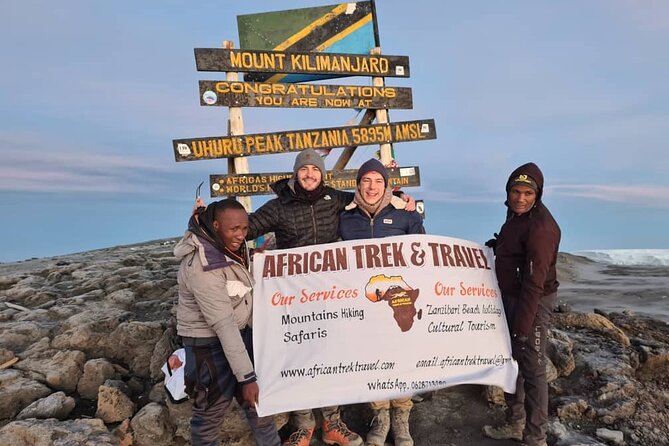
Kilimanjaro’s Machame Route gives you the mountain in changing acts: coffee farms and tropical forest first, then moorland, stark alpine desert, and a sunrise summit above the clouds. The hardest day is also the biggest prize, with a midnight start from Barafu Camp and a push to Uhuru Peak at 5,895 meters.
I like two things here. First, the route uses the Lava Tower climb for altitude practice before dropping to Barranco Camp. Second, Habari Adventure is a local Tanzanian operator, with guides such as Stan, Abdi, Leon, and Evance praised for calm support, organization, and careful health checks. The main drawback is simple: six days is demanding, with a 12 to 15-hour summit day and less acclimatization time than longer routes.
Key points to know before booking
- The summit day can last 12 to 15 hours, beginning around midnight at Barafu Camp.
- The route climbs high, then descends, using Lava Tower at 4,600 meters to help your body adjust.
- You move through five distinct habitats, from montane forest to moorland and alpine desert.
- Habari provides meals, tents and mountain equipment, plus oxygen, an oximeter, and a first aid kit.
- The trip is private, so only your own group takes part.
- Airport pickup and private transport are offered, but flights, visas, crew tips, personal items, and a portable flush toilet cost extra.
What the six-day Machame route feels like
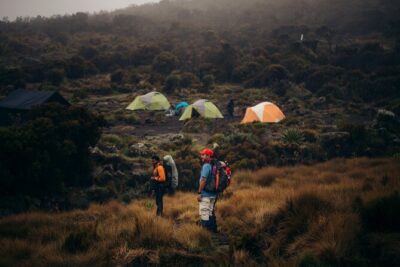
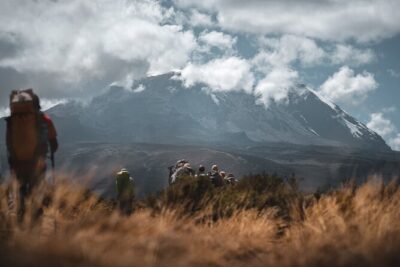
Machame is often called the scenic route to Kilimanjaro for good reason. You do not simply march uphill for six days. The path changes under your boots, and each zone brings a different temperature, view, and rhythm.
The opening hours pass through montane forest, where the air is humid and the trail is shaded. By summit week, you are walking over bare volcanic ground with little shelter from cold or wind. That change is part of the appeal, but it also means you need clothing for warm rain, chilly evenings, and freezing summit conditions.
This is a private activity, so your pace and daily routine can be handled within your group. That matters on a mountain. Some people need longer breaks, while others prefer to keep walking steadily. The supplied information does not specify the exact number of guides or porters assigned to each booking, so ask Habari for the staff plan before you pay.
More Kilimanjaro routes:
- Kilimanjaro climb by Lemosho Route (7-day)
★ 5.0 · 651 reviews - Kilimanjaro climb, Machame Route (7-day)
★ 5.0 · 262 reviews - Kilimanjaro Climbing Lemosho Route 8 Days.
★ 5.0 · 186 reviews
Day 1: Machame Gate to Machame Camp
Your first morning begins with hotel pickup around 8:00 am and a drive to Machame Gate. The approach gives you an early look at life around Kilimanjaro, including coffee and banana plantations cultivated by the Chagga people.
At the gate, you complete park registration and other formalities. Then the real work begins. The trail climbs through tropical rain forest to Machame Camp at 2,835 meters, covering about 11 kilometers in roughly six to seven hours.
A picnic lunch is included on the route. That is useful because the day is long, and stopping for a proper restaurant meal is not part of the plan. Breakfast, lunch, and dinner are listed for the day, so you should have regular food before and after the hike.
The forest is a fine introduction to the mountain, but do not mistake this first stage for an easy stroll. The combination of humidity, rising ground, and a full hiking day can leave you tired before the high-altitude work even begins. Walk slowly from the start. Saving energy here is smart, not timid.
Day 2: Moorland and the Shira Plateau
Day two covers only about 5 kilometers and takes roughly three to five hours, but the shorter distance does not mean the day is unimportant. You climb out of the forest and into moorland, where vegetation becomes lower and the mountain feels more open.
The route rises for about an hour, then eases briefly before reaching a rocky ridge and the Shira Plateau. The change in scenery is one of the rewards of Machame. You have more sky, broader views, and a clearer sense that you are climbing a major volcanic peak.
The itinerary points toward views of the Western Breach and its glacier. Conditions can affect what you see, so keep your expectations flexible. Lunch is described as a short snack break, which makes this a lighter food day on the trail.
This is a good day to settle into your personal mountain routine: drink often, keep your layers handy, and listen to your guide’s pace. The guides are trained in first aid and safety, and Habari says its staff also have backgrounds covering Kilimanjaro’s plants, animals, geography, astronomy, and local culture. You can ask questions as you walk, though the priority should remain steady movement and acclimatization.
Day 3: Lava Tower at 4,600 meters, then Barranco
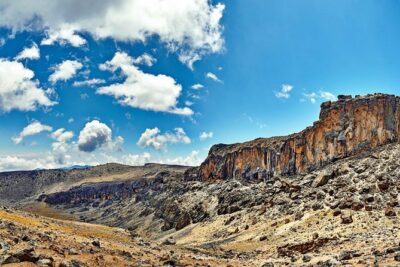
Day three is the route’s key acclimatization day. You climb into alpine desert and reach Lava Tower at about 4,600 meters, then descend to Barranco Camp at approximately 3,900 meters.
The hiking distance is about 10 kilometers, with around six hours on the trail. The important idea is climb high, sleep lower. That pattern gives you time at a greater altitude without making your overnight camp as high as Lava Tower.
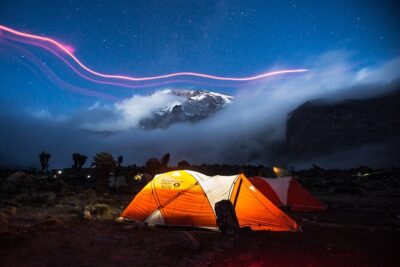
The descent to Barranco takes about three hours. It brings dramatic views of the Western Breach and Barranco Wall, and the camp sits in a valley below the wall. The location is especially appealing late in the day, when the setting sun can light the rock face and surrounding slopes.
This day may feel strange physically. You can be tired, short of breath, or headachy at altitude even though you are descending. Tell the guide how you feel. An oximeter and oxygen are included, but equipment is not a substitute for honest communication or a sensible decision about your health.
More six day trips in Moshi & Kilimanjaro:
- Kilimanjaro climb, Lemosho Route (6-day)
★ 5.0 · 129 reviews - Kilimanjaro climb, Marangu route (6-day)
★ 5.0 · 72 reviews - 6 Days 5 Night Safari
★ 5.0 · 57 reviews - 6 Days Tanzania Classic Safari
★ 5.0 · 52 reviews
Day 4: Barranco Wall and Barafu Base Camp
Day four is about 8 kilometers and roughly seven to eight hours. It begins with the famous Barranco Wall, a rocky climb that looks more intimidating than it is. The route is not technical, but it is long, tiring, and demanding enough to require care with every step.
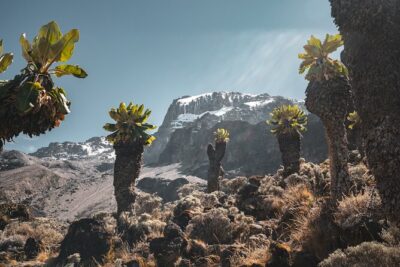
You pass giant groundsels around Barranco Camp before working up the wall. This is one of the most memorable sections of the route because it feels hands-on and exposed without requiring climbing skills or ropes, based on the description provided.
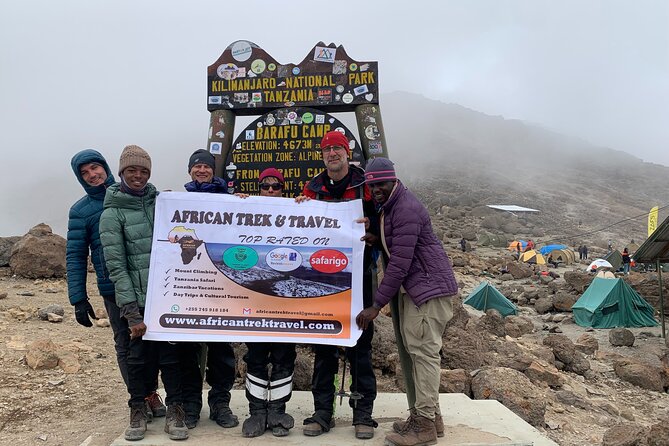
The path continues to Karanga Camp, where you have lunch. This is also described as the last water stop before the summit, an important practical detail. After Karanga, you continue through alpine desert to Barafu Camp at about 4,640 meters.
Barafu means base camp for the summit attempt, but it should not be confused with a restful hotel stop. You arrive high, tired, and aware that the main test begins after dinner. Use this time to eat, drink, organize your summit clothing, and rest as much as possible.
Day 5: Midnight start and Uhuru Peak
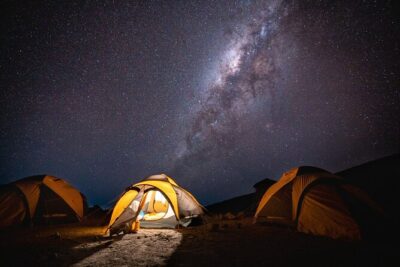
The summit day is the heart of the trip and the part you need to understand clearly before booking. You wake around midnight, have light tea and cookies, and begin climbing scree in the dark.
The ascent takes about four to five hours to Stella Point at 5,756 meters. Scree is loose volcanic gravel, so progress can feel slow. The trail gains a great deal of height over a relatively short distance, and the cold, darkness, and altitude make this far harder than the distance alone suggests.
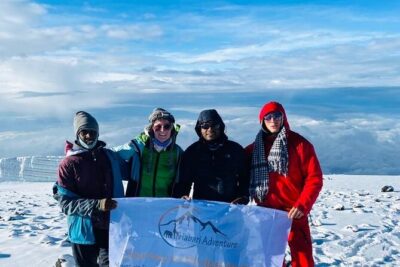
Reaching Stella Point around sunrise is one of the route’s strongest moments. From there, the walk to Uhuru Peak takes about another hour. At 5,895 meters, Uhuru is the highest point in Africa. You are expected to spend only a few minutes there for photographs before turning back.
The descent returns to Barafu Camp for lunch and rest. That break is welcome, but the day is not finished. You continue down to Millennium Camp at about 3,950 meters for dinner and overnight. Total hiking time is listed as 12 to 15 hours, over roughly 15 kilometers.
This is the point where a six-day itinerary shows its tradeoff. You get a shorter, usually less expensive climb, but the summit day is extremely long. You need good physical fitness, a calm attitude, and the willingness to stop or turn back if your health becomes a concern. No summit is worth ignoring serious altitude symptoms.
Day 6: Millennium Camp to Mweka Gate
After breakfast, you make the final descent through moorland and tropical rain forest. The route covers about 14 kilometers and takes about five hours.
The return to Mweka Gate can be rough on tired knees, even though you are losing altitude. Trekking poles, careful footing, and patient pacing help. At the gate, you complete park formalities and collect your certificates.
A private car then takes you back to your hotel for a warm shower and a proper celebration. That final transfer is more than a convenience. After the summit day and long descent, you will appreciate not having to arrange your own transport.
Guides, safety, and the Habari team
The strongest pattern in the supplied feedback is the quality of the guiding and support. Names that appear repeatedly include Stan, Abdi, Leon, Evance, Mudy, Nixon, and Inno. You cannot assume one of these guides will lead your climb, so request the name of your assigned head guide before departure.
The company describes its guides as local Tanzanians from Kilimanjaro and other parts of the country. They speak English, and some have studied additional languages. Their training includes safety and first aid, while their subject knowledge covers natural history, geography, archaeology, anthropology, astronomy, and wildlife management.
The personal accounts also highlight the wider crew: cooks and porters are described as important to the smooth running of the climb. One account praises chef Remmy, while others name crew members such as Michael, Jimmy, Jackson, Daniel, Yamani, and Hillary. Again, staffing can differ by group, but it is worth asking how the company handles porter welfare, tipping, equipment, and group size.
Health support is built into the package. An oximeter, oxygen, first aid kit, and mountain equipment are included. Those provisions are reassuring, but you should still arrive prepared and disclose medical concerns before the climb.
Meals, camping, and what the price covers
The listed price is $1,948.72 per person. For a six-day private Kilimanjaro climb, the value depends on what you would otherwise need to arrange yourself.
The package includes all fees and taxes, private transportation, meals, breakfast, oxygen, an oximeter, a first aid kit, and mountain equipment. The daily plan includes breakfast, lunch, and dinner on days one through five, with breakfast and lunch on day six.
The wording around breakfast is slightly repetitive, so ask for a precise meal plan before departure. You should also ask which equipment is supplied and what remains your responsibility. Personal items are excluded, and the list does not spell out every piece of clothing or technical gear you may need.
A portable flush toilet is not included. That is a small but important comfort issue for some climbers. If privacy and toilet arrangements matter to you, ask about available options and any extra charge.
Flights and entry visas are also outside the price. Tips for the mountain crew are not included, and you should budget for them separately. Ask for current tipping guidance so you can plan fairly and avoid carrying too little cash.
Who this climb suits best
This trip fits you if you want a private Kilimanjaro experience with a local company, structured transport, included meals, and a strong focus on guide support. It also suits solo climbers, couples, families, and small groups. The supplied accounts include solo climbs, honeymoon trips, a parent and child, couples, and a group of nine.
You need moderate physical fitness at minimum, but the summit day calls for more than ordinary sightseeing stamina. The 15-kilometer summit stage, 12 to 15 hours of walking, high altitude, and limited sleep are the real test.
If you prefer a gentler altitude schedule, ask about a longer version of Machame or another route. The six-day plan is attractive for its price and compact schedule, but adding a day can give you more time to adjust and may make the climb feel less rushed.
Timing, pickup, and cancellation details
Pickup is offered, and the meeting information lists Kilimanjaro Airport and Kilimanjaro National Park in Tanzania. The stated operating hours are Monday through Sunday, 10:00 am to 11:00 pm, with dates listed through June 18, 2026.
Confirmation is provided at booking. This is a private activity, so your group is the only group taking part in your booking.
You can cancel for a full refund up to 24 hours before the local start time. Changes made inside that 24-hour window are not accepted, and late cancellations are not refunded. Poor weather can also stop the experience. In that case, you are offered another date or a full refund.
Should you book Habari Adventure’s Machame climb?
I would consider this climb if you value a local Tanzanian team, private arrangements, and a package that covers the basic mountain operation in one price. The repeated praise for guides, organization, health checks, porters, cooks, and airport support gives Habari a strong profile for people who want close help from arrival through the summit.
I would pause if you are choosing only by price or if you have little hiking experience. Six days on Machame is not a casual holiday, and the summit day is punishing. Before booking, confirm your guide, group size, gear list, porter arrangements, tipping advice, toilet setup, and exact pickup plan.
Book it if you are fit, comfortable with camping, and ready for a very long summit night. Choose a longer route if you want more time for altitude adjustment. The route itself offers some of Kilimanjaro’s best scenery, while Habari’s local guiding model adds practical support and a human connection to the climb.
FAQ
How long does the Machame Route climb take?
The experience lasts approximately six days. The itinerary runs from hotel pickup and Machame Gate on day one to the Mweka Gate descent and hotel transfer on day six.
How difficult is the six-day climb?
You should have a moderate level of physical fitness. The most demanding section is day five, which includes a midnight start, the summit at Uhuru Peak, the descent to Barafu Camp, and onward walking to Millennium Camp, for a total of about 12 to 15 hours.
What altitude does the climb reach?
The summit is Uhuru Peak at 5,895 meters. The route also reaches Lava Tower at about 4,600 meters and Stella Point at approximately 5,756 meters.
Are meals and transport included?
Yes. The package includes private transportation and meals. Breakfast, lunch, and dinner are listed on days one through five, while day six includes breakfast and lunch.
What is not included in the price?
Flights, entry visas, tips for the mountain crew, personal items, and a portable flush toilet are not included.
Can I cancel for a full refund?
You can cancel at least 24 hours before the experience start time for a full refund. Cancellations or changes made less than 24 hours before the local start time are not accepted for a refund. If poor weather causes the climb to be canceled, you are offered another date or a full refund.
Newly listed around Moshi & Kilimanjaro
- Climb Mount Kilimanjaro: 7 Days Machame Route★ 5.0 · 3 reviews
- 6 Days Mount Kilimanjaro Climbing via Rongai Route★ 5.0 · 3 reviews
- Explore 1 day Ngorongoro Crater Budget Group Safari from Arusha★ 5.0 · 3 reviews
- Mt. Kilimanjaro Day Hiking★ 5.0 · 3 reviews
- Chemka (Kikuletwa) Hot Springs, Tanzania★ 5.0 · 3 reviews
- Guided City tour of Moshi★ 4.3 · 3 reviews
- 8 Day Tanzania Family Safari★ 5.0 · 3 reviews
- Serengeti Safari with Sirikwa Travel★ 5.0 · 3 reviews
Kilimanjaro Climbs, compared.
Browse the lists this tour appears in