
Reviewed · KILIMANJARO CLIMBS
6 Days Kilimanjaro Climbing Marangu Route
The Marangu Route gives you Kilimanjaro’s most established trail and its only regular hut accommodation, ending with a hard midnight summit climb to Uhuru Peak at 5,895 meters. You move from wet rainforest to open moorland, then across a stark high-altitude saddle beneath Kibo.
I like the extra night at Horombo, which gives your body more time to adjust, and I like the practical inclusions: park fees, meals, purified water, porters, cooks, guides, and airport transfers. The main concern is that the supplied schedule has conflicting accommodation details on summit day, so confirm the exact route and overnight stops before paying.
Key points to know before booking
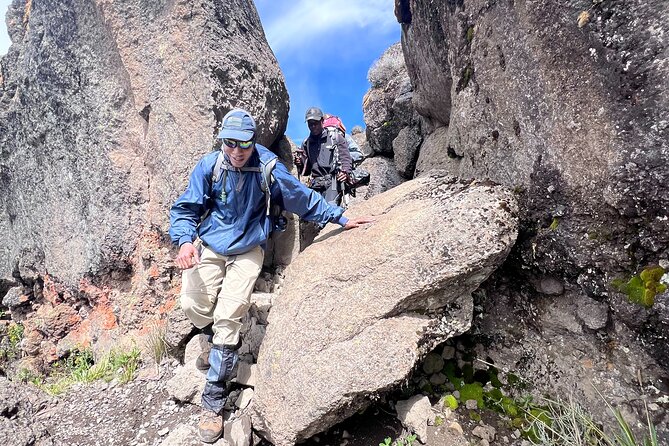
- Hut-based Marangu Route: Sleep at Mandara, Horombo, and Kibo Huts rather than carrying a tent yourself, although the package description also mentions private mountain tents.
- Extra acclimatization night: Day three stays at Horombo, with an optional walk toward Mawenzi base camp.
- A serious summit night: You start between midnight and 2 a.m., reach Gillman’s Point for sunrise, then continue toward Uhuru Peak.
- Wide range of scenery: The route passes through rainforest, heathland, moorland, an alpine desert, and snowy summit terrain.
- Strong practical value at $2,000: Park fees, staff wages, three daily meals, drinking water, and airport transfers are included.
- Check the schedule carefully: The written plan mentions Mweka Camp and Horombo Huts in different places after the summit.
Why the Marangu Route suits some climbers better
Marangu is often called the Coca-Cola Route because it is the oldest and most familiar way up Kilimanjaro. Its main selling point is simple: you sleep in mountain huts rather than tents. That can make a real difference if you dislike setting up camp or want a more basic bed and roof at the end of each walking day.
The route is also direct. You ascend through the same general corridor on the way up and down, instead of using a separate descent trail. That makes the route easy to understand, but it also means you see less of the mountain than you would on a longer circuit.
The six-day version is more sensible than a rushed five-day climb because it includes a second night at Horombo. That rest and acclimatization day is not wasted time. At altitude, a slower schedule can be more useful than simply covering more ground.
You should still treat this as a demanding high-altitude climb, not a standard holiday walk. The summit reaches 5,895 meters, and the final night combines cold, darkness, fatigue, steep ground, and thin air. A friendly guide and good staff support help, but they cannot remove the physical challenge.
More Kilimanjaro routes:
- Kilimanjaro climb by Lemosho Route (7-day)
★ 5.0 · 651 reviews - Kilimanjaro climb, Machame Route (7-day)
★ 5.0 · 262 reviews - Kilimanjaro Climbing Lemosho Route 8 Days.
★ 5.0 · 186 reviews
From Moshi to the rainforest on day one
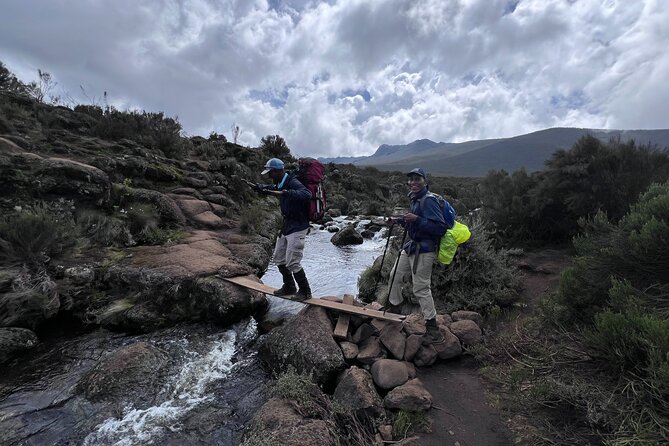
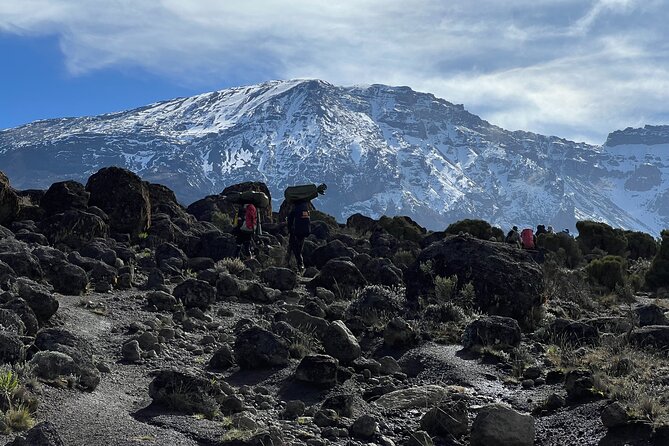
The first morning begins with a drive of about 45 minutes from Moshi toward Kilimanjaro National Park. The schedule refers to passing through Machame Village before reaching the park gate, although this is a Marangu Route program. That detail is worth confirming with Furaha Adventures, since the route name and access point should match your booking.
The gate is more than a formality. Your team waits while permits are issued, and you see porters and crews organizing loads for the climb. This can feel slow, but it is part of the mountain’s operating rhythm. Use the time to check your daypack, water, rain gear, poles, and layers.
From around 1,905 meters, you walk through rainforest toward Mandara Huts at 2,723 meters. The day takes about five hours, with 818 meters of ascent. Expect wet ground and slippery sections, especially in poor weather. Gaiters and trekking poles are useful here, not decorative extras.
The forest is the route’s first pleasure. Your guide points out local plants and wildlife as the trail winds upward. You will not yet have the huge summit views, but the damp green setting gives the climb a proper beginning and provides shade before the air turns colder.
Mandara Huts are your first overnight stop. The supplied details describe hut accommodation at this stage, while the package inclusions also refer to private, waterproof, four-season tents. Ask which arrangement applies to your departure. That small clarification matters when you are packing and deciding what level of comfort to expect.
Heathland, lobelias, and Horombo Huts
Day two climbs from Mandara to Horombo Huts, gaining about 998 meters and reaching 3,721 meters. The walk takes around six hours. The rainforest thins, and the scenery opens into heathland and moorland.
This is where Kilimanjaro begins to feel less like a forest walk and more like a high mountain route. Giant lobelias and groundsels add strange, memorable shapes to the trail. Farther up, low shrubs replace the taller vegetation, and Mawenzi comes into view across the mountain.
A lunch stop halfway breaks up the climb. The views toward Mawenzi are one of the day’s rewards, but do not let the scenery tempt you into rushing. The best pace is the one that lets you speak comfortably and keep drinking water.
Horombo Huts sit below the Kibo summit area. Temperatures drop late in the day, so keep a warm layer near the top of your bag rather than buried in your luggage. The schedule allows about five hours at the huts for accommodation and rest, but the useful point is that you need an early, quiet evening before the next day’s acclimatization walk.
The Horombo acclimatization day
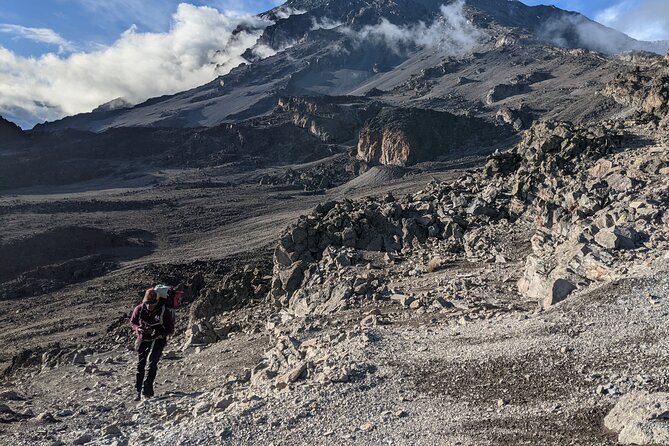
Day three is the reason this six-day version deserves serious consideration. You spend a second night at Horombo rather than climbing higher immediately. You can rest at the huts or take a walk toward Mawenzi base camp before returning to Horombo.
The exact duration is listed as about 12 hours, which seems to describe the full day rather than a continuous walking period. Confirm the proposed walk with your guide. You should not treat this as a summit-training contest. The purpose is to spend time at altitude, learn how your body responds, and arrive at the next stage in better shape.
This is also a useful day for sorting equipment. Check your headlamp, batteries, gloves, hat, water, snacks, trekking poles, and summit layers. If anything is wet from the lower trail, dry it while you have the chance.
The second night at Horombo adds time and cost to the operation, but it may add value to your chances of handling the summit. No schedule can guarantee success, and you should follow the guide’s advice if altitude symptoms appear. A private departure means only your group participates, which can make the pace and rest decisions more personal.
More six day trips in Moshi & Kilimanjaro:
- Kilimanjaro climb, Lemosho Route (6-day)
★ 5.0 · 129 reviews - Kilimanjaro climb, Marangu route (6-day)
★ 5.0 · 72 reviews - 6 Days 5 Night Safari
★ 5.0 · 57 reviews - 6 Days Tanzania Classic Safari
★ 5.0 · 52 reviews
Crossing the saddle to Kibo Huts
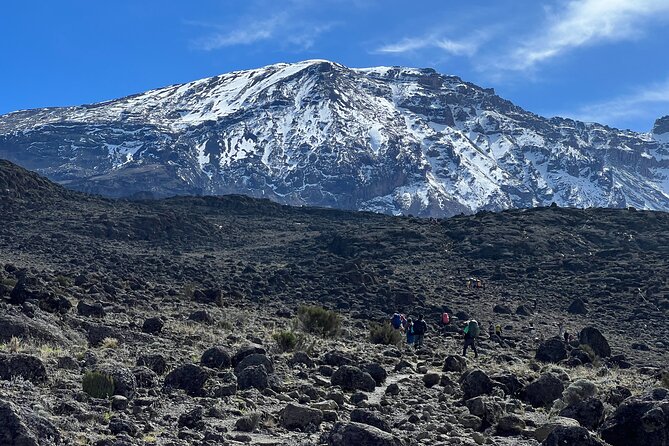
Day four takes you from Horombo at 3,721 meters to Kibo Huts at 4,714 meters. The walking time is about six hours, with nearly 1,000 meters of ascent. The heathland fades into a broad, stark area between Mawenzi and Kibo.
This saddle is one of the route’s most striking sections. It feels open and exposed, with little vegetation and a long view toward the summit cone. You can look across the ground you will cross on the way back, then study the Kibo climb that begins only a few hours after arrival.
The day is not technically complex according to the supplied plan, but the altitude makes ordinary walking feel slower. Eat lunch, drink steadily, and avoid burning energy on a fast finish. Kibo Huts are a staging point for the summit rather than a place for a long evening.
You will likely rest before the midnight start. Keep your summit clothing ready and organize your daypack before lying down. Since the summit attempt begins between midnight and 2 a.m., the quality of this short rest can affect how the hardest hours feel.
The midnight push to Gillman’s Point and Uhuru Peak
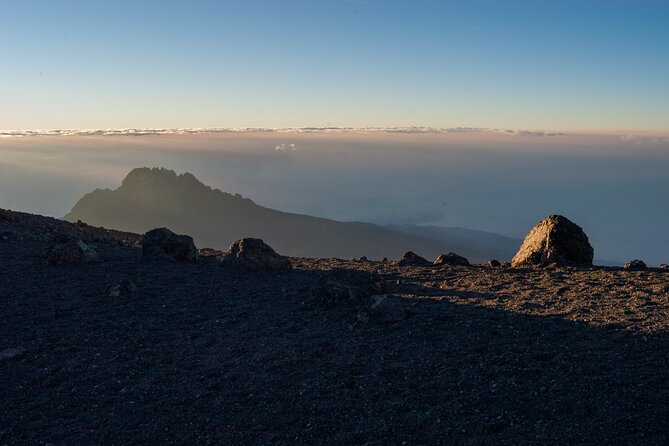
Day five is the climax. You leave Kibo Huts in darkness and climb switchbacks toward the crater rim. The schedule gives the summit journey about five hours, but the full experience includes the ascent, time at the top, and a long descent. Individual timing can vary.
Cold and fatigue are part of the test. The first major goal is Gillman’s Point, where sunrise can spread across the mountain. From there, Uhuru Peak is described as about another hour away, possibly over snow. The final altitude is 5,895 meters.
Reaching Uhuru Peak is a major physical achievement, but you should judge success sensibly. If your guide advises stopping at Gillman’s Point or turning back earlier because of altitude or exhaustion, that is not failure. It is the right mountain decision.
The descent is steep and tiring. Gaiters and poles are again recommended, particularly on loose or wet ground. The schedule says you descend toward Mweka Camp via Barafu, then lists Horombo Huts as the accommodation stop. Day six begins from Horombo, so the written plan contains a clear mismatch. Ask Furaha Adventures to confirm whether your group sleeps at Mweka, Horombo, or another camp after the summit.
That is not a minor wording issue. The overnight location changes the length and difficulty of both summit day and the final descent. Get the answer in writing before departure.
Returning through Mandara to Moshi
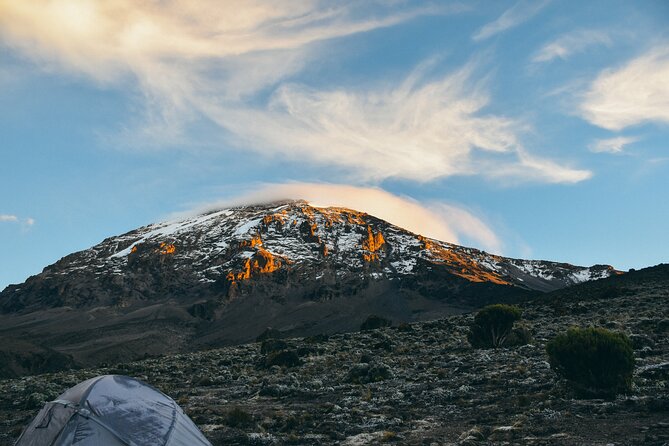
The final day descends from about 3,721 meters to the park gate at roughly 1,905 meters, losing around 1,816 meters. The walking time is about six hours, including a stop at Mandara Huts for lunch.
The return through lower forest can feel harder than expected. Your legs are tired, the trail may be muddy, and the warmer air can make you feel heavy after the cold summit. Gaiters and poles remain helpful on the wet, steep sections.
A farewell ceremony with the crew comes before the final descent. The plan specifically reminds you to tip guides, cooks, and porters when you leave them. Tips are not included in the $2,000 price, so bring suitable personal funds and plan for this cost separately.
At Marangu Gate, you receive summit certificates before a vehicle takes you back to your Moshi hotel. The drive is about 45 minutes. A hot shower, dinner, and a quiet celebration will likely feel more valuable than any souvenir.
What the $2,000 price really covers
At $2,000 per person, this is not a bare entry ticket. The price includes park fees, professional mountain guides, porters, cooks, staff salaries, airport transfers, purified drinking water, and breakfast, lunch, and dinner for six days.
Those inclusions matter because a Kilimanjaro climb uses a sizeable support operation. Meals and water alone are not the main cost. Park access, permits, wages, transport, and moving supplies onto the mountain all shape the final price.
The value looks strongest if you need airport transfers and want a private departure. You do not have to arrange those pieces separately, and only your group participates in the activity. The package also says it includes quality waterproof four-season private tents, but the route plan repeatedly assigns you to huts. Clarify this before booking, since the accommodation description is inconsistent.
Alcohol, soft drinks, tips, souvenirs, and other personal spending are extra. You should also confirm what airport transfer times are covered, because the information says airport transfers are included without giving a detailed arrival or departure schedule.
Staff support and the human side of the climb
The most consistent praise in the supplied comments concerns the Furaha Adventures team, especially the friendly guides and porters. Godfrey is singled out for helping with the booking process from the first stages through the end of the Tanzania visit. No individual mountain guide names are provided, so you should ask for the name and experience of your lead guide before departure.
That support matters most on the long summit night. Your guide sets the walking pace, helps the group make sensible altitude decisions, and explains the route and surroundings. Porters and cooks also shape the daily experience, even though you may notice their work most clearly at meals and camp.
The company has a perfect five-point rating from five submitted comments, but that is a small sample. I would take the strong praise as encouraging rather than as proof that every departure will be identical. The best practical step is to confirm the exact schedule, accommodation, equipment arrangements, and staff plan in advance.
Who should book this Kilimanjaro climb
This trip suits you if you want a direct six-day climb with hut stops, a private group, and a built-in acclimatization day. It is also a good fit if you prefer a well-known route and want meals, water, porters, park costs, and airport transfers handled in one package.
You should think twice if you want a quieter trail, a longer acclimatization schedule, or a route that uses different scenery on the way down. Marangu is popular and straightforward in layout, but its direct out-and-back design offers less variety than a longer circuit.
You also need to be ready for cold, mud, steep descents, a midnight start, and high altitude. The note that most participants can take part should not be read as a promise of easy access. The final summit hours are physically serious.
Booking is sensible once Furaha Adventures clears up the conflicting day-five and day-six accommodation notes. Confirm whether you use huts or tents, where you sleep after the summit, and which airport transfers are included. If those answers suit you, the price offers solid practical value for a private six-day Kilimanjaro climb with a useful extra night at Horombo.
FAQ
How long is the Kilimanjaro Marangu Route experience?
The experience lasts approximately six days, beginning and ending with transport connected to Moshi.
What is the highest point reached?
The summit goal is Uhuru Peak at 5,895 meters, or 19,341 feet.
Is airport pickup included?
Yes. Airport transfers are included, and pickup is offered. The supplied details do not specify the exact transfer schedule.
What meals are included?
Breakfast, lunch, and dinner are included for six days. Alcoholic drinks, soft drinks, and personal purchases are not included.
Are park fees and staff costs included?
Yes. The price includes park fees and the salaries of guides, porters, and the cook.
Where do you sleep during the climb?
The route plan names Mandara Huts, Horombo Huts, and Kibo Huts. The package details also mention private mountain tents, and the summit-night accommodation notes conflict with one another, so confirm the final arrangement with Furaha Adventures.
What is the cancellation policy?
You can cancel at least 24 hours before the local start time for a full refund. Cancellations or changes made less than 24 hours before the start time are not accepted for a refund.
Newly listed around Moshi & Kilimanjaro
- Climb Mount Kilimanjaro: 7 Days Machame Route★ 5.0 · 3 reviews
- 6 Days Mount Kilimanjaro Climbing via Rongai Route★ 5.0 · 3 reviews
- Explore 1 day Ngorongoro Crater Budget Group Safari from Arusha★ 5.0 · 3 reviews
- Mt. Kilimanjaro Day Hiking★ 5.0 · 3 reviews
- Chemka (Kikuletwa) Hot Springs, Tanzania★ 5.0 · 3 reviews
- Guided City tour of Moshi★ 4.3 · 3 reviews
- 8 Day Tanzania Family Safari★ 5.0 · 3 reviews
- Serengeti Safari with Sirikwa Travel★ 5.0 · 3 reviews
Kilimanjaro Climbs, compared.








Browse the lists this tour appears in