
Reviewed · KILIMANJARO CLIMBS
6 days Kilimanjaro Climbing Machame Route in Tanzania
The Machame Route earns its Whisky Route nickname honestly: it trades Marangu’s hut stays for tents, steeper trails, and a more rugged approach to Africa’s highest peak. I like the changing scenery, from wet rainforest to heather, moorland, scree, snow, and sunrise at Stella Point. I also like the careful acclimatization day at Lava Tower before dropping to Barranco.
The drawback is simple: six days is demanding. You spend most nights camping, summit after midnight, and descend a long way the same day. I also recommend confirming exactly what the two included accommodation nights cover, since the mountain portion uses tents.
Key points to know before you book
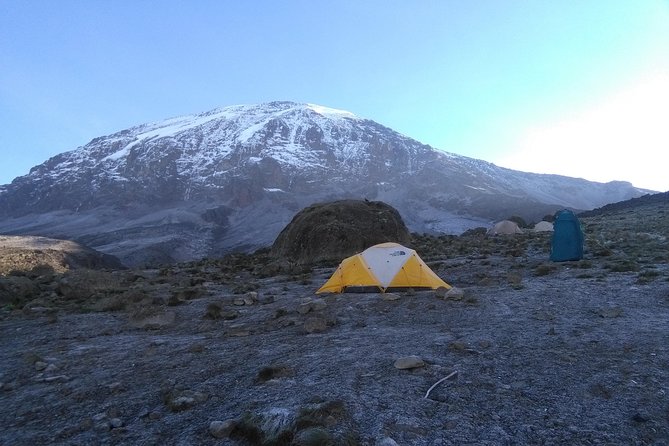
- A scenic route with tents only: Machame gives you more varied mountain scenery than the hut-based Marangu Route, but you need to be comfortable camping.
- The summit push starts at midnight: Day five combines a 6 to 8 hour ascent with a 3 hour descent, so stamina and patience matter.
- Lava Tower helps with acclimatization: You climb high, reach about 4,630 meters, then sleep lower at Barranco.
- The Barranco Wall is a real feature: Day four includes steep scrambling-like terrain before the trail reaches Barafu Camp.
- Guide Eli is named as part of the local team: The company is led by Peter, with Eli and other staff involved in guiding and support.
- The price is $2,800 per person: Park fees, dinner, transportation, two nights of accommodation, and shared transfers are included, but some inclusions need checking before payment.
Why Machame feels different from Marangu
Kilimanjaro is not a technical climbing trip in the usual sense. You do not need ropes or rock-climbing skills in the information provided for this tour, but you do need to walk for several hours each day at high altitude. The hard part is usually the combination of cold, thin air, uneven ground, and a very long summit day.
Machame is the scenic choice. The route crosses several plant zones, beginning in montane forest and ending among stone, ice, and snow. That variety gives the climb a strong sense of progress. You are not simply walking uphill on one type of trail for six days.
The tradeoff is comfort. There are no mountain huts on this route, only tents. Your group also faces more varied terrain than on Marangu, including muddy forest paths, rocky ridges, the Barranco Wall, and loose scree near the summit.
The published summit success figure is about 85 percent. Treat that as a guide rather than a promise. Your pace, health, preparation, and response to altitude will matter more than the number printed in a tour description.
More Kilimanjaro routes:
- 8-Day Small-group Lemosho Kilimanjaro Summit Trekking
★ 5.0 · 186 reviews - 7-Day Machame Kilimanjaro Summit Tour from Arusha
★ 5.0 · 125 reviews - Private Full Day Hiking Experience to Marangu Route
★ 5.0 · 61 reviews
Day one, Machame Gate to the rainforest camp
The day begins with a drive from Moshi to the Mount Kilimanjaro National Park Gate, taking about 45 minutes. The route passes through Machame village on the mountain’s lower slopes before you enter the park.
The first walking section runs through montane forest on a winding trail up a ridge. Lower down, the path can be muddy and slippery, especially if conditions are wet. Gaiters and trekking poles are useful here, not as fancy extras but as practical protection for your shoes, legs, and balance.
You climb from about 1,830 meters to 3,000 meters over 11 kilometers. The stated walking time is 5 to 7 hours, which leaves room for a slow, steady pace and breaks.
Machame Camp is your first overnight stop. This is a good introduction to the rhythm of the trip: walk, eat, rest, and prepare for the next morning. The forest is the most enclosed part of the route, so do not expect wide summit views yet. The reward is the feel of entering a wild mountain zone rather than starting on a developed resort trail.
Day two, heather and the Shira campsite
After breakfast, the forest gives way to heather and moorland. The route climbs across a small valley, then follows a steep, rocky ridge until the ridge ends and the trail turns west toward a river gorge.
This is a shorter day by distance, just 5 kilometers, but it still involves a gain from about 3,000 to 3,840 meters. The stated walking time is 4 to 5 hours. At this height, a short day is not necessarily an easy day. Your breathing may feel different, and a slow pace is sensible.
Shira Camp is the overnight stop. The open moorland changes the character of the climb. After the enclosed forest on day one, you get broader views and more exposed ground. The price of that openness is weather. Wind and cold can feel sharper, so keep warm layers accessible rather than buried in your main luggage.
Day three, Lava Tower and the important drop to Barranco
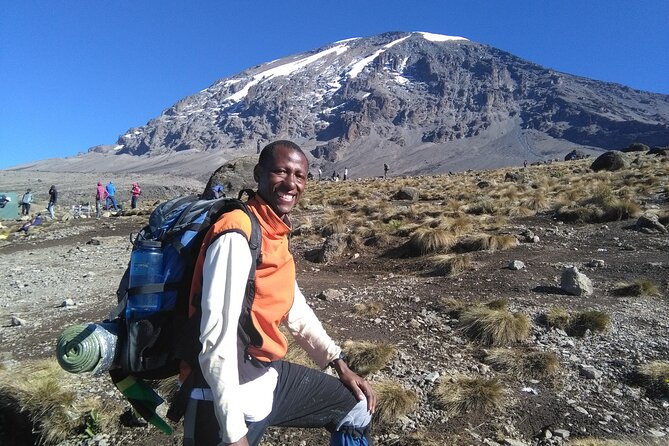
Day three is the route’s key acclimatization day. From the Shira Plateau, you continue east along a ridge, pass the junction toward Kibo, and head toward Lava Tower, also called Shark’s Tooth.
The route climbs to roughly 4,630 meters before descending to the Barranco area at about 3,986 meters. The supplied schedule gives 11 kilometers and 5 to 7 hours of walking. The exact elevation figures are presented slightly differently in the tour details, but the useful point is clear: you go high, then sleep lower.
That climb and descent is valuable because it gives your body time at altitude without making you spend the night at the day’s highest point. You may feel tired here, and the semi-desert surroundings offer little shelter from the elements. Still, this is not a day to rush. The slow approach helps you save strength for summit night.
Barranco Camp is one of the memorable stops on the route. You can rest, eat dinner, and look up at the steep Barranco Wall, which becomes the first major feature of the following day.
More six day trips in Arusha:
- Tanzania Wildlife Encounters – 6 Days
★ 5.0 · 277 reviews - Private 6-Day Tarangire Manyara Crater and Serengeti with Mid-Range Lodges
★ 5.0 · 238 reviews - 6 Days Private Budget Safari
★ 5.0 · 163 reviews - 6 Days Tanzania Budget Camping Safari
★ 5.0 · 145 reviews
Day four, the Barranco Wall and Barafu Camp
After breakfast, you leave Barranco and climb the Barranco Wall. The route then crosses the Karanga Valley, with lunch scheduled around 4,200 meters, before joining the junction connected to the Mweka Trail.
The day covers 9 kilometers and takes about 8 hours. That is a relatively short distance with a long walking time, which tells you something about the ground. The Barranco section is steep, and the route requires careful footing. You should expect a tiring day even before the summit attempt begins.
From Karanga, you continue to Barafu Camp at about 4,600 meters. You have now completed the South Circuit, a route design that gives views of the summit from different angles. Mawenzi and Kibo are visible from this position.
Barafu means ice, and the name fits the mood of the camp. This is not a relaxed evening at a scenic lodge. You eat, rest, organize your clothing, and prepare for an early start. Your dinner and tent routine need to be efficient because the summit push begins around midnight.
Day five, the midnight climb to Uhuru Peak
This is the toughest day by far. You leave at about 12:00 a.m. and climb northwest through heavy scree toward Stella Point on the crater rim.
The ascent from about 4,600 meters to Stella Point at 5,685 meters takes roughly 6 to 8 hours. The trail is steep, loose, dark, and mentally draining. Progress can feel slow. The challenge is not only the altitude, but the timing: you begin when your body expects to be asleep, then continue for hours in cold conditions.
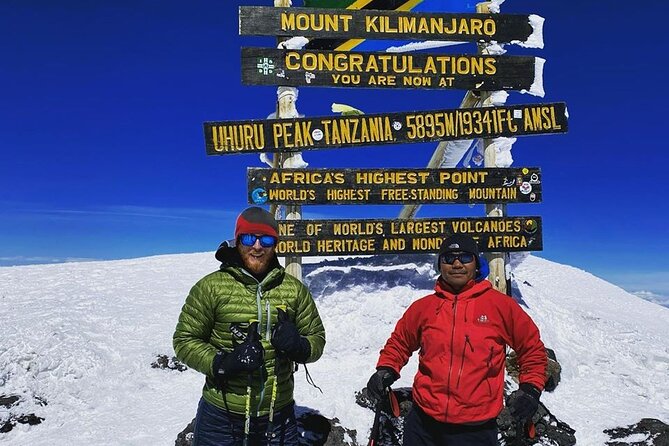
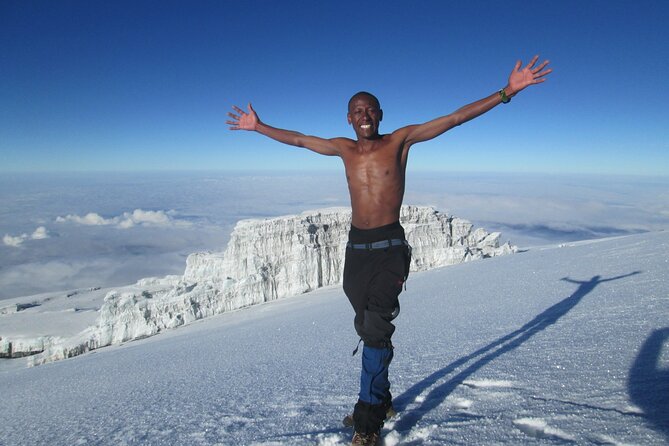
At Stella Point, you take a short rest and, weather permitting, see sunrise over the mountain. This is one of the strongest moments of the trip, but the schedule does not allow a long stop. From Stella Point, you continue for about two more hours over snow toward the summit, listed at 5,895 meters.
The ascent is about 5 kilometers. After reaching the summit, you face a 12 kilometer descent to roughly 3,100 meters, with about 3 more hours of walking listed for the descent. That makes this a 6 to 8 hour uphill effort followed by a long downhill finish.
The descent can be hard on knees and feet. Trekking poles become especially useful, and you should not treat the summit as the end of the day. It is only the halfway point in a very long push.
Day six, the muddy descent to Mweka Gate
After breakfast, you continue down to Mweka Park Gate, dropping from about 3,100 to 1,830 meters. The stated distance is 10 kilometers, with 3 to 4 hours of walking through forest.
The lower trail can be wet and muddy. Gaiters and poles are useful again, and you may be comfortable in shorts and a T-shirt at the lower elevation. Keep rain gear and warmer clothing within reach because mountain weather can change before the descent is over.
At Mweka Gate, you receive your summit certificate. The tour vehicle then drives you back to your Moshi hotel, a journey of about 30 minutes. The listed trip details say the activity starts and ends at the meeting point in Arusha, while the mountain transport description refers to Moshi and a Moshi hotel. Confirm the pickup town, hotel transfer, and return arrangements before booking, especially if you are staying in Arusha.
What the $2,800 price means
At $2,800 per person, this is a major purchase, but a Kilimanjaro climb is also a multi-day park expedition rather than a simple guided walk. The listed price includes national park fees, dinner, private transportation, two nights of accommodation, and a round-trip shared transfer.
Those inclusions give the tour real value, particularly the park fees and transport. A private group also means you are not automatically placed with strangers, which can make pacing and communication easier. The tour is described as private, with only your group participating.
The details need a careful check, though. The mountain itinerary describes tent camping, while the inclusions list two nights of accommodation without explaining where those nights are or what type of lodging they cover. The information also lists private transportation and a round-trip shared transfer, which may refer to different parts of the trip.
Ask for a written breakdown before paying:
- Which two nights of accommodation are included?
- Are tents, sleeping arrangements, and meals beyond dinner covered?
- Does pickup include Arusha, Moshi, or both?
- What exactly does the shared transfer cover?
- Are there extra landing or facility fees for your travel plans?
Souvenir photos are not included and can be purchased separately. Landing and facility fees are also excluded. The booking requires each person’s passport name, number, expiry date, and country.
The guides and local support
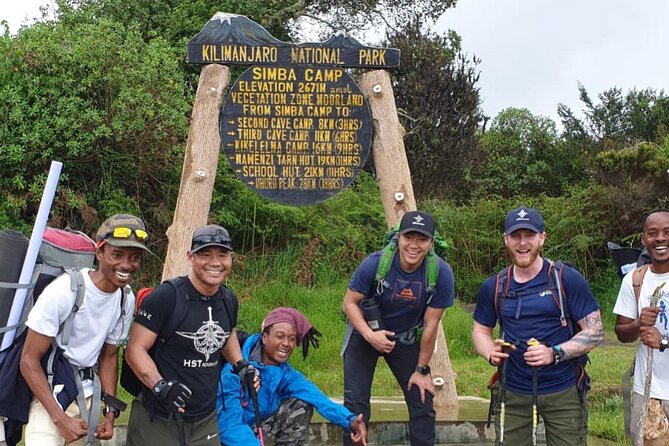
The company is led by Peter, and guide Eli is specifically named in the trip information. Direct feedback about the team highlights Eli’s friendly manner, reliability, and route knowledge, while Peter handled planning and online organization.
That matters on a climb like this. You need more than someone who can point toward the summit. You need clear pacing, help with daily routines, and a team that listens when you are tired or uncomfortable. The supplied experiences also give credit to the wider crew, including the porters and cooks. One account specifically praised the cooking and urged people not to choose fewer than six days because acclimatization time matters.
You should still ask how many guides and porters will accompany your group, what meals are included beyond the listed dinner, and how tipping is handled. Those details are not provided here, and they affect both comfort and fair treatment of the support crew.
Who should choose this climb
I would choose this route if you want scenery, a more adventurous trail, and a proper camping experience. It suits someone with moderate physical fitness who can handle 5 to 8 hours of walking on several days and a long summit night.
It is less suitable if you want hut accommodation, short walking days, or a relaxed holiday schedule. The summit day begins at midnight and combines a major ascent with a long descent. You should also be comfortable with mud, loose rock, cold, and basic mountain camping.
Children must be accompanied by an adult. The activity is private, but the information does not state a minimum or maximum group size. Ask before booking if that point matters to your budget or group plans.
Practical preparation for the six days
Pack for several climate zones. The first and last forest sections can be wet and muddy, while the higher camps bring cold, wind, scree, snow, and exposed alpine conditions.
Keep the following items easy to reach during the day:
- Waterproof layers for the forest
- Gaiters for mud and wet vegetation
- Trekking poles for steep and loose ground
- Warm layers for Barafu Camp and the midnight start
- Extra clothing for the summit descent
- A headlamp for the pre-dawn climb
Move slowly from the first day. The itinerary is designed around gradual height gain, especially on day three, so do not waste energy trying to race ahead. Use the rest stops, eat what you can, and tell the guide early if altitude or fatigue is affecting you.
The most important preparation is mental. Summit night may feel repetitive and slow. You will climb through scree in darkness, reach Stella Point, rest briefly, and continue toward the summit in snow if conditions allow. Think of it as a series of small sections rather than one giant climb.
Should you book the Machame Route?
Book this experience if you want the more scenic, tent-based side of Kilimanjaro and accept that the route is harder than Marangu. The six-day schedule gives you the important Lava Tower acclimatization day, and the local team, including Peter and guide Eli, provides a clear point of contact.
I would not book it without first confirming the accommodation details, the Arusha and Moshi transfer plan, and the full meal arrangement. At $2,800, those questions are worth asking.
For a fit hiker who wants varied scenery, a private group, and a serious summit attempt, Machame is a strong choice. For anyone mainly seeking comfort or a gentle introduction to high-altitude walking, choose a longer itinerary or a less demanding travel plan instead.
FAQ
How long does the Kilimanjaro Machame Route tour last?
The tour lasts approximately six days.
Where does the tour start?
The stated meeting point is in Arusha, Arusha Region, with a start time of 9:00 a.m.
Where does the climb begin?
The mountain schedule begins with a drive from Moshi to Mount Kilimanjaro National Park Gate, passing through Machame village.
Is accommodation provided in huts or tents?
The Machame Route uses tents only. The listed inclusions also mention two nights of accommodation, but the type and location of those nights are not specified.
What is included in the price?
The listed inclusions are dinner, national park fees, private transportation, two nights of accommodation, and a round-trip shared transfer.
What fitness level is required?
You should have a moderate physical fitness level. The route includes 5 to 8 hour walking days, steep terrain, and a midnight summit attempt followed by a long descent.
Can I cancel for a full refund?
Yes. You can cancel at least 24 hours before the experience start time for a full refund. Cancellations or changes made less than 24 hours before the start are not accepted for a refund.
Newly listed around Arusha
- 5-Day Private Safari Tour in Tanzania’s Wildlife★ 5.0 · 3 reviews
- 3 Days private safari Tarangire ,Ngorongroro crater &Manyara★ 5.0 · 3 reviews
- 3 Day Sharing Safari – Manyara, Ngorongoro Crater and Tarangire National Parks★ 5.0 · 3 reviews
- Tarangire National Park Day Trip★ 5.0 · 3 reviews
- 2 Days Tarangire and Ngorongoro Crater Tour★ 5.0 · 3 reviews
- 6 -Day Tarangire, Manyara, Serengeti & Ngorongoro★ 5.0 · 3 reviews
- 5 Days Group Camping Safari★ 4.7 · 3 reviews
- 4 Days Tanzania Safari★ 4.5 · 3 reviews
Kilimanjaro Climbs, compared.








Browse the lists this tour appears in