
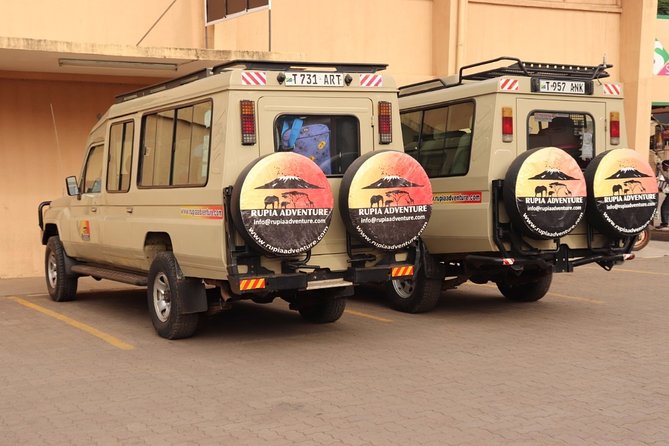
Reviewed · KILIMANJARO CLIMBS
5 Days Marangu Route – Mount Kilimanjaro Trek
The most memorable part of this trek is the midnight push from Kibo Hut to Uhuru Peak, where you climb by headlamp through cold, thin air and reach the crater rim around sunrise. I like the hut-based route, which avoids camping, and the built-in airport pickup, hotel stay, and gear check. The main concern is the five-day schedule: it is efficient, but the fast rise in altitude makes summit day demanding.
I also like the chance to see Kilimanjaro change as you climb, from rainforest and primates to moorland, bare volcanic slopes, and the high crater rim. Guides including Meshack, Maziku, Franky, John, and Julius have been praised for good spirits, mountain experience, and practical tips. Still, you should not mistake Marangu for an easy walk. The summit day is long, cold, and physically serious.
Key points to know before you book
- Five hiking days, seven days total: The program includes arrival, hotel time, the trek, a recovery day, and departure.
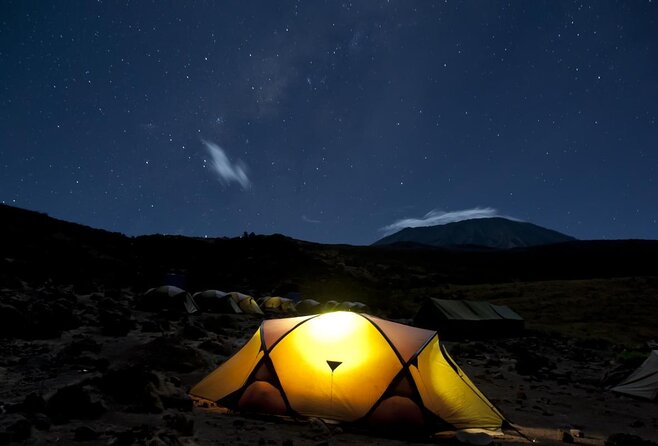
- Marangu uses mountain huts: You sleep in huts at Mandara, Horombo, and Kibo rather than tents.
- The summit starts around midnight: Expect a strenuous ascent to Gillman’s Point at 5,681 meters, followed by Uhuru Peak at 5,895 meters.
- A gear check comes before the trek: Missing equipment can be rented on the first day.
- The group limit is 15 people: That is small enough for guide contact, though the exact group size can vary.
- The price is $1,500 per person: Pickup is offered and a mobile ticket is provided, but ask what fees and equipment costs are included before paying.
Why Marangu works, and where it tests you
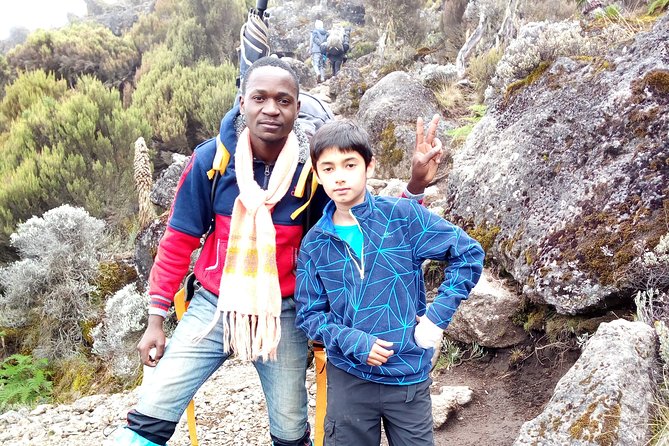
Marangu is often chosen because its route uses huts and follows a direct line toward Kibo. That gives you a simpler setup than a camping route, but it also means the itinerary reaches high altitude quickly. The five-day version includes no dedicated acclimatization day at Horombo, which is an important point for your decision.
The trip is not only a climb. It begins with a hotel night in Moshi or Arusha, an airport transfer, a briefing, and an equipment check. Those early steps matter. A missing jacket or unsuitable footwear is far easier to address before you are on the mountain.
The company limits each departure to a maximum of 15 people. That size can work well, especially if the guide team is attentive and the walking pace stays sensible. The named guides connected with past departures include Meshack, Maziku, Franky, John, and Julius. You should confirm your guide assignment before departure, since it can change.
More Hiking Tours in Arusha
- 8-Day Small-group Lemosho Kilimanjaro Summit Trekking
★ 5.0 · 186 reviews - Mountain Kilimanjaro Day Hike
★ 5.0 · 102 reviews - Private Full Day Hiking Experience to Marangu Route
★ 5.0 · 61 reviews
Day 1: Airport pickup, Moshi hotel, and the gear check
Your trip begins with pickup at Kilimanjaro International Airport and a transfer to your hotel in Moshi. The program also lists Panama Hotel or Mvuli Hotel in Arusha, or an alternative, so confirm the exact overnight location before arrival.
This first day is useful rather than decorative. You meet your guide, receive a briefing, and check your mountain gear. If something is missing, the operator says it can be rented that day. Use this time carefully. You want to know that your warm layers, rain protection, and other key items are ready before the first trail morning.
The schedule also gives you a night to settle in after your flight. Since the next day starts with transport to Marangu Gate, avoid treating the arrival evening as a sightseeing night. Rest, organize your bag, and ask direct questions about the walking pace, hut arrangements, and summit plan.
Day 2: Rainforest to Mandara Hut
After breakfast, you leave your lodge in Moshi and drive to Marangu Gate. Park paperwork comes first. Once that is complete, the trail enters dense rainforest, a pleasant opening section with heavy vegetation and the possibility of seeing primates.
The forest is one of the route’s best visual changes. You begin under thick green cover, with a cooler, shaded feel than the exposed upper mountain. The goal is Mandara Hut, at about 2,700 meters. The climb takes you into the first real altitude gain, so keep your pace slow even if you feel strong.
After reaching Mandara and resting, your guide can take you to Maundi Crater. This short outing is a worthwhile extra because it gives you a view toward Kenya’s interior. It also lets you stretch your legs without the pressure of the main route.
The drawback is that this is your first major walking day after arrival, and the route may feel tougher than its distance suggests. Do not burn energy trying to keep up with the fastest person in the group. On Kilimanjaro, a steady pace is more useful than an impressive first afternoon.
Day 3: Horombo Hut and the first high views
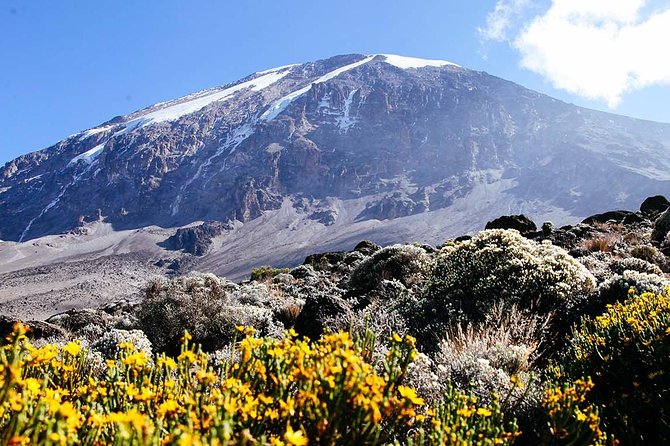
Day three starts with breakfast before you leave Mandara. The path soon reaches the timberline, then changes into the heath and moor zone. The scenery opens up, and the dense forest gives way to lower plants and broad views.
After roughly four to six hours, you reach Horombo Hut at 3,700 meters. From here, you can look toward Mawenzi, Kibo, and the wide plain of the Masai steppe. This is one of the strongest scenic days because you begin to see the mountain as a volcanic massif rather than simply a trail through trees.
Horombo is also where the altitude becomes harder to ignore. You may feel fine, or you may notice a headache, tiredness, or slower breathing. The itinerary moves onward the next day, so take the evening seriously: eat, drink, and sleep as well as you can.
The five-day format does not include a separate acclimatization day at Horombo. That keeps the price and duration lower than a longer version, but it removes useful time for your body to adjust. If you have never been at high altitude, this is the biggest practical weakness of the schedule.
More Kilimanjaro routes:
- 7-Day Machame Kilimanjaro Summit Tour from Arusha
★ 5.0 · 125 reviews - From Arusha/Moshi: Kilimanjaro Hike Marangu Route Day Trip
★ 4.5 · 54 reviews - Mount Kilimanjaro Day Hike Through Marangu Route to Mandara Hut
★ 5.0 · 37 reviews - 6 Days: Hiking Kilimanjaro via Machame Route
★ 5.0 · 24 reviews
Day 4: Across the saddle to Kibo Hut
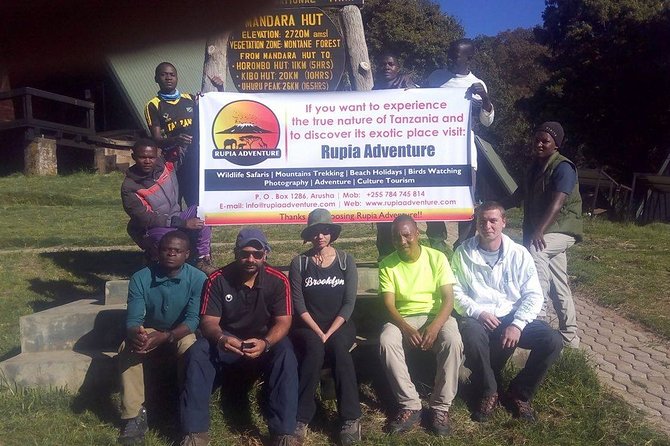
This is a long, exposed stage. The trail passes the last water point, then crosses the saddle, a nearly bare plateau linking Kibo and Mawenzi. Vegetation becomes scarce, and the mountain feels more stark and remote.
Kibo Hut usually comes after about five to six hours. This is the final sleeping point before the summit attempt, and your evening is deliberately short. You eat early, prepare your summit gear, and go to bed early because the wake-up comes around midnight.
The saddle can be mentally demanding. It is broad and open, and you are already high. The views toward Mawenzi and Kibo help, but the route does not offer much shelter from the elements. Keep your warm clothing accessible, not buried in a large bag.
The practical value of a good guide becomes clear here. You need clear instructions about the next morning, the meeting time, the items to carry, and the point at which to turn back if conditions or your health become unsafe. Past guide teams have included Meshack and Maziku, who were noted for keeping a good mood, as well as Franky, John, and Julius.
Day 5: The midnight climb to Uhuru Peak
Summit day is the heart of the experience and the part you should prepare for most carefully. The final ascent begins around midnight. You climb in darkness, passing Hans Meyer Cave at 5,220 meters, while the trail rises slowly toward the crater rim.
At sunrise, the route reaches Gillman’s Point at 5,681 meters. This is the crater rim, and the arrival of daylight can change the entire mood of the climb. The cold begins to ease, and you can see the high volcanic setting around you.
From Gillman’s Point, you continue for another one to two hours toward Uhuru Peak at 5,895 meters. This is the highest point in Africa. The final stretch is not easy, even after reaching the rim, so keep your effort controlled and listen closely to your guide.
After the summit, you return to Kibo Hut for a warm meal and a one to two hour rest. Then you continue down to Horombo Hut. This makes the day extremely long. You do not simply reach Uhuru Peak and stop. You summit, descend to Kibo, rest briefly, and then continue lower.
One earlier participant combined a four-day Mount Meru acclimatization climb with this five-day Marangu attempt and reached Uhuru Peak at about 6 a.m. That is not a promise of timing, but it shows why prior altitude exposure can help. If you have that option, ask the operator about adding Mount Meru or extending the Kilimanjaro schedule.
Day 6: Descending through moorland and rainforest
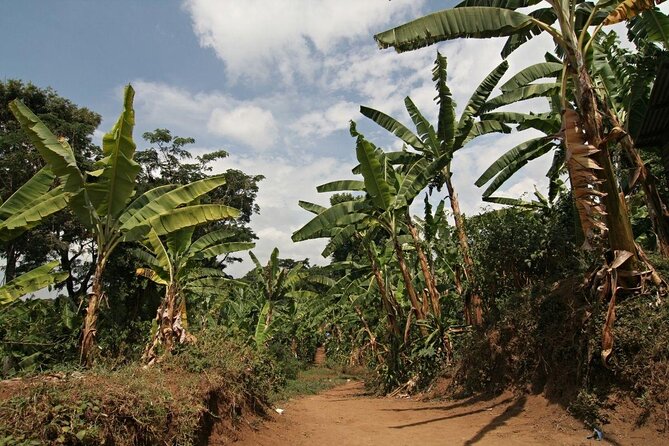
The final mountain stage takes you from Horombo through the heath and moor zone to Mandara Hut, where lunch is planned. From there, the trail returns to tropical rainforest before reaching Kilimanjaro National Park Gate at about 1,860 meters.
The total descent is listed at roughly six hours. After the strain of summit day, walking downhill can be harder than expected, particularly on tired legs. Use trekking poles if you have them, and keep your attention on the trail rather than rushing toward the finish.
At the gate, you say goodbye to the mountain guides and transfer back to your Moshi hotel. A warm shower and a proper rest are part of the reward. The program also suggests celebrating your summit success that evening, though you may prefer an early night.
This return to the rainforest gives the route a satisfying visual ending. In a single trip, you move from tropical forest to high volcanic ground and back again. Marangu’s direct route makes that progression easy to understand.
Day 7: A free day before your flight
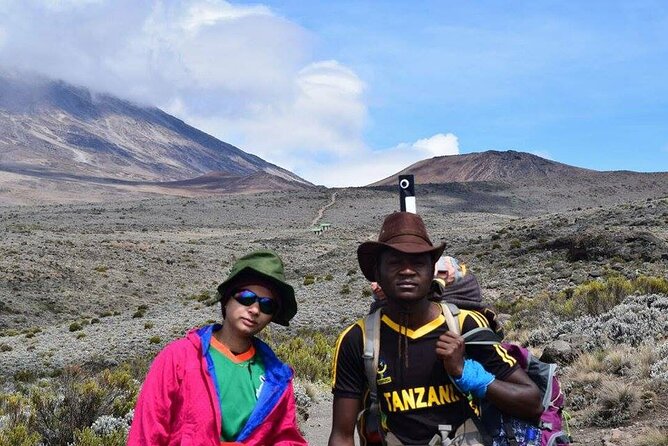
The last day is left open before your flight home. Depending on your departure time, you can explore Moshi and shop for souvenirs, or simply rest after the trek.
This open day is useful because international flights do not always line up neatly with a mountain schedule. You should confirm your airport transfer and flight timing in advance, but the program allows room for both a quiet morning and a short look around town.
Safari and Zanzibar add-ons are also available. If you plan to continue through Tanzania, this is the point to ask how the extra arrangements connect with your Kilimanjaro transfer.
What the $1,500 price represents
At $1,500 per person, this is not a budget day hike. You are paying for a seven-day program with airport pickup, hotel arrangements, transfers, guide support, the mountain trek, and hut-based accommodation. The package also includes a pre-trek gear check, which can save time and stress.
The exact inclusions are not fully detailed in the information provided. Before booking, ask specifically about park fees, meals, porter support, hotel nights, equipment rental, transfers, and tips. Do not assume that every cost connected with a Kilimanjaro climb is covered by the headline price.
The value is strongest if you want a single operator to handle the main pieces from airport arrival through your return to Moshi. It is less compelling if you already have accommodation, transport, and gear arranged independently. The maximum group size of 15 also matters. Ask how many people are booked on your date, not just the permitted maximum.
Who should choose this trek
I would consider this route if you want hut accommodation, a clear five-day climb, and a company that can arrange the arrival and departure pieces. It suits someone who prefers a direct route and does not want to carry camping equipment.
You should be in good physical condition and ready for long walking days. The trip is not presented as an easy activity, even though most people can participate according to the operator. That broad statement should not replace an honest personal assessment of your fitness and altitude experience.
The route is a better fit for you if you accept an early summit start, cold conditions, thin air, and a demanding descent. It may not be the right choice if you want a slow acclimatization plan. In that case, ask about a longer Kilimanjaro itinerary or a Mount Meru combination.
Booking details worth checking
Confirmation is provided at booking, and pickup is offered. The experience uses a mobile ticket, which is convenient if you are moving between airports, hotels, and the trailhead.
The cancellation rule is strict: the experience is non-refundable and cannot be changed for any reason. If poor weather forces the operator to cancel, you are offered another date or a full refund. If the minimum number of participants is not reached, you are offered another date or experience, or a full refund.
Because the personal cancellation terms are strict, check your dates, flights, fitness, and insurance before paying. Also confirm the hotel location, the exact guide team, what equipment can be rented, and the full list of inclusions.
Should you book the Marangu Route?
Book it if you want a structured Kilimanjaro program with huts, airport pickup, a hotel start and finish, and a direct path to Uhuru Peak. The route offers striking changes in vegetation and clear views of Mawenzi, Kibo, the Masai steppe, and Kenya’s interior.
Think twice if you are choosing it only because Marangu sounds easier. The hut system simplifies camping, but the five-day ascent still pushes you quickly to high altitude, and summit day can last well into the afternoon.
My advice is simple: ask about a longer acclimatization plan if this is your first high-altitude climb. If you are comfortable with the schedule and understand the summit demands, Rupia Adventure’s $1,500 package offers a practical way to organize the mountain, hotel, and transfer details in one booking.
FAQ
How long does the full experience last?
The program lasts approximately seven days, including arrival, five days on the Marangu Route, the return to Moshi, and a free day before your flight.
How much does the trek cost?
The listed price is $1,500 per person.
Where does pickup take place?
Pickup is offered from Kilimanjaro International Airport. You are then transferred to a hotel in Moshi, with Panama Hotel or Mvuli Hotel in Arusha, or an alternative, listed for the overnight stay.
Does the trek use tents or huts?
The itinerary uses mountain huts at Mandara, Horombo, and Kibo. Camping is not described in the program.
When does the summit climb begin?
The final ascent begins at around midnight on day five.
How high is Uhuru Peak?
Uhuru Peak is listed at 5,895 meters. Gillman’s Point, on the crater rim, is at 5,681 meters.
How many people can join the group?
The maximum group size is 15 participants.
Can I rent missing mountain equipment?
Yes. An equipment check takes place before the trek, and gear that is missing can be rented on that day.
Is the experience refundable if I cancel?
No. The experience is non-refundable and cannot be changed for any reason. If the operator cancels because of poor weather or because the minimum number is not reached, you may be offered another date or experience, or a full refund.
More five day trips in Arusha
- 5 Days Group Camping Safari
★ 5.0 · 730 reviews - 5-Day Highlights mid-Range Crater, Serengeti, Tarangire
★ 5.0 · 296 reviews - 5 Days Camping Tarangire, Serengeti & Ngorongoro crater & Visiting Maasai
★ 5.0 · 229 reviews - Tanzania Simba Safari – 5 Days
★ 5.0 · 217 reviews
Newly listed around Arusha
- 5-Day Private Safari Tour in Tanzania’s Wildlife★ 5.0 · 3 reviews
- 3 Day Sharing Safari – Manyara, Ngorongoro Crater and Tarangire National Parks★ 5.0 · 3 reviews
- 3 Days private safari Tarangire ,Ngorongroro crater &Manyara★ 5.0 · 3 reviews
- Tarangire National Park Day Trip★ 5.0 · 3 reviews
- 6 -Day Tarangire, Manyara, Serengeti & Ngorongoro★ 5.0 · 3 reviews
- 2 Days Tarangire and Ngorongoro Crater Tour★ 5.0 · 3 reviews
- 5 Days Group Camping Safari★ 4.7 · 3 reviews
- 7-Day Mt. Kilimanjaro Hiking: Machame Route★ 5.0 · 3 reviews
Kilimanjaro Climbs, compared.








Browse the lists this tour appears in