
Reviewed · SPICE FARM TOURS
Zanzibar: Spice Farm Tour with Cooking lesson
Zanzibar’s spices make the most sense when you handle them, smell them, and then use them in a meal. This five-hour tour takes you from Darajani Market to a spice farm, where you harvest ingredients, learn about local herbs, and cook a traditional Swahili lunch with a local chef.
I like the practical format: you do not just hear about cloves and other spices, you taste and smell them, then put them to work. I also like the easy, social cooking class, which includes tropical fruit, local music, and old-style cooking equipment. The main caution is language matching. One German booking had an English-speaking guide despite being booked in German, and that could be a real problem for children or anyone who needs detailed translation.
Key points at a glance

- Darajani Market comes first: Shop for cooking ingredients while learning about everyday food in Zanzibar.
- Harvest your own ingredients: Pick vegetables and spices at the farm before the cooking class begins.
- Taste spices with tropical fruit: Expect combinations that include coconut, watermelon, cloves, and banana.
- Cook a traditional Swahili meal: A local chef guides you through older cooking methods and equipment.
- Lunch is part of the experience: You eat the meal you helped prepare, along with drinks and harvested fruit.
- Private pickup, public farm transfer: Hotel pickup and drop-off are included, but the trip from the market to the farm uses a public vehicle.
From Darajani Market to the spice farm
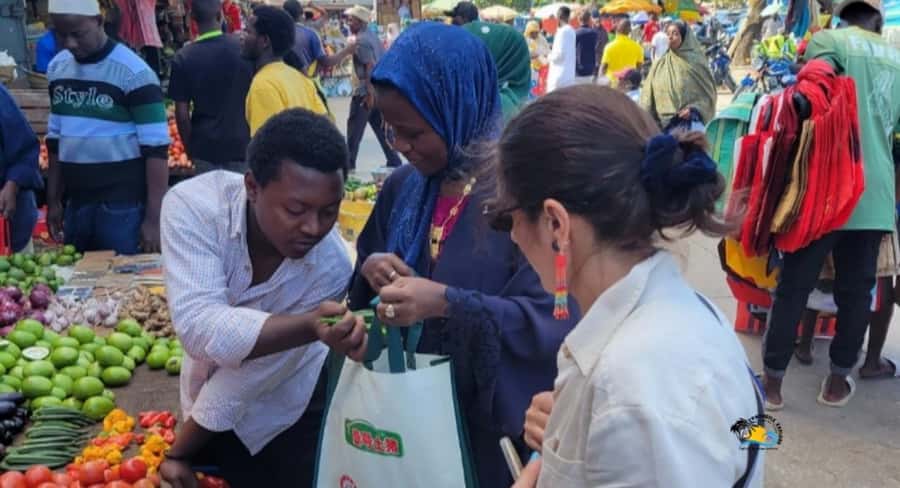
The tour begins with a guided walk through Darajani Market. This is a useful choice because it puts Zanzibar’s cooking in a daily setting before you reach the farm. Instead of seeing spices only as souvenirs in neatly labeled packets, you can look at the ingredients people buy, handle, and cook with at home.
Your guide helps you purchase ingredients for the class. The market visit also gives you a look at local shopping habits and the connection between Zanzibar’s food and its spice trade. The experience is not only about farming. It links the market, the farm, and the kitchen into one food story.
After shopping, you travel to the spice farm by public vehicle. Hotel pickup and drop-off are included, and the operator says it can collect you from any hotel in Zanzibar. You should provide the hotel name and room number, then wait in the lobby or reception area for the representative.
The public transport section is worth noting. Some people will enjoy the more local feel, while others may prefer a private transfer from start to finish. If you want a polished, resort-style outing, this may feel less controlled. If you like seeing how people move around, it adds a practical slice of local life.
More Cooking Classes in Zanzibar
- Zanzibar Cooking Class & Spice Tour
★ 4.5 · 77 reviews - Zanzibar: Spice Farm Tour with Traditional Cooking Lesson
★ 4.8 · 77 reviews - Half-Day Kuza Cave Swimming Adventure and Cooking Class
★ 4.5 · 44 reviews
What you learn among the spices
At the farm, a culinary guide leads you on foot through the growing areas. You learn where spices and herbs come from, how they are used in Zanzibar food, and what medicinal purposes local plants are associated with.
The value here is the connection between plant and plate. You might smell a spice before seeing it, touch leaves and pods, or taste an ingredient in a form that is quite different from what you find in a spice jar. The tour includes tasting and smelling rather than treating the farm as a walk past labeled plants.
The tasting list includes coconut, watermelon, cloves, and banana. These are not just refreshments on the side. They help show how Zanzibar’s sweet fruit and strong spices can be paired in everyday food and drink.
You also harvest vegetables and spices for the cooking class. That hands-on step gives the farm walk a clear purpose. You are not simply collecting facts. You are gathering some of what you will later prepare and eat.
The information about medicinal uses can be interesting, but keep your expectations sensible. The tour introduces traditional uses of local herbs and spices. It should not replace medical advice or be treated as a health consultation.
Harvesting ingredients for the kitchen
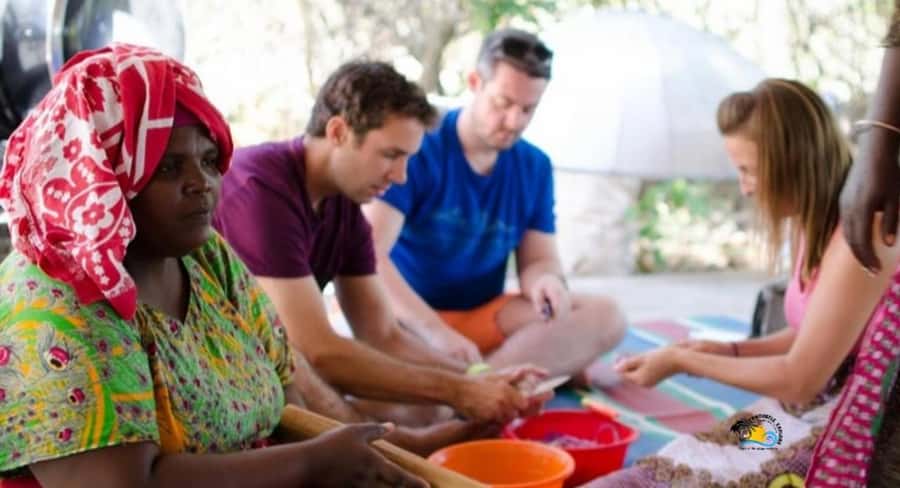
The harvesting session is one of the strongest parts for anyone who likes practical activities. You can collect vegetables and spices with the culinary expert, then take them back to the cooking area.
I like this because it makes the class feel connected to the farm. The ingredients have a visible starting point, and you get a clearer idea of how food moves from soil to market to cooking pot.
The exact vegetables and final dishes are not specified, so do not book expecting a particular menu. The meal is described as traditional Swahili food, but the ingredients available that day and the chef’s plan may shape what you prepare.
That flexibility can be a plus. Zanzibar’s food is based on local produce, spices, and cooking traditions, not on a fixed international menu. It can also be a drawback if you have a very specific dish in mind. You can write requests and special preferences when booking, but the supplied information does not promise a particular recipe.
Cooking with older methods and equipment
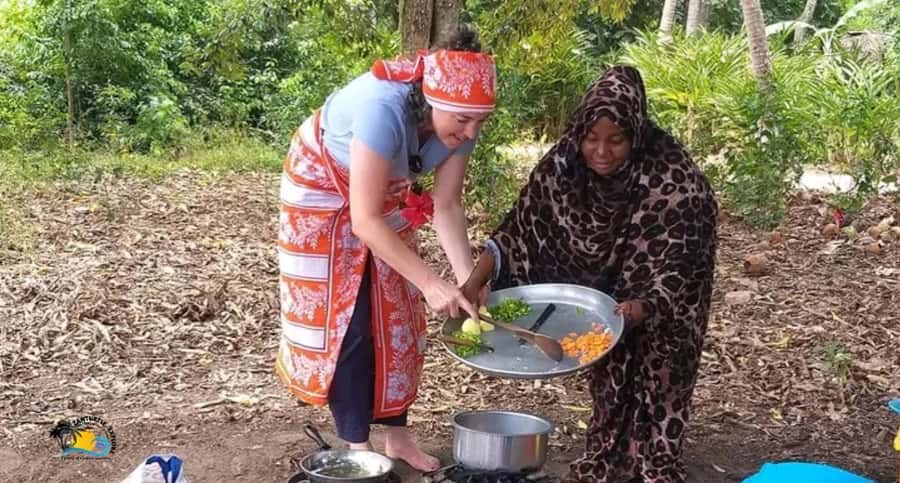
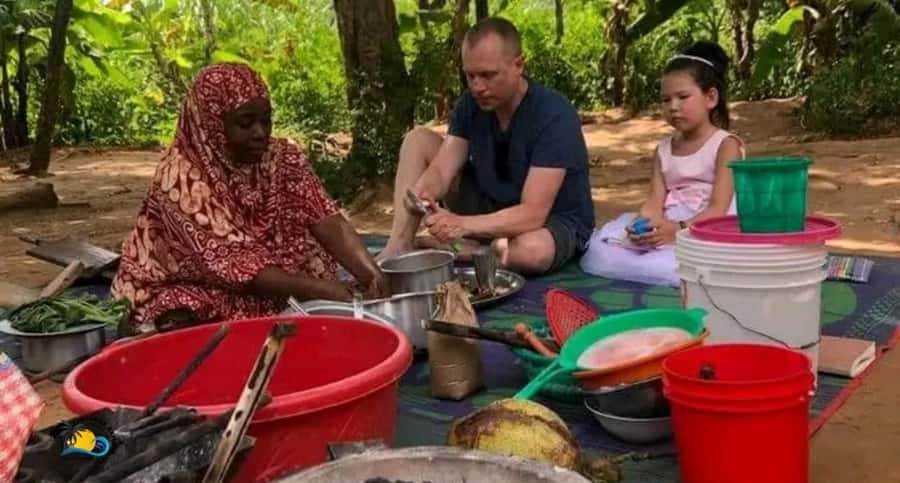
The class takes place after the farm walk and harvesting. A local chef guides you through the preparation of a traditional meal, explaining the importance of spices in Zanzibar cooking and showing older cooking techniques.
The cooking equipment is designed to reproduce the tools used in earlier times along the Zanzibar coast. That detail gives the lesson more character than a standard demonstration in a modern teaching kitchen. You can admire the apparatus, take part in the process, and see how cooking methods were shaped by local ingredients and available tools.
The class is participatory. You are involved in the steps rather than simply watching a chef work. A patient teaching style matters here, especially if you are cooking with children or with someone who has little kitchen experience. The strongest praise for this experience centers on hosts who involve participants in every stage and allow time to follow the process.
The language selection is unusually broad. Guides may be available in Arabic, English, French, German, Italian, Polish, Spanish, Swahili, Russian, or Portuguese. Still, language availability should be confirmed carefully before booking. The German-language mismatch reported for one booking is a useful warning, especially for families whose children cannot follow an English lesson.
More spice farm mornings:
- Zanzibar: Stone Town, Spice Tour, Prison Island with Lunch
★ 4.4 · 1,219 reviews - Zanzibar: Prison Island, Stone Town, & Spice Farm Tour
★ 4.5 · 579 reviews - Zanzibar: Stone Town, Spice tour & Prison Island with Lunch
★ 4.6 · 453 reviews - Full-Day Private Stone Town +Spice Farm and Prison Island Tour
★ 4.5 · 216 reviews
Eating the meal you prepared
Once the cooking is finished, you sit down to eat the food made during the class. Lunch and drinks are included, along with tropical fruit that you harvest during the experience.
This is a better ending than receiving a meal prepared entirely by someone else. You understand what went into it, and you can ask questions while the process is still fresh. You also get a chance to judge the spices in a real dish rather than tasting them one by one.
Do not expect a restaurant tasting menu. The appeal is the shared meal and the work behind it. You may find the result simple, homemade, and closely tied to the ingredients available at the farm.
You can also buy spices and fruit. That is useful if you want to recreate the meal at home. One participant specifically bought spices to try the dishes again after returning home, and that is probably the best souvenir from this outing. A small packet of Zanzibar spices has more lasting value than a generic trinket if you actually cook.
Music, dancing, and the social side
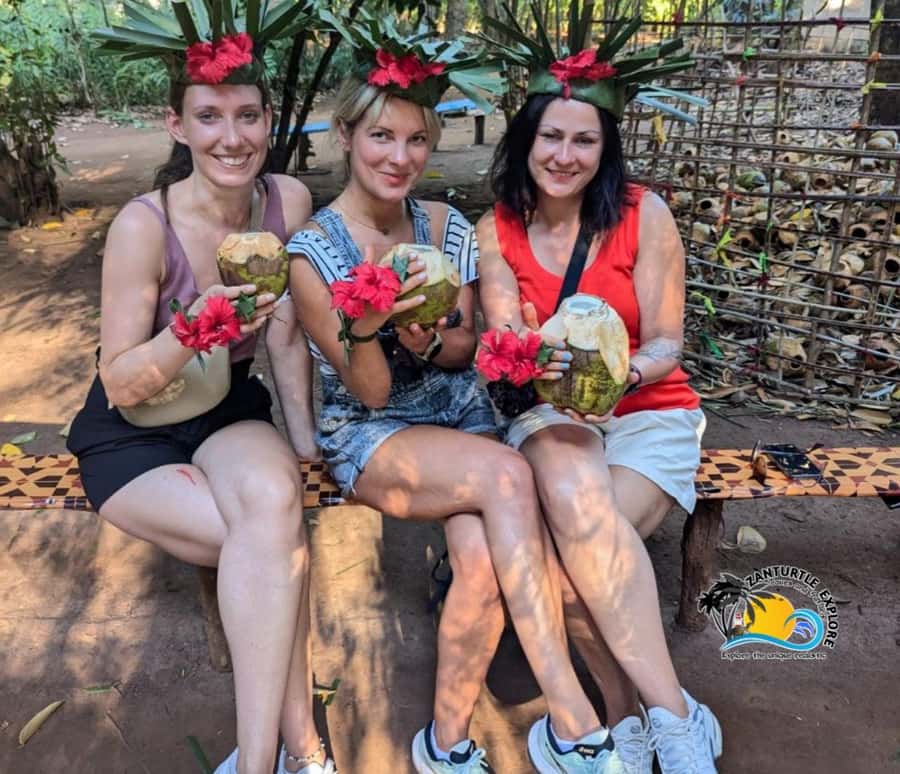
Traditional music and dance are included. These elements add a cultural welcome around the food experience, though the available details do not specify how long the performance lasts or exactly when it takes place.
I would treat this as an added part of the day, not the main reason to book. The farm, harvesting, and cooking class are the core activities. The music and dance give the outing a more communal feel and can make lunch more lively.
The experience is offered as a private group. That is helpful if you want to ask questions, set a comfortable pace, or cook with your own family or friends. It also means the value of the $66 price depends partly on how many people are in your booking and what you value in a private activity.
Is $66 a fair price?
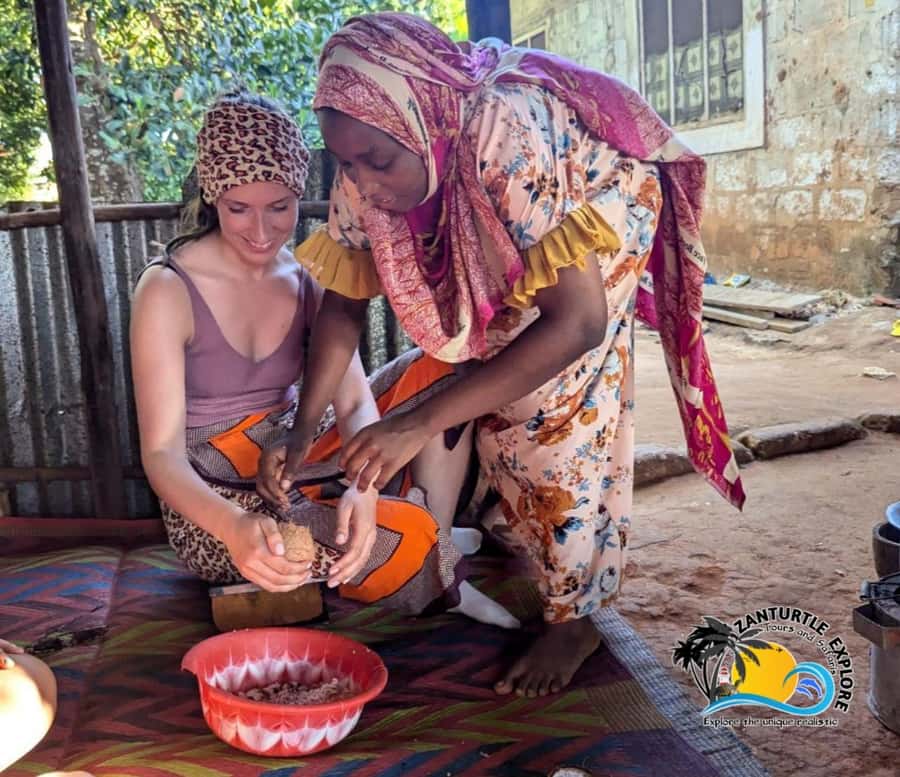
At $66 per person, this is not the cheapest way to see a spice farm, but it includes a good deal for a five-hour outing. The price covers a trained guide, hotel pickup and drop-off, entrance and conservation fees, the market and farm activities, harvesting, cooking equipment, lunch, drinks, tropical fruit, music, and dancing.
You also avoid paying separate admission or transport charges during the tour. Government fees and taxes are included, which makes the advertised price easier to judge.
The cooking class is what gives the tour better value than a basic spice walk. You receive a meal, but you also learn techniques and leave with ideas you can use at home. The chance to buy spices adds practical value for people who enjoy cooking.
The value is weaker if you only want a quick farm visit or have no interest in preparing food. Five hours is a large part of a Zanzibar day, and the market, public vehicle, walking tour, harvest, and class create a full schedule.
Who should book this experience?
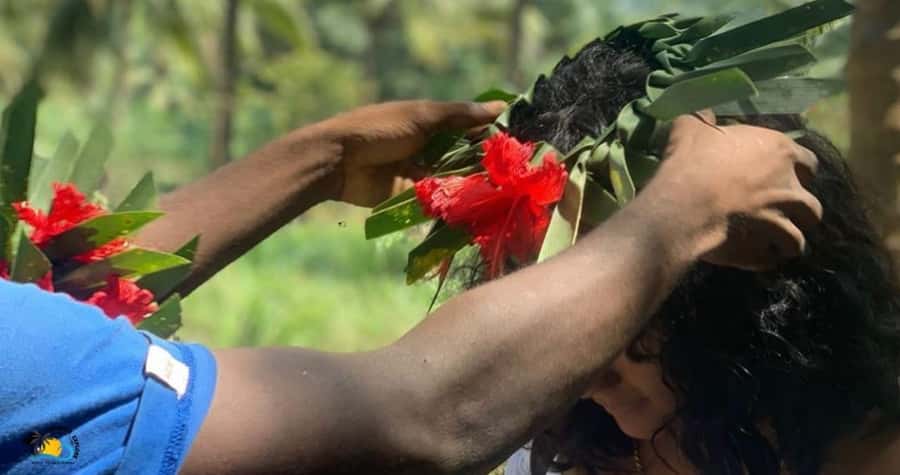
I would recommend it most to you if you:
- Enjoy cooking and want to take part rather than watch
- Like learning through food, plants, and local shopping
- Want a private group outing with hotel pickup
- Are happy to eat a traditional meal without knowing the exact menu in advance
- Want to buy spices and try the recipes at home
- Appreciate a slower, hands-on activity instead of a quick photo stop
Families may enjoy the harvesting and fruit tasting, but language is important. The German-language problem noted above suggests that you should confirm the guide language before paying, especially if children need clear instructions.
People with food allergies should not book this activity according to the stated restrictions. The tour includes tasting, harvesting, and eating a meal, and the menu is not specified in advance. If you have dietary concerns, write your request when making the reservation and ask for confirmation before committing.
You should bring comfortable shoes because the day includes walking around a market and farm. A camera is useful, and cash is recommended for personal purchases. Alcohol and drugs are not allowed, and you should not attend while intoxicated.
Booking flexibility and practical details

The tour lasts five hours, with starting times depending on availability. You can reserve now and pay later, which helps if your Zanzibar schedule is still changing. Cancellation is free up to 24 hours in advance for a full refund.
Pickup is included from hotels in Zanzibar. The meeting point is your hotel lobby or reception area, and you should provide the hotel name and room number.
The experience is wheelchair accessible, but the supplied details do not explain the exact farm paths, market conditions, or cooking setup. If you use a wheelchair, contact the operator with specific access questions before booking.
The activity is run by Zanturtle Explore Tours and Safaris. The advertised guide languages are Arabic, English, French, German, Italian, Polish, Spanish, Swahili, Russian, and Portuguese. Since language matching has caused at least one problem, I would put your preferred language in the booking request and confirm it directly.
FAQ
How long does the Zanzibar spice farm and cooking tour last?
The tour lasts five hours.
How much does the experience cost?
The listed price is $66 per person.
Is hotel pickup included?
Yes. Pickup and drop-off are included, and the operator can collect you from any hotel in Zanzibar. You should provide the hotel name and room number.
How do I reach the spice farm?
The tour begins with a guided walk through Darajani Market. After shopping there, you travel to the spice farm in a public vehicle.
What food activities are included?
You harvest vegetables and spices, take part in a cooking class, prepare a traditional Swahili meal, and eat the food you make. Lunch, drinks, and tropical fruit are included.
Which languages are available?
The advertised languages are Arabic, English, French, German, Italian, Polish, Spanish, Swahili, Russian, and Portuguese.
Is the tour suitable for people with food allergies?
No. People with food allergies are listed as unsuitable for this experience.
What should I bring?
Bring comfortable shoes, a camera, and cash.
Can I cancel or pay later?
You can reserve now and pay later. You may cancel up to 24 hours in advance for a full refund.
Should you book it?
Book this tour if you want Zanzibar’s spice story to end at the cooking pot, not at a souvenir stall. The combination of Darajani Market, farm harvesting, spice tasting, an old-style cooking class, lunch, and music gives you plenty to do in five hours.
I would skip it if you want a short, quiet farm visit, have food allergies, or need a guaranteed menu without confirming details first. Before booking, make your preferred guide language and any special requests clear. For cooks, families with the right language support, and anyone who wants to bring Zanzibar’s flavors home, $66 is a reasonable price for a full and hands-on day.
More workshops and classes in Zanzibar
- Zanzibar: Spice Farm Tour with Traditional Cooking Class
★ 4.6 · 16 reviews - Traditional Zanzibar Cooking Class including Spice Tour
★ 4.5 · 14 reviews - Mnemba Dolphin Tour, Clear Kayak, Cooking Class, Horse Riding
★ 4.5 · 14 reviews - A private half day spice farm with a cooking lesson
★ 5.0 · 13 reviews
More farm visits in Zanzibar
- Zanzibar: Stone Town & Spice Farm Tour with Lunch
★ 4.5 · 97 reviews - Zanzibar:Stone Town & Spice Farm Private Tour Lunch Included
★ 4.2 · 94 reviews - Zanzibar full day Jozani forest + Spice farm and stone town
★ 4.7 · 90 reviews - Zanzibar: Spice Farm & Stone Town Tour with Lunch
★ 4.5 · 80 reviews
Newly listed around Zanzibar
- Zanzibar: Nungwi/Kendwa Beach Sunset Dhow Cruise with Fruits★ 3.4 · 3 reviews
- Prison Island, Sea Turtles, Rock Restaurant & Relax in Beach★ 4.6 · 3 reviews
- Starfish Beach; The Rock; Kuza Cave; Paje Beach; Salaam Cave Tour★ 4.5 · 3 reviews
- Zanzibar: Half-Day Spice Farm Tour,the flavours of Zanzibar★ 4.7 · 3 reviews
- Joazani forest & Spice farm with lunch★ 5.0 · 3 reviews
- Nakupenda Island Snorkeling Sea trip & Lunch W/Transfer -Zanzibar★ 4.0 · 3 reviews
- Mnemba Island Snorkeling and Dolphin tour★ 5.0 · 3 reviews
- Zanzibar:Jozani forest, Spice farm with Swahili Cuisine clas★ 4.2 · 3 reviews
Spice Farm Tours, compared.



Full-Day Private Stone Town +Spice Farm and Prison Island Tour
Read our review →
The Swahili Spice Experience – Spice Tour + Culinary Journey
Read our review →Browse the lists this tour appears in