
Reviewed · KILIMANJARO CLIMBS
Private 7 Days Kilimanjaro Climbing via Lemosho Route
Kilimanjaro’s Lemosho Route gives you a long, varied approach to Uhuru Peak, beginning in montane forest and crossing moorland, semi-desert, and alpine desert before the final push. The route is not simply a walk uphill. Its careful rise in altitude gives you time to adjust before summit day.
I like the private format, with no more than five travelers, and I like the strong support structure: English, Spanish, French, German, Italian, and Simplified Chinese guiding is offered, along with cooks, porters, and an English-speaking lead team. The company’s guides, including Sebastian, Paschal, Evans, Kessy, and Valency, have received especially warm praise for encouragement and careful preparation.
The drawback is the schedule. Seven days is demanding, and summit day begins around midnight after sleeping at 4,700 meters. The price includes a lot, but tips, visas, flights, laundry, and likely personal gear are extra, so your real budget will be higher than $2,800.
Key points before you book
- A gradual western approach: Lemosho starts at 1,830 meters and reaches the Shira Plateau before joining the southern circuit.
- A small private group: The maximum group size is five travelers, useful if you want a quieter pace and direct contact with your guide.
- A serious acclimatization day: Day 3 climbs to Lava Tower at 4,650 meters, then descends to Barranco Camp.
- The famous Barranco Wall: Day 4 includes a steep ridge climb, with just 5 kilometers of walking but a more hands-on feel.
- A midnight summit attempt: The final climb reaches Stella Point and then Uhuru Peak, followed by a long descent.
- Practical inclusions: Park fees, taxes, six breakfasts, six lunches, six dinners, a cooker, porters, and an oxygen bottle are included.
Why Lemosho works well in seven days
The Lemosho Route is a good choice if you want scenery and a more measured approach rather than the shortest possible climb. Your first two days take you from forest into high moorland, and the route then crosses the Shira Plateau before heading toward the summit from the south.
That shape matters. You do not rocket straight toward the top. Day 3 takes you high to Lava Tower, then brings you down to Barranco Camp at roughly the same altitude where you began the day. This climb-high, sleep-lower pattern is one of the most useful parts of the schedule.
Still, do not mistake gradual for easy. The highest sleeping point before the summit is Barafu Camp at 4,700 meters. Altitude affects people differently, and a moderate fitness level is required. You should be ready for several long days, uneven ground, cold conditions near the top, and a final ascent that is both physically and mentally hard.
The private setup is another advantage. With a maximum of five participants, your guide can keep closer track of the group and adjust the walking rhythm more easily than on a large departure. The itinerary is also available with multilingual guiding, though you should confirm your preferred language before booking.
More Kilimanjaro routes:
- Kilimanjaro climb by Lemosho Route (7-day)
★ 5.0 · 651 reviews - Kilimanjaro climb, Machame Route (7-day)
★ 5.0 · 262 reviews - Kilimanjaro Climbing Lemosho Route 8 Days.
★ 5.0 · 186 reviews
Day 1: From Lemosho Gate into the big-tree forest
After breakfast and a briefing, you drive from the Moshi area toward Lemosho Park Gate. The route continues along a forest track that requires a four-wheel-drive vehicle before you reach Lemosho Glades.
The walk to Mti Mkubwa, or Big Tree Camp, is short by Kilimanjaro standards: about 6 kilometers and two to three hours. You rise from 1,830 meters to 2,650 meters, moving through montane forest.
This is a gentle first day, but it has a useful purpose. You get your first feel for the pace, your boots, your pack, and the camp routine without being asked to cover a huge distance. The forest also gives the opening day a calmer character than the exposed upper sections.
Lunch and dinner are included. You should use the first evening to check that your sleeping gear, rain protection, and walking layers are easy to reach. The early start and change in altitude can make even a short day feel more tiring than expected.
Day 2: A long crossing to Shira 2 Camp
Day 2 is one of the biggest walking days before the summit. The trail steepens as you leave the forest and enter the giant heather and moorland zone, crossing several streams before climbing over Shira Ridge.
The stated distance is 16 kilometers, with seven to eight hours of walking. You finish at Shira 2 Camp, at about 3,850 meters, on open moorland meadows beside a stream.
This is where the route begins to feel properly high and wild. The trees fall away, the air becomes thinner, and the views open across the Shira Plateau. You will also notice that the elevation gain is substantial, from 2,650 to 3,850 meters in one day.
For you, the main challenge is not technical climbing. It is steady endurance. Walk slowly, drink regularly, and avoid treating the first half of the day like a race. Breakfast, lunch, and dinner are included, so the support team handles the cooking while you focus on the trail and recovery.
Day 3: Lava Tower and the descent to Barranco
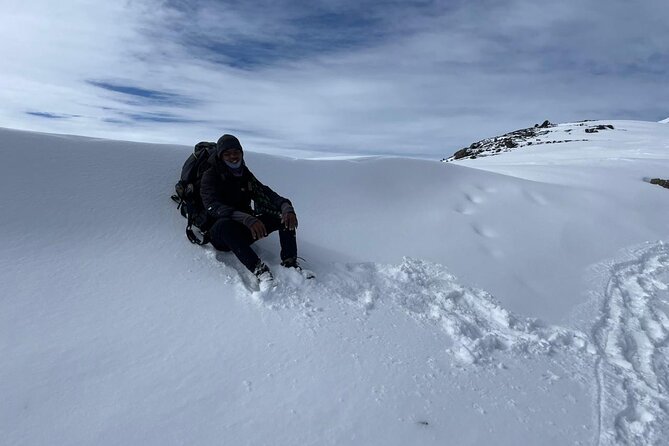
Day 3 is the route’s key acclimatization day. From the Shira Plateau, you climb east along a ridge toward the Kibo peak junction, then turn southeast for Lava Tower, also known as the Shark’s Tooth.
Lava Tower rises to about 4,650 meters. After reaching it, you pass the junction toward Arrow Glacier and descend to Barranco Camp, finishing around 4,000 meters. The total walk is approximately 8 kilometers and takes five to six hours.
On paper, the day appears odd because you start and finish at nearly the same height. That is exactly why it helps. Your body spends time at a higher elevation, then you sleep lower than the day’s high point.
The habitat changes again to semi-desert, with a stark, rocky feel. This is a day for patience. You may feel short of breath on the climb even if the distance is not large. The descent gives you a chance to settle before the next morning’s Barranco Wall.
More week long trips in Moshi & Kilimanjaro:
- Climbing Kilimanjaro through 7 days Machame Route
★ 5.0 · 151 reviews - 7 Days Kilimanjaro via Machame route affordable price
★ 5.0 · 110 reviews - Private Kilimanjaro Hike 7 Day Lemosho Route
★ 5.0 · 60 reviews - 7-Day Magical Tanzania Safari -Premium High End Package
★ 5.0 · 53 reviews
Day 4: The Barranco Wall and Karanga Valley
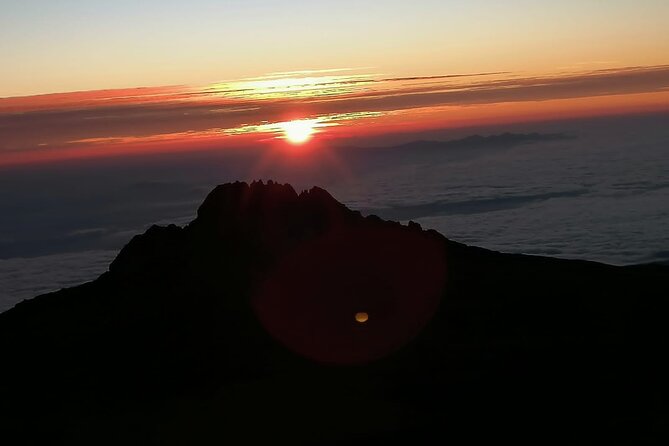
After breakfast, you leave Barranco Camp and climb the steep ridge of the Barranco Wall. The day covers only about 5 kilometers and takes three to four hours, but the terrain makes it feel more like a proper mountain day than a simple walk.
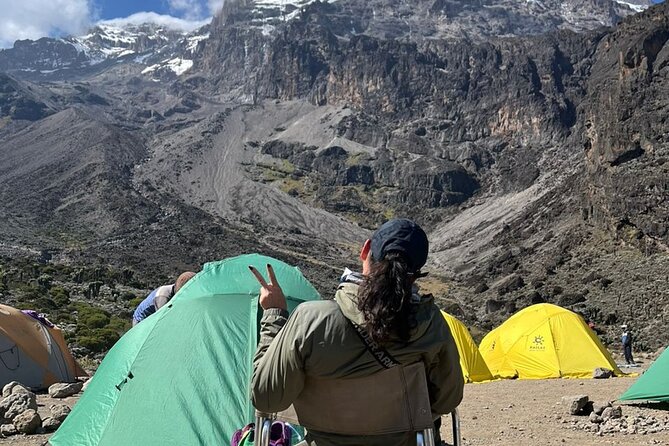
You rise from 4,000 to roughly 4,050 meters, then continue toward Karanga Valley and the junction with the Mweka Trail. The route passes through alpine desert, with little vegetation and a greater sense of exposure.
The Barranco Wall is one of the memorable sections of the climb. The short distance is helpful, since you are already high and still have several demanding days ahead. Expect a slower pace and follow your guide’s instructions closely on the steep sections.
This is also a good day to enjoy the social side of the trip. The walking is short enough to leave time for rest, food, and conversation with the guide team. Guides such as Sebastian have been praised for keeping spirits steady when the route becomes tiring, which matters as much here as physical strength.
Day 5: Barafu Camp and the final preparation
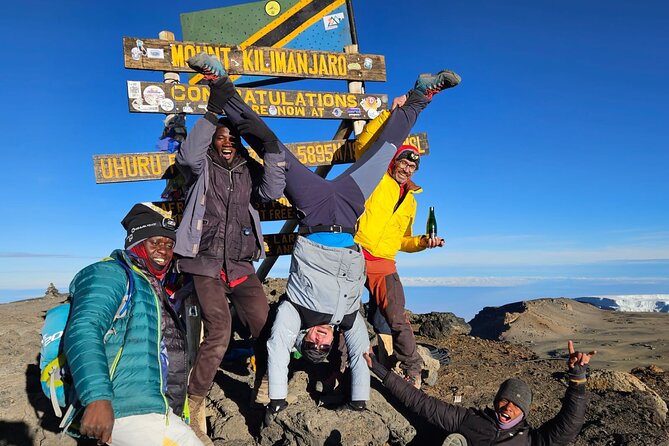
Day 5 takes you from Karanga Valley to Barafu Camp, covering about 4 kilometers in three to four hours. The elevation rises from 4,050 to 4,700 meters, and the terrain remains alpine desert.
You have now completed the southern circuit, with views toward the summit from different angles. Barafu is the staging point for the summit attempt, so the day is less about distance and more about getting ready.
You eat dinner, rest, and organize your clothing and equipment for the midnight start. Keep warm layers, rain gear, water, and any personal essentials close at hand. The included meals and cooking support are particularly valuable at this point, when your energy is low and a hot meal saves time and effort.
The main weakness of the seven-day schedule is visible here: you do not get a spare day at high camp. If altitude symptoms or exhaustion become serious, your guide must make the safety decision. The included oxygen bottle is part of the support package, but it should not be treated as a cure for altitude illness or a substitute for careful judgment.
Day 6: Stella Point, sunrise, and Uhuru Peak
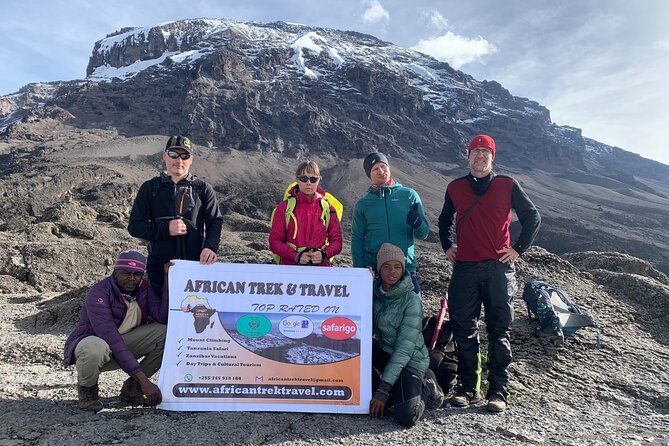
Summit day begins very early, normally between midnight and 2 a.m. You climb northwest between the Rebmann and Ratzel glaciers, moving over heavy scree toward Stella Point on the crater rim.
This is the hardest section of the whole trip. The climb takes about seven hours to reach the summit area, and the combination of darkness, cold, thin air, and loose rock can test even fit hikers. Your guide’s role becomes central here, especially if you are struggling with altitude or need to slow down.
At Stella Point, you can stop for a short rest and, if the timing is right, watch the sun rise. Faster climbers may see sunrise from the summit itself, but there is no shame in taking the view from Stella Point. Reaching that rim is already a major achievement.
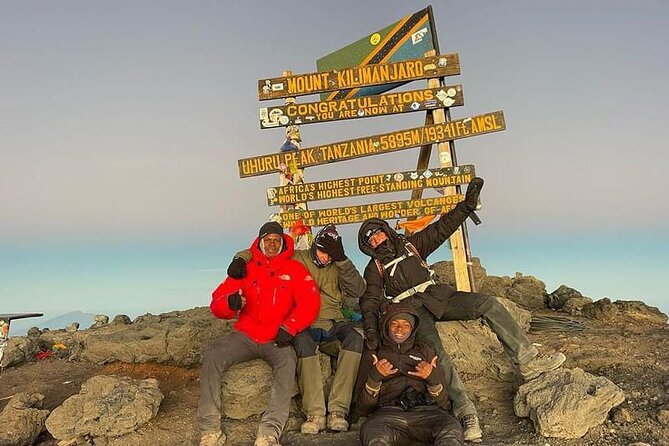
From Stella Point, the final hour leads across possible snow toward Uhuru Peak. At 5,895 meters, Uhuru Peak is the highest point on Mount Kilimanjaro and in Africa. The summit moment is brief, so take your photographs, look around, and then follow the guide’s instructions for the descent.
The day does not end at the top. After the summit, you descend to a lower camp, though the supplied schedule gives the detailed overnight arrangement only in broad terms. Confirm the exact summit-day camp plan with the operator before departure, especially if you want a clear picture of sleeping arrangements and meal timing.
Day 7: The forest descent to Mweka Gate
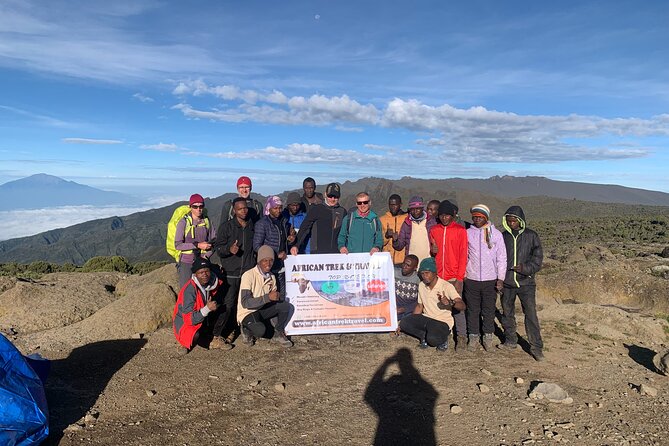
The final day takes you from around 3,090 meters down to 1,680 meters at Mweka Park Gate. The walk is about 10 kilometers and three to four hours through forest.
Lower elevations can be wet and muddy. Gaiters and trekking poles are specifically useful here, and you should keep rain gear and warmer clothing handy even if you expect to finish in a T-shirt and shorts.
At Mweka Gate, you receive summit certificates. An African Trek & Travel vehicle then drives you back to your Moshi hotel, a journey of roughly 60 minutes.
The descent may sound easy after Uhuru Peak, but tired legs and slippery ground can make it slow. Take care of your knees, keep your footwear secure, and do not rush simply because the summit is behind you.
What the $2,800 price really covers
At $2,800 per person, this is not a budget walk. It is a full mountain package that includes park fees and taxes, a cooker, porters, an oxygen bottle, and all six breakfasts, lunches, and dinners on the climb.
Those inclusions have real value. Kilimanjaro is not a self-contained hut-to-hut trek, so food preparation and porter support are major parts of the operation. Six days of each main meal also means you are not paying separately for every camp dinner.
The price does not include tips, a Tanzanian visa, flights, or laundry. You will also need to account for personal clothing and equipment unless those are arranged separately. Ask for a written breakdown of what the porter and cooking support covers, and plan a separate tipping budget.
The small group size improves the value for people who want personal attention. A solo climber or a private party of friends may find the cost reasonable for that level of support. If your priority is the lowest possible price, a larger group or shorter route may suit you better, but this seven-day route gives you more time than a compressed itinerary.
Guides, support, and the human side of the climb
The strongest part of this experience is the guide and porter structure. Specific guides associated with the company include Sebastian, Paschal, Evans, Kessy, and Valency. Sebastian is repeatedly singled out for calm encouragement, careful planning, and helping climbers who struggled with altitude.
The support team can include a guide, chef, waiter, and porters. That setup lets you walk with a lighter day pack while the team manages camp tasks and meals. It also means you should treat tipping as an important cost and a meaningful part of the trip budget, not as an afterthought.
Communication before the climb matters. Sebastian has been praised for answering questions quickly, helping arrange hotel transfers, and checking gear before departure. If you are booking close to your travel date, that kind of preparation can reduce stress.
The operator offers live guiding in six languages. Confirm which guide will lead your departure, since the names and language options may vary by date.
Who should choose this Kilimanjaro climb?
This trip suits you if you have moderate fitness, several days available, and a real interest in the changing environments of Kilimanjaro. You should be comfortable walking for up to eight hours before summit day and then starting again around midnight.
It is a good match for small groups, friends, couples, and solo climbers who want a private arrangement. The maximum of five participants keeps the group manageable and makes it easier to speak directly with the guide.
You should think twice if you dislike basic mountain camping, long walking days, cold nights, or uncertain physical performance at altitude. The route is designed with acclimatization in mind, but no itinerary can guarantee a summit.
The company has also supported single women on combined climbing and safari plans, with particular attention to safety and care. That does not remove the normal risks of high-altitude trekking, but it may reassure you if you are concerned about traveling with a local operator.
Booking can be canceled for a full refund if you cancel at least 24 hours before the local start time. Changes or cancellations inside that 24-hour window are not accepted for a refund.
Should you book it?
Book this seven-day Lemosho climb if you want a scenic route, a small private group, substantial camp support, and a schedule that gives you a useful acclimatization day at Lava Tower. The personal attention associated with guides such as Sebastian and Paschal is a strong reason to ask for this team when possible.
Do not book it on price alone. Add visas, flights, tips, laundry, and gear to the $2,800 cost, and be honest about your fitness and comfort with a midnight summit push.
For a determined first-time high-altitude climber, this is a well-supported route with a clear rhythm: forest, moorland, Lava Tower, Barranco Wall, Barafu, Uhuru Peak, and the long green descent to Mweka. If that sounds like the kind of challenge you want, it is a sensible seven-day plan.
FAQ
Where does the climb start?
The meeting point is M84R+V94, Shantytown 7582, Tanzania, in the Moshi area. Pickup is offered.
Where does the experience end?
The climb ends back at the meeting point after transport from Mweka Gate to your hotel in Moshi. The drive from Mweka Gate takes around 60 minutes.
How many people can join the private climb?
The activity has a maximum of five travelers.
What meals are included?
Six breakfasts, six lunches, and six dinners are included during the seven-day climb.
Are porters and cooking support included?
Yes. The package includes a cooker and porters.
Is an oxygen bottle included?
Yes. An oxygen bottle is listed among the inclusions.
What is not included in the price?
Tips, a Tanzanian visa, flights, and laundry are not included.
Newly listed around Moshi & Kilimanjaro
- Climb Mount Kilimanjaro: 7 Days Machame Route★ 5.0 · 3 reviews
- 6 Days Mount Kilimanjaro Climbing via Rongai Route★ 5.0 · 3 reviews
- Explore 1 day Ngorongoro Crater Budget Group Safari from Arusha★ 5.0 · 3 reviews
- Mt. Kilimanjaro Day Hiking★ 5.0 · 3 reviews
- Chemka (Kikuletwa) Hot Springs, Tanzania★ 5.0 · 3 reviews
- Guided City tour of Moshi★ 4.3 · 3 reviews
- 8 Day Tanzania Family Safari★ 5.0 · 3 reviews
- Serengeti Safari with Sirikwa Travel★ 5.0 · 3 reviews
Kilimanjaro Climbs, compared.








Browse the lists this tour appears in