
Reviewed · KILIMANJARO CLIMBS
Mt.kilimanjaro Lemosho Route
Kilimanjaro’s Lemosho Route gives you a smart way up Africa’s highest mountain: a gentle start across the Shira Plateau, then a careful climb through Lava Tower, Barranco, Karanga, and Barafu before the midnight push to Uhuru Peak. The route is demanding, but it is designed around altitude adjustment rather than speed.
I like the built-in acclimatization hikes, especially the pattern of climbing high and sleeping lower. I also like the private format, where your own group travels with a guide and support crew. The main caution is the schedule: several days run close to 12 hours, and the summit night is physically and mentally tough even though the climbing is not technically advanced.
Key points to know before booking
- Lemosho starts high and scenic: A vehicle takes you from Londorossi Gate to about 3,500 meters, giving you early views of the Shira Plateau.
- Altitude planning is taken seriously: Lava Tower, Barafu, and other acclimatization hikes help your body adjust before the summit attempt.
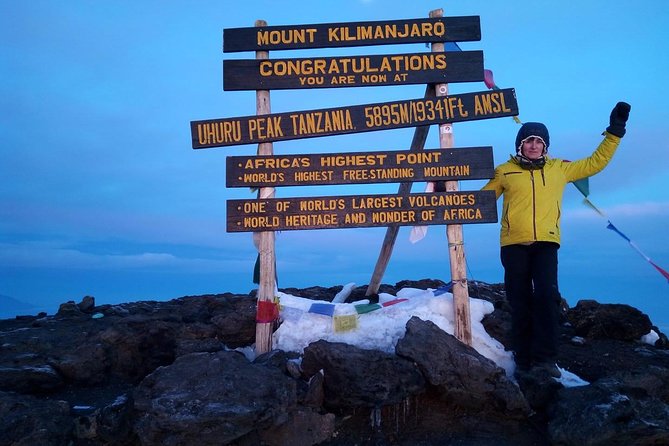
- The summit day is the real test: You leave Barafu at night for Uhuru Peak, 5,895 meters, then descend to Millennium Camp.
- You climb Barranco Wall without technical climbing: The wall looks severe, but the route up takes about an hour and is described as a straightforward hike.
- Guide support is central: The team includes a mountain support crew, with one guide assigned to each pair during the summit ascent.
- The price reflects a private mountain operation: At $2,256.42 per person, you are paying for a seven-day guided climb, permits and park formalities, camp support, and transfers, though you should confirm the full list of inclusions before paying.
Why the Lemosho Route works well for acclimatization
Lemosho is a good choice if you want a gradual approach to Kilimanjaro rather than a short, rushed ascent. You begin at Londorossi Gate on the western side of Kilimanjaro National Park, then move through the Shira Plateau before joining the route toward Lava Tower and the southern camps.
The key benefit is the rhythm. You gain height, pause, climb higher for an acclimatization walk, then often sleep at a lower camp. That is exactly the sort of pattern you want on a high mountain. It does not make altitude sickness impossible, but it gives you a better chance to adjust than a fast ascent with little time at altitude.
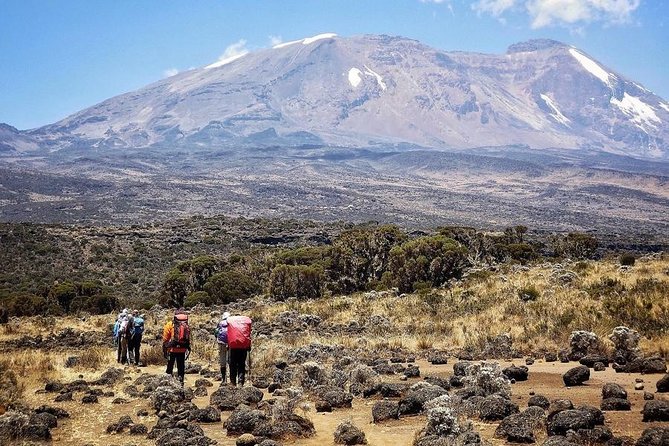
The route also changes character each day. You start with open high country and views across the plateau. Later, you meet volcanic rock, steep walls, glaciers, and finally rainforest. That variety helps break up the long walking days.
You need a moderate level of physical fitness. This is not a technical mountaineering trip, but it is still seven days of sustained effort, with early mornings, long descents, cold high camps, and a summit night that begins after a short rest.
More Kilimanjaro routes:
- Kilimanjaro climb by Lemosho Route (7-day)
★ 5.0 · 651 reviews - Kilimanjaro climb, Machame Route (7-day)
★ 5.0 · 262 reviews - Kilimanjaro Climbing Lemosho Route 8 Days.
★ 5.0 · 186 reviews
Day 1: Londorossi Gate to Shira 1 Camp
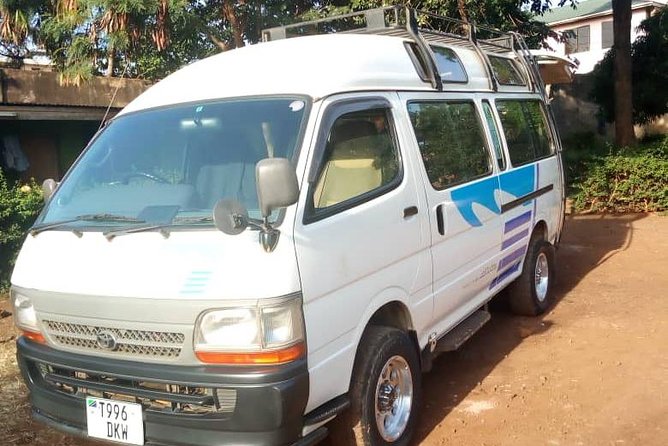
Your guide and mountain crew meet you at your hotel in the morning for another briefing. From Moshi, the drive to Londorossi Gate takes roughly three to four hours.
At the gate, the team handles climbing permits and registration with the search and rescue service. You then continue by off-road vehicle to the drop-off point at about 3,500 meters. This transfer saves you a long lower-altitude approach and puts you quickly into Kilimanjaro’s high country.
The first reward is the Shira Plateau. From the drop-off point, the walk to Shira 1 Camp gains only a small amount of height and is not described as especially hard. That sounds easy, but there is an important catch: beginning near 3,500 meters means you are already high on the first day.
Take the first afternoon slowly. Keep your pace easy, drink as directed by your guide, and do not treat the short walk as a reason to spend your energy. The day can last about 12 hours once driving, registration, transfers, and camp arrival are counted.
Day 2: Shira 1, Shira 2, and the Lava Tower acclimatization hike
Day two is a lighter trekking day, at least by Kilimanjaro standards. You leave Shira 1 at 3,505 meters and walk to Shira 2 Camp at 3,900 meters.
The route brings wide views of Africa and Kilimanjaro’s unusual plant life. Weather permitting, Shira 2 is also one of the best places on this trip to see Mount Meru, Africa’s fifth-highest summit. That view gives the day a welcome visual payoff before the harder sections begin.
After lunch at camp, you get about two hours to rest. Then comes a short acclimatization hike toward Lava Tower, gaining another 200 meters before returning to camp. This is one of the smartest parts of the plan. You briefly expose your body to greater height, then sleep lower at Shira 2.
Do not skip the rest period. The walk may feel manageable, but altitude can catch up with you later. The guides’ job is not just to get you from camp to camp. It is also to keep the group moving at a pace that protects your summit chances.
Day 3: Lava Tower at 4,630 meters and Barranco Camp
After breakfast, you leave Shira 2 and make your way toward Lava Tower, the route’s major altitude checkpoint. The trail includes repeated climbs and descents, ending at 4,630 meters.
This is where you may begin to feel the mountain properly. The itinerary allows one to two hours at Lava Tower, with lunch served there, before you descend to Barranco Camp at 3,960 meters. The temporary climb to 4,630 meters matters because it trains your body for the height ahead while giving you a lower sleeping point at night.
The descent to Barranco is not simply a retreat. It takes you toward one of Kilimanjaro’s memorable features, the Barranco Wall. The wall looks huge and steep from camp, and the next morning you will climb it. Still, the route up is a simple hiking trail rather than a technical climbing pitch.
Day three can feel harder than the mileage suggests because of the altitude and the repeated ups and downs. I would treat Lava Tower as a serious acclimatization day, not a scenic lunch stop. Keep your daypack light and follow the guide’s pace.
A few more Moshi & Kilimanjaro days to compare
- Safari Serengeti And Ngorongoro
★ 5.0 · 288 reviews - Climbing Kilimanjaro – Machame Route
★ 5.0 · 170 reviews - Climbing Kilimanjaro through 7 days Machame Route
★ 5.0 · 151 reviews - Kilimanjaro climb, Lemosho Route (8-day)
★ 5.0 · 148 reviews
Day 4: Barranco Wall and Karanga Camp
The day begins early. Leaving Barranco Camp as soon as possible helps you avoid the crowds that can gather on the wall.
The climb takes around an hour. It is steep in places, but the trail is considered straightforward. You will have time afterward to rest and take photographs with Kibo, Kilimanjaro’s main volcanic cone, behind you.
The walk to Karanga Camp is more tiring. It includes several ascents and descents, and the accumulated effort from the first three days starts to show. This is a point where an experienced guide can help. The pace needs to be slow enough to preserve energy, but steady enough to reach camp without wasting daylight.
At Karanga, you receive a warm lunch, then rest for a couple of hours before another acclimatization hike toward Barafu Camp. This short walk gains 200 meters before you descend to sleep at Karanga.
I like this day because it gives you a real sense of progress without rushing you straight to the summit camp. The drawback is that you do a lot of work for what can feel like a modest gain in distance. That is normal on Kilimanjaro. The route is shaped by altitude, not by the shortest line on a map.
Day 5: Karanga to Barafu Summit Camp
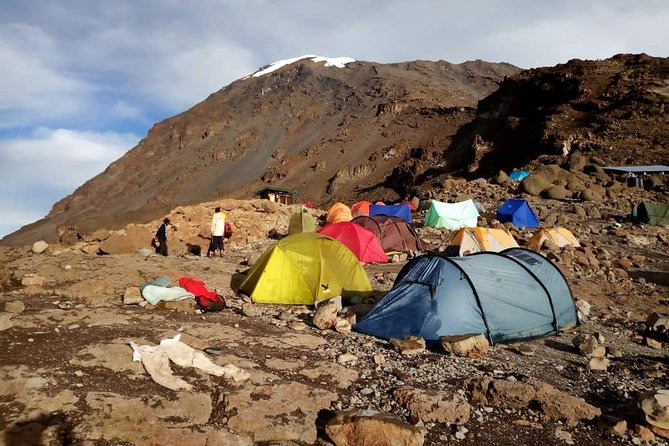
After breakfast, you walk to Barafu Summit Camp at 4,640 meters. This is the launch point for the night climb to Uhuru Peak.
The mountain team sets up your camp, including tents and sleeping bags, so you can focus on eating, resting, and preparing your clothing and gear. After reaching Barafu, you take an acclimatization walk toward Kosovo Summit Camp at about 4,800 meters, then return to Barafu for a hot dinner.
This is not a day for extra ambition. The summit attempt begins at night, so your main task is to preserve strength. The schedule includes time to sleep, though many people find it hard to rest at this altitude and with the excitement of the climb ahead.
Barafu is also where your clothing choices matter most. The supplied information does not specify a complete equipment list, so ask the operator what sleeping bags, tents, meals, transfers, park fees, and personal equipment are covered by the price. A clear answer here is more useful than a vague promise of a full-service climb.
Day 6: Uhuru Peak at 5,895 meters
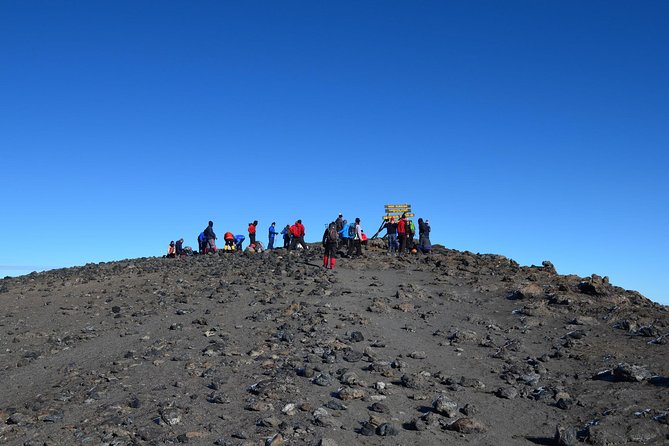
The summit attempt starts at night from Barafu. Technically, the climb is considered relatively simple, but altitude makes it the hardest part of the trip.
You climb slowly toward Uhuru Peak, the highest point on Kilimanjaro, at 5,895 meters. Each pair of climbers receives a personal guide for the ascent. That arrangement is valuable because the guide can watch your physical and mental condition closely, rather than trying to manage a large line of people with very different abilities.
The summit section is likely to feel cold, slow, and demanding. You may be walking when you would rather sleep, and the return to Barafu is only part of the day’s work. After reaching Uhuru Peak, you can descend to the nearest glacier if you wish, then return to Barafu.
You get about two hours at Barafu before continuing to Millennium Camp at 3,820 meters. That second descent is a major relief because the lower altitude helps your breathing and recovery. Still, do not underestimate it. A summit climb followed by a long descent is a full day of exertion, and the total schedule can reach about 12 hours.
The personal guide system is one of the strongest features of this trip. The named team members connected with this experience include Ayubu, Qamrish, Edwin, Panta, and Fred. Since guide assignments can change, confirm who will lead your group, who will cook, and how the one-guide-per-pair summit system will work.
Day 7: Millennium Camp to Mweka Gate
Millennium Camp sits in the tropical rainforest, a dramatic change after the dry, exposed camps above. You wake with the relief of lower altitude and the satisfaction of having reached the summit.
After a warm breakfast, you descend to Mweka Gate at 1,650 meters. The forest finish gives the final day a softer feel, but your legs may still be tired from the summit push and previous descent.
At the gate, the group gathers to congratulate one another. You can share your thoughts in the guestbook, receive commemorative certificates at the company office, and transfer back to your hotel.
The final transfer matters more than it may sound. After seven demanding days, you will want a direct, organized return rather than another complicated connection. Pickup is offered, and the experience includes a mobile ticket, so keep your booking details available on your phone.
What $2,256.42 per person gets you in practical terms
The price is not cheap, but a Kilimanjaro climb involves more than a guide walking beside you. This trip includes a private group, a mountain guide, a support crew, park entry formalities, camp arrangements, summit support, and transfers described in the schedule.
You also get a seven-day route with deliberate acclimatization. That is important value. A cheaper trip can become poor value if it cuts days from the mountain or gives you little time to adjust before the summit.
The information provided does not spell out every inclusion, so ask for a written breakdown before booking. Confirm meals, porter support, park and rescue fees, camping equipment, airport or hotel transfers, tips, and personal gear. Do not assume that every cost connected with a climb is included simply because tents and sleeping bags are supplied.
The private format is another reason the price may suit some people. You are not tied to strangers with a different pace or fitness level. That can make the guide’s pacing more responsive, though you should still expect the full group to follow the mountain schedule.
Who should book this climb
I would point this trip toward someone who wants a serious mountain challenge with a planned acclimatization structure and close summit support. It suits people who can handle long walking days, basic camp conditions, and a night departure for the summit.
It is also a good match if you value guide contact. The one-guide-per-pair arrangement during the summit attempt gives you more personal attention at the moment it matters most.
I would hesitate if you want a relaxed holiday with plenty of free time. The days are long, the schedule is fixed, and altitude can affect even fit people. You also need to be comfortable with an experience that depends on weather. If poor weather cancels the climb, you will be offered another date or a full refund.
The cancellation terms are generous before the deadline. You can cancel at least 24 hours before the start for a full refund. Within 24 hours, refunds and changes are not accepted.
The bottom line on this Lemosho climb
I like this itinerary because it respects the mountain. You start with Shira Plateau scenery, spend time at Lava Tower, sleep lower after high acclimatization walks, and reach Barafu with a dedicated summit plan.
The strongest reasons to book are the private format, the guide support, and the careful seven-day altitude schedule. The main reasons to pause are the demanding 12-hour days, the cost, and the need to confirm exactly what the price covers.
If you have moderate fitness, want Uhuru Peak, and prefer a guided climb with a support crew rather than an improvised ascent, this is a sound option. Book it after confirming the equipment and fee details, then arrive ready to walk slowly, rest often, and let the mountain set the pace.
FAQ
How long is the Kilimanjaro Lemosho Route experience?
The climb lasts approximately seven days, with each scheduled mountain day listed at about 12 hours, including trekking, camp activities, and acclimatization walks.
Where does the experience begin?
The experience is based in Moshi, Tanzania. Pickup is offered, and the first mountain day includes transport to Londorossi Gate in Kilimanjaro National Park.
What altitude does Uhuru Peak reach?
Uhuru Peak reaches 5,895 meters. The summit attempt begins at night from Barafu Summit Camp at 4,640 meters.
Is the climb technically difficult?
The summit climb is described as technically relatively simple, but the high altitude makes it physically and mentally challenging. The Barranco Wall also has a simple hiking trail despite its steep appearance.
What fitness level do I need?
You should have a moderate level of physical fitness. The itinerary includes long trekking days, repeated ascents and descents, high camps, and a night summit attempt.
Is this a private tour?
Yes. Only your group participates. A guide and mountain support crew accompany the group, and each pair of climbers receives a personal guide for the summit ascent.
Can I cancel for a full refund?
You can cancel at least 24 hours before the experience start time for a full refund. Cancellations or changes made less than 24 hours before the start are not accepted. If poor weather causes cancellation, you will be offered another date or a full refund.
Newly listed around Moshi & Kilimanjaro
- Climb Mount Kilimanjaro: 7 Days Machame Route★ 5.0 · 3 reviews
- 6 Days Mount Kilimanjaro Climbing via Rongai Route★ 5.0 · 3 reviews
- Explore 1 day Ngorongoro Crater Budget Group Safari from Arusha★ 5.0 · 3 reviews
- Mt. Kilimanjaro Day Hiking★ 5.0 · 3 reviews
- Chemka (Kikuletwa) Hot Springs, Tanzania★ 5.0 · 3 reviews
- Guided City tour of Moshi★ 4.3 · 3 reviews
- 8 Day Tanzania Family Safari★ 5.0 · 3 reviews
- Rongai Route 7 Days★ 5.0 · 3 reviews
Kilimanjaro Climbs, compared.








Browse the lists this tour appears in