
Reviewed · KILIMANJARO CLIMBS
Mount Kilimanjaro 7 Days – Machame Route
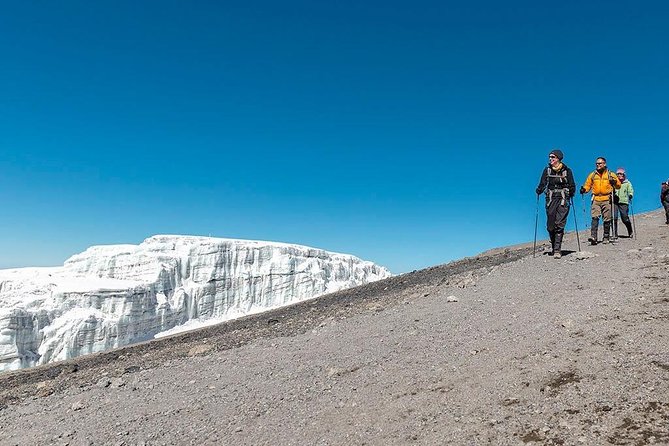
The Machame Route gives you Kilimanjaro in its most varied form: rainforest, high plateau, rocky ridges, glaciers, and a sunrise summit from 5,895 meters. It is the mountain’s popular Whiskey route, and the seven-day schedule gives your body more time to adjust than the bare six-day minimum.
I like two things right away. First, the route uses the South Circuit, so you see the summit from several angles before summit night. Second, the package includes a full support team, camping gear, meals, airport transfers, and hotel nights before and after the climb. The main caution is simple: this is a hard trek, with long days, steep ground, cold nights, and a punishing summit push.
Key points to know before booking
- Seven days gives you a better acclimatization plan: The Lava Tower and Barranco day takes you high, then brings you down to sleep lower.
- The route is scenically varied: Expect rainforest on day one, the Shira Plateau, Lava Tower, Barranco Wall, and the southern ice fields.
- Summit day is the real test: You start around midnight to 2 a.m., climb to Uhuru Peak, then descend a long way the same day.
- A large working crew supports the climb: A qualified guide, assistant guides, porters, and cook are included, along with crew salaries set by park guidelines.
- The $2,530 price covers major costs: Hotels, meals, transfers, park fees, camping equipment, water, and emergency supplies are part of the package.
- Mud is part of the deal: Gaiters and trekking poles are useful in the rainforest and again during the descent to Mweka Gate.
Why the Machame Route is worth the extra effort
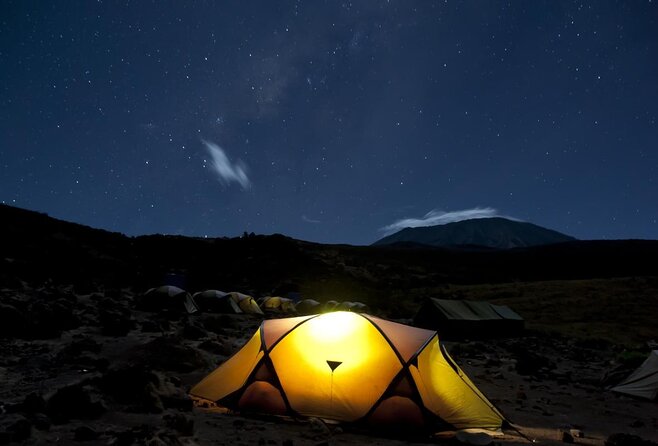
Machame is popular because it shows you more than a single corridor up the mountain. The trail begins on Kilimanjaro’s southern side, crosses beneath the southern ice field, and joins the summit approach after a wide arc through high country.
That variety is the route’s great strength. You do not spend seven days staring at the same type of ground. The first day is damp and green. The middle days are open, rocky, and high. The final climb is stark and cold. Each section feels different.
The tradeoff is crowding. Machame is now the busiest route on Kilimanjaro, so some of its natural quiet is lost. You also need more hiking confidence than on the Marangu Route. The days are longer, the path is steeper, and the trail can be muddy or slippery.
Still, the seven-day version makes good sense. Six days is the minimum stated for Machame, but the added day gives you a more sensible rhythm. At altitude, an extra day is not wasted time. It can make the difference between feeling steady and struggling badly.
More Kilimanjaro routes:
- Kilimanjaro climb by Lemosho Route (7-day)
★ 5.0 · 651 reviews - Kilimanjaro climb, Machame Route (7-day)
★ 5.0 · 262 reviews - Kilimanjaro Climbing Lemosho Route 8 Days.
★ 5.0 · 186 reviews
Day 1: Machame Gate to Machame Camp
Your climb begins with a roughly 45-minute drive from Moshi to the park gate. The road passes through Machame village on the lower slopes before you enter Mount Kilimanjaro National Park.
The first walking section rises from 1,830 meters to about 3,050 meters. You cover approximately 11 kilometers in five to six hours, mostly on a winding trail through rainforest.
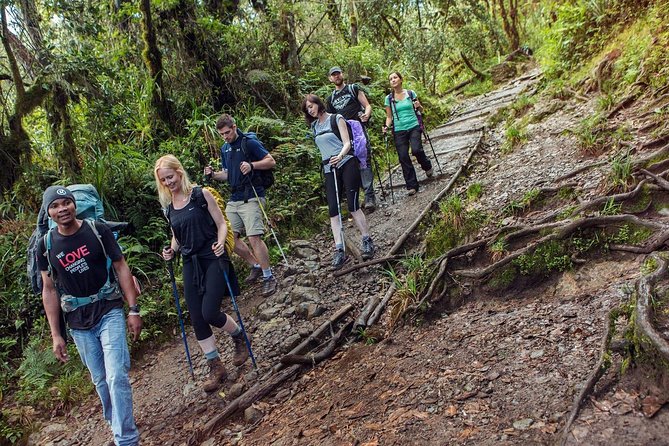
This is a proper first day, not a gentle stroll. The path climbs steadily, and lower sections can be muddy and slippery. Pack gaiters and trekking poles where you can reach them, not buried at the bottom of your duffel.
The forest is a fine introduction to the mountain. It gives you shade and a sense of moving from ordinary life into a wilder setting. By the time you reach Machame Camp, you have gained about 1,200 meters, so take the evening slowly and drink regularly.
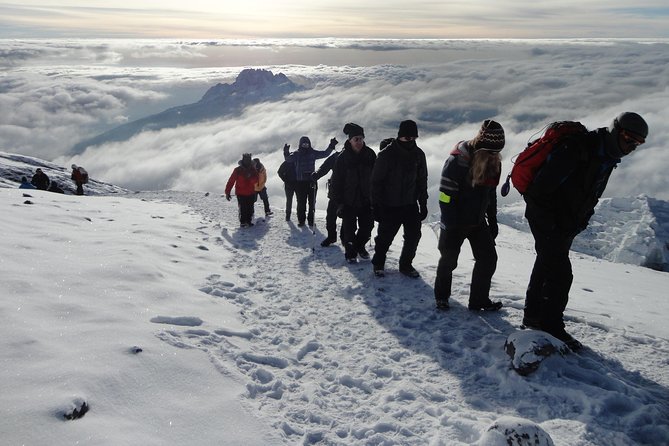
Your first night is in camp. Camping equipment, a sleeping mattress, tables, and camp chairs are supplied. You should still bring personal hiking and trekking gear, since those items are not included. Some equipment can be rented from the operator’s store in Tanzania.
Day 2: Machame Camp to Shira Camp
After breakfast, you leave the rainforest behind and climb from 3,050 meters to about 3,850 meters. This is a shorter day by distance, around five kilometers, but it takes four to five hours because the path is steep and rocky.
The trail crosses a valley and follows a rough ridge before turning west toward a river gorge. The change in scenery is quick. The enclosed forest gives way to a more open high-altitude setting, and the air begins to feel thinner.
Shira Camp sits on the Shira Plateau. This is an important stop because it gives you your first real sense of Kilimanjaro’s broad upper slopes. The short distance may look easy on paper, but altitude, not mileage, is the issue.
Walk slowly. Let the guide set a steady pace. You may be tempted to push on during the easier portions, but that is a poor bargain this early in the climb. The goal is to arrive with energy, not to win the afternoon.
Day 3: Shira Plateau, Lava Tower, and Barranco Camp
Day three is one of the best-designed days on the route. You walk about 10 kilometers over five to six hours, rising from 3,850 meters to roughly 4,000 meters by the end of the day.
The trail heads east along a ridge, passes the junction toward Kibo, and continues southeast to Lava Tower, also called Shark’s Tooth. The tower reaches about 4,650 meters. After this high point, you descend to Barranco Camp.
That rise and fall is deliberate. You go high during the day, then sleep lower. This helps your body adjust to altitude and gives you a useful rehearsal for the summit climb.
The scenery here becomes spare and rugged. The route passes beneath Kilimanjaro’s southern ice field, and the mountain begins to feel less like a hike through vegetation and more like a high-altitude expedition.
You may feel headache, tiredness, or shortness of breath at this point. Those symptoms matter. Tell your guide promptly rather than trying to hide them. Emergency oxygen and a basic first aid kit are carried for emergencies, but oxygen is not intended as a way to push through a failed summit attempt.
More week long trips in Moshi & Kilimanjaro:
- Climbing Kilimanjaro through 7 days Machame Route
★ 5.0 · 151 reviews - 7 Days Kilimanjaro via Machame route affordable price
★ 5.0 · 110 reviews - Private Kilimanjaro Hike 7 Day Lemosho Route
★ 5.0 · 60 reviews - 7-Day Magical Tanzania Safari -Premium High End Package
★ 5.0 · 53 reviews
Day 4: The Barranco Wall to Karanga Valley
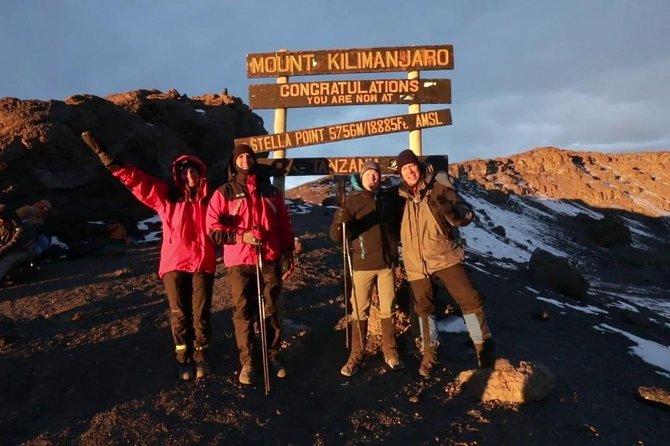
Day four is short in distance but memorable. You cover about five kilometers in three to four hours, climbing from 4,000 meters to roughly 4,050 meters.
The main feature is the Barranco Wall, a steep rocky ridge above camp. It requires careful movement rather than speed. The route then leads toward Karanga Valley and the junction with the Mweka Trail.
This is the kind of day that separates Machame from an easier walking holiday. You should be comfortable with steep, uneven ground and with using your hands for balance when needed. The supplied itinerary describes this as a steep ridge, so expect a more physical trail than the mileage suggests.
The reward is a change of pace before the Barafu climb. You do not spend every day grinding out a huge distance. Some days are shorter, but they still matter because they position you well for the next stage.
Day 5: Karanga Valley to Barafu Camp
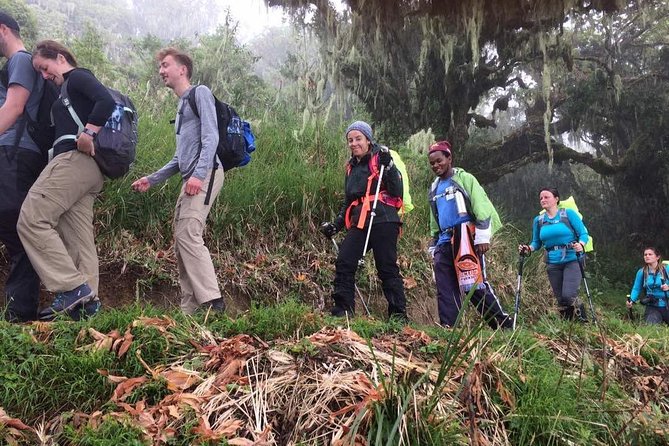
The route now climbs from about 4,050 meters to 4,700 meters. It is only around four kilometers and takes three to four hours, but the altitude makes it feel harder than an ordinary half-day hike.
At Barafu Camp, you have completed the South Circuit. The route has given you views of the summit from several directions, and now you are positioned for the final ascent.
This is not a sightseeing afternoon. You rest, eat dinner, organize your summit clothing, and try to sleep before the midnight-to-2 a.m. start. Keep your headlamp, warm layers, gloves, water, snacks, and personal medicine close by.
The camp sits high and exposed. Conditions can be cold, and you should not count on feeling comfortable. Your body has done a lot of work already, so conserve energy. The cook’s meals are included, and that support becomes especially valuable here, when preparing food yourself would be a chore.
Day 6: Barafu Camp to Uhuru Peak and Mweka Camp
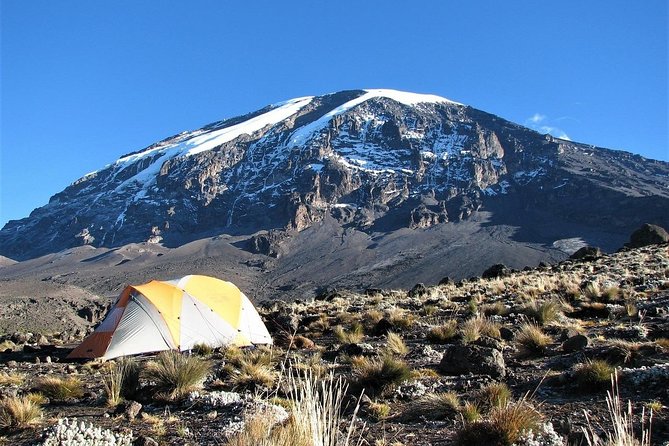
This is the longest and hardest day by far. The stated walking distance is about five kilometers up and 13 kilometers down, with around 13 hours of hiking in total.
You leave between midnight and 2 a.m. The trail rises through heavy scree toward Stella Point on the crater rim, between the Rebmann and Ratzel glaciers. Scree is loose volcanic rock, and every step can feel slow. The darkness, cold, altitude, and fatigue make this the most demanding part of the climb.
At Stella Point, around 5,739 meters, you stop briefly. The sunrise from the crater rim is the day’s great reward. Faster climbers may see it from the summit, but you should not rush recklessly for a better photograph.
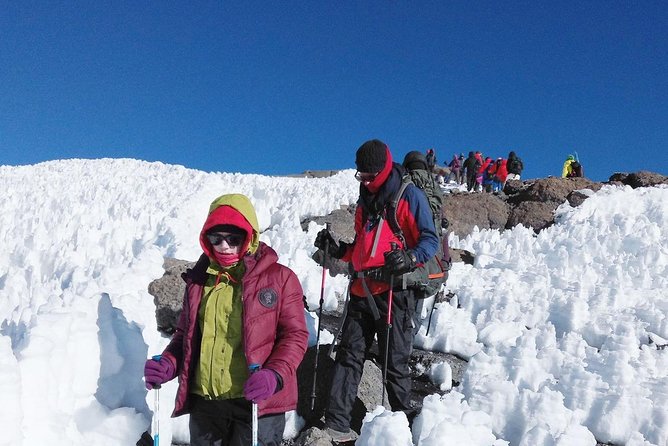
From Stella Point, the trail may be snowy for the final hour to Uhuru Peak. The summit reaches 5,895 meters. At this height, even standing still can take effort. You may have only a short time at the top before beginning the descent.
The descent returns to Barafu and continues toward Mweka Camp at about 3,090 meters. That long drop is welcome for your lungs, but it is hard on your knees and legs. Trekking poles earn their keep here.
The package includes emergency oxygen, but again, this is for emergencies only. It is not summit assistance. You need to arrive with realistic expectations and enough fitness for a very long day at altitude.
Day 7: Mweka Camp to Moshi
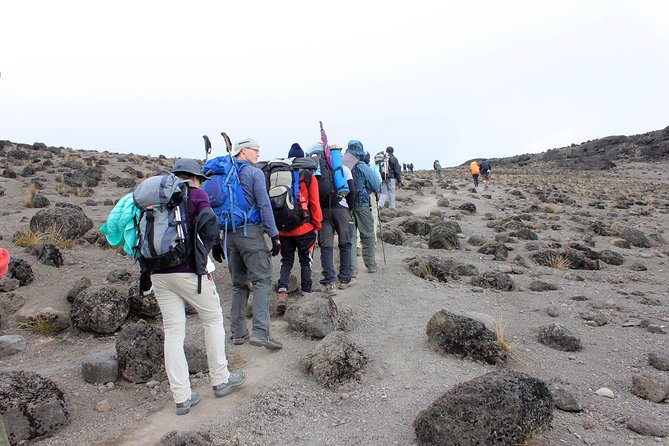
The final day descends from about 3,090 meters to 1,680 meters. You walk roughly 10 kilometers in three to four hours to reach Mweka Park Gate.
The lower trail can be wet and muddy. Gaiters are useful again, and you can usually switch to shorts and a T-shirt while keeping rain gear and warmer clothing handy.
At the gate, you receive your summit certificates. You then continue for about an hour to Mweka village, where a vehicle collects you for the roughly 30-minute drive back to your Moshi hotel.
The end feels practical rather than grand, and that is fine. After summit day, a hot meal, a shower, and a bed matter more than ceremony. The package includes the hotel night after the climb, with dinner and breakfast.
What the $2,530 price really covers
At $2,530 per person, this is not a cheap mountain walk. But the price includes many costs that can add up quickly on Kilimanjaro.
You receive return transfers between Kilimanjaro Airport and Moshi, a hotel night before the climb, and another after it. Dinner and breakfast are included at those hotel stays. On the mountain, six breakfasts, six dinners, and seven lunches are provided.
The package also covers park fees and taxes, camping equipment, tents, mattresses, camp chairs, tables, fresh drinking water, and hot water for washing each day. A qualified mountain guide, assistant guides, porters, and cook are included, with crew salaries set according to Kilimanjaro National Park guidelines.
That last point matters. A climb is not just a guide walking beside you. It depends on a working team that carries equipment, prepares food, sets up camp, and supports the route. The included staffing makes the price easier to understand.
You still need to budget for flights, visas, medical and travel insurance, personal gear, snacks, personal medicine, and water-purifying tablets. A portable toilet is optional but strongly recommended. That is an extra cost, but many people will find the privacy and convenience worth considering.
Food, equipment, and crew support
Food is a major part of a long climb, and the included cook is an important advantage. A previous party specifically praised the cook, known as J4, for preparing strong meals despite difficult weather. That detail matters because appetite and morale can suffer at altitude.
The crew names mentioned in the experience include guides Alan and Shefii. The operator is led by Wenceslaus Tarimo, who has provided planning help by phone and message, including advice for solo climbers.
The operation is described as a local organization, and choosing a locally run company can keep more of the climbing income in Tanzania. You should still confirm current crew arrangements and tipping expectations before departure, since those details are not listed here.
Bring personal layers suited to changing conditions. You need gear for warm, wet rainforest, cold camps, and a snowy summit approach. Gaiters and poles are especially useful. The company can rent some personal hiking gear from its Tanzania equipment store, but you should ask what is available before you arrive.
Who should book this climb?
This route suits you if you have moderate physical fitness and some hiking or backpacking experience. You do not need to be an elite athlete, but you should be ready for steep trails, long hours, loose rock, muddy ground, and a summit day that lasts much of the day and night.
It is a good match for someone who wants scenery and a more adventurous route rather than the simplest route up Kilimanjaro. It also suits private groups because only your group participates.
I would think twice if you dislike camping, struggle with steep terrain, or want a relaxed walking holiday. Machame is popular, but popularity does not make it easy. Heavy crowds can also reduce the feeling of solitude.
The five existing ratings are all five-star ratings, and the strongest themes are consistent: friendly support, strong guiding, good food, solid equipment, and careful help with planning. That is encouraging, but the summit itself remains your responsibility. A kind crew can support you, not remove the altitude or the effort.
Practical details before you commit
Pickup is offered, and the listed airport transfers cover Kilimanjaro Airport to Moshi and back. The listed start point is Machame Gate in Mount Kilimanjaro National Park, while the final transfer takes you from Mweka village to your Moshi hotel.
Confirmation is provided at booking. The activity is private for your group, not a shared departure with unrelated participants.
Cancellation is flexible up to 24 hours before the start time for a full refund. Cancellations or changes made inside that window are not accepted, and the local time cut-off applies.
Should you book the seven-day Machame Route?
Book it if you want the best balance of scenery, support, and acclimatization offered by this itinerary. The seven-day plan is more sensible than forcing the route into six days, and the included hotels, meals, crew, camping equipment, water, and transfers give the $2,530 cost real value.
Choose another plan if you want quiet trails, easy walking, or a short summit day. Machame is crowded and physically serious. For a fit hiker who accepts those limits, though, it offers a varied route and a well-supported attempt at Africa’s highest point.
FAQ
How long is the Machame Route experience?
The climb lasts approximately seven days, including the approach, summit attempt, descent, and return to Moshi.
What is the highest point reached?
The summit is Uhuru Peak, at 5,895 meters.
Is the Machame Route difficult?
Yes. It is considered a difficult route, with longer days and steeper walking than the Marangu Route. Some hiking or backpacking experience is recommended.
What is included in the price?
The price includes fees and taxes, airport transfers, hotel nights before and after the climb, dinner and breakfast at those hotels, mountain crew, camping equipment, meals on the mountain, fresh drinking water, hot washing water, emergency oxygen, and a basic first aid kit.
Are flights and visas included?
No. Flights, visas, medical insurance, and travel insurance are not included.
Are personal hiking clothes and equipment included?
No. Personal hiking and trekking gear is not included, although some equipment may be available to rent from the operator’s store in Tanzania.
Is a portable toilet included?
No. A portable toilet is optional, but it is highly recommended.
Where does the climb start and end?
The listed meeting point is Machame Gate in Mount Kilimanjaro National Park. After descending to Mweka village, a vehicle takes you back to your Moshi hotel.
Can I cancel for a full refund?
Yes. You can cancel at least 24 hours before the experience start time for a full refund. Cancellations or changes made less than 24 hours before the start time are not accepted.
Newly listed around Moshi & Kilimanjaro
- Climb Mount Kilimanjaro: 7 Days Machame Route★ 5.0 · 3 reviews
- 6 Days Mount Kilimanjaro Climbing via Rongai Route★ 5.0 · 3 reviews
- Explore 1 day Ngorongoro Crater Budget Group Safari from Arusha★ 5.0 · 3 reviews
- Mt. Kilimanjaro Day Hiking★ 5.0 · 3 reviews
- Chemka (Kikuletwa) Hot Springs, Tanzania★ 5.0 · 3 reviews
- Guided City tour of Moshi★ 4.3 · 3 reviews
- 8 Day Tanzania Family Safari★ 5.0 · 3 reviews
- Serengeti Safari with Sirikwa Travel★ 5.0 · 3 reviews
Kilimanjaro Climbs, compared.








Browse the lists this tour appears in