
Reviewed · KILIMANJARO CLIMBS
Kilimanjaro Experience 7 Days Lemosho route
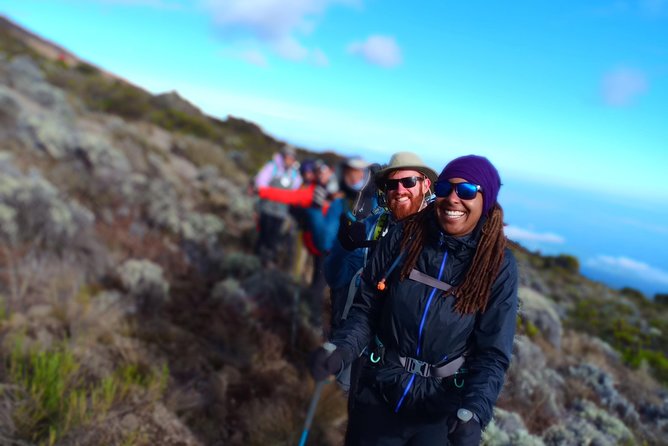
The best thing about this 7-day Lemosho route is the gradual change in scenery. You begin in thick rainforest, cross the open Shira Plateau, pass Lava Tower and Barranco Wall, then make the hard midnight push toward Stella Point and Uhuru Peak. It feels like several different hikes joined into one.
I like the route’s careful acclimatization pattern, especially the day that climbs to Lava Tower before dropping to Barranco. I also like the practical support: tents are prepared for you, a cook serves large meals, and purified water is included. The main consideration is price clarity. The advertised $1,000 does not include Kilimanjaro National Park fees, tips, or personal costs, so ask for the full final total before booking.
Key points to know before you book
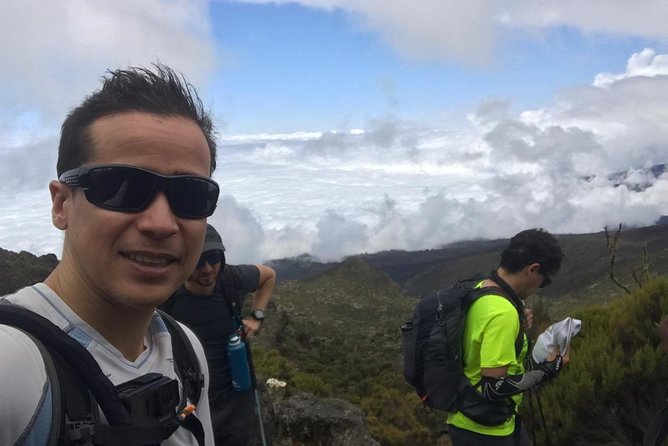
- Seven days on the mountain: You spend the full trek moving from rainforest to high volcanic terrain, with the summit attempt on Day 6.
- A strong acclimatization day: The climb toward Lava Tower followed by a descent to Barranco gives your body useful altitude practice.
- Full camping support: Guides, porters, a cook, tents, meals, purified drinking water, and rescue fees are included.
- A demanding summit night: You wake around 11:00 p.m., begin near midnight, and may spend 7 to 8 hours going up before a long descent.
- A local operator: Kilinge Adventures is based in Tanzania, with past trips led by guides including Thomas, Alex, Victor, and Norka.
- Budget carefully: Park fees, tips, optional tours, and personal expenses are extra.
Why the Lemosho route is worth seven days
Kilimanjaro is not a technical climb in the usual mountaineering sense, but it is a serious high-altitude trek. The challenge comes from the height, long walking days, cold, thin air, and the final night without normal sleep.
Lemosho is a good choice if you want a fuller mountain experience rather than the shortest possible route. The first days are not rushed. You walk through several habitats, gain height in stages, and spend time on the Shira Plateau before heading toward the summit circuit.
That extra time matters. You are not simply walking uphill for a week. You are giving your body more chances to adjust before the hardest section. Day 4 is especially useful: you climb toward Lava Tower at about 13,800 feet, then sleep lower at Barranco Camp. This climb high, sleep lower pattern is one of the most useful parts of the plan.
The route also gives you changing views of Kibo, Kilimanjaro’s main summit cone. From Shira, the peak appears across the plateau. Later, the South Circuit lets you see Kibo and Mawenzi from different angles. If weather cooperates, the scenery keeps changing before the summit night even begins.
More Kilimanjaro routes:
- Kilimanjaro climb by Lemosho Route (7-day)
★ 5.0 · 651 reviews - Kilimanjaro climb, Machame Route (7-day)
★ 5.0 · 262 reviews - Kilimanjaro Climbing Lemosho Route 8 Days.
★ 5.0 · 186 reviews
Day 1: Londorossi Gate to the rainforest camp
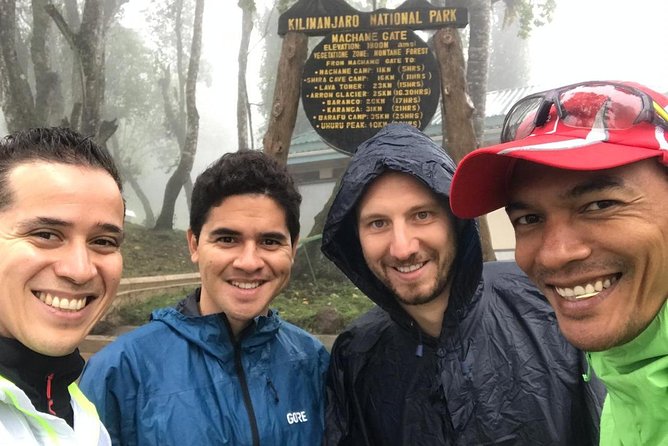
Your day starts in Moshi, with departure planned for 8:30 a.m. The drive to Londorossi Gate takes about four hours. There, you complete park entry formalities before continuing for roughly another hour to the trailhead.
This transfer is long, so do not treat Day 1 as a casual late start. You will likely spend much of the morning in the vehicle, then eat lunch near the trailhead before walking.
The first hike covers about 7 kilometers, takes 3 to 4 hours, and climbs from roughly 7,800 to 8,694 feet. The route passes through rainforest, with the trail winding through a less disturbed section of forest toward camp.
This is a gentle opening by Kilimanjaro standards, but it still gives you a useful first taste of the pace. You should expect the guides to set a slow rhythm. That is exactly what you want at the start. Save your energy, drink steadily, and avoid treating the early miles as a race.
The forest is also one of the most appealing parts of Lemosho. You get shade, thick plant growth, and a clear contrast with the open country ahead. The drawback is simple: rain can make the trail wet and muddy, so keep rain gear easy to reach rather than buried in your pack.
Day 2: Shira Ridge and the first big open views
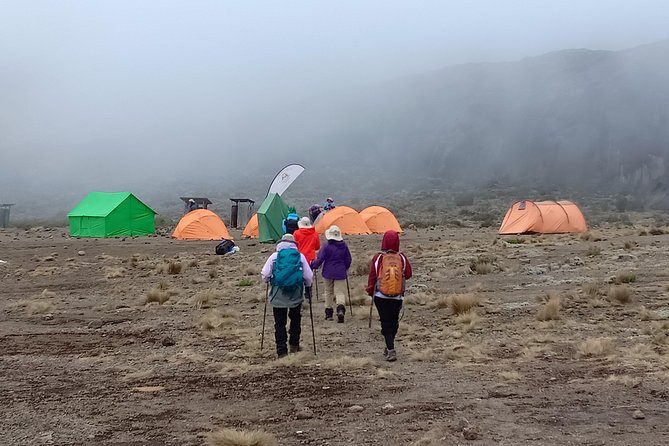
Day 2 climbs from about 8,694 to 11,840 feet over 8 kilometers. Walking time is listed at 5 to 6 hours, and the habitat changes from rainforest to moorland.
The forest gradually gives way to tall grasses, heather, volcanic rock, and lichen. You cross streams and climb rolling ground toward Shira Ridge. After the ridge, the trail drops gently to Shira 1 Camp.
This is where Kilimanjaro begins to feel broad and exposed. The trees no longer frame every view. Instead, you get open slopes and the sight of Kibo across the plateau. That first clear view of the summit is one of the emotional highlights of the route.
The altitude gain is substantial, so you may feel the pace more than you expect. Walk slowly, follow the guide’s rhythm, and tell the guide if you develop a headache, nausea, unusual tiredness, or other symptoms. The included professional guides are there for more than navigation. Their judgment is central to the safety of the trip.
Day 3: A long Shira Plateau acclimatization walk
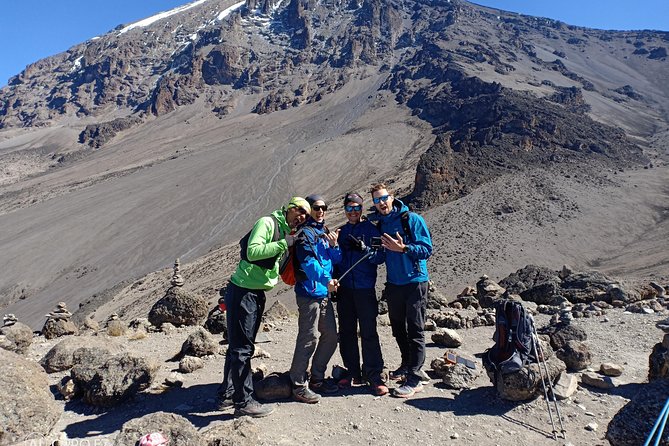
Day 3 is a full day on the Shira Plateau. The plan covers about 14 kilometers in 5 to 7 hours, with an ascent from roughly 11,840 to 13,800 feet.
The walk heads east toward Kibo, crossing moorland meadows and reaching Shira 2 Camp near a stream. From there, the route continues toward Moir Hut, a quieter site at the base of Lent Hills. Walks on Lent Hills provide extra options for acclimatization.
This is not just a scenic detour. It is an important conditioning day before the route gets steeper and colder. You gain height, spend time at altitude, and then prepare for the next stage without immediately attempting the summit.
The Shira Plateau is one of the world’s high plateaus, and its open character makes the day feel different from the forest below. At the same time, the plateau can feel exposed in poor weather. Sun, wind, cold, and sudden cloud cover can all affect your comfort, so carry layers and protect yourself from the sun.
The 14-kilometer distance is not extreme on paper, but altitude changes the calculation. A moderate fitness level is required, and you should be comfortable walking for several hours on uneven ground.
More week long trips in Moshi & Kilimanjaro:
- Climbing Kilimanjaro through 7 days Machame Route
★ 5.0 · 151 reviews - 7 Days Kilimanjaro via Machame route affordable price
★ 5.0 · 110 reviews - Private Kilimanjaro Hike 7 Day Lemosho Route
★ 5.0 · 60 reviews - 7-Day Magical Tanzania Safari -Premium High End Package
★ 5.0 · 53 reviews
Day 4: Lava Tower, Shark’s Tooth, and Barranco
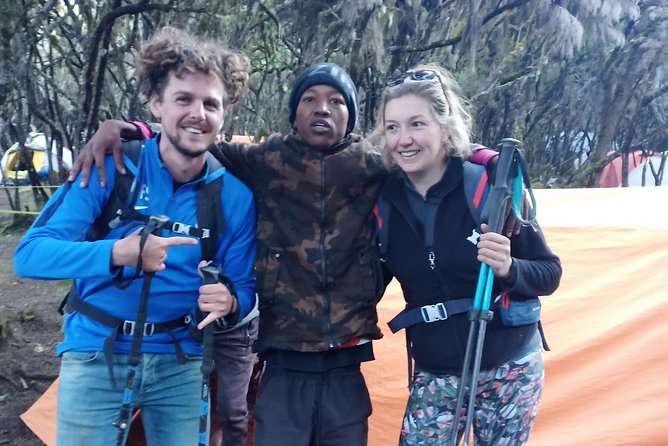
Day 4 is one of the smartest days in the program. You leave the Shira Plateau and climb toward Lava Tower, also called Shark’s Tooth. The route reaches roughly 13,800 feet before descending to Barranco Camp at about 12,926 feet.
The distance is about 7 kilometers, with 4 to 6 hours of walking. The habitat shifts into semi-desert, with less vegetation and more volcanic rock.
You may wonder why the route takes you up and then down. The answer is acclimatization. Spending time high, then sleeping lower, gives your body a useful altitude test without forcing you to camp at the day’s highest point.
After Lava Tower, you stop for lunch and continue down to Barranco. The day ends close to the elevation where it began, but the route is not easy. The climb toward the tower can feel demanding, and the descent can be tiring on the legs.
Barranco Camp is also a memorable location because of the steep wall rising above it. You will face that wall the next morning. Seeing it from camp gives you time to understand the challenge rather than meeting it as a surprise.
Day 5: Barranco Wall to Barafu Camp
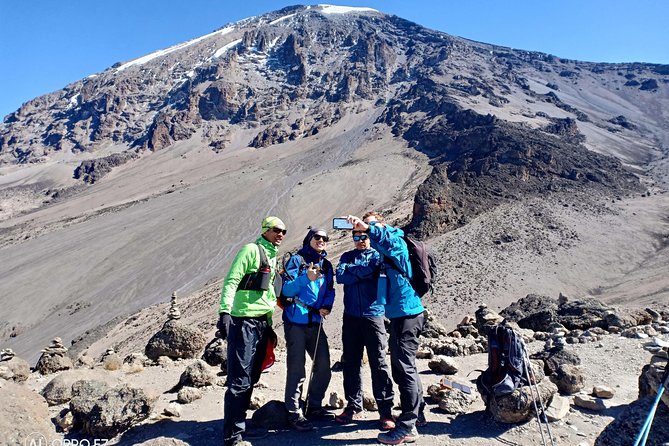
Day 5 is a long one. You leave Barranco after breakfast, climb the Barranco Wall, pass through Karanga Valley, then continue toward Barafu Hut. The total distance is about 9 kilometers, with 8 to 10 hours of walking.
The elevation rises from approximately 12,926 to 13,100 feet. The habitat is alpine desert, so expect a more barren setting, strong exposure, and colder conditions than in the forest.
The Barranco Wall can look intimidating from below. The route is steep in places, but this is a trekking section rather than a technical rock climb according to the supplied plan. Your guide will set the pace, and you should keep your hands free and focus on steady movement.
After Karanga, you reach the junction with the Mweka Trail and continue to Barafu Hut. At this point, you have completed the South Circuit, which offers views of the summit from several directions. Mawenzi and Kibo can both be seen from camp.
Barafu is the staging point for the summit attempt, not a place for a relaxed evening. You eat dinner, organize warm clothing and headlamp supplies, and try to rest before waking around 11:00 p.m. The early bedtime may be difficult at this altitude, but even quiet rest helps.
Day 6: The midnight summit attempt
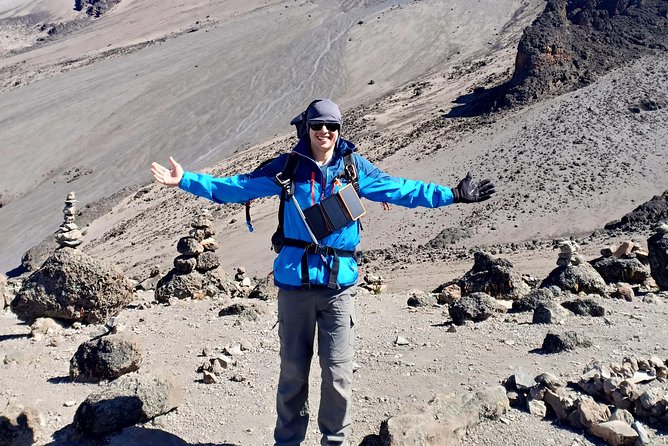
Day 6 is the hardest and most important day. You have tea and snacks around 11:00 p.m., then begin the summit walk near midnight.
The ascent covers about 5 kilometers and takes 7 to 8 hours. The route begins over steep rocks for 2 to 3 hours, then continues through zigzag sections toward the crater rim and Stella Point. The plan places the arrival at Stella Point, about 18,800 feet, around 6:00 a.m.
At Stella Point, you meet climbers arriving from other routes. From there, you continue toward Uhuru Peak. The reward is a sunrise viewed from the upper slopes of Kilimanjaro, assuming the weather allows it.
This is where your earlier pacing becomes important. You should move slowly, keep drinking, and eat small amounts even if your appetite is low. The summit attempt is cold, dark, and physically draining. A moderate fitness level alone does not guarantee success, since altitude affects people differently.
The descent is listed at about 12 kilometers and 4 to 6 hours, ending near 10,000 feet. That makes the day roughly 17 kilometers of walking when ascent and descent are combined. You may feel euphoric after the summit, but your legs will still need careful attention.
The plan does not provide a separate detailed description of the Uhuru Peak elevation or the precise time spent at the summit. Ask Kilinge Adventures how the guides handle turnaround times, altitude symptoms, and climbers who reach Stella Point but cannot continue.
Day 7: Mweka Gate and the return to Moshi
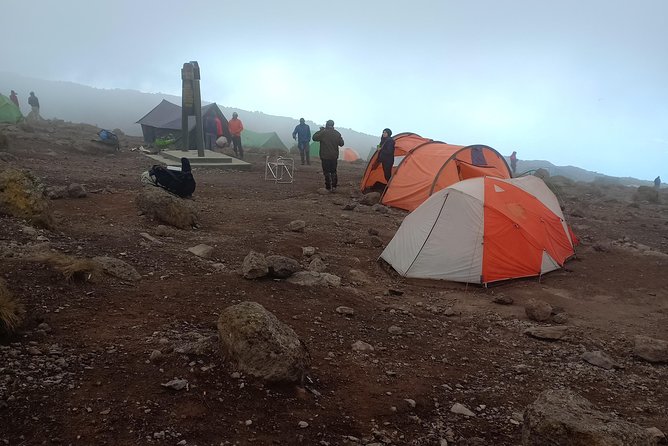
The final day descends from about 10,000 feet to 5,380 feet. The walk is approximately 10 kilometers and takes 3 to 4 hours through rainforest.
The lower trail can be wet and muddy. Gaiters and trekking poles are useful, while shorts and a T-shirt may be comfortable lower down. Keep rain gear and a warm layer accessible because mountain weather can change before you reach the gate.
At Mweka Park Gate, you receive summit certificates before a vehicle takes you back to your Moshi hotel. The advertised finish includes a hot shower and a Kilimanjaro beer, a welcome end after the summit night.
The final descent is easier on your breathing but can be hard on your knees. Trekking poles are especially helpful here. Do not pack them away just because the highest point is behind you.
What the $1,000 price really covers
At $1,000 per person, this trip may look inexpensive for a seven-day Kilimanjaro climb, but the headline price is not the full budget. Kilimanjaro National Park fees are excluded, along with tips, personal expenses, and optional tours such as a short safari.
The included services are substantial:
- Professional mountain guides
- Porters and a cook
- Guide, porter, and cook salaries
- Tents and mountain accommodation
- Breakfasts, lunches, and dinners on the mountain
- Large portions of fresh, nutritious food
- Clean purified drinking water
- Rescue fees
The food is a meaningful part of the value. Past trips specifically praise the cook and the generous meals, with Joseph and Shedrack named for their cooking on different climbs. You are not buying a self-supported hike. The crew carries equipment, prepares camp, cooks, and lets you focus on walking and resting.
Still, ask for a written cost breakdown. Confirm the park fee amount, airport or hotel transfers, gear supplied, group size, and expected tipping guidance. The maximum group size is stated as 100 people, which is a very high ceiling even if actual groups are smaller. Ask how many climbers will be in your own departure and how many guides will accompany them.
Guides, porters, and the human side of the climb
The strongest part of this experience is the support team. Past departures identify Thomas, Alex, Victor, and Norka as guides, while cooks including Joseph and Shedrack receive special praise for the food.
You should not assume those exact people will lead your departure. Ask for the names of your guides before you travel and confirm who will make route and safety decisions.
Fair and ethical treatment of porters is included in the package description. That is important on Kilimanjaro, where porters do much of the work behind the scenes. You can support that promise by asking about porter loads, sleeping arrangements, meals, pay, and the company’s tipping policy.
The personal accounts supplied for this experience repeatedly point to friendly service, good organization, helpful porters, and guides who paid attention to safety. One past climb included oxygen saturation checks by the guide. That does not guarantee the same procedure on your trip, so ask directly what health monitoring is used.
The best guide relationship is conversational and practical. You should feel comfortable reporting a headache, poor sleep, stomach trouble, cold fingers, or a change in your walking ability. Silence is not toughness at altitude.
Meals, tents, and what camp life means
You sleep in tents on the mountain, with the crew setting up camp and preparing meals. That makes the days easier in one sense, but camping at high altitude remains basic. You should expect outdoor mountain conditions rather than hotel comfort.
The food is described as fresh, healthy, nutritious, and served in large portions. Previous departures praised both the cook and the fact that meals and tents were ready at each stop. That support matters after a 10-hour walking day or a summit night.
The package lists seven lunches, six dinners, and six breakfasts. It also says all meals are provided while on the mountain. Because the day-by-day meal count can be read in different ways, confirm exactly what is served on the arrival and departure days.
Purified drinking water is included, which reduces one planning task. You still need a personal bottle or hydration system, and you should ask how much water is supplied each day. Personal snacks are not listed as included, so confirm that too before setting out.
Who should choose this Kilimanjaro trek
I would choose this route if you want a classic seven-day climb with varied scenery and a deliberate acclimatization pattern. It suits people who are comfortable walking 5 to 10 hours on several days and who understand that summit success is never guaranteed.
It is a good fit if you value a local Tanzanian operator, a full support crew, prepared camps, cooked meals, and direct contact with guides. It also suits you if you want time on the Shira Plateau rather than a rapid route to higher ground.
I would think twice if you want a small, private group but do not confirm the group size first. I would also pause if your budget cannot absorb park fees and tips beyond the $1,000 advertised price.
This is not a casual sightseeing outing. The booking information calls for moderate physical fitness, and the summit day is especially demanding. You should be ready for a midnight start, cold conditions, a long ascent, and a long descent on the same day.
Booking details and cancellation terms
Pickup is offered, mobile tickets are available, and confirmation is provided at booking. The meeting start time is 8:30 a.m., and the activity is near public transportation.
Free cancellation is available up to 24 hours before the local start time. Cancellations or changes made less than 24 hours in advance are not accepted for a refund. If poor weather cancels the climb, you are offered another date or a full refund.
The activity can accept up to 100 people, but that number should be treated as a maximum rather than a promise about your group. Ask for the actual departure size and transport arrangement before paying.
Should you book the 7-day Lemosho route?
I would book it if the operator gives you a clear final price, confirms the park fees, identifies your guide team, and explains the expected group size. The route itself is appealing: rainforest, Shira Plateau, Lava Tower, Barranco Wall, Barafu, and a sunrise summit attempt make for a varied and serious Kilimanjaro experience.
The biggest strengths are the gradual altitude program, full camp support, and strong attention to food and crew service. The biggest cautions are the extra costs, the demanding summit day, and the unusually high stated group limit.
For a first Kilimanjaro climb, seven days on Lemosho gives you a sensible amount of time without stretching the trip into the longer routes. Go in prepared, ask the practical questions before booking, and keep your expectations focused on a safe, well-paced attempt rather than a guaranteed summit.
FAQ
Where does the Kilimanjaro trek start?
The experience starts from Moshi, Tanzania. The first mountain transfer goes to Londorossi Gate, where you complete entry formalities before continuing to the Lemosho trailhead.
How long is the Lemosho trek?
The trek lasts approximately seven days. The summit attempt takes place on Day 6, followed by the descent to Mweka Gate on Day 7.
What time does the activity start?
The stated start time is 8:30 a.m. on the first day.
Is pickup available?
Yes. Pickup is offered as part of the experience information.
What is included in the price?
The package includes tents, mountain accommodation, professional guides, porters, a cook, guide and crew salaries, meals on the mountain, purified drinking water, and rescue fees.
Are Kilimanjaro National Park fees included?
No. Kilimanjaro National Park fees are listed as an extra cost.
Are meals included?
Yes. Breakfast, lunch, and dinner are provided while on the mountain. The package lists six breakfasts, six dinners, and seven lunches.
What level of fitness do I need?
You should have a moderate level of physical fitness. The trek includes walking days of up to 8 to 10 hours and a summit day with a 7 to 8-hour ascent followed by a 4 to 6-hour descent.
What happens on the summit day?
You receive tea and snacks around 11:00 p.m. and begin the ascent around midnight. You walk toward Stella Point, then continue toward Uhuru Peak before descending to a lower camp area.
Can I cancel for a full refund?
Yes, if you cancel at least 24 hours before the local start time. Cancellations or changes made less than 24 hours before the start are not refunded or accepted.
Newly listed around Moshi & Kilimanjaro
- Climb Mount Kilimanjaro: 7 Days Machame Route★ 5.0 · 3 reviews
- 6 Days Mount Kilimanjaro Climbing via Rongai Route★ 5.0 · 3 reviews
- Explore 1 day Ngorongoro Crater Budget Group Safari from Arusha★ 5.0 · 3 reviews
- Mt. Kilimanjaro Day Hiking★ 5.0 · 3 reviews
- Chemka (Kikuletwa) Hot Springs, Tanzania★ 5.0 · 3 reviews
- Guided City tour of Moshi★ 4.3 · 3 reviews
- 8 Day Tanzania Family Safari★ 5.0 · 3 reviews
- Serengeti Safari with Sirikwa Travel★ 5.0 · 3 reviews
Kilimanjaro Climbs, compared.








Browse the lists this tour appears in