
Reviewed · KILIMANJARO CLIMBS
Kilimanjaro Climb & Safari – Lemosho Route – 13 Day
Kilimanjaro’s Lemosho Route gives you a long, varied approach to Africa’s highest mountain, from monkey-filled forest and the Shira Plateau to giant senecios, lava formations, scree, and the summit of Uhuru Peak. Tusker Trail adds serious mountain support, custom walk-in tents, trained high-altitude first responders, and cooks trained at the Culinary Institute of America.
I like the careful altitude plan, which takes you through Lava Tower before dropping into Barranco Canyon, and the strong attention to food, equipment, and crew welfare. The price is high at $8,188 per person, and the summit day remains physically demanding even with excellent support. The safari portion also needs clarification at booking, since the final two days describe an optional add-on rather than a fully detailed safari itinerary.
Key points to know before booking
- Lemosho takes you through several climate zones: Expect montane forest, heath, moorland, alpine terrain, and the barren upper slopes near the summit.
- Tusker emphasizes summit safety: Guides are trained as High Altitude First Responders, and the company reports a 99 percent summit success rate.
- The route includes a major acclimatization climb: You go up to Lava Tower at 15,200 feet before descending to Barranco Canyon.
- Meals are a serious part of the operation: Culinary Institute of America trained mountain cooks prepare farm-to-table food, with breakfast, lunch, and dinner included on most of the trip.
- The final summit push starts before sunrise: You reach the crater rim around midday, then continue toward Uhuru Peak.
- Safari plans are flexible: Days 12 and 13 focus on Lake Manyara National Park, with possible connections to the Serengeti, Ngorongoro Crater, Tarangire, or Zanzibar.
Why the Lemosho Route is worth the extra days
Kilimanjaro has several routes, but Lemosho is appealing because it gives you time. This is not a quick march straight up the mountain. You spend several days crossing changing terrain, allowing your body more time to adjust before the summit attempt.
The route begins on the western side of Kilimanjaro at Londorossi. It then crosses the Lemosho Glades and Shira Plateau before joining the mountain’s southern circuit. That path gives you broad views of Kibo Peak and includes a useful high-altitude climb to Lava Tower.
The route is not easy. Several days last seven or eight hours, and the summit day includes a steep ascent followed by a long descent. Still, the gradual schedule is one of the strongest reasons to consider this trip. A longer climb cannot guarantee success, but it can give you a better chance than a rushed itinerary.
Tusker Trail has operated since 1977 under founder Eddie Frank, who has climbed Kilimanjaro 54 times. The company’s stated 99 percent summit success rate is impressive, though you should remember that your own result depends on health, acclimatization, weather, pacing, and sheer luck on summit day.
More Safaris in Moshi
- Safari Serengeti And Ngorongoro
★ 5.0 · 288 reviews - Big Five Safari In Tanzania
★ 5.0 · 99 reviews - Unforgettable Tanzania Safari And Zanzibar Beach
★ 5.0 · 97 reviews
Moshi gives you two useful preparation days
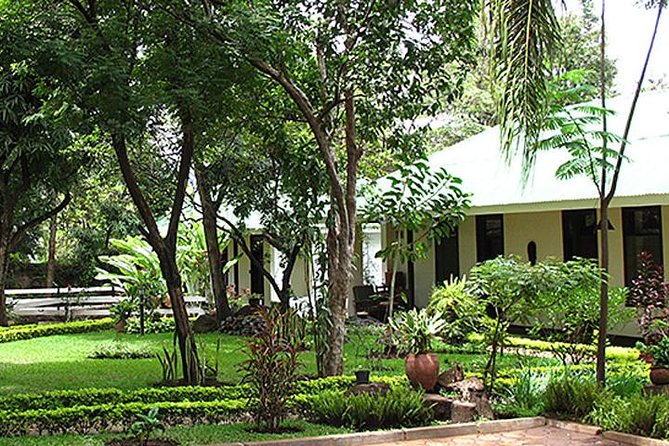
Your first night is at Bristol Cottages Hotel in Moshi, where you spend two nights before the climb. This is practical rather than flashy. You can shower, sleep, eat, and get ready without racing straight from the airport to the trail.
Day 2 is especially useful. You meet the mountain guides, attend an orientation, and complete a final equipment check. The operator does not provide climbing clothing and gear rental as part of the listed price, so use this meeting to settle any rental questions before leaving town.
A guide also takes the group to lunch in Moshi. The town market gives you a first look at daily life around Kilimanjaro, and it is a better introduction than spending the entire pre-climb period inside a hotel.
The pickup service is included as an available feature, and airport transportation is arranged at the beginning and end of the trip. The listed start time is 12:00 a.m., so confirm your exact arrival instructions with Tusker before booking flights.
Days 3 and 4: forest birds, monkeys, and the Shira Plateau
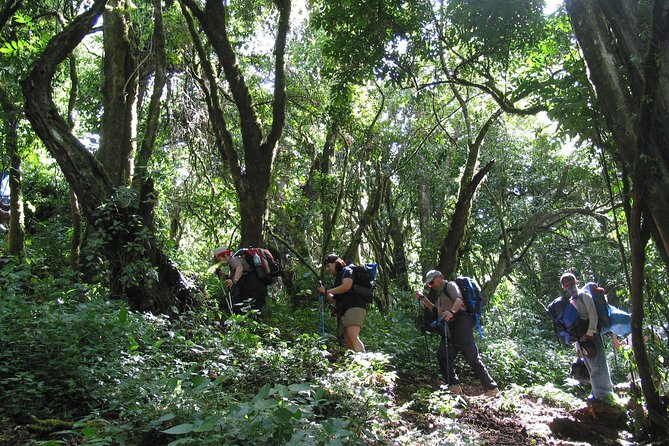
The climb begins at Londorossi on the western slopes. The first trail section runs through montane forest, where Hartlaub’s turacos and colobus monkeys may add sound and color to the walk. The route description also refers to Eddie and Amy Frank’s field guide to Kilimanjaro flora, suggesting that the guiding approach includes attention to plants rather than only pace and elevation.
After about four hours, you reach the first Tusker camp among the trees. This is a relatively gentle opening compared with what follows, but the forest can feel damp and enclosed. You will want to keep rain protection handy and avoid treating the first day as a free pass. Conserving energy from the start matters.
On Day 4, the trail leaves the forest and rises toward the Shira Plateau. Shira is a caldera formed after the collapse of one of Kilimanjaro’s original three peaks, along with Kibo and Mawenzi. You climb through heath and moorland to about 11,560 feet, with views opening toward the caldera and your first clear sight of Kibo.
This is an eight-hour day, so the change in scenery comes with a real physical cost. The reward is a wider sense of the mountain. You are no longer simply walking through trees. You can see the high summit ahead and understand the scale of the climb.
Days 5 and 6: across Shira to Moir Camp and Lava Tower
Day 5 crosses the Shira Plateau toward Moir Camp. The route passes beneath a large lava flow and includes a hot lunch break at Fisher Camp. The wide, rough plateau can feel exposed after the forest, and the eight-hour duration makes this another day where a slow pace is your best friend.
Moir Camp is located at the end of a large gorge. The setting gives the day a stronger mountain feel, with rock, open sky, and lava formations replacing the softer forest scenery. You should not expect a relaxed sightseeing walk. This is a proper trekking day at altitude.
Day 6 is one of the itinerary’s most important days for acclimatization. You climb to Lava Tower at 15,200 feet, then descend about 2,000 feet into Barranco Canyon. This climb high, sleep lower pattern is a standard and useful way to help your body adapt.
Lava Tower is a 320-foot volcanic formation, and lunch is taken near its base. The thin air may make the climb feel slow, even for fit hikers. That is intentional. The point is not to rush upward, but to spend time at elevation before sleeping lower in Barranco.
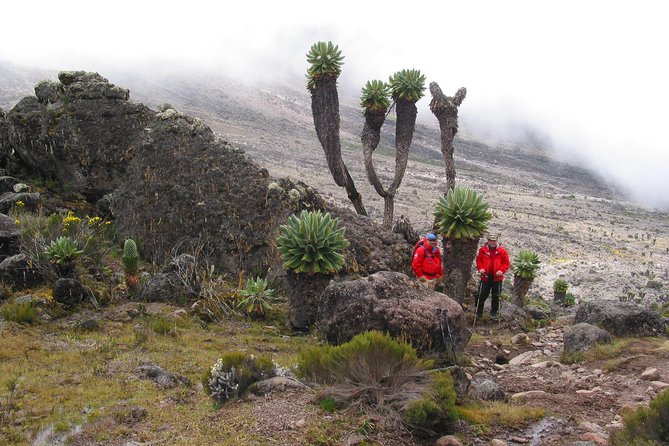
The descent enters an unusual zone marked by giant senecios and lobelias. Barranco Camp sits below the Barranco Wall, which becomes the next morning’s main challenge. I like this part of the plan because it combines memorable scenery with a sensible altitude strategy.
More Kilimanjaro routes:
- Kilimanjaro climb by Lemosho Route (7-day)
★ 5.0 · 651 reviews - Kilimanjaro climb, Machame Route (7-day)
★ 5.0 · 262 reviews - Kilimanjaro Climbing Lemosho Route 8 Days.
★ 5.0 · 186 reviews - Climbing Kilimanjaro – Machame Route
★ 5.0 · 170 reviews
Days 7 and 8: Barranco Wall and the high camps
Day 7 begins with the Barranco Wall. It is a steep scramble rather than a simple uphill path, and you need steady feet, patience, and comfort using your hands at times. The route description presents it as a major test, but it is followed by a shorter five-hour day, giving you some recovery time.
After the wall, you descend into Karanga Valley and then climb again to Karanga Camp. This repeated up and down movement can be tiring, but it also avoids a straight, relentless ascent. Kibo remains a constant presence, and the changing views help break up the effort.
Day 8 is shorter at about four hours, but the thin air makes it feel harder than the clock suggests. You continue over rocky ground to Barafu High Camp, whose name means ice in Swahili. Mawenzi Peak rises behind the camp, and the mood changes here because the summit attempt is next.
Barafu is not a comfort stop. It is cold, exposed, and high. Your most valuable assets are a warm sleeping system, organized clothing, good hydration, and a willingness to rest even if you are too excited to sleep.
Day 9: the pre-dawn climb to Uhuru Peak
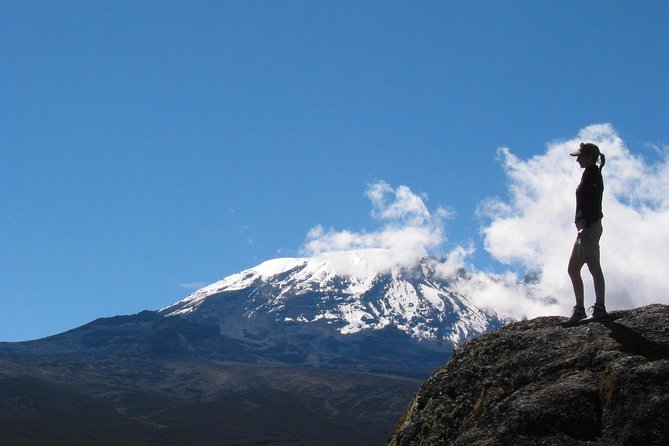
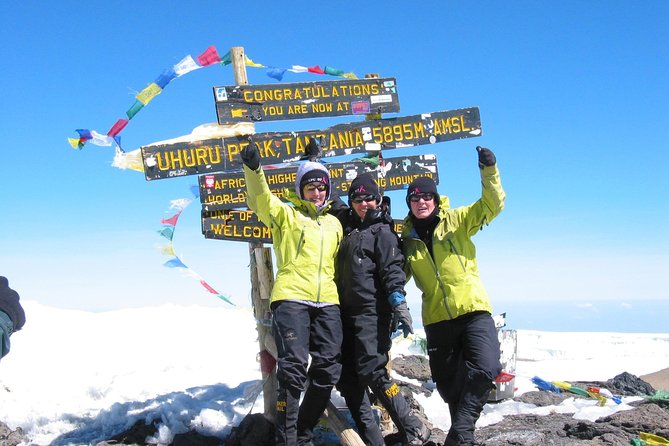
The summit attempt begins before sunrise. You climb steeply toward the crater rim, reaching it around midday if the schedule holds. From there, Mawenzi Peak sits behind you, while the crater and upper ice walls appear ahead.
Uhuru Peak, at the top of Kilimanjaro and the highest point in Africa, is about an hour beyond the crater rim according to the itinerary. Reaching it is the emotional high point of the trip, but it comes after several demanding days and a cold, thin-air ascent.
The listed summit day takes about seven hours, although the total effort should be understood as much longer when rest breaks and the later descent are counted. You may choose to descend into the crater and camp below the summit, or continue down to Barafu Camp. The crater option is a major variation, so ask about extra cost, equipment, conditions, and whether it is available for your departure date.
Do not let the company’s high success rate make you casual about this day. Summit success is never automatic. Listen closely to your guides, move at their pace, and tell them quickly if you feel unwell.
Days 10 and 11: a long descent and a proper finish
After the summit, you descend through loose scree for about two hours to Barafu, where lunch provides a needed pause. The route then continues to Millennium Camp, with the day totaling about six hours.
Many people focus so hard on reaching the summit that they underestimate the descent. Loose rock can punish tired knees, and fatigue makes small mistakes more likely. Trekking poles, careful foot placement, and patience matter here.
Day 11 brings the final downhill walk from Millennium Camp to the national park gate. After signing out, you return by vehicle to Bristol Cottages Hotel in Moshi for a hot shower, a cold drink, and a celebratory group dinner.
That hotel return is more than a small convenience. After sleeping in mountain camps and spending days without a normal shower, a bed and clean clothes feel like part of the reward. The group dinner also gives you space to mark the achievement before moving on to the safari portion.
Days 12 and 13: Lake Manyara and the optional safari extension
The final two days shift from mountain trekking to wildlife. Lake Manyara National Park is the named safari destination, with accommodation at a traditional wildlife lodge near the Rift Valley escarpment. The lodge setting includes views across the plains, giving you a sharp change from Kilimanjaro’s rock and cold.
The safari information is less exact than the climbing schedule. Day 12 is described as a day at Lake Manyara, and Day 13 includes about six hours at the park before airport transportation. If you choose the safari option, you may also be transferred to a different airport gate for short flights toward the Serengeti, Ngorongoro Crater, Tarangire, or Lake Manyara.
Zanzibar is also mentioned as a possible short-flight extension. This means you should not assume the advertised 13 days automatically include a full safari through several parks. Ask exactly what is included, where you sleep, which park fees apply, and whether flights are part of your selected package.
The wildlife add-on makes sense after the climb, but it changes the trip’s character. If you want a focused summit expedition, you may prefer to treat the safari as optional. If this is your one major visit to Tanzania, adding wildlife time could make the long journey more worthwhile.
Food, tents, staff, and the real value of $8,188
At $8,188 per person, this is a premium-priced Kilimanjaro trip. The value depends less on the number of days than on the level of support behind those days.
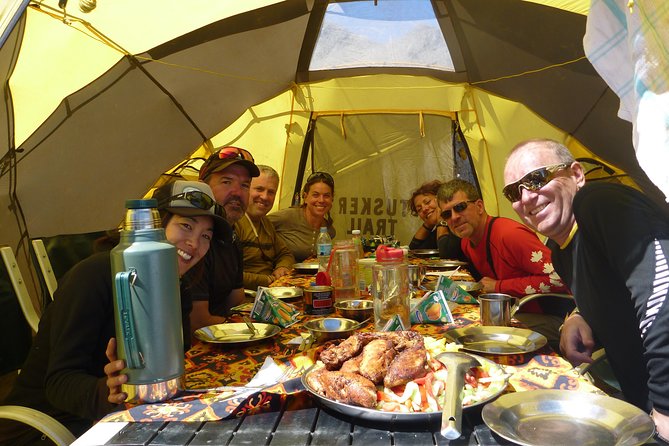
The operation uses custom walk-in tents and mountain chefs trained at the Culinary Institute of America. Farm-to-table meals are promoted as part of the program, and the listed inclusions provide breakfast on 12 days, lunch on 12 days, and dinner on 10 days. On a demanding climb, dependable food is not a luxury. It helps you maintain energy when appetite and altitude are working against you.
The listed inclusions do not cover climbing gear and clothing rental. That can add to your total cost, so ask Tusker for current rental details before you compare this package with lower-priced operators.
Crew treatment is another part of the value. Tusker says it pays its crew at the highest level, with pensions and medical benefits for them and their families. The company also supports a local Lions Club, including a school for deaf children. Those policies do not remove every ethical question connected with mountain tourism, but they are relevant when you are choosing between operators.
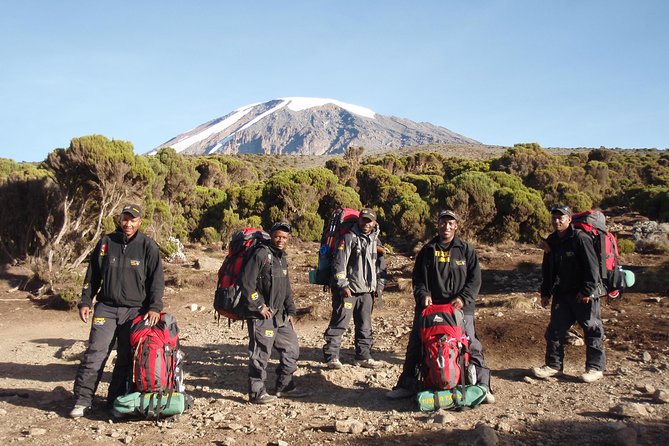
The strongest practical value is the safety structure. High Altitude First Responder training, experienced guides, a detailed route, and a large support team can make a major difference when you are tired or struggling with altitude. Past bookings have included support ratios such as 21 crew members for three climbers, although your own group size and staffing should be confirmed directly.
Who should book this climb
I would look at this trip if you want a serious, well-supported Kilimanjaro expedition rather than the cheapest route to the summit. It suits people who value food, equipment, guide training, crew care, and a longer acclimatization schedule.
It is also a good fit if you want a private experience. Only your group participates, rather than joining a large public departure. That can make communication easier, though group size still affects the feel of the climb.
You should think twice if your budget is tight, if you want a short trek, or if you dislike early starts, cold camps, long walking days, and uncertain summit conditions. Most people can participate according to the supplied information, but the route still requires good physical preparation.
Free cancellation is available up to 24 hours before the start time. Cancellations inside that window are not refunded, and poor weather may lead to a new date or a full refund. Confirm the local cut-off time and weather terms before you commit.
Should you book Tusker Trail’s Lemosho climb?
Book it if you want the Lemosho Route’s varied terrain, a longer schedule, serious mountain support, and a food program that treats camp meals as essential fuel. Tusker’s long operating history, stated 99 percent summit success rate, and strong attention to crew welfare add weight to the high price.
Before paying, get the safari plan in writing. Clarify whether Lake Manyara is included in the base cost, which flights and park fees apply, what crater camping costs, and how much gear rental will add.
For a first Kilimanjaro climb, I would favor this over a rushed itinerary, provided the budget works. The route gives you time, the support system is a central part of the product, and the post-climb wildlife option can round out a memorable Tanzania trip.
FAQ
How long is the Kilimanjaro and safari experience?
The experience lasts approximately 13 days. The first 11 days cover the climb, Moshi preparation, and return from the mountain. Days 12 and 13 describe Lake Manyara and possible safari or onward flight options.
Which Kilimanjaro route does this trip use?
It uses the Lemosho Route. The itinerary begins at Londorossi, crosses the Lemosho Glades and Shira Plateau, then continues through Lava Tower, Barranco, Karanga, and Barafu before the summit attempt.
Is airport pickup available?
Yes. Pickup is offered, and the itinerary describes transportation from Kilimanjaro Airport to Bristol Cottages Hotel in Moshi. Transportation back to the airport is also arranged at the end.
Are meals included?
Yes. The package lists breakfast on 12 days, lunch on 12 days, and dinner on 10 days. Mountain meals are prepared by cooks trained at the Culinary Institute of America.
Is climbing gear included?
No. Climbing gear and clothing rental are not included in the listed price. You should contact Tusker Trail for current rental details and costs.
Is the tour private?
Yes. This is a private activity, and only your group participates.
Can I cancel for a full refund?
You can cancel at least 24 hours before the experience start time for a full refund. Cancellations or changes made less than 24 hours before the start time are not accepted or refunded under the stated policy.
More Safaris in Moshi & Kilimanjaro
- 8-Day Essence of Tanzania Safari – Luxury
★ 5.0 · 72 reviews - Great Migration Safari In Tanzania
★ 5.0 · 71 reviews - Serengeti, Ngorongoro and Tarangire 4 Days Safari
★ 5.0 · 59 reviews - 6 Days 5 Night Safari
★ 5.0 · 57 reviews
Newly listed around Moshi & Kilimanjaro
- Climb Mount Kilimanjaro: 7 Days Machame Route★ 5.0 · 3 reviews
- 6 Days Mount Kilimanjaro Climbing via Rongai Route★ 5.0 · 3 reviews
- Explore 1 day Ngorongoro Crater Budget Group Safari from Arusha★ 5.0 · 3 reviews
- Mt. Kilimanjaro Day Hiking★ 5.0 · 3 reviews
- Chemka (Kikuletwa) Hot Springs, Tanzania★ 5.0 · 3 reviews
- Guided City tour of Moshi★ 4.3 · 3 reviews
- 8 Day Tanzania Family Safari★ 5.0 · 3 reviews
- Rongai Route 7 Days★ 5.0 · 3 reviews
Kilimanjaro Climbs, compared.








Browse the lists this tour appears in