
Reviewed · KILIMANJARO CLIMBS
Kilimanjaro climb, Rongai Route (7-day)
Kilimanjaro’s Rongai Route gives you a quieter way up Africa’s highest mountain, beginning on the northern side near Kenya and finishing through the southern Marangu route. Over seven climbing days, you move from conifer forest to heath, rocky semidesert, and the Arctic-like summit zone before reaching Uhuru Peak at 5,895 meters.
I like two things right away: the route builds in several acclimatization hikes, and the full package includes airport transfers, hotel nights, tents, meals, porters, medical checks, and park fees. The main catch is the price, $3,507 per person, plus your own gear, insurance, visa, and crew tips. It is a serious investment, though much of the difficult mountain logistics are covered.
Key points to know before booking
- A quieter northern approach: Rongai usually sees less foot traffic than the popular southern routes, with forest walking at the start and a broad change of scenery across the mountain.
- Seven climbing days, nine days overall: The package includes arrival and departure hotel nights, making the full schedule about nine days.
- Built-in altitude practice: Short hikes from Second Cave and Mawenzi Tarn help you climb high and sleep lower before summit night.
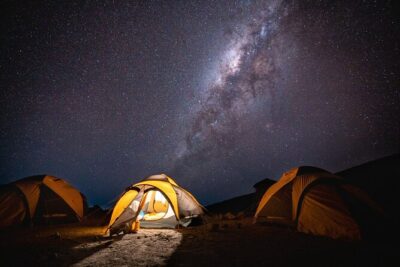
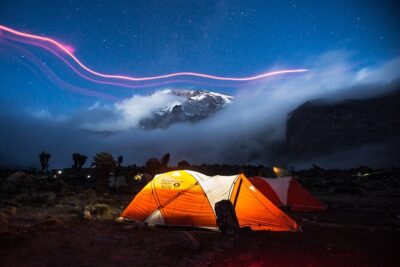
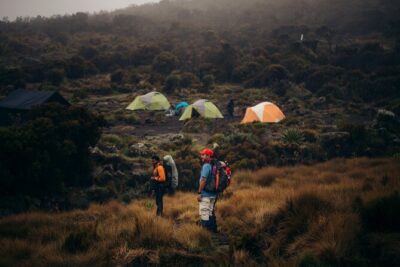
- Walk-in North Face VE-25 tents: Two hikers share each tent, with a separate dining tent, sleeping pads, tables, chairs, crockery, and cutlery.
- Strong safety setup: Certified Wilderness First Responder guides use medical kits, oxygen tanks, oximeters, and regular health checks.
- Summit night is the hard part: The climb from roughly 4,700 to 5,895 meters begins at night and is demanding mainly because of altitude, cold, darkness, and fatigue.
Starting in Moshi with a useful pre-climb briefing
Your trip begins with pickup at Kilimanjaro International Airport and a transfer to Aishi Machame Hotel near Moshi. Two hotel nights are included, one before and one after the mountain, with two people sharing a room unless you pay for single accommodation.
The hotel provides hot water, internet access, a swimming pool, and a comfortable place to sort your kit. That first night matters. You are not rushing from the airport straight into the forest, and the evening briefing gives you time to check clothing, ask health questions, and hear how the climb will operate.
The meeting time for the mountain departure is 9:00 a.m. Hotel check-in begins at 2:00 p.m. on arrival day. If your flight leaves late on the final day, checkout is normally at 11:00 a.m., with late checkout available for an extra fee.
More Kilimanjaro routes:
- Kilimanjaro climb by Lemosho Route (7-day)
★ 5.0 · 651 reviews - Kilimanjaro climb, Machame Route (7-day)
★ 5.0 · 262 reviews - Kilimanjaro Climbing Lemosho Route 8 Days.
★ 5.0 · 186 reviews
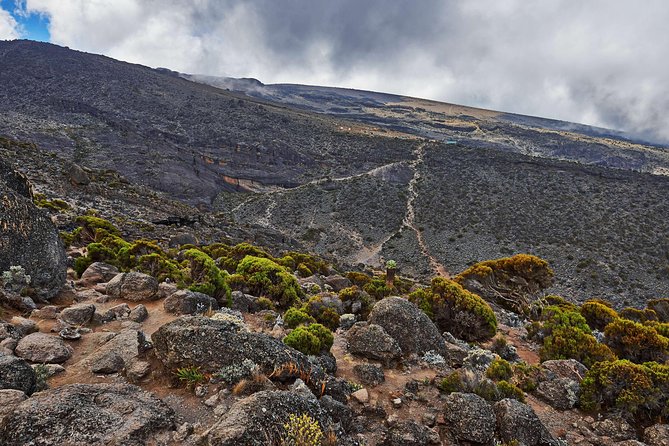
Day 2: Nalemuru Gate to Simba Camp at 2,625 meters
The climb begins at Nalemuru Gate, the northern entrance to Kilimanjaro National Park, at about 2,020 meters. While the head guide handles permits and search-and-rescue registration, you start walking through conifer forest toward Simba Camp.
This is a moderate first day of about five hours. The distance and height gain are manageable, but you should resist the urge to race ahead while your legs still feel fresh. The recommended rhythm is pole pole, or slowly slowly, a pace that becomes increasingly useful as the air thins.
By the time you reach camp, the crew has already pitched the tents and begun preparing dinner. That is one of the practical advantages of a supported climb. You carry only your personal day items, while porters handle tents and group equipment.
The first camp is also where you begin the daily routine: eat, drink, report how you feel, organize your sleeping space, and rest. Keep away from alcohol and tobacco, and follow the guide’s advice from the first hour. Altitude problems are easier to manage when you report symptoms early.
Day 3: Second Cave and your first altitude exercise
From Simba Camp, you walk about three hours to Second Cave Camp at 3,480 meters. This is a relatively easy day by Kilimanjaro standards, and the shorter schedule leaves time for lunch, rest, and a planned acclimatization hike.
After resting, you walk toward Kikilewa Camp, gaining about 100 meters, then return to sleep at Second Cave. This high-walking, lower-sleeping pattern is useful because your body gets a little more time at altitude without forcing you to spend the night at the higher camp.
The surrounding area begins to feel more open than the forest below. The route is still not technically difficult, but altitude can make simple slopes feel surprisingly slow. You may find that your appetite, sleep, and energy change even when your muscles feel fine.
The crew serves three meals a day, with vegetarian, gluten-free, halal, and other meal requests available. Tea, coffee, juice, and soda are also included on the mountain. Ask about dietary needs before departure rather than waiting until camp.
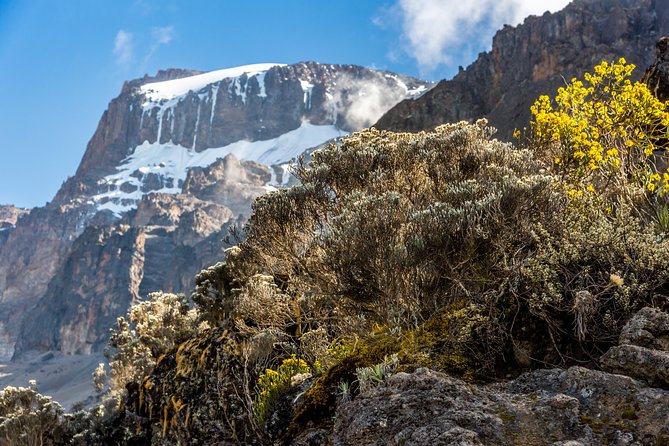
Day 4: Kikilewa Camp and the view toward Mawenzi
You leave Second Cave after breakfast and climb to Kikilewa Camp at 3,630 meters. The walking day is listed at about eight hours, although the exact pace depends on the group, rest stops, and conditions.
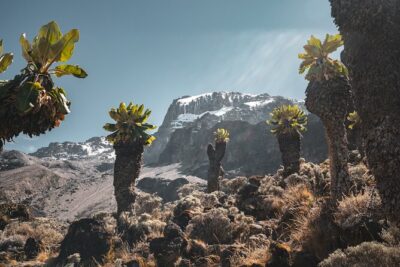
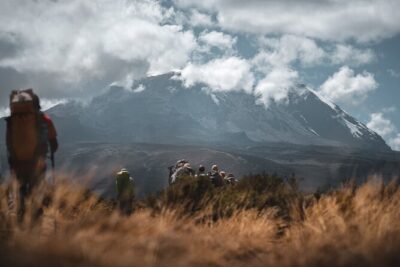
The reward is a clearer view toward Kibo, Kilimanjaro’s main summit cone, and Mawenzi, its jagged secondary peak. Clouds can hide the view, so do not count on a perfect panorama, but this is one of the more striking sections of the route when the sky is open.
This is described as a relief day, with time after lunch to sleep before the next stage. In practical terms, that rest is not wasted time. Your body is working hard to adjust, and an easy afternoon can help preserve strength for summit night.
The guide checks each climber’s condition in the evening and explains the next day’s plan. That repeated personal attention is important on a private trip, where the schedule is shaped around your own group rather than a large public departure.
More week long trips in Moshi & Kilimanjaro:
- Climbing Kilimanjaro through 7 days Machame Route
★ 5.0 · 151 reviews - 7 Days Kilimanjaro via Machame route affordable price
★ 5.0 · 110 reviews - Private Kilimanjaro Hike 7 Day Lemosho Route
★ 5.0 · 60 reviews - 7-Day Magical Tanzania Safari -Premium High End Package
★ 5.0 · 53 reviews
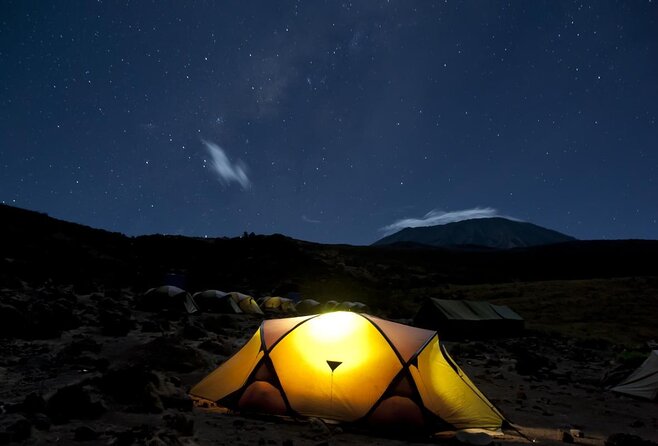
Day 5: Mawenzi Tarn and a sharper taste of altitude
The walk to Mawenzi Tarn Camp takes you to about 4,330 meters, at the foot of Mawenzi Volcano. The day includes lunch and a two-hour rest, followed by an acclimatization hike toward Mawenzi with around 200 meters of additional gain.
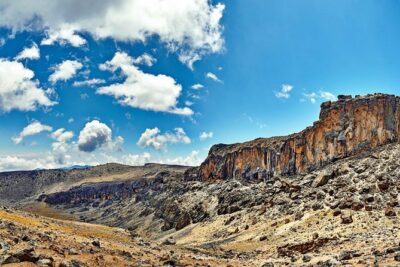
You then descend to camp for dinner. This short up-and-down outing gives you a chance to feel the effect of higher altitude while you are still close to camp. It also offers some of the route’s most unusual mountain scenery, with Mawenzi’s broken volcanic ridges rising nearby.
At this point, the climb becomes less about technical hiking and more about managing your body. Move slowly, drink regularly, and tell the guide if you develop a headache, dizziness, nausea, unusual breathlessness, or severe fatigue. The outfitter supplies oximeters, medical kits, and oxygen tanks, but good safety depends on honest communication.
You should also prepare mentally for a basic night. Tents are comfortable for mountain camping, but this is not a hotel room. Wind, cold, altitude, and interrupted sleep are normal parts of the experience.
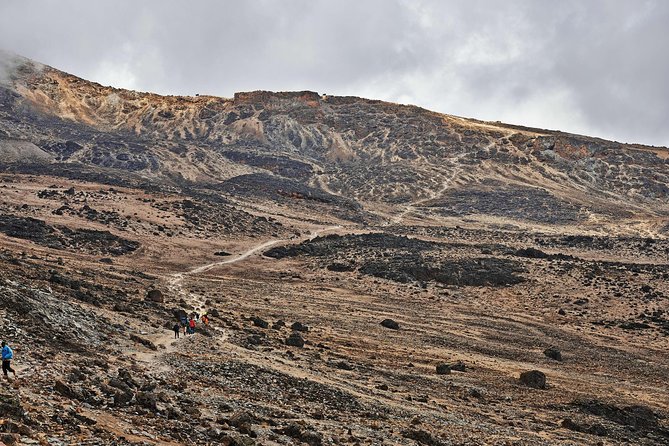
Day 6: Across the rocky semidesert to summit camp
The next stage leads toward Kibo Summit Camp at about 4,700 meters. The route leaves the greener upper slopes and enters a rocky semidesert, with less vegetation and a much harsher feel.
The walking itself is not described as technically difficult. The problem is conserving energy. You need to arrive at summit camp with enough strength for the night climb, so keep your pace slow and avoid unnecessary activity.
The schedule lists about 14 hours for this stage, which reflects the long effort surrounding summit preparation. The itinerary refers to both Kibo Summit Camp and School Hut Camp, with the latter listed at 4,715 meters for the summit departure. Confirm the exact camp name and timing during your briefing, since the supplied schedule uses both descriptions.
After arriving, eat, drink, organize your summit clothing, and sleep if you can. Avoid strenuous activity. You may not sleep deeply at this altitude, but even quiet rest helps.
Day 7: The midnight push to Uhuru Peak
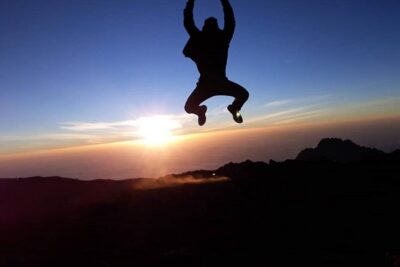
Summit night is the central test of the climb. You leave camp in darkness and walk toward Uhuru Peak at 5,895 meters. The slope is generally moderate, but high altitude places more stress on your heart and breathing than on your legs.
The guide team assigns one guide for every two climbers during this section and continually checks your condition. That close ratio is a major safety benefit, especially if your group includes people moving at different speeds.
Expect a slow, steady ascent. The coldest hours arrive before sunrise, and the darkness can make the climb feel longer. Your goal is not speed. It is to keep moving without burning through your reserves.
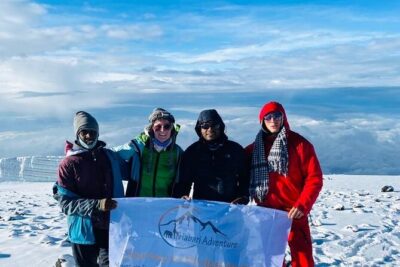
At the summit, you can take in the views and, if conditions allow, walk on the nearest glacier. The time at the top may be limited by weather, cold, and how your body feels, so follow the guide’s instructions rather than lingering for a perfect photograph.
The descent is not an afterthought. You drop to Horombo Camp at about 3,720 meters, with a two-hour rest stop at Kibo Camp. Tired legs, loose rock, and reduced concentration make the way down a real risk. Use your trekking poles, watch every step, and do not treat reaching the summit as the end of the hard work.
Day 8: Marangu Gate, certificates, and a proper shower
After breakfast, you make the final descent to Marangu Gate at 1,860 meters. Five hours of walking can feel long after summit night, but the lower altitude usually brings a welcome change in breathing and energy.
At the gate, you can exchange final thanks with the support crew before returning to the hotel. Certificates are issued at the company offices, and transport takes you back to Aishi Machame Hotel.
This is also the point when the scale of the support operation becomes clear. Guides lead and monitor you, cooks prepare three meals daily, porters move equipment, and camp staff create the dining setup. Tips for this crew are not included, so budget for them separately.
Day 9: Airport transfer and the cost of extra comfort
The final day is for rest and airport transfer. The package includes transport to and from JRO, but your hotel lunch and dinner are not included, so plan for those meals.
The price of $3,507 per person looks high until you add up what it covers: park fees, ground transport, two hotel nights, mountain tents, dining equipment, sleeping pads, food, drinks, guides, porters, cooks, medical checks, and airport transfers.
It still is not an all-in price. You must pay for flights, a Tanzanian visa, personal hiking gear, insurance, and tips. Single hotel and tent accommodation also costs extra. Sleeping bags and other personal equipment can be hired, which may help if you do not expect to use high-altitude gear again.
For a private trip, the value depends heavily on your group size and priorities. You are paying for a structured operation with substantial staff and safety equipment rather than simply buying access to a trail. Group discounts may improve the price for larger parties.
What the support team adds to the experience
The strongest part of this package is the level of care built into the mountain routine. Guides are certified Wilderness First Responders, and health checks take place during the climb. Oxygen, oximeters, and medical kits are carried, though none of these removes the need for suitable insurance.
Past groups have worked with guides and staff including Jackson, Joseph, Frank, Athumani, Amos, Elia, and Solomon. These names are not a guarantee of your assigned team, but they show the personal nature of the operation. Families, solo climbers, and friends have all used the route, and the guide-to-climber ratio on summit night is particularly reassuring.
Food is another frequent highlight of the setup. The kitchen team serves energy-rich meals three times a day, with snacks such as cakes and tea mentioned in the trip experiences. Mountain food will not replace a restaurant, but warm meals and regular drinks can make a major difference after a cold walking day.
Who should choose the Rongai Route?
Choose this climb if you want a quieter approach, full camping support, and a gradual schedule with planned altitude walks. The route suits beginners who are reasonably fit, as well as experienced hikers who prefer a guided, well-equipped ascent.
You need a moderate fitness level, but you do not need technical climbing experience based on the information provided. The greater challenge is altitude, not scrambling or ropes. Anyone with medical concerns should seek professional advice before booking.
This is a good option for families and private groups that want their own schedule and guide attention. It is less suited to someone seeking a short, cheap mountain outing. Seven days on the route, plus hotel nights, means you need time, patience, and a willingness to spend long hours in basic conditions.
Free cancellation is available up to 24 hours before the experience starts. Changes or cancellations inside that window are not refunded, so check your flights and insurance before committing.
Should you book this Kilimanjaro climb?
I would book the Rongai Route if your priorities are quieter trails, a careful acclimatization plan, and strong logistical support. The combination of private participation, experienced mountain staff, three meals daily, medical monitoring, and airport transfers makes the price easier to understand.
I would pause if $3,507 is only the beginning of your budget. Add flights, visa, insurance with trekking and helicopter evacuation cover up to 6,000 meters, gear, optional single accommodation, hotel meals, and tips.
The most important question is not simply Can you walk uphill for seven days? It is Can you manage altitude, cold, poor sleep, and a long summit night? If you can prepare properly and accept that reaching the top is never guaranteed, this is a well-supported way to attempt Africa’s highest peak.
FAQ
How long is the full experience?
The mountain climb lasts seven days, while the complete package takes about nine days including arrival and departure hotel nights.
Where does the climb begin?
The climb begins at Nalemuru Gate, the northern entrance to Kilimanjaro National Park, at approximately 2,020 meters.
Where does the climb finish?
The final descent ends at Marangu Gate at about 1,860 meters, followed by transport back to the hotel.
What altitude is Uhuru Peak?
Uhuru Peak is 5,895 meters above sea level.
Are meals included?
Yes. Breakfast, lunch, and dinner are included on the mountain. Vegetarian, gluten-free, halal, and other meal types are available. Hotel lunches and dinners are not included.
Is hotel accommodation included?
Yes. Two nights at Aishi Machame Hotel are included, normally with two people sharing a room. Single accommodation costs extra.
Is camping equipment provided?
Yes. North Face VE-25 tents, sleeping pads, dining equipment, tables, chairs, crockery, and cutlery are included. Personal items such as hiking clothing, boots, and a sleeping bag are not included, though some gear is available for hire.
Is airport transportation included?
Yes. Pickup and drop-off at Kilimanjaro International Airport, along with ground transportation, are included.
Is travel insurance included?
No. You need your own insurance covering trekking up to 6,000 meters and helicopter evacuation. This is strongly recommended.
What fitness level is required?
The experience requires a moderate level of physical fitness. You should also be prepared for high altitude, long walking days, and a demanding night ascent to the summit.
Newly listed around Moshi & Kilimanjaro
- Climb Mount Kilimanjaro: 7 Days Machame Route★ 5.0 · 3 reviews
- 6 Days Mount Kilimanjaro Climbing via Rongai Route★ 5.0 · 3 reviews
- Explore 1 day Ngorongoro Crater Budget Group Safari from Arusha★ 5.0 · 3 reviews
- Mt. Kilimanjaro Day Hiking★ 5.0 · 3 reviews
- Chemka (Kikuletwa) Hot Springs, Tanzania★ 5.0 · 3 reviews
- Guided City tour of Moshi★ 4.3 · 3 reviews
- 8 Day Tanzania Family Safari★ 5.0 · 3 reviews
- Serengeti Safari with Sirikwa Travel★ 5.0 · 3 reviews
Kilimanjaro Climbs, compared.
Browse the lists this tour appears in