
Reviewed · KILIMANJARO CLIMBS
Kilimanjaro 7 Days Machame Route Private Tour
Reaching Uhuru Peak at 5,895 meters is the main event here, but the mountain earns its drama long before summit night. Over several days, you walk from lush rainforest into stark alpine desert, sleep in camps beneath Kibo Peak, and finish with a long climb by headlamp toward the crater rim.
I like two things right away. First, this is a private climb, so your group is not tied to strangers or a fixed public group pace. Second, the crew setup is serious: certified Wilderness First Responder guides, porters, cooks, pulse oximeters, portable oxygen, and a first-aid kit are included.
The main caution is the schedule. It is sold as a seven-day Machame climb, yet the full plan takes about nine days, including arrival, briefing, hotel time, and departure. The seven mountain days are demanding, especially the 12 to 14-hour summit day, so moderate fitness is the minimum starting point, not the finish line.
Key points to know before booking
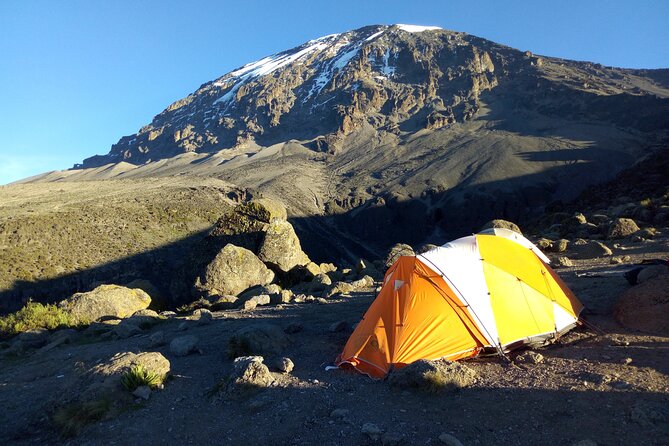
- A private Machame climb: Only your own group takes part, allowing more personal attention and a more flexible walking pace.
- A carefully staged ascent: The route includes a climb to Lava Tower at about 4,600 meters before sleeping lower at Barranco Camp.
- The hardest day is summit day: Expect a midnight start, Uhuru Peak, and a descent to about 3,100 meters in 12 to 14 hours.
- Meals and mountain support are included: A kitchen crew prepares breakfast, lunch, and dinner, while porters carry equipment.
- Safety equipment is part of the package: Guides carry oxygen and a first-aid kit, with pulse oximeters available for altitude checks.
- Budget for personal gear and tips: Boots, hiking clothes, a sleeping bag, and crew gratuities are not included in the $1,895 price.
What the nine-day schedule really means
The name can cause confusion. The climb itself covers seven days on Mount Kilimanjaro, but the complete experience runs approximately nine days.
Day one is based in Moshi, or possibly Arusha, depending on your hotel arrangements. If you add the optional airport transfer, you can be collected from Kilimanjaro Airport and taken to your hotel. The guide briefing also takes place here, along with an equipment check and the chance to rent needed items from the company store.
That extra day matters. You do not want to discover at the Machame Gate that your boots rub, your gloves are too thin, or your sleeping bag is not warm enough. The company advises arriving at least one day before the trek, and I agree. Use this time to sleep, check your kit, and ask direct questions about the summit plan.
Day nine is a recovery and departure day in Moshi. You have breakfast, check out by 10 a.m., and can arrange an airport transfer. If you are continuing to safari or Zanzibar, the company can provide a pre-safari briefing and help with add-on arrangements.
More Kilimanjaro routes:
- Kilimanjaro climb by Lemosho Route (7-day)
★ 5.0 · 651 reviews - Kilimanjaro climb, Machame Route (7-day)
★ 5.0 · 262 reviews - Kilimanjaro Climbing Lemosho Route 8 Days.
★ 5.0 · 186 reviews
Day two: from Machame Gate into rainforest
The mountain route begins after breakfast, with a vehicle transfer to Machame Gate. Registration takes place before you start walking, and the first stage climbs from roughly 1,200 meters to 3,000 meters.
The distance is about 13 kilometers, with five to seven hours of walking through montane forest. This is a proper first day, not a gentle stroll, but the forest gives you shade and a softer introduction than the exposed upper mountain.
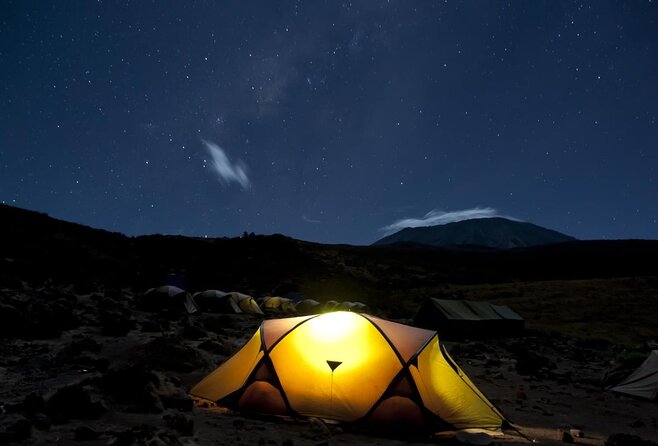
Machame Camp should already have tents waiting when you arrive. That is a small but important comfort. You can focus on washing, eating, and resting instead of helping set up camp after several hours on the trail.
The first night also gives you an early lesson in the rhythm of the trip. You walk, eat, rest, and repeat. The mountain crew handles the camp equipment, dining tent, tables, chairs, sleeping pads, crockery, and cutlery included in the package.
Day three: moorland views at Shira Camp
The route leaves the rainforest behind and climbs from about 3,000 to 3,800 meters. You will walk around nine kilometers over five to six hours, moving into moorland covered with heather plants.
The ground becomes more open, and the views begin to do some of the work. From camp, the plan promises views of Mount Meru, the Shira Plateau, Kibo Peak, and sunset. This is one of the first points where Kilimanjaro feels less like a forest hike and more like a high mountain expedition.
The altitude begins to matter here. A distance of nine kilometers may not sound great on paper, but the air is thinner and the route keeps ascending. Walk slowly. The guide’s job is not to reward the fastest person in the group. It is to help everyone preserve energy for the days ahead.
Day four: Lava Tower acclimatization and Barranco Camp
This is one of the most useful days on the route. You climb from approximately 3,800 to 3,950 meters, covering about 13 kilometers in seven to eight hours.
The route rises toward Lava Tower at about 4,600 meters, then drops to Barranco Camp. This climb high and sleep lower pattern helps your body adjust to altitude without making you spend the night at the highest point reached that day.
The descent to Barranco is not wasted effort. It is the clever part of the schedule. You get a higher-altitude test, then recover at a lower camp in the bottom of the Barranco Wall valley.
This is also a long day, and fatigue may begin to show. Keep your water accessible, eat even if your appetite has faded, and tell the guide about headaches, nausea, dizziness, or unusual shortness of breath. The included pulse oximeters and oxygen are useful safety tools, but they do not replace honest communication.
More week long trips in Moshi & Kilimanjaro:
- Climbing Kilimanjaro through 7 days Machame Route
★ 5.0 · 151 reviews - 7 Days Kilimanjaro via Machame route affordable price
★ 5.0 · 110 reviews - Private Kilimanjaro Hike 7 Day Lemosho Route
★ 5.0 · 60 reviews - 7-Day Magical Tanzania Safari -Premium High End Package
★ 5.0 · 53 reviews
Day five: the Barranco Wall and Karanga Valley
The fifth mountain day is shorter by distance, about 5.5 kilometers, and takes four to five hours. It is not easy. The route first drops into the Great Barranco, then climbs steeply up the Barranco Wall.
This is a rock climb without technical climbing, but it can be tiring. You use your hands at points and move carefully over uneven ground. The wall separates Barranco Camp from the southeastern slopes of Kibo, and the route passes beneath the Heim and Kersten glaciers before reaching Karanga Valley.
From there, you climb again to Karanga Camp at about 3,963 meters. If you feel strong, the plan includes an optional afternoon acclimatization walk to around 4,200 meters, followed by a return to camp.
I like this day because it changes the pace. After the long acclimatization day, you get a shorter route with one memorable physical challenge. The drawback is that the Barranco Wall may feel intimidating if you dislike exposed or steep terrain, even though the activity is not described as technical climbing.
Day six: Barafu Camp and a quiet afternoon
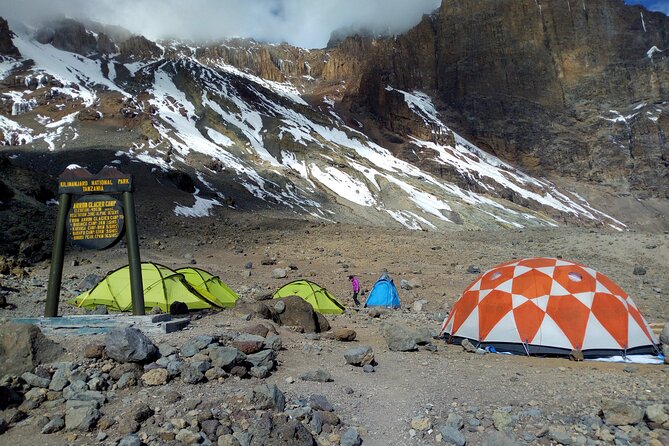
The move from Karanga Camp to Barafu Camp covers only about three kilometers, but the altitude makes it tough. You climb from roughly 3,963 to 4,643 meters across barren scree with almost no vegetation.
The walk takes three to four hours. Once you reach Barafu, the sensible plan is to eat, rest, and prepare for the summit attempt. Your summit clothes, headlamp, spare headlamp batteries, camera, and walking poles should be ready before you lie down.
Barafu is not a sightseeing stop in the usual sense. It is a staging camp. The summit is still about 1,342 meters higher, and the final push begins during the night.
This is where the private format can help. Your guide can keep an eye on your energy, help you organize equipment, and make sure you understand the timing. Do not spend the afternoon wandering around camp simply because the walking day was short. Rest is the job.
Day seven: Uhuru Peak and the longest day
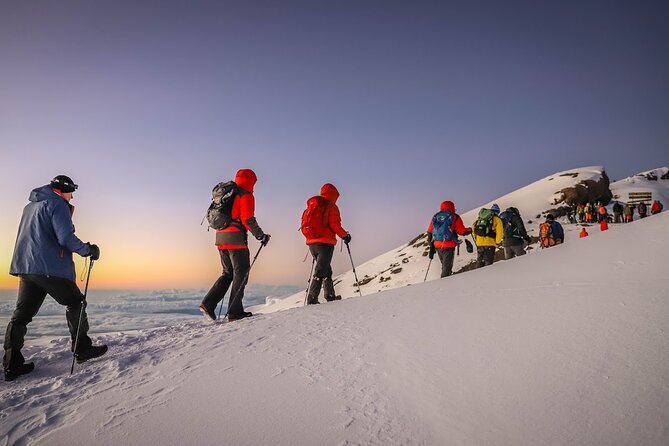
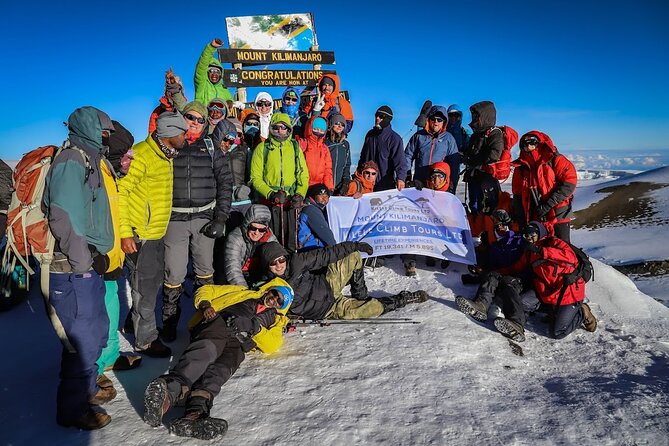
Summit day begins around midnight with a light breakfast. The goal is to reach Uhuru Peak near sunrise, though exact timing depends on your pace and conditions.
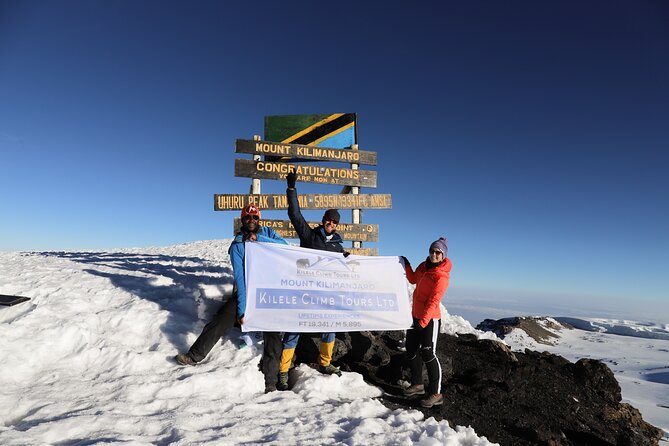
The ascent from around 4,620 meters to 5,895 meters follows steep switchbacks over scree and possibly snow. You aim first for Stella Point on the crater rim at about 5,861 meters, usually reached between 4 and 5 a.m. From there, the route continues along the Kibo crater rim for about an hour toward Uhuru Peak.
The summit section offers views of the crater and glaciers, plus the rare feeling of standing on Africa’s highest mountain. It is also cold, tiring, and physically serious. The route description gives a total walking distance of about 15 kilometers and a full hiking time of 12 to 14 hours, including the descent.
After reaching the summit, you return to Barafu Camp and continue down to around 3,100 meters. That large loss of altitude is welcome, but your legs will be spent. The day combines the highest altitude, the coldest start, the steepest sustained effort, and the longest hours.
Plan mentally for a slow day. The summit is not won by rushing. The guide’s support, the oxygen equipment, and the group’s ability to move at a shared pace are valuable here. The achievement is real, but the summit is never guaranteed. Mountain conditions and your health remain in charge.
Day eight: descending through forest to Mweka Gate
The final mountain day drops from about 3,100 to 1,700 meters. The distance is nine kilometers, and the descent takes roughly three to four hours through montane forest.
After breakfast, you walk to Mweka Park Gate, sign out, and board the vehicle back to your hotel. The company plans a certificate presentation and celebration after the descent.
Downhill walking can be harder on tired knees than expected. Trekking poles are especially useful here, and you should not treat the last day as an afterthought. The forest is a welcome return to warmer air and thicker vegetation, but uneven ground can still punish tired legs.
Camp life, food, and mountain crew
The package includes camping equipment for a functioning mountain camp: sleeping tents, dining tent, tables, chairs, sleeping pads, crockery, and cutlery. It does not include your personal sleeping bag, boots, hiking outfit, or other individual gear.
Food is a major part of a climb like this. Breakfast is provided eight times, lunch seven times, and dinner six times. The itinerary also describes nutritious meals cooked by a kitchen crew. You should clarify the exact meal count and any dietary needs before departure, since the listed totals do not map perfectly to every day of the nine-day schedule.
The crew structure receives strong praise in the supplied material. Guides, cooks, and porters are repeatedly singled out for organization, care, good food, luggage handling, and calm support. One especially striking achievement involved four veterans with prosthetics reaching the summit, showing what careful planning and strong teamwork can make possible. It should not be read as a promise of success for every climber, but it does show the value of an experienced mountain operation.
Fair wages for the mountain crew, approved by the Kilimanjaro National Park Authority, are included in the tour arrangements. Tips are not included. Carry local cash and ask before the climb how the company recommends distributing gratuities among guides, porters, cooks, and support staff.
Safety, fitness, and who should book
You need a moderate level of physical fitness. That means being ready for repeated walking days, steep ascents, uneven rock, cold conditions, and the possibility of a 12 to 14-hour summit day.
You do not need technical climbing experience according to the route description. The Barranco Wall is a steep rock section, but it is not technical climbing. Still, altitude is the central challenge, not just muscle strength.
The operation includes certified Wilderness First Responder guides, pulse oximeters, portable oxygen tanks, and a first-aid kit. Those are meaningful safeguards. They do not remove the need to prepare properly or report symptoms early.
This climb suits you if you want a private experience with a clear camp system, cooked meals, porters, and close guide support. It is less suited to anyone looking for a relaxed mountain holiday, a short hiking break, or a route with guaranteed summit success.
Is $1,895 per person good value?
At $1,895 per person, the price is not small, but it covers much more than trail guiding. Fees and taxes, mountain crew, porters, cooking, camping equipment, meals, safety supplies, and the private format are included.
You still need to pay for personal equipment, tips, optional airport transfers, hotel arrangements, and any safari or Zanzibar extension. Those extras can push up the final cost, so budget beyond the advertised figure.
I see the strongest value in the private crew and included safety support. Sharing a mountain with an unknown group can make pacing awkward. A private booking gives your own party a more personal setup, though the price may be harder to justify for a solo climber than for a small group splitting some operational costs.
The included meals and camp equipment also reduce the number of separate arrangements you must make. Before paying, confirm the hotel nights, airport transfer price, equipment rental costs, meal counts, and recommended tip amounts.
Booking details worth checking
Confirmation is provided at booking, and the meeting time is listed as 9 a.m. Pickup is offered, though airport transfers are optional rather than automatically included.
The activity is private, and only your group participates. It is near public transportation, but the mountain days themselves depend on the company vehicle transfers to and from the gates.
Free cancellation is available if you cancel at least 24 hours before the local start time. Changes or cancellations made inside that 24-hour window are not accepted for a refund.
Should you book this Machame Route climb?
I would choose this tour if you want Kilimanjaro with a private group, a full acclimatization pattern, cooked food, porters, and visible attention to safety. The route gives you a satisfying progression from forest to moorland, glacier country, crater rim, and summit.
I would not book it casually. You need to arrive early, prepare for altitude, bring proper personal gear, and accept that summit day can last from midnight into the afternoon. Also confirm why the product title says seven days while the complete schedule takes nine.
For a prepared hiker who values organization and personal guide support, the $1,895 price can be fair. For anyone hoping for an easy African sightseeing tour with a mountain attached, this is the wrong idea. Kilimanjaro asks for patience, stamina, and a willingness to walk slowly. The reward is one of the world’s great high-altitude days.
FAQ
How long does the complete experience take?
The full schedule is approximately nine days. Day one is for arrival, hotel transfer, briefing, and equipment checks. Seven days are spent on the mountain, followed by a final day in Moshi.
How much does the tour cost?
The listed price is $1,895 per person.
Is this a private tour?
Yes. Only your group participates in the activity.
Is airport pickup included?
Airport pickup is offered as an optional transfer. The supplied information does not state that it is included in the $1,895 price.
What physical fitness level is required?
The activity states that you should have a moderate physical fitness level.
What personal equipment must I provide?
You must provide personal hiking clothing, boots, a sleeping bag, and other individual hiking gear. Equipment rental is available from the company store if needed.
Are meals included?
Yes. Breakfast, lunch, and dinner are included, with the listed provision of eight breakfasts, seven lunches, and six dinners.
Is camping equipment included?
Yes. The package includes sleeping tents, a dining tent, tables, chairs, sleeping pads, crockery, and cutlery.
What is the cancellation policy?
You can cancel at least 24 hours before the local start time for a full refund. Cancellations or changes made less than 24 hours before the start time are not accepted for a refund.
Newly listed around Moshi & Kilimanjaro
- Climb Mount Kilimanjaro: 7 Days Machame Route★ 5.0 · 3 reviews
- 6 Days Mount Kilimanjaro Climbing via Rongai Route★ 5.0 · 3 reviews
- Explore 1 day Ngorongoro Crater Budget Group Safari from Arusha★ 5.0 · 3 reviews
- Mt. Kilimanjaro Day Hiking★ 5.0 · 3 reviews
- Chemka (Kikuletwa) Hot Springs, Tanzania★ 5.0 · 3 reviews
- Guided City tour of Moshi★ 4.3 · 3 reviews
- 8 Day Tanzania Family Safari★ 5.0 · 3 reviews
- Serengeti Safari with Sirikwa Travel★ 5.0 · 3 reviews
Kilimanjaro Climbs, compared.








Browse the lists this tour appears in