
Reviewed · MOSHI & KILIMANJARO TOURS
Moshi: Serval Wildlife Tour with food and drinks
Serval Wildlife Sanctuary gives you something a standard safari often cannot: close, guided contact with animals in a managed sanctuary setting. You may see giraffes, zebras, ostriches, monkeys, Oryx, lions, and servals, with time to walk, take photos, and learn how these animals live.
I like the easy pickup from Moshi or Arusha, and I like the setting in the Siha Highlands, where Mount Kilimanjaro and Mount Meru may appear along the drive. The main caution is price. At $120 for one person, you should confirm exactly what the fee covers, since some bookings have treated sanctuary entry and transport as separate costs.
The sanctuary itself receives the strongest praise. Guides there, including Ester, can bring you close to the animals safely and explain their behavior. The transport service has received mixed marks, and the visit may feel short if you expect a full safari.
Key points to know before booking
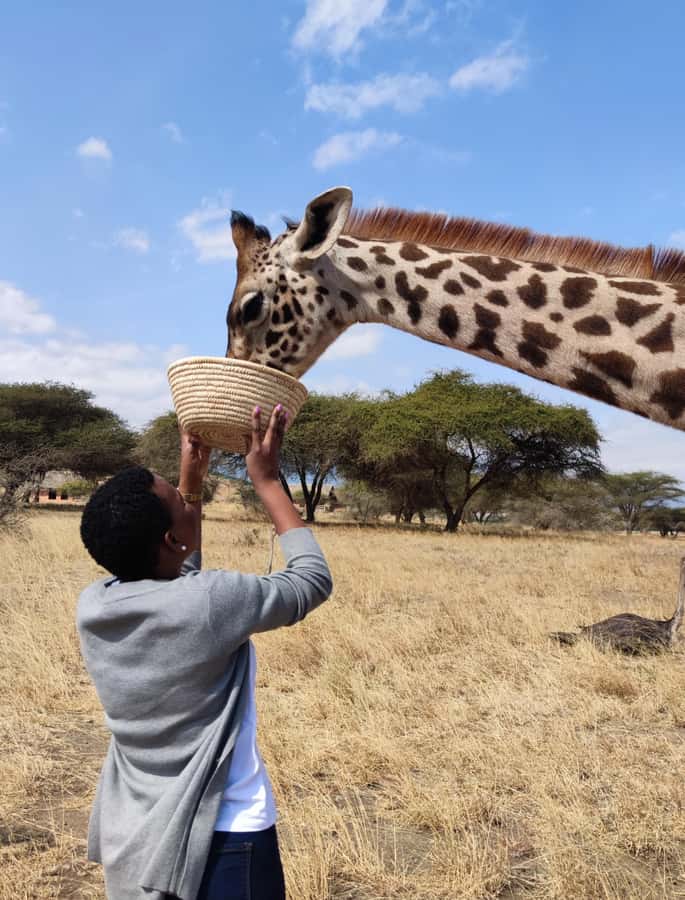
- Close animal encounters: You can observe and, where permitted by the sanctuary guides, pet or feed some animals safely.
- Seven animal highlights: The visit may include servals, giraffes, lions, zebras, ostriches, monkeys, and Oryx.
- Highland scenery: The drive through Siha District can bring views of Mount Kilimanjaro and Mount Meru.
- Short sanctuary visit: About 1.5 hours is set aside for the guided walk, photos, safety briefing, and free time.
- Lunch follows the sanctuary: The meal is served at a local restaurant rather than inside the wildlife grounds.
- Check the price carefully: Confirm entry fees, included drinks, pickup and drop-off points, and any extra transport charge before paying.
What makes Serval Wildlife Sanctuary different
This is not a traditional national-park safari. You are not spending a full day searching for animals from a vehicle. Instead, you visit a sanctuary with managed enclosures and guided animal encounters.
That difference matters. If you want to watch a lion appear after a long search across open plains, this is not the right replacement for a safari in Tarangire, Ngorongoro, or Serengeti. If you want a compact wildlife outing with closer views and a more controlled setting, Serval can fit neatly into a Moshi or Arusha itinerary.
The attraction brings several African species together in one place. You may see sleek servals, tall giraffes, zebras, ostriches, monkeys, Oryx, and lions. The exact experience can depend on the animals’ behavior and the sanctuary’s safety rules. A lion may be resting rather than moving around, and children may not always be allowed close to certain animals.
That is part of the bargain. You get access and proximity, but not the wild uncertainty of an open reserve.
The sanctuary also presents itself as a place for conservation education. Your guide can discuss the animals’ conservation status and their ability to adapt to different environments. For families, this educational side gives the visit more value than a quick photo stop.
More Wildlife Tours in Moshi
- 7 Days Mid Range Tanzania Wildlife Safari
★ 5.0 · 31 reviews - Wildlife Safari Tanzania
★ 5.0 · 19 reviews - From Moshi or Arusha: Serval Wildlife Sanctuary Trip
★ 4.9 · 14 reviews
The drive from Moshi or Arusha into the Siha Highlands
Pickup is offered from accommodations in Moshi, Arusha Urban, or Boma Ng’ombe. You are asked to wait in the hotel lobby 10 minutes before the scheduled pickup time, a small detail that can prevent a morning of phone calls and waiting at the wrong entrance.
The drive takes you toward Siha District and the highland scenery around Mount Kilimanjaro. Depending on weather and visibility, you may see Kilimanjaro or Mount Meru along the way. These views add a sense of place that a simple transfer to an animal park would otherwise lack.
Transport quality is an important part of this booking. One account describes a comfortable vehicle with Wi-Fi and a friendly driver. Another describes a small four-seat car, rapid driving, and an uncomfortable ride. Those experiences do not point to one consistent standard, so I would ask in advance what vehicle is planned, especially if you are carrying luggage or are booking for more than one person.
The guide and driver may be separate people. The actual sanctuary visit is led by the sanctuary’s own trained wildlife guides, while the transport portion is handled by the tour operator. That distinction explains why the animal portion can be excellent even if the road service feels ordinary.
Also confirm your return point. Pickup and drop-off options include Moshi, Arusha Urban, and Boma Ng’ombe, but a request to start in Arusha and finish in Moshi may require an added charge. One booking involved a quoted extra payment for that change, so do not assume that a one-way variation is included.
Inside the sanctuary: a 90-minute wildlife encounter
The sanctuary portion lasts about 1.5 hours and includes a safety briefing, guided walk, sightseeing, free time, and photo stops. That is a sensible order. You first learn how to behave around the animals, then move through the grounds with a guide rather than wandering on your own.
The safety briefing deserves your full attention. Follow the guide’s instructions, respect the enclosures, and do not treat the visit like a petting zoo. The chance to get near animals is special precisely because it depends on careful limits.
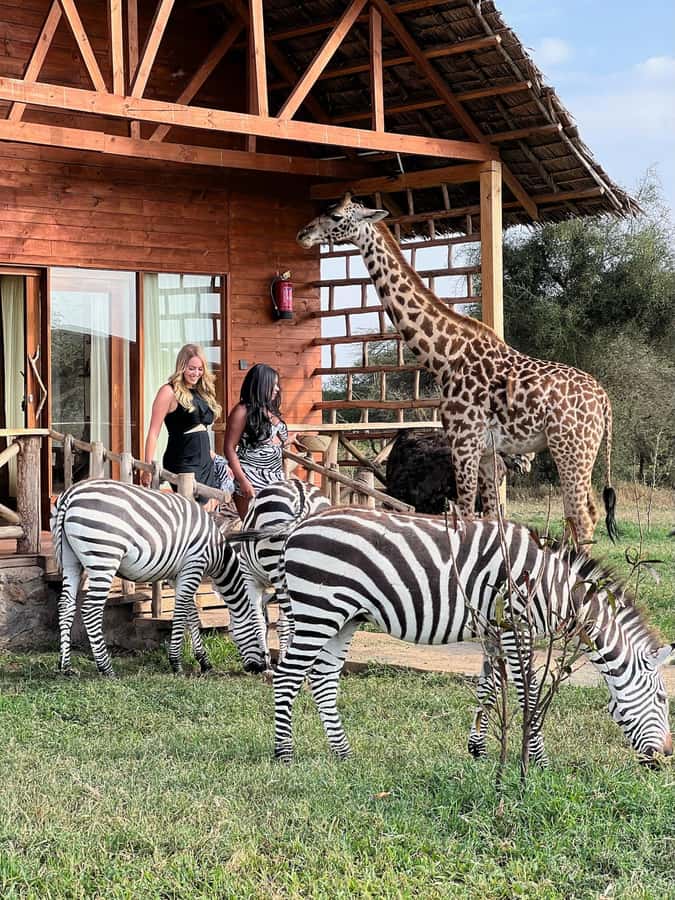
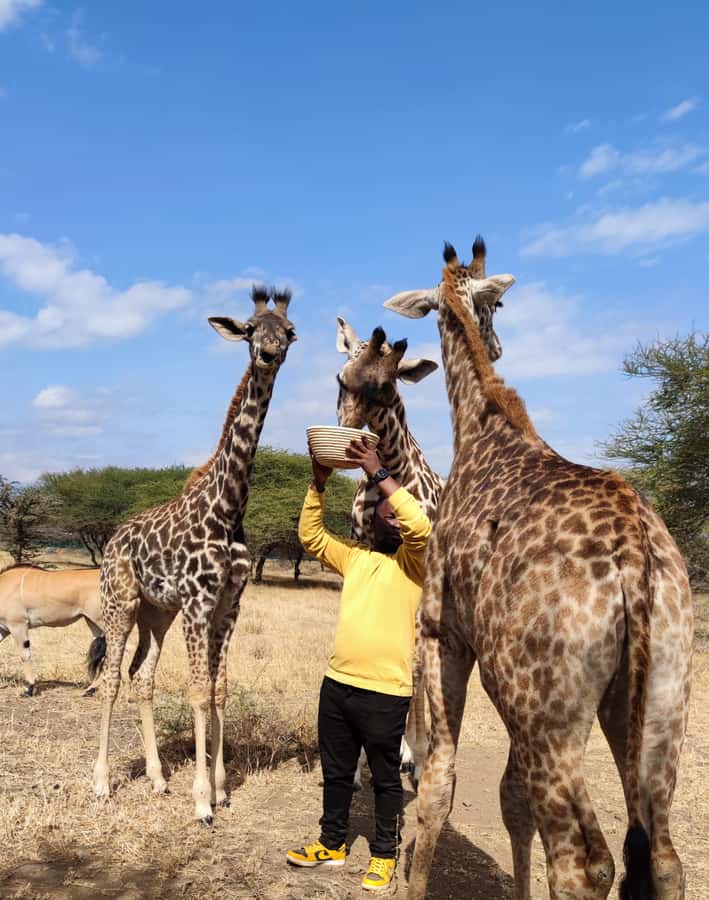
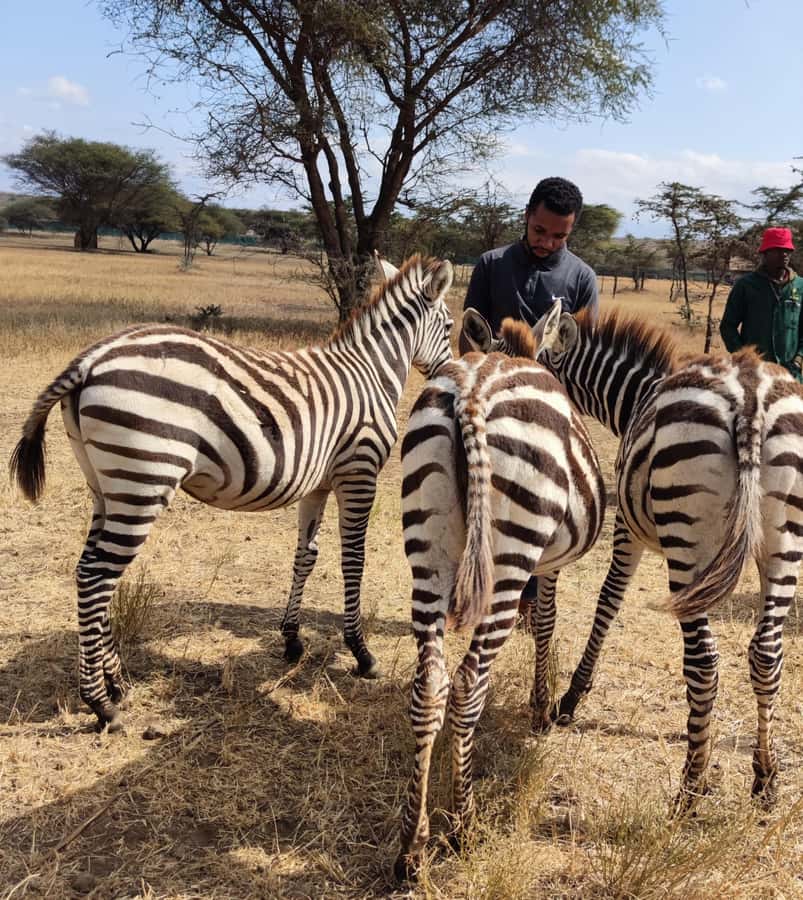
Giraffes are one of the main attractions. Their height and calm presence make them easy to appreciate at close range, and they often provide strong photo opportunities. Zebras add movement and pattern, while ostriches bring a very different sort of energy. Monkeys can be entertaining and inquisitive, but you should still follow the guide’s rules about feeding and contact.
Oryx are another useful reminder that African wildlife is not limited to the animals most familiar from safari brochures. Your guide can help explain how each species is suited to its environment, which makes the stop more than a string of animal photographs.
The servals are central to the sanctuary’s identity. These spotted wild cats are smaller and less familiar than lions or leopards, with long legs and a light, athletic build. The visit offers a chance to learn about them and to understand why less famous species also deserve attention in conservation work.
Lions can be the emotional high point, but keep your expectations realistic. A lion may be sleeping when you arrive. That is not a failure of the sanctuary. It is simply normal animal behavior, though it can disappoint anyone expecting an active predator encounter.
Access around the animals is controlled. Children, in particular, may not be allowed close to a resting lion or certain other animals. This may feel restrictive in the moment, but it is the correct trade-off for safety.
One of the most praised parts of the experience is the sanctuary guide. Ester is specifically noted for explaining the animals clearly and helping with photographs. A good guide changes the whole visit. Instead of walking past an enclosure, you learn what to look for in an animal’s posture, movement, and habits.
Photography, feeding, and respectful contact
You should have good chances for photographs, especially with giraffes and zebras. The sanctuary setting allows you to get closer than you normally would on a vehicle-based safari, but your best pictures will still depend on animal behavior, light, and the instructions of the guide.
Some visitors are allowed to pet or feed animals safely under supervision. Do not count on unlimited contact with every species. The guide decides what is suitable, and that decision can change depending on the animal, the group, and the conditions at the time.
This is also where the experience needs an honest explanation. Close contact can feel personal and memorable, but it is not the same as seeing animals in a fully wild setting. You are visiting a sanctuary with managed spaces, not tracking animals across a national park.
For families, the format can work well because the guide can point out details quickly and keep the group moving. For wildlife photographers, it may be less satisfying if you want long periods to wait for a particular pose or behavior. The 1.5-hour schedule is designed for a broad introduction, not a specialist photography session.
People with animal allergies or insect allergies should avoid this outing. The experience takes place outdoors among animals and natural surroundings, so this is not a minor footnote.
More Wildlife Tours in Moshi & Kilimanjaro:
- 6 Days Essence of Tanzania Wildlife Safari
★ 5.0 · 8 reviews - 4 Days Wildlife Tanzania Adventure
★ 5.0 · 6 reviews - 7 Days Cultural and Wildlife Safari
★ 5.0 · 5 reviews - Tanzania Wildlife Encounters – 6 Days
★ 5.0 · 277 reviews
Lunch at a local restaurant, not inside the sanctuary
After the wildlife visit, the itinerary allows about one hour at a local restaurant for lunch and welcome refreshments. This gives you a comfortable pause after the walk and makes the outing feel like a half-day cultural and food stop rather than a rushed animal viewing.
The food has received warm praise, and one detailed account describes a choice of main course priced around 45,000 to 55,000 Tanzanian shillings. The exact meal arrangement should be confirmed before departure, since the restaurant stop is outside the sanctuary.
Drinks need particular attention. The advertised package says lunch and drinks are included, but one booking described the included drink as a single two-liter bottle of water, with other drinks charged separately. If you want soda, juice, coffee, or additional bottled water, carry some Tanzanian shillings or ask what is covered before ordering.
The meal is not served at the wildlife site. That may disappoint you if you picture lunch among the animals, but it also means you can eat in a more ordinary restaurant setting after the guided walk.
Is $120 good value for this outing?
The listed price is $120 per group up to one person, which effectively reads as a solo booking price. For one person, that can be a lot for a three-hour activity, especially if you compare it with the cost of a longer shared safari.
Value depends on what you want. The price can make sense if you care about close animal access, a private or small-group format, hotel transport, an English-speaking guide, lunch, and sanctuary entry in one tidy booking. It is less convincing if you mainly want a ride to the sanctuary, because transport can often be arranged through a hotel or local driver at a lower cost.
There is also a serious point to clarify: one booking treated the sanctuary ticket as an additional $120 charge plus a service fee. That conflicts with the stated inclusion of the entry fee. Before you pay, ask for a written breakdown covering:
- Sanctuary entry
- Round-trip transport
- Lunch
- Included drinks
- Guide services
- Pickup and drop-off locations
- Any one-way or route-change surcharge
Do not assume that the words lunch and drinks mean every item on the restaurant menu. Do not assume that a transfer between Arusha and Moshi is included simply because both cities appear as pickup options.
The overall rating of 3.2 from 11 ratings reflects this split. The sanctuary experience itself receives very strong praise, while the price, communication, transport, and unclear ticket arrangements pull the overall impression down.
Who will enjoy this sanctuary visit most?
I would recommend it most to families, first-time visitors to Tanzania, and anyone with a spare half-day around Moshi or Arusha. You can see several recognizable African species without committing to a full safari, and the guided contact creates a more immediate experience than viewing animals from a distant vehicle.
It also suits visitors who want a conservation-focused stop. The guide can explain animal protection and adaptation, and the sanctuary gives less familiar species such as servals and Oryx room in the conversation.
It is a weaker choice for experienced safari-goers who already plan to visit major parks. If you have limited time and must choose between this and a proper national-park game drive at a similar price, compare the duration, vehicle time, and type of wildlife viewing carefully.
I would also think twice if you dislike organized transport or want complete control over your schedule. The sanctuary visit is guided, and the transfer arrangements may not be as flexible as you expect.
Practical details that can save you trouble
Wear comfortable walking shoes. The sanctuary portion includes a walk and time outdoors, so clothing suited to warm sun and changing highland conditions is sensible. Bring a camera, water, and some extra money for drinks or meal items not included in the package.
Use the pickup time as a firm appointment. Wait in the hotel lobby 10 minutes early, and confirm the driver’s name, vehicle, and phone contact in advance.
Ask whether your group will be private or shared. Small groups are available, but the booking information does not guarantee a private vehicle in every case. This matters if you are traveling with children, carrying luggage, or hoping to spend extra time taking photos.
The tour is wheelchair accessible, but you should still confirm the exact transport and route arrangements for your needs before booking. Accessibility can depend on the vehicle and the walking areas used on the day.
The activity is conducted in English. If you need another language, do not assume it is available, since English is the language specified for the live guide.
Free cancellation is available up to 24 hours before the activity for a full refund, and you can reserve now and pay later. Those options are useful if your Kilimanjaro plans may shift, though they do not remove the need to clarify the ticket price and transport details.
Should you book the Serval Wildlife Tour?
Book it if you want a short, guided wildlife encounter with close views, a helpful sanctuary guide such as Ester, highland scenery, and a restaurant lunch. The animal portion can be genuinely memorable, especially for families and visitors who cannot fit a longer safari into their schedule.
Do not book it blindly at the advertised price. First confirm that the sanctuary entry fee is included, ask what drinks mean, check the vehicle and return location, and compare the total with arranging transport yourself.
My verdict is simple: the sanctuary is worth considering, but the package needs careful price checking. If the final cost clearly covers entry, transport, lunch, and the guide, this can be a pleasant and efficient Moshi or Arusha outing. If entry is added later or the tour is mainly a basic transfer, arrange the visit independently and spend your money on the sanctuary experience itself.
FAQ
Where does the Serval Wildlife Tour take place?
The visit takes place at Serval Wildlife Sanctuary in Tanzania’s Siha District, near the Kilimanjaro area.
How long does the activity last?
The advertised duration is three hours. About 1.5 hours is allocated to the sanctuary, followed by about one hour for lunch and refreshments, with transport included in the overall outing.
What animals can I see?
The included wildlife encounters are with servals, ostriches, giraffes, lions, zebras, monkeys, and Oryx. Animal sightings and behavior can vary.
Where can I be picked up and dropped off?
Pickup and drop-off are available from Boma Ng’ombe, Arusha Urban, and Moshi. You should confirm any request to use different pickup and drop-off cities because an extra charge may apply.
Is lunch included?
Lunch is included at a local restaurant after the sanctuary visit. Drinks are also listed as included, but you should confirm which drinks are covered because additional beverages may cost extra.
Is the tour conducted in English?
Yes. The live tour guide language is English.
Can I cancel or pay later?
You can cancel up to 24 hours in advance for a full refund, and the activity offers a reserve-now, pay-later option.
More Food Tours in Moshi & Kilimanjaro
- Stonetown: Food Markets and Street Food Walking Tour
★ 4.7 · 151 reviews - Authentic Street Food Tours in Stone Town, Zanzibar
★ 5.0 · 46 reviews - Arusha: Traditional Tanzania Cooking Class & Food Market Tour
★ 5.0 · 34 reviews - Organic Coffee Tour and Local Food Experience in Arusha
★ 5.0 · 29 reviews
Newly listed around Moshi & Kilimanjaro
- Climb Mount Kilimanjaro: 7 Days Machame Route★ 5.0 · 3 reviews
- 6 Days Mount Kilimanjaro Climbing via Rongai Route★ 5.0 · 3 reviews
- Explore 1 day Ngorongoro Crater Budget Group Safari from Arusha★ 5.0 · 3 reviews
- Mt. Kilimanjaro Day Hiking★ 5.0 · 3 reviews
- Chemka (Kikuletwa) Hot Springs, Tanzania★ 5.0 · 3 reviews
- Guided City tour of Moshi★ 4.3 · 3 reviews
- 8 Day Tanzania Family Safari★ 5.0 · 3 reviews
- Serengeti Safari with Sirikwa Travel★ 5.0 · 3 reviews
Moshi & Kilimanjaro Tours, compared.
Browse the lists this tour appears in