
Reviewed · KILIMANJARO CLIMBS
Kilimanjaro Lemosho Route 7 Days
Kilimanjaro’s Lemosho Route gives you a quieter start than the mountain’s busier approaches, then brings you across Shira Plateau and up the dramatic Barranco and Karanga sections before the final push to Uhuru Peak. This is a serious high-altitude trek, not a long sightseeing walk, but the seven-day plan gives you a sensible amount of time to adjust.
I like the private format, since your group can move at its own pace and communicate directly with the guides. I also like the practical support: warm washing water, purified drinking water, VHF radios, emergency oxygen, a Gamow Bag, pulse oximeter, and a porter to carry your day-pack during the summit attempt.
The main consideration is the pace. Summit day combines a 7 to 8 hour ascent with a 4 to 5 hour descent, so you need moderate fitness and a willingness to spend long hours walking slowly at altitude. The published distance and elevation figures also contain a few inconsistencies, so confirm the final schedule with Kilimanjaro Brothers before departure.
Key points to know before you book
- A quieter western approach: The first two days use the Lemosho side of Kilimanjaro, away from the more crowded routes.
- A private seven-day climb: Only your own group participates, with English-speaking mountain guides and porters.
- Strong safety support: Emergency oxygen, a Gamow Bag, pulse oximeter, VHF radios, and mountain rescue fees are included.
- Comfortable mountain camping: Expect waterproof tents, sleeping mats, solar LED lights, dining furniture, a toilet tent, and a personal portable toilet.
- Food is treated as part of the climb: Three meals a day are included, with fresh, nutritious portions and options for vegetarian, vegan, allergy-sensitive, Halal, and Kosher diets.
- Hotel nights on both sides: The package includes accommodation before and after the trek, with airport transfers and transport in the destination area.
Why the Lemosho Route suits a seven-day climb
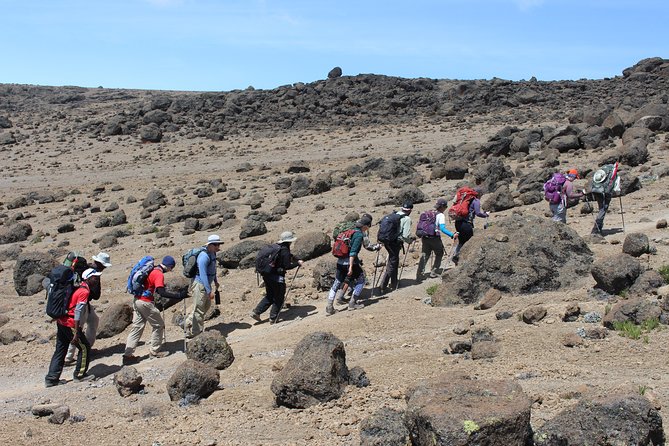
Lemosho is a good choice if you want a quieter beginning and a gradual approach to Kilimanjaro. The route starts on the western side of the mountain, where the first walking days feel more remote than the final trail network near the summit.
You do not begin at high elevation. Day one takes you by vehicle to Londorossi Park Gate at 2,385 meters, or 7,825 feet, then on foot to Mti Mkubwa Camp at 2,700 meters. That modest first gain matters. Your body gets an introduction to the altitude before the trail rises sharply.
The route then crosses toward Shira Camp, reaches Barranco, and continues through Karanga Valley to Barafu Camp. From there, you make the summit attempt and descend through Mweka. It is a classic Kilimanjaro pattern: steady acclimatization early on, a demanding high camp before the summit, then a long descent through a different part of the mountain.
This is a private tour, so you are not assigned to a large mixed group. That can be valuable when one person needs a slower pace, an extra rest, or a little more time with meals and equipment. It also means you should ask how many guides and porters will accompany your particular group, since the exact staffing is not stated in the tour details.
More Kilimanjaro routes:
- Kilimanjaro climb by Lemosho Route (7-day)
★ 5.0 · 651 reviews - Kilimanjaro climb, Machame Route (7-day)
★ 5.0 · 262 reviews - Kilimanjaro Climbing Lemosho Route 8 Days.
★ 5.0 · 186 reviews
Day one: Londorossi Gate to Mti Mkubwa Camp
Your first day begins with a drive to Londorossi Park Gate. Park admission and government fees are included, so this stage is handled as part of the organized climb rather than as a separate payment.
The hike to Mti Mkubwa Camp takes about 3 to 4 hours and covers 8 kilometers, or roughly 5 miles. At 2,700 meters, Mti Mkubwa is high enough to begin the altitude process but not yet an intimidating camp elevation.
I like this opening because it lets you settle into the routine. You walk, eat, organize your sleeping space, and learn how the support team works before the harder days arrive. The drawback is that the route’s forested opening may feel less dramatic than the open views later in the climb. Save your energy rather than expecting a summit-style adventure on day one.
Day two: Shira Camp and the first real altitude gain
Day two is longer and includes two listed stages. You climb from Mti Mkubwa to Shira Camp 1 at 3,500 meters, then continue to Shira Camp 2 at 3,840 meters.
The schedule describes 5 to 6 hours for the first section over 6 kilometers, followed by another 3 to 4 hours and 8 kilometers to Shira Camp 2. The figures should be confirmed before you go because the listing gives both 6 kilometers and 6 miles for the first distance, which are not the same measurement.
This is an important day for acclimatization. You gain a substantial amount of height, and the open setting around Shira should give you a stronger sense of the mountain’s scale. It is also one of the quieter parts of the route, which is a central reason to choose Lemosho.
Do not treat the quiet trail as an easy trail. The combined walking time can reach nine or ten hours, and the altitude gain is real. Drink regularly, keep your pace slow, and tell your guide early if you develop a headache, unusual tiredness, nausea, or poor coordination.
Day three: Shira 2 to Barranco Camp
From Shira Camp 2, you walk to Barranco Camp at 3,950 meters. The stated distance is 8 kilometers, with 6 to 7 hours of hiking.
This day links the broad western approach with the more rugged central section of the climb. Barranco is one of the most memorable camps on Kilimanjaro because of its position below the Barranco Wall. You should expect a full day of walking, but not the extreme summit-day schedule that comes later.
Barranco is also where the mountain can begin to feel more exposed and demanding. The overnight elevation is close to 4,000 meters, so sleep may be less comfortable than at the lower camps. The included warm washing water is a small but welcome practical feature here. It will not replace a shower, but it helps you feel cleaner after a dusty day.
More week long trips in Moshi & Kilimanjaro:
- Climbing Kilimanjaro through 7 days Machame Route
★ 5.0 · 151 reviews - 7 Days Kilimanjaro via Machame route affordable price
★ 5.0 · 110 reviews - Private Kilimanjaro Hike 7 Day Lemosho Route
★ 5.0 · 60 reviews - 7-Day Magical Tanzania Safari -Premium High End Package
★ 5.0 · 53 reviews
Day four: The Barranco Wall and Karanga Valley
Day four covers the short distance from Barranco Camp to Karanga Valley Camp. The route is listed as 5 kilometers, or 3 miles, with 4 to 5 hours of hiking. Karanga sits at about 3,995 meters, almost the same elevation as Barranco.
Do not judge this day by the distance alone. The Barranco section is known for its steep, hands-on character, and the route can feel demanding even when the total mileage is modest. Your guide’s pacing and route management matter more here than raw speed.
Karanga is an acclimatization stop before the trail rises higher. The similar elevations of Barranco and Karanga help keep the day manageable, though you still need to conserve energy. I would use this afternoon to eat well, drink, check your clothing, and prepare the small bag you will take toward the summit.
Day five: Karanga to Barafu Camp
The climb from Karanga Valley to Barafu Camp covers only 4 kilometers, or 2 miles, and takes about 4 to 5 hours. The destination is much higher, at 4,550 meters.
This is the final preparation day. Barafu is your high camp, and the summit attempt begins from here. The short distance does not make it a relaxed day. At this altitude, even a gradual uphill walk can feel slow, and the thin air makes ordinary tasks more tiring.
The tour provides tents, sleeping mats, solar LED lights, dining furniture, warm washing water, and toilet equipment. Those details have particular value at Barafu, where comfort is limited by the altitude and the early start ahead. You should expect to rest rather than explore after reaching camp.
The exact departure time for the summit attempt is not provided. Ask about it, along with the planned rest period at Barafu, what you should carry, and how the guides handle a climber who cannot continue.
Day six: Uhuru Peak and the long descent
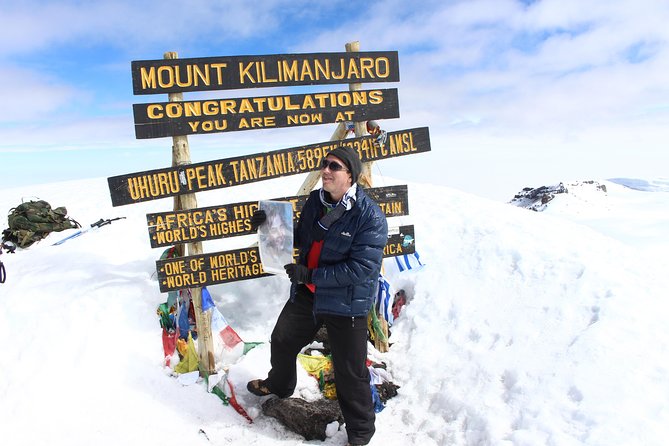
Summit day is the heart of the trip and the hardest part by a wide margin. The published schedule allows 7 to 8 hours to reach Uhuru Peak at 5,895 meters, or 19,341 feet, followed by a descent through Barafu, a short rest, and another 4 to 5 hours down to Mweka Camp.
The ascent is listed as 5 kilometers, or 3 miles, while the descent to Mweka is listed as 12 kilometers, or 7 miles. The total day can therefore involve roughly 11 to 13 hours of walking, depending on conditions and your pace.
At this stage, patience is more useful than athletic ambition. You will probably move slowly, take regular breaks, and depend heavily on your guides for pacing and health checks. The pulse oximeter gives the team a way to monitor oxygen levels, while emergency oxygen and the Gamow Bag provide important backup equipment. Rescue fees on the mountain are also included.
The summit itself is the highest point in Africa, but do not expect to linger. Cold, fatigue, altitude, and weather can make the summit stop brief. The return to Mweka is not an easy victory lap. Your knees and feet will already be tired, and the descent can be rough. A porter carries your day-pack during the summit attempt, which is one of the more useful inclusions on this demanding day.
Day seven: Mweka Gate and the return to the hotel
The final day takes you down to Mweka Gate. The schedule gives 4 to 5 hours of hiking and a distance of 4 kilometers, or 2 miles, but it also lists Mweka Gate at 4,600 meters, a figure that does not fit the normal direction of descent. Ask the operator to confirm the exact distance and elevation before booking.
After reaching the gate, you are transferred to the previous hotel for a certificate and summit party ceremony. That return to a bed, bathroom, and prepared meal can feel like a major change after a week in tents.
The package includes hotel accommodation before and after the trek, though the accommodation section uses both classic standard and comfort hotel descriptions. Ask which level applies to your booking, since the wording suggests two hotel categories but does not explain the allocation clearly.
Food, water, and camp comfort
Food can make or break a high-altitude trek. This package includes breakfast, lunch, and dinner every day on the mountain, with large portions of fresh and nutritious food. The operator also describes meals for vegetarian, vegan, allergy-sensitive, Halal, and Kosher diets.
Breakfast may include tea, coffee, porridge, sausages, bread, toast, eggs, and fruit. That kind of meal gives you both easy carbohydrates and more filling choices before a long walking day. You should still state your dietary needs clearly when booking rather than waiting until the first camp.
Purified drinking water is included, as is warm water for washing each day. You get waterproof tents and sleeping mats, toilet tents, a portable personal flash toilet, dining tables, and large chairs with backs and armrests. These are not luxury extras in the usual sense, but they make camp life less punishing.
The high-powered solar LED lights are another thoughtful touch. A dark tent and a dead headlamp battery can make evening tasks needlessly difficult. Even so, bring your own personal headlamp and basic backup supplies unless the operator confirms that all personal lighting is supplied.
Guides, porters, and the private format
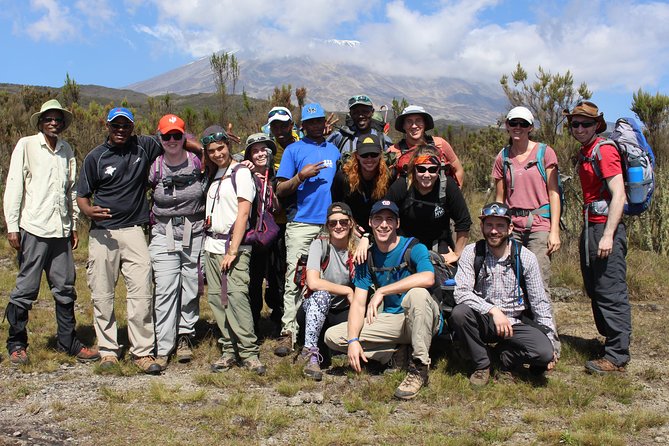
The experience includes professional English-speaking mountain guides and porters, with fair and ethical treatment of porters stated as part of the package. The names connected with past climbs include Joseph, Ibi, Eli, Paul, Side, and Martin, while George, Benjamin, and MD appear in arranging or hosting roles. Your assigned team may be different, so treat these names as examples rather than a promise of a specific guide.
The strongest service themes are guide support, teamwork, food, safety, and organization. The company’s background is also relevant: its representatives describe having worked as porters and guides before operating their own local company. If supporting a locally run Tanzanian operator matters to you, that is a meaningful part of the choice.
Private does not mean you walk alone. You still rely on a team of guides, cooks, and porters, and the size of that team can affect the feel of the trip. Ask how porter welfare is handled in practice, what luggage weight limits apply, and what personal gear you need to carry.
What the $2,669.88 price includes
At $2,669.88 per person, the price is not simply paying for seven days of walking. It covers park entrance and government fees, rescue fees, transportation in the destination, arrival and departure transfers, hotel nights, mountain accommodation, meals, tents, mats, dining equipment, water, safety gear, guides, porters, and summit-day day-pack support.
That makes the price easier to assess than a stripped-down trek quote. A cheaper headline rate may leave you paying separately for park charges, transfers, accommodation, rescue cover, or food. Here, many of the large costs are bundled together.
You still need to budget for tips, a Tanzania visa on arrival, laundry, telephone use, drinks, and personal expenses. Optional tours, such as a safari after the climb, are not included. Group discounts are offered, so ask for the price for your full party rather than assuming the listed per-person rate is final.
The hotel category needs clarification, as does the odd wording that appears to include two nights of classic standard accommodation and two nights of comfort accommodation. The details may refer to alternative hotel levels, but the package description does not make that clear.
Who should book this Kilimanjaro climb?
I would recommend this trip to a reasonably fit person who wants a private climb, values a quieter start, and prefers having safety equipment and meals arranged in advance. It also suits a family or group of friends who want to share the mountain experience without being placed with strangers.
The route is less suitable if you want a casual holiday with a little hiking added. You will camp for most of the climb, spend several days above 3,500 meters, and face a very long summit day. Moderate physical fitness is required, and the operator makes no claim that the route is easy.
The food arrangements make the trip a good option for people with specific dietary needs, provided those needs are discussed before departure. The full-board format also means you do not have to plan daily mountain meals yourself.
Free cancellation is available if you cancel at least 24 hours before the experience begins. A cancellation made later is not refunded, and bad weather may lead to a different date or a full refund.
Should you book it?
Book this Lemosho climb if you want a private, well-supported route with a quieter first two days and a clear focus on safety, food, and camp comfort. The 4.9 rating from 13 reviews and 100 percent recommendation figure support the company’s strong reputation for guide care, teamwork, meals, and logistics.
Before paying, get written confirmation of your assigned hotel level, guide team, daily distances, summit departure time, group size, porter arrangements, and the unusual elevation and mileage figures on days two and seven. If those details are clear, the package offers solid value for a demanding seven-day route to Uhuru Peak.
FAQ
How long does the Kilimanjaro Lemosho Route tour last?
The climb lasts approximately seven days, including the approach to Mti Mkubwa, the summit attempt, the descent to Mweka Gate, and the return to the hotel.
Is this a private tour?
Yes. Only your group participates in the activity, rather than joining a larger shared group.
Is hotel accommodation included?
Yes. The package includes hotel accommodation before and after the trek, with bed and breakfast provided. The description refers to classic standard and comfort hotel categories, so confirm which level applies to your booking.
Are meals included on the mountain?
Yes. Breakfast, lunch, and dinner are included for all seven days. The food is described as fresh, healthy, nutritious, and served in generous portions.
Is drinking water provided?
Yes. Clean, purified drinking water is included during the climb.
What safety equipment is included?
The package includes emergency oxygen tanks, VHF handheld radios, a Gamow Bag, a pulse oximeter, and mountain rescue fees. A porter also carries your day-pack during the summit attempt.
What camping equipment is provided?
Waterproof tents, sleeping mats, solar LED lights, toilet tents, a portable personal flash toilet, aluminum dining tables, and chairs with backs and armrests are included.
Is airport pickup available?
Yes. Arrival and departure transfers are included, along with transportation within the destination location.
What is not included in the price?
Tips, a Tanzania visa on arrival, personal expenses such as laundry, telephone use, and beverages, and optional tours such as a post-climb safari are not included.
Newly listed around Moshi & Kilimanjaro
- Climb Mount Kilimanjaro: 7 Days Machame Route★ 5.0 · 3 reviews
- 6 Days Mount Kilimanjaro Climbing via Rongai Route★ 5.0 · 3 reviews
- Mt. Kilimanjaro Day Hiking★ 5.0 · 3 reviews
- Explore 1 day Ngorongoro Crater Budget Group Safari from Arusha★ 5.0 · 3 reviews
- Chemka (Kikuletwa) Hot Springs, Tanzania★ 5.0 · 3 reviews
- Guided City tour of Moshi★ 4.3 · 3 reviews
- 8 Day Tanzania Family Safari★ 5.0 · 3 reviews
- Serengeti Safari with Sirikwa Travel★ 5.0 · 3 reviews
Kilimanjaro Climbs, compared.








Browse the lists this tour appears in