
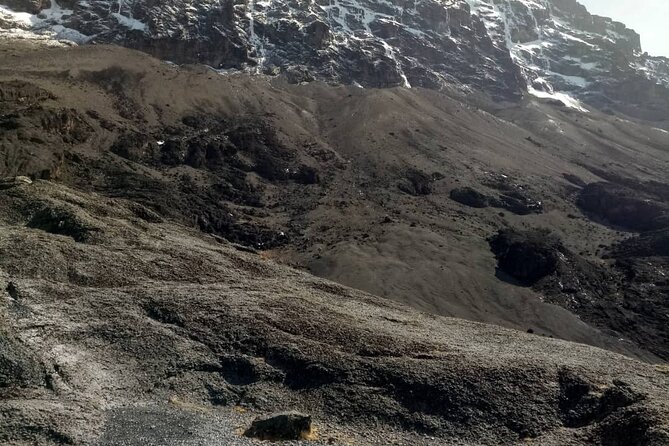
Reviewed · KILIMANJARO CLIMBS
Small-group 7-day Lemosho Route Kilimanjaro Climb from Arusha
The Lemosho Route gives you a strong Kilimanjaro experience in seven days, starting in rainforest and crossing the Shira Plateau before joining the Machame trail. I like the small group limit of six, and I like the careful route design, which includes a high point at Lava Tower followed by a lower night at Barranco for acclimatization.
I also like that the $2,400 price covers the working parts that can make or break a mountain trip: an English-speaking guide, cook, porters, tents, meals, water, park costs, and transfers. The main drawback is simple: seven days is demanding, and this route is harder than Marangu or Rongai, with a 12-hour summit day and some steep, loose, muddy sections.
Key points to know
- The route begins in western Kilimanjaro rainforest, then moves through heath, moorland, and the open Shira Plateau.
- A maximum of six people keeps the group small enough for closer contact with the guides and crew.
- Day three is crucial for acclimatization, reaching Lava Tower at about 4,650 meters before dropping to Barranco Camp.
- Barranco Wall is the route’s hands-on challenge, with steep passages and a memorable climb above Karanga Valley.
- Summit night lasts about 12 hours, ending at Uhuru Peak after the climb to Stella Point and the crater rim.
- Kenedy and Julius are named as guides associated with a highly praised Lemosho traverse, while the wider crew includes cooks and porters.
Why the Lemosho Route is worth the effort
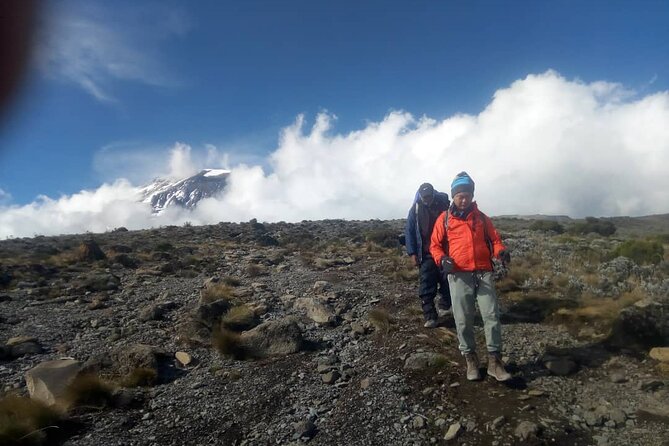
Lemosho is a good choice if you want more than the quickest path up Kilimanjaro. The first two days cross thick rainforest, where the trail can be wet, narrow, and slippery. Ferns, ericas, and changing plant life keep the early walking interesting, even when the mud makes every step more deliberate.
By the third day, the forest has given way to heath and moorland. The views open up as you approach the Shira Plateau, and the sense of height becomes much clearer. You are not simply walking uphill for a week. You are moving through several distinct plant zones, each with its own weather, footing, and feel.
The route joins the Machame trail on day three. That means the quieter opening section eventually connects with one of Kilimanjaro’s better-known routes. You get a less familiar start without missing the dramatic middle and upper sections that make the southern circuit so appealing.
The tradeoff is effort. Lemosho is specifically described as more challenging than Marangu and Rongai. You should expect steep passages, long walking days, cold temperatures at higher camps, and a summit night that tests both fitness and patience.
More Kilimanjaro routes:
- 8-Day Small-group Lemosho Kilimanjaro Summit Trekking
★ 5.0 · 186 reviews - 7-Day Machame Kilimanjaro Summit Tour from Arusha
★ 5.0 · 125 reviews - Private Full Day Hiking Experience to Marangu Route
★ 5.0 · 61 reviews
The first morning: Moshi, transport, and the park gate
The day begins at about 8:30 a.m. A 45-minute drive from Moshi takes you through mountainside villages to the Kilimanjaro National Park Gate. Pickup is offered, and transfers are included, but the description refers to departure from Moshi even though the experience is marketed from Arusha. If you are staying in Arusha, confirm the exact pickup point and transfer plan before you pay.
The park gate is not just a formality. It is where permits are issued and mountain crews organize loads, food, equipment, and paperwork. You may spend time waiting while the operation takes shape around you. That delay can feel slow at first, but it is part of getting a legal and properly supplied climb underway.
The first day covers about four hours, rising from 2,389 to 2,785 meters. The short distance is useful because your body is still adjusting to the rhythm of walking, eating, sleeping, and drinking at altitude.
Expect wet ground and slippery sections in the lower forest. Gaiters are strongly recommended, as are trekking poles. I would take both seriously. Gaiters help keep mud and water out of your boots, while poles give you extra balance on steep or slick ground.
Day two: leaving the forest for Shira Plateau
Day two is a much longer effort, about eight hours, climbing from 2,785 to 3,895 meters. The forest gradually falls behind, and the trail reaches the rim of the Shira Plateau.
This change is one of Lemosho’s rewards. The first day feels enclosed by trees. The second brings wider views and cooler air. You will notice the temperature dropping as the route gains height, so keep warm layers accessible rather than buried at the bottom of your bag.
The elevation gain is about 1,110 meters, making this one of the more serious walking days before the summit push. It is not a day for rushing. A steady pace matters more than speed, and you should use breaks to drink and eat even if you do not feel hungry.
The moorland section includes ferns and ericas, with fewer trees and more open ground. It also exposes you to changing weather. The scenery may be broader here, but there is less shelter, so a waterproof jacket and warm layers remain important.
Day three: Lava Tower and the Barranco descent
Day three is the smartest part of the route plan. You begin at about 3,895 meters and finish near 3,986 meters, so the net gain is only 91 meters. Yet the route climbs much higher during the day, reaching Lava Tower, also called Shark’s Tooth, at about 4,650 meters before descending to Barranco Camp.
This is valuable altitude practice. You spend time high on the mountain, then sleep lower. That pattern gives your body a better chance to adjust than a simple steady climb would provide. It does not remove the risk of altitude problems, but it makes this day more than a scenic walk.
The trail heads east along a ridge, passes the junction toward Kibo Peak, and continues southeast toward Lava Tower. After the tower, another junction leads toward Arrow Glacier. You then descend to Barranco Camp.
The walking time is about seven hours. The route can feel demanding even though the final camp is only slightly higher than the starting point. The key is to judge the day by effort and altitude exposure, not by the small net gain.
More week long trips in Arusha:
- Tanzania Classic – 7 Days
★ 5.0 · 1,151 reviews - 7-Day Premium Luxury Tanzania Safari All-Inclusive
★ 5.0 · 426 reviews - Group Safari 7 Days in Tanzania’s Main Parks
★ 5.0 · 240 reviews - 7 Days Tanganyika Wilderness Safari
★ 5.0 · 159 reviews
Day four: Barranco Wall and Karanga Camp
After breakfast, you tackle Barranco Wall. This is the day with the most obvious hands-on terrain. The trail climbs the wall, then continues through Karanga Valley to the junction with the Mweka Trail.
The description of the crew moving over the wall with ease gives you a useful picture of the support team’s role. Porters and guides are not just carrying supplies. They help keep the group moving through awkward sections and show you how to use the route.
The climb is not presented as a technical rock-climbing activity, but it is steep and adventurous. Take your time, keep three points of contact when needed, and follow the guide’s instructions. The trail may feel exposed in places, especially if you are tired or uncomfortable with steep ground.
You walk about five hours and finish at Karanga Camp, around 4,034 meters. The relatively short day helps preserve energy before the move to Barafu. It is one of the route’s useful shorter stages, though the wall itself can make the day feel more serious than the clock suggests.
Day five: Barafu Camp and the South Circuit
Day five takes about five hours, climbing from 4,034 to 4,662 meters. The destination is Barafu Camp, the staging point for summit night.
Reaching Barafu means you have completed the South Circuit, which gives views of the summit from different angles. That variety is one reason this route feels more rewarding than a simple up-and-down climb. You have spent days approaching Kibo from changing directions, rather than seeing the mountain from one fixed line.
The schedule calls for an early dinner and rest. Treat that rest as part of the climb, not spare time. You will need to organize summit clothing, water, snacks, headlamp, gloves, and any personal items before trying to sleep.
Barafu is high, cold, and not a place for a relaxed evening. The camp’s purpose is preparation. Your guide and crew can help with the practical work, while you conserve energy for the hardest day.
Day six: the 12-hour push to Uhuru Peak
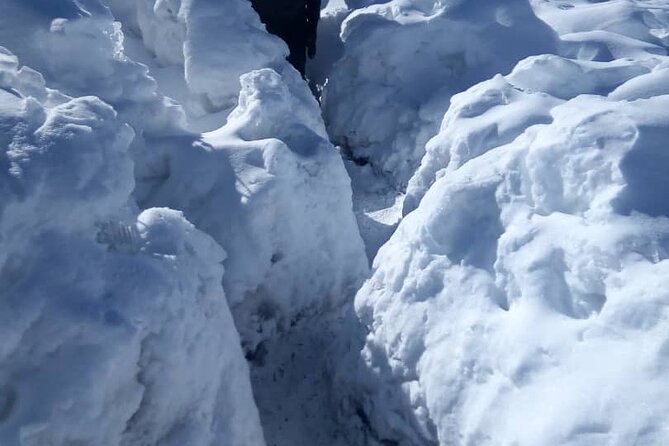
Summit day starts in darkness and lasts about 12 hours. The route climbs between the Rebmann and Ratzel glaciers, then uses switchbacks toward Stella Point on the crater rim. The final approach crosses heavy scree, so the footing can be loose and tiring.
Stella Point is at the crater rim and offers a major psychological lift. You can rest briefly and, if your pace is strong, possibly see sunrise from the summit itself. The schedule notes that faster hikers may reach the summit in time for sunrise, but you should not turn that into a race. A slow, steady pace is the safer approach.
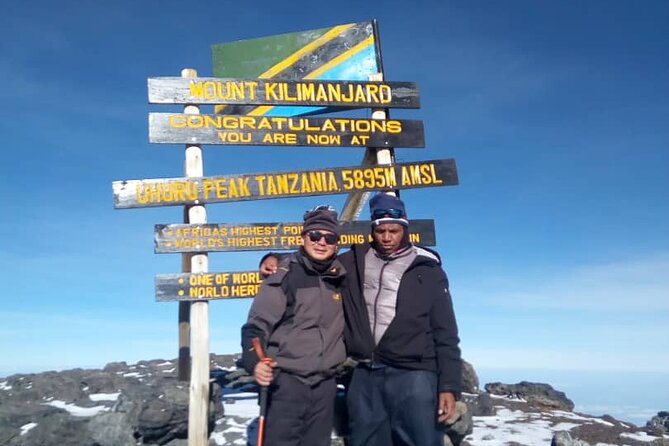
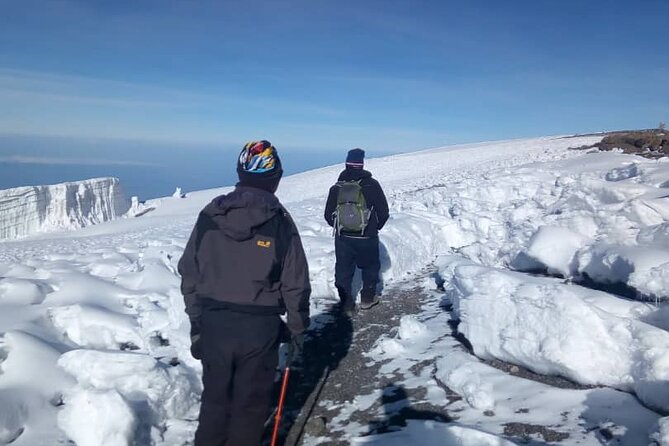
From Stella Point, the remaining ascent to Uhuru Peak takes about one hour. Snow may appear along this section. At 5,895 meters, Uhuru Peak is Africa’s highest point, and reaching it is the clear goal of the climb.
This is also the day to be realistic. Cold, darkness, scree, fatigue, and altitude all arrive together. Oxygen and pulse oximeters are reported as part of the safety equipment and are used appropriately by the crew, but equipment is not a guarantee of success. Your guide will need to make decisions based on your condition.
After photos and celebrations at the summit, the route continues down. The day is long enough that you should keep your expectations practical. The achievement is enormous, but the descent still requires care.
Day seven: muddy descent and a warm return
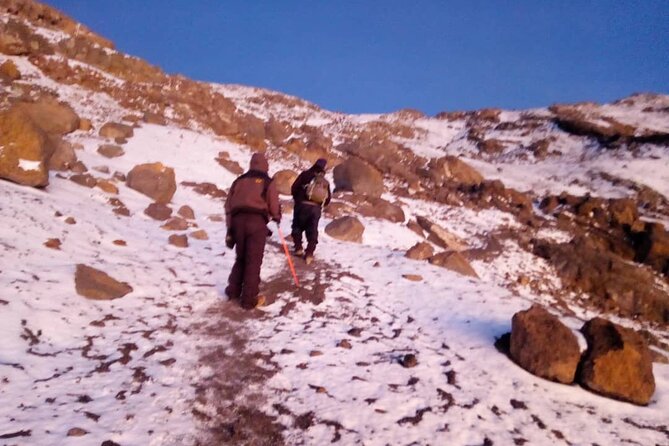
The final day begins around 3,106 meters and descends to 1,633 meters, with about four hours of walking. The trail to Mweka Park Gate becomes warmer, wet, muddy, and steep.
This is where tired legs can create new problems. Gaiters and trekking poles are recommended again, and I would keep them ready rather than packing them away after the summit. The descent may look easier on paper, but slippery ground and fatigue demand attention.
At Mweka Gate, you receive summit certificates. Afterward, a vehicle meets you at Mweka village for the drive back to your Moshi hotel, which takes about 30 minutes. A hot shower, dinner, and a proper celebration follow.
The final ceremony of appreciation and team bonding with the mountain crew is a thoughtful part of the program. Porters, cooks, and guides carry much of the practical burden of a climb like this, and the farewell gives you a chance to recognize that work directly.
What the $2,400 price really covers
At $2,400 per person, this is not a bare-bones mountain outing. The price includes all fees and taxes, an English-speaking professional guide, a cook, porters, camping equipment, mountain tents, sleeping mats, chairs, tables, meals, clean drinking water, bottled water, tea, coffee, and transfers.
It also includes hotel stays, though the exact hotel details are not provided. The meal allowance is listed as eight breakfasts, seven dinners, and eight lunches. That is generous for a seven-day schedule, but you should ask the operator to explain how those meals match your hotel nights and mountain days.
The value comes from having the working system arranged for you. You are not separately hiring a guide, sourcing tents, organizing porters, or solving every transfer. The inclusion of water and meals also matters at altitude, where poor planning can quickly become a serious nuisance.
You still need to budget for flights, visa fees, alcohol and soft drinks, tips, and personal purchases. Tips are not a minor detail on a guided Kilimanjaro climb, so ask for current guidance before departure and carry enough local spending money.
The supplied price information does not spell out every item of personal gear, so do not assume boots, jackets, sleeping bags, trekking poles, or gaiters are included. The description specifically recommends gaiters and poles, which suggests you should plan to bring or separately arrange them.
A small crew can make a big difference
The maximum group size is six. That is small enough for the guide to keep track of each person’s pace and condition, while still giving you the social side of a shared climb.
Kenedy and Julius are named as head and second guides for a Lemosho traverse. If you are booking with a preference for particular guides, confirm their availability, since guide assignments can change.
The wider crew includes a cook and porters. Food is described as very good in the supplied comments, and accommodation is described as good, with no suggestion that basic mountain camping is being dressed up as luxury. You should expect functional tents and shared camp life, not a hotel room above the clouds.
One useful detail is the reported presence and proper use of oxygen and pulse oximeters. This is exactly the sort of safety practice you want to see. Still, ask how the team monitors altitude symptoms and what the evacuation plan is before setting out.
Who should book this climb
I would recommend this route to a fit adult who wants a scenic, varied approach and is ready for several hard days. The tour states that most people can participate, but that should not be read as a promise that the summit is easy. The 12-hour summit day alone requires serious preparation.
This is a good match if you value:
- A route through several plant zones
- A small group capped at six
- Camping with an organized cook and porter team
- A high acclimatization day at Lava Tower
- A direct return to a Moshi hotel after the descent
- A more challenging route than Marangu or Rongai
It is less suitable if you want short walking days, lodge accommodation, or a gentle introduction to high-altitude trekking. The thick forest can be muddy, Barranco Wall is steep, and the summit section is cold, dark, and long.
The experience has received a top overall rating from four published comments, with especially strong praise for the guides, porters, food, organization, and safety equipment. One account describes saving money compared with UK-based operators without giving up those basic standards. That is encouraging, though a small number of comments cannot guarantee the exact same experience for every departure.
Practical preparation before you go
Train for long uphill and downhill days, not just flat-distance walking. Your legs need to handle repeated climbs, steep descents, and uneven ground while carrying a daypack.
Pack gaiters and trekking poles. The advice appears twice for good reason, at the muddy forest start and again on the final descent. Carry warm layers where you can reach them, since the temperature falls sharply after the forest.
Expect the route to change underfoot. Rainforest mud, moorland paths, scree near the summit, and wet descending trails each call for a slightly different pace. Good footwear and patience matter more than trying to keep up with the fastest person in the group.
You should also prepare mentally for a slow summit morning. The route uses switchbacks and heavy scree before Stella Point, followed by the last hour to Uhuru Peak. Staying focused on one step at a time is more useful than thinking about the full distance.
Free cancellation is available if you cancel at least 24 hours before the experience begins. Changes made inside that period are not accepted, and poor weather may lead to a new date or a full refund. Check the local cutoff time carefully.
Should you book the 7-day Lemosho climb?
Book it if you want a varied Kilimanjaro route, a small group, and a full support team included in one price. The strongest reasons are the western rainforest approach, the Lava Tower acclimatization pattern, the South Circuit views, and the practical support of guides, cooks, and porters.
Think twice if you are not prepared for steep trails, wet ground, cold camps, and a 12-hour summit day. Before paying, confirm your pickup from Arusha or Moshi, ask what personal gear is available, and request the current tipping guidance.
For a prepared hiker who wants more route variety than Marangu or Rongai, this is a well-priced and demanding way to reach Uhuru Peak.
FAQ
How long is the Kilimanjaro climb?
The experience lasts approximately seven days.
Where does the climb begin?
The route begins on the western side of Mount Kilimanjaro. The first day includes a drive to the Kilimanjaro National Park Gate.
What time does the activity start?
The stated start time is 8:30 a.m.
Is pickup available?
Yes. Pickup is offered, and transfers mentioned in the program are included.
How large is the group?
The group has a maximum of six participants.
Is an English-speaking guide included?
Yes. A professional English-speaking guide is included, along with a cook and porters.
Where do you sleep during the climb?
The package includes overnight stays in hotels and mountain tents. Camping equipment such as tents, sleeping mats, chairs, and tables is included.
Are meals and drinking water included?
Yes. Meals are provided according to the schedule, along with clean drinking water, bottled water, coffee, and tea.
How difficult is the Lemosho Route?
It is described as more challenging than the Marangu and Rongai routes. The climb includes steep passages, Barranco Wall, high-altitude camps, and a summit day of about 12 hours.
What is not included in the price?
Flights, visa fees, alcohol and soft drinks, tips, and personal spending money are not included.
Can I cancel for a full refund?
Yes, if you cancel at least 24 hours before the experience start time. Cancellations made less than 24 hours in advance are not refunded. If poor weather causes the operator to cancel, you are offered a different date or a full refund.
Newly listed around Arusha
- 5-Day Private Safari Tour in Tanzania’s Wildlife★ 5.0 · 3 reviews
- 3 Days private safari Tarangire ,Ngorongroro crater &Manyara★ 5.0 · 3 reviews
- 3 Day Sharing Safari – Manyara, Ngorongoro Crater and Tarangire National Parks★ 5.0 · 3 reviews
- Tarangire National Park Day Trip★ 5.0 · 3 reviews
- 6 -Day Tarangire, Manyara, Serengeti & Ngorongoro★ 5.0 · 3 reviews
- 2 Days Tarangire and Ngorongoro Crater Tour★ 5.0 · 3 reviews
- 5 Days Group Camping Safari★ 4.7 · 3 reviews
- 7-Day Mt. Kilimanjaro Hiking: Machame Route★ 5.0 · 3 reviews
Kilimanjaro Climbs, compared.








Browse the lists this tour appears in