
Reviewed · KILIMANJARO CLIMBS
7 Days Kilimanjaro Trekking Machame Route with Professional Guide
Kilimanjaro’s Machame Route gives you the mountain in changing acts: rainforest, giant heather, high moorland, volcanic scree, icefields, and a sunrise summit push. The route is called the Whiskey route for good reason. It is scenic, demanding, and not a gentle stroll to Africa’s highest point.
I like the extra acclimatization day built into this version, and I like that the price includes the unglamorous essentials: airport transfers, Arusha lodging, meals, tents, rescue fees, oxygen, and first aid. The main caution is the summit day, which can run 11 to 15 hours and begins around 1 a.m.
Key points before you book
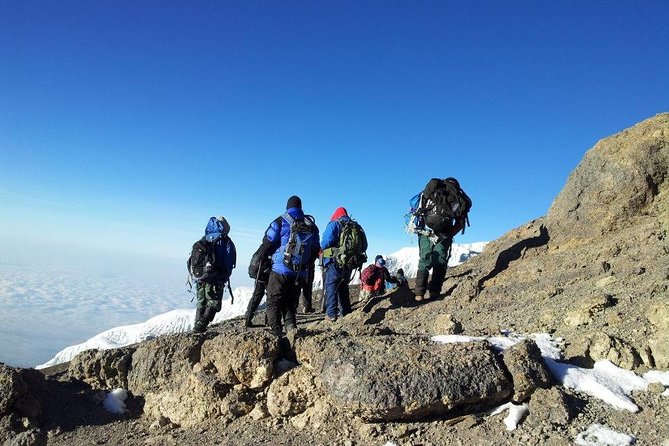
- Seven days on the mountain: The full trip takes about nine days, with arrival and departure nights in Arusha.
- A strong acclimatization profile: You climb high to Lava Tower, then sleep lower at Barranco Camp before continuing upward.
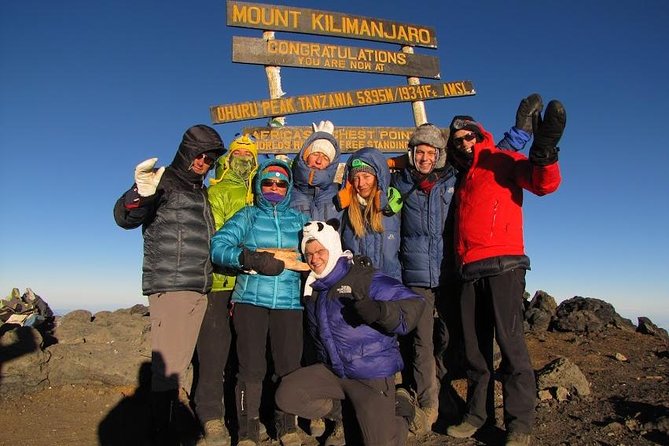
- A real summit night: Expect a torchlit start, loose volcanic scree, Stella Point at 18,800 feet, and a possible push to Uhuru Peak at 19,345 feet.
- A private trip: Only your group participates, with a professional guide and private transportation.
- A well-equipped package: Meals, accommodation, tents, gear, rescue fees, oxygen, first aid, and transfers are included.
- Guide support matters here: The company’s guide team has included names such as Frankie, Nestor, Emmanuel, Bryson, Augustine, and Clinton on past climbs, with particular praise for pacing and summit support.
Why the Machame Route earns its reputation
I would choose Machame for the scenery and the way it lets you see Kilimanjaro change by altitude. You begin in thick forest, move into open heather country, cross high volcanic ground, and finish among glaciers and cliffs near the summit.
The route is not the shortest way up. That is part of its value. The seven mountain days give your body more time to adjust than a rushed climb, and the itinerary includes a useful high-altitude day at Lava Tower followed by a descent to Barranco. That climb-high, sleep-lower pattern is one of the most sensible features of the trip.
Still, the route asks a lot from you. Several days involve five to nine hours of walking, and summit day is in another category altogether. You need a moderate level of fitness, a willingness to walk slowly, and enough patience to accept that progress may come in small steps.
The tour costs $2,400 per person. That is a substantial price, but it covers much more than a guide and a park entry. You receive private transport, all accommodation, meals listed for the trip, camping equipment, rescue fees, oxygen, first aid, airport transfers, and a professional guide. I would compare the package by checking exactly what is included with competing climbs, because equipment and support costs can quickly change the final bill.
More Hiking Tours in Arusha
- 8-Day Small-group Lemosho Kilimanjaro Summit Trekking
★ 5.0 · 186 reviews - Mountain Kilimanjaro Day Hike
★ 5.0 · 102 reviews - Private Full Day Hiking Experience to Marangu Route
★ 5.0 · 61 reviews
Day 1: Arusha briefing and equipment check
Your trip begins with a private transfer from Kilimanjaro International Airport to Arusha Safari Lodge. You can arrive at any time on the first day, which is helpful if your international flight schedule is awkward.
The important part of this evening is not sightseeing. It is preparation. A pre-climb meeting is planned for about 4:30 p.m., followed by dinner around 6:30 p.m. The team checks your equipment and confirms that you have the required medical coverage and travel insurance.
I like this practical start. A gear check can catch a missing warm layer or unsuitable footwear before you are standing above the tree line. You spend the night at Arusha Safari Lodge, with bed, dinner, and breakfast included.
The tour information also gives an 8:30 a.m. start time, so confirm how that applies to your particular arrival and transfer arrangements. The schedule allows arrival at any time on day one, but you should not assume a late arrival will include the full evening briefing.
Day 2: Machame Gate and the first forest camp
After registration at Machame National Park Gate, you enter Kilimanjaro’s southern rainforest. The first day on foot takes about five to six hours, including a picnic lunch along the trail, and ends at Machame Camp at roughly 9,800 feet.
This is a pleasing introduction to the mountain. The forest is green and full of plant life, and the steady climb feels manageable before the altitude becomes the main concern. I would use this day to settle into the group’s walking rhythm rather than trying to move quickly.
The practical drawback is that the route can feel crowded or busy at the gate because registration formalities must be completed before walking. That is part of entering a major national park, not a flaw in the mountain itself. Once you are under the trees, the experience becomes much more about the trail and less about administration.
Day 3: Heather country and the Shira Plateau
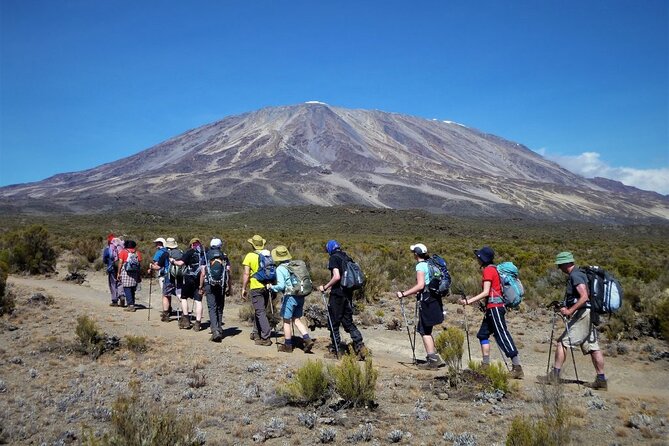
The forest soon gives way to moorland and giant heather. You climb through rocky hills for about four to five hours and reach the Shira area at around 12,600 feet, with the plateau itself described at roughly 11,000 feet.
This shorter walking day is valuable. You gain altitude without spending another full day on your feet, and you have time to notice the change in vegetation. Views toward Mount Meru can be especially memorable when the peak appears above or among the clouds.
You should not mistake the shorter distance for an easy day. The elevation rises quickly compared with the first camp, and some people begin to feel headaches, poor sleep, or reduced appetite at this stage. A slow pace, water, and honest communication with your guide matter more than speed.
More Kilimanjaro routes:
- 7-Day Machame Kilimanjaro Summit Tour from Arusha
★ 5.0 · 125 reviews - From Arusha/Moshi: Kilimanjaro Hike Marangu Route Day Trip
★ 4.5 · 54 reviews - Mount Kilimanjaro Day Hike Through Marangu Route to Mandara Hut
★ 5.0 · 37 reviews - 6 Days: Hiking Kilimanjaro via Machame Route
★ 5.0 · 24 reviews
Day 4: Lava Tower, Barranco Valley, and a smart altitude lesson
Day four is one of the most useful and scenic sections of the route. You spend the morning climbing toward Lava Tower at about 14,900 feet, then descend to Barranco Camp at roughly 12,800 feet. Walking time is about seven to nine hours.
This is where the itinerary shows good mountain sense. You climb high during the day and sleep lower than your highest point. The descent to Barranco also gives you a chance to see how your body responds before summit night.
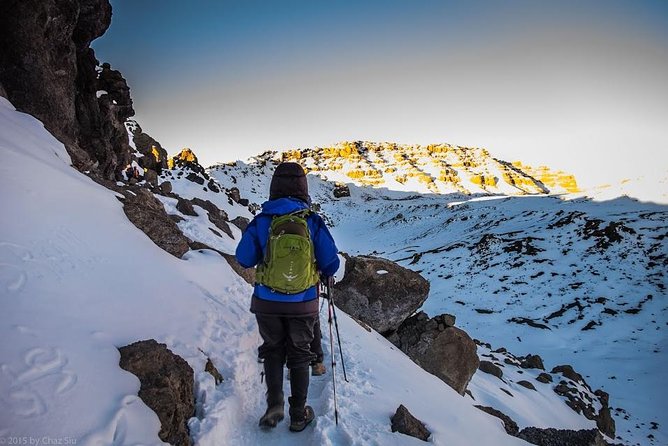
Barranco Camp sits below towering cliffs, with broad views toward the plains. The setting is dramatic, but the day is long. You may reach camp tired even though the final sleeping altitude is lower than Lava Tower. I would keep this day focused on steady movement, food, and rest, not on proving anything.
Day 5: The Barranco Wall and Karanga Camp
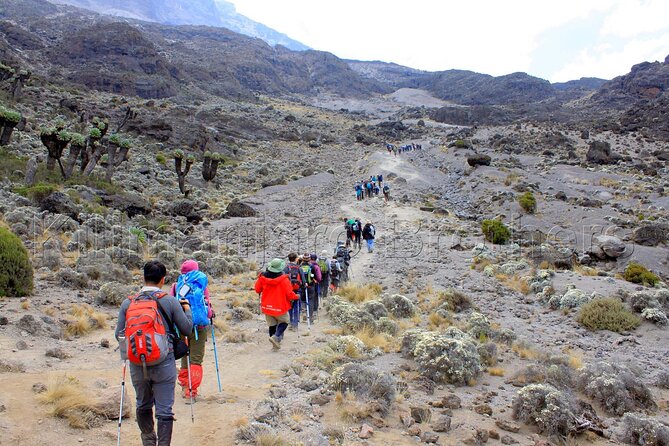
The morning begins with a steep climb over the Barranco Wall. This sounds intimidating, but the key issue is sustained effort rather than technical climbing equipment. After the wall, the trail rolls along the southeastern side of Kibo, with views toward the Southern Icefields.
The route then turns across scree and sheltered pockets of vegetation before reaching Karanga Camp at about 13,100 feet. Walking time is listed at five to seven hours.
I like this day because it brings a clear feeling of progress. You are above the forest and close enough to the summit area to see the icefields, yet the walk is shorter than the previous day. Karanga is also described as the last water point on the approach to the summit, which makes it a useful place to pay attention to your supplies and hydration.
The terrain is rough underfoot. You need to watch each step, especially after several days of walking. This is not a day for casual footwear or a loose packing system.
Day 6: Barafu Camp and the quiet before the summit
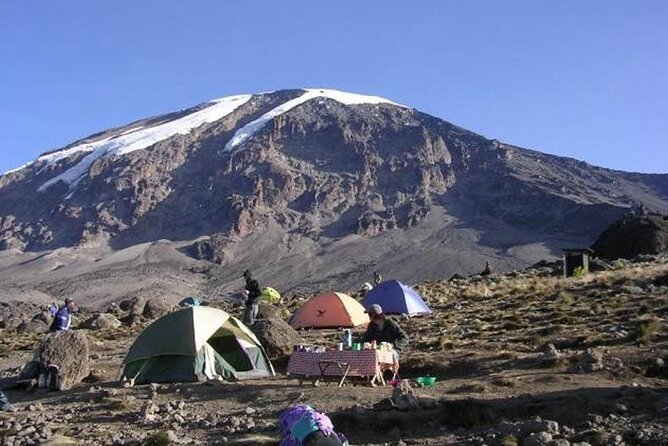
You follow a path over compacted scree to Barafu Hut at about 14,800 feet. The walking time is only three to five hours, followed by lunch and a short acclimatization hike to about 15,700 feet.
Barafu is the launch point for the final ascent. The rest of the day is for resting, eating, checking clothing, and preparing for the early start. You are not likely to sleep normally, since the summit push begins around 1 a.m., but lying down and staying warm still helps.
This is an important mental adjustment. The summit attempt is not simply another day of hiking. It is a long night followed by a descent, and you need to conserve energy before it begins. I would organize your headlamp, warm layers, water, and snacks before resting so you are not searching through bags in the dark.
Day 7: Stella Point, Uhuru Peak, and a very long descent
The summit day starts by torchlight at about 1 a.m. The first major goal is the crater rim at Stella Point, reached after roughly five or six hours of steep climbing over loose volcanic scree.
The pace is slow, with zigzags helping you gain height. At Stella Point, around 18,800 feet, you can pause for sunrise and look toward Mawenzi. For many people, this is already a major achievement.
If you still have the strength, the route continues along the crater rim to Uhuru Peak at 19,345 feet. The round trip from Stella Point is described as about two hours, passing near glaciers and ice cliffs in the summit area.
Here is the honest part: reaching Stella Point does not guarantee that you will continue to Uhuru Peak. At this altitude, every step can feel costly. A good guide will help you judge your condition, and the supplied guide feedback places strong emphasis on adjusting the pace and supporting climbers during the summit effort.
After the summit section, you descend to Barafu for refreshments, then continue to Millennium Camp at about 12,500 feet. The entire day can last 11 to 15 hours, with the itinerary giving an approximate 13-hour walking day. This is the hardest part of the experience by a wide margin.
The descent is faster than the climb, but it is not easy. Your legs have already worked through a cold, sleepless ascent, and loose ground can be tiring. Reaching Millennium Camp is a major relief, but you should expect to feel spent.
Day 8: Forest descent and return to Arusha
The final mountain day takes you down a well-built path through tropical forest. The walk lasts about four to six hours and ends at the Mweka National Park Gate at approximately 5,400 feet.
Birdsong, undergrowth, and a return to lower-altitude plant life make this a pleasant change after the stark upper mountain. The route continues through coffee and banana farms to Mweka village, where private transport takes you back to Arusha.
You spend the night again at Arusha Safari Lodge, with dinner and breakfast included. This overnight is more than a hotel convenience. It gives you a proper place to wash, eat, and recover instead of pairing the final descent with an immediate airport transfer.
Day 9: Airport transfer or extra time in Tanzania
The final day includes a private transfer from Arusha to Kilimanjaro International Airport. You can also discuss adding a short safari or another option, but that would be separate from the core trek and should be arranged directly with the operator.
The included transfer is useful because airport timing after a mountain climb can be stressful. Confirm the departure schedule and allow enough time for the drive and airport procedures.
Guides, support, and what the package really covers
A Kilimanjaro climb depends heavily on the people managing the pace, food, camp routine, and summit decisions. The strongest feedback connected with this operator centers on friendly, supportive staff and guides who adjust the pace when someone is struggling.
Names associated with the guide team include Frankie, Nestor, Emmanuel, Bryson, Augustine, and Clinton. I cannot promise which guide will lead your departure, so ask before booking if having a particular guide matters to you.
The package includes:
- Private transportation and all transfers
- Arusha accommodation
- Mountain accommodation in tents
- Professional guide
- Park and other listed fees and taxes
- Rescue fees
- Oxygen and first-aid support
- Gear
- Breakfast, lunch, and dinner as specified
Tips are not included. Set aside money for gratuities and ask before departure how the team handles them.
The private format means only your group participates. That gives you more control over the pace and group dynamic than a large shared departure, though the mountain schedule still has fixed demands. The supplied information does not state the maximum group size, so ask how many climbers and support staff will be assigned to your booking.
Who should choose this trek?
I would recommend it to a reasonably active person who wants a scenic route and accepts that Kilimanjaro is a serious physical challenge. You do not need to be an expert mountaineer based on the information provided, but you do need moderate fitness and the ability to walk for long hours at altitude.
The route can also suit a mixed-age group if everyone understands the demands. One reported climbing group ranged from age 19 to 69 and relied on a large support team, but that should not be read as a promise that age alone is unimportant. Fitness, medical advice, acclimatization, and personal response to altitude all matter.
I would not choose this trip if you want a relaxed holiday with a little hiking added. The summit night is cold, early, long, and physically draining. I would also avoid booking without suitable medical coverage and travel insurance, both of which are checked at the pre-climb briefing.
Is the $2,400 price good value?
For a nine-day trip with seven days on the mountain, $2,400 is not a bargain-basement price, but the inclusions make it easier to judge. Airport transfers, two nights at the Arusha lodge, meals, tents, guide support, rescue fees, oxygen, first aid, and gear are all significant costs when arranged separately.
The real value is in organization. You are not only paying for trail guidance. You are paying for transport, camp support, food, safety equipment, and a structured ascent that includes an acclimatization day.
Before paying, ask for a current packing list and clarify what all gears means. That phrase is broad. You should know which personal items remain your responsibility, how luggage is handled, and whether any equipment rental carries an extra charge.
Should you book this Machame Route climb?
Book it if you want Kilimanjaro’s most varied scenery, a seven-day mountain schedule, private transport, and a package that includes the major support costs. The extra acclimatization day and high-to-low day at Lava Tower are strong reasons to prefer this plan over a shorter ascent.
Think twice if you are not ready for the 13-hour summit day or if you want a small, quiet hiking holiday without a demanding overnight push. Ask about the assigned guide, group size, equipment list, medical requirements, and current meal arrangements before you commit.
For the right person, this is a serious but well-structured way to approach Uhuru Peak. Go slowly, pack for cold conditions, and treat the summit as an opportunity rather than a guarantee.
FAQ
How long is the entire Kilimanjaro experience?
The trip lasts approximately nine days. Seven days are spent trekking on Mount Kilimanjaro, with arrival and departure time in Arusha.
Where does the tour begin and end?
The trip begins and ends at the accommodation in Arusha, Tanzania. Airport transfers connect Arusha with Kilimanjaro International Airport.
What route does the trek use?
The trek follows the Machame Route, also known as the Whiskey route. It begins at Machame Gate and reaches the summit area through the Shira Plateau, Barranco, Karanga, and Barafu.
What is the highest point reached?
Uhuru Peak is at 19,345 feet. Stella Point, on the crater rim, is at approximately 18,800 feet.
How difficult is the trek?
A moderate level of physical fitness is required. Daily walks range from about three to nine hours before summit day, while the summit day can last 11 to 15 hours.
Are meals and accommodation included?
Yes. Accommodation, tents, breakfast, lunch, and dinner are included as specified for the nine-day program. Arusha lodging is included before and after the mountain trek.
Are airport transfers included?
Yes. Private transfers from Kilimanjaro International Airport to Arusha and from Arusha back to the airport are included.
Are tips included in the price?
No. Tips are not included.
More week long trips in Arusha
- Tanzania Classic – 7 Days
★ 5.0 · 1,151 reviews - 7-Day Premium Luxury Tanzania Safari All-Inclusive
★ 5.0 · 426 reviews - Group Safari 7 Days in Tanzania’s Main Parks
★ 5.0 · 240 reviews - 7 Days Tanganyika Wilderness Safari
★ 5.0 · 159 reviews
Newly listed around Arusha
- 5-Day Private Safari Tour in Tanzania’s Wildlife★ 5.0 · 3 reviews
- 3 Days private safari Tarangire ,Ngorongroro crater &Manyara★ 5.0 · 3 reviews
- 3 Day Sharing Safari – Manyara, Ngorongoro Crater and Tarangire National Parks★ 5.0 · 3 reviews
- Tarangire National Park Day Trip★ 5.0 · 3 reviews
- 6 -Day Tarangire, Manyara, Serengeti & Ngorongoro★ 5.0 · 3 reviews
- 2 Days Tarangire and Ngorongoro Crater Tour★ 5.0 · 3 reviews
- 5 Days Group Camping Safari★ 4.7 · 3 reviews
- 7-Day Mt. Kilimanjaro Hiking: Machame Route★ 5.0 · 3 reviews
Kilimanjaro Climbs, compared.








Browse the lists this tour appears in