
Reviewed · KILIMANJARO CLIMBS
8 Days Climbing Mt.Kilimanjaro (Lemosho Route)
Kilimanjaro’s Lemosho Route gives you the mountain in chapters: forest on day one, high moorland by day two, the open Shira Plateau, volcanic rock, and finally a freezing summit push under a dark sky. The route is long enough to allow useful acclimatization, yet the final ascent remains a serious physical test.
I like the small private groups, which let your pace and rest stops shape the day rather than a large walking line. I also like that guides, porters, cooks, tents, meals, boiled water, park fees, first aid, and pulse oximeters are part of the package.
The main caution is communication and value control. The price is attractive for an eight-day climb, but the supplied feedback includes both warm praise and serious complaints about payment, promises, and organization, so get every inclusion and cost in writing before paying.
Key points to know before you book
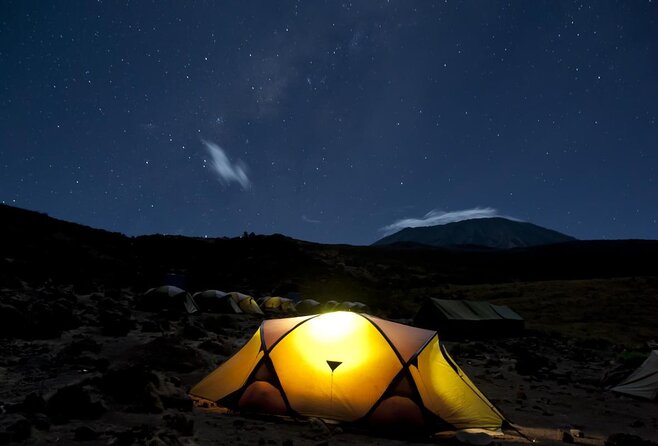
- Lemosho begins quietly in montane forest, then crosses the Shira Plateau before joining the southern circuit.
- Day four is crucial for acclimatization, taking you up toward Lava Tower before dropping to Barranco Camp.
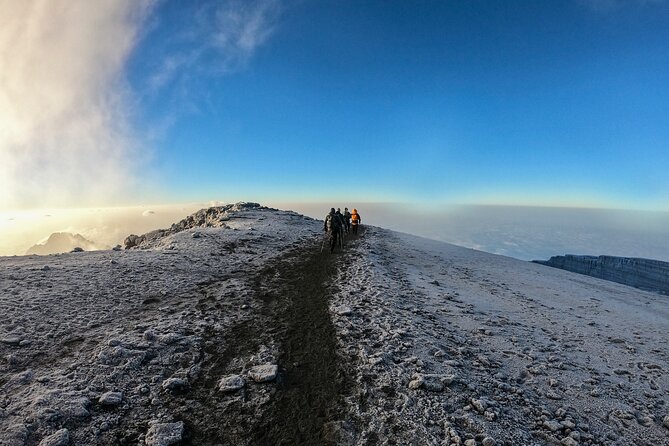
- Summit day begins around midnight to 2 a.m., with a long ascent to Stella Point and Uhuru Peak.
- The crew carries the camp infrastructure, including tents, mattresses, dining equipment, meals, and boiled water.
- The $2,300 price covers many major costs, but tips, climb gear, visas, personal items, unspecified drinks, emergency oxygen, and two hotel nights are extra.
- The operator has earned strong praise for its crew, including guides such as Haji, Mariki, Musa, Jonathan, Tulzia, Geoffrey, Fabian, Moses, Adam, Kaniki, and Seif, but service appears less consistent in some accounts.
Why the eight-day Lemosho Route makes sense
If you want to climb Kilimanjaro without rushing through the mountain, eight days is a sensible format. You spend the first three days gaining height across the western side, then use the southern circuit to prepare for the summit.
The route reaches a maximum of 5,895 meters at Uhuru Peak. That altitude is the real challenge. Kilimanjaro is a walk-up mountain rather than a technical climb, but thin air, cold, wind, poor sleep, and a long summit night can humble fit people quickly.
The itinerary uses the useful high-and-low pattern on day four. You climb toward Lava Tower at about 4,650 meters, then descend to Barranco Camp at roughly 4,000 meters. That day does not add much net height, but it gives your body time to respond before the steeper sections ahead.
This is a private activity, so only your group participates. That matters if you want a quieter schedule, need to walk slowly, or prefer direct contact with your guide. It also means the quality of your assigned guide matters greatly, so ask who will lead your climb and how many crew members will support your group.
More Kilimanjaro routes:
- Kilimanjaro climb by Lemosho Route (7-day)
★ 5.0 · 651 reviews - Kilimanjaro climb, Machame Route (7-day)
★ 5.0 · 262 reviews - Kilimanjaro Climbing Lemosho Route 8 Days.
★ 5.0 · 186 reviews
Day 1: Lemosho Gate to Mti Mkubwa Camp
After breakfast and a briefing, you drive toward Lemosho Park Gate. The final approach uses a forest track that requires a four-wheel-drive vehicle, then you begin walking from the Lemosho Glades.
The first hike is short by Kilimanjaro standards: about 6 kilometers in two to three hours. You rise from approximately 1,830 meters to 2,650 meters and sleep at Mti Mkubwa, which means Big Tree.
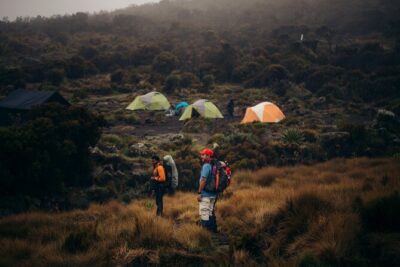
This is a gentle introduction, with a montane forest habitat and lunch and dinner provided. The forest may be damp, and the trail can feel more like a proper wilderness path than a polished walkway. Keep rain gear accessible rather than buried in your luggage.
The short opening day is useful. You are not trying to prove anything yet. Use it to check your boots, adjust your pack, learn the walking rhythm, and get to know the guides and porters who will shape the week.
Day 2: Heather country and the first Shira views
The trail steepens after breakfast as you leave the forest and enter giant heather moorland. You cross several streams, climb over the Shira Ridge, and then descend gently toward Shira 1 Camp.
The numbers are still manageable: 8 kilometers, four to five hours, and a rise from 2,650 meters to about 3,500 meters. You receive all three meals, and the camp sits near a stream on the Shira Plateau.
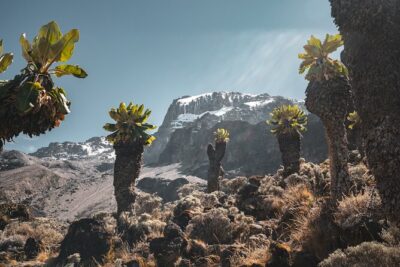
This is where the climb begins to feel spacious. Trees give way to open ground, large heather plants, and wider mountain views. The route is less enclosed, and the changing plant life helps you see how quickly Kilimanjaro’s climate zones shift with altitude.
The drawback is simple: altitude can begin affecting you here even if the walking feels easy. Move slowly, drink the boiled water provided, and tell your guide about headaches, nausea, unusual tiredness, or poor coordination. The crew includes pulse oximeters and first-aid equipment, but those tools work best when you speak up early.
Day 3: A gentle Shira Plateau acclimatization day
Day three links Shira 1 and Shira 2 camps, covering another 8 kilometers in four to five hours. You gain about 350 meters, reaching approximately 3,850 meters.
The walking is described as gentle, with moorland meadows and a stream near camp. Extra hikes on the plateau can make this a useful acclimatization day, but the precise options depend on the guide and conditions.
I like this part of the schedule because it resists the temptation to race upward. You have time to settle into high-altitude walking before the route becomes more demanding.
You should still treat the day seriously. A comfortable afternoon does not guarantee an easy summit night. Eat even if your appetite drops, keep warm after sunset, and use the camp rest period instead of turning every available hour into another excursion.
A few more Moshi & Kilimanjaro days to compare
- Safari Serengeti And Ngorongoro
★ 5.0 · 288 reviews - Climbing Kilimanjaro – Machame Route
★ 5.0 · 170 reviews - Climbing Kilimanjaro through 7 days Machame Route
★ 5.0 · 151 reviews - Kilimanjaro climb, Lemosho Route (8-day)
★ 5.0 · 148 reviews
Day 4: Lava Tower, Shark’s Tooth, and Barranco Camp
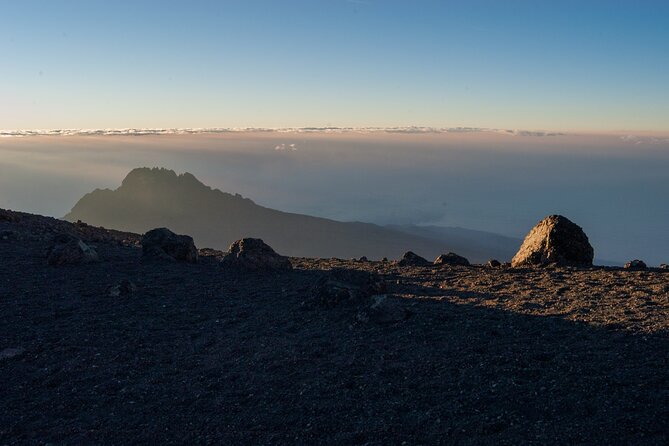
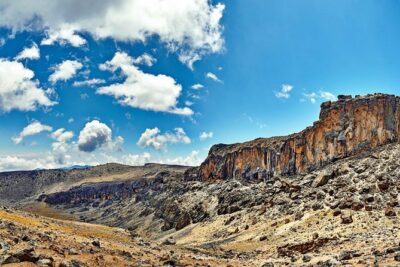
This is one of the most valuable days on the route. From Shira 2, you climb east along a ridge, pass the junction toward Kibo, and continue southeast toward Lava Tower, also called Shark’s Tooth.
The high point is about 4,650 meters, while Barranco Camp sits near 4,000 meters. You walk roughly 8 kilometers over five to six hours through semi-desert terrain.
At first glance, ending near your starting elevation might seem like wasted effort. It is not. The climb toward Lava Tower exposes you to greater altitude, then the descent gives your body a better chance to adapt before the summit attempt.
This day can also feel rough because the scenery becomes more stark and the air thinner. Carry a warm layer, protect your water from freezing later in the week, and do not judge your summit chances by how quickly you walk here.
Day 5: The Barranco Wall to Karanga
After breakfast, you leave Barranco Camp and climb the Barranco Wall. The route continues along a steep ridge into the Karanga Valley before joining the junction connected with the Mweka Trail.
The day covers only about 5 kilometers and takes three to four hours, but the short distance does not mean it is effortless. You rise from roughly 4,000 meters to 4,050 meters through alpine desert.
The Barranco Wall is the day’s defining feature. It is steep and can require careful footwork, but this section is part of a guided hiking route rather than a technical rock climb. Follow the guide’s pace, keep both hands available when needed, and avoid rushing to pass others.
Karanga gives you a shorter afternoon to rest. That is welcome because your body is already working hard at altitude, even when the route mileage looks modest.
Day 6: The final camp at Barafu
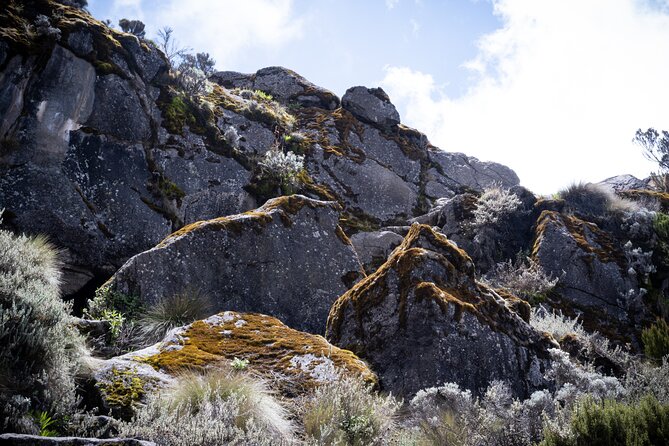
The route from Karanga to Barafu Camp is short, about 4 kilometers and three to four hours. You climb from approximately 4,050 meters to 4,700 meters across alpine desert.
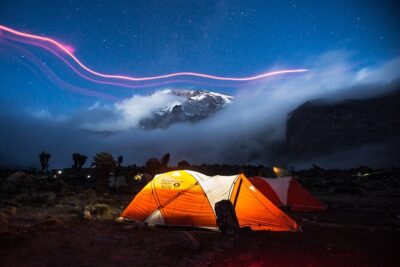
By arriving at Barafu, you complete the southern circuit and have seen the summit from several directions. The camp is the staging point for Uhuru Peak, so the day is less about sightseeing and more about eating, organizing clothing, filling water, and resting.
Dinner comes before an early night, although sleep may be broken by excitement, cold, altitude, or all three. Keep your summit clothing and headlamp ready. You do not want to sort through a duffel bag at midnight while the rest of the group is preparing to leave.
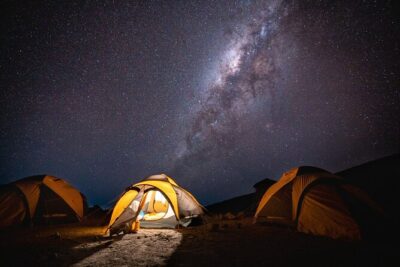
The itinerary includes tents, sleeping mattresses, a mess tent, mini camping chairs, tables, candles, cutlery, and meals. That support makes a real difference at Barafu, where a warm meal and an orderly camp can conserve energy for the hardest hours ahead.
Day 7: Stella Point, Uhuru Peak, and Mweka Camp
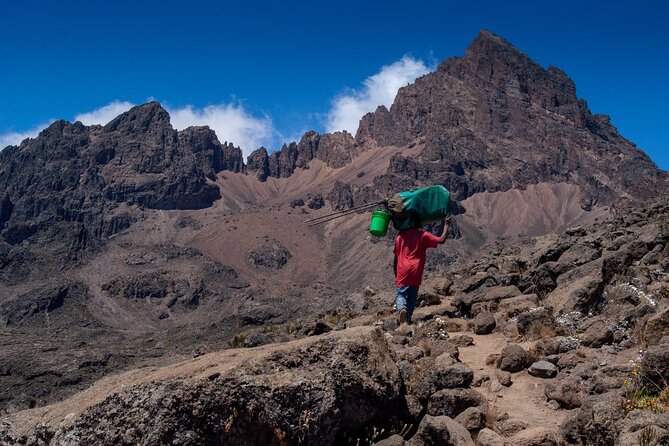
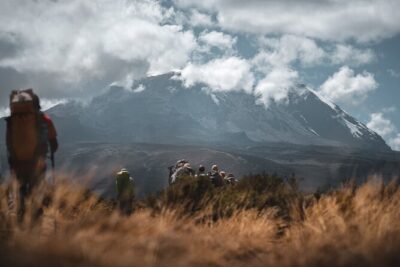
Summit day begins between midnight and 2 a.m. You climb northwest between the Rebmann and Ratzel glaciers, moving through heavy scree toward Stella Point on the crater rim.
This is the toughest part of the trek. The distance and timing are demanding, but the altitude is the bigger issue. You may feel slow, breathless, cold, or mentally drained long before the summit comes into view.
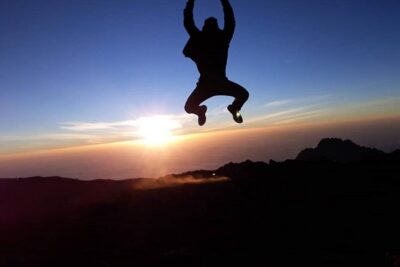
At Stella Point, around 5,739 meters, you can pause and watch sunrise. Faster walkers may see the sunrise from Uhuru Peak, but do not turn that into a race. The final hour from Stella Point to the summit may include snow, and reaching Uhuru Peak requires careful pacing.
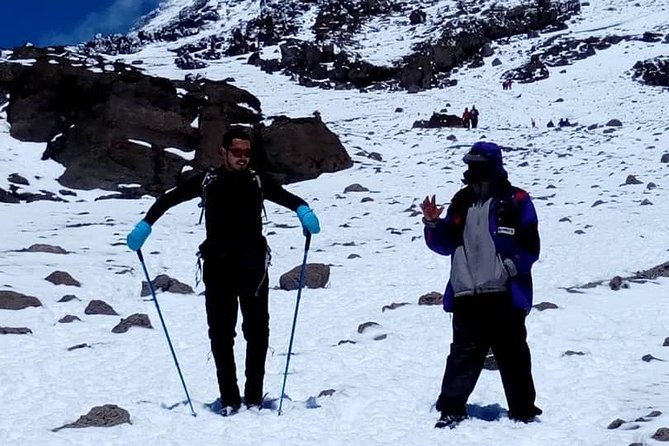
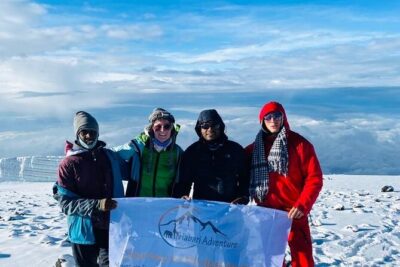
After summit photos and a short celebration, you descend to Mweka Camp. The full day is much longer than the earlier stages, combining the summit ascent with a major descent. Your knees and feet may suffer more on the way down than on the way up, so trekking poles are especially useful.
The strongest crew praise centers on this kind of support. Guides named Haji, Mariki, Musa, Jonathan, Tulzia, Geoffrey, Fabian, Moses, Adam, Kaniki, and Seif are associated with accounts describing patient pacing, safety checks, medical awareness, and encouragement. Those qualities matter more than cheerful conversation when someone is struggling at 5,000 meters.
Day 8: Mweka Gate and the return to Moshi
The final hike descends from Mweka Camp at about 3,090 meters to Mweka Gate at roughly 1,680 meters. It covers 10 kilometers and takes three to four hours through forest.
Lower down, the trail can be wet and muddy. Gaiters and trekking poles help, while shorts and a T-shirt may be comfortable once temperatures rise. Keep rain gear and warmer clothing within reach because mountain weather can change before you reach the gate.
At Mweka Gate, you receive summit certificates. A Monkey Adventures vehicle then takes you back to your Moshi hotel, with the drive taking about 60 minutes.
This is not a sightseeing day. It is a tired, practical finish, but getting from the gate to a shower and a bed is part of the value of having transport arranged.
What the $2,300 price really covers
At $2,300 per person, this is not a bare-bones permit-and-guide package. The price includes national park and entry fees, rescue fees, tents, sleeping mattresses, a dining tent, tables, chairs, candles, cutlery, meals, boiled water, guides, porters, a cook, a waiter, and basic safety equipment.
It also includes pulse oximeters and first aid. Emergency oxygen is not included, so ask how the company handles altitude emergencies and evacuation decisions before departure.
The rental-gear help is useful if you do not own a full high-altitude kit. The team offers to take you to a local hiking store and help you find rental equipment at good prices. Still, inspect every item yourself. You need reliable rainwear, warm layers, gloves, a hat, sturdy boots, a sleeping bag suitable for cold nights, and a headlamp.
Budget separately for tips, meals and drinks not specified, visas, personal items, climb gear, emergency oxygen, and two nights of accommodation before and after the trek. The supplied information lists those hotel nights at $50 for a full-body stay at Kili Base Hotel, so confirm the current rate and exactly what it includes.
Crew service, food, and camp life
The porter and cook system is central to this climb. You walk with a day pack while the crew carries tents, sleeping equipment, food, dining supplies, and other camp needs.
Meals are provided three times daily on the mountain. Several accounts praise the cooking, but the exact menu is not specified, so tell the operator about dietary needs before arrival rather than assuming the camp kitchen can handle them.
The mess tent and small chairs offer a place to eat and recover. Do not expect hotel comfort. One piece of negative feedback specifically raised concerns about toilet facilities, so ask what toilet arrangement is supplied at camp and what comfort level you should expect.
The human side can be a major strength. Edward is repeatedly described as responsive during planning, and several guides are praised for patience, flexibility, and care. One account describes a guide with more than 20 years of experience and medical training, while another describes a private climb adapted for a 10-year-old child. Those examples suggest flexibility is possible, but they do not guarantee the same guide or arrangement for your departure.
The important caution about booking
The overall rating is 4.6 from 37 ratings, with 92 percent recommending the experience. That is a strong signal, especially alongside repeated praise for guides, cooks, porters, organization, and summit support.
But the record is not uniformly positive. Serious complaints describe inconsistent communication, disorganization, unmet promises, and a dispute over money paid in advance. Another complaint raises concerns about the quality of the included hotel stay and basic amenities.
You should not ignore either side. Before sending payment, request a written itinerary, total price, payment schedule, named company entity, hotel details, crew plan, tipping guidance, gear costs, emergency procedure, and a clear statement of what happens if the climb is shortened or you turn around.
Free cancellation is available up to 24 hours before the local start time for a full refund. Cancellations or changes within 24 hours are not refundable, and poor weather may lead to a new date or a full refund.
Who should choose this climb?
I would consider this route for a fit hiker who wants varied scenery and a slower schedule than shorter Kilimanjaro itineraries. The private format suits couples, families, solo climbers, and small groups who value their own pace.
You need to be comfortable camping for seven nights, walking for several hours each day, starting the summit attempt in the middle of the night, and coping with cold, wet trails, thin air, and basic facilities.
This is not a casual mountain holiday. Most travelers can participate according to the supplied information, but the summit remains physically demanding, and no operator can promise that you will reach Uhuru Peak.
Should you book the 8-day Lemosho climb?
Book it if you want the scenic Lemosho approach, a full acclimatization schedule, private guiding, and a package that handles the major park and camp costs. The crew support and repeated praise for guides such as Haji, Mariki, Musa, Jonathan, and others are meaningful advantages.
Pause before booking if the low price is your only reason. The complaints about communication and payment deserve careful checking, and you should confirm the exact hotel, toilet, gear, and emergency arrangements in writing.
My call: this can be a good-value Kilimanjaro climb for a prepared hiker who asks direct questions and plans a realistic gear and tipping budget. Choose it for the route and the local crew support, not because the summit is guaranteed or the camping will feel luxurious.
FAQ
How long is the Kilimanjaro experience?
The climb lasts approximately eight days, ending with transport from Mweka Gate back to a hotel in Moshi.
What route does the climb use?
The experience uses the Lemosho Route, crossing montane forest, moorland, the Shira Plateau, semi-desert, and alpine desert before reaching the summit.
What is included in the price?
The price includes guides, porters, a cook and waiter, national park and entry fees, rescue fees, tents, sleeping mattresses, a dining tent, camping furniture, cutlery, meals, boiled water, first-aid supplies, and pulse oximeters.
Are meals provided during the climb?
Yes. Breakfast, lunch, and dinner are provided on the mountain. Day eight includes breakfast.
Is airport or hotel pickup available?
Pickup is offered, and transport from Mweka Gate to a Moshi hotel is provided at the end. The stated meeting point is in Machame, Tanzania, so confirm the exact pickup location when booking.
Is this a private climb?
Yes. Only your group participates in this private activity, and small-group hiking is offered.
What is the cancellation policy?
You can cancel at least 24 hours before the local start time for a full refund. Cancellations or changes made within 24 hours are not accepted for a refund, while poor weather may result in a different date or a full refund.
Newly listed around Moshi & Kilimanjaro
- Climb Mount Kilimanjaro: 7 Days Machame Route★ 5.0 · 3 reviews
- 6 Days Mount Kilimanjaro Climbing via Rongai Route★ 5.0 · 3 reviews
- Explore 1 day Ngorongoro Crater Budget Group Safari from Arusha★ 5.0 · 3 reviews
- Mt. Kilimanjaro Day Hiking★ 5.0 · 3 reviews
- Chemka (Kikuletwa) Hot Springs, Tanzania★ 5.0 · 3 reviews
- Guided City tour of Moshi★ 4.3 · 3 reviews
- 8 Day Tanzania Family Safari★ 5.0 · 3 reviews
- Rongai Route 7 Days★ 5.0 · 3 reviews
Kilimanjaro Climbs, compared.
Browse the lists this tour appears in