
Reviewed · KILIMANJARO CLIMBS
7 Days Machame Route Trek Mount Kilimanjaro
Kilimanjaro’s Machame Route gives you a full change of scenery in one hard, rewarding week. You start under giant rainforest trees, pass colobus monkeys and ancient ferns, then cross dry moorland and alpine desert before reaching Uhuru Peak at 5,895 meters.
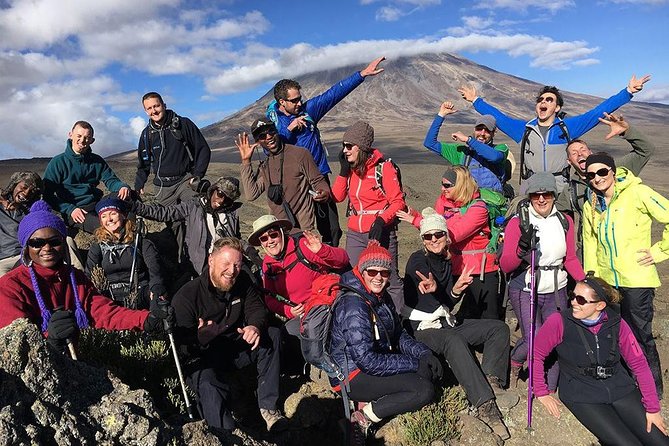
I like two things right away: the route includes a useful acclimatization day at Lava Tower, and the small maximum group of four should allow your guide to watch your pace closely. The mountain crew also earns strong praise, with guides including Gideon, Laurent, Julius, Johnny, Emanuel, and Meshack associated with successful summit attempts.
The catch is simple: this is a demanding climb, not a scenic walk. The midnight summit push lasts up to seven hours to Stella Point, followed by another one to two hours to Uhuru Peak, then a long descent. You need solid fitness, patience, and a willingness to sleep in tents for six nights.
Key points to know before you book
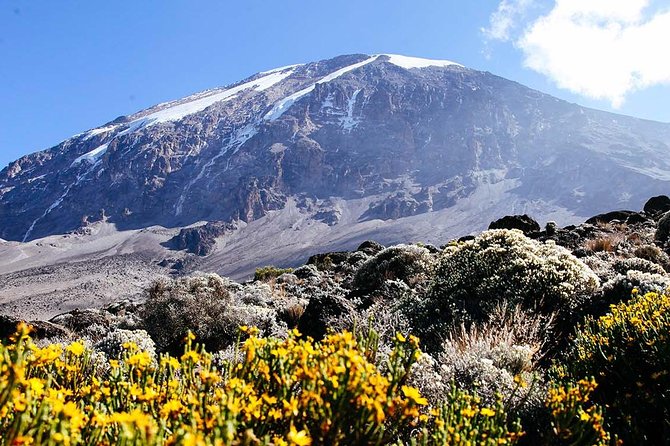
- Rainforest to glaciers in seven days: You move through Kilimanjaro’s main climate zones, from lush forest and heath to cold, dry high-altitude terrain.
- A real acclimatization profile: Day three takes you to Lava Tower at 4,640 meters before you sleep lower at Barranco Camp.
- Small groups matter: The maximum group size is four, useful when the pace slows or altitude symptoms appear.
- The summit starts at midnight: Expect tea, biscuits, darkness, cold, and a long climb toward Stella Point.
- The Barranco Wall looks worse than it is: You may use your hands for balance, but no technical climbing is required.
- Strong crew support: The most praised part of this operator’s service is its guides, cooks, porters, and careful attention to summit success.
Why the Machame Route is worth seven days
The Machame Route is often chosen for its scenery, but the bigger advantage is its shape. You gain height steadily, then spend one important day climbing high and sleeping lower. That gives your body more time to adjust than a rushed itinerary.
Seven days is still not easy. Kilimanjaro rises from warm forest to nearly 5,900 meters, and altitude can affect even fit people. The route helps, but it cannot remove the risk of headaches, nausea, fatigue, or a failed summit attempt.
I like that the schedule does not rush from Shira Plateau straight to a higher sleeping camp. The Lava Tower day is especially useful. You climb to about 4,640 meters, pause there, and then descend to Barranco Camp. That is the classic climb high, sleep lower pattern, and it gives your body a better chance to adjust.
You will also have a private feel to the climb if your party is small. The maximum group size is four, though the full mountain crew includes guides, cooks, and porters. The small hiking group should make it easier to communicate, ask for a slower pace, and receive direct help from the guide.
More Hiking Tours in Arusha
- 8-Day Small-group Lemosho Kilimanjaro Summit Trekking
★ 5.0 · 186 reviews - Mountain Kilimanjaro Day Hike
★ 5.0 · 102 reviews - Private Full Day Hiking Experience to Marangu Route
★ 5.0 · 61 reviews
Day one: forest trails to Machame Camp
Pickup is offered after breakfast, with an advertised start time of 8:30 am. You are driven from your hotel in the Arusha area to Kilimanjaro National Park’s gate, where the required paperwork is completed before walking begins.
The first hike takes about five to six hours. It is a steady introduction rather than a gentle stroll, but the forest makes the time pass well. Huge old trees, primeval ferns, and small endemic flowers line the route. Impatiens Kilimanjari is one of the local plants you may see.
The forest is also the best place to watch for black-and-white colobus monkeys. They can be high in the branches, peering through the leaves, so keep your eyes up when the guide pauses.
Machame Camp is your first tented night. You can expect time to stretch, rest, eat a cooked meal, and settle into the rhythm of mountain camping. The main drawback is that your body has barely had time to adjust to the walking, so even this opening day can feel longer than its distance suggests.
Day two: leaving the trees for Shira Camp
The early start on day two is meant to get you to Shira Camp around mid-afternoon. The scenery changes quickly. Thick green forest gives way to heath and moorland, with drier ground, ferns, and wider views.
This is one of the most satisfying parts of the route because you can see the mountain opening up around you. At camp, the Kibo glaciers may catch the evening light, creating a sharp contrast with the dry high country.
The hiking time is not stated for this day, so you should focus less on the clock and more on moving at a steady pace. Eat and drink when prompted, even if you still feel strong. Altitude often becomes more noticeable after leaving the forest.
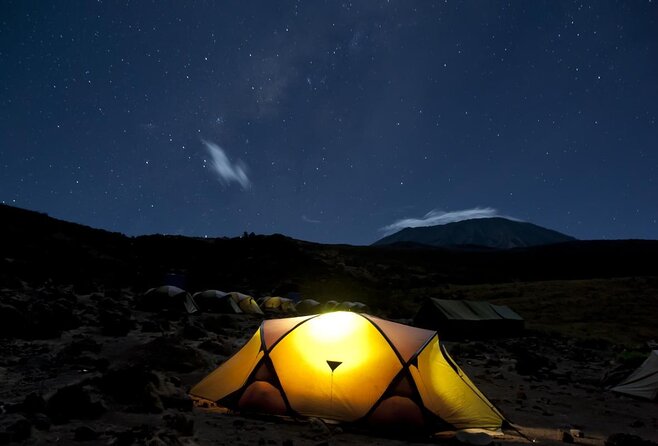
Shira Camp offers a colder, more exposed night than Machame Camp. The tent is practical, not luxurious. You should be ready for basic sleeping conditions, changing temperatures, and a meal served as part of a fixed mountain routine.
Day three: Lava Tower and Barranco Valley
Day three is the key acclimatization day. From Shira Plateau, you climb roughly 700 meters toward Lava Tower, reaching about 4,640 meters. After resting there, you continue through the alpine desert and down toward Barranco Camp.
The entire trek takes around six to seven hours. It is not just a long walk. The height makes the day valuable, and your guide’s judgment matters here. You may feel fine at the start and slower by Lava Tower. Do not treat that as a failure. The point is to expose your body to altitude without sleeping at the highest point reached that day.
The scenery becomes stark. Small lobelia plants and giant senecios appear in the Barranco Valley, giving the otherwise dry terrain a strange, almost prehistoric feel. This is a good day to walk slowly and observe the plants rather than race toward camp.
Barranco Camp is rewarding because the route has taken you high and then brought you down to sleep. Dinner and a tent await, but fatigue may be building. If you have a headache or feel unwell, tell your guide early rather than trying to hide it.
More Kilimanjaro routes:
- 7-Day Machame Kilimanjaro Summit Tour from Arusha
★ 5.0 · 125 reviews - From Arusha/Moshi: Kilimanjaro Hike Marangu Route Day Trip
★ 4.5 · 54 reviews - Mount Kilimanjaro Day Hike Through Marangu Route to Mandara Hut
★ 5.0 · 37 reviews - 6 Days: Hiking Kilimanjaro via Machame Route
★ 5.0 · 24 reviews
Day four: the Barranco Wall and Karanga Camp
The Barranco Wall is the day’s memorable obstacle. Parts of the route require you to place your hands on the rock for balance, but the itinerary does not involve technical climbing. Your guide accompanies you and can offer a hand at awkward sections.
This is a good example of why a guide matters. You need to concentrate on foot placement, keep your pack balanced, and avoid rushing. The wall may look intimidating from camp, but the route is treated as a hiking section rather than a mountaineering pitch.
Beyond the wall, the day includes repeated climbs and descents. That may sound inefficient, but the changes in height provide more acclimatization. You cross a mountain ridge with striking contrasts between dry ground and remaining vegetation before reaching Karanga Camp.
The walking takes about three to four hours, making this one of the shorter days. You should have time to rest after lunch, play a game of rummy, or simply sit with the view. This pause is useful because the summit push is close, and saving energy now is smarter than trying to prove your strength.
Day five: Barafu Camp and the final rest
After breakfast, you walk toward Barafu Camp. Kibo Summit remains close on your left, and the terrain becomes very dry and desert-like. The route takes roughly three to four hours.
Barafu means ice, and the camp marks the high staging point for the summit. The setting is stark and exposed, with little to distract you from the fact that the hardest hours are ahead.
You are scheduled for an early dinner and an early night. Rest may be difficult because you are excited, cold, or anxious about the midnight wake-up. Try to treat the afternoon as recovery time. Organize your summit clothing, headlamp, water, snacks, and personal items before lying down.
The schedule’s short walking time on day five is a major advantage. You do not want to reach the summit start already exhausted. Still, a short day does not mean an easy day, since the altitude at Barafu can make ordinary tasks feel slow.
Day six: the midnight climb to Uhuru Peak
Around midnight, your guide wakes you with tea and biscuits. The summit attempt begins in darkness, using the moon and headlamps for light.
The climb to Stella Point on the crater rim takes about five to seven hours. The route is steep and slow, and the cold is likely to be a bigger issue than the distance. You will need patience. The common mountain rhythm is short steps, regular pauses, and steady encouragement from the guide.
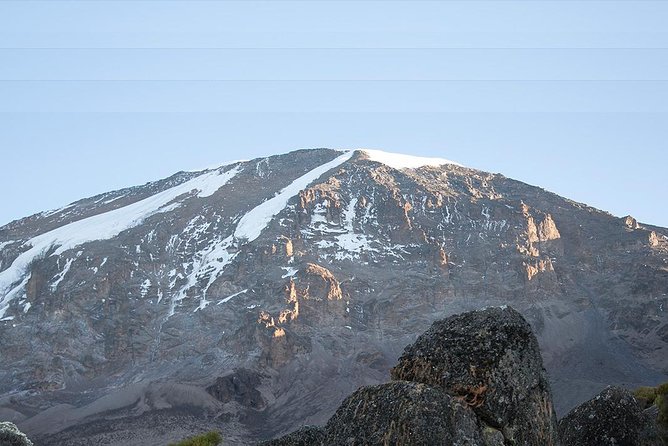
From Stella Point, you continue for another one to two hours to Uhuru Peak, the highest point on Kilimanjaro, at 5,895 meters. Reaching the summit around sunrise gives you views across the African plains, with the snowy summit and glaciers catching the early light.
This is the emotional high point, but do not forget the practical side. Time at the summit may be limited by cold, fatigue, and altitude. Take your photographs, enjoy the achievement, and follow your guide’s instructions.
The descent returns along the same route to Barafu Camp, where the mountain team awaits you. Many climbers focus so strongly on reaching the top that they underestimate the descent. That is a mistake. Tired legs, loose ground, and the long hours can make going down feel harder than going up.
One previous climber offered a blunt tip: take altitude medication only as advised by a medical professional, and remember that the climb is strongly mental as well as physical. The advice about the descent is worth taking seriously. Reaching Uhuru Peak is only part of the day.
Day seven: rainforest again and the Mweka Gate
After breakfast, you take part in a farewell ceremony with the mountain crew before beginning the final walk down. The route takes you back into the rainforest, where you may get another chance to see colobus monkeys.
The descent to Mweka Gate takes about two to three hours. After the dry upper mountain, the return to thick forest feels dramatic. Your knees may be tired, so trekking poles can be useful if you already have them, though equipment details are not specified.
At the gate, you are met and taken back to your hotel. The planned reward is a long shower, time by the pool, dinner, and an overnight stay at the hotel. That final night is important. You are not expected to rush straight into another activity after the summit day and descent.
Guides, porters, and the human side of the climb
The most consistent strength of this trip is the mountain crew. Specific guides connected with successful climbs include Gideon, Laurent, Julius, Johnny, Emanuel, Meshack, Frank, and Mathias. Guide assignments can change, so you should confirm who will lead your group before departure.
The crew is described as professional, kind, and focused on each person’s ability to reach the summit. That matters more than a polished sales pitch. A good guide watches your walking speed, checks how you are coping, and knows when encouragement should replace pressure.
Cooks and porters are also central to the experience. You sleep in tents and rely on the crew for meals, camp organization, and carrying supplies. At the end, the farewell ceremony gives you a chance to recognize the people who made the climb possible.
The operator also has experience with couples, families, honeymoon groups, and small parties. Some past groups changed size during their trip, so it is worth discussing how your booking would be handled if a companion drops out or plans change.
What the $2,200 price means
At $2,200 per person, this is a serious purchase, but the value depends on what is included in your final booking. The supplied details confirm hotel pickup, a mobile ticket, guiding, tented mountain nights, cooked meals, transport to and from the mountain, and a hotel night after the descent. They do not provide a full equipment rental list or a line-by-line list of park fees and transfers.
That means you should ask for the inclusions in writing before paying. Confirm airport transfers, hotel nights before the climb, sleeping bags, walking poles, bottled or treated water, crew tips, park fees, and emergency support. Do not assume these items are included simply because the trek is guided.
The small maximum group of four improves the value. You are paying for a personal physical challenge, not just a route and a tent. Direct guide attention can be especially useful on the Barranco Wall and during the summit attempt.
Free cancellation is available if you cancel at least 24 hours before the local start time. Poor weather or failure to meet the minimum group size can lead to a different date or a full refund. Changes made inside 24 hours are not accepted, so keep your plans firm close to departure.
Who should book this Kilimanjaro trek
I would choose this route if you want the mountain’s major climate zones, a meaningful acclimatization day, and a small hiking group. It suits fit hikers who are comfortable with long days, basic camping, and an overnight summit attempt.
It is also a good fit if personal guide attention matters to you. A maximum of four hikers gives the group a more direct feel than a large commercial climb.
I would pause before booking if you dislike cold nights, tents, early starts, or slow uphill walking. The hardest day begins around midnight and can last well into the day once the descent is counted. The route offers no shortcut around that effort.
You should also be honest about altitude. Being fit helps, but it does not guarantee a summit. Follow your guide’s advice and report symptoms early.
Should you book the seven-day Machame Route?
Yes, if you want a demanding but well-paced Kilimanjaro route with rainforest, moorland, alpine desert, and glacier views in one trip. The seven-day schedule gives you a better acclimatization pattern than a rushed climb, and the small group size is a real advantage.
Book it after confirming the full price inclusions and the assigned guide. Choose it for the crew support, varied scenery, and careful pacing, not because reaching Uhuru Peak will be easy. If you can accept the tents, the midnight start, and the hard walk down, this is a strong way to approach Kilimanjaro.
FAQ
How long is the Machame Route trek?
The trek lasts approximately seven days, beginning with hotel pickup and ending with transport back to the hotel after the descent from Mweka Gate.
What time does the experience start?
The stated start time is 8:30 am. On summit day, your guide wakes you at around midnight for the final ascent.
Where does the trek begin?
You are picked up after breakfast and taken to the Kilimanjaro National Park gate. After the required paperwork, you begin the walk toward Machame Camp.
Where do you sleep during the climb?
You sleep in tents at Machame Camp, Shira Camp, Barranco Camp, Karanga Camp, and Barafu Camp. The final night is at a hotel after returning from the mountain.
Does the route reach Uhuru Peak?
Yes. The summit route continues from Stella Point to Uhuru Peak, which is listed at 5,895 meters.
How large is the group?
The activity has a maximum of four travelers. The mountain crew also includes guides, cooks, and porters.
What is the cancellation policy?
You can cancel at least 24 hours before the local start time for a full refund. Cancellations or changes made less than 24 hours before the start are not accepted for a refund. If poor weather or an insufficient number of participants causes cancellation, you are offered another date or a full refund.
More week long trips in Arusha
- Tanzania Classic – 7 Days
★ 5.0 · 1,151 reviews - 7-Day Premium Luxury Tanzania Safari All-Inclusive
★ 5.0 · 426 reviews - Group Safari 7 Days in Tanzania’s Main Parks
★ 5.0 · 240 reviews - 7 Days Tanganyika Wilderness Safari
★ 5.0 · 159 reviews
Newly listed around Arusha
- 5-Day Private Safari Tour in Tanzania’s Wildlife★ 5.0 · 3 reviews
- 3 Days private safari Tarangire ,Ngorongroro crater &Manyara★ 5.0 · 3 reviews
- 3 Day Sharing Safari – Manyara, Ngorongoro Crater and Tarangire National Parks★ 5.0 · 3 reviews
- Tarangire National Park Day Trip★ 5.0 · 3 reviews
- 6 -Day Tarangire, Manyara, Serengeti & Ngorongoro★ 5.0 · 3 reviews
- 2 Days Tarangire and Ngorongoro Crater Tour★ 5.0 · 3 reviews
- 5 Days Group Camping Safari★ 4.7 · 3 reviews
- 7-Day Mt. Kilimanjaro Hiking: Machame Route★ 5.0 · 3 reviews
Kilimanjaro Climbs, compared.








Browse the lists this tour appears in