
Reviewed · KILIMANJARO CLIMBS
7 Days Machame Route Kilimanjaro Trekking
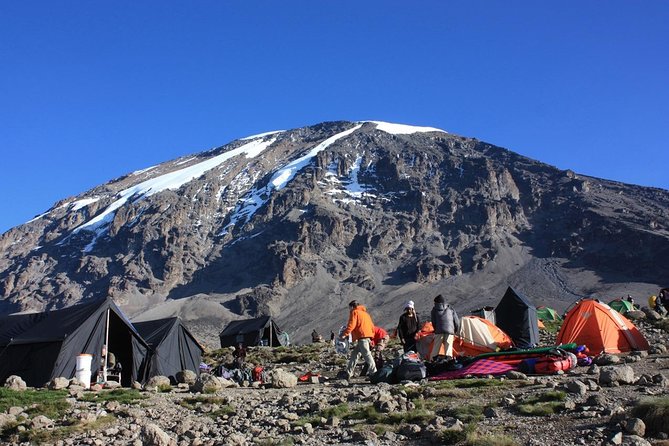
The Machame Route gives you Kilimanjaro in full color: wet rainforest, open moorland, black volcanic rock, a high alpine desert, and snow near Uhuru Peak. You climb high to Lava Tower, sleep lower at Barranco, then make your summit attempt from the stark Barafu Camp.
I like the route’s varied habitats and big views, especially the Western Breach, Heim Glacier, Barranco Wall, and sunrise from Stella Point. I also like the practical value: at $2,200.11 per person, the trip includes camping equipment, meals, porters, rescue fees, park-related charges, and a private group.
The catch is simple: this is a serious high-altitude climb, not a long sightseeing walk. The summit day begins around 11:30 p.m., includes roughly 7 kilometers uphill and 23 kilometers downhill, and you must supply or rent some important gear, including a sleeping bag.
Key points before you book
- Seven days on the Machame Route: You climb from 1,490 meters at Machame Gate to 5,895 meters at Uhuru Peak.
- A strong acclimatization pattern: Day 3 takes you up to 4,630 meters at Lava Tower before dropping to Barranco Camp at 3,950 meters.
- Private trekking format: Only your own group takes part, with pickup offered from Arusha.
- A demanding summit night: Wake around 11:30 p.m. for tea and biscuits before the long ascent to Stella Point and Uhuru Peak.
- Porters, cook, and camping included: Tents, mattresses, cooking equipment, meals, porterage, rescue fees, and taxes are covered.
- Highly praised mountain crew: The named guides include Ombeni, Safaeli, Oliver, and Godlove, with the crew’s care, professionalism, food, and support repeatedly emphasized.
Why Machame is Kilimanjaro’s popular choice
Machame is often called the Whiskey Route, a name that hints at its tougher profile compared with the easier-going Marangu approach. The route is popular because it offers a broad sample of Kilimanjaro’s mountain zones without requiring a longer itinerary.
You begin in montane forest, where fog, mud, and rain are normal. Within a day, the trees give way to heath and moorland. Later, you cross bare volcanic ground, pass beneath glaciers, scramble up Barranco Wall, and finish among stone scree and summit ice.
That variety matters. A seven-day trek gives you more time than a shorter climb to adjust to altitude, though it does not remove the risk of altitude sickness. The route still demands patience, steady walking, and a willingness to accept discomfort.
This is a private activity, so your group does not get folded into a large shared party. That can make a practical difference when you need to set a walking pace, discuss how you feel, or ask the guide to explain the terrain.
More Hiking Tours in Arusha
- 8-Day Small-group Lemosho Kilimanjaro Summit Trekking
★ 5.0 · 186 reviews - Mountain Kilimanjaro Day Hike
★ 5.0 · 102 reviews - Private Full Day Hiking Experience to Marangu Route
★ 5.0 · 61 reviews
Arusha pickup and the early start
The activity begins in Arusha, with a stated start time of 4:00 a.m. That early pickup allows you to reach the Machame area, organize at the gate, and begin the first mountain day without wasting the best part of the morning.
From Arusha, listed at about 1,400 meters, you drive to Machame Village. You can buy mineral water there and receive a packed lunch. Depending on road conditions, the vehicle continues for about 3 kilometers or you walk that stretch to Machame Gate at approximately 1,490 meters.
At the gate, your guide handles registration with Tanzania National Parks, while the porters sort and pack the equipment. This is where you should make sure your personal items are organized. The porters carry the shared mountain load, but you still need a small daypack with the things you personally need during the walk.
The tour lists mobile ticketing and pickup, which keeps the start fairly straightforward. Accommodation before and after the trek is not included, so you need to arrange your Arusha hotel separately.
Day 1: Machame Gate to the wet montane forest
The first day covers about 18 kilometers and takes roughly seven hours. The habitat is montane forest, and the route begins with a strong sense of entering a real mountain environment rather than simply walking toward a viewpoint.
Expect mud, rain, and fog. The forest can feel cool and damp, and the trail may be slippery. Your waterproof layers should be accessible, not buried at the bottom of your bag.
The distance is long for a first day, but the altitude gain is moderate compared with what comes later. This is a good time to settle into the guide’s pace and learn how the support system works. Tents are prepared at camp, and the crew supplies drinking and washing water.
Dinner and breakfast are included, as are the camping setup and cooking equipment. The inclusion of a chef is important on a seven-day climb. You burn a lot of energy, and regular meals are part of keeping the summit attempt realistic.
Day 2: Moorland and the Shira Plateau
Day 2 is shorter, about 9 kilometers and six hours, but you gain substantial altitude. The trail leaves the rainforest and enters heathland and moorland, where the trees thin out and the mountain begins to feel more exposed.
You cross streams and follow a rocky ridge toward the Shira Plateau. Shira Camp sits around 3,840 meters beside a stream. From here, the views toward the Western Breach and its glaciers give you your first clear sense of Kilimanjaro’s upper zones.
The setting is open, so temperatures can fall below freezing at night. The trip information specifically warns that Shira is cold. A sleeping bag is not included, although one can be rented, so arrange that before departure rather than leaving it to chance.
The camp routine is practical: tents are ready before you arrive, porters prepare water, and the chef serves snacks and dinner. You should use this evening to check your layers, headlamp, water containers, and sleeping arrangements.
More Kilimanjaro routes:
- 7-Day Machame Kilimanjaro Summit Tour from Arusha
★ 5.0 · 125 reviews - From Arusha/Moshi: Kilimanjaro Hike Marangu Route Day Trip
★ 4.5 · 54 reviews - Mount Kilimanjaro Day Hike Through Marangu Route to Mandara Hut
★ 5.0 · 37 reviews - 6 Days: Hiking Kilimanjaro via Machame Route
★ 5.0 · 24 reviews
Day 3: Lava Tower, altitude symptoms, and Barranco
Day 3 is one of the most useful days for acclimatization. You walk about 15 kilometers in roughly seven hours, leaving the moorland for semi-desert terrain and rocky ground.
The route climbs east for about five hours to Lava Tower at 4,630 meters. You eat a packed lunch there, and, if weather permits, you may have the option of climbing the tower. The main value of the stop is not the extra scramble. It is the chance to spend time high before sleeping lower.
At Lava Tower, headaches and shortness of breath are common signs of altitude affecting the body. Take them seriously and tell your guide exactly how you feel. Do not treat the lunch stop as a test of toughness.
After lunch, you descend to Barranco Camp at about 3,950 meters. That high-up-then-down pattern is a key reason this seven-day route can work well for acclimatization. You have gained height, spent time there, and then sleep at a lower elevation.
Barranco is also one of the more memorable camps, sitting below the dramatic wall that you tackle the following morning. The transition from bare rock to the camp area gives the day a strong visual finish, but you may arrive tired. Keep your evening simple: eat, drink, organize your clothing, and rest.
Day 4: The Barranco Wall and Karanga Valley
Day 4 covers only about 5 kilometers and takes four to five hours. Do not mistake the shorter distance for an easy day. The main feature is the Great Barranco Wall, which looks intimidating from below.
The route is described as a Class 2 hike. You should expect hands-on movement in places, but it is not presented as technical climbing. A steady guide and careful foot placement matter more than speed.
At the top, you get views of Heim Glacier and the cloud layer below. This is one of the trek’s best moments because the route itself becomes part of the view. You are not simply walking toward scenery; you are working your way over a visible obstacle.
The trail then rises and falls through the Karanga Valley. That repeated up-and-down walking can be tiring, but it serves an acclimatization purpose. You camp at Karanga Camp, about 3,959 meters, and use the relatively short day to recover before the summit buildup.
Day 5: Karanga to exposed Barafu Camp
The fifth day is brief by distance, about 4 kilometers and two to three hours. You leave Karanga and join the Mweka Route, which becomes the descent path during the final two days.
After about an hour, you reach Barafu Hut. This is the last water stop for the porters because there is no accessible water at Barafu Camp. That detail explains why the crew must carry water onward and why you should manage your own supply carefully.
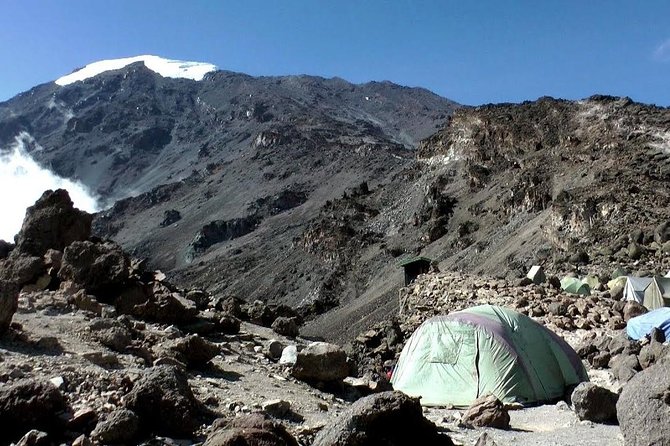
Barafu means ice in Swahili. The camp sits at about 4,550 meters on a rocky, exposed ridge. Wind and rock are part of the setting, and the tents are not tucked into a sheltered forest clearing. Get familiar with the campsite before dark so you know where to move and where your equipment is.
Dinner is served early, then you rest. This is not a normal night of sleep. Your guide wakes you around 11:30 p.m. for tea and biscuits, so arrange your summit clothing and headlamp before lying down.
Day 6: Stella Point, Uhuru Peak, and the long descent
Summit day is the physical and emotional center of the trek. You start around midnight and climb over stone scree toward the crater rim. The ascent to Stella Point at 5,685 meters takes about six hours according to the schedule.
The final section is mentally demanding. The trail is high, cold, and slow, and the darkness hides the full scale of the climb. Keep your pace controlled and follow your guide’s instructions. This is where the patient, supportive approach praised in the crew descriptions matters most.
At Stella Point, you can watch the sunrise. From there, you continue for about two hours on a snow-covered trail to Uhuru Peak at 5,895 meters, the highest point in Africa. Reaching Stella Point earns a green certificate, while reaching Uhuru Peak earns a gold certificate.
The schedule gives about eight hours to reach the summit area and another seven to eight hours to descend to Mweka. The stated distance is approximately 7 kilometers up and 23 kilometers down. That downhill figure is the warning you should remember: even after the summit photo, the day is far from finished.
You descend through changing terrain to Mweka Camp. Your knees and feet may be more troubled by the descent than by the climb, so trekking poles and properly fitted footwear are especially useful considerations. The tour does not include climbing gear, but gear rental is available.
Day 7: Forest descent, certificates, and the crew celebration
The final mountain walk takes about three hours and covers roughly 15 kilometers through forest. Compared with summit day, it is a gentler finish, but tired legs can make the trail feel longer.
After breakfast, the crew holds a celebration with dancing and singing. This is also when tips are presented to the guide, assistant guides, chef or chefs, and porters. Tips are not included in the price, so budget for them as a separate part of the trip.
You descend to Mweka Gate, where you sign your name to receive the completion certificate. You then continue toward Mweka Village, described as another hour and about 3 kilometers, before returning to the meeting point.
The activity ends back at the starting meeting point. The exact final transport details should be confirmed when you book, especially if you have a hotel check-in, airport transfer, or onward safari planned.
What the $2,200.11 price covers
At $2,200.11 per person, the value depends on what you would otherwise need to arrange separately. The package includes:
- Camping equipment, including a mess tent, mattress, and cooking equipment
- Rescue fees
- Parking fees
- All listed mountain accommodation
- A professional driver and guide
- Porterage
- Six breakfasts
- Seven lunches
- Six dinners
- Taxes and VAT
That is a substantial bundle for a seven-day climb. Food, tents, porters, and rescue coverage are not minor extras on Kilimanjaro. They are central to how the trip operates.
You still need to budget for international flights, visas, travel insurance, personal items, souvenirs, a sleeping bag, climbing gear, bath towels, and tips. Sleeping bags and climbing gear are available for rent, which is useful if you do not want to purchase equipment for one climb.
Possible government increases in taxes or park fees are also excluded. Accommodation before and after the trek is not part of the package, so include at least those nights in your full trip budget.
The Mafie Adventures crew and level of support
The crew is one of the strongest parts of this experience. Specific guide names connected with the trek include Ombeni, Safaeli, Oliver, and Godlove. The guide teams are described as friendly, professional, and experienced, with more than 20 years of combined mountain experience mentioned for Ombeni and Safaeli.
The practical praise is consistent around care and support. The guides check comfort, explain the mountain, and help keep the climb manageable. The porters and food service also receive strong approval, and one group had its own toilet and an additional support detail.
Because this is a private trip, you should ask in advance which guides will lead your group, how many porters are assigned, and what toilet arrangement is included for your booking. The supplied information confirms porters, a chef, assistant guides, and camping equipment, but not a fixed crew size or a guaranteed private toilet for every departure.
The support system does not make altitude harmless. Your guides can help assess symptoms and adjust the plan, but you remain responsible for telling them when you feel unwell.
Who should choose this seven-day climb
I would recommend this route to an active person who wants a varied Kilimanjaro experience and accepts that summit success is not guaranteed. You need to be ready for long walking days, cold camps, basic camping, and a midnight start.
The private format suits couples, families, or friends who want to climb together rather than join an open group. The trip can also work for someone arranging a spontaneous climb because gear and sleeping bags are available for rent, though a last-minute booking still leaves you responsible for fitness, insurance, visas, and personal preparation.
This is not a casual nature outing. The summit reaches 5,895 meters, and Day 6 can run for up to 16 hours when the ascent and descent are combined. Most people may participate according to the supplied activity information, but you should not read that as a promise that the climb will be easy or suitable for every fitness level.
Important practical details before booking
The experience is non-refundable and cannot be changed after booking. If you cancel or request an amendment, the amount paid is not refunded, so confirm your dates, insurance, equipment needs, and accommodation plans first.
Pickup is offered, and the stated meeting point is Arusha, Tanzania. The activity starts at 4:00 a.m. and ends back at the meeting point. Confirmation is received at booking, and the activity is listed near public transportation.
Pack for wet forest, freezing camps, wind, rock, and snow. Keep rain protection available on Day 1, warm layers ready for Shira and Barafu, and your headlamp and summit clothing organized before the early wake-up.
Should you book the Machame Route?
Book this trek if you want Kilimanjaro’s most varied scenery, a private group, a seven-day schedule, and a package that covers the major operating costs. The Lava Tower acclimatization day, Barranco Wall, and sunrise near Stella Point give the route real character.
Think twice if you dislike cold camping, long descents, or uncertain summit outcomes. The best reason to choose Mafie Adventures is the combination of named guide support, porters, meals, rescue fees, and equipment arrangements. Just confirm the guide team, rental gear, accommodation before and after, tip expectations, and final transport before paying, since the cancellation terms are strict.
FAQ
Where does the Kilimanjaro trek start?
The activity starts in Arusha, Tanzania. Pickup is offered, and the stated start time is 4:00 a.m.
How long is the Machame Route experience?
The trek lasts approximately seven days.
Is this a private tour?
Yes. Only your own group participates in the activity.
What is the highest point reached?
Uhuru Peak is the highest point, at approximately 5,895 meters. Stella Point is at about 5,685 meters.
Are meals included?
Yes. The package includes seven lunches, six dinners, and six breakfasts.
Is camping equipment included?
Yes. Camping equipment includes a mess tent, mattress, and cooking equipment. Accommodation on the mountain is included.
Are sleeping bags and climbing gear provided?
Sleeping bags and climbing gear are not included, but both are available for rent.
Are tips included in the price?
No. Tips are excluded. At the mountain celebration, tips are presented to the guides, assistant guides, chef or chefs, and porters.
More week long trips in Arusha
- Tanzania Classic – 7 Days
★ 5.0 · 1,151 reviews - 7-Day Premium Luxury Tanzania Safari All-Inclusive
★ 5.0 · 426 reviews - Group Safari 7 Days in Tanzania’s Main Parks
★ 5.0 · 240 reviews - 7 Days Tanganyika Wilderness Safari
★ 5.0 · 159 reviews
Newly listed around Arusha
- 5-Day Private Safari Tour in Tanzania’s Wildlife★ 5.0 · 3 reviews
- 3 Days private safari Tarangire ,Ngorongroro crater &Manyara★ 5.0 · 3 reviews
- 3 Day Sharing Safari – Manyara, Ngorongoro Crater and Tarangire National Parks★ 5.0 · 3 reviews
- Tarangire National Park Day Trip★ 5.0 · 3 reviews
- 2 Days Tarangire and Ngorongoro Crater Tour★ 5.0 · 3 reviews
- 6 -Day Tarangire, Manyara, Serengeti & Ngorongoro★ 5.0 · 3 reviews
- 5 Days Group Camping Safari★ 4.7 · 3 reviews
- 7-Day Mt. Kilimanjaro Hiking: Machame Route★ 5.0 · 3 reviews
Kilimanjaro Climbs, compared.








Browse the lists this tour appears in