
Reviewed · KILIMANJARO CLIMBS
7 Days Machame Route Climbing Mt. Kilimanjaro
The 7-day Machame Route gives you a strong balance of scenery and acclimatization. You walk from thick rainforest to volcanic rock, sleep in camps, and make the midnight push to Uhuru Peak at 19,345 feet. I especially like the Lava Tower to Barranco day, which takes you high before bringing you lower to help your body adjust, and the small local team, with guides such as Bakari, Livingston, Abraham, and Alfonse praised for steady pacing and encouragement. The drawback is simple: summit day is long, cold, dark, and physically punishing.
I like that the $2,750 price includes park fees, camping, meals, drinking water, airport transport, two Moshi hotel nights, and a professional mountain crew. The group limit of 15 keeps this from feeling like a crowded conveyor belt, though you should still expect basic camping, wet trails, shared facilities, and no promise that you will reach the summit.
Key points to know before booking
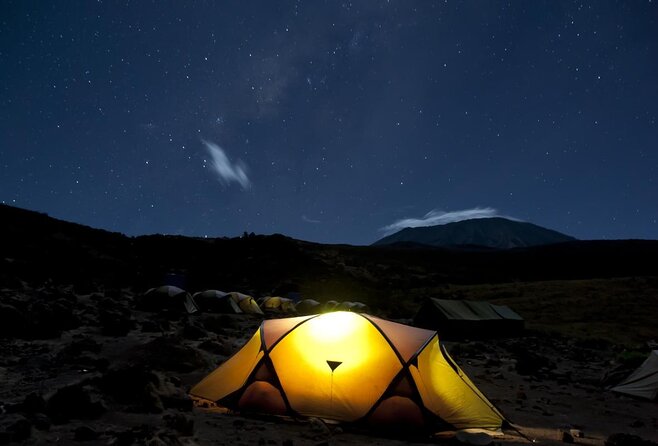
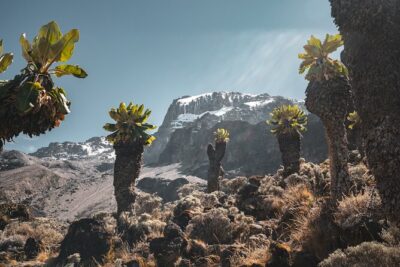
- The route climbs through five distinct habitats: rainforest, moorland, semi-desert, alpine desert, and Arctic summit terrain.
- Day 3 is the acclimatization workhorse: you climb to Lava Tower at about 13,000 feet, then descend to Barranco Camp.
- Summit morning begins around midnight to 2 a.m.: the ascent to Stella Point takes roughly seven to eight hours.
- The $2,750 cost covers major essentials: park and camping fees, a guide team, cook, porters, meals, water, safety equipment, and Moshi lodging.
- The group maximum is 15 people: that offers a more personal feel than a very large departure, while keeping the cost below many private climbs.
- Wet and slippery ground is part of the deal: gaiters and trekking poles are especially useful on the first and final days.
Why the seven-day Machame Route makes sense
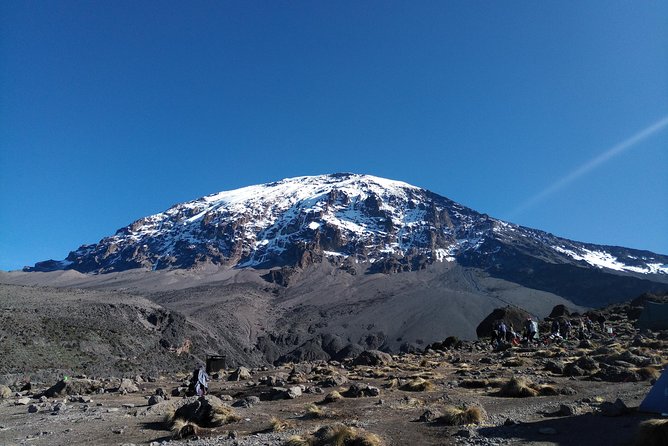
Kilimanjaro is not a technical climbing trip in the usual mountaineering sense, but it is a serious high-altitude trek. You do not need ropes or climbing experience according to the information provided, yet you do need strong fitness, patience, and the ability to walk for hours at a slow pace.
Machame is popular because it gives you changing scenery and a useful climb-high, sleep-lower pattern. The route still asks a lot from your legs, but the seven-day schedule is more sensible for acclimatization than a rushed shorter version.
The route crosses from about 5,400 feet at the gate to 19,345 feet at the summit. That change is enormous. Your body has to adjust as you go, and the guides’ repeated use of a slow pole pole pace is not decoration. It is one of the main tools for staying steady.
The company caps the group at 15 people. That is large enough to spread the cost of the support crew, but small enough for guides to keep an eye on your pace and condition. The supplied safety package includes portable oxygen tanks, an oxygen saturation meter, and a first-aid kit. These are useful safeguards, not guarantees against altitude sickness, so you still need to report symptoms honestly.
More Kilimanjaro routes:
- Kilimanjaro climb by Lemosho Route (7-day)
★ 5.0 · 651 reviews - Kilimanjaro climb, Machame Route (7-day)
★ 5.0 · 262 reviews - Kilimanjaro Climbing Lemosho Route 8 Days.
★ 5.0 · 186 reviews
Day 1: Machame Gate to Machame Camp
The climb begins with a drive of about 50 minutes from Moshi to Kilimanjaro National Park’s Machame Gate. The road passes through Machame village on the lower slopes, giving you a first look at the community connected to this route.
From the gate, you walk uphill through rainforest for about 11 kilometers. The day takes five to seven hours, with an elevation gain from 5,400 to 9,400 feet.
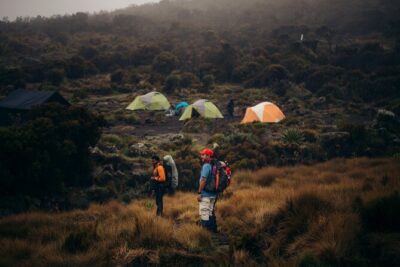
This is a fine opening stage because the forest gives you shade and a gradual introduction to the mountain. The trail winds up a ridge, but lower sections can be muddy and slippery. Pack your rain gear where you can reach it, not buried at the bottom of your bag.
Gaiters help keep mud out of your boots, while trekking poles give you extra balance. You will eat breakfast, lunch, and dinner as part of the mountain meal plan, then sleep at Machame Camp.
Day 2: Heather and moorland on the way to Shira
Day two is shorter in distance but not necessarily easy. You cover about five kilometers in four to six hours, climbing from 9,400 to 12,500 feet.
The rainforest thins and gives way to moorland. The path rises across a small valley and follows a steep, rocky ridge covered with heather. The vegetation feels more open now, and the route begins to look properly alpine.
The trail eventually turns west toward a river gorge, where you stop for rest, dinner, and the night at Shira Camp. This is one of the days when you should resist the urge to race ahead. The mountain rewards slow movement, regular water breaks, and a light pack.
The short distance may look reassuring on paper. The altitude is the real issue. At 12,500 feet, simple tasks take more effort, and you may notice your breathing change.
Day 3: Lava Tower and the essential Barranco descent
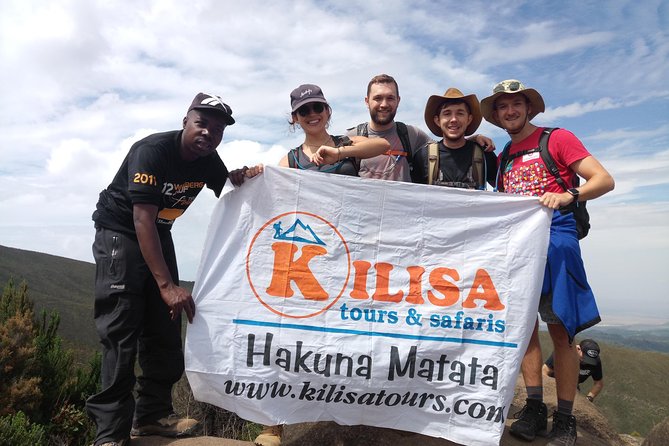
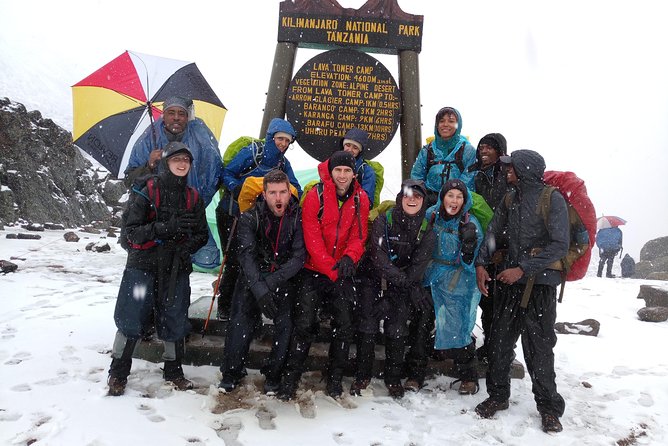
Day three covers 10 kilometers and takes six to eight hours. You start at Shira Camp, climb toward Lava Tower at about 13,000 feet, and finish at Barranco Camp, also at about 13,000 feet.
The route first heads east along a ridge, passing a junction toward Kibo, the volcanic cone that holds the summit. It then turns southeast toward Lava Tower, also called the Shark’s Tooth. A further junction leads toward Arrow Glacier at about 16,000 feet, though the described route continues down to Barranco.
This is the most important acclimatization day. You spend time high, then descend to sleep at roughly the same elevation where you began. That pattern gives your body a better chance to adjust than simply gaining height every day.
It is also a demanding day. The semi-desert habitat offers little shelter, and the combination of altitude and steady climbing can make the hours feel long. Eat even if your appetite fades, sip water often, and tell your guide if a headache or unusual fatigue becomes more than a minor nuisance.
More week long trips in Moshi & Kilimanjaro:
- Climbing Kilimanjaro through 7 days Machame Route
★ 5.0 · 151 reviews - 7 Days Kilimanjaro via Machame route affordable price
★ 5.0 · 110 reviews - Private Kilimanjaro Hike 7 Day Lemosho Route
★ 5.0 · 60 reviews - 7-Day Magical Tanzania Safari -Premium High End Package
★ 5.0 · 53 reviews
Day 4: The Barranco Wall to Karanga
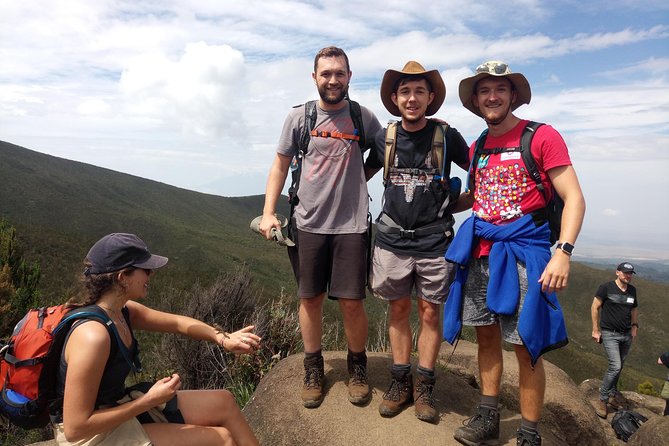
From Barranco Camp, you climb a steep ridge and pass the Barranco Wall before reaching Karanga Camp. The distance is about five kilometers, and the walk takes four to five hours.
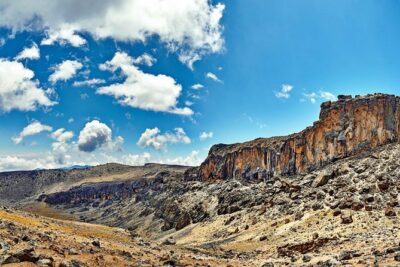
This is a shorter day by design. The Barranco Wall is the day’s main physical feature, but the overall schedule leaves time to rest and adjust to the altitude. You finish around 13,100 feet in an alpine desert setting.
Do not treat the short distance as a free pass. At this height, a few kilometers can still feel substantial. The value is in allowing your body and legs to recover before the push to Barafu and the summit.
A calm guide matters here. Several accounts highlight patient, safety-focused leadership and steady encouragement, with Bakari, Livingston, Abraham, and Alfonse named in different accounts. Your assigned team may differ, but the company’s guide-led pacing is an important part of the experience.
Day 5: Karanga to Barafu Camp
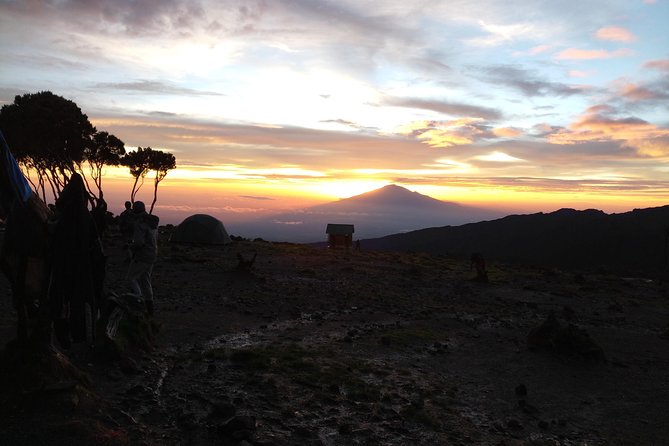
Day five covers only four kilometers, but you climb from 13,100 to 15,300 feet. The walk takes four to five hours through alpine desert.
You leave Karanga, pass the junction connecting with the Mweka Trail, and continue to Barafu Hut. At this point, you have completed the South Circuit, known for views of the summit from several angles.
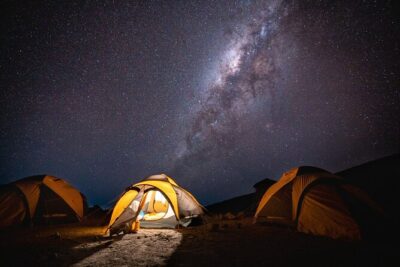
Barafu means ice, and the camp is a stark place to prepare for the summit. Mawenzi and Kibo can be seen from this position. The setting is impressive, but comfort is limited. You eat dinner, rest, and organize your clothing and daypack for the night ascent.
The schedule requires discipline. You should use this afternoon for sleep rather than sightseeing around camp. Keep warm layers, gloves, a headlamp, water, and any personal essentials ready before lying down. The summit attempt begins very early, often between midnight and 2 a.m.
Day 6: The midnight push to Uhuru Peak
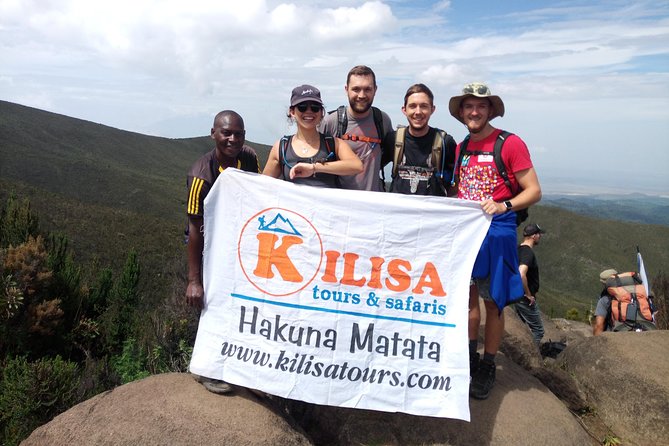
Summit day is the heart of the trip and the part that demands the clearest expectations. You ascend from Barafu Camp at 15,300 feet to Uhuru Peak at 19,345 feet, then descend to Mweka Hut at about 10,000 feet.
The ascent covers about five kilometers and takes seven to eight hours. You climb in darkness toward the crater rim, moving through heavy scree between the Rebmann and Ratzel glaciers before reaching Stella Point at 18,600 feet.
This is where the trek becomes as mental as physical. The slope is steep, the air is thin, and each step can feel slow. Guides who maintain a patient pace and keep checking on you can make a major difference. Kilisa’s supplied oxygen and oximeter add a sensible safety layer, but they do not replace careful altitude management.
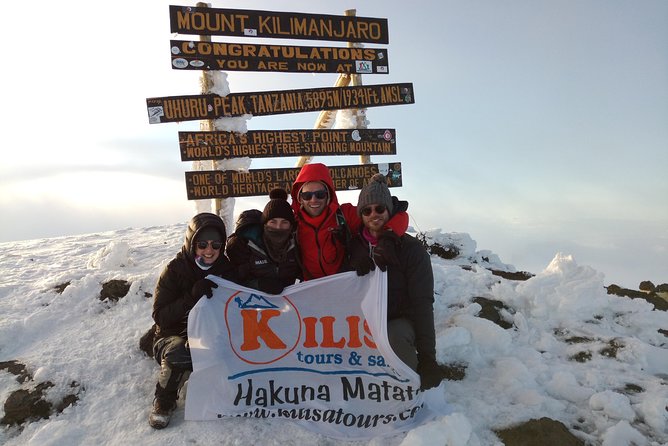
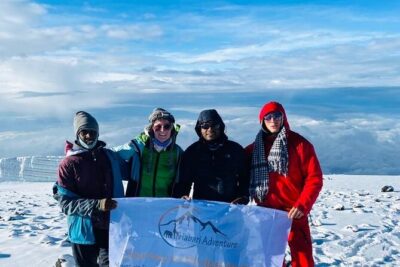
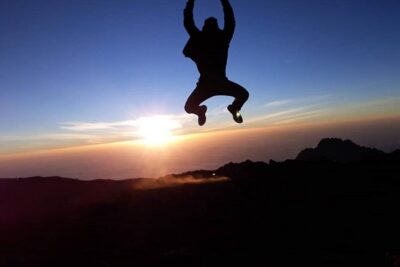
At Stella Point, you may pause for a short rest and see sunrise if the weather cooperates. From there, the final hour to Uhuru Peak may include snow. Reaching the summit gives you the highest point in Africa, but the descent is not an afterthought.
You still have about 12 kilometers to walk down to Mweka Camp, taking another four to six hours. Your knees and feet will feel the strain, and the long return makes this a very full day. Eat, drink, and keep a little energy in reserve for the descent.
Day 7: Mweka Camp back to Moshi
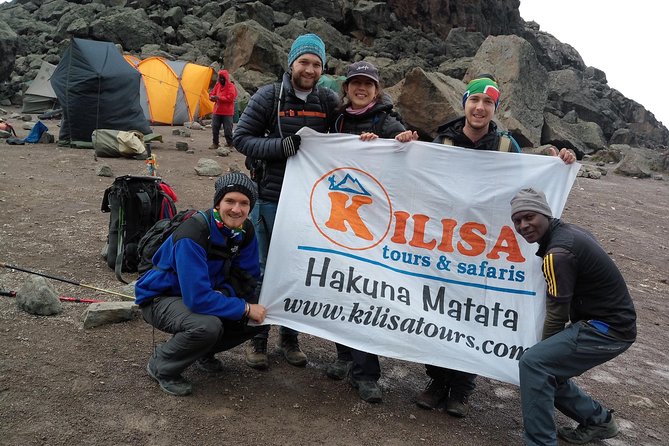
The final walking day descends 10 kilometers from Mweka Camp at about 10,000 feet to the Mweka Park Gate at 5,400 feet. The walk through rainforest takes three to four hours.
The lower trail can again be wet and muddy, so keep your gaiters and poles available. As you lose altitude, shorts and a T-shirt may feel comfortable, but keep rain gear and warm clothing close in case the weather shifts.
At the park gate, you receive your summit certificate. You then continue for about another hour to Mweka Village, where a vehicle takes you back to your Moshi hotel.
This last transfer is included in the practical sense of the package: the mountain effort ends with a planned ride rather than an improvised search for transport. Two nights of Moshi accommodation are included overall, which gives you a place to settle before or after the climb, depending on how your booking is arranged.
What the $2,750 price really covers
At $2,750 per person, this is not a budget walk, but Kilimanjaro requires a large support operation. Your fee includes park entry fees, camping fees, Kilimanjaro rescue fees, 18 percent VAT on tour services, private transport to and from Kilimanjaro International Airport, and two nights in Moshi.
On the mountain, you receive three hot meals each day, treated and filtered drinking water, tents, a guide team, a cook, and porters. The meal plan lists seven breakfasts, six lunches, and six dinners, matching the mountain schedule and the final morning’s breakfast.
That package makes the price easier to assess. You are paying not only for walking, but also for permits, logistics, food preparation, camp support, transport, and the local crew required to move supplies up the mountain.
You still need to budget for flights, travel insurance, personal toiletries, and tips for guides, porters, and the cook. A portable flush toilet can be rented for $100 for the whole trip, shared within a group. It is optional, but worth considering if private toilet access matters to you.
The company advertises a best-price guarantee for the same or nearly identical tour under matching conditions. Read that carefully. The comparison must involve the same length, season, group size, meals, lodging, transport, and destinations, not simply another seven-day Kilimanjaro offer.
Who will get the most from this climb
This trip suits you if you want a scenic route, a gradual seven-day schedule, and the structure of a supported expedition. It is also a good fit if you value a local Moshi operator and want airport transfers, hotel nights, meals, and mountain safety equipment handled together.
You should have a strong level of physical fitness. The daily distances are manageable for a fit hiker, but altitude changes the experience. Summit day alone involves a nighttime ascent followed by a long descent, so regular walking practice and uphill conditioning are sensible preparation.
This is not the right choice if you want hotel comfort on the mountain, a relaxed sightseeing schedule, or a guaranteed summit. Camping is basic, conditions can be muddy and cold, and the summit depends on your health, weather, and how your body responds to altitude.
How the local crew shapes the experience
The strongest pattern in the supplied feedback is the human support. People repeatedly praise the guides for patience, safety checks, encouragement, and the slow pole pole rhythm. Names including Bakari, Livingston, Abraham, Alfonse, and Bacarri appear in different accounts, so you should confirm your actual lead guide before departure.
The cook and porters also receive warm attention, especially for making camp feel welcoming and for serving substantial hot meals after difficult walking days. That support is not a small detail. A hot dinner at 15,300 feet can lift morale when your body is tired.
You should also treat tips as part of the real cost of a Kilimanjaro climb. They are not included, and the porters and cook are essential to the operation. Ask Kilisa for current tipping guidance before you go so you can plan fairly and carry the right amount.
Booking details and cancellation
Pickup is offered, mobile tickets are available, and confirmation is provided at booking. The listed meeting time is 8:30 a.m., but confirm the exact pickup and pre-climb briefing schedule with Kilisa.
You can cancel for a full refund if you do so at least 24 hours before the local start time. Cancellation within 24 hours is nonrefundable, and changes inside that window are not accepted. If poor weather causes the company to cancel the experience, you are offered another date or a full refund.
Should you book this Kilimanjaro climb?
I would consider this a well-structured Machame option for a fit hiker who wants seven days on the mountain rather than a hurried ascent. The route has strong scenery, a useful acclimatization pattern, a clear support package, and a group limit that should keep the experience reasonably personal.
The main caution is the summit schedule. You must be ready for a midnight start, thin air, cold conditions, scree, snow near the top, and a very long descent on day six.
Book it if you value local guides, included logistics, hot mountain meals, and a route that gives acclimatization real attention. Before paying, confirm the exact guide team, hotel arrangements, group size for your date, tipping expectations, and what is supplied inside the tents. If you accept basic camping and prepare seriously for altitude, the seven-day Machame Route offers a fair, demanding path to Uhuru Peak.
FAQ
How long is the Kilisa Machame Route climb?
The experience lasts approximately seven days, including the mountain trek, the descent to Mweka, and transport back to Moshi.
What is the highest point reached?
The summit is Uhuru Peak at 19,345 feet.
How far do you walk on summit day?
You walk about five kilometers during the ascent from Barafu Camp to the summit, followed by about 12 kilometers descending to Mweka Hut.
What meals are included?
The package includes breakfast, lunch, and dinner while you are on the mountain. The stated meal plan includes seven breakfasts, six lunches, and six dinners.
Is drinking water provided?
Yes. Treated and filtered drinking water is provided throughout the trek.
Is airport transportation included?
Yes. Private transport to and from Kilimanjaro International Airport is included.
Are flights included in the price?
No. Flights are not included.
Is travel insurance included?
No. You must arrange your own travel insurance.
What happens if bad weather cancels the climb?
If the experience is canceled due to poor weather, you are offered a different date or a full refund.
Newly listed around Moshi & Kilimanjaro
- Climb Mount Kilimanjaro: 7 Days Machame Route★ 5.0 · 3 reviews
- 6 Days Mount Kilimanjaro Climbing via Rongai Route★ 5.0 · 3 reviews
- Explore 1 day Ngorongoro Crater Budget Group Safari from Arusha★ 5.0 · 3 reviews
- Mt. Kilimanjaro Day Hiking★ 5.0 · 3 reviews
- Chemka (Kikuletwa) Hot Springs, Tanzania★ 5.0 · 3 reviews
- Guided City tour of Moshi★ 4.3 · 3 reviews
- 8 Day Tanzania Family Safari★ 5.0 · 3 reviews
- Serengeti Safari with Sirikwa Travel★ 5.0 · 3 reviews
Kilimanjaro Climbs, compared.
Browse the lists this tour appears in