
Reviewed · KILIMANJARO CLIMBS
7-Day Machame Route Kilimajaro
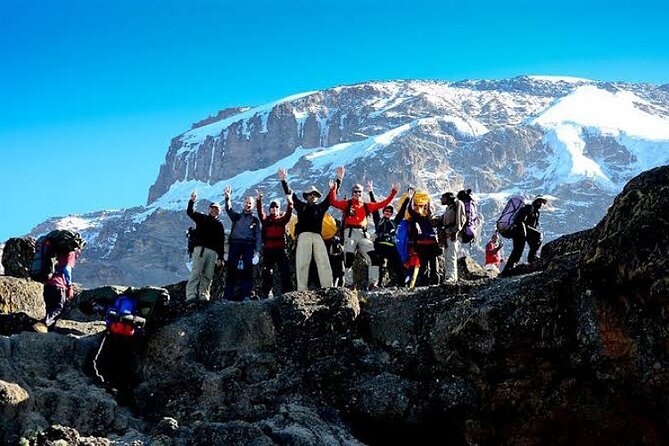
The best part of this 7-day Machame Route trek is its steady climb through several very different habitats, from coffee country and rainforest to cold moorland, volcanic rock, glaciers, and the summit of Mount Kilimanjaro. You get a full acclimatization day built into the route, which matters greatly on a mountain rising to 5,895 meters.
I like the guide, porter, and cook team, since you can focus on walking instead of carrying camp supplies or preparing meals. I also like that the $2,550 price includes park fees, rescue cover, transport, accommodation, and all meals during the climb. The main drawback is the hard summit night, when you begin around midnight and may hike for seven hours before the long descent.
Key points at a glance
- Seven days on the Machame Route: You move from rainforest to alpine desert, with time to adjust to the altitude.
- A strong support team: Guides lead the way, porters carry equipment, and a cook prepares breakfast, lunch, and dinner.
- The climb includes Uhuru Peak: The final goal is the 5,895-meter summit, reached after the overnight push from Barafu Camp.
- Lava Tower and Barranco Wall: Day 3 gives you the classic acclimatization pattern of climbing high, then sleeping lower.
- Most major costs are covered: Park fees, rescue fees, transport, accommodation, and mountain meals are included.
- The group can be large: The maximum is 50 people, so ask about the expected group size before booking.
Why seven days on Machame makes sense
The Machame Route is one of Kilimanjaro’s most scenic approaches. It is also more demanding than a simple trail walk. You gain altitude quickly, sleep in tents, cross rough volcanic ground, and finish with a steep summit night.
The seven-day schedule helps by spreading the climb across several camps. Day 3 is especially useful: you climb toward Lava Tower, then lose height into Barranco Valley. That climb high, sleep lower pattern gives your body more time to adjust than a rushed itinerary.
You still need a moderate level of fitness. This is not technical mountaineering, but it is a serious high-altitude trek. The hardest part is not just the distance. It is the thin air, cold nights, uneven rock, and the fact that the summit attempt comes after several days of walking.
The company has used guides named Leonard and Tom, both associated with supportive, professional mountain service. Your actual guide should be confirmed before departure, but you can reasonably expect a team structure rather than a lone escort: guide, porters, and cook working together throughout the climb.
More Kilimanjaro routes:
- Kilimanjaro climb by Lemosho Route (7-day)
★ 5.0 · 651 reviews - Kilimanjaro climb, Machame Route (7-day)
★ 5.0 · 262 reviews - Kilimanjaro Climbing Lemosho Route 8 Days.
★ 5.0 · 186 reviews
Day 1: Machame Gate through the rainforest
Your morning begins with pickup from a hostel or hotel in Moshi. Airport pickup is also offered. The drive to Machame Gate takes about 45 minutes, followed by registration and the start of the trail.
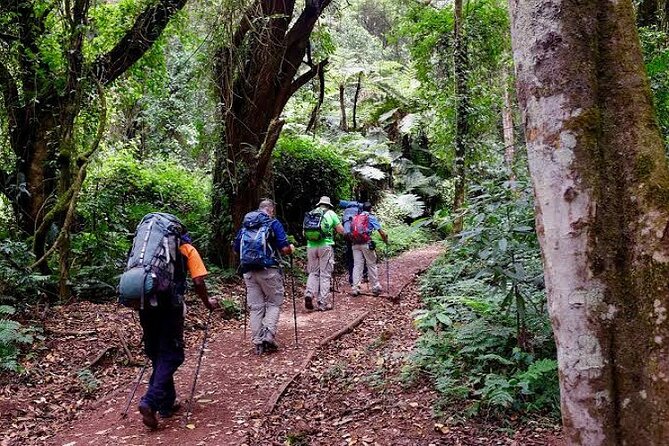
The first section passes through montane forest and coffee plantations. It is a gradual climb, with dense rainforest providing shade and a pleasant introduction to the mountain. Your guide explains local plants and animals along the way.
Keep your eyes open for black-and-white colobus monkeys and brightly colored bird species. These sightings are not guaranteed, but the forest itself makes this day more than a long walk to camp.
The hiking time is about six hours, ending at Machame Camp near the upper edge of the rainforest. This is a manageable opening day, but wet conditions can make the forest trail slippery. Carry a rain layer where you can reach it quickly.
You will have support from the porters and cook from the beginning. That arrangement is valuable on a seven-day climb. You carry only your personal day items, while the camp equipment and food move ahead with the support crew.
Day 2: Moorland and the Shira Plateau
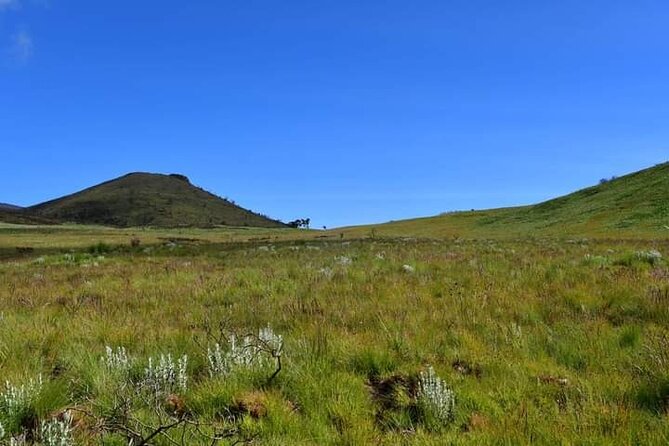
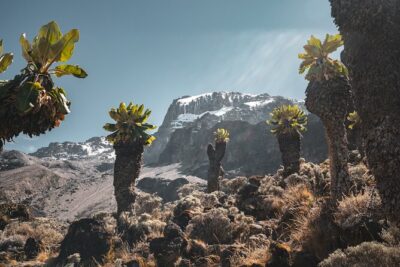
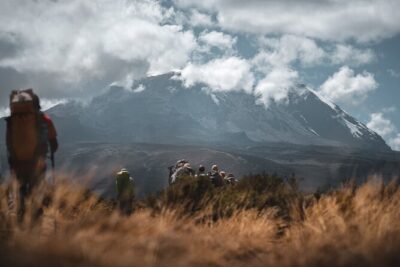
Day 2 leaves the forest behind and climbs into moorland. The gradient becomes steeper, and the vegetation grows lower and more open. You begin to see Kibo, Kilimanjaro’s main summit cone, as the trail follows a rocky ridge toward the Shira Plateau.
The day covers about 840 meters of elevation gain and takes five to six hours. Once you reach the plateau, the route feels less steep for a while, and clear weather can bring wide views across the mountain.
Shira is a collapsed volcanic crater and one of Kilimanjaro’s three volcanic cones. You do not need to be a geology enthusiast to appreciate the setting. The broad plateau, volcanic ground, and huge summit cone make the mountain feel much larger than it did in the forest.
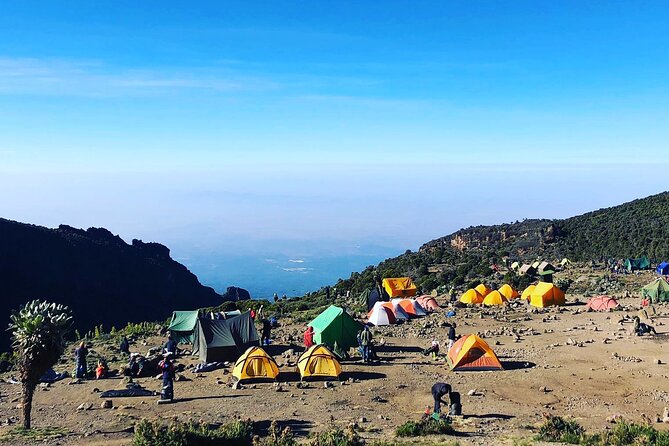
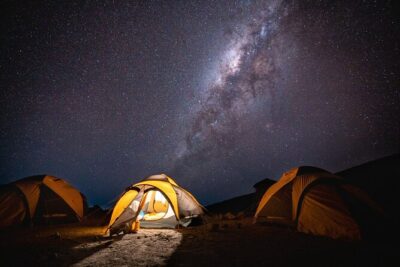
Shira Camp is exposed. Temperatures can drop below freezing, and wind can make it feel colder. Pack your warm layers inside your sleeping bag or clothing bag rather than leaving them buried in your main luggage. You will want dry socks, gloves, and a hat close at hand.
This is also where the daily rhythm becomes clear: breakfast, a slow climb, rest stops, a cooked meal, and an early night. The pace is deliberately unhurried. On Kilimanjaro, slow is not a sign of weakness. It is part of the plan.
Day 3: Lava Tower and Barranco Valley
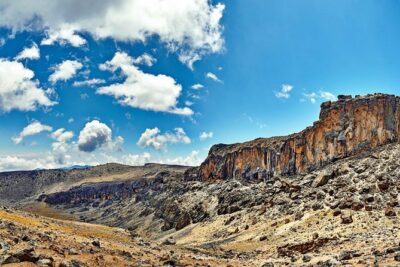
Day 3 is one of the most important days on the Machame Route. You climb through a semi-desert zone toward Lava Tower, a roughly 300-foot volcanic rock formation with broad views from its upper area.
The trail is rocky and the air is thinner. Some people begin to notice headache, nausea, unusual tiredness, or shortness of breath around this point. Tell your guide promptly if you feel unwell. Do not try to hide symptoms to keep the group moving.
After reaching Lava Tower, you descend steeply into Barranco Valley. Although the day finishes at nearly the same elevation at which it began, that is exactly what makes it useful for acclimatization. You gain height during the day, then sleep lower.
Barranco Camp sits below the Barranco Wall in a sheltered valley. The wall looks intimidating from camp, but the next morning’s route is easier than its first impression suggests. Day 3 takes about seven hours and may feel tougher than the previous stages because of the rocky ground and altitude.
I consider this the day that separates a scenic mountain walk from a real high-altitude trek. You are not yet near the summit, but your body is already being tested. Drink as directed by your guide, eat even if your appetite is low, and use the evening to rest.
More week long trips in Moshi & Kilimanjaro:
- Climbing Kilimanjaro through 7 days Machame Route
★ 5.0 · 151 reviews - 7 Days Kilimanjaro via Machame route affordable price
★ 5.0 · 110 reviews - Private Kilimanjaro Hike 7 Day Lemosho Route
★ 5.0 · 60 reviews - 7-Day Magical Tanzania Safari -Premium High End Package
★ 5.0 · 53 reviews
Day 4: Climbing Barranco Wall to Karanga
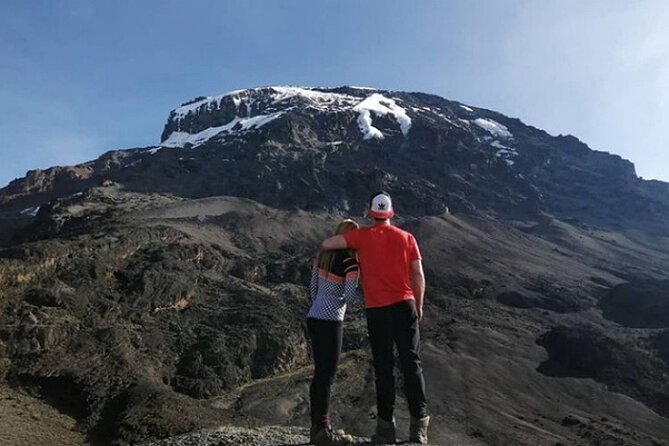
After breakfast, you ascend the Barranco Wall. This is the most visually dramatic part of the day, with a steeper path and sections where careful foot placement matters.
The trail then crosses a series of hills and valleys before dropping into Karanga Valley. One more steep climb brings you to Karanga Camp. The elevation gain is modest, about 145 meters, and the walk takes four to five hours.
This shorter day is a major reason to choose seven days instead of trying to force the mountain into a tighter schedule. You reach camp with time to relax, eat, and prepare for the higher camps ahead.
The habitat is alpine desert. Trees have disappeared, and the surroundings become rocky, dry, and stark. The lack of vegetation makes the changing altitude easy to see. You are now well above the forest world of Day 1.
Karanga can also be a useful mental reset. The early part of the climb is behind you, while the summit attempt is still ahead. Use the afternoon to inspect your boots, charge anything that needs power if facilities allow, and organize your headlamp and warm clothing.
Day 5: The short climb to Barafu Camp
The trail from Karanga reaches the junction with the Mweka Trail, then follows a rocky ridge toward Barafu Camp. The walking time is about three to four hours, with around 605 meters of elevation gain.
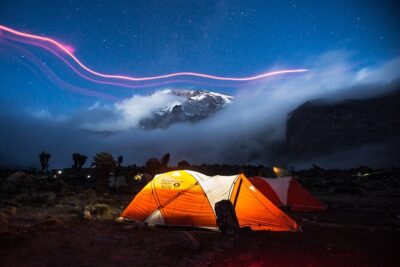
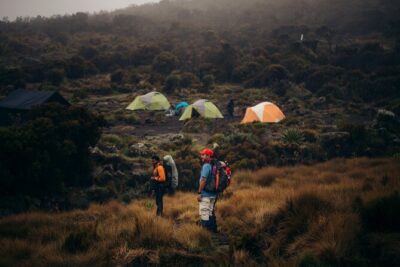
Barafu means ice, and the camp’s name fits the cold, exposed setting. Tents are pitched along a narrow, rocky ridge exposed to strong winds. Take time to learn where you are sleeping, where your equipment is stored, and how to move around camp before darkness arrives.
You can see the summit from several angles here. That view is inspiring, but Barafu is not a place for a long afternoon of sightseeing. The point of this day is to reach camp, eat, rest, and prepare for the midnight start.
Your cook provides meals during the climb, and that becomes especially helpful at Barafu. You do not need to spend your limited energy preparing food. Eat what you can, organize your summit pack, and try to sleep even if the timing feels strange.
The final push is close, but do not treat Day 5 as an easy victory. The altitude is high, the camp is cold, and the summit attempt begins before most people would normally go to bed.
Day 6: Stella Point, Uhuru Peak, and the long descent
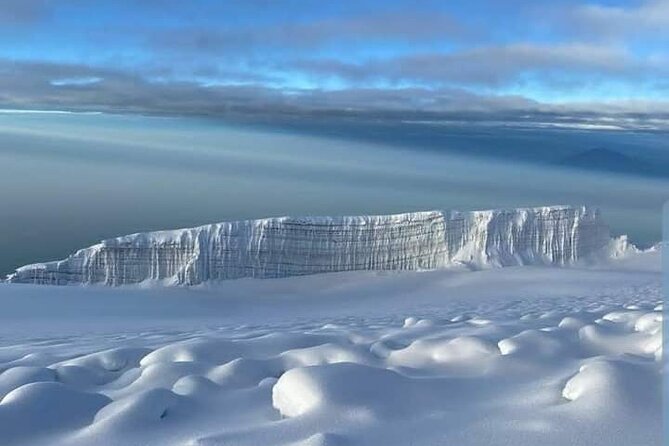
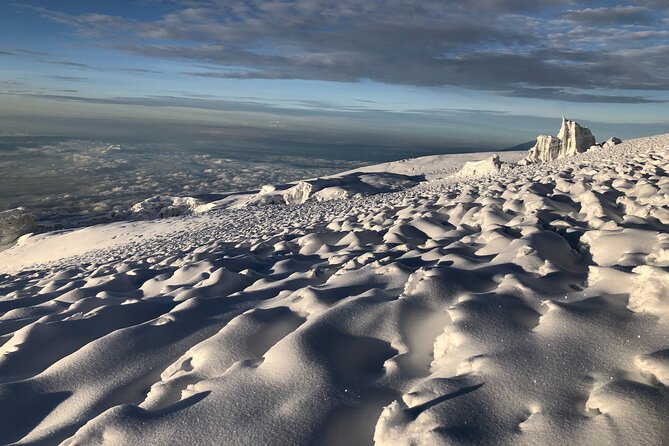
Summit day begins at about midnight. You climb steeply over scree toward the summit glaciers, usually walking for four to five hours to reach Stella Point on the crater rim at 5,739 meters.
The surface is loose and tiring. Each step can slide slightly, and progress may feel slow. Your guide sets the pace, which is important here. A steady rhythm is more useful than bursts of speed.
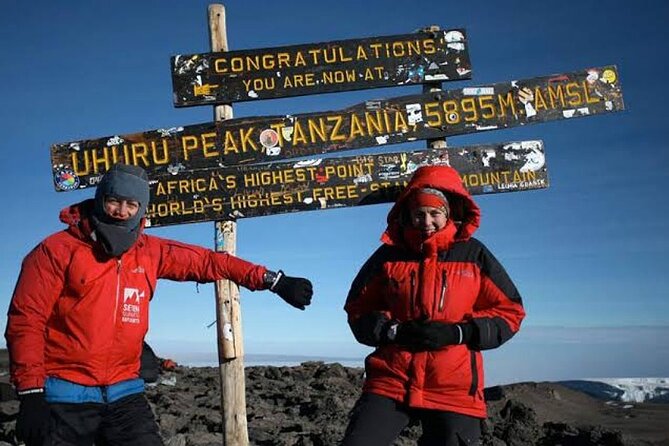
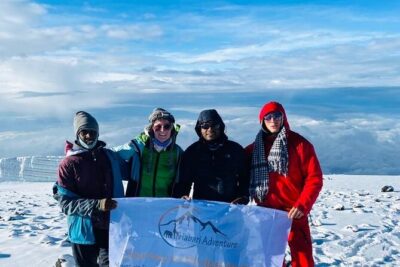
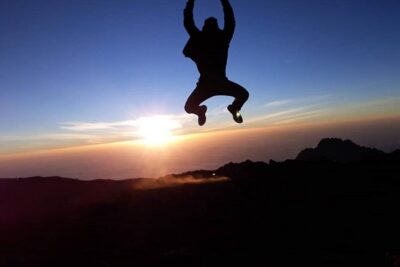
Arriving at Stella Point around sunrise can bring spectacular views of the ice cliffs inside the crater and Mawenzi Peak beyond. From there, it takes about another hour to reach Uhuru Peak at 5,895 meters.
The summit is the emotional high point of the trip, but it is not the end of the day. You return to Stella Point, descend the scree back to Barafu Camp for breakfast, then continue downhill to either Millennium Camp or Mweka Camp, depending on the precise plan.
The full day takes about seven hours according to the schedule, though the total effort can feel greater because it combines the midnight start, summit ascent, return to Barafu, and further descent. This is the section you should train for most carefully.
The descent is hard on tired knees. Trekking poles, well-broken-in boots, and a small day pack can make a real difference. Keep drinking and follow your guide’s instructions, especially if you develop signs of altitude sickness.
Day 7: Forest descent and the Mweka Gate
The final morning is the easiest walking of the route, though your legs may not agree at first. After breakfast, you descend through forest to Mweka Gate in roughly three to four hours.
The elevation loss is about 1,280 meters. The return to trees feels welcome after the cold, exposed camps higher up. The trail is scenic, but wet conditions may make it muddy or slippery.
At the gate, successful climbers who reached Stella Point and Uhuru Peak receive certificates. You then drive back to your hotel for a shower, dinner, and a Kilimanjaro beer.
That final transfer matters more than it may sound. After the summit day and the forest descent, having transport arranged means you do not need to solve local travel while tired and dirty. The package also includes private transportation for the planned transfers.
What the $2,550 price really covers
At $2,550 per person, this is a substantial purchase, but the price includes many of the costs that can quickly add up on Kilimanjaro:
- Park fees and other listed taxes
- Private transportation
- Mountain accommodation
- Rescue fee
- Breakfast, lunch, and dinner during the seven-day climb
- Guide, porter, and cook support as part of the guided arrangement
The inclusions make the price easier to judge. You are not paying only for trail access. You are paying for permits, a staffed mountain camp, food logistics, support equipment, and emergency coverage.
You still need to budget for guide, porter, and cook tips. Flights, travel insurance, and meals, drinks, and dinners at your hotel before and after the climb are also separate.
Travel insurance is particularly important for a high-altitude trip. The package includes a rescue fee, but that is not the same thing as full travel insurance. Check that your policy covers the activities and altitude involved before you leave home.
Food, camp life, and the support team
The cook is one of the practical strengths of this setup. All listed breakfasts, lunches, and dinners during the climb are included, so you do not need to carry seven days of food or plan meals in camp.
The exact menu is not specified, so you should ask about dietary needs before booking. Bring any personal snacks you know you can eat when tired or short of appetite.
Porters handle much of the camp load, while your guide manages the route and pace. That division lets you walk with a lighter personal pack. You should still pack carefully, since you remain responsible for your own layers, water, medication, and day-use items.
The service depends heavily on the mountain crew. Guides named Leonard and Tom have been associated with professional, encouraging support, and the company has also been praised for careful organization, equipment rental arrangements, and attention to small details. Confirm what equipment is supplied, rented, or yours to bring before departure.
Group size, fitness, and who should book
The maximum group size is 50 people. That is a large possible group for a mountain trek, even if the actual number on your departure is smaller. Ask how many people are booked, how many guides will lead the group, and how the group handles different walking speeds.
This climb suits you if you want a guided Kilimanjaro route with meals, porters, and transport arranged. It is also a good match if you prefer a longer schedule that gives you more time to adjust before summit night.
You should think twice if you dislike cold camping, rough trails, early starts, or long descents. The route is scenic, but it is not gentle. Moderate fitness is required, and the summit night can be physically and mentally demanding.
The route also suits people who value scenery. You move through rainforest, moorland, rocky semi-desert, alpine desert, glacier country, and forest again. That change is one of the strongest reasons to pick Machame.
Booking details and cancellation
Pickup is offered from your hotel or airport, and confirmation is provided at booking. The activity is near public transportation, though the mountain transfer itself is arranged as private transport.
Free cancellation is available if you cancel at least 24 hours before the start time. Cancellations or changes made less than 24 hours before the start are not accepted for a refund, and the cut-off follows local time.
Should you book this Machame Route climb?
I would choose this trip if you want the classic Kilimanjaro progression without arranging each mountain service yourself. The seven-day plan gives you a sensible acclimatization pattern, and the included cook, porters, meals, rescue fee, and transport offer clear value at $2,550.
Before paying, confirm the expected group size, the name and experience of your assigned guide, the sleeping arrangements, equipment support, and how dietary needs are handled. If you are fit enough for a serious high-altitude trek and can accept the cold and midnight summit start, this is a well-supported way to aim for Uhuru Peak.
FAQ
How long is the Machame Route tour?
The climb lasts approximately seven days, beginning with pickup in Moshi and ending with the descent to Mweka Gate and transport back to your hotel.
What is the price per person?
The listed price is $2,550 per person.
Does the tour include hotel or airport pickup?
Yes. Pickup is offered from your hotel or airport, and private transportation is included.
Are meals included during the climb?
Yes. Breakfast, lunch, and dinner are included for the seven-day mountain trip. Hotel meals, drinks, and dinners before and after the climb are not included.
Is rescue cover included?
Yes. The rescue fee is included. Travel insurance is not included and must be arranged separately.
How many people can join the group?
The maximum group size is 50 people.
What fitness level is needed?
You should have a moderate level of physical fitness. The route includes several hours of walking each day, cold and exposed camps, steep scree, and a midnight summit attempt.
Newly listed around Moshi & Kilimanjaro
- Climb Mount Kilimanjaro: 7 Days Machame Route★ 5.0 · 3 reviews
- 6 Days Mount Kilimanjaro Climbing via Rongai Route★ 5.0 · 3 reviews
- Explore 1 day Ngorongoro Crater Budget Group Safari from Arusha★ 5.0 · 3 reviews
- Mt. Kilimanjaro Day Hiking★ 5.0 · 3 reviews
- Chemka (Kikuletwa) Hot Springs, Tanzania★ 5.0 · 3 reviews
- Guided City tour of Moshi★ 4.3 · 3 reviews
- 8 Day Tanzania Family Safari★ 5.0 · 3 reviews
- Serengeti Safari with Sirikwa Travel★ 5.0 · 3 reviews
Kilimanjaro Climbs, compared.
Browse the lists this tour appears in