
Reviewed · KILIMANJARO CLIMBS
7-Day Kilimanjaro Climbing Via Machame Route
The Machame Route gives you Kilimanjaro in seven changing acts: tropical forest, open moorland, high desert, volcanic rock, and a cold summit under the stars. The route is known as the Whiskey Route, but the real flavor is steady walking, early camps, and a long final night to Uhuru Peak.
I like the gradual climb, especially the Barranco Camp to Lava Tower section, which lets you gain height before dropping slightly to sleep. I also like the strong guiding team associated with Spirit of Kilimanjaro, including William, Rama, David, Zachariah, Joseph, Paul, and cook Hussein. The main drawback is the summit day: a midnight start, seven hours uphill, and another six to eight hours down to Mweka Camp is a serious test.
Key points to know before booking
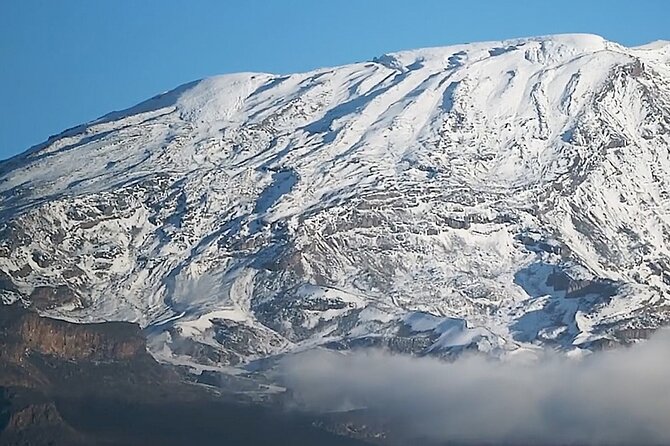
- Five ecological zones in seven days: You start in tropical rainforest and finish in Arctic terrain near the summit.
- The seven-day plan is the wiser choice: It gives you more time to adjust than the shorter six-day version.
- Barranco Wall is hands-on but not technical: Guides assist you across it, and no climbing equipment is listed.
- Summit night is the hard part: You leave Barafu Camp around midnight and aim for sunrise at Uhuru Peak.
- Strong personal support: The named guide teams receive repeated praise for care, motivation, organization, and summit support.
- Price is $2,565 per person: Meals are included, while visas and international flights are not.
Why Machame is Kilimanjaro’s popular Whiskey Route
Machame begins on Kilimanjaro’s southern slope, close to Moshi. The route starts at Machame Gate, which is described as about a 20-minute drive from Aishi Machame Hotel. You then follow a footpath through nearly every major climate zone on the mountain, finishing in the cold, dry Arctic desert around Uhuru Peak.
The route is scenic because the surroundings keep changing. The first day feels wooded and humid. By Shira 2 Camp, trees have thinned and heather and small plants take over. Near Lava Tower and Barranco, the mountain becomes harsher, with volcanic rock, open ground, and wide views toward the Great Breach Wall.
This is not a casual walk. The tour asks for a moderate level of fitness, and the altitude is the bigger issue than the distance alone. You need to be ready for long uphill days, cold nights, uneven ground, and a final push that starts while most people are asleep.
The seven-day version is preferable to the six-day option because the schedule has more room for acclimatization. On day three, the route meets the Lemosho and Umbwe routes at Barranco Camp. From there, the climb follows the same upper-mountain route toward Barafu and the summit.
More Kilimanjaro routes:
- Kilimanjaro climb by Lemosho Route (7-day)
★ 5.0 · 651 reviews - Kilimanjaro climb, Machame Route (7-day)
★ 5.0 · 262 reviews - Kilimanjaro Climbing Lemosho Route 8 Days.
★ 5.0 · 186 reviews
Day 1: Machame Gate to Machame Camp
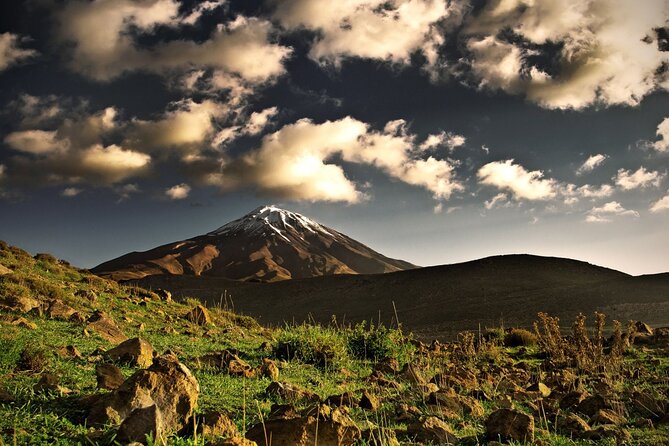
Your day begins with a drive from Moshi to Machame Gate at 5,718 feet, or 1,748 meters. The supplied schedule gives the drive time as approximately 45 hours, which is clearly inconsistent with the stated location and the separate note that Machame Gate is about 20 minutes from Aishi Machame Hotel. Confirm the actual transfer time before departure.
At the gate, you begin walking uphill through the Tropical Rainforest Zone. The distance is not given, but the planned walking time is five to seven hours, ending at Machame Camp at 9,350 feet, or 2,850 meters.
This opening section is a good introduction to the route. You have shade, thicker vegetation, and a clear sense that the mountain is changing as you gain height. It is also a long first day, so do not treat the forest as an easy stroll. The combination of uphill walking and a new altitude can be tiring even before the route becomes more exposed.
You sleep at Machame Camp. Your first dinner is included, along with breakfast and lunch listed as part of the package. The schedule includes six dinners for the seven-day trip, which makes sense if the final day ends after breakfast, but it is worth asking the operator to confirm the exact meal plan.
Day 2: Heather country on the way to Shira 2
Day two takes you from Machame Camp to Shira 2 Camp, climbing from 9,350 feet to 12,621 feet, or 3,847 meters. The planned trek takes about eight hours.
You leave the rainforest behind and enter the Moorland and Heather Zone. Trees become scarce, while smaller plants and open ground become more common. This is an important transition, not only for scenery but also for how exposed you may feel to cold, sun, and wind.
The day involves a meaningful gain in altitude. You will want to walk slowly and follow the guide’s pace rather than trying to prove your fitness. On Kilimanjaro, a controlled pace is useful because the goal is not simply to reach camp early. The goal is to arrive with enough energy to eat, drink, sleep, and continue.
Shira 2 Camp is high enough for altitude to become a real concern. The schedule does not list a separate acclimatization day, so your best advantage is the seven-day timing and a patient approach. This is also where the views begin to open up in a major way, with fewer trees blocking the surroundings.
Day 3: Lava Tower, Barranco Camp, and the Great Breach Wall
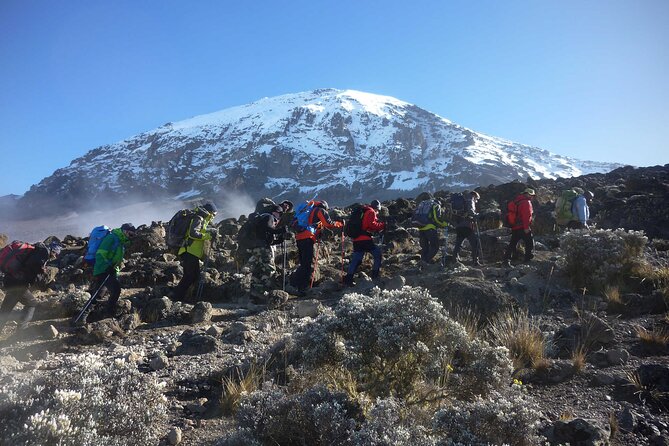
Day three is one of the most useful days in the whole plan. You start at Shira 2 Camp at 12,621 feet and climb toward Lava Tower for lunch. You then descend to Barranco Camp at 13,066 feet, or 3,983 meters. The full day takes about eight hours.
This climb high, sleep lower pattern is valuable for altitude adjustment. You reach a higher point during the day, then lose some height before sleeping at Barranco. That does not remove the risk of altitude sickness, but it gives the route a sensible rhythm.
The scenery becomes increasingly dry and spare. The tropical feel is long gone, and volcanic desert begins to dominate. Lava Tower is the high point of the day, while the descent to Barranco gives your legs a break from constant climbing, even though descending can be hard on tired knees.
Barranco Camp is known for its view of the Great Breach Wall. The wall gives the camp a dramatic setting and helps you see the scale of the upper mountain. This is also where Machame meets the Lemosho and Umbwe routes, so the route can feel more connected to the wider Kilimanjaro climbing network.
You should expect a full day rather than a quick transfer between camps. Eat at lunch, keep drinking, and use the rest period at camp wisely. The next morning brings one of the route’s best-known physical sections.
More week long trips in Moshi & Kilimanjaro:
- Climbing Kilimanjaro through 7 days Machame Route
★ 5.0 · 151 reviews - 7 Days Kilimanjaro via Machame route affordable price
★ 5.0 · 110 reviews - Private Kilimanjaro Hike 7 Day Lemosho Route
★ 5.0 · 60 reviews - 7-Day Magical Tanzania Safari -Premium High End Package
★ 5.0 · 53 reviews
Day 4: Across the Barranco Wall to Karanga
From Barranco Camp, you climb to Karanga Camp at 13,106 feet, or 3,994 meters. The walking time is given as four to five hours, although the daily listing also shows seven hours. Confirm how the operator defines the day’s total time.
The Barranco Wall looks imposing, but the route describes the climb as non-technical. Your guides assist you as you cross it. That means you should expect hands-on scrambling and careful foot placement, not a roped mountaineering pitch. The specific equipment requirements are not provided, so ask what personal gear you need before leaving home.
This section is a good example of why Machame is more than a long uphill path. You have to pay attention to the route, use your hands at times, and move carefully around rock. It can be exciting without requiring technical climbing skills.
After reaching Karanga Camp, you rest for the remainder of the day. That rest matters. You are already close to 4,000 meters, and the next two days bring Barafu Camp followed by the summit attempt. The camps are arranged to create a gradual transition, but your body still has to do the work.
Day 5: Karanga to Barafu Camp
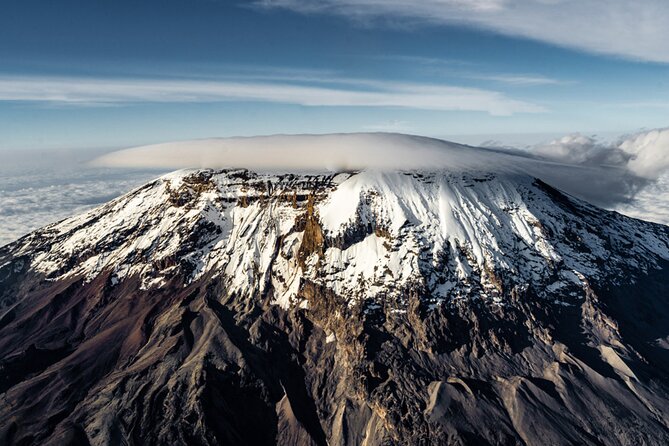
Day five takes you from Karanga Camp to Barafu Camp, climbing to 15,239 feet, or 4,644 meters. The walk is expected to take four to five hours, with seven hours listed for the full day.
Barafu means ice in Swahili, and the camp marks the point where the climb becomes focused on the summit. The surroundings are high, dry, and exposed, with little shelter compared with the forest below. You rest here for the afternoon and prepare for the hardest part of the trip.
The planned sleep schedule is unusual but necessary. You go to bed around 7 p.m. and wake at 11 p.m. for the summit preparation. You may not sleep well, and you should not count on feeling fresh. Organize your clothing, water, headlamp, and snacks before lying down so the midnight start is less frantic.
This is a good point to be realistic. The final climb is not just another hiking day. You will begin after a short night, in the cold, and at an altitude where every movement can feel slower. The support of a guide team matters here. William’s teams have included guides such as Rama, David, Zachariah, Joseph, Paul, Izadini, and Donovan, with Hussein named as a cook on one climb. The repeated praise centers on motivation, organization, meals, and careful support.
Day 6: Midnight to Uhuru Peak, then down to Mweka
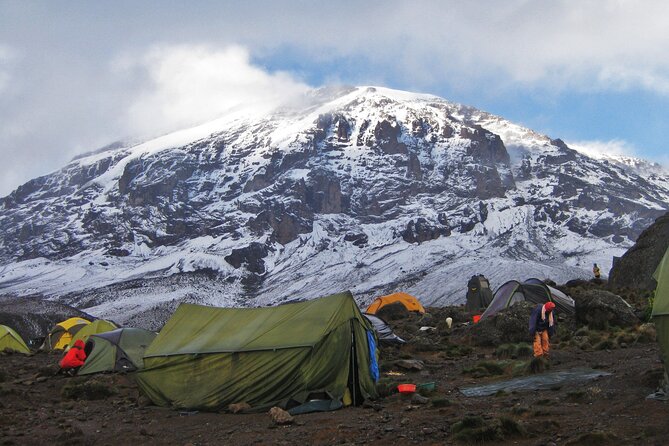
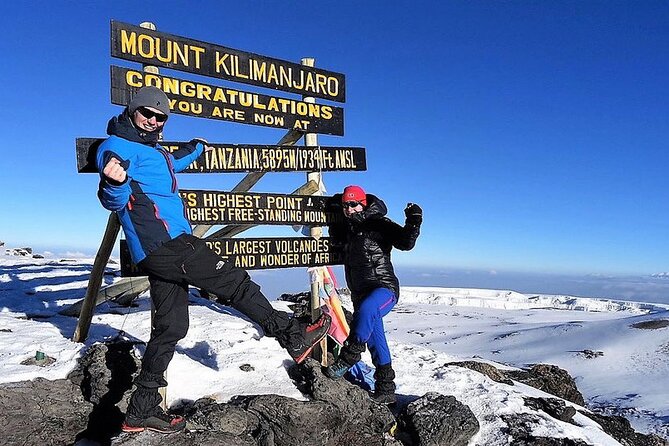
Summit day starts around midnight from Barafu Camp. The climb to Uhuru Peak, at 19,341 feet or 5,895 meters, takes about seven hours. You aim to reach the summit around sunrise.
The schedule calls for the final approach via Stella Point. Reaching Uhuru Peak is the central goal, and you are given a few minutes for photos and to take in the achievement before beginning the descent. Keep that pause short. At this altitude and after a long night, you will be ready to move lower.
The descent to Mweka Camp at 10,204 feet, or 3,110 meters, takes another six to eight hours. This is a huge day, potentially lasting 13 to 15 hours of walking. The downhill section may feel easier at first, but tired legs and loose ground can make it demanding.
This is the point where a seven-day schedule earns its keep. The route does not rush you to the summit in fewer days, and the earlier camps allow some adjustment before this long effort. Still, no itinerary can guarantee that you will reach Uhuru Peak. Altitude affects people differently, and the guide’s judgment should take priority if you become unwell.
Day 7: Mweka Gate and the return to Moshi
After breakfast at Mweka Camp, you descend to Mweka Gate at 5,423 feet, or 1,653 meters. The final walk takes about three to four hours.
At the gate, you sign the official Kilimanjaro National Park register, have a cold drink, and receive an official Kilimanjaro certificate from the head guide. This is a simple but satisfying finish. You have gone from rainforest to summit ice and back down through the moorland zone.
The transfer back to the Premium Hotel in Moshi is listed as about three hours, with arrival around 3 p.m. depending on when you leave camp. The schedule also shows a 50-minute activity duration for this final stop, so the transfer details should be checked before you book.
Pickup is offered, but the exact pickup point and transfer arrangements should be confirmed. The listed meeting time is 12:00 a.m., which appears to refer to the summit start rather than the first departure from Moshi. Ask the operator to clarify the correct meeting time for your booking.
What the $2,565 price gets you
At $2,565 per person, this is a major purchase, but the value depends on what you need from a Kilimanjaro operator. You are buying a seven-day guided climb, camp-to-camp support, meals, park access arrangements implied by the itinerary, porter assistance described in the supplied material, and transport connections at the start and finish.
The included meals are seven breakfasts, seven lunches, and six dinners. Visas and international flights are not included. Hotel arrangements beyond the stated return to a Premium Hotel in Moshi are not fully explained, so confirm if pre-climb and post-climb nights are part of the price or separate.
The strongest value is the human support. The named teams receive repeated praise for friendliness, motivation, cooking, communication, and summit care. One account describes a private seven-day climb with William’s crew, while another notes that the guides and porters kept the climber comfortable and focused from start to finish.
You should also ask about group size. The maximum is listed as 100 people, which is a very large possible group for a mountain route. That may be a maximum across departures rather than the size of your own climbing party, but you should not assume. Find out how many climbers will be with your guide team and how many guides and porters are assigned.
Who will get the most from this climb
I would consider this route for a fit hiker who wants a classic Kilimanjaro experience and prefers seven days over a compressed schedule. You should be comfortable walking for up to eight hours on several days and handling a summit day that begins at midnight.
It may suit you if changing scenery matters. Machame gives you rainforest, heather, open moorland, volcanic desert, the Barranco Wall, and high summit terrain in one trip. It also suits people who value a local operator and want a named guide team rather than an anonymous large company.
This is not the best match if you want a relaxed holiday, dislike camping, or need a predictable sleep schedule. The final night is especially demanding, and the price does not include international travel or a visa.
The cancellation terms are simple: you can receive a full refund if you cancel at least 24 hours before the local start time. Cancellations or changes inside that window are not accepted for a refund.
Should you book the 7-day Machame Route?
I would book this climb if you want Kilimanjaro’s most varied scenery, can handle long days, and place real value on guide support. The seven-day version makes more sense than squeezing the route into six days, and the Barranco to Lava Tower to Barranco sequence gives you a useful acclimatization pattern.
Before paying, confirm four things: the actual Moshi to Machame Gate transfer time, the size of your climbing group, what the $2,565 price covers at the Moshi hotels, and the personal gear required for Barranco Wall and summit night.
The experience looks strongest for people who want a serious mountain goal with an encouraging local team. It is a poor choice if you are mainly seeking comfort. Kilimanjaro will give you extraordinary scenery, but it will also give you cold mornings, short sleep, high altitude, and one very long day.
FAQ
How long is the Machame Route climb?
The experience lasts approximately seven days, including the walk from Machame Gate to the summit area, the descent to Mweka Camp, and the final walk to Mweka Gate.
Where does the climb start?
The climb starts at Machame Gate on the southern side of Mount Kilimanjaro. The gate is described as about a 20-minute drive from Aishi Machame Hotel.
What altitude is Uhuru Peak?
Uhuru Peak is listed at 19,341 feet, or 5,895 meters.
How difficult is the climb?
A moderate level of physical fitness is required. The itinerary includes several walking days of four to eight hours, plus a summit day that begins around midnight and includes a seven-hour ascent followed by a six to eight-hour descent.
Is the Barranco Wall technical?
The Barranco Wall climb is described as non-technical, with guides available to assist you.
What meals are included?
The package includes seven breakfasts, seven lunches, and six dinners.
Are visas and international flights included?
No. Visa costs and international flights are not included.
Can I cancel for a full refund?
Yes, if you cancel at least 24 hours before the experience start time, based on local time. Cancellations or changes made less than 24 hours before the start are not accepted for a refund.
Newly listed around Moshi & Kilimanjaro
- Climb Mount Kilimanjaro: 7 Days Machame Route★ 5.0 · 3 reviews
- 6 Days Mount Kilimanjaro Climbing via Rongai Route★ 5.0 · 3 reviews
- Explore 1 day Ngorongoro Crater Budget Group Safari from Arusha★ 5.0 · 3 reviews
- Mt. Kilimanjaro Day Hiking★ 5.0 · 3 reviews
- Chemka (Kikuletwa) Hot Springs, Tanzania★ 5.0 · 3 reviews
- Guided City tour of Moshi★ 4.3 · 3 reviews
- 8 Day Tanzania Family Safari★ 5.0 · 3 reviews
- Serengeti Safari with Sirikwa Travel★ 5.0 · 3 reviews
Kilimanjaro Climbs, compared.








Browse the lists this tour appears in