
Reviewed · KILIMANJARO CLIMBS
7-Day Guided Mount Kilimanjaro Climb by Machame Route
Machame earns its nickname, the Whiskey Route, with steep ridges, rocky trails, and a rewarding mix of rainforest, moorland, and high alpine desert. The seven-day plan gives you a better shot at adjusting to altitude than a rushed six-day climb, while the Lava Tower and Barranco Valley add useful up-and-down walking.
I like the built-in acclimatization day at Barranco and the short Karanga day, both smart choices before the summit push. I also like that the $2,180 price covers park, camping, and rescue fees, meals, crew wages, two hotel nights, and airport transfers. The catch is simple: this is a strenuous trek, not a casual guided walk, and the large maximum group size of 100 means you should confirm your actual group size before booking.
Key points to know before you book
- Seven days gives you useful altitude time: The route reaches 15,300 feet before summit night, with a high point at Lava Tower before dropping to Barranco.
- The scenery changes every day: You move from wet rainforest to heather, open moorland, semi-desert, alpine desert, and back to forest.
- Summit night begins around midnight to 2 a.m.: The climb to Stella Point and Uhuru Peak is the hardest part of the trip.
- The price covers major climbing costs: Park, camping, and rescue fees, guides, cooks, porters, fair crew wages, meals, airport transfers, and two hotel nights are included.
- Wet lower trails need the right gear: Gaiters and trekking poles are especially useful on the first and final days.
- The route suits active hikers: It is not technically difficult, but its steep ridges, long days, and repeated ups and downs demand steady fitness.
Why the seven-day Machame Route works
Machame is a good choice if you want Kilimanjaro’s scenic side and can accept a harder trail. It begins on the southern side of the mountain, heads east, and circles beneath the southern ice fields before the summit. That gives you changing views and more varied walking than a simple up-and-down route.
The trail is not described as technical climbing. You do not need ropes or specialist mountaineering skills based on the details provided. Still, the route can feel tiring because it crosses ridges and valleys rather than climbing at one even angle. You gain height, lose some of it, then climb again.
That pattern has a purpose. On Day 3, you climb to about 16,000 feet near Lava Tower before sleeping around 13,000 feet at Barranco. This high-climb, lower-sleep pattern helps your body prepare for the final ascent. The extra seventh day also gives you a short Karanga day before Barafu and summit night.
I would choose this route over a six-day version if your schedule allows. Six days may be the minimum, but seven gives you more time to adjust and more room to walk at a controlled pace. First-time climbers can still choose it, but you should arrive ready for long, steep walking.
More Kilimanjaro routes:
- Kilimanjaro climb by Lemosho Route (7-day)
★ 5.0 · 651 reviews - Kilimanjaro climb, Machame Route (7-day)
★ 5.0 · 262 reviews - Kilimanjaro Climbing Lemosho Route 8 Days.
★ 5.0 · 186 reviews
Day 1: Moshi to Machame Camp through rainforest
Your day starts with a drive of about 50 minutes from Moshi to the Mount Kilimanjaro National Park Gate. The road passes through Machame village on the mountain’s lower slopes, then the walking begins.
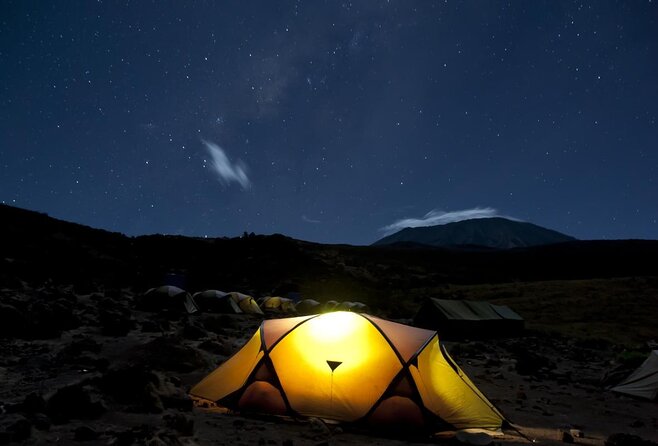
The first trail leads through rainforest on a winding path up a ridge. Expect wet ground, especially lower down, where mud and slippery sections can slow you. Gaiters and trekking poles are not fancy extras here. They are practical tools for keeping water and muck out of your boots and giving you balance.
The day covers about 11 kilometers and takes five to seven hours. You climb from 5,400 feet to 9,400 feet, sleeping at Machame Camp in the rainforest zone.
This is a long opening day, but it gives you an immediate sense of how the trek works. You walk with your mountain crew, settle into the camp rhythm, and learn how your body responds to the first altitude gain. Keep your rain gear handy, even if the morning begins dry.
Day 2: Heather and moorland on the way to Shira
After breakfast, the forest thins and the trail enters heather country. The route crosses a small valley and follows a steep, rocky ridge until the ridge ends. From there, it turns west toward a river gorge and Shira campsite.
This is a shorter day by distance, about five kilometers, but it still takes four to six hours because the trail rises from 9,400 feet to 12,500 feet. The moorland habitat feels more open than the forest, with fewer trees and wider mountain views.
The main challenge is the quick gain in elevation. You may not walk far, but the air is thinner and the trail continues uphill. Use the day to find a calm pace. I would rather arrive at camp with energy left than treat this as a race.
Shira is an important staging point. You are high enough for altitude to become a real concern, but you are not yet pushing toward the summit. Eat well, drink as directed by your guide, and tell the crew promptly if you feel unwell.
Day 3: Lava Tower and the Barranco acclimatization climb
Day 3 is one of the most useful parts of the route. From the Shira Plateau, you head east along a ridge, pass the junction toward Kibo, then turn southeast toward Lava Tower, also called Shark’s Tooth.
The trail climbs to about 16,000 feet near the Lava Tower area before dropping to Barranco Camp at roughly 13,000 feet. You cover about 10 kilometers in six to eight hours, moving through semi-desert terrain. On paper, the day ends only a little higher than it begins. In practice, it asks a lot from your legs and lungs.
This is the classic climb high, sleep lower pattern. The high point gives your body a taste of the altitude you will face later, while the lower Barranco camp is a more sensible place to spend the night.
The trail also reaches a second junction toward Arrow Glacier at about 16,000 feet. The route information places this on the day’s high section, but the important point for you is that this is a demanding acclimatization day, not a sightseeing stroll.
Barranco Camp is one of the memorable stops because the next morning begins with the Barranco Wall. Get rest here. The following day is shorter, but the wall still requires careful footwork and steady effort.
More week long trips in Moshi & Kilimanjaro:
- Climbing Kilimanjaro through 7 days Machame Route
★ 5.0 · 151 reviews - 7 Days Kilimanjaro via Machame route affordable price
★ 5.0 · 110 reviews - Private Kilimanjaro Hike 7 Day Lemosho Route
★ 5.0 · 60 reviews - 7-Day Magical Tanzania Safari -Premium High End Package
★ 5.0 · 53 reviews
Day 4: The Barranco Wall and a short Karanga day
After breakfast, you leave Barranco and climb a steep ridge beside the Barranco Wall. The trail then reaches Karanga Valley campsite.
This day covers about three miles and takes four to five hours. The elevation changes only from 13,000 to 13,100 feet, and the habitat is alpine desert. That modest height gain is the point. You are still walking at serious altitude, but the schedule gives you time to recover before the longer push to Barafu.
The Barranco Wall can look imposing, especially after several days of hiking. The route description calls it a steep ridge rather than a technical climbing section, so expect hands-on, careful trail work rather than ropes or climbing equipment. Your guide’s pacing matters here. Stay patient and avoid burning energy early.
Karanga is a useful rest stop, but do not mistake a short day for an easy one. You are already high, and the thin air can make a few hours feel much longer. Keep your pack light and use the afternoon to organize summit clothing, batteries, and water.
Day 5: Barafu Camp and views of Mawenzi and Kibo
From Karanga, you reach the junction with the Mweka Trail and continue up to Barafu Hut. This day covers about 2.5 miles and takes four to five hours, climbing from around 13,000 feet to 15,300 feet through alpine desert.
At Barafu, you have completed the South Circuit, which gives views of the summit from several angles. The two major peaks, Mawenzi and Kibo, are visible from this position. The setting is stark and high, with little shelter from the elements.
The short distance hides the real challenge: you are preparing for summit night while sleeping at 15,300 feet. The schedule calls for camp, dinner, rest, and preparation. Take that instruction seriously. Your body needs every quiet hour it can get.
This is also the point to check your equipment. You should have warm clothing, rain gear, gloves, and anything you need for a night start. The lower sections can be warm and wet, but Barafu and the summit route require a very different clothing plan.
Day 6: Stella Point, Uhuru Peak, and the long descent
Summit day begins very early, usually between midnight and 2 a.m. You climb northwest through heavy scree toward Stella Point on the crater rim, passing between the Rebmann and Ratzel glaciers.
The ascent is slow and demanding. Scree shifts underfoot, the air is thin, and darkness makes the climb feel even more serious. At Stella Point, you stop briefly. If the weather cooperates, sunrise provides the day’s great reward.
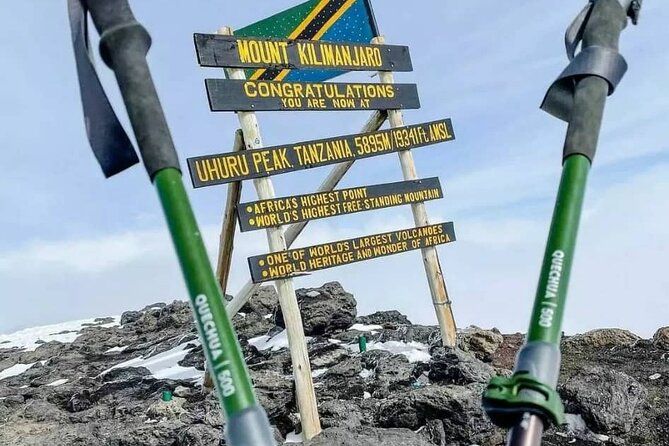
From Stella Point, you continue toward Uhuru Peak, the highest point on Kilimanjaro and in Africa. The final hour may include snow, according to the route details. Faster climbers may reach the summit in time for sunrise, but the exact timing depends on pace and weather.
The hard part is not over at the summit. You descend toward Mweka Hut campsite after reaching Uhuru Peak, making this a very long day. The route description cuts off part of the final Day 6 detail, so you should ask Kisaza Tours for the exact summit-day distances, camp timing, and planned support before paying.
Expect tired legs and mixed emotions by the time you reach the lower camp. Keep your pace controlled on the descent, since loose scree can be tough on knees and ankles.
Day 7: Mweka Gate and the return to Moshi

After breakfast, you continue down to Mweka Park Gate. This final section takes about three to four hours, covers six miles, and drops from around 10,000 feet to 5,400 feet through rainforest.
The lower trail may be wet and muddy again. Gaiters and trekking poles are useful at the start and finish of this route, not just on Day 1. At the gate, you receive your summit certificates, then continue for about another hour to Mweka village, where a vehicle takes you back to your Moshi hotel.
The clothing advice changes quickly on this day. Shorts and a T-shirt may be enough at lower elevations, but keep rain gear and warmer layers easy to reach. Do not bury them in your luggage before leaving camp.
What the $2,180 price covers
At $2,180 per person, this is not a cheap holiday, but a Kilimanjaro price needs to be judged by what is included. Here, the cost covers professional guides, cooks, and porters, along with park fees, camping fees, rescue fees, VAT charges, and fair wages for the mountain crew.
You also receive airport pickup and drop-off, two nights of accommodation in Moshi or Arusha before and after the climb, and meals listed as seven lunches, six breakfasts, and six dinners. Those inclusions remove several costs that can otherwise add up quickly.
The price does not include international flights, insurance, tips for the driver, guide, and hotel staff, or the listed Tanzania-related cost, which is not explained in detail. Ask for clarification on that last item. You should also confirm the hotel names, room arrangements, meal details, and whether the airport transfers match your flight times.
The fair-wage inclusion matters. Porters carry essential equipment and make the camp system possible, so I consider responsible crew treatment a key part of the value, not a minor extra.
Guides, crew, and the feel of the operation
The named Kisaza team includes Stephen, Michael, Francis, Louis, David, Ezekiel, and Lusekelo. Stephen is specifically associated with quick communication and practical help before departure, while the mountain team is repeatedly praised for friendly service, airport transfers, and steady support on the climb.
You should still ask who your lead guide will be for your dates. The supplied information does not assign individual guides to this specific departure. It also lists a maximum of 100 participants, which is a very large possible group, so ask whether your climb will be private, shared, or split into smaller hiking groups.
The operation includes cooks and porters, not just a walking guide. That means the trek has a full camp structure rather than a basic guide-only setup. The included Moshi or Arusha nights also give you a place to arrive, prepare, and return to after the descent.
Who should choose this climb
I would recommend the seven-day Machame Route for an active person who wants changing scenery, a proper acclimatization schedule, and a challenging but nontechnical mountain route. It is especially suitable if you have hiking or trekking experience and like a more adventurous trail.
You can be a first-time climber, but you should not choose it because the price makes Kilimanjaro sound easy. The route has steep sections, long days, high camps, and a midnight summit start. Moderate physical fitness is the stated requirement, but you will benefit from arriving ready for repeated uphill and downhill walking.
The route may not suit you if you need smooth paths, short days, or a simple hotel-based holiday. Machame is the harder choice compared with Marangu, even though its success rate is described as higher.
Booking is flexible in one useful way: you can cancel at least 24 hours before the local start time for a full refund. Changes or cancellations inside that window are not accepted for a refund.
Should you book the seven-day Machame climb?
Book it if you want Kilimanjaro’s most varied scenery, can handle a strenuous trek, and value having park costs, crew, meals, airport transfers, and hotel nights bundled into one price. The seven-day schedule is the sensible version of Machame because it allows a short recovery day before Barafu and gives you a stronger acclimatization pattern.
Before booking, confirm the exact summit-day schedule, the unexplained Tanzania-related charge, your actual group size, and the names of your lead guides. If those details are clear and you are comfortable with steep trails and a midnight start, this is a strong-value route for an adventurous first major climb.
FAQ
How long is the Mount Kilimanjaro climb?
The climb lasts approximately seven days. It includes the approach from Moshi, six nights of listed meals, the summit attempt, the descent to Mweka Gate, and transport back toward Moshi.
Which route does this climb use?
It uses the Machame Route, also known as the Whiskey Route. The trail approaches Kilimanjaro from the south and heads east before the summit section.
What time does the activity start?
The listed start time is 9:00 a.m. The meeting point is Kilimanjaro International Airport, and pickup is offered.
Is airport pickup included?
Yes. Airport pickup and drop-off are included. The trip also includes two nights of accommodation in Moshi or Arusha before and after the climb.
What is the highest point reached?
The summit is Uhuru Peak, the highest point on Mount Kilimanjaro and the continent of Africa. The route also reaches about 16,000 feet near Lava Tower and 15,300 feet at Barafu Camp.
When does the summit hike begin?
The summit attempt starts very early, between midnight and 2:00 a.m. You climb toward Stella Point, then continue to Uhuru Peak.
What meals are included?
The package includes seven lunches, six breakfasts, and six dinners. The provided details do not specify individual menus.
Are park and camping fees included?
Yes. Park fees, camping fees, rescue fees, VAT fees, and charges are included in the listed price.
Do I need hiking experience?
The activity states that participants should have a moderate physical fitness level. The Machame Route is not technically difficult, but it is steep, tiring, and better suited to people with some hiking or trekking experience.
What happens after reaching the summit?
You descend toward Mweka Hut on Day 6. On Day 7, you continue to Mweka Park Gate for your summit certificate, then walk on to Mweka village, where a vehicle takes you back to your Moshi hotel.
Newly listed around Moshi & Kilimanjaro
- Climb Mount Kilimanjaro: 7 Days Machame Route★ 5.0 · 3 reviews
- 6 Days Mount Kilimanjaro Climbing via Rongai Route★ 5.0 · 3 reviews
- Mt. Kilimanjaro Day Hiking★ 5.0 · 3 reviews
- Explore 1 day Ngorongoro Crater Budget Group Safari from Arusha★ 5.0 · 3 reviews
- Chemka (Kikuletwa) Hot Springs, Tanzania★ 5.0 · 3 reviews
- Guided City tour of Moshi★ 4.3 · 3 reviews
- 8 Day Tanzania Family Safari★ 5.0 · 3 reviews
- Serengeti Safari with Sirikwa Travel★ 5.0 · 3 reviews
Kilimanjaro Climbs, compared.








Browse the lists this tour appears in