
Reviewed · KILIMANJARO CLIMBS
The Ultimate 8-day Lemosho route Climbing Kilimanjaro
Kilimanjaro’s Lemosho Route gives you eight days to reach Uhuru Point, with a slower climb, striking scenery, and a private trip format that lets you set the pace with your own group. You move from forest to moorland, across the Shira Plateau, past Lava Tower, and up through the high alpine zone.
I like the built-in acclimatization time and the practical package: a guide, meals, camping gear, and transport between Moshi and the mountain are covered. I also like that the route includes the Barranco Wall and the long Shira Plateau crossing, rather than rushing you straight toward the summit.
The main catch is the $1,300 price is not all-inclusive. Park fees, tips, insurance, hotels, personal gear, flights, and airport transfers are extra. Confirm the final total before booking.
Key things to know before choosing Lemosho
- Eight days gives your body more time to adjust than a very short Kilimanjaro itinerary.
- The Shira Plateau is the route’s great scenic section, with broad moorland and high mountain views.
- Barranco Wall looks worse than it is, but you still need steady footing and a reasonable head for heights.
- Summit night is the hardest part, beginning after a short rest at Barafu Camp.
- Meals, tents, mattresses, guides, and mountain transport are included, which keeps the planning simple.
- Park fees are extra, so treat the advertised price as a starting point, not your final trip budget.
Why the 8-day Lemosho Route is worth considering
Kilimanjaro is Africa’s highest mountain and the world’s tallest free-standing mountain. You do not need technical climbing equipment for this route, but you do need stamina, patience, and the ability to walk for several hours on rough, steep ground.
Lemosho is a good choice if you want a scenic approach and more time for acclimatization. The route begins on the western side of the mountain and crosses the Shira Plateau before joining the busier southern routes near Lava Tower. That early section tends to feel more open and remote than the final approach.
I especially like the rhythm of this itinerary. Several days are moderate rather than brutally long, giving you time to walk slowly, eat properly, and sleep at altitude. That matters because the summit is not won by speed. It is won by arriving at the final night with enough energy left.
The private format is another useful feature. You can walk at your group’s pace instead of being tied to a large mixed party. Still, ask how many people will actually be in your departure group. The supplied information describes the booking as private but also gives a maximum capacity of 90 people, so the practical group size should be confirmed directly.
More Kilimanjaro routes:
- Kilimanjaro climb by Lemosho Route (7-day)
★ 5.0 · 651 reviews - Kilimanjaro climb, Machame Route (7-day)
★ 5.0 · 262 reviews - Kilimanjaro Climbing Lemosho Route 8 Days.
★ 5.0 · 186 reviews
Day 1: Moshi briefing and the road to Londorossi Gate
Your morning begins with breakfast and a briefing at your Moshi hotel with the chief guide. This is when you should ask final questions about clothing, water, weather, the daily walking pace, and what the porters will carry.
The drive to Londorossi Park Gate takes about two and a half hours. The gate is listed at about 2,250 meters, or 7,380 feet. Round-trip transport from your Moshi hotel to the mountain and back from Mweka Gate is included, a useful saving and one less transfer to arrange yourself.
The day-one description is slightly unclear because it refers to the Mti Mkubwa Camp to Shira 1 section on the following day. In a normal eight-day Lemosho plan, the first walking stage includes the forest approach and an overnight at Mti Mkubwa. Ask the operator to confirm the exact first-night camp and walking distance before departure.
That small detail matters. You want to know if you are walking after the gate on day one or simply entering the park and beginning the trail. A clear schedule also helps you pack the right clothing in your day bag.
Day 2: Mti Mkubwa to Shira 1 and the first big change in scenery
The trail becomes steeper as it leaves the forest and enters the moorland zone. You cross toward Shira Ridge at about 3,600 meters, or 11,810 feet, then spend the night at Shira Camp.
This is one of the most rewarding changes on Kilimanjaro. The dense lower vegetation gives way to open ground, larger views, and cooler air. You begin to feel that you are on a high mountain rather than simply taking a long woodland walk.
The altitude is also beginning to matter. Even if the trail feels manageable, you should keep your pace slow and tell your guide if you develop a headache, nausea, unusual tiredness, or trouble sleeping. A good guide will watch your condition, but you need to report what you are feeling.
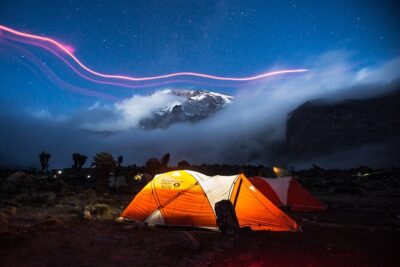
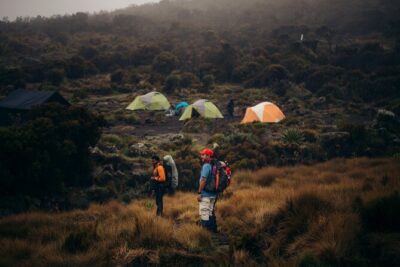
Dinner and camping follow at Shira. The package supplies tents, sleeping mattresses, breakfast, lunch, and dinner throughout the trek. That makes this trip easier than organizing food and shelter independently, though you should still bring personal snacks if you have preferred energy foods.
Day 3: The broad Shira Plateau to Shira 2
Day three is described as a fairly easy trek across the plateau to Shira Camp 2, at about 3,500 meters. The camp sits in moorland meadows beside a stream.
This is a useful day because it is not all uphill. You get a chance to settle into the daily routine while remaining at altitude. Walk slowly, drink the water provided, and use the easier hours to check your boots, socks, sleeping bag, and rain protection.
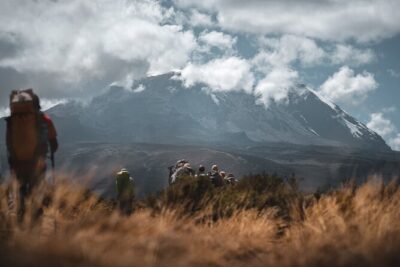
The Shira Plateau is also where the route earns its scenic reputation. The walking is more exposed, so weather can affect how much you see. On a clear day, the open plateau gives you a strong sense of Kilimanjaro’s size. In cloud or mist, the mood is quieter and the trail can feel more serious.
Do not mistake an easier walking day for a rest day. You are still sleeping high, and your body is working hard to adjust. Keep your evening calm and save your energy for the long summit push later.
A few more Moshi & Kilimanjaro days to compare
- Safari Serengeti And Ngorongoro
★ 5.0 · 288 reviews - Climbing Kilimanjaro – Machame Route
★ 5.0 · 170 reviews - Climbing Kilimanjaro through 7 days Machame Route
★ 5.0 · 151 reviews - Kilimanjaro climb, Lemosho Route (8-day)
★ 5.0 · 148 reviews
Day 4: Shira 2 to Lava Tower at 3,840 meters
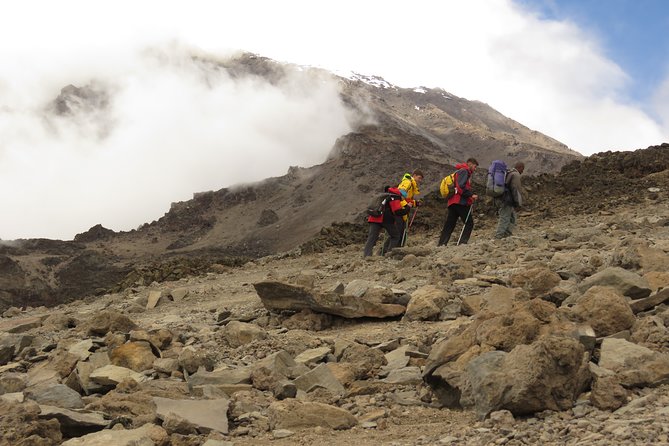
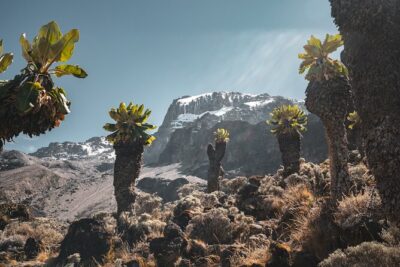
After breakfast, you head east toward the mountain’s upper slopes. The trail rises above the vegetation toward Kilimanjaro’s main mass, with Lava Tower listed at about 3,840 meters, or 12,600 feet.
This is an important acclimatization stage. You climb high, then the itinerary continues toward the Barranco area rather than taking you directly to the summit. That pattern gives you time at a greater elevation before sleeping lower.
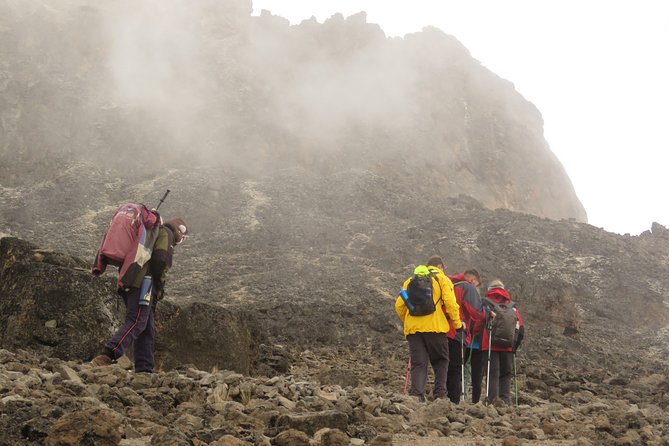
The scenery becomes more severe here. Vegetation thins, the trail grows rockier, and Kilimanjaro feels less like a distant object and more like the task in front of you. You should expect the pace to be slow. That is not poor organization. Slow walking is part of the plan.
Lava Tower can also be a demanding point in the day. If you feel sick, do not hide it to avoid slowing your group. Altitude problems can worsen quickly, and the guide needs accurate information to make safe decisions.
Day 5: Barranco Camp and the famous wall
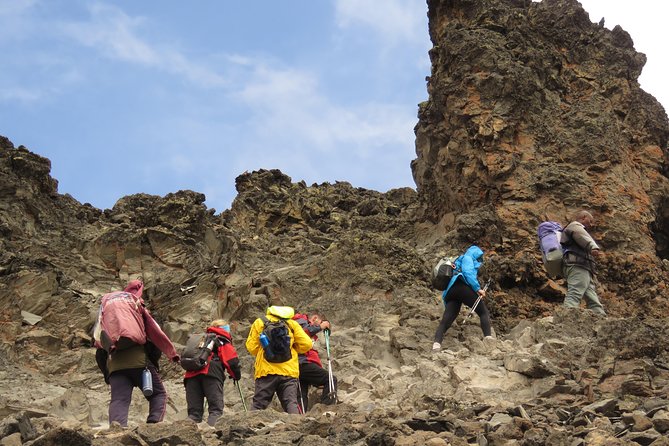
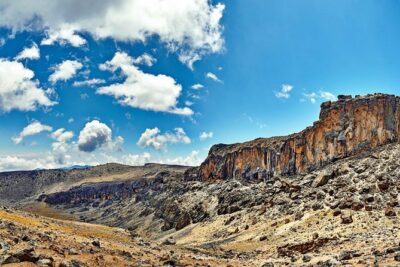
The route continues from Barranco Camp, listed at about 3,900 meters, to Karanga Camp. The key feature is the Barranco Wall, a narrow, steep-looking section that often appears more intimidating from below than it feels once you are on it.
You are not expected to use technical climbing skills, but you do need to follow your guide’s instructions and place your feet carefully. The route may require some hand use for balance. Large backpacks make this harder, which is another reason to carry only what you need during the day.
This is one of the days I would look forward to most. The wall gives the trek a sense of adventure without turning it into a technical mountaineering trip. Afterward, the route continues toward Karanga, at about 4,200 meters, or 13,780 feet.
The camp-to-camp distances are not the only measure of difficulty. At this height, a short climb can feel like serious work. Take small steps, keep eating, and listen to the guides. Several guides connected with this operator, including Paul, Martin, Gabrielle, Prudence, Edwin, Barakael, and Noka, have been singled out for patient support and strong leadership. Your assigned guide may be different, so ask for the name and background of your lead guide before you arrive.
Day 6: Karanga to Barafu Camp
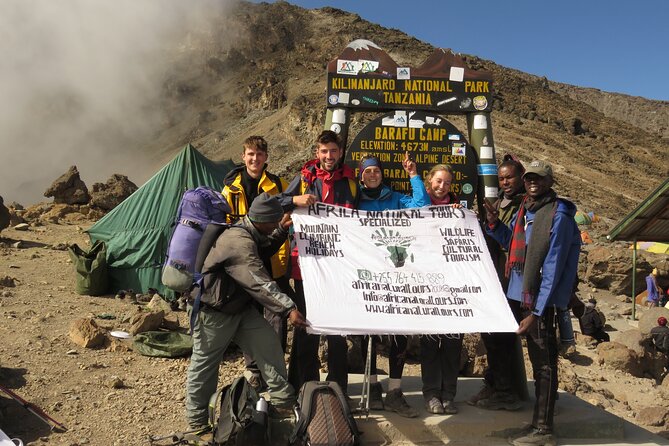
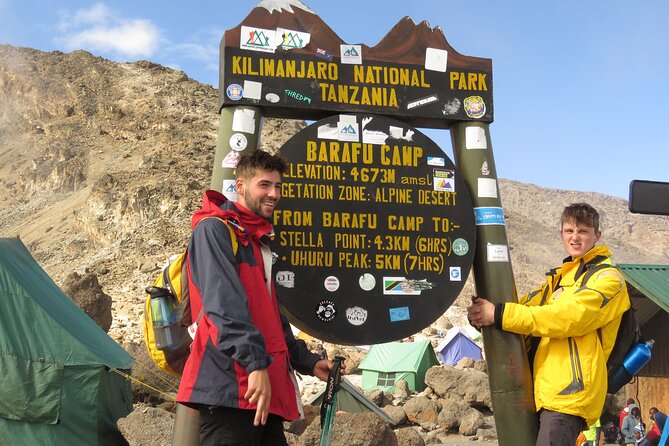
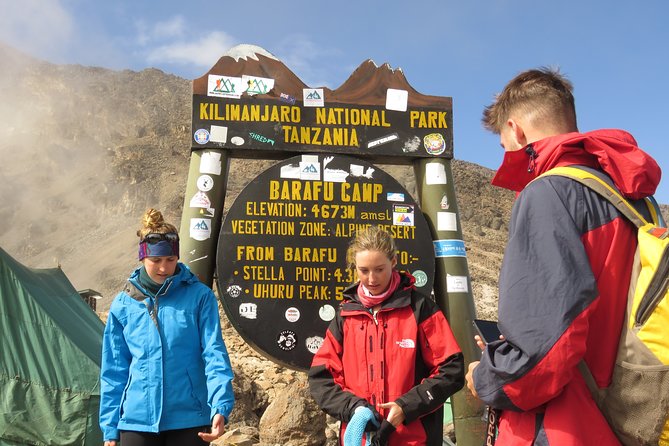
From Karanga, you climb to Barafu Camp, the high camp used before the summit attempt. Barafu is the launch point for the hardest part of the trip, so this day is about arriving, eating, organizing your gear, and resting.
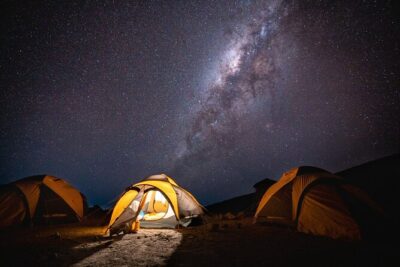
The schedule does not give a precise elevation for Barafu, but it is the high camp before summit day. Conditions can be cold and tiring, and you should not expect a normal night’s sleep. The summit attempt begins after a short rest, often in the early hours, so organize your headlamp, warm layers, water, gloves, and snacks before lying down.
This is where the private format can help. If your group is small, the guide can keep the pace suited to your condition. Even so, private does not mean flexible enough to ignore safety. The mountain schedule, weather, and your health still control the day.
Day 7: Uhuru Point and the long descent
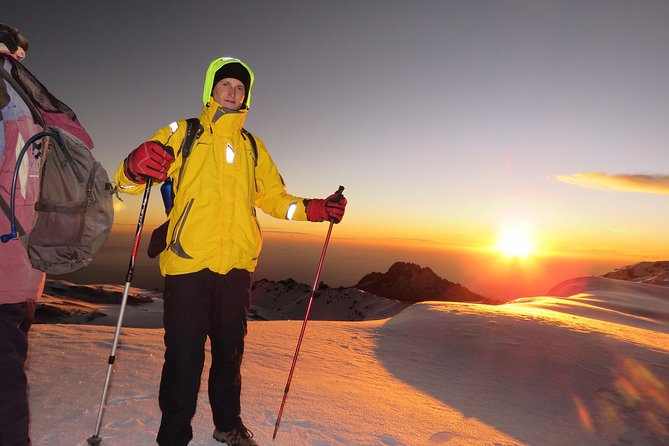
Summit day is the emotional center of the climb. You leave Barafu in darkness, climb toward the summit, and after reaching the top descend through Barafu to Mweka Camp.
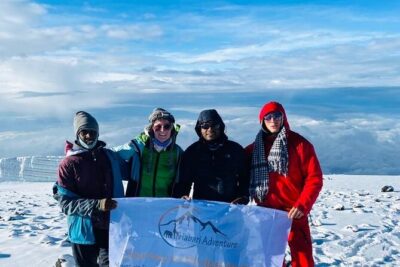
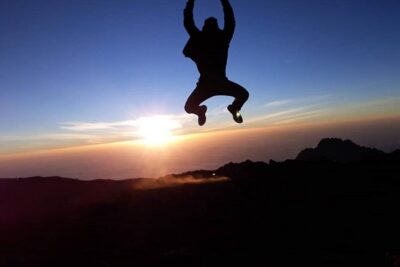
The ascent is slow and strenuous. Cold, altitude, darkness, and fatigue combine to make this much harder than the earlier trail sections. Reaching Uhuru Point is the goal, but a safe return is just as important. If the guide advises turning around, that is a safety decision, not a failure.
After the summit, you descend to Mweka Camp. This is a long day, and many people are surprised by how tired their legs feel on the way down. Trekking poles can be especially useful here, though personal hiking gear is not included and must be supplied by you.
The itinerary promises a trekking certificate, normally provided after the climb. Confirm the exact requirements with the operator, especially if you do not reach the summit but complete part of the route.
Day 8: Mweka Camp to Mweka Gate
The final stage descends from Mweka Camp, listed at about 3,100 meters, or 10,170 feet, to Mweka Gate. The air gets warmer as you lose height, and the trail returns to thicker vegetation.
At the gate, the Kilimanjaro Lemosho trek ends. Transport back to your Moshi hotel is included, but hotel accommodation itself is not. Plan a room for the night before and after the climb, and leave room in your schedule to rest before an onward flight or safari.
The ending is simple, but the logistics matter. You should know the name and address of your Moshi hotel when arranging pickup and drop-off. Airport transfers are separate, so do not assume the included mountain transport covers Kilimanjaro International Airport.
What the $1,300 price really covers
At $1,300 per person, the package offers a useful base for an eight-day mountain trip. You receive a professional hiking guide, briefing, camping equipment, sleeping mattress, meals, transport from Moshi to Londorossi Gate, return transport from Mweka Gate, and a certificate.
That is good value if the operator’s final quote is clear and the crew is properly supported. The guide, cook, and porters shape your daily experience more than the brochure wording does. Personal accounts connected with this company repeatedly praise the organization, food, guides, porters, and cooks. Paul and Martin receive especially warm attention, while Godfrey Ngaiza is noted for quick communication and help with wider trip arrangements.
But the headline price leaves out major expenses:
- Kilimanjaro National Park fees
- Tips for the mountain crew
- Travel and medical insurance
- Hotels before and after the trek
- International and domestic flights
- Airport transfers
- Personal hiking equipment
Park fees can make a noticeable difference to your final bill. Ask for a written total that separates the tour charge, park fees, hotel costs, transfers, and suggested crew gratuities.
Food is included three times daily during the trek. One account describes the food as very good but also reports a stomach illness after drinking boiled water. That does not prove a wider problem, but it is sensible to discuss water treatment, carry personal purification supplies if appropriate, and tell the crew quickly if you feel unwell.
Who should book this climb
I would choose this itinerary if you want Kilimanjaro’s scenic western approach and prefer eight days over a compressed schedule. It suits hikers with moderate physical fitness who can manage repeated days on foot, camping, steep sections, and a difficult summit night.
It is also a good fit for a group of friends or family members who want a private arrangement. You can ask for a steady pace and spend the climb with your own party rather than joining a fully mixed group.
I would be more cautious if you want a fixed all-inclusive price. The exclusions are substantial, and the day-one camp details need clarification. I would also avoid booking without proper insurance and personal hiking gear. The tour supplies the basic camp setup, but it does not supply your boots, warm clothing, rain gear, headlamp, poles, or other individual equipment.
The operator accepts bookings with confirmation at the time of purchase, offers mobile tickets, and allows free cancellation up to 24 hours before the start time. Changes or cancellations inside that window are not refunded or accepted, based on local time.
Should you book the 8-day Lemosho climb?
Book it if you value the scenic route, extra acclimatization time, private pacing, and organized mountain support. The combination of Shira Plateau, Lava Tower, Barranco Wall, and a summit attempt makes this a varied route rather than a simple uphill march.
Before paying, get three things in writing: the exact day-one schedule, the actual group size, and the full cost including park fees. If those details are clear and you are prepared for the physical demands, this is a strong choice for a first Kilimanjaro climb from Moshi.
FAQ
Where does the Kilimanjaro climb begin?
The listed meeting point is Africa Natural Tours Ltd on Mkwawa Avenue in Tanzania. The activity begins at 7:00 am, with pickup offered from the Moshi hotel you booked.
How long is the Lemosho Kilimanjaro trek?
The experience lasts approximately eight days, ending at Mweka Gate before transport returns you to your Moshi hotel.
Are meals included during the trek?
Yes. Breakfast, lunch, and dinner are included throughout the mountain trek.
Is camping equipment provided?
Yes. The package includes camping equipment, quality tents, and a sleeping mattress.
Is transport to and from Kilimanjaro included?
Round-trip mountain transport is included from your Moshi hotel to Londorossi Gate and from Mweka Gate back to your Moshi hotel. Airport pickup and drop-off are not included.
Are Kilimanjaro park fees included in the $1,300 price?
No. All Mount Kilimanjaro park fees are listed separately and may be paid directly to the park or through the tour operator.
What fitness level do I need?
You should have a moderate level of physical fitness. The climb includes several days of hiking at increasing altitude, a steep section at Barranco Wall, and a demanding summit day.
Newly listed around Moshi & Kilimanjaro
- Climb Mount Kilimanjaro: 7 Days Machame Route★ 5.0 · 3 reviews
- 6 Days Mount Kilimanjaro Climbing via Rongai Route★ 5.0 · 3 reviews
- Explore 1 day Ngorongoro Crater Budget Group Safari from Arusha★ 5.0 · 3 reviews
- Mt. Kilimanjaro Day Hiking★ 5.0 · 3 reviews
- Chemka (Kikuletwa) Hot Springs, Tanzania★ 5.0 · 3 reviews
- Guided City tour of Moshi★ 4.3 · 3 reviews
- 8 Day Tanzania Family Safari★ 5.0 · 3 reviews
- Serengeti Safari with Sirikwa Travel★ 5.0 · 3 reviews
Kilimanjaro Climbs, compared.
Browse the lists this tour appears in