
Reviewed · KILIMANJARO CLIMBS
Mt Kilimanjaro Climb – 8 days Lemosho
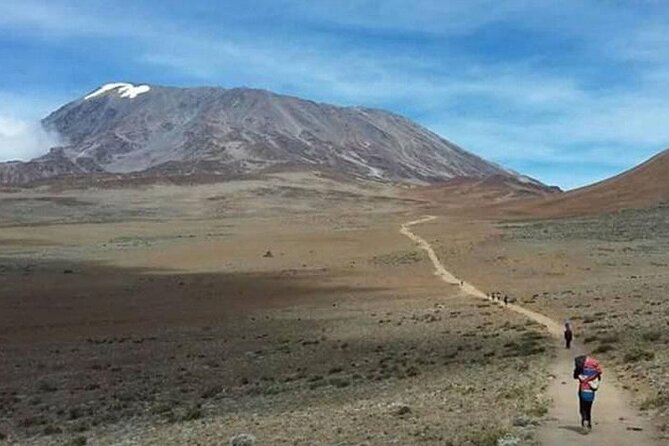
The best thing about this 8-day Lemosho climb is its patient route design. You begin in the western forest, cross the open Shira plateau, spend time at nearly 4,000 meters before summit night, and get several days to adjust before the serious altitude arrives. That makes this a scenic and sensible choice for reaching Uhuru Peak.
I like the gradual acclimatization and the strong human side of the trip. The route gives you a useful climb-high, sleep-lower pattern, while the guides and support crew handle food, camps, water, and safety checks. I also like the company’s stated commitment to fair, ethical salaries under KPAP guidelines.
The main drawback is time and effort. Eight days on the mountain costs more than a shorter route, and summit day is a very long 10 to 14 hours, with a cold, steep climb followed by a punishing descent. The $3,500 price is not small, though it covers many major costs.
Key points to know before booking
- Lemosho begins at 2,385 meters: You start in the western forest rather than walking straight into high, exposed country.
- The route reaches Uhuru Peak at 5,895 meters: Summit day begins from Barafu Camp and can take 10 to 14 hours.
- Acclimatization is the main advantage: Days three and four let you spend time near 3,900 meters before the final ascent.
- Barranco Wall is the route’s hands-on moment: Day five includes a steep climb with views toward Kibo’s southern glacier.
- The crew is a major part of the experience: Guides named in past departures include Joy, Geopron, Davis, Kevin, Amnaay, Robert, Herick, Francis, and Ibrahim.
- The $3,500 package covers the mountain basics: Park fees, seven nights of camping, meals, water, transport to the gate, guides, safety equipment, and hotel pickup and drop-off are included.
Why Lemosho is a smart eight-day choice
Kilimanjaro is not a technical mountaineering trip in the usual sense. You do not need to climb with ropes or carry out complicated rock work on this itinerary. The real test is altitude, long walking days, cold, tired legs, and the need to keep moving when the summit feels far away.
That is why the extra days matter. An eight-day Lemosho route gives your body more time to adjust than a rushed itinerary. You still gain altitude steadily, but you are not asked to reach the summit after only a handful of nights on the mountain.
The route also gives you variety. The opening forest feels different from the Shira plateau, the high camps, the rocky Barranco section, and the volcanic summit zone. You get more than a summit photograph. You get a changing mountain experience.
This is a private activity, so only your group takes part. The group size is not specified, and a planned group can change if people cancel. One solo participant ended up continuing alone after last-minute cancellations, which provided more flexibility and extra time with the crew. That arrangement may suit some people, but you should be ready for the possibility that your final group is smaller than expected.
More Kilimanjaro routes:
- Kilimanjaro climb by Lemosho Route (7-day)
★ 5.0 · 651 reviews - Kilimanjaro climb, Machame Route (7-day)
★ 5.0 · 262 reviews - Kilimanjaro Climbing Lemosho Route 8 Days.
★ 5.0 · 186 reviews
Day one: Lemosho Gate to Big Tree Camp
The climb begins at Lemosho Gate, at 2,385 meters, with an ascent to Big Tree Camp at 2,780 meters. Walking time is about two to three hours, with a gain of 395 meters.
This is a manageable first day. The short distance lets you begin gently while the team gets the camp routine in place. The forest setting also gives the route a softer opening than the stark upper mountain. You will spend the night in a tent, with camping equipment, mattresses, and a mess tent supplied.
Hotel pickup and transport to the gate are included, which removes one practical chore from the morning. The listed start time is 8:00 am. Confirm the exact pickup arrangement when you book, especially if you are arranging your own pre-climb accommodation.
Do not treat day one as a throwaway. Use it to learn the pace your guide prefers, adjust your backpack, and get comfortable drinking water regularly. You will be walking slowly for a reason. Saving energy early is one of the simplest ways to help yourself later.
Day two: Big Tree Camp to Shira Camp 1
Day two climbs from 2,780 meters to Shira Camp 1 at 3,500 meters, gaining 720 meters over four to five hours.
This is a more serious walking day. The forest gives way to higher ground, and the increase in altitude becomes noticeable. You are not yet near the summit zone, but the body is beginning to work harder for each step.
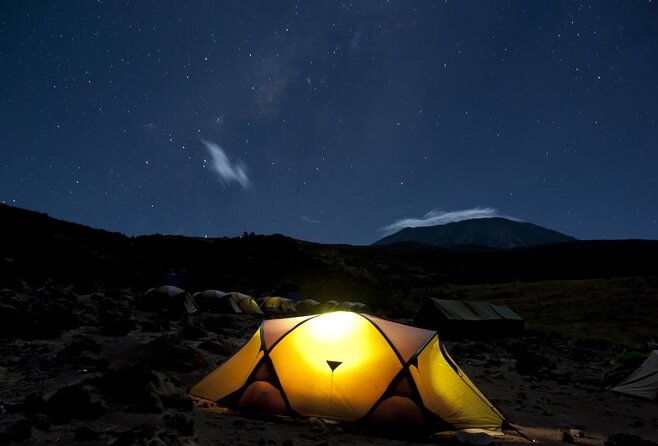
Shira Camp 1 is important because it puts you on the broad Shira plateau. The route now feels more open and exposed, with the upper mountain becoming a stronger presence. The camp itself is not presented as a hotel-style stop. You are camping, and comfort depends on your clothing, sleeping setup, and ability to settle in after a full day outdoors.
Three meals a day are included. Past groups have singled out the cooking, including local organic food and a chef known as Oscar, as well as a cook called Nikaas on another departure. The exact crew can vary, but the package does include a cook and meal service, which is valuable after a long climb.
Day three: Shira Camp 1 to Shira Camp 2
The third day is shorter, moving from 3,500 meters to Shira Camp 2 at 3,900 meters in about three to four hours. The listed gain is 400 meters.
This day is less about distance and more about adjustment. You are spending time close to 4,000 meters without yet making the final push toward Barafu. A shorter walking day gives you room to breathe, eat, rest, and pay attention to how your body responds.
I like this part of the schedule because it avoids the common temptation to race upward. You may feel fit at this point and want to walk faster. Resist that urge. A slow pace, steady hydration, and honest communication with the guide are more useful than showing off on the easier days.
The high plateau can also bring a different kind of discomfort. Temperatures, wind, and thin air may make camp feel harder than the walking time suggests. Your personal mountain clothing and sleeping gear are not included, so packing well matters.
A few more Moshi & Kilimanjaro days to compare
- Safari Serengeti And Ngorongoro
★ 5.0 · 288 reviews - Climbing Kilimanjaro – Machame Route
★ 5.0 · 170 reviews - Climbing Kilimanjaro through 7 days Machame Route
★ 5.0 · 151 reviews - Kilimanjaro climb, Lemosho Route (8-day)
★ 5.0 · 148 reviews
Day four: Shira Camp 2 to Barranco Camp
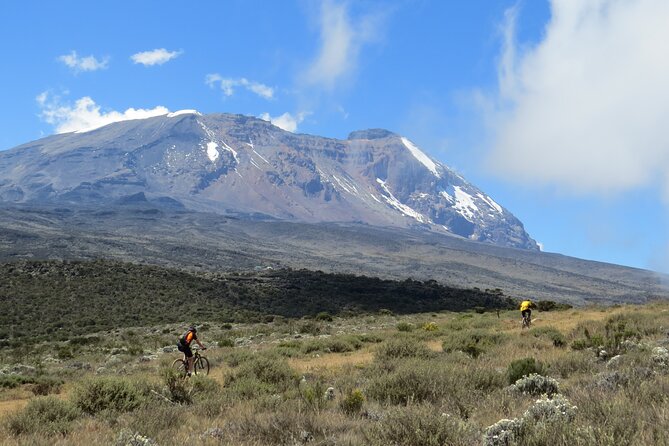
Day four is one of the route’s most useful acclimatization days. You start at 3,900 meters, climb higher, and finish at Barranco Camp at 3,960 meters after six to seven hours. The listed figures show an ascent of 740 meters and a descent of 680 meters.
That up-and-down profile matters. You gain height during the day but sleep only slightly higher than the previous night. This gives your body time at elevation without forcing you to sleep at the day’s highest point.
Barranco Camp is also one of the memorable stops. The southern side of Kibo comes into view, including the area around its glaciers. The route feels more rugged here, and you begin to see the sort of terrain that makes Kilimanjaro a real physical challenge rather than a simple high-altitude walk.
The long day may leave you tired before the summit attempt. That is normal. The point is not to arrive at camp fresh. The point is to make useful altitude gains and then recover.
Day five: Crossing the Barranco Wall
From Barranco Camp at 3,960 meters, you climb to Karanga Camp at 4,035 meters. The listed walking time is three to four hours, with 100 meters of ascent and 25 meters of descent.
The numbers make this look easy. The Barranco Wall explains why it is not simply a stroll between camps. You climb steeply over the wall, then continue along terrain that rises and falls. The effort is concentrated rather than spread across a long distance.
This is the day when a calm guide makes a real difference. The route is described as steep, but it is not presented as a technical climbing section. You should still expect to use your hands at times and move carefully. Take the guide’s pace, keep your balance, and avoid rushing to stay ahead of the group.
The reward is a strong view toward Kibo’s southern glacier. It is also a psychological turning point. You are now high on the mountain, and Barafu Camp and summit night are no longer abstract plans.
Day six: Karanga Camp to Barafu Camp
Day six climbs from 4,035 meters to Barafu Camp at 4,640 meters. Walking time is three to four hours, with a 615-meter gain.
Barafu is the launch point for the summit attempt. The walking distance is not especially long, but altitude changes the experience. Thin air, cold conditions, and the anticipation of a night climb can make this short day feel heavy.
Your main task is to rest and prepare. Eat what you can, organize personal gear, and listen closely to the guide’s instructions. The package supplies tents, mattresses, a mess tent, meals, drinking water, an oxygen cylinder, and an oximeter. Those items do not remove the risk of altitude, but they give the crew tools to monitor and support you.
The guide team is central here. Named guides associated with this route include Davis, Kevin, Amnaay, Joy, Geopron, Robert, Herick, Francis, and Ibrahim. You will not necessarily have all of them, but the repeated focus on guide support points to an operator that puts close attention on individual needs.
Day seven: Barafu Camp to Uhuru Peak and Mweka Camp
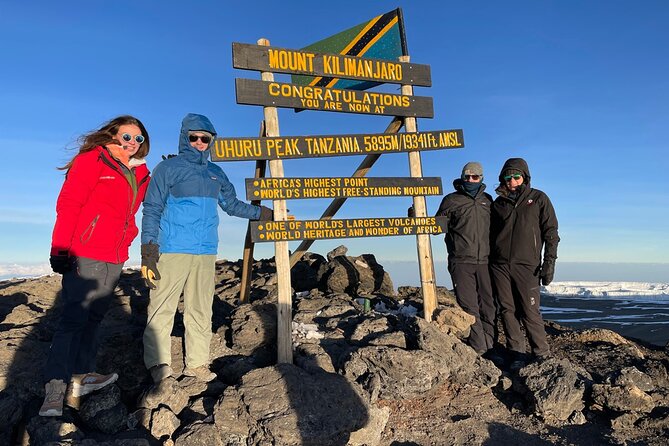
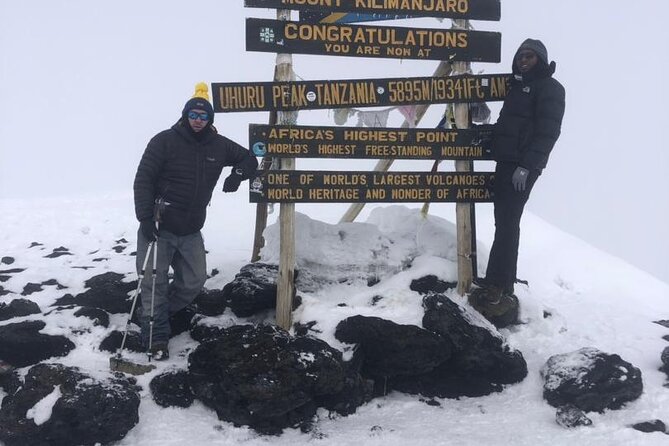
This is the hard day. From Barafu Camp at 4,640 meters, you climb to Uhuru Peak at 5,895 meters, then descend all the way to Mweka Camp at 3,080 meters. The total walking time is listed as 10 to 14 hours.
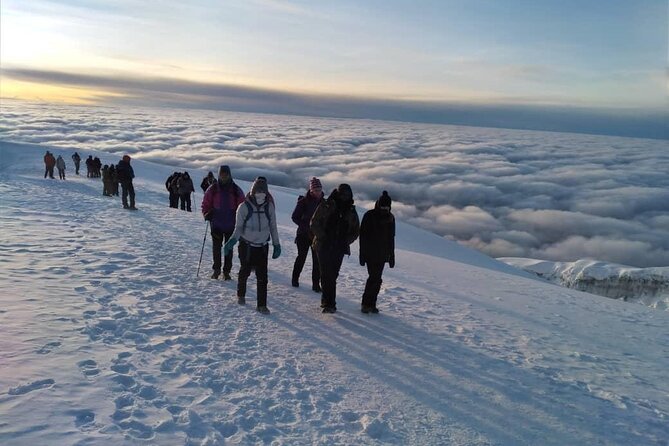
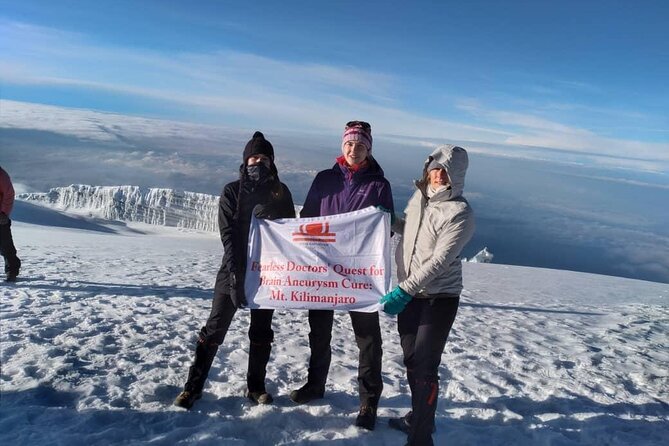
The ascent to Stella Point is very steep, long, and potentially cold. From the crater ridge, the view opens across the summit area, and the final push to Uhuru Peak gives you the high point of the entire trip. The route description notes that altitude may influence the climb. That is the key warning in the whole program.
Do not judge summit day by ordinary hiking standards. You may feel slow, winded, cold, or uncertain. The guides’ job is to keep the pace controlled and help assess your condition. One participant completed the climb at age 73, which shows that age alone does not decide the outcome. Fitness, preparation, pacing, and altitude response all matter.
The descent is not an easy bonus after reaching the top. You drop more than 2,800 meters to Mweka Camp, and tired knees and feet take a beating. This is why the final day is so long. Reaching Uhuru Peak is only half of the day’s work.
Day eight: Mweka Camp to Mweka Gate
The final day descends from 3,080 meters to Mweka Gate at 1,630 meters. Walking time is about two to three hours, with a 1,450-meter loss in altitude.
After summit day, the short walking time sounds welcome. The steep descent can still be hard on your legs, so move carefully and keep your attention on footing. At the gate, transport is provided, along with hotel drop-off.
The end of the climb can feel surprisingly abrupt. After seven nights of tents, camp routines, mountain meals, and slow walking, you are suddenly back near ordinary roads and hotel comforts. Give yourself enough time after the climb to recover. Pre and post-climb accommodation is not included, though it can be arranged on request.
What the $3,500 price really covers
At $3,500 per person, this is a substantial purchase. The value depends on what you would otherwise need to arrange yourself and on how seriously you weigh ethical operations and mountain support.
The price includes all park fees, camping and forest department fees, rescue fees, transport to and from the gate, hotel pickup and drop-off, seven nights of camping, three meals per day, drinking water, a professional guide, camping equipment, an oxygen cylinder, and an oximeter.
It also states that team salaries follow KPAP guidelines. That matters on Kilimanjaro, where porters do much of the physical work behind the scenes. A fair-pay commitment does not make the trek cheap, but it gives the price a clearer purpose.
You still need to budget for tips to the guide, cook, and porters. Personal mountain clothing and equipment are also your responsibility. Travel insurance, airport transfers, and pre or post accommodation are not included.
My view is that the price is reasonable for a supported eight-day climb if the listed services are delivered as described. The longer route, safety equipment, food, transport, and crew costs add up. It is less attractive if you already own no mountain gear and have not allowed extra money for tips, insurance, accommodation, and transfers.
Food, water, camping, and safety
Three meals a day are included, and the food has been a major strength of the operation. Specific crew members praised for cooking and food service include Oscar, Nikaas, Mohammed, and waiter Sam. Do not expect restaurant choice at high camp, but dependable hot meals can make a major difference to morale and energy.
Drinking water is provided. You should still follow the guide’s instructions about how much to drink and when. The supplied oximeter allows the crew to check blood oxygen levels, while the oxygen cylinder provides an emergency support measure. These are useful safeguards, not guarantees that altitude sickness cannot occur.
The tents, mattresses, and mess tent are included. Personal climbing gear is not. The information does not specify a rental service or a detailed equipment list, so ask for the operator’s current packing guidance before you arrive.
The human side of Nyange Adventures
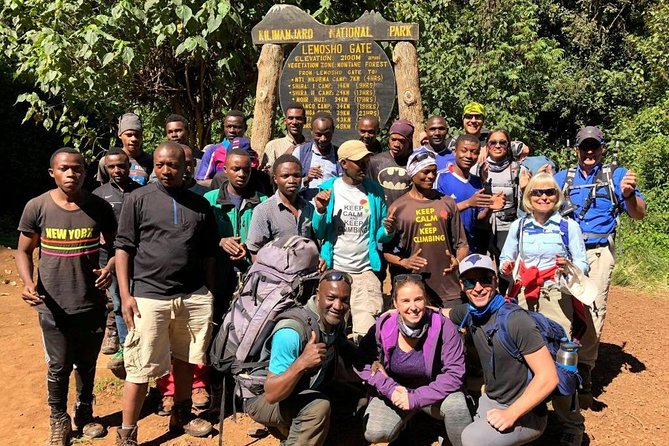
The strongest part of this experience appears to be the crew. The names change by departure, but the guides repeatedly singled out for patience, support, and close care include Davis, Kevin, Amnaay, Joy, Geopron, Robert, Herick, Francis, and Ibrahim.
That matters because a Kilimanjaro guide does more than point out the trail. Your guide sets the pace, watches how you are coping, helps manage the summit attempt, and often provides the calm voice you need when the mountain feels too high.
The support team also adds warmth to what could otherwise be a grim endurance exercise. The porters, cooks, and waiters create the camp routine, carry equipment, and help make seven nights outdoors workable. You should plan a fair tip for the team, since tips are not included.
Some departures have been very small, including a solo climb after cancellations. That can give you flexibility and personal attention, but it can also mean less group energy. Since this is a private activity, ask how your group will be organized before departure.
Who should book this climb
I would choose this route for a reasonably fit person who values time for acclimatization over the lowest possible price. You should be comfortable walking for several hours a day and facing a final day of 10 to 14 hours.
It suits people who want a scenic approach, structured support, and a serious chance at the summit. It also suits solo participants who like the idea of joining a private arrangement that may remain flexible.
I would hesitate if you want a short, inexpensive holiday or if you dislike camping. The package does not include personal gear, insurance, airport transfers, or accommodation outside the seven mountain nights. The summit day is not a casual hike, no matter how manageable earlier days may feel.
Free cancellation is available with a full refund if you cancel at least 24 hours before the 8:00 am start time. Cancellations or changes inside that 24-hour window are not refunded or accepted.
Should you book the 8-day Lemosho climb?
Book it if you want a longer, scenic Kilimanjaro route with a better acclimatization plan than a rushed ascent. The $3,500 cost is easier to justify because it covers the major park, camping, food, transport, guide, and safety expenses, while the stated KPAP salary policy gives you a more responsible way to support the mountain crew.
Before paying, confirm the guide team, group size, equipment advice, hotel arrangements, and extra costs for tips, insurance, transfers, and personal gear. If you can handle the long summit day and accept the realities of high-altitude camping, this is a well-structured way to make a serious attempt on Uhuru Peak.
FAQ
How long is the Kilimanjaro Lemosho climb?
The climb lasts approximately eight days, with seven nights of mountain camping.
Where does the climb begin?
The route begins at Lemosho Gate, at an elevation of 2,385 meters.
How high is Uhuru Peak?
Uhuru Peak is 5,895 meters above sea level.
What is the hardest day?
Day seven is the most demanding. You climb from Barafu Camp to Uhuru Peak and then descend to Mweka Camp, with 10 to 14 hours of walking.
Are meals and drinking water included?
Yes. Three meals per day and drinking water are included.
Is camping equipment provided?
Yes. The package includes a tent, mattresses, and a mess tent. Personal mountain climbing gear and equipment are not included.
Can I cancel for a full refund?
Yes, if you cancel at least 24 hours before the experience start time. Cancellations or changes made less than 24 hours before the start are not accepted, and the amount paid is not refunded.
Newly listed around Moshi & Kilimanjaro
- Climb Mount Kilimanjaro: 7 Days Machame Route★ 5.0 · 3 reviews
- 6 Days Mount Kilimanjaro Climbing via Rongai Route★ 5.0 · 3 reviews
- Explore 1 day Ngorongoro Crater Budget Group Safari from Arusha★ 5.0 · 3 reviews
- Mt. Kilimanjaro Day Hiking★ 5.0 · 3 reviews
- Chemka (Kikuletwa) Hot Springs, Tanzania★ 5.0 · 3 reviews
- Guided City tour of Moshi★ 4.3 · 3 reviews
- 8 Day Tanzania Family Safari★ 5.0 · 3 reviews
- Serengeti Safari with Sirikwa Travel★ 5.0 · 3 reviews
Kilimanjaro Climbs, compared.








Browse the lists this tour appears in