
Reviewed · KILIMANJARO CLIMBS
Mt. Kilimanjaro Climb – 8 Day Lemosho Route
The Lemosho Route gives you Kilimanjaro at its most scenic and, in many ways, most forgiving. You start in quiet forest on the western side of the mountain, cross the high Shira Plateau, circle the southern slopes, and finish with a sunrise climb to Uhuru Peak. I like the extra acclimatization day and the route’s quieter feel. I also like that the group is capped at 12, which matters when you need close attention at altitude.
The main consideration is simple: this is a serious high-altitude climb, not a long sightseeing walk. You need strong physical fitness, patience, and a willingness to spend eight days camping. The midnight summit push is cold, tiring, and mentally demanding, even with a careful pace and a full support crew.
Key points to know before booking
- An extra acclimatization day: Day 3 on the Shira Plateau gives you time to walk high and sleep lower before the harder sections.
- A scenic western approach: Forest, heather, volcanic rock, moorland, the Shira Plateau, Senecio Forest, and the southern circuit all appear on this route.
- A small maximum group: No more than 12 climbers are scheduled, allowing a more personal experience than a large expedition.
- A full mountain support team: Certified guides, porters, cooks, tents, meals, sleeping mats, and a private toilet tent are included.
- A demanding summit night: You begin around midnight, reach Stella Point near 18,900 feet, and continue to Uhuru Peak.
- A strong reported summit rate: The advertised success rate is about 95 percent, helped by the eight-day schedule and gradual ascent.
Why Lemosho is a smart choice for Kilimanjaro
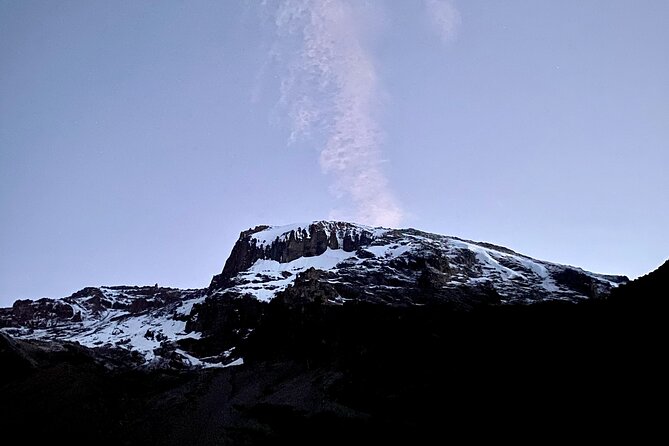
Lemosho is a newer route and is known for its scenic western approach. Instead of rushing toward the summit, you spend several days gaining height gradually. That extra time gives your body a better chance to adjust to thinner air.
The route also lets you see Kilimanjaro change character. The first day passes through forest, where blue monkeys may appear among the trees. Higher up, the vegetation becomes shorter and stranger, with tall grasses, heather, lichen-covered rock, moorland, and giant senecios.
I especially like the route’s broad views. From the western slopes, you may look toward Mount Meru and Moshi, while Kibo, Kilimanjaro’s highest cone, appears across the Shira Plateau. Later, Mawenzi and Kibo come into view from Barafu Camp.
Lemosho is not easy simply because it is scenic. Its highest sections are demanding, and altitude can affect anyone. The advertised 95 percent summit rate should be viewed as a sign that the itinerary is sensibly paced, not as a personal guarantee.
More Kilimanjaro routes:
- Kilimanjaro climb by Lemosho Route (7-day)
★ 5.0 · 651 reviews - Kilimanjaro climb, Machame Route (7-day)
★ 5.0 · 262 reviews - Kilimanjaro Climbing Lemosho Route 8 Days.
★ 5.0 · 186 reviews
Day 1: From Moshi to the forest near Londorossi Gate
The trip starts with pickup in Moshi and a drive of roughly four hours to Londorossi Gate. You complete entry formalities there before continuing by vehicle to the Lemosho trailhead.
Your first walk leads into undisturbed forest. The trail winds through thick greenery toward the first campsite, and this opening day feels less like a race up Africa’s highest mountain and more like a gradual departure from ordinary life.
Keep an eye out for blue monkeys swinging through the trees. They are a small but memorable detail, and they help make the western approach feel different from the more heavily used routes.
The drive is long, and the first day includes both transport and hiking. That makes an early start useful. You will want comfortable travel clothes, accessible water, and your daypack ready before leaving the hotel.
Day 2: Heather, volcanic rock, and the first view of Kibo
On the second day, the forest gives way to open savannah. Tall grasses, heather, volcanic rock, and lichen-covered vegetation replace the trees. The change happens gradually, so you can watch the mountain’s plant life thin out as you gain height.
The trail climbs through rolling hills and crosses several streams before reaching Shira Ridge. From there, you descend gently to Shira 1 Camp. This up-and-down pattern is part of the route’s acclimatization design. You are gaining altitude overall, but not simply walking straight uphill all day.
Shira 1 brings the first broad view of Kibo across the plateau. This is an important psychological moment. The summit is no longer an idea on a map. It is visible ahead, though still several hard days away.
You should expect exposed conditions here compared with the forest. The route description specifically highlights grasses, rock, and open moorland, so sun protection and layers matter. Mountain weather can change, and the included support does not replace your need to carry personal clothing and gear.
Day 3: A full acclimatization day on the Shira Plateau
Day 3 is one of the best reasons to choose the eight-day version. You spend the full day exploring the Shira Plateau, described as one of the highest plateaus on Earth.
The main walk heads east across moorland meadows toward Shira 2 Camp. You then leave the main trail for Moir Hut, a less-used camping area below the Lent Hills. Walks on Lent Hills provide a useful chance to gain altitude during the day and return to camp at a lower sleeping height.
This is the classic climb high, sleep low idea. You are not wasting a day. You are giving your body more time to respond before Lava Tower, Barranco, Barafu, and the summit.
The day also offers variety. Instead of following the busiest direct line, you explore a quieter section near Lent Hills. The drawback is that a full day at altitude can feel slow if you are eager to reach the summit. That is exactly why it helps. Kilimanjaro rewards steady pacing more than impatience.
A few more Moshi & Kilimanjaro days to compare
- Safari Serengeti And Ngorongoro
★ 5.0 · 288 reviews - Climbing Kilimanjaro – Machame Route
★ 5.0 · 170 reviews - Climbing Kilimanjaro through 7 days Machame Route
★ 5.0 · 151 reviews - Kilimanjaro climb, Lemosho Route (8-day)
★ 5.0 · 148 reviews
Day 4: Lava Tower and the Senecio Forest
Day 4 takes you toward Lava Tower, a roughly 300-foot volcanic rock formation. You climb to this high point before descending to Barranco Camp through the unusual Senecio Forest.
The day ends around 13,000 feet, although you begin and finish at roughly the same elevation. That apparent lack of progress is intentional. Time spent higher on the trail gives your body a useful altitude workout before you sleep.
Lava Tower is likely to feel like a major test. The trail is rocky, and altitude may slow your steps or affect your appetite and energy. Listen closely to your guide here. Certified guides are included, and the company’s commonly featured lead guide, Ezekiel, has been described as having more than 20 years in the industry. Michael is also named as part of the support leadership on past climbs.
Barranco Camp rewards the effort with a striking change in scenery. The giant senecios and volcanic formations create some of the route’s most memorable views. You also get a practical lesson in mountain travel: a day can be valuable even when your sleeping elevation has not changed.
Day 5: The Barranco Wall and Karanga Camp
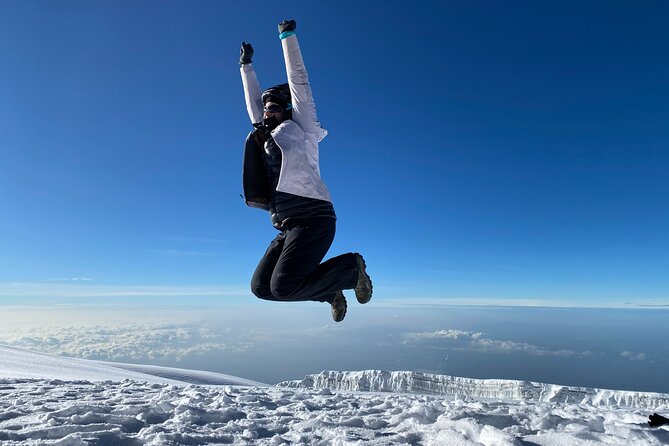
The Barranco Wall is the route’s most famous physical obstacle. You descend briefly into a ravine, then climb the steep, nearly 900-foot wall. It is non-technical, meaning you do not need climbing equipment for the route as described, but it is narrow and demanding in places.
One section is about three feet wide and is known as the Kissing Wall. The nickname comes from the way climbers hug the rock as they pass. It may look intimidating from below, but the practical challenge is controlled movement, balance, and following your guide’s instructions.
After reaching the top, you cross a series of hills and valleys before descending into Karanga Valley. A final steep climb takes you to Karanga Camp.
This is a shorter day than some of the others, which is helpful. You get another chance to recover before higher elevations and the summit attempt. Still, the wall can be tiring, especially after several days of walking. Good boots, a calm pace, and keeping both hands available when needed are more useful than rushing for a photograph.
Day 6: Barafu Camp and the final preparation
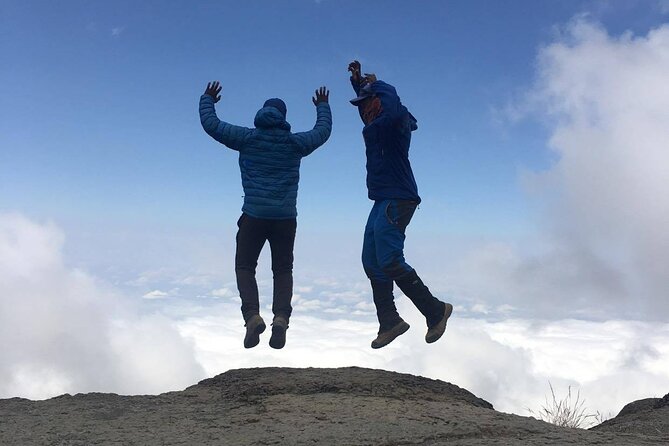
You leave Karanga and reach the junction with the Mweka Trail. The trail then becomes rocky as you climb toward Barafu Hut.
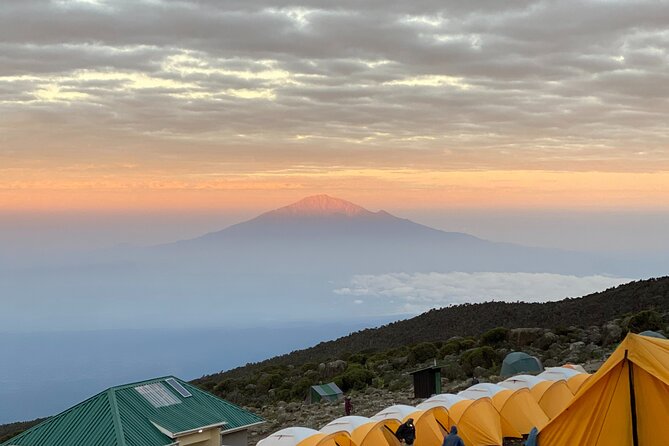
Arriving at Barafu means you have completed the Southern Circuit, which has shown you the summit from several angles. From camp, you can see Mawenzi and Kibo, a fitting preview of the two peaks before the hardest night.
This is a rest-and-prepare day rather than a sightseeing day. You make camp, rest, and eat an early dinner. Try to organize your summit clothing, headlamp, water, and personal items before lying down. The midnight departure comes quickly, and there is no prize for searching through a duffel bag at 11:45 p.m.
The included sleeping mat, three-person mountaineering tent, meals, cooks, porters, and private toilet tent make this section more comfortable than a self-supported climb. You still need to bring or rent your own sleeping bag and personal gear.
Day 7: The midnight climb to Uhuru Peak
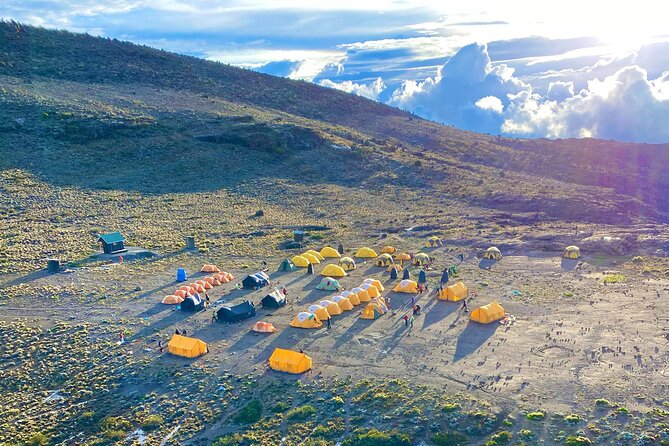
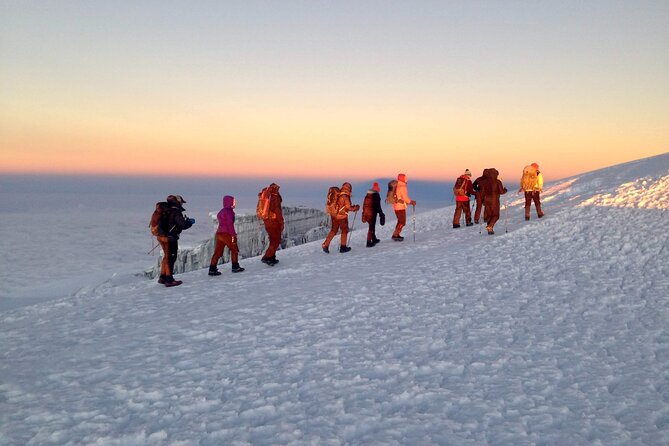
Summit day begins around midnight. You climb in darkness for several hours, taking frequent but short breaks. This is the most physically and mentally demanding part of the trip.
The route heads toward Stella Point, near 18,900 feet. If timing and conditions cooperate, you see sunrise over Mawenzi Peak. That moment is one of the major rewards of the Lemosho schedule, but it comes after a cold, slow climb when your body may be tired from the previous six days.
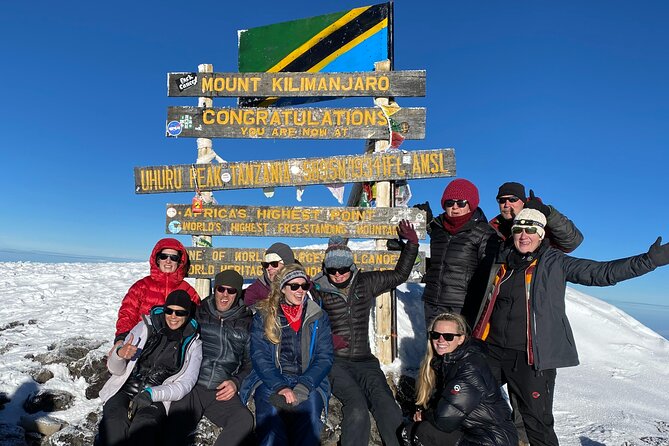
From Stella Point, you continue to Uhuru Peak, the highest point on Kilimanjaro and the highest point in Africa. You can pause for photographs and a brief moment of reflection before beginning the descent.
The descent starts the same day, adding a great deal of work after the summit. This is why your guide’s pacing and judgment matter so much. Past groups have singled out Ezekiel for his handling of pace, safety, and the practical details that keep a long climb moving. That does not remove the physical strain, but it can make the effort more manageable.
Day 8: Down through Mweka Gate and back to Moshi
The final day continues the descent to Mweka Gate. Lower sections can be wet and muddy, so do not assume the return walk will be easy simply because you are heading downhill.
At the gate, a driver meets you and takes you toward Mweka Village. A vehicle then continues the journey back to your hotel in Moshi. The day ends with refreshments, perhaps a Kilimanjaro beer, and summit certificates.
That certificate ceremony gives the trip a welcome finish. After a week of cold nights, early starts, and thin air, a shower, a hotel bed, and a proper drink are not minor comforts.
What the $3,099 price includes
At $3,099 per person, this is a major purchase, but the price covers far more than a guide and a trail permit. You receive airport pickup and drop-off, hotel lodging the night before and after the climb, mountain fees and taxes, camping equipment, meals, and a sizeable support operation.
The support includes certified guides, porters, and cooks. Breakfast, lunch, and dinner are provided for six days, which covers the main camping portion. A sleeping mat and private toilet tent are also included.
That package gives the price real value for someone who wants a guided expedition rather than the work of organizing Kilimanjaro independently. The tradeoff is that several important expenses remain yours: flights, visa, personal travel insurance, sleeping bag, rental equipment, snacks, drinks, hotel lunches and dinners, and tips for the support team.
Tips deserve planning. They are not included, and a portered climb depends on a large team working behind the scenes. Set aside money for gratuities before you arrive so the final cost does not surprise you.
Guides, food, camping, and group size
The company emphasizes guides with at least three years of training and experience. Specific past climbs have included Ezekiel as lead guide and Michael among the senior team. The strongest praise has focused on safety, pacing, food, equipment, and the small practical acts that make a hard week easier.
The setup is not luxury camping, but it is organized camping. You sleep in a three-person mountaineering tent on an included mat, with a private toilet tent available. Cooks handle the six included breakfasts, lunches, and dinners.
A maximum of 12 climbers is a useful limit. It is large enough for group energy but small enough for guides to monitor pace and condition more closely. Group discounts are offered, which may help if you are booking with friends or family.
The published rating is 5 out of 5 from 11 ratings, with 100 percent recommending the experience. That is encouraging, especially alongside repeated praise for the guide team and food, but mountain conditions and personal fitness still shape the result.
Who should book this Kilimanjaro climb?
You should consider this route if you want scenery, a gradual schedule, and a quieter approach. It suits fit hikers who are comfortable spending eight days on foot and sleeping in tents.
It is also a good match if you value strong logistical support. Airport transfers, hotels, meals, porters, cooks, guides, and a private toilet tent reduce the number of details you need to arrange yourself.
You should think twice if you dislike camping, struggle with long uphill days, or expect a comfortable holiday with a summit added on. The itinerary requires strong fitness, and altitude can make even a modest pace feel hard.
The route is also a good fit for small groups. With space for up to 12 and group discounts available, friends can share the experience without joining a huge expedition.
Booking details and cancellation
The listed start time is 9:00 a.m., with pickup offered. Confirmation is provided when you book. Bring proof of personal travel insurance, arrange your visa and flights separately, and plan for sleeping-bag rental or purchase if you do not already have one.
Free cancellation is available if you cancel at least 24 hours before the local start time. Cancellations or changes made within 24 hours are not accepted for a refund.
Should you book the 8-day Lemosho Route?
I would choose this route over a shorter Kilimanjaro itinerary if your budget and schedule allow it. The extra acclimatization day, quieter western approach, broad scenery, and careful southern circuit make the additional time worthwhile.
Book it if you want the best chance of handling the altitude and you are prepared for a real expedition. Do not book it simply because the advertised summit rate is high. Your success still depends on fitness, patience, preparation, and how your body responds to altitude.
For a well-supported Kilimanjaro climb with a small group, experienced leadership, and a route that gives you time to adjust, the 8-day Lemosho itinerary offers strong value at $3,099. Just budget separately for tips, insurance, visa costs, personal gear, drinks, and the flights that get you to Tanzania.
FAQ
How long is the Kilimanjaro Lemosho Route experience?
The climb lasts approximately eight days. The itinerary begins with pickup in Moshi, includes seven mountain days, and ends with transportation back to a hotel in Moshi.
How many people can join the climb?
The maximum group size is 12 travelers. Group discounts are available.
What equipment is included?
The package includes a three-person mountaineering tent, sleeping mat, and private toilet tent. Sleeping bags, rental gear, and other personal equipment are not included.
Are meals included during the climb?
Six breakfasts, six lunches, and six dinners are included. Lunch and dinner at the hotel, along with drinks and snacks, are not included.
Is airport transportation included?
Yes. Airport pickup and drop-off are included, along with hotel lodging the night before and the night after the climb.
What fitness level do I need?
You should have a strong physical fitness level. The route includes steep sections such as the Barranco Wall, high-altitude camps, and a midnight summit push to Uhuru Peak.
Newly listed around Moshi & Kilimanjaro
- Climb Mount Kilimanjaro: 7 Days Machame Route★ 5.0 · 3 reviews
- 6 Days Mount Kilimanjaro Climbing via Rongai Route★ 5.0 · 3 reviews
- Explore 1 day Ngorongoro Crater Budget Group Safari from Arusha★ 5.0 · 3 reviews
- Mt. Kilimanjaro Day Hiking★ 5.0 · 3 reviews
- Chemka (Kikuletwa) Hot Springs, Tanzania★ 5.0 · 3 reviews
- Guided City tour of Moshi★ 4.3 · 3 reviews
- 8 Day Tanzania Family Safari★ 5.0 · 3 reviews
- Serengeti Safari with Sirikwa Travel★ 5.0 · 3 reviews
Kilimanjaro Climbs, compared.








Browse the lists this tour appears in