
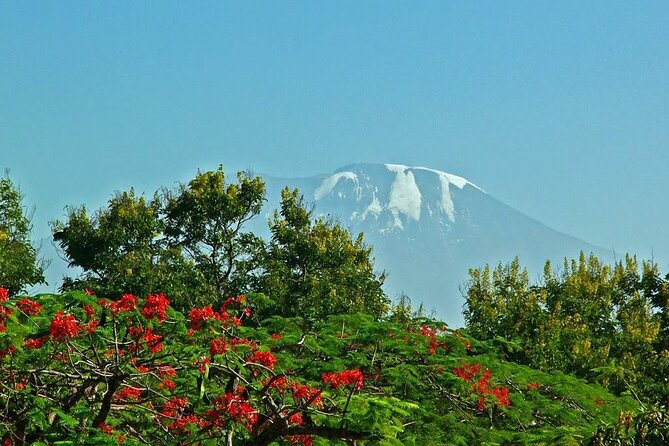
Reviewed · KILIMANJARO CLIMBS
Mountain Kilimanjaro Climbing 8 Days Lemosho Route
Kilimanjaro’s Lemosho Route gives you the mountain in chapters: rainforest, open moorland, volcanic rock, high desert, glaciers, and finally Uhuru Peak. The eight-day plan moves at a useful pace, with several acclimatization walks before the summit push.
I like the broad views from the Shira Plateau, and I like that meals, sleeping gear, guides, and porters are included rather than left for you to arrange. The main concern is the altitude and the demanding final two days. This is a serious climb, not a long sightseeing walk.
- Start in the rainforest at 2,100 meters, then climb gradually toward Shira Plateau.
- Sleep at Crater Camp after reaching Uhuru Peak, a rare and demanding extension inside Kilimanjaro’s crater.
- Use high-altitude acclimatization walks at Shira 2, Karanga, and other camps.
- Climb Lava Tower at 4,640 meters, then descend to Barranco to help your body adjust.
- Expect a small group of no more than 15 people, with pickup offered from Kilimanjaro International Airport.
- Plan for an early summit start, a long day, cold conditions, and a tip for the guides, cooks, and porters.
Why the 8-day Lemosho Route works well
The Lemosho Route is often chosen for its scenic variety and gradual approach. You do not rush straight toward the summit. Instead, you cross several climate zones and spend time at useful high camps before the final climb.
That extra time matters. At altitude, fitness helps, but acclimatization often matters more. The schedule gives you a chance to walk high and sleep lower, particularly on the Lava Tower and Barranco section. You will still need patience, steady breathing, and a willingness to walk slowly.
The route is listed at about 40 kilometers to the summit, though the full mountain journey, including descents and the return to the gate, involves much more walking. The day-by-day program includes hikes of roughly four to twelve hours, with the longest effort concentrated around summit night and the following descent.
The price is $2,756.93 per person. That is a major expense, but the package includes the mountain crew, meals across eight days, sleeping equipment, park access within the itinerary, airport pickup, and transport back to Moshi. The value depends on how much you want handled for you. If you tried to arrange each part separately, the price comparison would be less simple than it first appears.
Day 1: Rainforest from 2,100 to 2,650 meters
Your climb begins on Mount Kilimanjaro at about 2,100 meters. The trail winds through the lush forest zone and up the lower northern slopes toward Shira Plateau.
The first day takes about three hours, ending at Mti Mkubwa Camp at 2,650 meters. This is a sensible opening. You get your first feel for the pace, the trail, and the weight of the day without being thrown into a long climb.
The forest is also a good reminder that Kilimanjaro is not only a rocky summit. The mountain changes sharply as you gain height. On this first stretch, I would focus on walking slowly and noticing how your body responds. Do not try to prove anything to the group on day one.
Sleeping equipment is provided, which reduces the amount of gear you need to bring from home. Still, you should pack warm layers and personal items you know you will need. The higher camps are cold, and comfort at night becomes more important as the climb continues.
More Kilimanjaro routes:
- Kilimanjaro climb by Lemosho Route (7-day)
★ 5.0 · 651 reviews - Kilimanjaro climb, Machame Route (7-day)
★ 5.0 · 262 reviews - Kilimanjaro Climbing Lemosho Route 8 Days.
★ 5.0 · 186 reviews
Day 2: Open moorland and the first Shira views
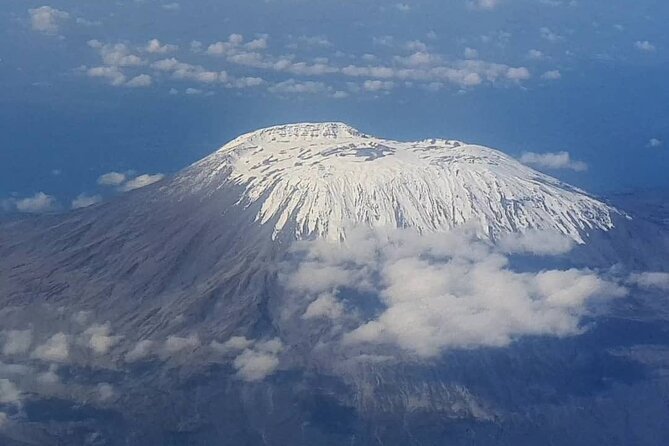
Day two crosses grassy moorland and heather, with volcanic rock formations scattered along the trail. The destination is Shira 1 Camp, and the walk takes about seven hours.
This is one of the first major visual changes on the mountain. The dense forest gives way to open ground, and Kibo Peak may appear above the clouds. The trail also gains a fair amount of altitude, with some fairly steep sections.
You should expect the day to feel harder than its distance suggests. The combination of climbing, thinner air, and exposed ground can slow you down. Your guides are there to set a manageable rhythm, so follow their pace rather than racing ahead.
Shira 1 is valuable as an acclimatization stop. You are high enough to begin adjusting, but the route has not yet reached its most severe terrain. If you feel a headache, unusual fatigue, or other altitude symptoms, tell the guide early. Quietly hiding a problem helps nobody.
Day 3: Shira Plateau and a useful acclimatization walk
The third day continues across the Shira Plateau toward Shira 2 Camp. The route offers unusual views of Kibo and a chance to see the northern ice fields from the western side of the mountain.
The day takes about seven hours, but it is not simply a long march from one camp to another. The steady climb across the plateau helps prepare you for higher ground, and a separate afternoon acclimatization walk is planned before you return to camp for dinner and sleep.
This is a good place to appreciate the route’s main strength. You are given time to adjust instead of being pushed upward every hour of the day. The open views can make the walking feel less enclosed than the forest section, though the exposure may also mean more sun, wind, and changing temperatures.
At Shira 2, protect your energy. Eat even if your appetite is low, drink regularly, and keep your evening simple. The mountain does not reward needless exertion at camp.
Day 4: Lava Tower at 4,640 meters, then Barranco
Day four is a key acclimatization day. You climb through upland desert toward lava ridges beneath the glaciers of the Western Breach, reaching Lava Tower at 4,640 meters.
The ascent takes about four hours. Lava Tower is the high point for the day and a natural place for lunch. Afterward, you make a steep descent to camp at the base of the Great Barranco Valley, at about 3,960 meters.
This high-up-then-down pattern is useful. You spend time at a higher elevation during the day but sleep lower than Lava Tower. That makes the day tiring, but it serves a clear purpose for acclimatization.
Barranco Camp is sheltered by tall cliffs and has wide views toward the plains below. The setting should feel dramatic, but do not mistake the relatively short walking time for an easy day. The climb to Lava Tower is steep, and altitude can make ordinary steps feel slow.
This is also where you may begin to understand the physical rhythm of the expedition. The day is not only about reaching the next camp. It is about placing your body at different heights and giving it a better chance to cope with the summit.
A few more Moshi & Kilimanjaro days to compare
- Safari Serengeti And Ngorongoro
★ 5.0 · 288 reviews - Climbing Kilimanjaro – Machame Route
★ 5.0 · 170 reviews - Climbing Kilimanjaro through 7 days Machame Route
★ 5.0 · 151 reviews - Kilimanjaro climb, Lemosho Route (8-day)
★ 5.0 · 148 reviews
Day 5: Barranco Wall and Karanga Camp
The morning starts with a descent into the beginning of the Great Barranco, followed by the climb up the Barranco Wall. This section involves rock and is long and tiring, but it is not described as technical climbing.
You pass beneath the Heim and Kersten Glaciers before heading toward the Karanga Valley. From there, a steep climb brings you to Karanga Camp at 3,963 meters. The walking time is about four hours, though the rock section and altitude can make it feel substantial.
The Barranco Wall is one of the route’s more memorable physical challenges. You will use your hands at points and move carefully over rock, but the key demand is endurance rather than specialist climbing skill. Listen closely to your guide and avoid rushing when the trail narrows or steepens.
If you are feeling strong, an afternoon acclimatization walk rises to around 4,200 meters before you descend to camp. I like this detail because it gives stronger hikers a useful extra step without forcing everyone into the same effort. Your guide should decide how much makes sense for you on the day.
Day 6: Barafu Camp and preparation for summit night
Day six takes you to Barafu Camp at 4,640 meters. The route crosses barren scree slopes with no vegetation, and the climb is steep.
The scheduled walk takes about four hours, but the full day is listed at roughly twelve hours because it includes rest, an early dinner, and the preparation for the midnight start. Once you reach Barafu, the main job is no longer sightseeing. You eat, drink, stay warm, and rest.
The camp sits high and exposed, so conditions may feel stark. This is the point where the mountain can seem less friendly. Keep your gear organized before lying down, because you may be getting up between 11 p.m. and midnight for the summit approach.
A practical tip is to prepare your summit clothing before dinner. Put your headlamp, gloves, warm layers, water, and essential snacks where you can reach them easily. The less you have to think about in the middle of the night, the better.
Day 7: Uhuru Peak and an unusual night at Crater Camp
Summit day begins before dawn. You climb toward Uhuru Peak and are expected to reach the top in the early afternoon. The schedule says the summit section takes about seven hours, followed by a short descent to Crater Camp.
Reaching Uhuru Peak is the central goal, but this is not the end of the day. You then sleep in the crater bowl near the Furtwangler Glacier. Crater Camp is an optional-style extension in general, but it is built into this particular program, making the trip more demanding than a standard summit-and-descent plan.
The crater setting is the experience’s most unusual feature. You are sleeping on soft sands inside Kilimanjaro’s crater, close to one of the mountain’s famous glaciers. Only a small number of climbers choose this kind of overnight, so it offers a different perspective from simply touching the summit and heading down.
It also adds risk and fatigue. You should be honest about your condition and follow the guide’s judgment. The combination of summit altitude, a long day, cold, and a night at Crater Camp is not a minor add-on.
The summit itself may feel less like a triumphant photo stop than a test of patience. Go slowly. Keep your attention on each step, and let the guide manage the pace. The fact that the summit arrival is planned for early afternoon may mean fewer groups around, but mountain conditions can affect timing.
Day 8: Forest descent and return to Moshi
The final day covers the remaining section of the mountain and descends through the forest to the gate. The walking time is about five hours.
After the stark upper slopes, returning to trees and thicker air can feel like a relief. Your vehicle waits at the gate and takes you back to your hotel in Moshi, where a proper celebration is in order.
You will also say goodbye to the guides, cooks, and porters here. Tipping is expected, so set aside money for the mountain crew before the descent. Their work covers far more than pointing out the trail. They help carry supplies, prepare meals, organize camp, and keep the group moving.
The return transport is included, which is useful after the final walk. You do not need to arrange a separate ride from the park gate.
Guides, food, gear, and group size
The experience allows a maximum of 15 people. That is not a private climb, but it is small enough for the guide to keep track of the group more easily than on a large departure.
The company’s staff named in the supplied information include Oscar Swai, who appears to handle arrangements and client communication, and Timothy, who is identified as a main mountain guide on one eight-day Lemosho climb. Your specific guide may differ, so confirm names before departure if that matters to you.
Meals are included and can be adjusted to dietary requirements. That is important on an eight-day climb, when familiar food and enough calories can affect your strength. Tell the operator about your needs before you arrive, not once the group is already on the trail.
Sleeping gear is included as well. This makes packing easier, but you still need personal clothing and items suited to cold, wet, and changing conditions. The supplied information does not list every piece of equipment, so ask exactly what is provided before you leave home.
Pickup is offered from Kilimanjaro International Airport, with the stated meeting point on Kilimanjaro Airport Road at 7:00 a.m. Mobile ticketing is available, and confirmation is provided at booking.
Who should book this climb
This trip suits you if you want a scenic route, a measured pace, and a mountain crew handling the practical work. It is especially appealing if the Shira Plateau and Crater Camp matter as much to you as the summit photograph.
You need a moderate level of physical fitness, but that phrase should not make the climb sound easy. The route includes steep rock, long walking days, high camps, cold conditions, and a summit night. You should be comfortable with sustained uphill walking and with being tired for several days in a row.
This is not the best choice if you want a relaxed holiday with a little walking added. The final two days are demanding, and Crater Camp adds another layer of effort after the summit. You should also be comfortable sharing the trip with a group of up to 15 people.
The 100 percent recommendation rate and five-star average from 10 submitted ratings are encouraging, with repeated praise for guide quality, polite staff, airport assistance, and organization. One useful caution comes from a past luggage problem, which the operator helped resolve. That suggests you should still pack important personal items in your carry-on and confirm how delayed baggage would be handled.
Price, cancellation, and practical value
At $2,756.93 per person, this is not a budget walk. Its value comes from the number of major services bundled into one mountain program: guides, porters, cooks, meals, sleeping equipment, park access, airport pickup, and return transport.
You are also paying for eight days rather than a rushed summit attempt. The extra nights help with acclimatization and give you the chance to see more of Kilimanjaro’s changing zones.
Free cancellation is available up to 24 hours before the experience begins. Changes or cancellations within 24 hours are not refunded, and poor weather or failure to meet the minimum group size can lead to a new date, another experience, or a full refund. Since the mountain depends on weather, read those terms carefully before making fixed onward plans.
Should you book the Lemosho Route?
Book it if you want a well-supported, scenic Kilimanjaro climb with time for acclimatization and the rare chance to sleep at Crater Camp. The route offers more than a direct push to the top, and the included meals, equipment, airport pickup, and mountain crew make the price easier to understand.
Think twice if you want the lightest possible itinerary or if you are uneasy with high-altitude camping. Ask about the exact equipment list, your assigned guide, dietary arrangements, group departure, and the demands of Crater Camp before paying.
For a fit hiker who values scenery, steady pacing, and strong logistical support, this eight-day Lemosho plan is a serious but appealing way to approach Africa’s highest mountain.
FAQ
Where does the Kilimanjaro climb begin?
The stated meeting point is Kilimanjaro International Airport on Kilimanjaro Airport Road in Tanzania. The start time is 7:00 a.m., and pickup is offered.
How long does the experience last?
The climb lasts approximately eight days. Walking times range from about three to twelve hours depending on the day and the summit schedule.
What route does the climb use?
The experience follows the Lemosho Route. It crosses rainforest, moorland, the Shira Plateau, upland desert, volcanic rock, and the upper slopes near the glaciers.
Is Crater Camp included?
Yes. After reaching Uhuru Peak on day seven, you descend to Crater Camp and spend the night inside the crater bowl near Furtwangler Glacier.
Are meals and sleeping equipment included?
Yes. Meals are provided throughout the eight days and can be adapted to dietary requirements. Sleeping equipment is also included.
What happens if I cancel?
You can cancel up to 24 hours before the start time for a full refund. Cancellations or changes made less than 24 hours before the start are not refunded. If poor weather or an insufficient group size cancels the climb, you can choose a different date or experience, or receive a full refund.
Newly listed around Moshi & Kilimanjaro
- Climb Mount Kilimanjaro: 7 Days Machame Route★ 5.0 · 3 reviews
- 6 Days Mount Kilimanjaro Climbing via Rongai Route★ 5.0 · 3 reviews
- Explore 1 day Ngorongoro Crater Budget Group Safari from Arusha★ 5.0 · 3 reviews
- Mt. Kilimanjaro Day Hiking★ 5.0 · 3 reviews
- Chemka (Kikuletwa) Hot Springs, Tanzania★ 5.0 · 3 reviews
- Guided City tour of Moshi★ 4.3 · 3 reviews
- 8 Day Tanzania Family Safari★ 5.0 · 3 reviews
- Serengeti Safari with Sirikwa Travel★ 5.0 · 3 reviews
Kilimanjaro Climbs, compared.








Browse the lists this tour appears in