
Reviewed · KILIMANJARO CLIMBS
Mount Kilimanjaro Rongai Route
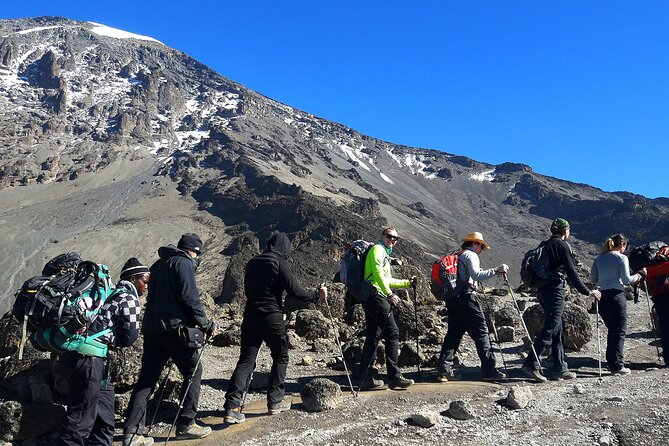
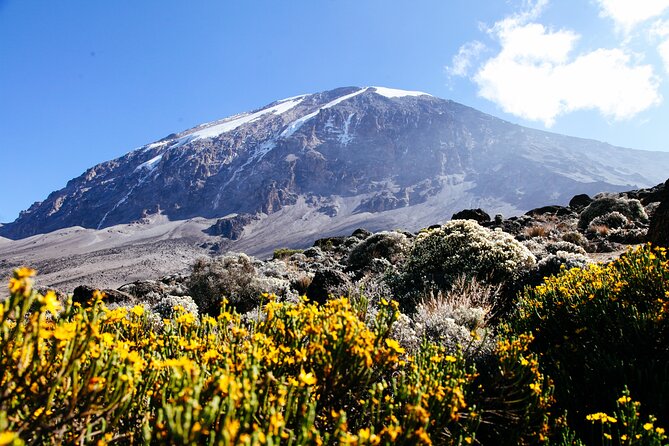
The Rongai Route gives you a peaceful approach to Kilimanjaro, with pine forest, open moorland, giant senecios, Mawenzi Peak, and the stark Saddle between Mawenzi and Kibo. You climb one side of the mountain and return through Marangu Gate, so the week does not feel like the same trail repeated.
I like the extra acclimatization day at Mawenzi Tarn, and I like the strong guide and porter support. Guides named in connection with these climbs include Izadini, Teodori, Mndeme, Stanley, Kabilla, Amani, and Selemani. The main drawback is the summit day: 22 kilometers and up to 15 hours, with a midnight start.
Key points to know before booking
- Rongai ascent, Marangu descent: You approach Kilimanjaro through the quieter eastern side and leave through a different ecological zone.
- A useful acclimatization day: Day 4 at Mawenzi Tarn gives your body extra time at roughly 4,330 meters.
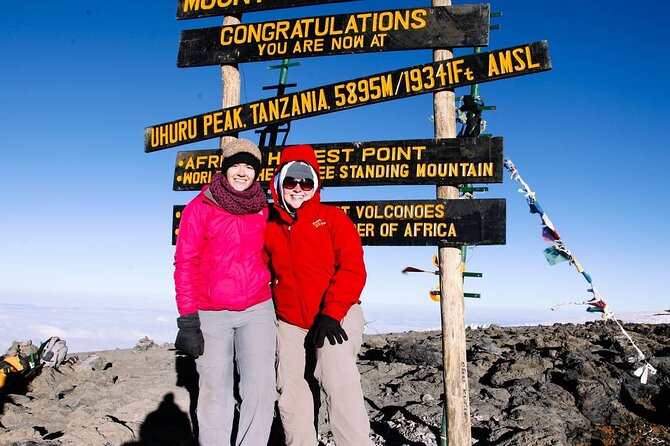
- The summit push is serious: Expect a midnight start, steep climbing to Gillman’s Point, Uhuru Peak at 5,895 meters, and a long descent.
- Private group format: Only your group participates, with a maximum group size of 15 for the listed price.
- A well-supported climb: Guide attention, porters, cooks, and practical mountain logistics are central to the experience.
- Seven days for about $2,700 per group: The value depends heavily on group size and exactly what the price includes, so confirm the details before paying.
Why the Rongai Route feels different
Many Kilimanjaro climbs are judged by the summit alone. That is understandable, but the route you take shapes the whole week. Rongai approaches from the Kenyan side of the mountain, near the northeastern edge of Kilimanjaro National Park. On this program, the climb begins through farmland and pine forest before moving into high moorland.
The early walking is not just a warm-up. It lets you settle into the pace, learn how your guide manages rest stops, and begin adjusting to thinner air without starting with a brutal climb. You might spot colobus monkeys in the forest, although wildlife sightings are not promised.
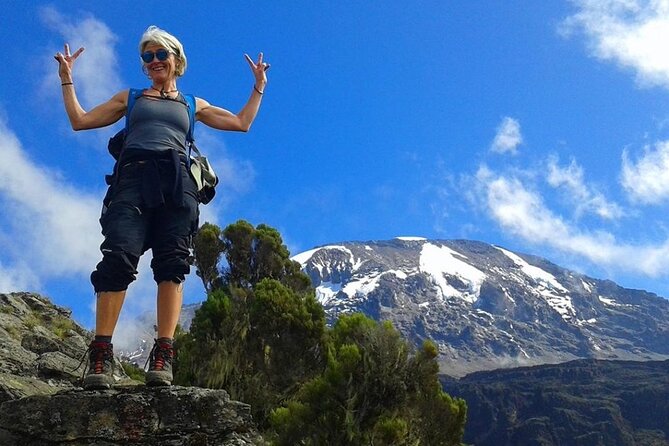
The route also gives you changing views of Mawenzi, Kilimanjaro’s jagged secondary peak. Its cliffs and ridges provide a dramatic counterpoint to the broad, rounded summit of Kibo. The quieter feel around Kikelewa and Mawenzi Tarn is one of the route’s best features, especially if you prefer open space to a crowded trail.
You return through the Marangu side, passing through moorland and rainforest before reaching Marangu Gate. That change in scenery is valuable. It makes the mountain feel larger and more varied, and it gives you a real sense of crossing Kilimanjaro rather than simply walking up and down one corridor.
More Kilimanjaro routes:
- Kilimanjaro climb by Lemosho Route (7-day)
★ 5.0 · 651 reviews - Kilimanjaro climb, Machame Route (7-day)
★ 5.0 · 262 reviews - Kilimanjaro Climbing Lemosho Route 8 Days.
★ 5.0 · 186 reviews
Seven days from pine forest to the summit
Day 1: Farmland, pine forest, and Simba Camp
After breakfast at the hotel, you drive for roughly two to three hours toward Rongai Gate. The start point is listed as Kilimanjaro Airport at 7:00 a.m., while the day plan describes a hotel departure after breakfast, so confirm the exact pickup arrangement with Zara before the climb.
At the gate, registration comes first. The opening walk covers about 8 kilometers and takes three to four hours, climbing from 1,950 meters to 2,600 meters. The trail passes through farmland and pine forest, with a gentle rise rather than an immediate test of strength.
You finish at Simba Camp, where a hot meal and overnight rest are planned. This is a sensible first day. You are walking enough to begin altitude adjustment, but not so much that you burn your reserves before the difficult sections.
Day 2: The open moorland toward Kikelewa
Day 2 brings a bigger gain in height, from 2,600 meters to 3,600 meters. The distance is about 10 kilometers, and walking takes five to six hours.
You climb steadily to Second Cave, stopping there for lunch. From this point, the trail turns toward Mawenzi on a smaller path across open moorland. The setting becomes more exposed and spare, with broad views and a stronger feeling of isolation.
Kikelewa Camp sits in a sheltered valley near Kikelewa Cave. Giant senecios add a distinctly Kilimanjaro touch to the scene. This is a good evening to eat well, drink often, and avoid rushing around camp. At 3,600 meters, altitude can begin to affect sleep, appetite, and energy even when the walking itself feels manageable.
A few more Moshi & Kilimanjaro days to compare
- Safari Serengeti And Ngorongoro
★ 5.0 · 288 reviews - Climbing Kilimanjaro – Machame Route
★ 5.0 · 170 reviews - Climbing Kilimanjaro through 7 days Machame Route
★ 5.0 · 151 reviews - Kilimanjaro climb, Lemosho Route (8-day)
★ 5.0 · 148 reviews
Day 3: A short, steep climb to Mawenzi Tarn
The third day is only 6 kilometers and takes around three to four hours, but it is steeper. You climb grassy slopes to Mawenzi Tarn, at about 4,315 meters, beneath the cliffs of Mawenzi Peak.
This may be the most visually striking camp of the route. The mountain walls rise sharply around the tarn, and the setting feels remote and high. You have lunch on arrival, then time to rest or take a short acclimatization walk.
Do not mistake the short distance for an easy day. Height matters more than mileage here. The guide’s role becomes especially important, and the strongest praise associated with Zara centers on careful attention to tiredness and signs of altitude trouble. You should expect a slow, steady pace and direct advice about hydration and rest.
Day 4: The extra night at 4,330 meters
The additional day at Mawenzi Tarn is one of the smartest parts of this itinerary. You hike upward toward Mawenzi Peak for acclimatization, then return to camp to rest.
The plan does not give a distance or duration for this outing, so your guide will set the pace according to conditions and how you are feeling. The point is not to rack up extra kilometers. It is to spend more time high on the mountain before moving toward Kibo.
This day also gives you a chance to notice how your body is responding. Headaches, nausea, unusual fatigue, and poor coordination should be taken seriously. A beautiful view is never a reason to ignore a health warning. Staying hydrated and following your guide’s instructions will matter more than trying to prove your toughness.
Day 5: Across the Saddle to Kibo Hut
After breakfast, you cross the Saddle, the broad and barren area between Mawenzi and Kibo. The walk covers about 8 kilometers and takes five to six hours, rising from 4,315 meters to 4,720 meters.
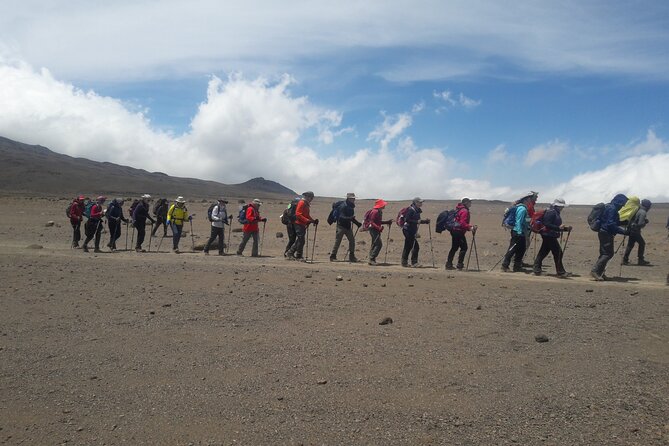
The ground is sparse and almost lunar in appearance. There is little shelter, and the summit of Kibo appears ahead as a constant reminder of what comes next. The incline is generally gentle, but the altitude makes a steady pace essential.
Kibo Hut is the staging point for the summit attempt. You have an early dinner, receive a detailed briefing, and try to sleep before waking around midnight. This is not a normal night in the mountains. You may rest poorly, and you should treat any sleep you get as useful rather than expect a full night.
Day 6: Gillman’s Point, Uhuru Peak, and Horombo Hut
Summit day is the heart of the climb and the part you need to understand clearly before booking. You start around midnight, walking from roughly 4,700 meters toward Uhuru Peak at 5,895 meters.
The climb to Gillman’s Point, at 5,685 meters, usually takes about six hours. It is steep, slow, and physically demanding. Your guide will set a controlled rhythm, and the practical support of the crew becomes especially valuable here. The aim is to keep moving without wasting energy.
From Gillman’s Point, you continue along the crater rim toward Uhuru Peak, the highest point in Africa. If the weather cooperates, sunrise over the continent can be extraordinary. Still, conditions at the top may include cold, wind, cloud, or limited visibility, so the achievement should not depend only on getting a perfect photograph.
After time at the summit, you descend to Kibo Hut for a short rest, then continue to Horombo Hut. The full day covers about 22 kilometers and takes 12 to 15 hours. That is a huge effort, not a casual final walk. You should book this climb only if you are prepared for a long day with very little margin for delay.
The descent to Horombo is important because it gives you a lower sleeping altitude after the summit. You will likely feel exhausted, but the change in height can make the night more comfortable than another night at Kibo.
Day 7: Moorland and rainforest to Marangu Gate
The final day covers about 20 kilometers and takes six to seven hours. From Horombo Hut at 3,720 meters, you descend to roughly 1,830 meters at Marangu Gate.
The route passes through moorland and then rainforest. After the dry, high terrain around Kibo, the return of thicker vegetation feels dramatic. Take this part steadily. Your legs have already handled the summit and a long descent, and downhill walking can be hard on knees and toes.
At Marangu Gate, you receive your summit certificate before driving back to Springlands Hotel in Moshi. The plan includes a hot meal, shower, and bed afterward, which is exactly the sort of simple comfort you will appreciate at the end of a demanding week.
Zara can also connect you with a safari coordinator if you want to add a wildlife trip or continue to Zanzibar. Those extensions are not part of the climbing price, but the option is practical if Tanzania is a once-in-a-lifetime visit.
How much support you can expect on the mountain
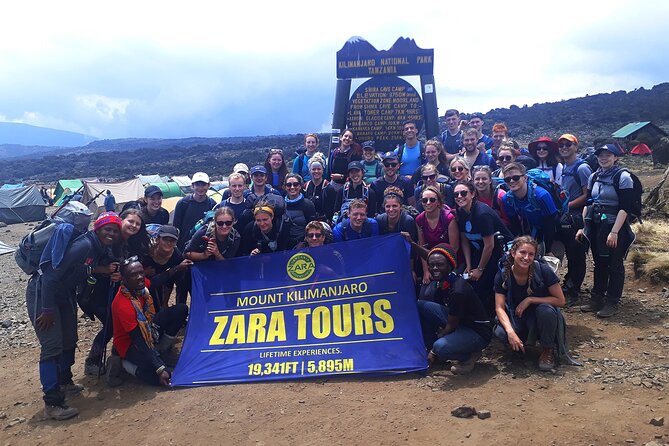
The strongest feature of this climb is the mountain team. The operation may include mountain guides, porters, cooks, and serving staff. One large group associated with Zara had a sizable support crew, but your private group of up to 15 will not necessarily have the same staffing arrangement.
The guide names connected with these climbs include Mndeme, Stanley, Izadini, Teodori, Kabilla, Amani, and Selemani. Guide assignments can change, so do not book based on a particular name unless Zara confirms that person in writing. What you should look for is clear English communication, careful pacing, and a guide who checks your condition rather than simply pushing toward the next camp.
Food is another reported strength of this operation. Meals include hot food at high camps, and one account specifically describes a two-course dinner at around 4,500 meters. That does not mean every menu or meal will be identical, but it does indicate that camp catering is treated as part of the climb rather than an afterthought.
You should also ask how porter welfare is handled, how luggage is divided, and what equipment is supplied. The provided price does not spell out those inclusions, so do not assume that airport transfers, hotel nights, park fees, tips, gear rental, or travel insurance are all covered.
Is $2,700 a fair price?
The listed cost is $2,700 per group of up to 15 people. That pricing can offer good value for a full seven-day private climb, particularly for a larger group, but the math changes sharply depending on how many people join.
For 15 people, the advertised price works out to about $180 per person. For two people, it is $1,350 each. That is why you need to confirm whether the amount is truly fixed for the whole group and what services it includes.
A seven-day Kilimanjaro climb requires far more than trail guiding. Park access, camping arrangements, meals, transport, staff wages, porter support, and logistics all affect the real cost. The supplied details say admission tickets are included at each listed stop, but they do not provide a full list of inclusions.
I would ask Zara these questions before booking:
- Is the $2,700 price fixed for the entire group?
- Are hotel nights at Springlands Hotel included before and after the climb?
- Does pickup from Kilimanjaro Airport form part of the price?
- Are park fees, camping fees, meals, porters, and guide services included?
- What equipment can you rent?
- What tipping guidance do you provide?
- What happens if a climber must descend early?
The private format is a real benefit if you want your group to control the pace and atmosphere. It may be less economical for one or two people unless the price is adjusted. The maximum group size of 15 also matters. A large private group may have a personal feel, but you should ask how many guides will be assigned.
Who should choose this climb?
This route suits you if you want a full week on Kilimanjaro, prefer changing scenery, and value a slower acclimatization plan. The extra night at Mawenzi Tarn is especially useful for people who would rather allow more time for altitude adjustment than choose the shortest possible itinerary.
You need a moderate level of physical fitness. The route includes several long days, high-altitude walking, a steep summit night, and a long descent. You do not need to be an elite athlete based on the information provided, but you should be comfortable walking for hours and managing fatigue.
This is not the best choice if you want a light sightseeing outing or a flexible holiday schedule. The summit day alone can last up to 15 hours, and weather or altitude may affect how the day unfolds.
The climb also suits you if personal service matters. The private format means only your group participates, and the guiding team is built around close attention. Ask for a clear plan if your group includes people with different fitness levels.
Practical details that matter
Pickup is offered, and the meeting information lists Kilimanjaro Airport in Tanzania with a 7:00 a.m. start. Since the first day also refers to breakfast at the hotel, confirm the meeting location, hotel pickup time, and airport transfer details before arrival.
A mobile ticket is available, and booking confirmation is provided at the time of booking. The activity is near public transportation, though the actual climb begins with an arranged drive to Rongai Gate.
Free cancellation is available if you cancel at least 24 hours before the experience start time. Cancellations or changes made within 24 hours are not accepted for a refund. The cutoff uses local Tanzanian time.
Should you book the Rongai Route?
I would choose this climb if you want a quieter approach, a different descent route, and an extra acclimatization day. The itinerary has a good rhythm: gentle forest walking, higher moorland, time at Mawenzi, a steady crossing to Kibo, then the summit and a long return.
I would pause before booking if the $2,700 group price is unclear or if you are not ready for the 12 to 15-hour summit day. Ask for the full inclusion list and the guide-to-climber ratio first.
For a properly prepared climber, the Rongai Route offers a serious but well-supported way to reach Africa’s highest point. The combination of mountain scenery, careful guiding, hot meals at altitude, and a private group setup makes it a strong choice, provided you understand the physical challenge and confirm the costs.
FAQ
How long is the Mount Kilimanjaro Rongai Route experience?
The climb lasts approximately seven days, including the ascent from Rongai, an extra acclimatization day at Mawenzi Tarn, the summit attempt, and the descent through Marangu Gate.
How much does the climb cost?
The listed price is $2,700 per group, with a maximum of 15 people. Confirm what is included before booking because the supplied details do not provide a complete breakdown of fees and services.
Where does the experience start?
The meeting information lists Kilimanjaro Airport in Tanzania at 7:00 a.m. Pickup is offered, and the first day plan describes leaving after breakfast at the hotel. Confirm your exact pickup details with Zara.
What level of fitness is required?
You should have a moderate level of physical fitness. The climb includes several hours of walking on most days, a 22-kilometer summit day lasting 12 to 15 hours, and a 20-kilometer descent on the final day.
Is this a private activity?
Yes. Only your group participates, and the listed group size is up to 15 people.
Can I cancel for a full refund?
Yes, if you cancel at least 24 hours before the experience start time. Cancellations or changes made less than 24 hours before the start are not accepted for a refund.
Newly listed around Moshi & Kilimanjaro
- Climb Mount Kilimanjaro: 7 Days Machame Route★ 5.0 · 3 reviews
- 6 Days Mount Kilimanjaro Climbing via Rongai Route★ 5.0 · 3 reviews
- Explore 1 day Ngorongoro Crater Budget Group Safari from Arusha★ 5.0 · 3 reviews
- Mt. Kilimanjaro Day Hiking★ 5.0 · 3 reviews
- Chemka (Kikuletwa) Hot Springs, Tanzania★ 5.0 · 3 reviews
- Guided City tour of Moshi★ 4.3 · 3 reviews
- 8 Day Tanzania Family Safari★ 5.0 · 3 reviews
- Serengeti Safari with Sirikwa Travel★ 5.0 · 3 reviews
Kilimanjaro Climbs, compared.








Browse the lists this tour appears in