
Reviewed · KILIMANJARO CLIMBS
Mount Kilimanjaro – Machame route
Kilimanjaro’s Machame Route gives you seven days to move from tropical forest at 1,800 meters to Uhuru Peak at 5,895 meters. That gradual change in scenery is the great appeal: rainforest on day one, open moorland and volcanic rock soon after, then a cold summit under the stars.
I like the route’s careful climb-high, sleep-lower pattern around Lava Tower and Barranco, and I like that the price includes the working crew, meals, rescue fees, oxygen, and first-aid supplies. The main drawback is simple: this is a serious physical test, and summit day combines a long uphill push with a long descent.
Key points to know before you book
- Seven days on the mountain: The route runs from Machame Gate to Mweka Gate, with six nights of mountain accommodation.
- A varied route: You move through rainforest, moorland, semi-desert, alpine desert, and an icy summit zone.
- A full support team: Guides, a cook, porters, drinking water, hot washing water, rescue fees, oxygen tanks, and an oximeter are included.
- A demanding summit day: You climb from 4,700 meters to 5,895 meters, then descend to about 3,100 meters in the same day.
- Small maximum group: The operator accepts up to 15 people, with private transportation included.
- A useful guide detail: Onesmo and Isack are named among the team connected with successful seven-day climbs.
Why the Machame Route is a good seven-day choice
The Machame Route is often chosen for its changing scenery and its gradual approach to the summit. Here, you start near Machame village at roughly 1,800 meters and finish at the highest point in Africa six days later.
I like that the route does not simply point uphill every day. On day three, you climb toward Lava Tower at about 4,700 meters before sleeping lower at Barranco Camp, around 3,950 meters. That kind of schedule gives you time at greater altitude while keeping your sleeping camp lower than your highest point of the day.
The route also gives you a proper circuit feel. By day five, you reach Barafu Camp and complete the southern circuit before setting up for the summit. You are not just walking to a high camp and turning around. Each day has a different setting and purpose.
Still, do not mistake seven days for an easy version of Kilimanjaro. The final push begins from 4,700 meters, and the schedule lists five to seven hours going up and another five to seven hours coming down. That is a very long day at high altitude.
More Kilimanjaro routes:
- Kilimanjaro climb by Lemosho Route (7-day)
★ 5.0 · 651 reviews - Kilimanjaro climb, Machame Route (7-day)
★ 5.0 · 262 reviews - Kilimanjaro Climbing Lemosho Route 8 Days.
★ 5.0 · 186 reviews
Day 1: Machame Gate to Machame Camp
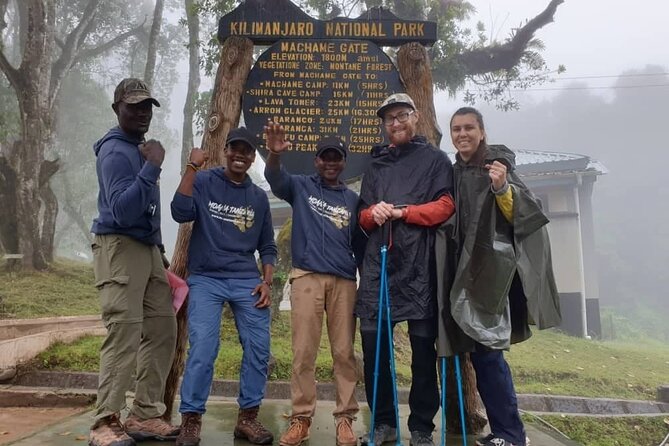
Your climb begins near Machame village and Machame Gate. The route rises from about 1,800 meters to 3,000 meters over 11 kilometers, with five to seven hours of walking.
The first section passes through rainforest, which makes a memorable opening to the climb. The air and plant life feel very different from the dry high country that comes later. You finish at Machame Camp, where the guide and support team help settle you in for your first night.
The distance is moderate on paper, but you are gaining 1,200 meters. Keep your pace slow from the start. A common mistake on a mountain is to treat the first day like a warm-up hike. Here, the first day is already part of your altitude plan.
Your included drinking water matters from the beginning. Meals are also included throughout the trek, with six breakfasts, six dinners, and seven lunches listed in the package. That means you do not need to organize food from camp to camp yourself.
Day 2: Machame Camp to Shira Camp
Day two leaves the rainforest behind and enters moorland. You climb from 3,000 meters to 3,850 meters, covering about nine kilometers in four to six hours.
The route crosses a valley and follows a steep, rocky ridge before reaching a river gorge. Expect a more open setting, rougher footing, and a stronger sense that you are moving into Kilimanjaro’s high country.
Shira Camp is an important stage because it puts you on the Shira Plateau. The gain in elevation is substantial, so this is another day for a patient pace. I would keep your daypack light and organized. You want water, warm layers, personal medication, toiletries, and any climbing gear you need close at hand.
The operator provides hot water for washing, which is a modest but welcome comfort after several hours on the trail. It is not a substitute for a shower, and personal toiletries remain your responsibility.
Day 3: Shira Plateau, Lava Tower, and Barranco
Day three is one of the most useful parts of the route for altitude adjustment. You walk about 10 kilometers for six to eight hours, rising only from roughly 3,850 meters to 3,950 meters by the time you sleep at Barranco Camp.
That small net gain hides a harder day. You head toward Kibo Peak and pass Lava Tower, also called the Sharks Tooth, at about 4,700 meters. The route continues toward the Arrow Glacier before dropping to Barranco.
The scenery shifts to semi-desert, with volcanic rock and sparse plant life replacing the thicker growth below. You get a close look at the mountain’s exposed upper slopes, and the route feels more demanding without yet requiring the summit effort.
This is the day when the seven-day schedule earns its keep. You spend time high, then sleep lower. I like this structure because it gives you a chance to notice how your body handles altitude before summit day.
The drawback is that day three can feel long. Six to eight hours of walking, high elevation, and a rocky trail may leave you tired when you reach camp. Save energy and do not let the excitement around Lava Tower push you into a fast pace.
A few more Moshi & Kilimanjaro days to compare
- Safari Serengeti And Ngorongoro
★ 5.0 · 288 reviews - Climbing Kilimanjaro – Machame Route
★ 5.0 · 170 reviews - Climbing Kilimanjaro through 7 days Machame Route
★ 5.0 · 151 reviews - Kilimanjaro climb, Lemosho Route (8-day)
★ 5.0 · 148 reviews
Day 4: Barranco Wall to Karanga Camp
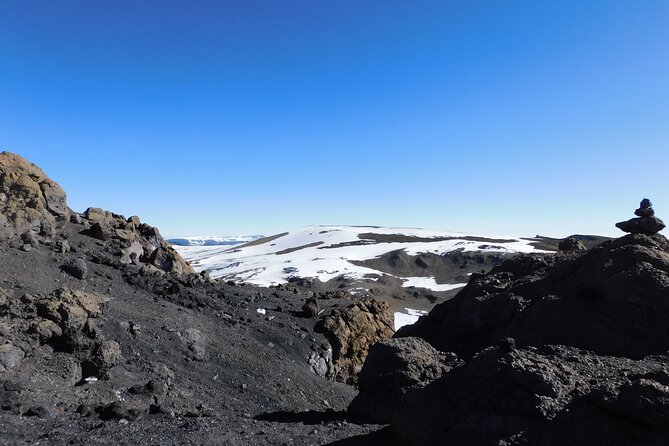
The fourth day is shorter by distance, only about five kilometers, with four to five hours of walking. You rise from approximately 3,950 meters to 4,040 meters and pass the Barranco Wall on the way to Karanga Valley.
This is one of the route’s more distinctive sections. The wall adds a short, steeper climbing element, so the day feels different from a standard uphill trail. You will need to pay attention to your footing and follow your guide’s instructions.
After the wall, the route continues toward Karanga Camp through alpine desert. The modest change in sleeping elevation does not mean the day is unimportant. You are positioning yourself for the high camp while giving your body another relatively controlled stage.
Karanga Camp is also a useful rest point before Barafu. Keep your evening simple: eat, drink, organize your summit clothing, and sleep. The next day is short in distance but brings you to the highest sleeping camp of the climb.
Day 5: Karanga Camp to Barafu Camp
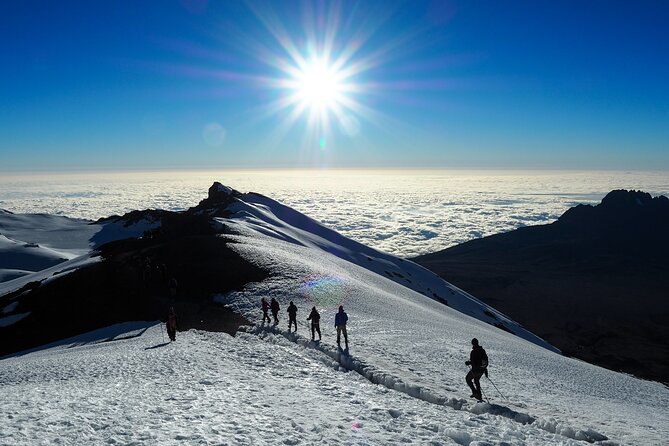
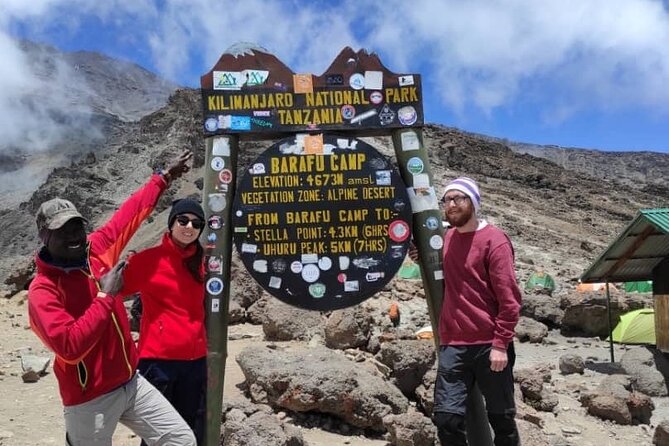
Day five covers only four kilometers and takes about four to five hours, but it climbs from 4,040 meters to 4,700 meters. You reach the junction with the Mweka Trail and continue upward to Barafu Hut.
At Barafu Camp, you have completed the southern circuit. The surroundings are alpine desert, with little shelter from the mountain environment. This is not a sightseeing afternoon. It is a preparation period for the summit attempt.
Your guide and support crew are especially important here. The package includes guides, a cook, and porters, along with drinking water and hot washing water. It also includes portable oxygen tanks, an oximeter, and a portable first-aid kit. These supplies do not remove the risks of high altitude, but they show that the climb is organized around safety as well as reaching the top.
Use the time at Barafu to check every layer and personal item. Your mountain clothing, toiletries, and personal climbing gear are not included. You should also be clear about what transport and accommodation you need in Moshi before and after the trek, since those costs are separate.
Day 6: Barafu Camp to Uhuru Peak and Mweka Hut
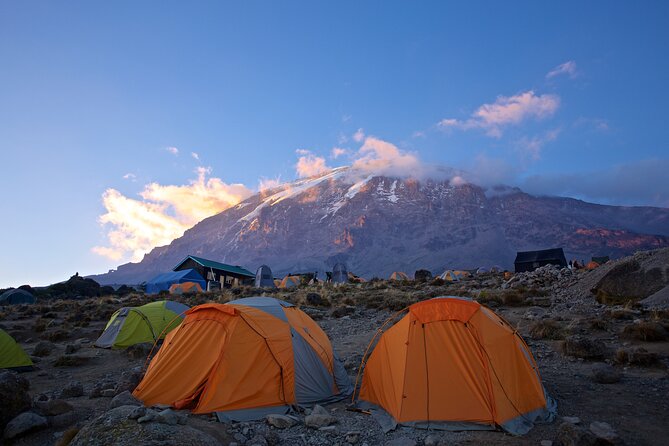
Summit day is the hard bargain of this experience. You begin at about 4,700 meters and climb to Uhuru Peak at 5,895 meters before descending all the way to Mweka Hut at roughly 3,100 meters.
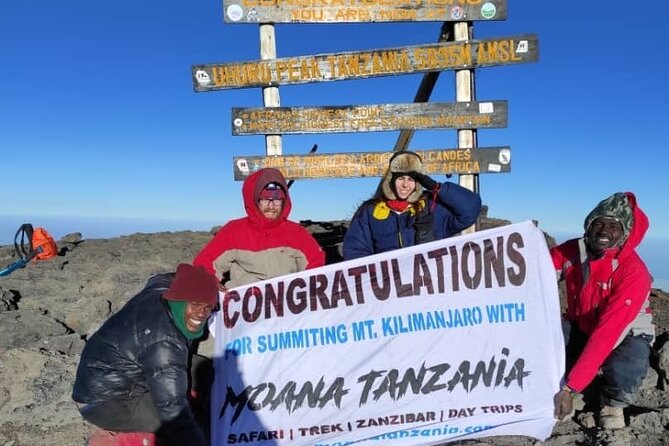
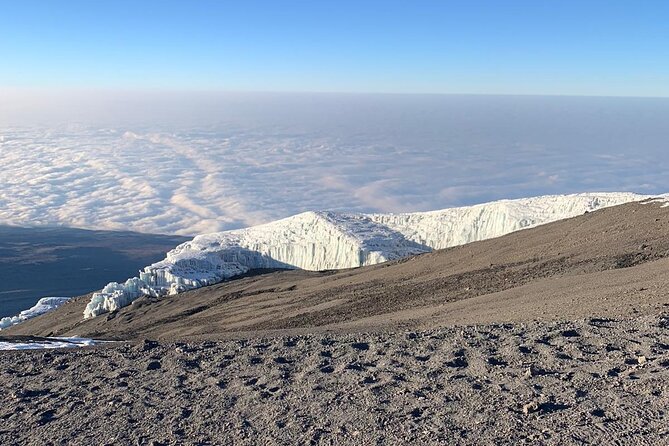
The route heads between the Rebmann and Ratzel glaciers toward Stella Point. From there, you continue to Uhuru Peak, the highest point on Kilimanjaro and the highest point in Africa.
The schedule gives five to seven hours for the climb and another five to seven hours for the descent. Exact timing depends on your pace and mountain conditions, but you should plan for a full, tiring day. The summit is not the end of the effort. The descent to Mweka Hut is still a major part of it.
At the top, you have time to celebrate and take pictures. Keep that moment practical as well as emotional. Cold, wind, fatigue, and altitude can make you eager to leave after your photographs.
The descent to Mweka Hut brings you back into a lower elevation zone, though your legs may feel the strain. This is where the support team, food, water, and first-aid supplies become particularly valuable.
Day 7: Mweka Hut to Mweka Gate
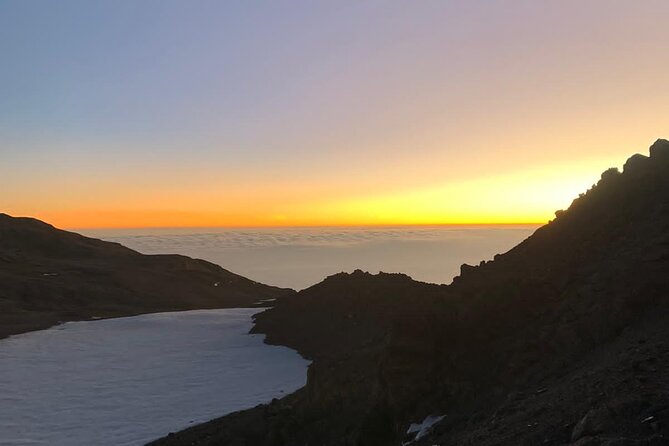
The final day takes three to four hours and descends from about 3,100 meters to 1,650 meters. You continue through forest to Mweka Gate.
After the stark upper mountain, the return to forest feels like a real change. The trail is still downhill, so tired knees may make this less effortless than it sounds. Take your time and keep your attention on the path.
The climb ends at Mweka Gate, where the mountain portion of the experience is complete. Private transportation is included, which simplifies the onward transfer after your descent. Accommodation in Moshi before and after the trek is not included, so you need to arrange that separately.
What the $2,700 price covers
At $2,700 per person, this is not a budget day hike. It is a supported, seven-day expedition with a full mountain crew and a considerable amount of equipment and logistics built into the cost.
The included services cover:
- Private transportation
- Accommodation fees on the mountain
- Rescue fees
- Guides, cook, and porters
- Drinking water throughout the trek
- Hot water for washing
- Portable oxygen tanks and an oximeter
- A portable first-aid kit
- Six breakfasts
- Six dinners
- Seven lunches
- GST and parking fees
I see the strongest value in the practical support. You are not carrying the full food and camp burden yourself, and rescue fees are already part of the price. Meals and water also reduce the number of details you need to manage while climbing.
The price does not include flights, travel insurance, Moshi accommodation before or after the mountain, laundry, toiletries, or personal mountain-climbing gear. Add those costs before deciding that the advertised price is your full trip budget.
Insurance deserves special attention. It is not included, and the mountain reaches 5,895 meters. You should check that your policy covers the planned activity and altitude before setting out.
The guide and porter team
The human side of this climb matters as much as the route. The package includes guides, a cook, and porters, and the available feedback gives specific names to look for: Onesmo and Isack.
One group credited a friendly crew and a positive atmosphere during a successful ascent, while another specifically climbed with Onesmo. That does not guarantee that either guide will lead your departure, so ask Moana Tanzania who is assigned to your group before you travel.
The maximum group size is 15 people. That is small enough to avoid the feel of a mass procession, though it is larger than a private climb for two or four people. If you want a particular guide or a smaller group, ask before paying.
Good communication with your guide is essential. Tell the guide early if you feel unwell, are struggling with the pace, or need a clothing adjustment. Portable oxygen and an oximeter are useful safety tools, but they are not a replacement for honest communication and careful decisions.
Food, water, washing, and camp comfort
The practical comforts here are basic but meaningful. Drinking water is provided throughout the trek, and hot water is available for washing. You will still need your own toiletries and personal gear.
Six breakfasts, six dinners, and seven lunches are included. Since the trek lasts about seven days, the food plan is built around the mountain schedule rather than restaurants or town stops.
Do not expect hotel comfort at camp. The supplied information confirms accommodation fees, but it does not describe room arrangements or specific facilities at each camp. Ask Moana Tanzania what sleeping setup and luggage limits apply to your departure.
The route includes public toilets and a good network of base camps according to the available trip details, but facilities become more basic as you climb. Pack for function, not style. Warm layers, personal medication, and easy-to-reach toiletries will matter more than extra clothing.
Fitness, altitude, and the real difficulty
You need a strong physical fitness level for this activity. The challenge is not just the total distance. It is the repeated elevation gain, rocky ground, high camps, cold conditions near the summit, and the long summit descent.
The daily distances range from four to 11 kilometers, but hours on the trail range from three to eight before summit day. Day six is the key test, with up to 14 hours of listed walking when the ascent and descent are combined.
I would choose this trip if you are comfortable with long uphill walks and can stay patient when progress feels slow. I would not choose it if you are looking for a relaxed scenic holiday with a short climb at the end.
The route offers several different difficulty levels, including short climbing sections around Barranco Wall and the higher volcanic terrain. That variety keeps the week interesting, but it also means you should not judge the whole trip by the manageable first day.
Who should book this Kilimanjaro climb?
This trip suits you if you want:
- A full seven-day attempt at Uhuru Peak
- A route with several climate zones and changing scenery
- A supported climb with guides, porters, a cook, water, meals, and rescue fees
- A group experience with a maximum of 15 people
- A structured route through Machame, Shira, Barranco, Karanga, Barafu, and Mweka
It may not suit you if you want a short itinerary, private luxury, or a low total trip cost after flights and Moshi hotels are added. It also requires careful planning for personal gear, insurance, and physical preparation.
Moana Tanzania has received a top overall rating from five recorded pieces of feedback, with particular praise for organization, the crew’s friendly manner, and successful summit attempts. That is encouraging, but you should still confirm your assigned guide, group size, equipment requirements, and Moshi arrangements directly.
Booking, weather, and cancellation details
Pickup is offered, and mobile tickets are available. Confirmation is normally received at booking unless you book within one day of departure, in which case confirmation is subject to availability.
The experience operates from Monday through Sunday between 7:00 AM and 11:00 AM during the stated operating period, from October 7, 2021, through June 18, 2026. Confirm the exact start time and pickup point before departure.
The trip requires suitable weather. If poor weather forces cancellation, you are offered another date or a full refund. For your own cancellation, six full days or more before the start time brings a full refund. Cancellation two to six full days before departure brings a 50 percent refund, while cancellation less than two full days before departure is nonrefundable.
Should you book it?
I would book this Machame Route climb if you want a serious, well-supported seven-day attempt at Kilimanjaro and value the fact that food, water, porters, rescue fees, oxygen, and first-aid equipment are included.
The strongest reasons to choose it are the route’s changing scenery, the useful high point at Lava Tower before Barranco, and the broad support package. The main caution is the summit day. You need to be ready for a long climb from Barafu, a summit at 5,895 meters, and a hard descent to Mweka Hut.
Before booking, confirm your guide, group size, Moshi accommodation, personal gear list, insurance requirements, and the exact summit-day plan. If those details suit you and you have the fitness for the mountain, this offers a practical route to Uhuru Peak without stripping away the demanding parts that make Kilimanjaro such a major achievement.
FAQ
How long is the Machame Route experience?
The climb lasts approximately seven days, with mountain stages from Machame Gate to Mweka Gate.
What is the highest point reached?
The summit is Uhuru Peak at 5,895 meters.
What habitats will I pass through?
You pass through rainforest, moorland, semi-desert, alpine desert, icy summit terrain, and forest during the descent.
Are meals included?
Yes. The package includes six breakfasts, six dinners, and seven lunches.
Is drinking water provided?
Yes. Drinking water is provided throughout the trek, and hot water is provided for washing.
Is mountain accommodation included?
Yes. Accommodation fees on the mountain are included. Accommodation in Moshi before and after the trek is not included.
How large can the group be?
The maximum group size is 15 people.
What happens if bad weather cancels the climb?
If poor weather causes cancellation, you are offered a different date or a full refund.
Newly listed around Moshi & Kilimanjaro
- Climb Mount Kilimanjaro: 7 Days Machame Route★ 5.0 · 3 reviews
- 6 Days Mount Kilimanjaro Climbing via Rongai Route★ 5.0 · 3 reviews
- Mt. Kilimanjaro Day Hiking★ 5.0 · 3 reviews
- Explore 1 day Ngorongoro Crater Budget Group Safari from Arusha★ 5.0 · 3 reviews
- Chemka (Kikuletwa) Hot Springs, Tanzania★ 5.0 · 3 reviews
- Guided City tour of Moshi★ 4.3 · 3 reviews
- 8 Day Tanzania Family Safari★ 5.0 · 3 reviews
- Serengeti Safari with Sirikwa Travel★ 5.0 · 3 reviews
Kilimanjaro Climbs, compared.








Browse the lists this tour appears in