
Reviewed · KILIMANJARO CLIMBS
Mount Kilimanjaro – Lemosho Route
Kilimanjaro’s Lemosho Route gives you a full high-altitude journey in seven days, beginning in rainforest and ending at Uhuru Peak, 5,895 meters above sea level. The route crosses several climate zones, includes the dramatic Barranco Wall, and uses the southern circuit before the summit push.
I like the route’s gradual rise from 2,400 meters to the summit, and I like that the price includes the working team you need on a serious mountain trip: guides, porters, a cook, meals, water, oxygen, and first-aid equipment. The food also receives strong praise, with vegetarian meals available when requested.
The main caution is simple: seven days is demanding. You need strong physical fitness, and the summit day involves a climb from Barafu Camp at 4,700 meters to Uhuru Peak, followed by a long descent to Mweka Hut. This is not a casual walk in a scenic park.
Key Points Before You Book
- Londorossi Gate begins the route in rainforest, with a chance to watch for wildlife before the trail climbs into higher country.
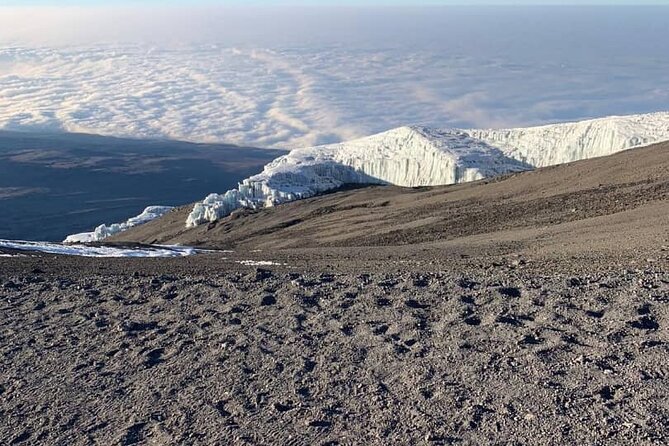
- The Lemosho route crosses rainforest, heath, moorland, alpine desert, and icy summit terrain in one compact trip.
- The Barranco Wall is the route’s most memorable hands-on section, followed by the quieter Karanga Valley.
- The price includes a full mountain crew, plus six breakfasts, six dinners, seven lunches, drinking water, hot washing water, oxygen, and a portable first-aid kit.
- The summit day is long and serious, with five to seven hours up and another five to seven hours down.
- Groups can include up to 15 people, so you get organized support but not necessarily a private, quiet trek.
Why the Lemosho Route Works So Well
Kilimanjaro is Africa’s highest mountain and the world’s highest free-standing mountain. Unlike a technical climbing expedition, this route is a trekking ascent, but the altitude makes it physically serious. You walk for several days, sleep at increasing elevations, and finish with a night climb toward the summit.
Lemosho is appealing because the first days do not rush straight upward. You begin at Londorossi Gate, around 2,400 meters, then spend the first night at Mti Mkubwa at 2,800 meters. Day two reaches Shira 2 Camp at 3,750 meters, and day three climbs higher before dropping slightly to Barranco Camp.
That pattern matters. The itinerary gives you time to move from forest into open high country before the summit attempt. It does not remove the risk of altitude problems, but it provides a more measured progression than a very short Kilimanjaro schedule.
The route also changes scenery often. You begin under forest canopy, walk through heath and moorland, cross dry alpine desert, and finish among ice and rock near the summit. If you want the mountain to feel like a seven-day journey rather than a quick ascent, this variety is a major strength.
More Kilimanjaro routes:
- Kilimanjaro climb by Lemosho Route (7-day)
★ 5.0 · 651 reviews - Kilimanjaro climb, Machame Route (7-day)
★ 5.0 · 262 reviews - Kilimanjaro Climbing Lemosho Route 8 Days.
★ 5.0 · 186 reviews
What the $2,900 Price Includes
The listed cost is $2,900 per person. That is a large amount, but it covers more than trail access. Private transportation, fees and taxes, guides, porters, a cook, drinking water, hot water for washing, oxygen tanks, an oxygen meter, a first-aid kit, and meals are all included.
You receive seven lunches, six breakfasts, and six dinners. That is useful because food on a mountain trek is not a small detail. You cannot simply stop at a café when you get hungry, so a dedicated cook is part of the practical value of the package. The meal service has been praised for being fresh, plentiful, and adaptable, including vegetarian options.
The support team is another large part of the cost. The company is run by Gea, and David is named as the chef. Other team members associated with the mountain operation include Gasper, Robson, Salim, Herbert, and Gewa. You should confirm each person’s role before departure, but the package clearly relies on a substantial crew rather than a lone guide.
The price does not include accommodation in Moshi before or after the climb. You also pay separately for flights, travel insurance, laundry, personal items, toiletries, climbing gear, and tips for the guides, cook, and porters.
That last point deserves attention. Tips are not included, so you should budget for them before you arrive. The exact amount is not stated here, and you should ask Moana Tanzania for current guidance. You also need to bring or rent suitable mountain clothing and equipment.
Day 1: Londorossi Gate to Mti Mkubwa
The hike begins at Londorossi Gate, moving from about 2,400 meters to 2,800 meters. The distance is six kilometers, with three to four hours of walking through rainforest.
This is a gentle opening by Kilimanjaro standards. The forest gives you shade and a softer start, while the trail introduces the first of the mountain’s major habitat changes. Keep your eyes open for wildlife, though no specific sightings are guaranteed.
Mti Mkubwa is the first overnight camp. The short walking time makes this day useful for settling into the group, checking your gear, and finding a comfortable walking rhythm. You should not treat the easy start as proof that the whole climb will be easy. The real strain comes later, as both altitude and walking hours increase.
Day 2: Shira Ridge and Shira 2 Camp
Day two covers 14 kilometers and takes seven to eight hours. You climb from 2,800 meters to 3,750 meters, leaving the rainforest for heath and moorland.
This is a longer day, and you will notice the route opening up around you. The change from forest to high moorland is one of the satisfying parts of the Lemosho experience. You are no longer simply walking uphill through trees. The mountain begins to feel broad and exposed.
The route reaches Shira Ridge before continuing to Shira 2 Camp. At this point, pacing matters. Walk steadily, drink the provided water, and avoid turning the day into a race. The camp’s altitude is already high enough that some people may feel the effects.
The itinerary gives you a 950-meter gain on this day. That is a substantial increase, especially after seven to eight hours on foot. Your guide’s support and the group’s pace will matter here. A maximum group size of 15 allows for a shared experience, but the pace may not suit everyone equally.
A few more Moshi & Kilimanjaro days to compare
- Safari Serengeti And Ngorongoro
★ 5.0 · 288 reviews - Climbing Kilimanjaro – Machame Route
★ 5.0 · 170 reviews - Climbing Kilimanjaro through 7 days Machame Route
★ 5.0 · 151 reviews - Kilimanjaro climb, Lemosho Route (8-day)
★ 5.0 · 148 reviews
Day 3: Lava Tower, Arrow Glacier, and Barranco Camp
Day three is one of the route’s most valuable days for acclimatization. You walk 10 kilometers for six to eight hours, climbing from 3,750 meters to 3,950 meters through alpine desert.
The trail heads toward Kibo, the volcanic cone that forms Kilimanjaro’s summit area, then reaches Lava Tower, also called Sharkstooth. You pass the Arrow Glacier before continuing to Barranco Camp.
The numbers tell an interesting story. You climb to a much higher point during the day, then finish at 3,950 meters. That high point and lower sleeping altitude are useful for helping your body adjust, though the itinerary does not provide a detailed acclimatization guarantee.
This is also a demanding day because of the time on the trail. Alpine desert offers little shelter, and the surroundings can feel stark compared with the forest below. Bring protection from sun and cold, and listen closely to the guides if you begin to feel unwell.
Barranco Camp is well placed for the next day’s famous obstacle. You finish close to the Barranco Wall, which makes the fourth morning feel like a clear new chapter in the climb.
Day 4: The Barranco Wall and Karanga Valley
Day four is shorter, covering five kilometers in four to five hours. You climb from 3,950 meters to 4,040 meters through alpine desert, passing the Barranco Wall before reaching Karanga Valley and Karanga Camp.
The modest elevation gain can be misleading. This is not simply a rest day. The Barranco Wall adds a more physical element to the route, with hands-on movement and careful footing. The itinerary does not describe the wall in technical terms, so you should ask the operator about current trail conditions and what equipment, if any, is expected.
The short distance gives you more time to handle the wall carefully and settle into camp. I like this part of the schedule because it avoids stacking another huge mileage day immediately before the summit preparation. You still need energy, but you are not spending the entire day on a long traverse.
Karanga Camp is at 4,040 meters, so the air remains thin. Keep your expectations realistic. A shorter day can still feel hard at this altitude, especially if you had headaches, poor sleep, or low appetite the night before.
Day 5: Karanga Camp to Barafu Camp
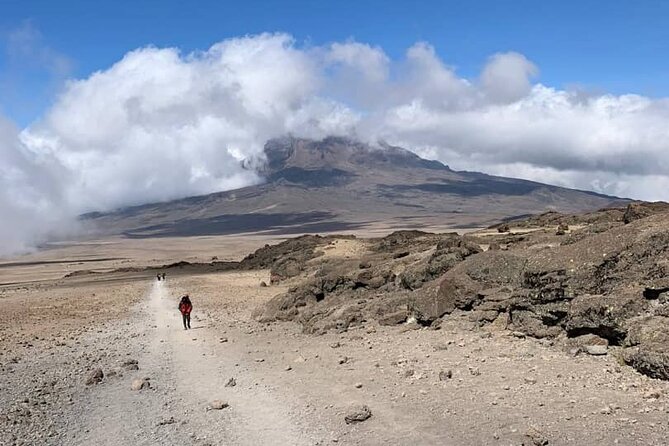
Day five covers only four kilometers but climbs from 4,040 meters to 4,700 meters. The walking time is four to five hours, and the terrain remains alpine desert.
You leave Karanga in the morning and reach the junction connecting with the Mweka Trail. From there, you continue to Barafu Hut and Barafu Camp. At this point, you have completed the southern circuit and are in position for the summit attempt.
Barafu is not the place for a relaxed sightseeing stop. It is the staging point for the hardest part of the trip. You rest, eat, organize your clothing and equipment, and prepare for the summit schedule. The itinerary does not specify the exact departure time, so ask for that before the climb.
The short distance is helpful, but the 660-meter climb is still serious. Your body has been working at altitude for several days, and Barafu sits high enough for sleep and appetite to become difficult. Follow the guides’ instructions, keep drinking, and make sure your headlamp, warm layers, gloves, and personal gear are ready before resting.
Day 6: Uhuru Peak and the Long Descent
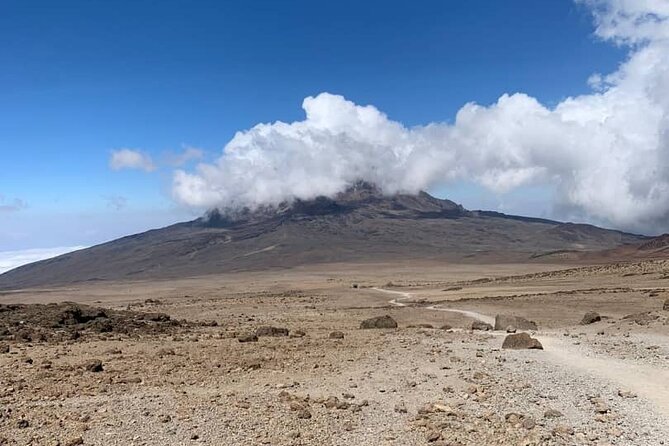
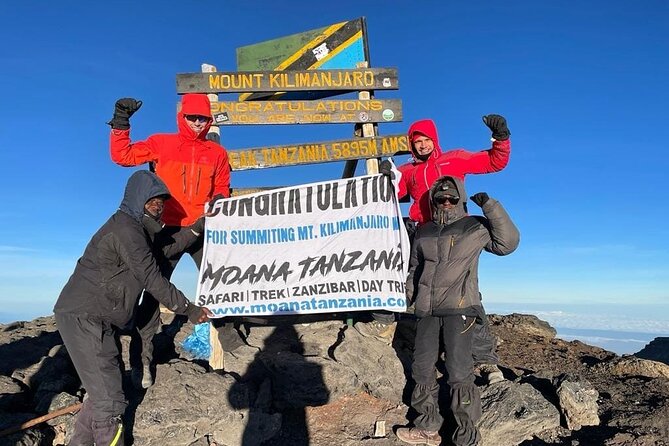
Summit day begins at 4,700 meters and aims for Uhuru Peak at 5,895 meters. The stated hiking time is five to seven hours up and another five to seven hours down, with a final overnight at Mweka Hut at 3,100 meters.
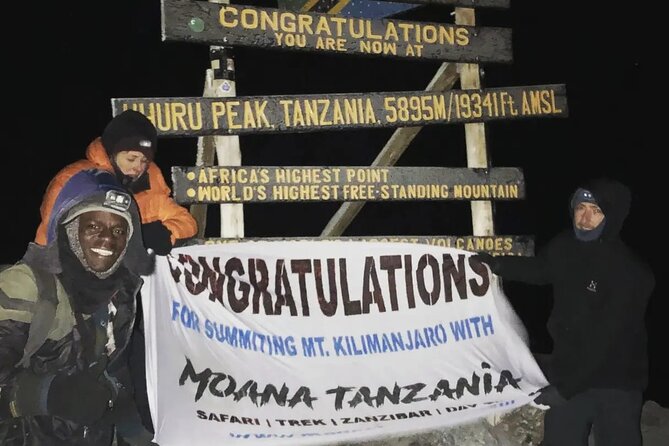
You start between the Rebmann and Ratzell glaciers, then climb toward Stella Point. From there, you continue to Uhuru Peak, the highest point in Africa. Time is allowed for photographs and celebration, but do not linger too long in the cold and thin air.
This is the day that defines the trip, and it is also the day that demands the most honesty from you. The ascent is long, the altitude is severe, and the descent is not a quick stroll back to camp. You may reach the summit tired, cold, and ready to stop, yet still have hours of downhill walking ahead.
Moana includes portable oxygen tanks and an oxygen meter, along with a first-aid kit. Those items are reassuring, but they are not a substitute for fitness, careful pacing, or medical judgment. Ask how the team handles altitude symptoms and emergency descent procedures before setting out.
Reaching Mweka Hut at 3,100 meters is a welcome change after the summit. You sleep lower than Barafu and begin the recovery process, though your legs may still be worn out from the full day.
Day 7: Mweka Hut to Mweka Gate
The last day drops from 3,100 meters to 1,650 meters. You walk three to four hours through forest before reaching Mweka Gate.
After the stark upper mountain, the return to forest brings shade, thicker air, and a clear sense that the climb is finished. The short final hike is manageable for most people who have completed summit day, but tired knees can make downhill walking surprisingly uncomfortable.
The activity ends back at the meeting point in Moshi. Private transportation is included, and pickup is offered. Confirm the exact pickup details and return timing when you book, especially if you have a flight or a separate Moshi hotel reservation.
Food, Water, and Camp Support
The package includes drinking water and hot water for washing. That is basic but valuable mountain comfort. Hot washing water will not replace a shower, but it can make a major difference after a long day in dust, cold, or sweat.
The cook is David, and the food has been praised for being fresh, generous, and suited to dietary needs such as vegetarian meals. You should still state your requirements before departure rather than waiting until the first camp.
Guides and porters are included, and the team is described as caring, encouraging, flexible, and serious about safety. Names connected with the operation include Gea, David, Gasper, Robson, Salim, Herbert, and Gewa. Since the available information does not assign every name a specific job, confirm who your lead guide and chef will be.
You should pack personal toiletries, mountain clothing, and all required climbing gear. The operator does not provide personal gear under this price, and laundry is not included.
Who Should Choose This Climb?
This trek suits you if you want a full seven-day Kilimanjaro route with a changing environment and a staffed support system. It is a good match for people who value organized meals, porters, transport, safety equipment, and guide support rather than trying to arrange each piece separately.
You need strong physical fitness. The itinerary includes several days of six to eight hours, followed by a summit day of up to 14 hours of walking. You should be comfortable with long uphill and downhill days before booking.
The trip is less suitable if you want a small, private group. The maximum is 15 people, which is still manageable, but the experience may feel more communal than personal. It is also not ideal if you have a tight budget after adding Moshi accommodation, flights, insurance, gear, and gratuities.
The excellent rating record and full recommendation rate suggest a reliable level of service, especially around food, encouragement, organization, and care. Still, ratings cannot predict how your body will respond to altitude. That remains the central uncertainty on any Kilimanjaro climb.
Booking, Weather, and Cancellation Details
The meeting point is Moshi, Tanzania. The stated operating hours are Monday through Sunday from 7:00 AM to 11:00 AM, for dates listed through June 18, 2026. Confirmation is normally provided at booking, although bookings made within one day of departure are confirmed as soon as possible and remain subject to availability.
You can cancel at least six full days before the start time for a full refund. Cancellation two to six full days ahead receives a 50 percent refund. Less than two full days ahead is nonrefundable, and late changes are not accepted. The cut-off uses local time.
The trip requires good weather. If poor weather causes cancellation, you are offered another date or a full refund. Ask how weather decisions are made, since mountain conditions can affect the summit plan even when the lower slopes look fine.
Should You Book the Moana Tanzania Lemosho Route?
I would choose this trip if you want a well-supported Lemosho climb and can handle the physical demands of a seven-day schedule. The strongest reasons are the route’s changing habitats, the gradual approach through Shira and Barranco, the included mountain crew, and the practical safety provisions.
The $2,900 cost offers solid value because it includes transport, permits and fees, staff, food, water, washing water, oxygen, and first aid. Your real budget will be higher once you add Moshi lodging, insurance, personal gear, flights, and tips.
Book it if you are fit, flexible, and ready for a long summit day. Before paying, confirm the guide team, equipment expectations, accommodation arrangements in Moshi, dietary needs, tip guidance, and the exact summit schedule. If you want a shorter or easier mountain outing, this is not the right choice. If you want to give yourself seven days to cross Kilimanjaro’s major zones with a professional support team, it is a strong option.
FAQ
Where does the Kilimanjaro Lemosho Route trip start?
The trek starts in Moshi, Tanzania. Pickup is offered, and the activity ends back at the meeting point.
How long does the trek last?
The trip lasts approximately seven days.
What is the highest point reached?
The summit is Uhuru Peak at 5,895 meters.
What fitness level do I need?
You should have a strong physical fitness level. The itinerary includes several long hiking days and a summit day with five to seven hours of walking up and five to seven hours down.
How large can the group be?
The maximum group size is 15 people.
Are guides, porters, and a cook included?
Yes. The price includes guides, porters, and a cook.
Are meals included?
Yes. The package includes seven lunches, six breakfasts, and six dinners.
Is drinking water provided?
Yes. Drinking water and hot water for washing are included.
What happens if bad weather cancels the trek?
If poor weather causes cancellation, you are offered a different date or a full refund.
Newly listed around Moshi & Kilimanjaro
- Climb Mount Kilimanjaro: 7 Days Machame Route★ 5.0 · 3 reviews
- 6 Days Mount Kilimanjaro Climbing via Rongai Route★ 5.0 · 3 reviews
- Explore 1 day Ngorongoro Crater Budget Group Safari from Arusha★ 5.0 · 3 reviews
- Mt. Kilimanjaro Day Hiking★ 5.0 · 3 reviews
- Chemka (Kikuletwa) Hot Springs, Tanzania★ 5.0 · 3 reviews
- Guided City tour of Moshi★ 4.3 · 3 reviews
- 8 Day Tanzania Family Safari★ 5.0 · 3 reviews
- Serengeti Safari with Sirikwa Travel★ 5.0 · 3 reviews
Kilimanjaro Climbs, compared.








Browse the lists this tour appears in