
Reviewed · MOSHI & KILIMANJARO TOURS
Moshi town 1 day tour
Moshi reveals itself best through its everyday places: the bus stand, produce markets, fish stalls, farms, and old railway station. This tour takes you beyond the hotel strip and into the working town, with guide Thomas explaining local customs, food, transport, and daily life as you go.
I like the direct contact with Moshi residents, especially at the central, Mbuyuni, and Manyema markets. I also like the range of stops: you move from town streets to banana and rice farms, then finish with local cultural and railway stories rather than spending the whole day in shops.
The main consideration is the price. At $1,000 per person, this is costly for a seven-hour town tour, even with hotel pickup, drop-off, a guide, and a group capped at 10 people. The value depends heavily on how much you want personal guidance and an introduction to everyday Moshi.
Key points to know before you book
- Thomas is the guide to request: He is a former Kilimanjaro guide who now leads town excursions and speaks English.
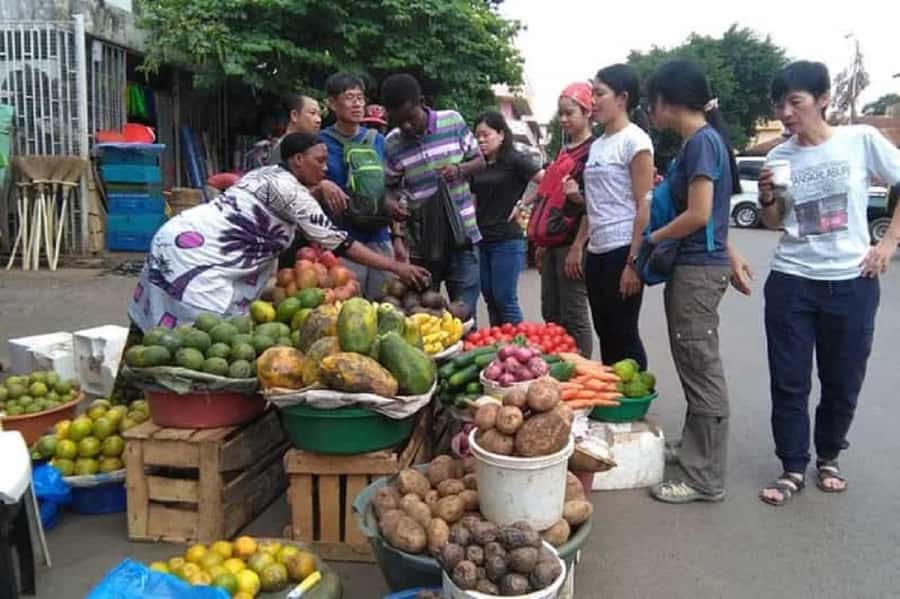
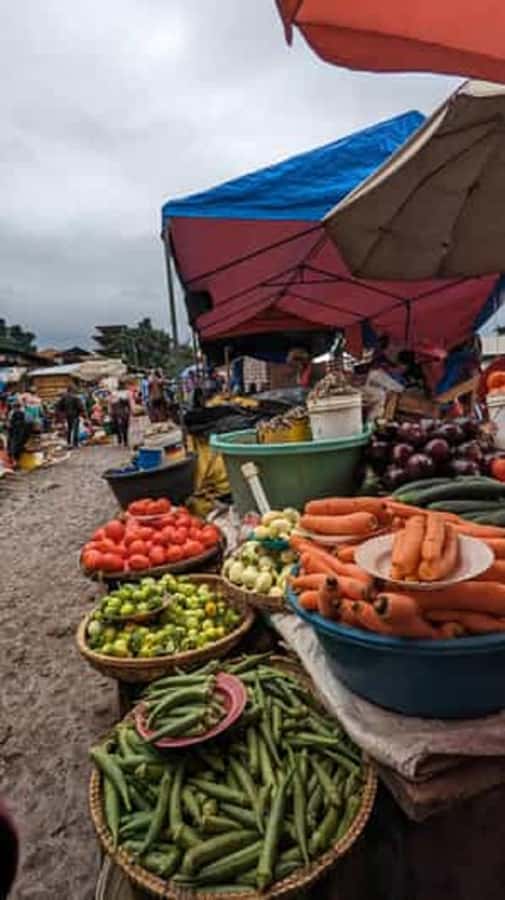
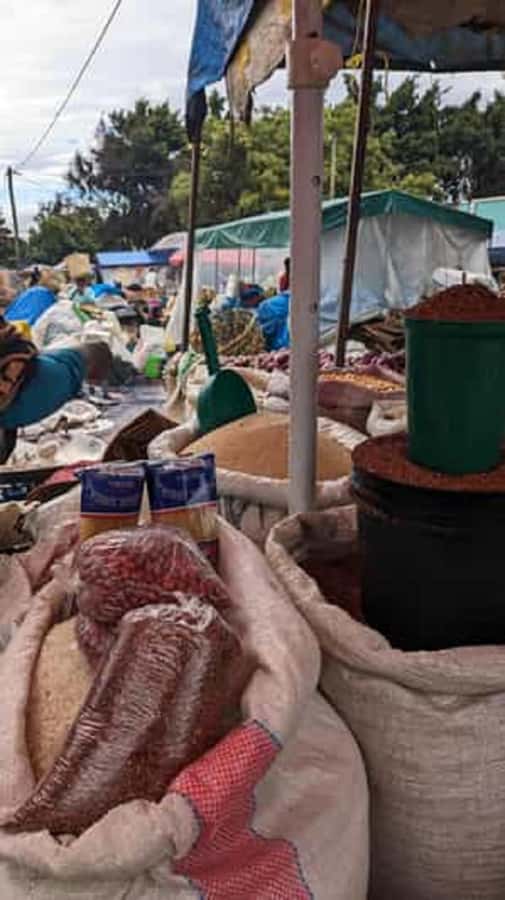
- The markets are the heart of the day: Expect vegetables, cereal crops, tomatoes, fish, local foods, and ordinary shopping rather than a staged cultural show.
- You see working farmland: Banana cultivation and irrigated rice fields at Mabogini add a rural side to the town visit.
- The tour involves walking: Some roads are dusty, and the day includes walking through markets and neighborhoods.
- It suits a spare day before or after a trek: You can fill a recovery or waiting day with a closer look at Moshi.
- The group is small: A maximum of 10 people makes questions and market guidance easier.
Why this Moshi tour feels different from a quick city stop
Many visitors see Moshi as a base for Mount Kilimanjaro, then leave without learning much about the town itself. This outing gives you a fuller picture. You watch people buy food, see how transport links the town to other places, and walk through farming areas that support local households.
The strongest part is the human contact. Thomas is described as well known around town, and the day can include introductions to local people, explanations of customs, and conversations about ordinary life. He has also been praised for helping solo visitors feel secure while crossing streets and moving through busy areas.
I would not book this expecting a polished sightseeing circuit with grand monuments. Moshi’s appeal here is practical and local. You may walk on dusty roads, pass through poorer neighborhoods, and encounter places that look modest rather than picture-perfect. That is also the point.
The experience is especially useful if you have one open day before a Kilimanjaro climb, after descending from the mountain, or between a safari and a Zanzibar holiday. It gives you something purposeful to do without committing to another long excursion.
More day trips in Moshi & Kilimanjaro:
- 1-Day Moshi Villages bike tour
★ 5.0 · 59 reviews - Best Kilimanjaro hiking day trip tour with Kilinge Adventures
★ 4.5 · 54 reviews - Chagga Villages in Mount Kilimanjaro Cycling Day Trip
★ 5.0 · 42 reviews
Starting at 8:00 AM from your hotel
Pickup is scheduled for 8:00 AM at your hotel, with Keys Hotel listed as the starting point. The tour ends with a return to the hotel, so you do not need to arrange separate transport back into town.
The seven-hour schedule is busy. Most listed stops receive about 30 minutes, although the detailed description gives slightly different timing at a few points. Treat the schedule as a useful outline rather than a minute-by-minute promise. Markets, conversations, and walking can naturally take longer or shorter.
The tour is offered in English with a live guide. A small group of no more than 10 participants is a practical advantage here. In a market, a small group can stay together more easily, and you can ask about food, prices, customs, or farming without competing with a coach party.
Moshi Bus Stand: starting with daily movement
The Moshi Bus Stand is one of the first stops, scheduled for around 8:30 AM. Here you see the different forms of transport that carry people into and out of town. The stop includes time for photographs, a guided visit, and walking.
This is a useful first lesson because transport explains how Moshi connects to the surrounding area. You are not just looking at vehicles. You are seeing one of the places where town life, rural trade, work, and family visits meet.
The stop is not presented as a formal museum or architectural sight. Its value comes from observation and explanation. Thomas can help you understand what you are seeing and answer questions that would be hard to resolve on your own.
Keep your expectations practical. This is a working bus terminal, not a carefully arranged attraction. Noise, traffic, and crowds may be part of the scene. That makes comfortable shoes and attention around vehicles sensible.
Central Market: produce, grains, and local shopping
Around 9:30 AM, the tour moves to Moshi’s central market. You can expect stalls selling vegetables, cereal crops, and other household goods. This is one of the best places to see how food moves from growers and sellers to local kitchens.
The market visit works because it focuses on ordinary transactions. You are not simply shown a row of souvenir stalls. You see the ingredients and products that people use every day, while Thomas explains what you are looking at and how local customs shape the visit.
Food sampling may be included during the market walk, based on the experience described by the guide’s past groups. Still, the exact items are not fixed in the tour details, so you should ask Thomas what is suitable before trying anything unfamiliar.
The market can feel intense if you have just finished a mountain trek and are still tired. Tell the guide if you need a slower pace. The itinerary has several stops, and you will get more from the market if you have enough energy to look, ask questions, and walk carefully.
A few more Moshi & Kilimanjaro days to compare
- Kilimanjaro climb by Lemosho Route (7-day)
★ 5.0 · 651 reviews - Safari Serengeti And Ngorongoro
★ 5.0 · 288 reviews - Kilimanjaro climb, Machame Route (7-day)
★ 5.0 · 262 reviews - Kilimanjaro Climbing Lemosho Route 8 Days.
★ 5.0 · 186 reviews
Mbuyuni Market: a closer look at farm trade
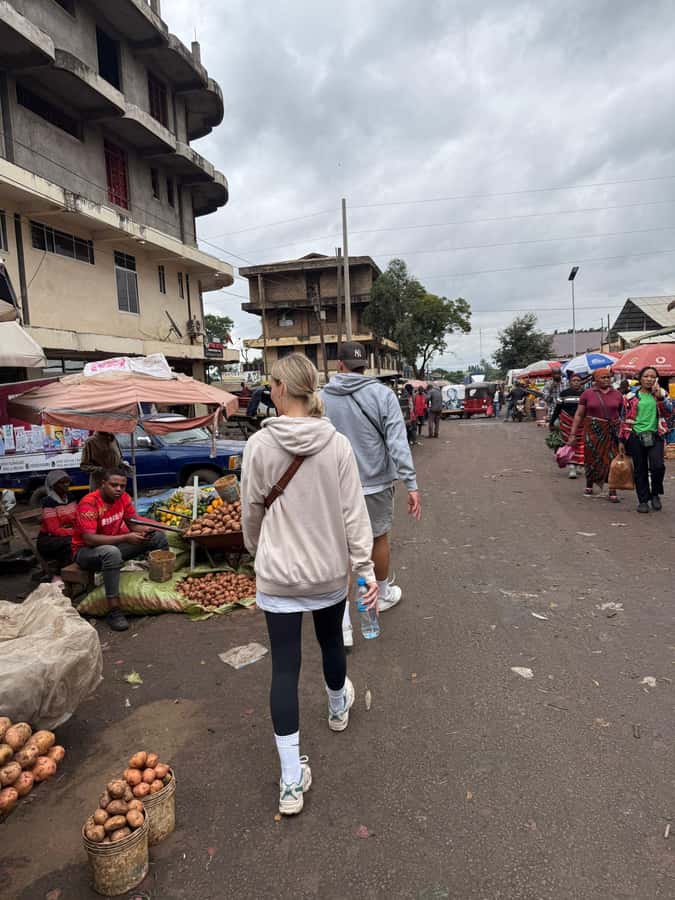
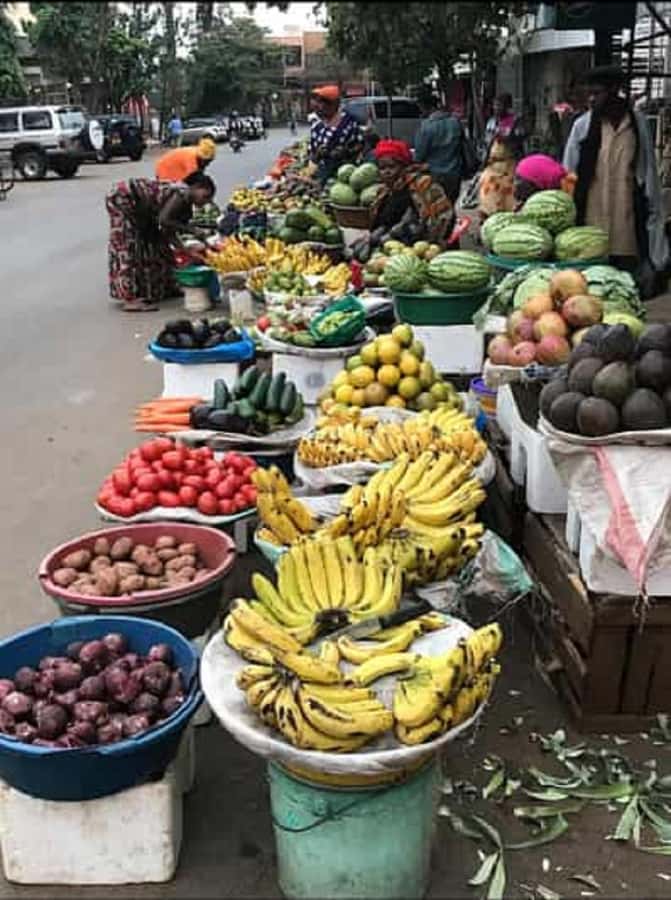
At about 10:30 AM, Mbuyuni Market offers another view of local commerce. Women selling tomatoes and other produce on the ground are specifically part of the scene described for this stop.
The contrast with the central market is useful. Instead of seeing only an established town market, you get a sense of how farmers and small sellers bring goods directly into public spaces. The simple layout may tell you as much about the local economy as the products themselves.
I would treat this as a place for respectful observation rather than aggressive photography. Ask before taking close-up pictures of sellers or their goods. A guide who knows the area can help you handle these encounters politely.
The market also adds texture to the farming stops later in the day. After seeing produce for sale, you get a better reason to pay attention when the tour explains how bananas and rice are grown.
Manyema Market and the local fish trade

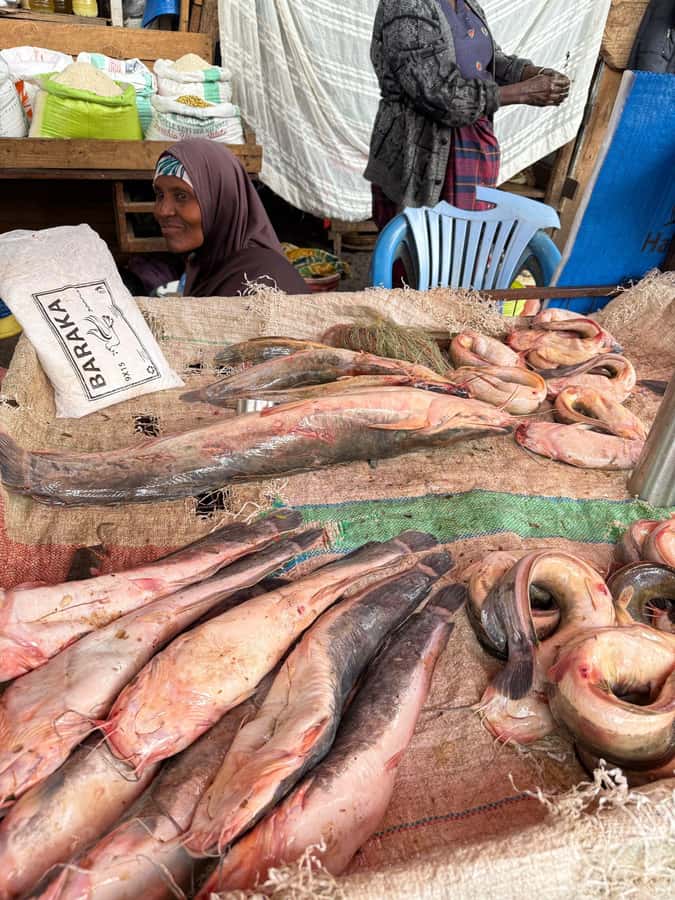
Manyema Market follows at about 11:30 AM. Here, the guide explains the name Manyema and gives a short account of its local connection. You also see different types of fish sold at the market.
This is a compact stop, but it adds another part of the food system. The earlier markets focus mainly on vegetables and crops. Manyema shows how fish enters the daily market and how sellers present it to local buyers.
The stop may not suit everyone equally. Fish markets can have strong smells and wet or uneven surfaces, and the tour information does not promise a polished indoor setting. If you are sensitive to those conditions, this is worth keeping in mind.
For me, that ordinary quality is valuable. The tour does not smooth away the less tidy parts of town. You see food as it is sold locally, not just prepared for outsiders in a restaurant.
Coffee Union Cafe and Moshi’s coffee connection
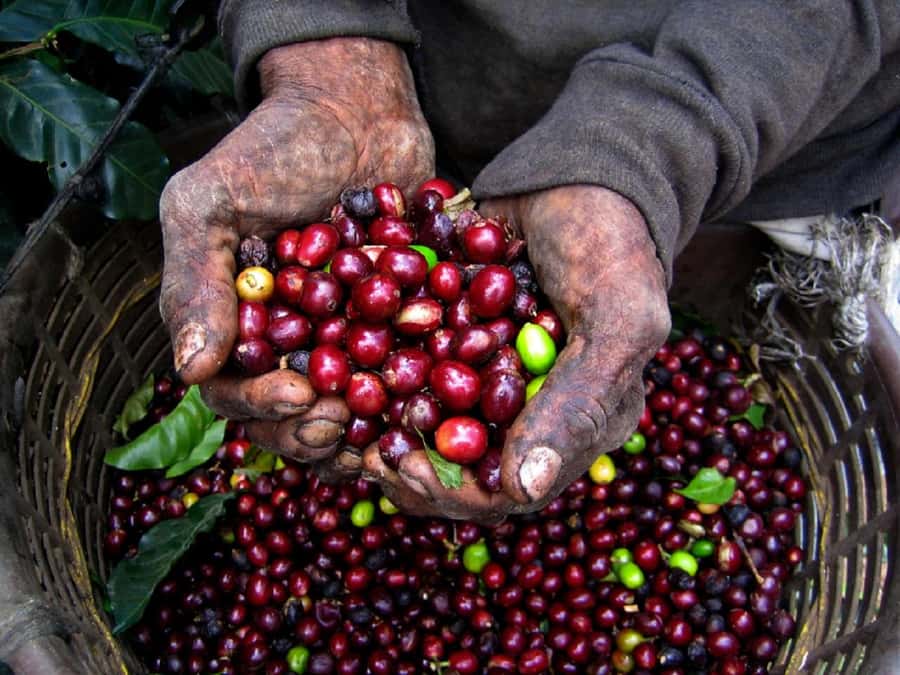
Coffee Union Cafe is included as a stop for a guided visit and sightseeing. The detailed schedule does not give a separate time for it, but it appears among the half-hour visits in the wider route.
Coffee is an important part of the Kilimanjaro area’s identity, and this stop gives you a chance to connect the drink with the region around Moshi. You can ask about local coffee and how it fits into the area’s farming and trading life.
The exact format is not specified. It may be a short café visit and explanation rather than a full coffee workshop, so do not book it expecting a long roasting demonstration unless the operator confirms that in advance.
Still, it can be a welcome pause between market walks. After several active stops, a café setting gives you a chance to sit, listen, and compare what you have seen so far.
Old Railway Station and the story behind Moshi
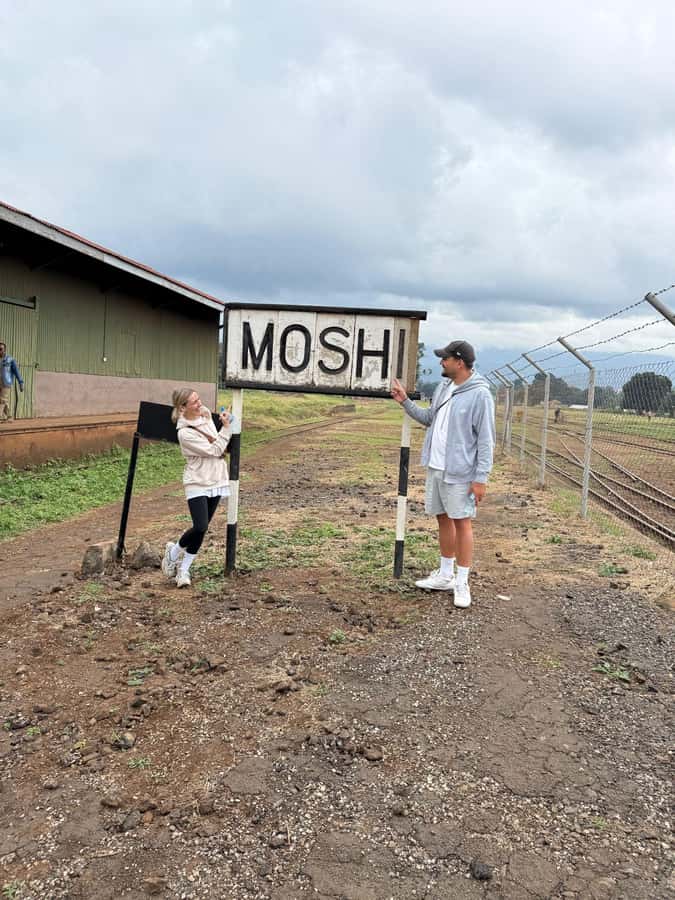
The Old Railway Station is one of the tour’s historical stops. The guide explains the story of the name Moshi and its connection with a village called Old Moshi.
This is where the day gains a stronger sense of time and place. The railway station is not just a photo backdrop. Its story helps connect present-day Moshi with older routes, settlements, and the growth of the town.
The station is described as a historical area rather than a restored attraction with extensive displays. Expect guided storytelling and sightseeing, not a large museum visit. That makes the guide especially important. Without explanation, an old station can be easy to overlook.
The itinerary also includes Old Moshi Cultural Tourism Enterprise, with a photo stop, visit, walk, and guided explanation. Together, these stops give the day a local cultural frame instead of leaving you with only market impressions.
Banana farms and the work behind familiar food
The route includes a banana plant farm at about 1:30 PM. Here you learn about the history of bananas and how they are cultivated.
This is a good reminder that food on a market stall has a growing season, a farming method, and a human cost behind it. The farm visit is not just a scenic break. It gives you a chance to ask how plants are raised and how farming fits into life around Moshi.
The supplied information does not describe a full farm activity or a meal at the site. Plan for a guided walk and explanation rather than hands-on agricultural work.
You may also find the farm stop easier after the crowded markets. The pace changes, and the subject becomes production instead of buying and selling. If you are interested in rural life, this is one of the more useful sections of the tour.
Mabogini rice fields and irrigation
The final major rural stop is Mabogini, where the tour explains rice cultivation and irrigation. Rice fields offer a different view from the banana farm, with attention placed on water, planting, and the work needed to produce a staple crop.
This part can be especially rewarding if you want to understand how town and countryside depend on one another. Earlier, you see crops being sold. Here, you see one way those crops are produced.
The schedule lists Mabogini at around 2:00 PM and also gives 2:00 PM as the end of the tour. Since the full duration is seven hours and the route includes several other stops, the timing is clearly approximate or contains an overlap. Confirm the final pickup time with Kuhetours before the day begins.
The rice fields are also one of the more photograph-friendly parts of the route, with open farmland replacing market lanes. Ask before entering planted areas or walking across farm paths.
What the guide adds to the day
The guide can make or break this experience. Thomas has worked as a Kilimanjaro guide and now focuses on Moshi town. That background matters because he understands both the needs of mountain visitors and the details of local life.
His English is described as strong, and his role goes beyond pointing out locations. You can expect explanations about customs, food, transport, farming, and the people you meet. His connections around town may lead to introductions that a visitor walking alone would not easily arrange.
The best use of Thomas is to ask questions. Ask why a market is arranged in a certain way, how a crop reaches town, what a place name means, or how Moshi has changed. The tour becomes much more useful when you treat it as a conversation rather than a list of photo stops.
Past experience also suggests the tour can include schools, a church, a clinic or hospital, and poorer neighborhoods, although these are not fixed in the main stop list. Do not assume every one of these places is guaranteed. Ask the guide what the day’s route includes.
Walking, safety, and comfort
This is a walking-heavy town tour. The route includes markets, roads, neighborhoods, cafés, and farms, with several half-hour visits. One detailed account describes dusty roads and a lot of walking.
Wear shoes that can handle uneven or dusty ground. Bring water, sun protection, and a small bag that closes securely. The tour details do not list meals, drinks, or entrance tickets as included, so plan to pay for any personal food or café purchases unless Kuhetours tells you otherwise.
Safety is another reason to value a local guide. Thomas has been praised for helping people around traffic and difficult encounters, and solo visitors have felt comfortable with him. That does not remove the need for normal care, but it is reassuring in busy market areas.
The tour is not described as wheelchair accessible, and no accessibility details are supplied. If stairs, uneven paths, dusty roads, or extended walking are a concern, ask Kuhetours before booking.
Is $1,000 per person good value?
The listed price is $1,000 per person, which is high for seven hours in Moshi. Pickup, drop-off, and the guide fee are included, and the small group limit gives you more personal attention than a large group tour.
Even so, I would compare this cost carefully with other Moshi day trips. The price makes the most sense if it covers private or nearly private guiding, if you place a high value on Thomas’s local connections, or if the operator confirms a level of service beyond the basic town route.
For a budget-conscious visitor, the price is the clear weakness. The markets and public areas themselves are not described as costly attractions. You are paying mainly for transport, time, organization, language support, and access to a guide who can explain what you are seeing.
Ask for a full price breakdown before paying. Confirm whether the $1,000 applies to one person regardless of group size, and check if food, drinks, or any additional entrance charges are extra. The available details do not answer those points.
Flexible booking helps: cancellation is free up to 24 hours before the tour, and you can reserve now and pay later. Those policies reduce booking risk, but they do not change the basic question of value.
Who should book this Moshi day tour?
I would consider it for someone with a spare day who wants to understand Moshi rather than simply wait in a hotel. It is particularly suitable after Kilimanjaro, when you may want a gentle cultural day instead of another demanding outdoor activity.
It also suits solo visitors who prefer a local guide in markets and unfamiliar streets. Families and small groups may appreciate the limited group size, though the walking and market conditions should suit everyone in the party.
I would hesitate if you want major monuments, a relaxed café day, or a low-cost city stroll. I would also hesitate if the $1,000 price is outside your budget. The tour’s value comes from personal interpretation and access to daily life, not from expensive admissions or luxury transport.
Should you book the Moshi town tour?
Book it if you want the ordinary side of Tanzania: market food, bus routes, fish sellers, farms, local conversations, and the stories behind Moshi’s railway and place names. Request Thomas if he is available, since his former mountain guiding work and local connections are central to the experience.
Before committing, confirm the exact route, final timing, what the high price includes, and whether food or café purchases cost extra. If those answers suit you, this can turn an otherwise empty pre-trek or post-safari day into a useful introduction to Moshi. If you mainly want a cheap way to see the town, the price is difficult to justify.
FAQ
Where does the Moshi town tour start?
The tour starts with pickup at your hotel at 8:00 AM. Keys Hotel is listed as the starting location.
Where does the tour end?
You are taken back to your hotel at the end of the tour. Keys Hotel is listed as the return location.
How long does the tour last?
The tour lasts seven hours.
What language is the tour conducted in?
The live tour guide speaks English.
How many people can join the tour?
It is a small-group tour limited to 10 participants.
What places are visited?
Stops include Moshi Bus Stand, Moshi Station, the central market, Mbuyuni Market, Manyema Market, Mabogini, Coffee Union Cafe, and Old Moshi Cultural Tourism Enterprise.
Are hotel pickup and drop-off included?
Yes. Hotel pickup and drop-off are included, along with the guide fee.
How much does the tour cost?
The listed price is $1,000 per person.
Can I cancel the booking?
Yes. You can cancel up to 24 hours in advance for a full refund. You can also reserve now and pay later.
Newly listed around Moshi & Kilimanjaro
- Climb Mount Kilimanjaro: 7 Days Machame Route★ 5.0 · 3 reviews
- 6 Days Mount Kilimanjaro Climbing via Rongai Route★ 5.0 · 3 reviews
- Explore 1 day Ngorongoro Crater Budget Group Safari from Arusha★ 5.0 · 3 reviews
- Mt. Kilimanjaro Day Hiking★ 5.0 · 3 reviews
- Chemka (Kikuletwa) Hot Springs, Tanzania★ 5.0 · 3 reviews
- Guided City tour of Moshi★ 4.3 · 3 reviews
- 8 Day Tanzania Family Safari★ 5.0 · 3 reviews
- Serengeti Safari with Sirikwa Travel★ 5.0 · 3 reviews
Moshi & Kilimanjaro Tours, compared.








Browse the lists this tour appears in