
Reviewed · MOSHI & KILIMANJARO TOURS
1-Day Moshi Villages bike tour
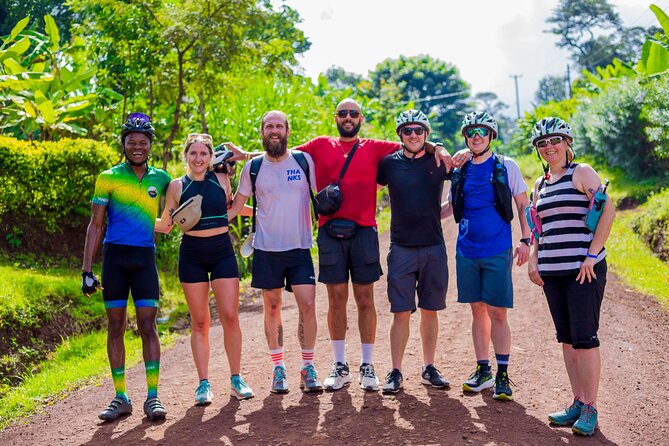
Moshi is at its most interesting when you leave the traffic behind and pedal into the Rau Forest and nearby villages. This four-to-five-hour ride takes you through rice fields, sugarcane plantations, rough rural tracks, and small communities, with Mount Kilimanjaro appearing across the open country when the air is clear.
I like two things in particular. First, a bicycle gets you close to daily farming life in a way a vehicle cannot. Second, the tour has real variety: Colobus monkeys, an old railway station, local markets, churches, mosques, and lunch all fit into one outing.
The main caution is the road surface. Some tracks are bumpy and rough, and one rider with knee trouble had to shorten the route and miss the market and lunch. If you rarely cycle, tell your guide early and be honest about your limits.
Key points to know before you pedal away
- Rau Forest brings the wildlife: Look into the tree crowns for Colobus monkeys with long, fluffy tails.
- The route mixes farm roads and town streets: Expect off-road riding, paved sections, rice fields, sugarcane plantations, and village paths.
- Moshi life is part of the tour: The route includes Mbuyuni Market, Manyema fish market, Clock Town, a Hindu temple, and an old railway station.
- Kilimanjaro is a distant view, not the day’s destination: You see the mountain from open countryside around Moshi.
- Lunch and transport are included: The $50 price covers the bicycle, guide, private transport, fees, water, soda, and either a lunch box or traditional hot meal.
- The ride is active but not a race: Guides such as Alpha, also written Alfa, and Said have been praised for careful pacing and clear stories along the route.
Why this ride shows you more than Moshi streets
Moshi is best known as the starting point for Kilimanjaro climbs, but you do not need to climb Africa’s highest mountain to experience the area’s daily rhythm. This ride gives you a close look at the farms, waterways, forest, and neighborhoods around town.
The setting changes often. One moment you are riding beside rice paddies. Soon after, the track cuts through sugarcane country, then enters the shade of Rau Forest. Later, you are back among houses, markets, religious buildings, and old railway remains.
That variety is the strongest reason to book. A standard town visit can show you shops and streets, but this tour connects Moshi with the farmland that feeds it. You see how local farmers use small plots, river water, and fertile ground to produce rice, sugarcane, fruit, and other crops.
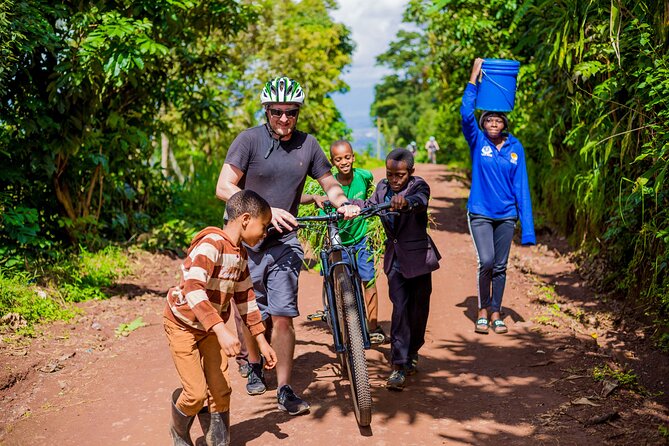
The experience also has a useful cultural focus. The route passes through Chagga communities and small villages, where your guide can explain what you are seeing as you stop. It is not simply a ride with scenery passing by. The pauses give the day shape and help you understand the connection between the mountain region, farming, and town life.
More Bike Tours in Moshi & Kilimanjaro:
- Chagga Villages in Mount Kilimanjaro Cycling Day Trip
★ 5.0 · 42 reviews - Moshi city bike day trip
★ 5.0 · 17 reviews - Kilimanjaro bike park safari
★ 5.0 · 16 reviews
Rau Forest and the search for Colobus monkeys
The first major section leads toward Rau Forest Reserve. The route includes both paved and off-road paths, so you should expect a proper country ride rather than a smooth cycleway.
The forest is the most atmospheric part of the outing. Keep your eyes above the trail, especially in the upper branches. Colobus monkeys may be visible in the tree crowns, recognized by their long, fluffy tails. They are not guaranteed to appear on every ride, so treat them as a fortunate sighting rather than the sole reason to book.
The forest also gives you a break from the sun. After riding through open farms and village roads, the trees create a cooler, quieter setting. One of the most praised parts of the tour is this forest section, and I can see why. It adds a sense of discovery that a simple road ride would lack.
Still, you should not picture a wilderness expedition. This is a cycling route through a reserve and surrounding countryside, with a guide leading the way. The focus is on seeing the forest as part of a larger Moshi outing, not on a long wildlife drive.
Set aside about an hour for this part of the route. Admission to the reserve is included, which keeps the price simple and means you are not stopping to handle separate entrance payments.
Rice paddies, sugarcane, and the work of farming
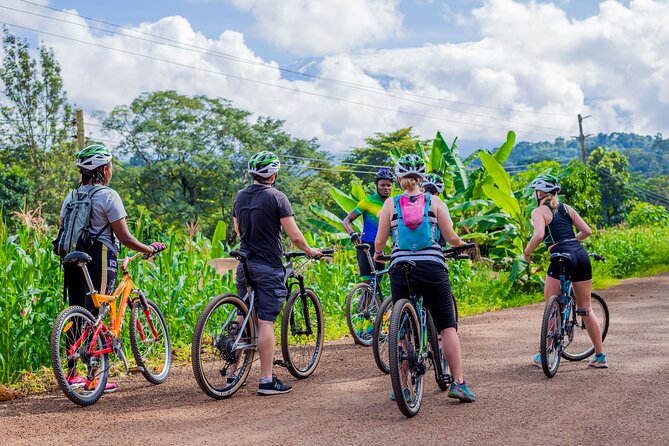
After or around the forest section, the ride opens into agricultural country. You pass rice fields, sugarcane plantations, and other farming plots, with the Karanga River and Rau River included among the route’s natural features.
This is where the bicycle earns its place. You move slowly enough to notice the irrigation channels, field boundaries, changing crops, and small houses along the road. Your guide can stop to explain how crops are grown and harvested, rather than leaving you to guess from a vehicle window.
The sugarcane fields near the TPC area add another distinctive stretch. Tall cane can close in around the track, while the rice fields offer a wider view. The contrast makes the route feel far more varied than a simple ride through one type of countryside.
You also pass mosques and large Lutheran churches built during the German colonial period. These buildings are not isolated sights on a formal history walk. They appear as part of the living villages, alongside homes, farm plots, and roads still used today.
The rough surfaces are the tradeoff. The route is not described as a polished recreational trail, and a rider with bad knees found the bumps difficult enough to slow the outing and skip parts of it. You do not need to be a serious cyclist, but you should be comfortable on a bicycle and ready for uneven ground.
Moshi markets, Clock Town, and an old railway station
The town section takes about two hours and changes the mood again. You cycle into Moshi to visit Mbuyuni Market and Manyema fish market, then continue toward the old railway station and Clock Town in the city center.
Markets are useful stops because they show Moshi as a working town, not just a base for mountain trips. Mbuyuni Market and the fish market offer a look at local trade and everyday shopping. The experience is more direct than simply passing through a commercial street, though you should expect ordinary market activity rather than a staged cultural show.
The old railway station adds a different kind of interest. It is described as being stuck in time, and it gives the ride a look at Moshi’s transport past. The station is a memorable stop because it breaks up the farm scenery with a piece of older town infrastructure.
In the city center, you pass Clock Town and the large Hindu temple. You also visit Africa Gift Shop, known locally as Mama Africa shop. These stops give you time to look around and perhaps buy a small item, though personal purchases are not included in the tour price.
The town riding may feel busier than the forest and village roads. You are sharing space with ordinary traffic and pedestrians, so listen to your guide and keep your attention on the road. The route is not only sightseeing. It is still a bicycle tour through an active town.
More day trips in Moshi & Kilimanjaro:
- Best Kilimanjaro hiking day trip tour with Kilinge Adventures
★ 4.5 · 54 reviews - Day Trip Coffee Tour and Materuni Waterfalls
★ 5.0 · 35 reviews - Private Full-Day Trip to Materuni Waterfalls
★ 5.0 · 22 reviews - Kilimanjaro 1 Day Hike
★ 5.0 · 16 reviews
Kilimanjaro views from the open countryside
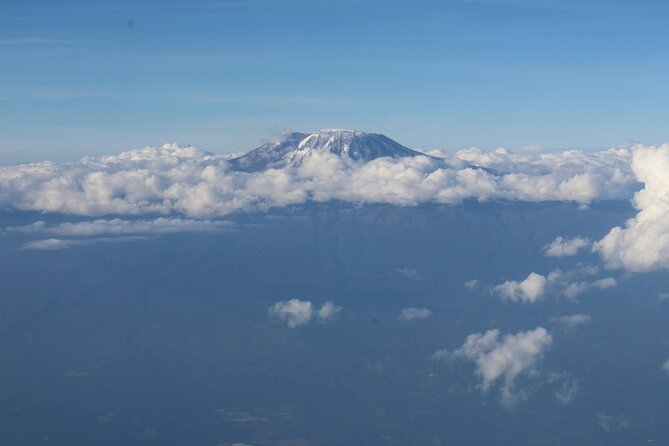
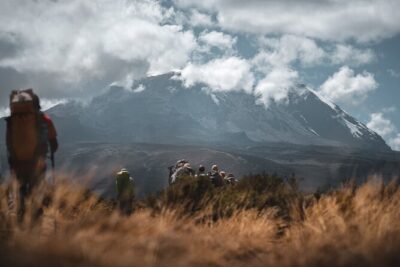
Mount Kilimanjaro appears as a distant sight during the countryside section. The open area around Moshi is useful for viewing the mountain because there are fewer tall buildings and trees to block the horizon.
This is an important distinction. You are not riding toward the summit, and the tour does not include a climb or mountain trail. You are seeing Kilimanjaro from the Moshi villages and surrounding farm country.
The best view depends on weather and visibility. The tour description presents the mountain as a sightseeing highlight, but no mountain view can be promised on a cloudy day. Even without a clear peak, the route still includes the rivers, fields, villages, and forest.
I like this part because it puts Kilimanjaro in context. Instead of seeing the mountain only from a hotel or climbing road, you see it above the farms and communities that live in its region. The mountain is a backdrop, while the daily life below remains the main subject.
What $50 includes, and where the value lies
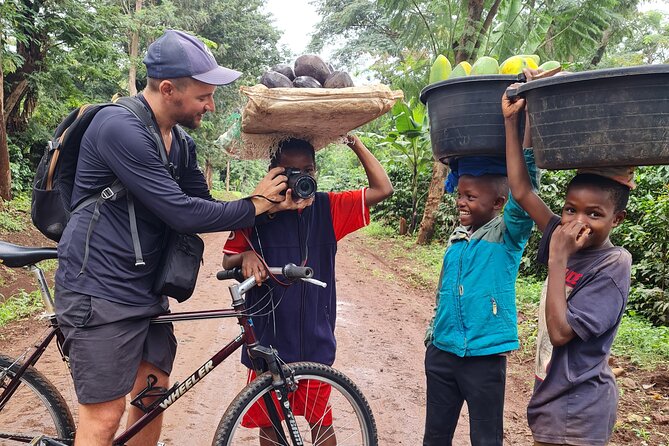
At $50 per person, this is a good-value half-day outing if you use the included elements. The fee covers the bicycle, cycling guide, private transport, entrance fees, mineral water, soda, and lunch.
Lunch may be provided as a box or as a traditional hot meal in a restaurant. The food received strong praise, and it matters here because a four-to-five-hour ride can leave you hungry, especially in warm conditions.
The included transport is also useful. Pickup is offered, and the activity returns to the meeting point at Bike2kili Safaris on Market Street and Mission Street in Moshi. You are not left to arrange a separate vehicle between the city and the countryside.
There are no extra admission charges listed for the Moshi stops. Tips and personal purchases are not included, so keep some money for the gift shop or anything you may want at the markets.
The price becomes less attractive if you want a purely relaxed sightseeing trip. You are paying for an active outing, and the route can be physically demanding on rough roads. For someone looking for an easy town walk, this is the wrong use of $50. For someone wanting forest, farms, town sights, a guide, food, and transport in one morning, the package is strong.
Guides, pacing, and group size
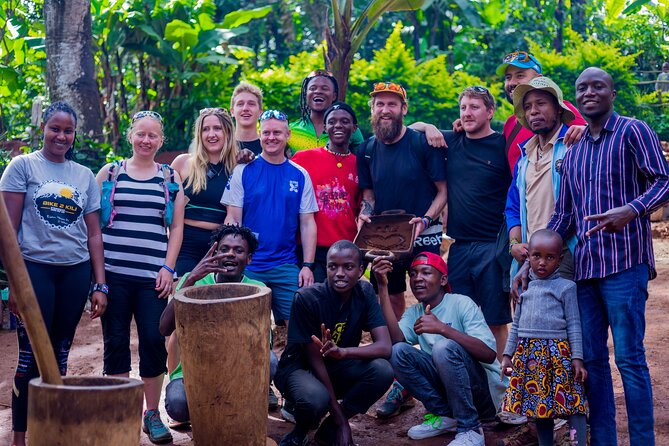
The maximum group size is 20, but the ride may be smaller. One booking became a one-to-one experience, which allowed the guide to adjust the pace and provide close support.
Guides connected with this tour include Alpha, also spelled Alfa in some descriptions, and Said. Alpha has been singled out for his strong knowledge of the area and local people, while Said has been praised for clear communication. The most useful quality here is not a formal lecture. It is having someone who can tell you what you are seeing and watch the road when conditions get rough.
If you are not a regular cyclist, say so at the start. A careful guide can help you feel comfortable, but the guide cannot remove every bump from the route. Knee pain, poor balance, or limited stamina may affect how much of the full route you complete.
The scheduled opening hours are Monday through Saturday, 7:00 a.m. to 6:30 p.m. The ride itself generally takes four to five hours, with one published departure running from about 8:00 a.m. to 1:00 p.m., including lunch and pickup. Confirm the exact start time when you book.
Who should book this Moshi bike tour
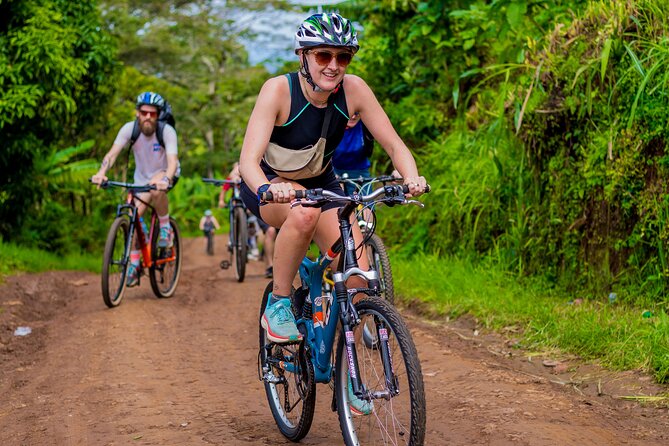
I would choose this tour if you want to combine nature, agriculture, local town life, and light cultural sightseeing in one outing. It suits people who are comfortable riding for several hours and who prefer seeing ordinary places at ground level.
It is especially useful early in a Moshi stay. The ride helps you understand the area before a longer Kilimanjaro climb or safari, and it gives you a sense of how the town connects to its surrounding farms.
You should think twice if you have serious knee problems or dislike rough tracks. One rider had to skip lunch and the market after knee trouble slowed the ride. The tour may still be possible at a reduced pace, but the full route is not an easy cruise.
Families and mixed-ability groups should discuss the route before booking. The information says most people can participate, but it does not promise a flat or gentle ride. A bicycle, open countryside, and uneven tracks require a basic level of comfort and stamina.
The experience has a 4.9 rating from 59 reviews and a 98 percent recommendation rate. Those figures suggest a reliably well-received outing, but the physical warning remains important. High marks do not turn a bumpy road into a smooth one.
Practical details for a smoother ride
Wear clothing suitable for cycling and outdoor heat. The tour supplies water and soda, but you may still want to arrive ready for active movement and sun exposure.
Keep your camera ready in the forest and open farm areas, but do not count on a perfect Kilimanjaro view. The mountain is weather-dependent, and Colobus monkeys can remain high in the trees or out of sight.
Use the guide’s judgment around the markets and town traffic. You will have chances to stop, but this is not a free-roaming shopping trip. Stay aware of the group and allow time for the ride between sights.
The experience requires good weather. If poor weather cancels the ride, you can receive a full refund or choose another date. You can cancel for a full refund up to 24 hours before the start time. Cancellations or changes made inside 24 hours are not refunded or accepted.
Should you book it?
Book this ride if you want to see Moshi beyond its main streets and prefer an active morning to a standard vehicle tour. The strongest parts are the Rau Forest, farm roads, Chagga villages, old railway station, and the chance to see Kilimanjaro from open countryside.
Skip it if you need smooth roads, guaranteed wildlife, or a slow, fully passive sightseeing experience. For everyone else, the combination of bicycle, local guide, lunch, private transport, and varied scenery makes $50 a fair price. Just bring working knees and a willingness to accept a little dust and bouncing along the way.
FAQ
How long does the Moshi villages bike tour last?
The experience lasts approximately four to five hours. One described schedule runs from about 8:00 a.m. to 1:00 p.m., including pickup and lunch.
How much does the tour cost?
The listed price is $50 per person.
What is included in the price?
The price includes use of a bicycle, a cycling guide, private transportation, all fees and taxes, mineral water, soda, and lunch. Lunch may be a box or a traditional hot meal in a restaurant.
Where does the tour start?
The meeting point is Bike2kili Safaris Tanzania at Market Street and Mission Street in Moshi.
Where does the tour end?
The activity ends back at the meeting point.
Is pickup available?
Yes. Pickup is offered, and private transportation is included.
Will I see Mount Kilimanjaro?
The route provides distant views of Mount Kilimanjaro from the Moshi countryside. A clear view depends on weather and visibility.
Are Colobus monkeys guaranteed?
No. The route passes through Rau Forest, where you can look for Colobus monkeys in the tree crowns, but sightings are not guaranteed.
Is the route paved?
The ride uses both off-road and paved paths. You should expect rough terrain in parts of the route.
Can I cancel for a full refund?
Yes, if you cancel at least 24 hours before the experience start time. Cancellations made less than 24 hours before the start are not refunded. If poor weather causes the operator to cancel, you can choose another date or receive a full refund.
Newly listed around Moshi & Kilimanjaro
- Climb Mount Kilimanjaro: 7 Days Machame Route★ 5.0 · 3 reviews
- 6 Days Mount Kilimanjaro Climbing via Rongai Route★ 5.0 · 3 reviews
- Mt. Kilimanjaro Day Hiking★ 5.0 · 3 reviews
- Explore 1 day Ngorongoro Crater Budget Group Safari from Arusha★ 5.0 · 3 reviews
- Chemka (Kikuletwa) Hot Springs, Tanzania★ 5.0 · 3 reviews
- Guided City tour of Moshi★ 4.3 · 3 reviews
- 8 Day Tanzania Family Safari★ 5.0 · 3 reviews
- Serengeti Safari with Sirikwa Travel★ 5.0 · 3 reviews
Moshi & Kilimanjaro Tours, compared.

Browse the lists this tour appears in