
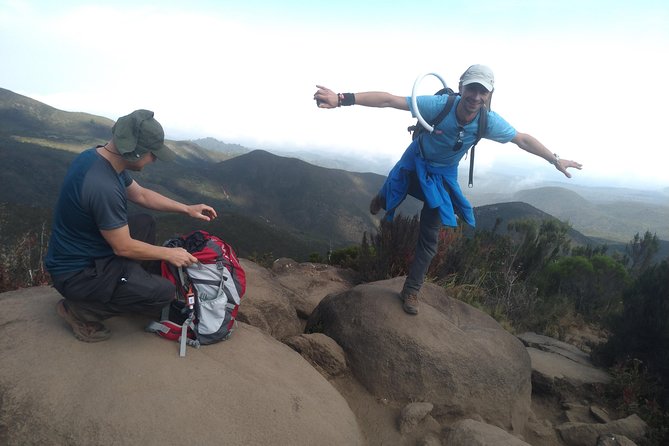
Reviewed · KILIMANJARO CLIMBS
Lemosho Route
The Lemosho Route gives you a slow, scenic approach to Kilimanjaro, beginning in forest and ending on the stark upper slopes beneath Uhuru Peak. The route’s best feature is its patient rise in altitude, with several acclimatization walks before the final push to 5,895 meters.
I like the wide range of scenery, from the Lemosho rainforest to the Shira Plateau and the lava ridges below the glaciers. I also like the built-in acclimatization time, especially the high point at Lava Tower followed by a descent to Barranco Camp. The main concern is simple: this is a serious high-altitude trek, and summit day lasts about 10 hours before the descent even begins.
Key points to know before booking
- The route reaches Uhuru Peak at 5,895 meters, with a midnight departure from Barafu Camp.
- The schedule includes several acclimatization opportunities, including the walk toward 4,200 meters from Karanga Camp.
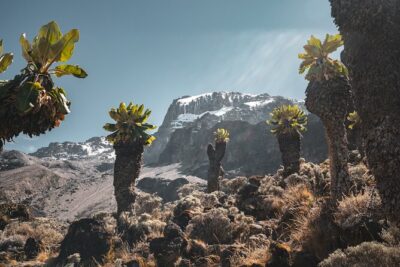
- You cross five distinct mountain zones, from rainforest and heather to upland desert and bare volcanic scree.
- The advertised price is $2,310 per person, but the stated inclusions are limited, so confirm exactly what is covered.
- Groups can contain up to 15 people, which matters on narrow sections such as the Barranco Wall.
- Airport pickup, equipment checks, and gear rental arrangements are handled at the start in Moshi.
Why Lemosho is a strong choice for Kilimanjaro
Kilimanjaro is not a technical climbing trip in the usual mountaineering sense. You do not need rope work or advanced climbing skills on this route, but you do need patience, steady fitness, and the ability to walk for many hours at altitude.
Lemosho is appealing because it does not rush you straight toward the summit. The route begins on the western side of the mountain, where the first days are spent gaining height gradually through forest and open moorland. That extra time matters. Altitude is the main challenge on Kilimanjaro, not the speed of the trail.
The schedule supplied for this trip covers arrival, eight trekking days, and departure from the mountain. That is effectively nine calendar days if you count the first hotel night in Moshi. Check the exact dates when booking, because the headline duration says eight days while the day-by-day plan runs from Day 1 through Day 9.
The group limit is 15 people. That is not a private climb, and the pace may be shaped by the slowest person in the group. On the other hand, a shared group can make the long camp days less lonely, and the operator has experience handling larger climbing teams.
More Kilimanjaro routes:
- Kilimanjaro climb by Lemosho Route (7-day)
★ 5.0 · 651 reviews - Kilimanjaro climb, Machame Route (7-day)
★ 5.0 · 262 reviews - Kilimanjaro Climbing Lemosho Route 8 Days.
★ 5.0 · 186 reviews
Your first day in Moshi: briefing and equipment check
Your trip begins with pickup at Kilimanjaro International Airport and transfer to a hotel in Moshi. The stated meeting point is the airport on Kilimanjaro Airport Road, with a listed start time of 2:00 am. Since the first detailed activity begins with an airport transfer and hotel check-in, confirm how that early time applies to your arrival.
At the hotel, you meet your guide for a briefing and equipment check. This is one of the most useful parts of the preparation. Missing mountain gear can be rented that day, rather than discovered at the trailhead.
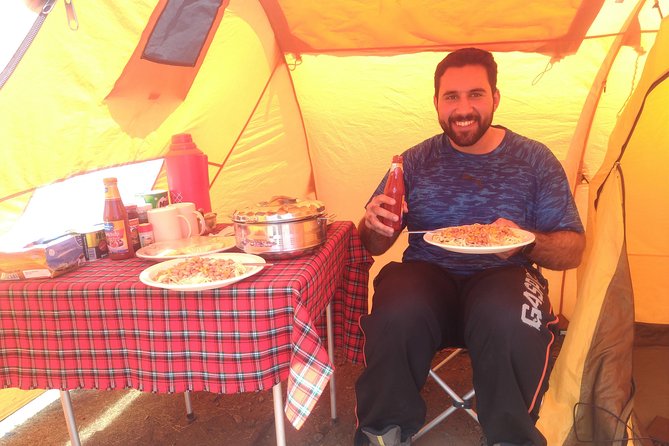
The listed accommodation is Lindrin Lodge, with bed and breakfast. Meals from the trekking days are included as breakfast, lunch, and dinner. Personal items are not included, so budget separately for anything you need beyond the arranged mountain services.
Names connected with the operator in the supplied material include Jackson, Omary, Fadhili, and Wency Machiba. Your assigned guide may be different. Ask for the guide’s name, the guide-to-climber ratio, and the final crew details before you leave Moshi.
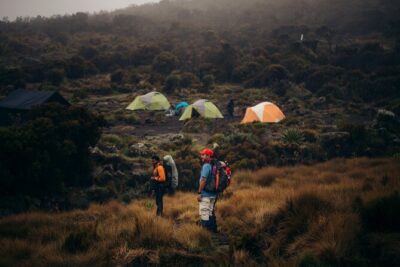
Day 2: Lemosho Glades to Big Tree Camp
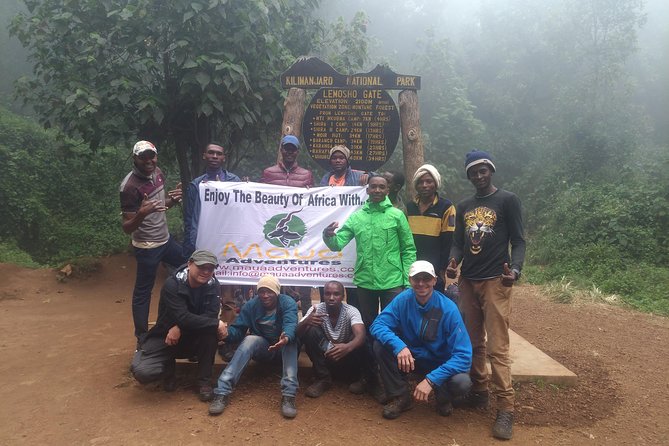
The first mountain day starts with a pickup around 8:00 am and a transfer to the Lemosho Gate on Kilimanjaro’s western side. Registration comes first, then the walking begins through forest.
The distance is about 7 kilometers, or 4.3 miles, and the stated walking time is around four hours. Big Tree Camp sits at 2,780 meters, after starting at approximately 2,385 meters.
This is a sensible opening day. You are not asked to cover a huge distance, and the forest gives you a cooler, sheltered start. Still, do not mistake the short mileage for an easy holiday walk. You are carrying a daypack, adjusting to a new rhythm, and sleeping higher than you may be used to.
The pace should be deliberately steady. Keep your first day conservative. Saving energy here is more useful than trying to prove your fitness.
Day 3: Big Tree Camp to Shira 1
The route changes quickly as you leave the thicker forest and cross grassy moorland and heather. Volcanic rock formations appear along the plateau, giving the day a more open feel.
You walk approximately 8.5 kilometers in about seven hours, reaching Shira 1 Camp at 3,500 meters. The altitude gain is noticeable, and some sections are fairly steep.
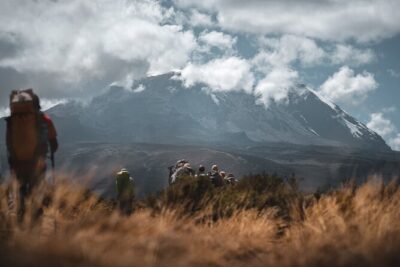
This is one of the days when the slow pace pays off. You gain more than 700 meters, but the schedule gives you most of the day to do it. Kibo Peak may appear above the clouds, an early reminder that the summit is still far away.
The drawback is that seven hours of walking can feel long so early in the trek. Eat the provided meals even if your appetite is fading, and keep drinking regularly. At altitude, waiting until you feel thirsty is a poor plan.
A few more Moshi & Kilimanjaro days to compare
- Safari Serengeti And Ngorongoro
★ 5.0 · 288 reviews - Climbing Kilimanjaro – Machame Route
★ 5.0 · 170 reviews - Climbing Kilimanjaro through 7 days Machame Route
★ 5.0 · 151 reviews - Kilimanjaro climb, Lemosho Route (8-day)
★ 5.0 · 148 reviews
Day 4: Shira 1 to Shira 2
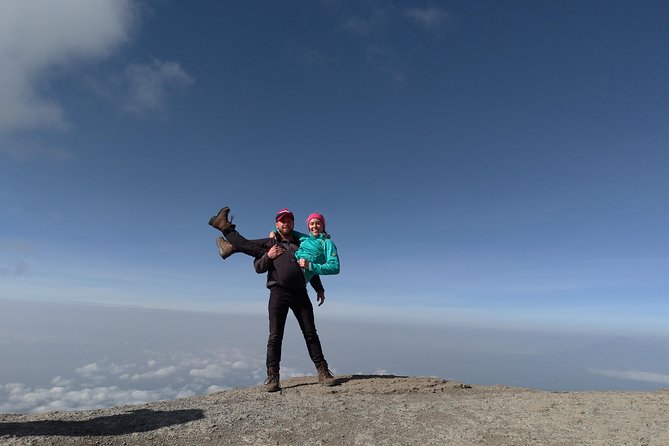
Day 4 continues across the Shira Plateau, with an 8-kilometer walk taking about five hours. Shira 2 Camp sits at 3,900 meters.
The views are a major reason to choose this route. From the western side, you may see the Northern Ice fields and unusual angles of Kibo. The plateau is broad and open, with panoramic mountain views that differ from the more enclosed forest of the first day.
The schedule also includes an afternoon acclimatization walk before returning to camp for dinner and the night. That extra up-and-down outing is valuable because it lets you spend time higher than camp without sleeping at that height.
This day can feel deceptively comfortable. The walk is shorter than Day 3, but your body is now responding to altitude. Use the afternoon walk as a test, not a race. If you feel unwell, tell your guide promptly.
Day 5: Shira 2, Lava Tower, and Barranco
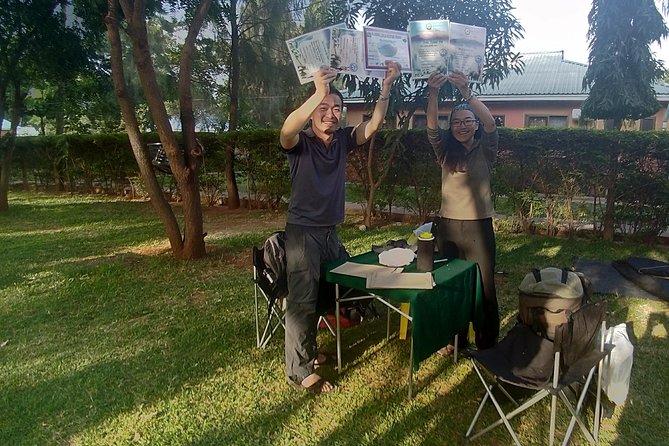
This is the route’s key acclimatization day. You climb from Shira 2 through upland desert toward Lava Tower, reaching 4,640 meters, then descend to Barranco Camp at 3,960 meters.
The total distance is about 10 kilometers, with roughly seven hours of walking. You gain height, eat lunch at the high point, and then sleep considerably lower. That high-walk, lower-sleep pattern is one of the most useful features of the schedule.
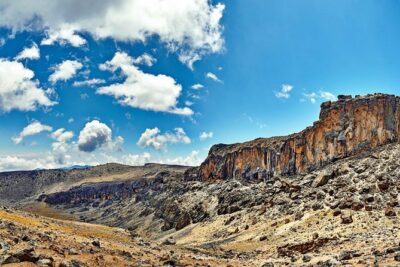
The views widen as you move along lava ridges beneath the glaciers of the Western Breach. Lava Tower is not just a scenic lunch stop. It is where you learn how your body reacts to the upper mountain.
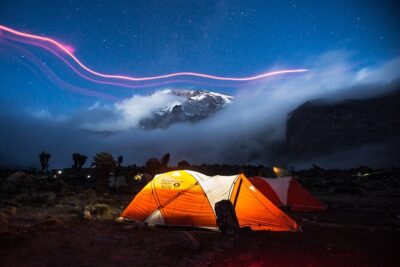
The descent to Barranco is steep in places. Barranco Camp is sheltered by high cliffs but looks out across the plains below. It is a dramatic place to spend the night, though the combination of a long day and altitude can leave you tired.
Take headache, nausea, unusual breathlessness, or severe weakness seriously. A successful summit is never worth ignoring altitude symptoms.
Day 6: The Barranco Wall to Karanga Camp
The day begins by descending into the Great Barranco, followed by the climb up the Barranco Wall. This section is not technical climbing, but it is a long, tiring scramble over rock.
The route then passes below the Heim and Kersten glaciers before heading toward the Karanga Valley. The distance is only about 5.5 kilometers, but the walking time is around five hours because the route rises and falls repeatedly.
Karanga Camp sits at approximately 3,963 meters, almost the same elevation as Barranco. The value here is not a large gain in sleeping altitude. It is the careful preparation for the final upper mountain days.
For those feeling strong, the plan includes an afternoon acclimatization walk to around 4,200 meters, followed by a return to camp. This is another chance to gain height without sleeping higher.
You should expect the Barranco Wall to feel physically demanding, especially if you are nervous around exposed rock or crowded sections. Your guide’s instructions and the group’s pace matter here. Use your hands for balance, take short steps, and do not rush because someone behind you is waiting.
Day 7: Karanga to Barafu Camp
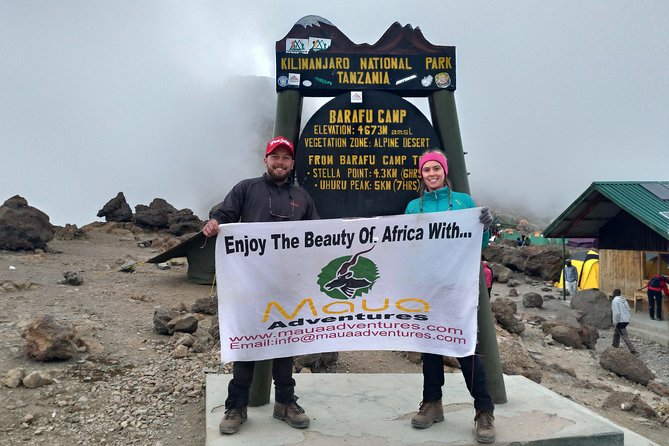
The walk to Barafu is short, about 3 kilometers, and takes around three hours. That does not make it a throwaway day. You climb over steep, empty scree to Barafu Camp at approximately 4,640 meters.
There is little vegetation at this height. The upper mountain feels stark and exposed, and even a short climb can be tiring. After lunch, the plan is to rest, keep warm, drink, and prepare for the summit attempt.
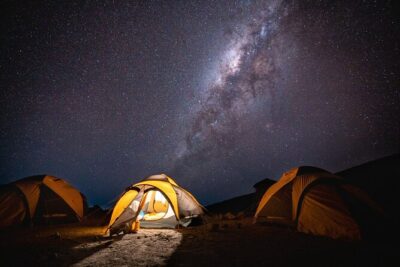
Dinner comes early, followed by an attempt to sleep before waking between 11:00 pm and midnight. Many people struggle to sleep before summit night, so do not panic if you lie awake.
Pack your summit clothing, headlamp, insulated water reserves, snacks, and any other essential kit before dinner. The midnight start is not the time to hunt through your luggage for gloves.
Day 8: Barafu to Uhuru Peak and Mweka Camp
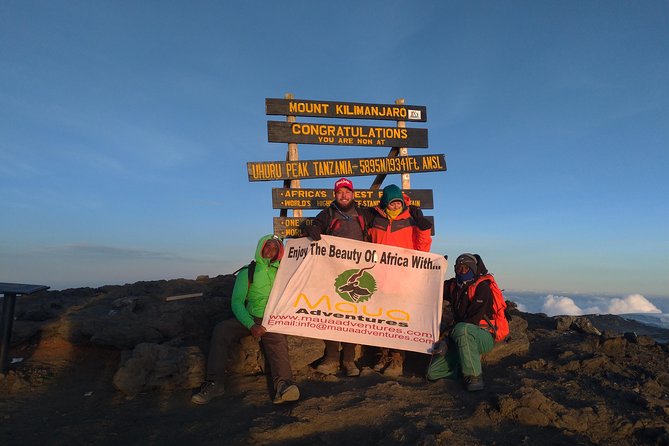
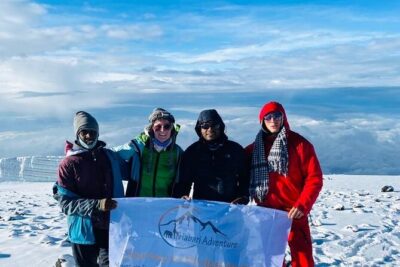
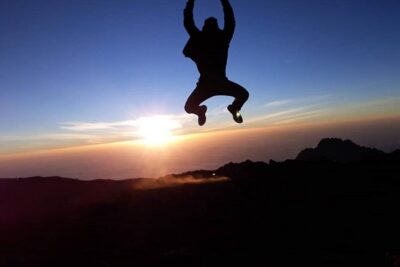
Summit day begins around 11:30 pm with hot tea and biscuits, followed by departure around midnight. The climb to the crater rim takes about six to eight hours, with Stella Point at 5,739 meters along the way.
The stated summit elevation is 5,895 meters at Uhuru Peak. The route is steep and slow, and the basic strategy is to keep moving one careful step at a time.
This is the hardest part of the trip. You climb through the coldest, highest hours of the night, then continue after sunrise if you go from Stella Point to Uhuru Peak. The supplied schedule gives about 10 hours for the combined summit climb and descent toward Mweka Camp.
After reaching the summit area, you descend to Mweka Camp at about 3,100 meters. That drop is welcome for your breathing, but your legs will already be exhausted. The long descent can be rough on knees and feet, so trekking poles may be useful if you normally use them.
Do not judge your whole trip by whether you reach Uhuru Peak. The mountain can turn people around for altitude, weather, or exhaustion. The plan recognizes Stella Point at 5,739 meters with a green certificate, while Uhuru Peak earns a gold certificate.
Day 9: Mweka Camp to Mweka Gate
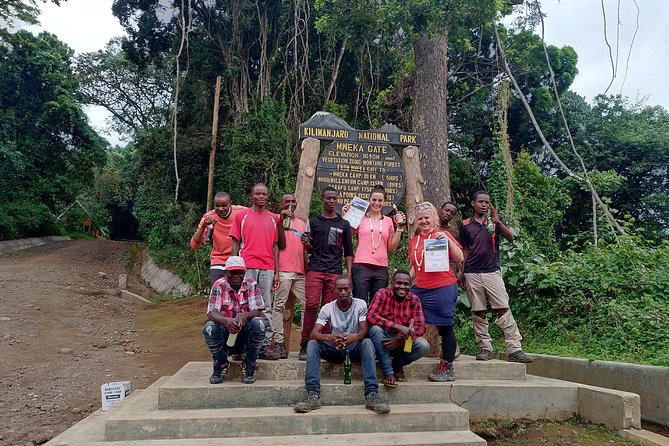
The final walk runs through lower rainforest to Mweka Gate at 1,640 meters. The distance is about 9 kilometers, or 5.5 miles, and the stated time is three to five hours.
Compared with summit day, this is a gentler finish, though tired legs can make a forest descent surprisingly demanding. At the gate, successful climbers receive their certificates, and the crew is customarily tipped before transport back to Moshi.
Tipping is not listed as part of the price, so plan for it separately. Ask before the climb how the operator handles crew tips and what is considered fair for the guides, cook, and porters.
What the $2,310 price really tells you
At $2,310 per person, this is a substantial purchase, but the value depends heavily on what the operator includes beyond the schedule. The stated included item is parking fees, while the daily mountain plan says breakfast, lunch, and dinner are included from Day 2 onward.
That wording is too limited for me to judge the full value confidently. Before paying, request a written list covering airport transfers, Moshi accommodation, park entry fees, camping fees, crew wages, tents, sleeping arrangements, meals, drinking water, rescue coverage, transfers after the climb, and equipment rental.
A multi-day Kilimanjaro climb has real operating costs. A low headline price can look attractive but may leave important items for you to pay later. The operator’s history of arranging guides, porters, cooks, hotel transfers, and equipment checks is encouraging, but the exact package should be clear in writing.
The free cancellation policy allows a full refund if you cancel at least 24 hours before the local start time. Changes made inside that window are not accepted, and poor weather may result in a new date or a full refund.
Who should choose this climb
I would point this route toward a fit walker who wants more time for altitude adjustment and does not mind long, slow mountain days. The eight trekking days provide a more measured schedule than a rushed ascent.
It is a good match if you value changing scenery, high camps, and a serious summit attempt more than comfort. It is not a casual sightseeing outing, and the moderate fitness requirement should be taken seriously.
You should also be comfortable with basic mountain camping and an overnight summit start. The hardest day combines darkness, cold, steep climbing, thin air, and a long descent. That combination is the real test.
Practical questions to settle before departure
Ask the operator to clarify the apparent difference between the advertised eight-day duration and the nine numbered days. Confirm your airport pickup time, the exact hotel arrangement at Lindrin Lodge, and whether your arrival night is included.
You should also ask which guide is assigned to your group. Names associated with the company include Jackson, Omary, Fadhili, and Wency Machiba, but they are not guaranteed to lead this particular departure.
The group maximum is 15 people. Ask how many guides and support staff will accompany a group of your size. Crew support has been a major strength in the supplied accounts, with specific praise for professional guides, kind staff, good food, and careful attention to safety and comfort.
Pack for changing temperatures rather than one climate. You will move from rainforest to cold, bare upper slopes, and the summit start requires warm clothing, a headlamp, insulated water reserves, and snacks.
Should you book the Lemosho Route?
I would consider booking it if you want a scenic, gradual route and are prepared for a demanding summit day. The Shira Plateau, Lava Tower acclimatization stop, Barranco Wall, and midnight climb give this route plenty of variety.
I would pause until the price inclusions are fully explained. At $2,310, the trip may offer fair value, but the supplied inclusion list does not tell you enough. Get the costs for park fees, camping, transfers, crew, equipment, and tips in writing.
If the operator confirms those details and you can commit to the fitness and altitude demands, Lemosho is a sensible Kilimanjaro choice. It gives you time to adapt, memorable mountain scenery, and a structured attempt at Africa’s highest summit.
FAQ
How long does the Lemosho Route experience take?
The detailed schedule runs from Day 1 through Day 9. It includes arrival in Tanzania, eight trekking days from Lemosho Gate to Mweka Gate, and the return toward Moshi. The headline duration is listed as approximately eight days, so confirm the exact calendar length before booking.
What is the highest point on the route?
Uhuru Peak is the highest point, at 5,895 meters. Stella Point is listed at 5,739 meters on the crater rim.
Is airport pickup included?
Pickup is offered, and the first day describes collection at Kilimanjaro International Airport followed by transfer to a hotel in Moshi. Confirm the exact pickup arrangement and timing for your flight.
Where does the trek begin?
The mountain portion begins at Lemosho Gate on the western side of Kilimanjaro, after registration and transfer from your Moshi hotel.
What meals are included?
Breakfast, lunch, and dinner are included during the listed trekking days. The first day at the hotel is described as bed and breakfast.
Can I rent missing equipment?
Yes. The guide conducts an equipment check in Moshi, and missing mountain gear can be rented that day.
How large can the group be?
The maximum group size is 15 people.
What is the cancellation policy?
You can cancel at least 24 hours before the local start time for a full refund. Cancellations or changes made less than 24 hours before the start are not accepted for a refund. If poor weather cancels the experience, you are offered another date or a full refund.
Newly listed around Moshi & Kilimanjaro
- Climb Mount Kilimanjaro: 7 Days Machame Route★ 5.0 · 3 reviews
- 6 Days Mount Kilimanjaro Climbing via Rongai Route★ 5.0 · 3 reviews
- Explore 1 day Ngorongoro Crater Budget Group Safari from Arusha★ 5.0 · 3 reviews
- Mt. Kilimanjaro Day Hiking★ 5.0 · 3 reviews
- Chemka (Kikuletwa) Hot Springs, Tanzania★ 5.0 · 3 reviews
- Guided City tour of Moshi★ 4.3 · 3 reviews
- 8 Day Tanzania Family Safari★ 5.0 · 3 reviews
- Serengeti Safari with Sirikwa Travel★ 5.0 · 3 reviews
Kilimanjaro Climbs, compared.
Browse the lists this tour appears in