
Reviewed · KILIMANJARO CLIMBS
Kilimanjaro Climb – 8 Days Lemosho Route
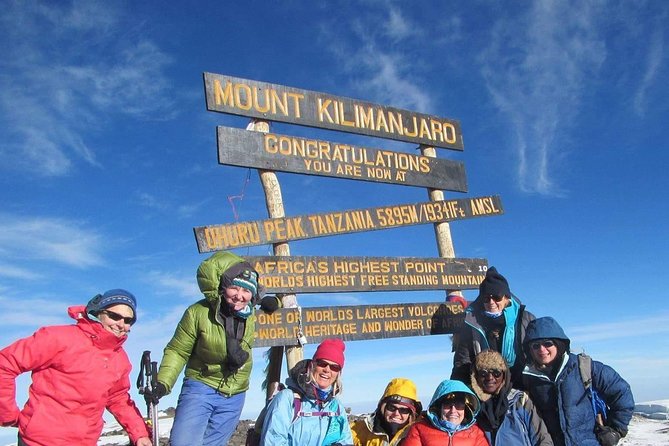
Kilimanjaro’s Lemosho Route gives you the mountain at its most varied: rainforest on the lower slopes, open moorland on the Shira Plateau, dark volcanic ground near Lava Tower, and glaciers above Barafu Camp. The eight-day schedule takes a gradual path toward the summit, which is the main reason to choose it.
I like the extra time for acclimatization and the route’s quieter western start. I also like that the price includes guides, porters, a cook, park fees, camping equipment, meals, water, and airport transfers. The drawback is simple: this remains a demanding high-altitude climb, and the summit day includes a major ascent followed by a long descent.
Key points
- The route begins in remote western Kilimanjaro: You enter through Londorossi Gate and walk from rainforest toward the Shira Plateau.
- The eight-day plan allows a steadier climb: The itinerary spreads the ascent over several days before the summit push.
- Lava Tower and Barranco create the route’s dramatic middle section: You climb high, descend into Barranco Valley, then tackle the Great Barranco Wall.
- The summit day is physically serious: From Barafu Camp, you gain about 1,296 meters, then descend for another six to eight hours.
- The support package is broad: A mountain crew, cook, porters, food, water, camping equipment, and first-aid supplies are included.
- This is a private activity for your group: The group arrangement matters if you want a trip built around your own party rather than a large scheduled departure.
Why the Lemosho Route earns eight days
I would choose Lemosho for the way it eases you into Kilimanjaro. You do not begin with a huge altitude gain. Day one is only about three hours of walking, with a 360-meter ascent to Mti Mkubwa Camp. That first day lets you settle into the pace, the sleeping arrangements, and the mountain routine.
The route starts at Londorossi Gate, below the Shira Plateau, and passes through the rainforest of western Kilimanjaro. The forest section is short compared with the full climb, but it gives the trip a clear sense of progression. You begin among trees, then move into open moorland and finally into the alpine desert and glacier zone.
Lemosho later joins the Machame Route near Lava Tower. That means you get the quieter western approach at the start, then connect with one of Kilimanjaro’s better-known southern routes for the upper mountain. The route is not a shortcut. Its value lies in the pacing and scenery.
Day 1: Londorossi Gate to Mti Mkubwa Camp
The first walking day covers roughly 7 kilometers and takes about three hours. You gain 360 meters before reaching Mti Mkubwa Camp in the rainforest zone.
This is a sensible opening. You have transport and park formalities to handle before walking, so a short trek prevents the first day from becoming a test of willpower. The forest also gives you a gentle introduction to uneven trails and the need to keep your pace slow.
Your mountain crew includes professional guides, porters, and a cook. Their work begins early, and the practical benefit is clear: you can focus on walking while the camp, meals, and equipment are handled by the support team.
More Kilimanjaro routes:
- Kilimanjaro climb by Lemosho Route (7-day)
★ 5.0 · 651 reviews - Kilimanjaro climb, Machame Route (7-day)
★ 5.0 · 262 reviews - Kilimanjaro Climbing Lemosho Route 8 Days.
★ 5.0 · 186 reviews
Day 2: Mti Mkubwa to Shira I Camp
Day two is longer, at 10 kilometers and six to seven hours, with a 755-meter altitude gain. You leave the rainforest and enter moorland on the way to Shira I Camp.
This is one of the route’s useful transitions. The air and scenery change as the trees thin out. You also begin to feel the climb more clearly, although the walking time remains manageable for a fit person moving at a careful pace.
Shira Plateau was formed by an earlier volcanic eruption and later filled by material from the larger Kibo eruption. You do not need a geology lesson to enjoy it, but that background makes the broad open ground more interesting. You are walking across an old volcanic structure, not simply crossing a scenic high plain.
Day 3: Shira I to Shira Hut
The third day covers 8 kilometers in three to four hours, with a 305-meter gain. The shorter schedule gives you time to move steadily and adjust to the altitude before the route becomes more demanding.
Shira Hut is still within the moorland zone. The plateau is a major reason to select Lemosho, since it gives you wide views and a feeling of space that differs from the enclosed rainforest below.
I like this day because it is not overloaded. On a mountain trip, a short walking day is not wasted time. It gives your body more room to adjust, and it lets you arrive at camp without using energy that you will need later.
Day 4: Shira Hut, Lava Tower, and Barranco Camp
Day four is the route’s great high-and-low lesson. You walk about 10 kilometers over six to seven hours, passing through semi-desert terrain. The listed altitude gain is only 50 meters, but the day still matters because you go up to Lava Tower before descending toward Barranco Camp.
This pattern helps prepare you for high altitude: climb higher, then sleep lower. The route meets the Machame trail around Lava Tower, bringing you into the upper section shared with another approach.
The walk into Barranco Valley sets up one of the most memorable sections of the climb. The scenery becomes harsher and more exposed, with volcanic ground replacing the softer forest and plateau environments. You should not treat the modest net altitude gain as an easy day. Six to seven hours at this height can feel long.
A few more Moshi & Kilimanjaro days to compare
- Safari Serengeti And Ngorongoro
★ 5.0 · 288 reviews - Climbing Kilimanjaro – Machame Route
★ 5.0 · 170 reviews - Climbing Kilimanjaro through 7 days Machame Route
★ 5.0 · 151 reviews - Kilimanjaro climb, Lemosho Route (8-day)
★ 5.0 · 148 reviews
Day 5: Barranco Wall to Karanga Camp
Day five covers 6 kilometers in three to four hours, with a 140-meter gain. Its main feature is the Great Barranco Wall, followed by a traverse beneath Kilimanjaro’s Southern Ice Field.
The Barranco Wall sounds intimidating, and it does require care, but the itinerary treats it as part of a relatively short day. You will need to follow your guide’s instructions and use a controlled pace rather than rushing. The climb is one of the route’s physical highlights because it turns the mountain from a distant view into something you must negotiate directly.
Karanga Camp lies in the alpine desert zone. The short walking time is welcome after the longer day at Lava Tower. It also gives you another chance to eat, drink, and rest before the final approach to Barafu.
Day 6: Karanga to Barafu Camp
The walk to Barafu Camp is only 4 kilometers and takes two to four hours, but the altitude gain reaches 600 meters. This is a compact day with a serious upward pull.
Barafu is the staging point for the summit attempt. Reaching camp early does not mean the day is over in the usual sense. You need to rest, eat, prepare your clothing and equipment, and follow the guide’s instructions for the night ahead.
The tour includes camping equipment, three meals a day, and water while on the mountain. Those inclusions have real value here. At Barafu, your energy and attention should go toward the summit attempt, not toward solving basic camp and food arrangements.
Day 7: Barafu Camp to the summit and down to Mweka
Summit day is the hardest part of the trip. The ascent is listed at six to eight hours over 7 kilometers, with a 1,296-meter gain. After reaching the summit, you descend for another six to eight hours, covering about 12 kilometers and losing 2,896 meters.
Read those figures carefully. This is not simply a long walk with a celebratory finish. It is a major high-altitude effort followed by a punishing descent. Your physical preparation should include sustained uphill walking and long downhill sections, not just short gym sessions.
The route enters the glacier zone near the summit. Weather, cold, fatigue, and altitude all become important. The first-aid kit and professional mountain staff are useful safeguards, but they do not remove the risks of high-altitude trekking. You need travel insurance that covers this kind of activity, since insurance is not included.
The descent to Mweka Camp is a major relief, even though it is tiring. The air becomes thicker as you lose height, and the focus shifts from reaching the top to getting your legs through the final miles.
Day 8: Mweka Camp to Moshi
The final mountain walk runs 10 kilometers through rainforest and takes about four to five hours. You lose approximately 1,360 meters before reaching Mweka Gate and continuing to Moshi.
This is a proper trekking day, not just a quick exit. Wet forest conditions may make the descent feel slower, and tired knees can turn downhill walking into the day’s main challenge. Still, the route back to the gate gives you a clear end point after the summit effort.
Airport transport to and from your Moshi accommodation is included. The trip description also provides for an overnight hotel stay after arrival in Tanzania and a briefing, gear check, and equipment-rental arrangements with the head guide. Because the included list does not clearly spell out all Moshi hotel accommodation, I would confirm exactly what is covered before paying.
What the $2,900 price really covers
At $2,900 per person, this is a substantial purchase, but the price includes many of the costs that make a Kilimanjaro climb work. Park entry fees and camping fees are covered, along with mountain accommodation equipment, guides, porters, a cook, three meals daily, water, airport transfers, and an emergency first-aid kit.
The crew is a major part of the value. You are not carrying the full camp operation yourself, and a cook provides meals during the mountain portion. The company also states that it provides fair treatment for the crew, an important point when comparing operators.
You still need to budget for hotel meals, personal items, insurance, and tips for the guides, porters, and cook. Tips are not a minor detail on a supported mountain trip, so include them in your total budget rather than treating them as an afterthought.
The private format is another useful feature. Only your group participates, so you are not automatically placed in a large public departure. One account describes a small party growing from two friends into a group of five, which suggests that group arrangements may sometimes be handled flexibly. Ask how your private booking will operate if you are traveling alone or as a couple.
The guide and crew matter more than the brochure
There are no guide names supplied for this experience, so I cannot point you to a particular leader. What you can expect is a head guide briefing, a gear check, help arranging any equipment hire, and a support crew made up of guides, porters, and a cook.
That preparation is valuable. A gear check can identify missing cold-weather clothing or unsuitable footwear before the mountain exposes the problem. Ask the operator what equipment is available to hire and what you must bring yourself.
The strongest praise connected with this trip focuses on planning, attention, problem-solving, and the support crew. One solo climber described the seven-day version as a first of seven summit attempts and credited the guide and crew with exceeding expectations. Another account describes the staff solving problems along the way. Those points matter because a long climb is rarely judged only by scenery. Small issues with food, gear, timing, or camp can shape the whole experience.
Fitness, safety, and the parts you should not underestimate
The stated requirement is moderate physical fitness, but I would treat that as a floor, not a promise that the climb will feel moderate. You need to handle up to eight hours of walking, steep altitude gains, cold conditions, and a summit day followed by a long descent.
Train for time on your feet. Long uphill walks and downhill walks are more relevant than speed. Practice carrying whatever personal equipment you will take, and use the gear you plan to bring before departure.
The emergency first-aid kit is included, and professional guides are part of the package. Still, the activity takes place in a demanding environment. Follow the guide’s pace and instructions, and do not assume reaching Barafu means you are ready for the summit.
Travel insurance is not included. Arrange suitable cover before the climb, and check the policy wording carefully for mountain trekking and emergency treatment.
Booking, weather, and cancellation details
Confirmation is provided at booking. You can cancel for a full refund up to 24 hours before the local start time. Cancellations or changes made inside that 24-hour window are not refunded or accepted.
Weather can affect the departure. If poor weather cancels the experience, you are offered another date or a full refund. The same applies if the minimum number of participants is not reached. Since the activity is private, ask how the minimum is defined for your booking.
Pickup is offered, and the ticket is mobile, which keeps arrival day fairly simple. The airport transfer to your Moshi accommodation is included, so confirm the meeting point and hotel details before landing.
Who should book the eight-day Lemosho climb?
I would recommend this route to you if you want a scenic approach, prefer a slower schedule, and value a full support crew. It also suits a first major high-altitude climb better than a compressed itinerary because the additional days give you more time to adjust.
It is a good choice if the Shira Plateau, Barranco Wall, Southern Ice Field, and western rainforest appeal to you as much as the summit itself. The climb is not only about standing at the top. The route’s changing zones are a large part of the experience.
You should think twice if you want a relaxed holiday, dislike camping, or are not prepared for the summit-day schedule. The eight-day format improves the pacing, but it does not make Kilimanjaro easy.
Should you book it?
I would book this experience if you want route variety, gradual acclimatization, and strong logistical support in one package. The $2,900 cost is easier to justify because it includes the mountain permits, crew, food, water, equipment, transfers, and first-aid supplies.
Before booking, confirm the Moshi hotel arrangements, equipment available for hire, group setup, and expected tipping. If those details are clear and you are ready for the long summit day, the Lemosho Route offers one of the most satisfying ways to approach Kilimanjaro.
FAQ
Where does the Kilimanjaro climb begin?
The trek begins at Londorossi Gate on the western side of Kilimanjaro, below the Shira Plateau.
How long is the experience?
The climb lasts approximately eight days, including the mountain trek from Londorossi Gate to Mweka Gate and transport back to Moshi.
What route does the climb use?
It follows the Lemosho Route. You pass through rainforest, cross the Shira Plateau, reach Lava Tower, descend into Barranco Valley, and continue toward Barafu Camp and the summit.
Is airport pickup included?
Yes. Transport from Kilimanjaro Airport to your accommodation in Moshi and transport back to the airport are included.
Are meals included?
Three meals daily and water are included while you are on the mountain. Meals at your hotel are not included.
Is camping equipment included?
Accommodation equipment while on the mountain is included. The head guide also conducts a gear check and can arrange equipment hire if needed.
Who provides support during the climb?
Professional mountain guides, a cook, and porters support the climb. An emergency first-aid kit is also included.
Is this a private tour?
Yes. Only your group participates in the activity.
How fit do I need to be?
The stated requirement is a moderate level of physical fitness. The itinerary includes several six to eight-hour walking days and a summit day followed by another six to eight hours of descent.
What happens if bad weather cancels the climb?
If poor weather causes cancellation, you are offered a different date or a full refund. If the minimum number of participants is not reached, you are offered another date or experience, or a full refund.
Newly listed around Moshi & Kilimanjaro
- Climb Mount Kilimanjaro: 7 Days Machame Route★ 5.0 · 3 reviews
- 6 Days Mount Kilimanjaro Climbing via Rongai Route★ 5.0 · 3 reviews
- Explore 1 day Ngorongoro Crater Budget Group Safari from Arusha★ 5.0 · 3 reviews
- Mt. Kilimanjaro Day Hiking★ 5.0 · 3 reviews
- Chemka (Kikuletwa) Hot Springs, Tanzania★ 5.0 · 3 reviews
- Guided City tour of Moshi★ 4.3 · 3 reviews
- 8 Day Tanzania Family Safari★ 5.0 · 3 reviews
- Serengeti Safari with Sirikwa Travel★ 5.0 · 3 reviews
Kilimanjaro Climbs, compared.








Browse the lists this tour appears in