
Reviewed · KILIMANJARO CLIMBS
Climb Kilimanjaro in 8 Days via Lemosho Route
Kilimanjaro’s Lemosho Route gives you the mountain in chapters: rainforest, open heath, the Shira Plateau, volcanic rock, and finally the cold upper slopes of Kibo. The eight-day schedule is built around a slower ascent, which gives your body more time to adjust before the demanding summit night.
I like the route’s scenic variety and the extra acclimatization time. I also like the small maximum group of 10, plus the practical support from local guides, porters, cooks, and drivers. The main drawback is the price and the effort required: $2,500 is a serious investment, and summit day lasts about 13 hours.
Key reasons to consider this climb
- Eight days on the mountain: The longer schedule allows a gradual approach and includes an acclimatization stop at Lava Tower.
- A changing world of scenery: You move from rainforest to heath, the wide Shira Plateau, alpine desert, and glacial views near Kibo.
- A small group size: The maximum of 10 people should make communication and pacing easier than on a large departure.
- Full trek support: Park fees, permits, guides, porters, tents, sleeping equipment, meals, drinking water, and safety gear are included.
- A tough but clear summit plan: You reach Stella Point around sunrise, continue to Uhuru Peak, then descend to Mweka Camp.
- Strong attention to camp life: The team includes a cook and support staff, with several climbers praising varied meals, hot drinks, and friendly service.
Why the Lemosho Route earns eight days
Kilimanjaro is not a technical climb in the mountaineering sense, but it is a demanding high-altitude trek. You walk for several hours most days, sleep in tents, and deal with thinner air as you rise. The challenge is less about scrambling up rock and more about steady effort, altitude, cold, fatigue, and patience.
The Lemosho Route approaches Kilimanjaro from the west. That gives you a quieter start and a long run-up across the Shira Plateau before joining the southern circuit. The route also follows the useful mountaineering rule of climb high, sleep lower on Day 4, when you reach Lava Tower before descending to Barranco Camp.
I see that as one of the best reasons to choose eight days rather than rushing through a shorter itinerary. You pay for an additional day, but you also get more time for acclimatization and more chances to enjoy the mountain without treating every hour as a race.
The price is $2,500 per person. It covers many major costs: airport transfers, transport to and from the trailhead, national park fees, permits, guides, porters, camping equipment, meals, drinking water, first aid supplies, oxygen tanks, and a summit certificate. International flights, insurance, personal clothing and boots, tips, alcoholic drinks, extra hotel nights, and optional activities cost extra.
That makes the package easier to budget than a basic trek price that leaves park fees and equipment unclear. Still, you should ask for the exact tipping guidance and confirm what camping equipment is supplied in your departure. The listing names sleeping bags, sleeping mats, and tents as included, which is helpful, but you will still need personal hiking clothing, boots, a daypack, and other gear.
More Kilimanjaro routes:
- Kilimanjaro climb by Lemosho Route (7-day)
★ 5.0 · 651 reviews - Kilimanjaro climb, Machame Route (7-day)
★ 5.0 · 262 reviews - Kilimanjaro Climbing Lemosho Route 8 Days.
★ 5.0 · 186 reviews
Day 1: From Moshi to Big Tree Camp
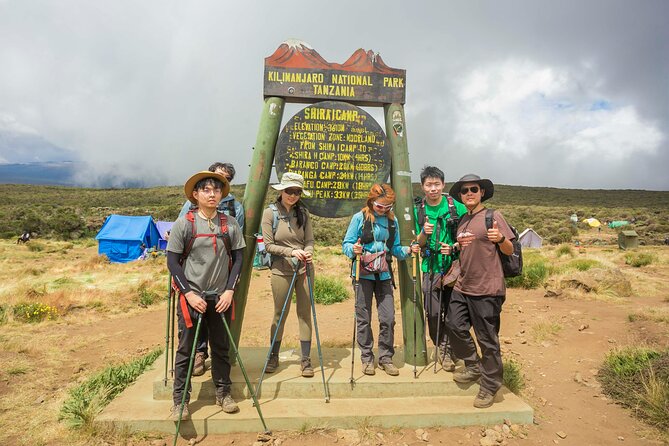
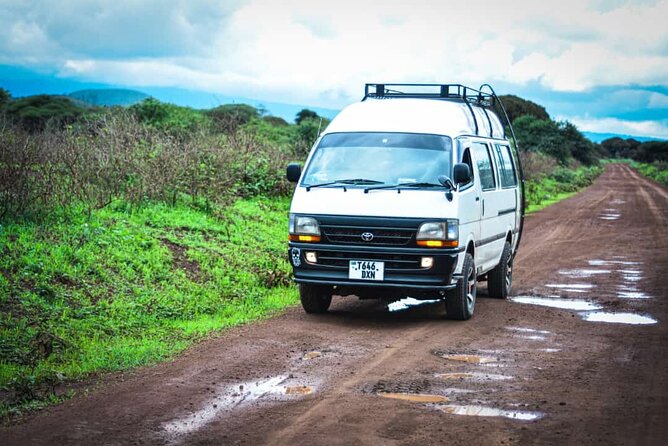
The morning begins with breakfast and an 8:00 am start from Moshi. You drive to Londorossi Gate for registration, then continue to the Lemosho trailhead. The trek begins in rainforest and ends at Big Tree Camp after about four hours of walking.
This is a friendly first day by Kilimanjaro standards. The rainforest is thick, green, and shaded, and the trail gives you an early sense of the mountain without immediately demanding a huge effort. It is also a useful test of your boots, daypack, rain protection, and general pacing.
Do not treat the short walking time as a sign that the climb will be easy. You still have several days ahead, and the smartest approach is to walk slowly from the start. The team handles transportation and park formalities, so you can concentrate on settling into the rhythm of walking, eating, drinking, and resting.
Day 2: Rainforest gives way to heath
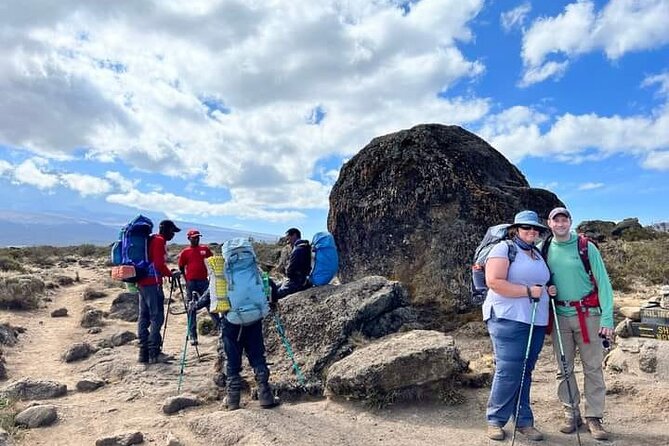
Day 2 continues through the forest before the trail becomes steeper and enters the heath zone. After about five hours, you reach Shira Camp 1.
This transition is one of the pleasures of Lemosho. In a single day, you leave the enclosed forest and begin to see more sky and open ground. The route feels less like a woodland hike and more like a high mountain trek.
The extra exposure can also bring stronger sun, wind, or rain, so keep a warm layer and rain shell easy to reach. At camp, the value of having a cook and support crew becomes clear. You need enough food and fluids to recover each day, and several accounts of this trip specifically praise the varied, balanced meals and hot drinks served in camp.
Day 3: A shorter acclimatization day on Shira
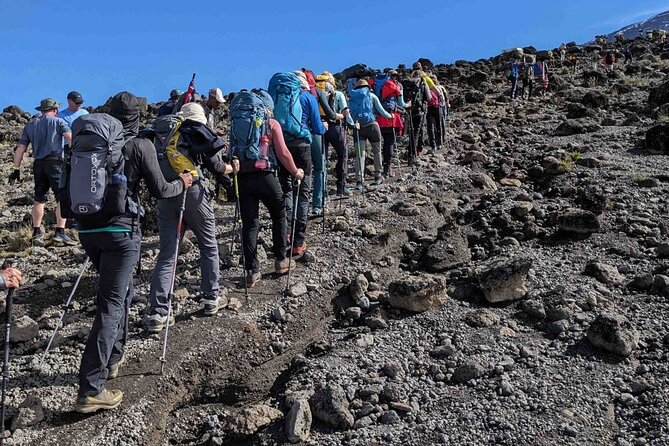
Day 3 is relatively short, at about five hours, and moves toward the Shira Plateau. You get wide views of Kilimanjaro and the surrounding area while gaining height at a controlled pace.
This day matters because altitude does not care how fit you are. A strong runner can still feel the effects of rapid elevation gain, while a steady walker may adjust well. A shorter day gives you time to notice how your body is responding before the route becomes more demanding.
I would use this day to speak openly with your guide about headaches, nausea, unusual tiredness, or breathing trouble. The package includes experienced guides, first aid kits, and oxygen tanks, but safety equipment works best when you report symptoms early. Do not hide a problem to avoid slowing down the group.
A few more Moshi & Kilimanjaro days to compare
- Safari Serengeti And Ngorongoro
★ 5.0 · 288 reviews - Climbing Kilimanjaro – Machame Route
★ 5.0 · 170 reviews - Climbing Kilimanjaro through 7 days Machame Route
★ 5.0 · 151 reviews - Kilimanjaro climb, Lemosho Route (8-day)
★ 5.0 · 148 reviews
Day 4: Lava Tower, Shira Plateau, and Barranco
Day 4 is one of the key days of the itinerary. You cross the Shira Plateau, reach the junction for Lava Tower, stop for acclimatization, and then descend to Barranco Camp. The full trek takes about seven hours.
Lava Tower gives you a valuable high point before you sleep lower at Barranco. That pattern helps your body adjust and makes the day more than a simple transfer from one camp to another. You also get changing views of the upper mountain, volcanic ground, and the route ahead.
The descent to Barranco includes the scenic Barranco Wall. From a distance it can look intimidating, but the itinerary describes it as part of the approach rather than a technical climbing obstacle. You should expect a long day with uneven ground and some hands-on movement, not a vertical rock climb.
This is also where the route’s beauty and physical demands meet. The scenery becomes more stark, and the air feels thinner. Keep your pace calm, drink regularly, and save energy for the next morning.
Day 5: Up the Barranco Wall to Karanga
You begin Day 5 by climbing the Barranco Wall, then continue through valleys and ridges to Karanga Camp. Walking time is about five hours.
The wall is often the most talked-about feature of this section because its appearance is more dramatic than its actual route description suggests. You may need to use your hands in places, but the essential skill is careful, steady movement while following the guide.
From there, the trail rises and falls through mountain valleys. The day is shorter than Day 4, but do not assume it will feel easy. You are already at altitude, and the repeated ridges can test tired legs. The reward is the view toward Kibo’s southern glacier, a sharp reminder that the summit is now close.
The team support is important here. Several climbers have singled out porters for their positive attitude and practical help, while guides such as Efatha, Sebastian, Elissafi, and Kenny have been praised for encouragement and a strong sense of safety. Staff assignments can vary, but the company’s support structure is clearly a major part of the experience.
Day 6: Alpine desert and Barafu Camp
Day 6 takes about four hours and crosses alpine desert terrain toward Barafu Camp. The campsite has views of Mawenzi and the summit ridge, and it is your base before the final ascent.
This day is short on paper, but Barafu is not a place to spend casually wandering around. You need to eat, drink, organize your summit clothing, and rest. Your guide should explain the timing and plan for the night ahead. Keep essential items close, since you may leave camp in the early hours.
The setting is stark compared with the rainforest at the start. There is less shelter, less vegetation, and a stronger sense that you are entering the final high section. That contrast is part of what makes Lemosho so satisfying, but it can also make the cold and fatigue more noticeable.
Day 7: Stella Point, Uhuru Peak, and Mweka Camp
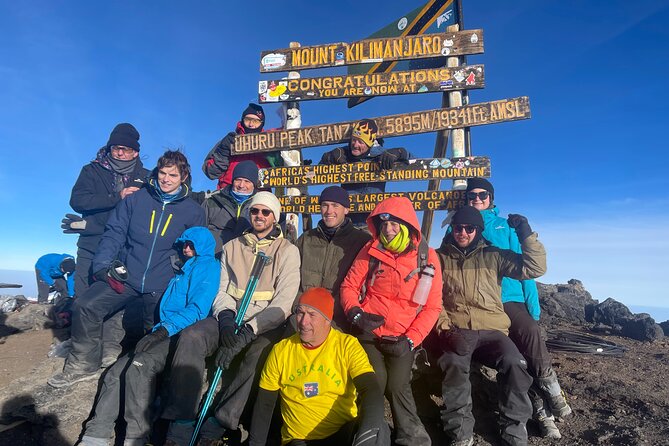
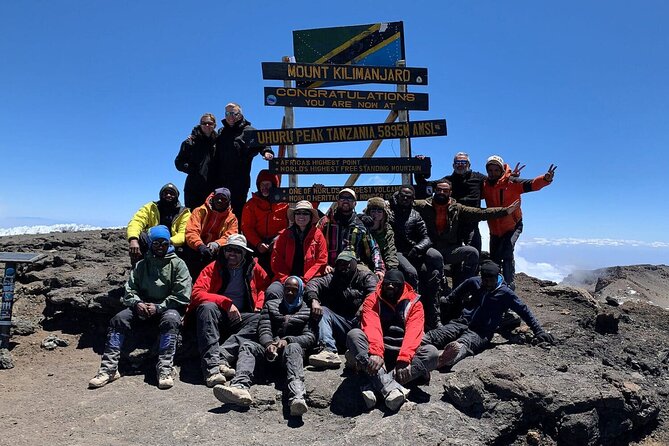
Summit day begins in the early hours. You climb toward Stella Point and aim to arrive around sunrise, then continue along the crater rim to Uhuru Peak, the highest point in Africa. After reaching the summit, you descend to Barafu for a short rest before continuing to Mweka Camp.
The total walking time is about 13 hours, making this the hardest day by a wide margin. The climb to Stella Point is slow and tiring, and the altitude can make every step feel larger than it should. Once you reach Uhuru Peak, take the moment seriously, but do not linger longer than your guide advises. The summit is cold, and descending safely is the next priority.
The return to Barafu is only part of the descent. After resting, you continue to Mweka Camp, which means your legs and concentration will be tested long after the summit photographs are taken. This is where preparation matters. Use warm layers, carry enough water, keep snacks available, and follow the guide’s pace.
The certificate awarded after the trek is a small but welcome finish to a very long day. More important, the route gives you a structured summit attempt rather than treating the peak as an optional add-on.
Day 8: Down through rainforest to Moshi
The final five-hour descent leads through rainforest to Mweka Gate. At the gate, you say goodbye to the mountain crew and transfer back to your hotel in Moshi.
The last day is physically easier than summit day, but descending can be rough on knees and ankles. Trekking poles can help if you bring them, though personal gear is not included in the package. The return to forest also brings a welcome change in air, temperature, and scenery.
Back in Moshi, you can celebrate properly. Extra accommodation and meals before or after the climb are not included, so plan those nights separately if your flights do not line up with the eight-day schedule.
Meals, tents, porters, and safety support
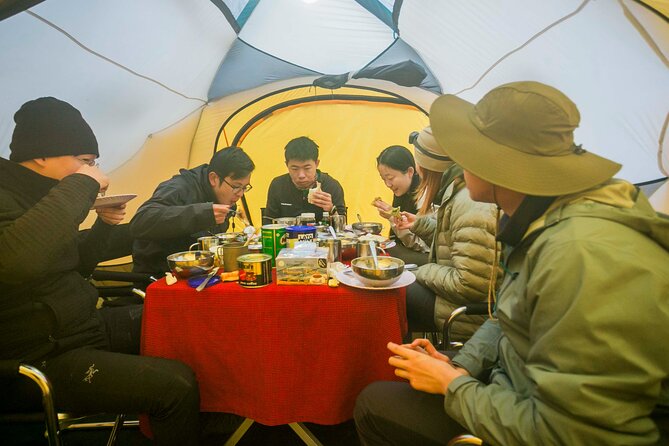
All eight breakfasts, eight lunches, and eight dinners are included. The food is prepared by the trek cook, and the supplied accounts give particular credit to the variety and balance of meals. One detail that may matter on cold mornings is the report of hot drinks being brought to the tent.
You camp throughout the trek. Tents, sleeping bags, sleeping mats, and other camping equipment are listed as included, along with clean drinking water. You should still confirm the equipment specifications before departure, especially if you are particular about sleeping-bag warmth or mat thickness.
Guides and porters are included, as are first aid kits and oxygen tanks. That does not remove the need for travel insurance. Medical, evacuation, and trip cancellation cover are specifically excluded, and high-altitude trekking is exactly the sort of trip where evacuation coverage deserves careful attention.
Tips are also excluded. Budget for them separately and ask the operator for current guidance on fair distribution among guides, porters, cooks, and other staff. Porters carry much of the camp operation, so responsible treatment and fair tipping are important parts of choosing a trekking company.
Group size, fitness, and the real level of effort
The maximum group size is 10 people. That is small enough for the guide to keep track of the group more easily, while still giving you company on the trail. If you are booking with friends or family, group discounts may be available.
The listed fitness requirement is moderate, but I would interpret that carefully. You do not need advanced climbing skills, yet you do need to walk for several hours on consecutive days and handle a 13-hour summit day. A moderate fitness label should not be read as a promise of comfort.
You will be best suited to this trek if you can train for long uphill walks, practice carrying a daypack, and become comfortable walking slowly. The route rewards consistency more than speed. You should also be ready for basic tent camping and for a schedule controlled by weather, altitude, and safety.
Is $2,500 a fair value?
At $2,500 per person, the price is not cheap, but it includes the expensive backbone of a Kilimanjaro climb. Park permits and fees alone form a major part of any legitimate trek budget, and this package also includes airport transfers, trailhead transport, staff, camping, meals, water, safety supplies, and a summit certificate.
The eight-day format adds value because it gives you a more gradual ascent than a rushed program. You are paying not only for transport and meals, but also for time on the route and an acclimatization pattern that includes Lava Tower before Barranco.
The price does not cover flights, insurance, personal equipment, tips, extra hotel nights, alcohol, or optional excursions. Add those costs before comparing this climb with another company. A lower advertised price may not be lower once you add permits, meals, equipment, and transport.
Who should book this Lemosho climb?
I would choose this trip if scenery and acclimatization matter more to you than finding the shortest or cheapest route. The eight days give you a measured pace, and the route passes through more distinct mountain zones than a quick ascent.
It also fits people who want organized support. Airport transfers, a pre-climb briefing, guides, porters, cooks, tents, meals, water, and safety equipment reduce the amount of planning you need to handle alone. The small group limit is another useful feature for first-time high-altitude trekkers.
I would hesitate if you dislike camping, have not prepared for long walking days, or are looking for a soft adventure. I would also avoid booking without travel insurance and without understanding the extra costs for personal gear and tips.
The company’s published recommendation rate is 100 percent, with a listed rating of 5 from 13 ratings. The strongest praise centers on friendly guides, supportive porters, good food, hot drinks, reliable organization, and a strong sense of safety. Names connected with the guiding team include Jackson, Efatha, Sebastian, Elissafi, Kenny, Innocent, and Martin, though the exact crew for your departure may differ.
Should you book it?
Book this trek if you want a scenic, carefully paced Kilimanjaro climb and can accept the cost, camping, altitude, and very long summit day. The Lemosho Route is a good fit for you if reaching Uhuru Peak matters, but you also want time to enjoy the route rather than rush through it.
Before paying, confirm the departure dates, personal equipment list, sleeping-bag details, tipping guidance, and insurance requirements. If those pieces fit your plans, the $2,500 package offers a well-supported eight-day path from Moshi to the roof of Africa.
FAQ
How long is the Kilimanjaro Lemosho Route experience?
The climb lasts approximately eight days, beginning and ending in the Moshi area.
What time does the experience start?
The listed start time is 8:00 am.
How large is the group?
The activity has a maximum of 10 travelers.
What fitness level do I need?
A moderate physical fitness level is required. You should be prepared for several hours of walking on most days and a summit day lasting about 13 hours.
Are airport transfers included?
Yes. Transfers to and from Kilimanjaro International Airport are included.
Are meals included?
Yes. The package includes eight breakfasts, eight lunches, and eight dinners.
Is camping equipment provided?
Yes. Tents, sleeping bags, sleeping mats, and other camping equipment are included.
What happens if poor weather cancels the climb?
If poor weather causes cancellation, you will be offered a different date or a full refund. You can also cancel at least 24 hours before the experience start time for a full refund.
Newly listed around Moshi & Kilimanjaro
- Climb Mount Kilimanjaro: 7 Days Machame Route★ 5.0 · 3 reviews
- 6 Days Mount Kilimanjaro Climbing via Rongai Route★ 5.0 · 3 reviews
- Explore 1 day Ngorongoro Crater Budget Group Safari from Arusha★ 5.0 · 3 reviews
- Mt. Kilimanjaro Day Hiking★ 5.0 · 3 reviews
- Chemka (Kikuletwa) Hot Springs, Tanzania★ 5.0 · 3 reviews
- Guided City tour of Moshi★ 4.3 · 3 reviews
- 8 Day Tanzania Family Safari★ 5.0 · 3 reviews
- Serengeti Safari with Sirikwa Travel★ 5.0 · 3 reviews
Kilimanjaro Climbs, compared.








Browse the lists this tour appears in