
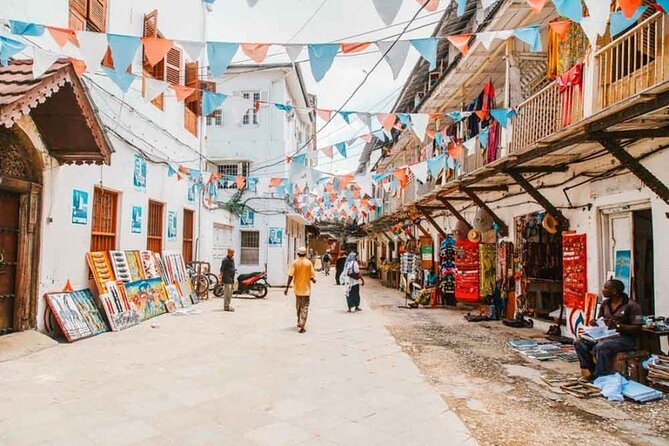
Reviewed · STONE TOWN TOURS
Stone Town walking tour, shopping, history and culture
Stone Town reveals itself best on foot, one narrow lane at a time. This private tour brings you from the People’s Palace Museum through old markets, forts, gardens, and landmarks tied to Zanzibar’s difficult past and modern culture.
I like the private guide setup, especially if you want to stop for questions or take the quieter lanes. I also like the mix of major sights and everyday places such as Darajani Market and Jaws Corner. The main consideration is the pace: three hours on foot can feel brisk, and hotel transport, lunch, and any shopping purchases are not included.
Key points at a glance
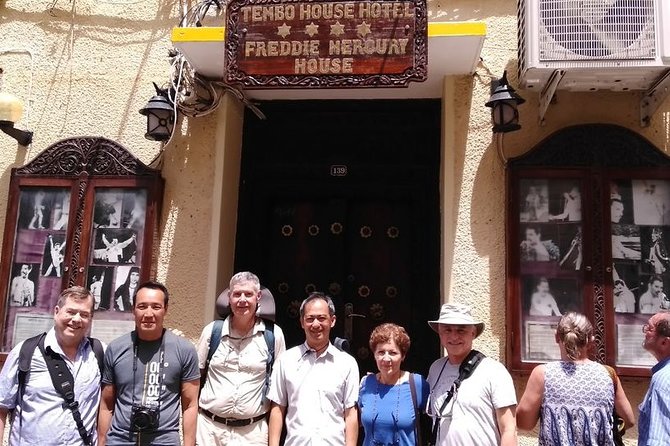
- A private Stone Town walk: Only your group takes part, so you can ask questions and set the pace within the three-hour schedule.
- Historic landmarks in one route: See the Old Fort, House of Wonders, former slave market, and Freddie Mercury Museum.
- Local life beyond monuments: The route includes Forodhani Garden, Jaws Corner, Darajani Market, narrow lanes, and local street food.
- A guide with personal context: Guides such as Abdul have led visitors through smaller, quieter streets while explaining Stone Town’s past and present.
- Good value at $25.85: The fee includes the guide, bottled water, and entry to the former slave market.
- Simple morning logistics: Meet at the People’s Palace Museum at 9:00 am and finish at the same place.
Why Stone Town works best as a walking tour
Stone Town is not a place you understand from a vehicle window. Its character lies in the tight streets, carved doors, old walls, market sounds, and sudden views toward the waterfront. A walk lets you connect the grand landmarks with the ordinary parts of town between them.
This tour lasts about three hours, which gives you enough time to cover the main sights without committing half a day. You will move through the old part of Zanzibar City with a local guide who explains the culture, the history of the city, and how people live today.
The private format matters here. Stone Town’s lanes can be confusing, and a guide gives the walk a clear shape. You can ask about a doorway, a market stall, a religious custom, or a piece of Zanzibar’s past without waiting for a large group to catch up.
The route also avoids making Stone Town feel like a string of museum stops. You will see major buildings, but you will also pass places where people shop, meet, eat, and go about their day. That mix is the real strength of the experience.
More History Tours in Zanzibar
- Zanzibar: Stone Town Historical Cultural Walking Guided Tour
★ 4.5 · 179 reviews - Stone Town Historical Walking Tour
★ 5.0 · 143 reviews - Stone Town’s Hidden History: Private Guided Walking Tour
★ 4.6 · 94 reviews
Starting at the People’s Palace Museum at 9:00 am
The tour begins at the People’s Palace Museum on Mizingani Road at 9:00 am. The meeting point is listed as R5QR+X6C, Mizingani Rd, Zanzibar, Tanzania, and the walk finishes back there.
A morning start is sensible in Zanzibar. You will have a better chance of walking before the strongest heat of the day, though you should still dress for sun and bring comfortable shoes. Bottled water is provided, but it is wise to use the water as a supplement rather than your only preparation for a three-hour walk.
Hotel pickup is not included. If you need a transfer, the operator can be contacted about arranging one, but that cost and arrangement are separate from the walking tour. This is worth settling before the day of the tour, particularly if your hotel is outside central Stone Town.
The meeting point also gives the walk a clear beginning and end. You do not have to guess where the guide will leave you, and you can continue exploring or return to your hotel after the tour.
The Old Fort and Stone Town’s public face
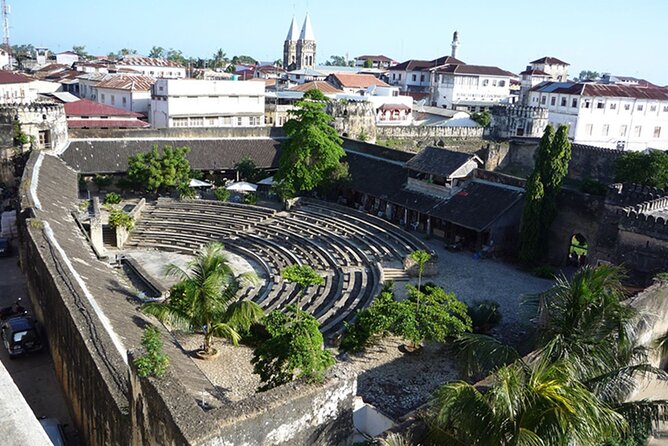
The Old Fort, also called Ngome Kongwe, is one of the essential stops. Its heavy walls give you a quick sense of Stone Town’s strategic position and long connection to trade, travel, and outside powers.
A guide adds value here because a fort can otherwise become a quick photo stop. You can ask how it fits into the wider story of Zanzibar and how the old defensive structure relates to the city around it.
The Old Fort is also a useful orientation point. From here, the tour moves naturally into the streets and public spaces of Stone Town. You begin to see how historic buildings, small shops, food stalls, and busy routes sit close together.
Do not expect a long, formal museum visit at every stop. This is a walking tour, not a series of extended indoor tours. The benefit is breadth and local explanation, while the tradeoff is that some sights may receive only a short visit depending on the group’s pace and the guide’s route.
The House of Wonders and the waterfront
The House of Wonders, known locally as Beit-el-Ajaib, is another major landmark on the route. Its name alone hints at its former importance, and its position near the waterfront makes it one of the easiest buildings to recognize in Stone Town.
The tour uses the building as part of a wider explanation of Zanzibar’s past rather than treating it as an isolated attraction. You will learn how the old city developed and how its public buildings reflect the island’s changing fortunes.
The condition and access of historic buildings can vary, so the experience may involve viewing important sites from outside or spending limited time at them. That is not a flaw unique to this walk. It is simply something to keep in mind when booking a compact city tour with several stops.
The value comes from seeing the House of Wonders alongside the Old Fort, markets, and lanes. Taken together, these places give you a better sense of Stone Town than any single building could provide.
More Walking Tours in Zanzibar
- Stone Town Private Walking Tour
★ 5.0 · 371 reviews - Zanzibar: 3 Hours Private Stone Town walking Tour with Guide
★ 4.6 · 301 reviews - Stonetown: Food Markets and Street Food Walking Tour
★ 4.7 · 151 reviews - Zanzibar Stone Town Walking Tour
★ 5.0 · 145 reviews
The former slave market, a difficult but necessary stop
The former slave market is the most serious stop on the route. Zanzibar’s history includes the East African slave trade, and this part of the tour addresses that past directly.
Entry to the former slave market is included. That makes the stop more than a passing explanation in the street. You have a chance to spend time at a place connected to the people who were held and traded there, while your guide provides historical and local context.
Expect this section to be sobering. It is not a light sightseeing stop, and the subject deserves attention rather than a quick photograph. If you prefer a tour focused only on architecture and shopping, this part may feel emotionally heavier than the rest.
I consider its inclusion one of the strongest features of the itinerary. Stone Town’s beauty can easily distract from the forces that shaped Zanzibar. Learning about the slave market helps you see the city with a fuller understanding.
Freddie Mercury and modern Zanzibar

The Freddie Mercury Museum brings the tour into a more recent and familiar chapter of the city’s story. Freddie Mercury was born in Zanzibar, and the museum connects his international fame with Stone Town’s local identity.
This stop gives the walk some variety. After forts and colonial-era buildings, you get a link to music, popular culture, and the way Zanzibar is remembered around the world.
The description refers to the Freddie Mercury House and Freddie Mercury Museum. Because the experience is only about three hours, you should expect a guided visit as part of the walking route rather than a long standalone museum session.
If music history is important to you, you may want extra time in this area after the tour ends. The scheduled walk continues through several other attractions, so the guide needs to keep moving.
Darajani Market, street food, and daily life
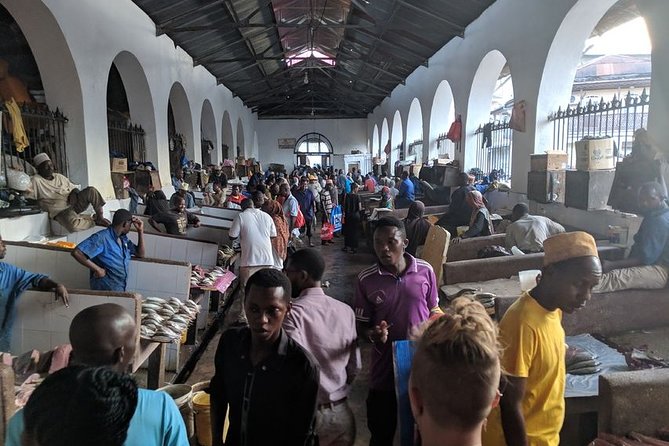
Darajani Market is where the tour shifts most clearly from historic sightseeing to daily life. Markets tell you what people buy, cook, carry, and discuss. They also show you a side of Stone Town that polished landmarks cannot.
You will have a chance to see local street food and learn about Zanzibar’s culture and ways of living. The guide can help explain what you are seeing, which is especially useful when stalls, foods, or customs are unfamiliar.
Market visits are not always tidy or quiet. You might find narrow aisles, strong smells, crowded stretches, and sellers working rather than performing for visitors. That is part of the point, but you should stay alert with your belongings and follow your guide’s lead.
Lunch is not included. The tour may show you food stalls and local eating spots, but you should not assume a meal is part of the price. Bring the appetite for an informal tasting if something catches your eye, and budget separately for anything you buy.
Forodhani Garden and Jaws Corner
Forodhani Garden adds a waterfront pause to the route. It is one of the city’s well-known public spaces and a useful place to understand how Stone Town changes between daytime sightseeing and evening food activity.
Jaws Corner offers another look at local social life. It is known as a meeting place, and including it helps explain that Stone Town is not only a collection of old buildings. It is also a neighborhood where people gather and maintain daily routines.
These stops may be brief, but they help connect the tour’s main themes. You see history at the forts and former slave market, culture at the market and food areas, and present-day social life at public gathering spots.
The exact order can vary. A private guide has some flexibility, and the tour may use narrower, quieter streets instead of relying only on the largest roads. Abdul, one guide associated with this experience, has been specifically noted for taking groups through those smaller lanes while explaining the city.
Narrow streets, carved doors, and time to shop
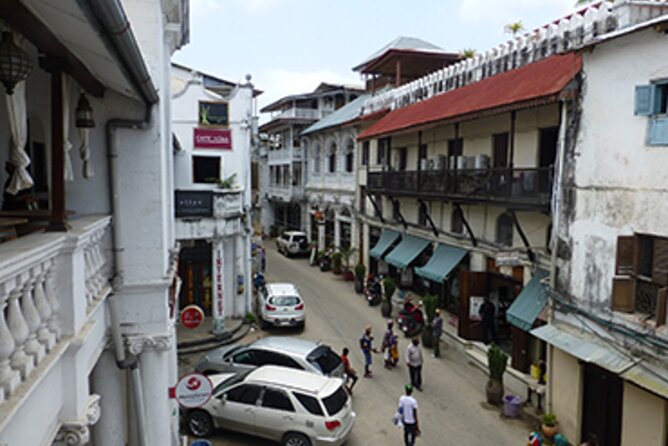
The best part of the route may be the walking between named attractions. Stone Town’s narrow streets reveal details that are easy to miss when you are focused only on a map: door carvings, old walls, changing street width, and glimpses of local life.
You will also have time to browse for souvenirs. The private format is helpful here because you can ask the guide where an item comes from or how much time remains before the next stop.
Shopping can affect the pace. If you want a serious buying session, three hours may not provide enough time for long bargaining at several shops. If you simply want to look, compare prices, and pick up a small reminder of Zanzibar, the schedule should be more suitable.
Keep your expectations practical. This is not a dedicated shopping tour, and purchases are not included. Shopping is an extra layer added to a history and culture walk.
What the private format is worth at $25.85
At $25.85 per person, the tour offers solid value if you want a guide for the main Stone Town sights. The price includes the guide, bottled water, and entry to the former slave market. The description also states that admission fees are included, so confirm the exact coverage when booking if you are especially concerned about a particular attraction.
The private setup is the bigger value than the low price alone. You are not sharing the walk with a large group, and you can ask questions that suit your interests. For a couple, family, or small group, that personal attention can make the history easier to follow.
The price does not include transportation from your hotel, lunch, or souvenirs. Those exclusions are reasonable for a central walking tour, but they mean your true day cost will be higher if you need a transfer or plan to eat along the way.
Communication appears to be a strong part of the service. The operator has been described as quick to respond through WhatsApp, flexible with arrangements, and punctual for transport and tours. That is useful if you are combining this walk with airport transfers or a Prison Island outing, though those are separate services.
Who should book this Stone Town walk
I would choose this tour if you want a first look at Stone Town that combines major landmarks with markets and local streets. It suits you especially well if you prefer having a guide explain the setting rather than reading signs on your own.
It is also a good fit for visitors with limited time. The three-hour schedule covers a lot, and the return to the People’s Palace Museum makes it easy to plan the rest of your day.
Families and small groups may appreciate the private arrangement. You can ask the guide to explain difficult history at a suitable level, pause for questions, and avoid being tied to the interests of a larger group.
I would think twice if you dislike walking in heat, want long indoor visits, or expect a full meal and hotel pickup to be part of the price. You should also allow extra time if shopping is a major goal.
The tour is suitable for most people according to the participation information, but the practical demands remain simple: comfortable shoes, sun protection, and enough energy for several hours on foot.
Booking, cancellation, and final advice
You receive confirmation when booking, and the activity is supplied as a mobile ticket. Cancellation is free up to 24 hours before the 9:00 am start time for a full refund. Cancellations or changes made inside that 24-hour window are not accepted for a refund, with cut-off times based on Zanzibar’s local time.
Should you book it? Yes, if you want an affordable, private introduction to Stone Town with a useful balance of architecture, difficult history, markets, street food, and modern culture. The strongest reasons are the personal guide, the included former slave market entry, and the chance to use the smaller lanes instead of simply following the broadest streets.
Before booking, confirm your meeting plan and ask about hotel transfer if needed. If Abdul is assigned, you can expect the kind of route that uses quieter streets and detailed local explanation, but guide assignment should be confirmed rather than assumed.
FAQ
How long does the Stone Town walking tour last?
The tour lasts approximately three hours.
What time does the tour begin?
It starts at 9:00 am.
Where does the tour meet?
The meeting point is the People’s Palace Museum, R5QR+X6C, Mizingani Rd, Zanzibar, Tanzania.
Where does the tour finish?
The activity ends back at the meeting point.
Is this a private tour?
Yes. Only your group participates in the private activity.
Is the former slave market entrance included?
Yes. Entry to the former slave market is included, along with the tour guide and a bottle of water.
Is hotel transportation or lunch included?
No. Transportation from your hotel and lunch are not included. You can contact the operator about arranging a transfer.
More shopping trips in Zanzibar
- Stone Town Guided Tour: Culture, Slave Market & Spice Market
★ 4.8 · 44 reviews - Spice , Prison Island ,Stone Town and Slave Market Site Tour
★ 5.0 · 24 reviews - Stone Town Private Tour with Slave Market Tickets
★ 5.0 · 13 reviews - Zanzibar:Stone town Street food market walking tour,transfer
★ 4.5 · 9 reviews
More Stone Town walks
- Zanzibar: Stone Town, Spice Tour, Prison Island with Lunch
★ 4.4 · 1,219 reviews - Zanzibar: Prison Island, Stone Town, & Spice Farm Tour
★ 4.5 · 579 reviews - Zanzibar; Prison Island, Nakupenda, StoneTown Tour with BBQ
★ 4.3 · 457 reviews - Zanzibar: Stone Town, Spice tour & Prison Island with Lunch
★ 4.6 · 453 reviews
Newly listed around Zanzibar
- Zanzibar: Nungwi/Kendwa Beach Sunset Dhow Cruise with Fruits★ 3.4 · 3 reviews
- Prison Island, Sea Turtles, Rock Restaurant & Relax in Beach★ 4.6 · 3 reviews
- Starfish Beach; The Rock; Kuza Cave; Paje Beach; Salaam Cave Tour★ 4.5 · 3 reviews
- Joazani forest & Spice farm with lunch★ 5.0 · 3 reviews
- Zanzibar: Half-Day Spice Farm Tour,the flavours of Zanzibar★ 4.7 · 3 reviews
- Nakupenda Island Snorkeling Sea trip & Lunch W/Transfer -Zanzibar★ 4.0 · 3 reviews
- Mnemba Island Snorkeling and Dolphin tour★ 5.0 · 3 reviews
- Zanzibar:Jozani forest, Spice farm with Swahili Cuisine clas★ 4.2 · 3 reviews
Stone Town Tours, compared.






Full-Day Private Stone Town +Spice Farm and Prison Island Tour
Read our review →
Browse the lists this tour appears in