
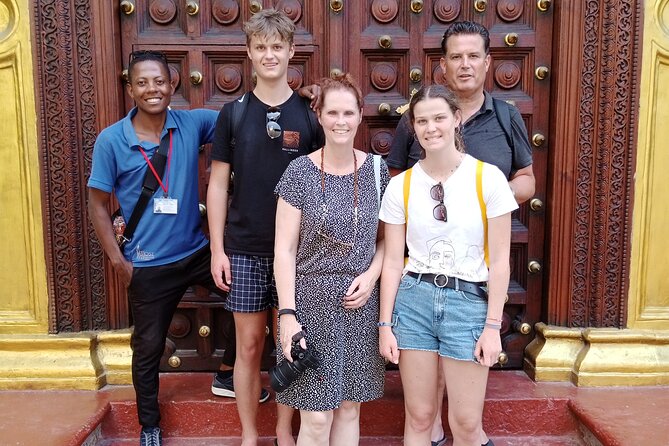
Reviewed · STONE TOWN TOURS
Stone Town Historical Walking Tour
Stone Town is best understood on foot, where carved doors, narrow lanes, old markets, and grand waterfront buildings bring Zanzibar’s past into focus. This private tour covers the old Mj Mpongwe area and explains how local communities, Persians, Portuguese, and the Sultanate of Oman shaped the city.
I like the personal guide format, especially for a first morning in Zanzibar. I also like the mix of major sights and ordinary places, from the House of Wonders and Old Fort to Jaws Corner and Darajani Market. Guides such as Alfa, Khalfan, Rabik, and Sultan are praised for patience, clear explanations, and adapting the walk to children or special interests.
The main consideration is the meeting point. The House of Wonders area has been affected by construction, and one booking caused confusion when the map pin led toward a closed site. Confirm the exact spot before setting out, and remember that the former slave market costs an extra $5.
Key points to know before you book
- A private three-hour introduction: Only your group takes part, so you can ask questions, pause for photos, or adjust the pace.
- A serious look at slavery: The route includes the former slave market site and explains the East African slave trade, with entry costing $5 extra.
- Several guide names appear in the service: Alfa, also called Alpha or Alfan in some accounts, Khalfan, Rabik, and Sultan have led this experience.
- A useful first-day orientation: You see major landmarks, market streets, churches, and gathering places in one walk.
- No transport is needed during the tour: The walk starts and ends at the House of Wonders, but you arrange your own ride to and from the meeting point.
- Strong overall rating with one practical warning: The experience is rated 4.9 from 143 ratings and recommended by 97 percent, yet the meeting location deserves careful checking.
Starting at the House of Wonders
The walk begins at the House of Wonders on Sokoku Street, listed under the location code R5QQ+JR. This grand building is one of Stone Town’s most recognizable landmarks and gives the tour a fitting starting point.
You should not assume that the House of Wonders is fully open for an interior visit. Its condition has been described as poor, and construction around the building has caused confusion for at least one group arriving at the wrong spot. Treat it first as a meeting landmark, not as a guaranteed museum stop.
Your guide should use the area to explain how Stone Town developed as a port and seat of power. The point of a walking tour here is not just to collect photographs. It is to connect the buildings around you with Zanzibar’s local, Persian, Portuguese, and Omani influences.
Because this is a private activity, you have more room to ask about details that catch your eye. If a carved door, shop, or old alley interests you, say so. Guides have adapted the walk for solo visitors, families, and groups of up to 10 people.
More History Tours in Zanzibar
- Zanzibar: Stone Town Historical Cultural Walking Guided Tour
★ 4.5 · 179 reviews - Stone Town’s Hidden History: Private Guided Walking Tour
★ 4.6 · 94 reviews - Private Historic Stone Town Tour
★ 5.0 · 79 reviews
Mj Mpongwe and the old city lanes
The tour takes you through Mj Mpongwe, the old part of Zanzibar City. This is where the experience becomes more than a parade of famous buildings.
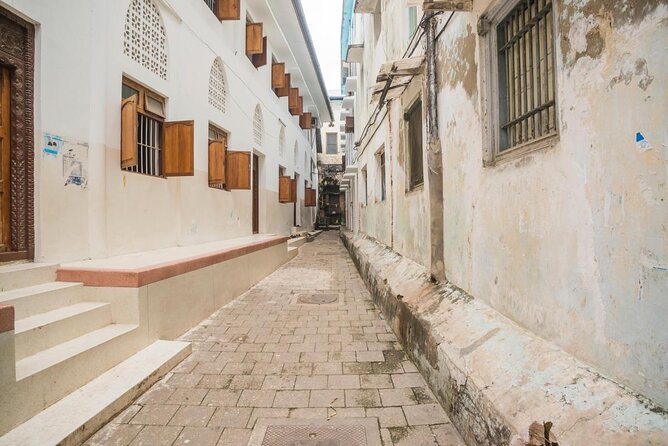
Stone Town’s narrow lanes reward slow walking. Your guide can explain how different communities lived, traded, worshipped, and governed here. You will also have a chance to notice details that are easy to miss on your own, particularly the carved wooden doors that give many old buildings their character.
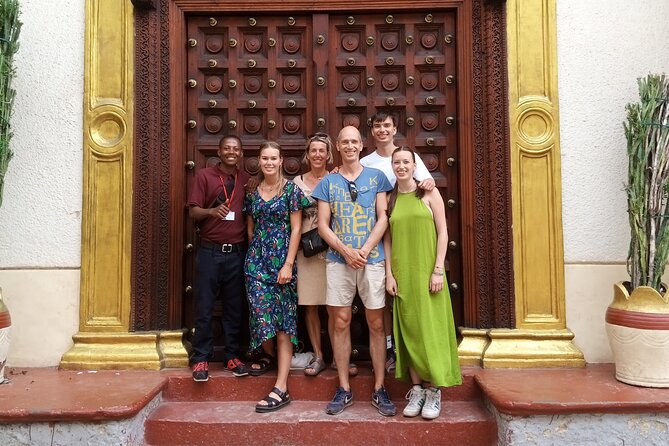
One guide, Sultan, made a point of spending time with visitors looking at the doors. That is a useful reminder not to rush. The best part of these lanes may be a small design detail or a brief explanation about a building rather than a formal attraction with a ticket booth.
The streets can feel tight and confusing, which is exactly why a local guide helps. A private format also lets you pause for photographs without holding up a large group. Families can benefit from this flexibility, too. Rabik has been particularly effective at keeping children aged 7 and 12 interested during a walk lasting more than three hours.
Old Fort and the changing face of Stone Town
The Old Fort is one of the major stops. Its heavy walls point to the defensive role Stone Town once played, while the area around it connects the old city to present-day public life.
Your guide will place the fort within Zanzibar’s broader story rather than treating it as an isolated ruin. This is where the Portuguese period, Omani rule, and the importance of the port begin to fit together.
The tour information does not promise a separate entrance ticket or a long interior visit at every landmark. Ask your guide what you will enter and what you will view from outside. That small question helps you understand how much of your time is devoted to walking commentary and how much to formal site access.
I like this arrangement for a short city orientation. You can see several important places without spending the entire afternoon inside one museum. The tradeoff is that the tour may feel brisk if you want detailed architectural study at every stop.
Freddie Mercury’s former home
Freddie Mercury’s connection to Zanzibar gives the route a modern cultural thread. The tour points out the house where the Queen vocalist lived, adding a personal story to a city often presented only through sultans, traders, and colonial buildings.
This stop is primarily about location and context. Do not expect the walking tour description to guarantee a full museum visit or a long exhibition inside the house. A separate Freddie Mercury Museum is also listed among the sights, so confirm whether your guide plans to include the museum itself and whether an entrance fee applies.
The stop works well because it breaks up the older political and religious history. You move from palaces, forts, and markets to a twentieth-century musical figure with a direct link to Zanzibar.
For music fans, this may be a highlight. For others, it is a quick, interesting part of a larger route rather than the central reason to book.
More Walking Tours in Zanzibar
- Stone Town Private Walking Tour
★ 5.0 · 371 reviews - Zanzibar: 3 Hours Private Stone Town walking Tour with Guide
★ 4.6 · 301 reviews - Stonetown: Food Markets and Street Food Walking Tour
★ 4.7 · 151 reviews - Zanzibar Stone Town Walking Tour
★ 5.0 · 145 reviews
Forodhani or Foodchain Garden and Jaws Corner

The route includes a garden area identified as Foodchain Garden in one description and Forodhani Garden in the itinerary. These names appear to refer to the waterfront garden area, but you should ask your guide to confirm the exact stop on the day.
Forodhani is useful as a pause in the historical narrative. It links the old city to the sea and to the everyday social life of Zanzibar. The tour does not include food or drinks, so budget separately if you want to buy anything during or after the walk.
Jaws Corner offers another look at local social life. It is known as a meeting place in Stone Town, and the stop helps show how the city functions beyond its formal monuments. This is the kind of place where a guide’s local explanation adds value, since the setting itself may not tell you much.
The experience is not a food tour, and personal spending is excluded. If you want to taste something, shop, or linger, make your wishes clear. Previous visitors have sampled jackfruit and seen fish markets during related market sections, but food tasting is not promised as an included feature.
Darajani Market and the everyday city
Darajani Market is one of the most useful stops for understanding present-day Stone Town. It brings you into a working market rather than a preserved historical setting.
Expect an active route through stalls and market areas, with opportunities to see local produce and fish trading. Your guide can help explain what you are looking at and may point out seasonal items such as jackfruit.
This is also the part of the tour where practical guidance can help. One guide was praised for offering advice about souvenir purchases. That does not mean you must buy anything, but a local opinion can help you compare prices and avoid rushing into the first purchase.
Keep your belongings secure and follow your guide’s lead in crowded areas. The tour description does not promise a dedicated market tasting session, so treat any food sample or purchase as optional and paid separately.
Darajani is a strong reason to choose a walking tour over a simple sightseeing drive. A vehicle can take you near the market, but it cannot explain the small details of daily trade as you move through the lanes.
Anglican and Catholic churches
The route includes both Anglican and Catholic churches. These stops show another side of Zanzibar’s past and give the tour a religious and architectural balance.
The Anglican church is especially important within the story of the former slave market area. The Catholic church adds a different Christian presence to the city’s mix of faiths. Your guide explains these places as part of Stone Town’s wider social history, not as disconnected buildings.
The tour description does not specify guaranteed interior access, worship schedules, or dress rules. Wear clothing suitable for entering religious spaces, and ask before taking photographs inside. If a service is taking place, your guide should tell you how to proceed respectfully.
I appreciate the inclusion of both churches because it keeps the tour from focusing only on royal buildings and trade. You see how religion, commerce, and political power occupied the same compact city.
The former slave market site
The former slave market is the most serious stop on the route. The tour explains the East African slave trade and its role in Stone Town, making this more than a sightseeing walk.
Entrance to the former slave market costs $5 per person and is not included in the $20 tour price. The guide fee, taxes, transport, personal purchases, souvenirs, tips, and this entrance fee are all separate, so carry enough money for the parts you wish to enter.
Allow time for this stop to sink in. It is not a light interlude between markets and monuments. The value comes from hearing the local and regional context, then connecting that story to the buildings and streets around you.
If you prefer a faster overview, tell your guide in advance. If this subject matters to you, ask for extra explanation and consider using the private format to spend more time here. The tour gives you a starting point for understanding a painful part of Zanzibar’s past, but it is still a general city walk rather than a specialist academic study.
What the $20 price really covers
At $20 per person, the price is reasonable for a private, guide-led walk lasting about two to three hours. You are paying mainly for local interpretation and the ability to have the route shaped around your group.
The price is less simple than it first appears. You must add the $5 former slave market entrance if you want to go inside, plus any transport to the meeting point and any food, souvenirs, or other personal purchases. A tip for the guide is also not included.
For a solo visitor, the private setup may feel especially worthwhile because you can ask frequent questions without worrying about a group. For a family or larger party, the cost can also make sense because the guide can adjust the pace. One group of 10 was handled by Alfa and a guide partner, so larger parties may have additional guiding support, though you should confirm arrangements when booking.
This is not the tour to choose if you want every admission covered or a vehicle between sights. It is a good-value orientation if you want a local guide, a walking route, and a clear introduction to Stone Town.
The guides and the private-tour advantage
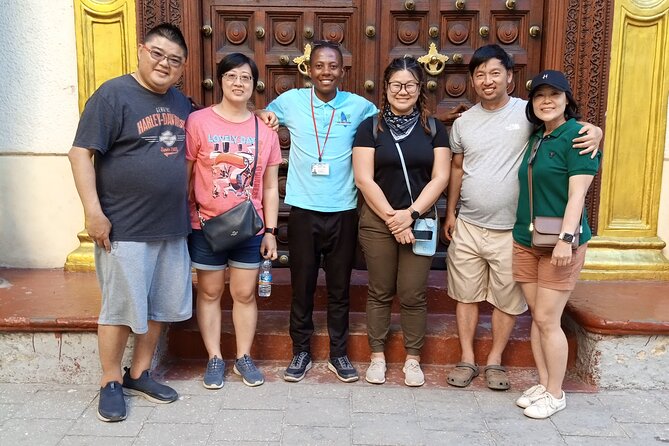
Several guides are associated with this experience. Alfa, also referred to as Alpha or Alfan, is repeatedly praised for clear explanations, patience, and answering questions. Khalfan is described as welcoming, careful about safety, and willing to let people stop for photographs and shopping.
Rabik has worked well with children, keeping a 7-year-old and a 12-year-old engaged for more than three hours. Sultan is noted for his enthusiasm and attention to Stone Town’s carved doors.
Names may vary depending on who is assigned, so you should not assume a specific guide unless the operator confirms it. Still, the repeated emphasis on patience and personal attention is important. This is not a fixed audio route. Your experience depends in part on the guide’s storytelling and on how actively you ask questions.
Some guides have also helped with practical matters, such as making sure a visitor met a ride back to the hotel or lending $5 temporarily so a solo visitor could pay an entrance fee. Those are useful touches, but they should be viewed as individual acts of help, not guaranteed inclusions.
Timing, meeting point, and useful preparation
The experience is generally described as about three hours, though the official duration is two to three hours. Plan for a walking pace rather than a short stroll, and allow extra time if your group wants photographs, market browsing, or a longer discussion at the former slave market.
The tour starts and ends at the House of Wonders. There is no included transport, so arrange your own way there and back. The activity provides a mobile ticket, and booking confirmation is issued at the time of booking.
The meeting point deserves special care. Construction around the House of Wonders has caused at least one group to spend 30 minutes trying to locate the guide. Confirm the exact meeting instructions with Alfa Tours & Safaris before you leave your hotel, and do not assume that a map pin inside a construction area means you should enter the site.
Most people can participate, and the tour is private to your group. The experience requires good weather. If poor weather causes cancellation, you are offered another date or a full refund.
You can cancel for a full refund up to 24 hours before the start time. Cancellations or changes made within 24 hours are not refunded or accepted.
Who should book this Stone Town walk?
I would choose this tour for a first day in Zanzibar, especially if you want the city explained before visiting beaches or taking other island excursions. It gives you a useful framework for the House of Wonders, Old Fort, churches, markets, former slave market, and Freddie Mercury connection.
Families should consider it because the private format allows the guide to slow down and keep children involved. Solo visitors also benefit from the attention and the ability to ask as many questions as they like.
History-focused visitors should book it if they want a broad introduction to slavery, Omani rule, trade, religion, and local life in one outing. If your main interest is only Freddie Mercury, this is probably too wide-ranging. If you dislike walking, market streets, or uneven city routes, you may prefer a shorter sightseeing option.
Should you book the Stone Town Historical Walking Tour?
Yes, if you want a fairly priced private introduction with a strong focus on people, places, and local context. The 4.9 rating from 143 ratings and 97 percent recommendation support the idea that the guide service is usually the main strength.
Book with realistic expectations. The $20 does not cover all entrance fees, the House of Wonders may be affected by construction, and the meeting point needs confirmation. But with the extra $5 for the former slave market, comfortable walking shoes, and a little patience, this tour gives you a useful and personal first look at Stone Town.
FAQ
How long does the Stone Town Historical Walking Tour last?
The tour lasts approximately two to three hours. The typical itinerary is about three hours.
Where does the tour start and finish?
It starts at the House of Wonders, at R5QQ+JR on Sokoku Street in Zanzibar, Tanzania. The activity ends back at the same meeting point.
Is the tour private?
Yes. Only your group participates in the private activity.
Is the former slave market entrance included?
No. Entry to the former slave market costs $5 per person and is paid separately.
Does the tour include transportation?
No. You arrange your own transport to and from the meeting point, and no transport is provided during the walking tour.
What happens if the weather is poor?
The experience requires good weather. If it is canceled because of poor weather, you are offered a different date or a full refund.
More Stone Town walks
- Zanzibar: Stone Town, Spice Tour, Prison Island with Lunch
★ 4.4 · 1,219 reviews - Zanzibar: Prison Island, Stone Town, & Spice Farm Tour
★ 4.5 · 579 reviews - Zanzibar; Prison Island, Nakupenda, StoneTown Tour with BBQ
★ 4.3 · 457 reviews - Zanzibar: Stone Town, Spice tour & Prison Island with Lunch
★ 4.6 · 453 reviews
Newly listed around Zanzibar
- Prison Island, Sea Turtles, Rock Restaurant & Relax in Beach★ 4.6 · 3 reviews
- Zanzibar: Nungwi/Kendwa Beach Sunset Dhow Cruise with Fruits★ 3.4 · 3 reviews
- Starfish Beach; The Rock; Kuza Cave; Paje Beach; Salaam Cave Tour★ 4.5 · 3 reviews
- Zanzibar: Half-Day Spice Farm Tour,the flavours of Zanzibar★ 4.7 · 3 reviews
- Joazani forest & Spice farm with lunch★ 5.0 · 3 reviews
- Nakupenda Island Snorkeling Sea trip & Lunch W/Transfer -Zanzibar★ 4.0 · 3 reviews
- Mnemba Island Snorkeling and Dolphin tour★ 5.0 · 3 reviews
- Zanzibar:Jozani forest, Spice farm with Swahili Cuisine clas★ 4.2 · 3 reviews
Stone Town Tours, compared.




Full-Day Private Stone Town +Spice Farm and Prison Island Tour
Read our review →
Browse the lists this tour appears in