
Reviewed · MAASAI VILLAGE VISITS
Maasai World
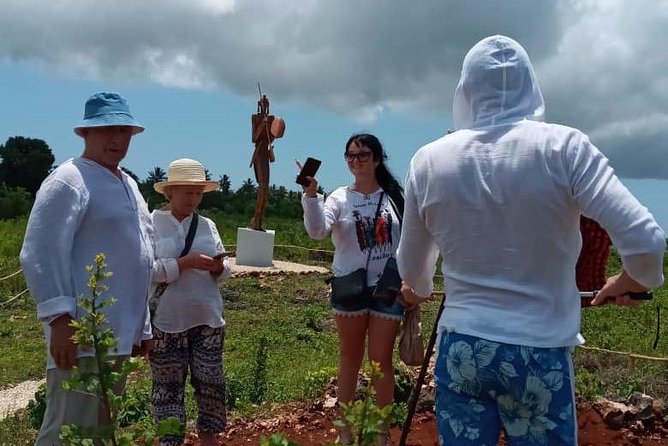
Maasai World gives you a close look at Maasai customs without leaving Zanzibar. In about two hours, you tour an authentic-style village, see traditional clothing and tools, meet Maasai people, join a dance, and try a bow-and-arrow activity. It is a hands-on cultural visit, not a passive museum stop.
I like the direct access to local explanations, especially when you can ask about customs and present-day Maasai life. I also like the mix of learning and participation: the village tour, dancing, and archery keep the visit lively for families, couples, and small groups.
The main consideration is time. Two hours is enough for an introduction, but not for a full study of Maasai culture, and some customs may challenge Western expectations. Come with curiosity and respect rather than expecting a polished theme-park show.
Key points to know before you go
- A two-hour cultural visit: You get a focused introduction rather than an all-day excursion.
- A real hands-on element: You can handle a traditional bow and arrow and take part in Maasai dancing.
- Questions are part of the experience: Ask about clothing, tools, customs, and ways of life.
- Guide David may lead your visit: His clear explanations and open answers are frequently praised.
- Private group format: Only your group takes part, which can make conversation easier.
- Convenient advance booking: A mobile ticket secures admission, and free cancellation is available up to 24 hours before the start time.
What Maasai World adds to a Zanzibar holiday

Zanzibar is often sold through its beaches, spice farms, old stone buildings, and boat trips. Those are worthwhile, but they do not always give you much room to ask personal questions about another culture. Maasai World fills that gap with a compact visit centered on people, objects, movement, and conversation.
You are not simply looking at photographs or reading a few display panels. You see the tools and clothes used by Maasai people, hear explanations of their past and present, and take part in selected activities. That makes the visit useful for you if you want more than a quick photo stop.
The experience also has a clear local connection. Although Maasai communities are most strongly associated with mainland Tanzania and Kenya, this attraction lets you learn about Maasai culture while staying in Zanzibar. It is best understood as a cultural introduction in Zanzibar, not a substitute for visiting a Maasai community in the wider East African region.
More Maasai village visits:
- Zanzibar: Maasai village Tour with Sunset Dhow Cruise
★ 4.3 · 32 reviews - Zanzibar: Maasai village and Nungwi turtles experience trip
★ 4.9 · 16 reviews - Zanzibar: Maasai World Tour with Cultural Practices
★ 4.0 · 4 reviews
Starting at Mpandeni and meeting your guide
The meeting point is Maasai World at 58H2+2CP, Mpandeni, Tanzania. The activity begins and ends at the same place, so you do not need to manage a complicated route between several stops. It is also near public transportation, which helps if you are arranging your own way there.
Opening hours are listed daily from 10:00 a.m. to 7:00 p.m. You should still select a definite start time when booking, since the attraction’s daily opening range does not mean that every moment has unlimited space. Advance booking is sensible, particularly since admission is often reserved well ahead of the visit.
The experience is private to your group. That matters more than it may sound. A smaller party can ask more questions, keep the pace comfortable, and avoid feeling like you are being moved through a large crowd. If you are visiting with friends or family, the private format also lets everyone join in at their own level.
David is the guide named most often in the available comments. If he leads your visit, expect a strong focus on explanation and questions. He is described as clear about both the past and present life of Maasai people, including subjects that may not fit familiar Western ideas. Guide availability can change, so treat David as a possibility rather than a guaranteed part of every booking.
Seeing Maasai clothing, tools, and daily life
The first part of the visit introduces Maasai history, culture, tools, and clothing. These objects give the discussion something concrete. Instead of hearing broad statements about a distant way of life, you can connect the information to items used for work, dress, and daily routines.
Pay attention to the practical purpose of each object. Clothing can tell you about identity and tradition. Tools can help explain how people work and manage ordinary tasks. Even a short display becomes more useful when you ask how an item is used, who uses it, and whether its role has changed over time.
The experience is especially valuable if you arrive with questions. You might ask how traditional customs continue today, how Maasai life has developed, or what outsiders commonly misunderstand. The program specifically allows you to ask local Maasai people about customs, so use that opportunity rather than waiting for the guide to cover every subject.
Keep your approach polite. Cultural demonstrations work best when you treat the people explaining their lives as hosts and teachers, not as props for photographs. Listen first, ask before taking close-up pictures, and remember that a short visit can only show part of a much larger culture.
Touring the Maasai village
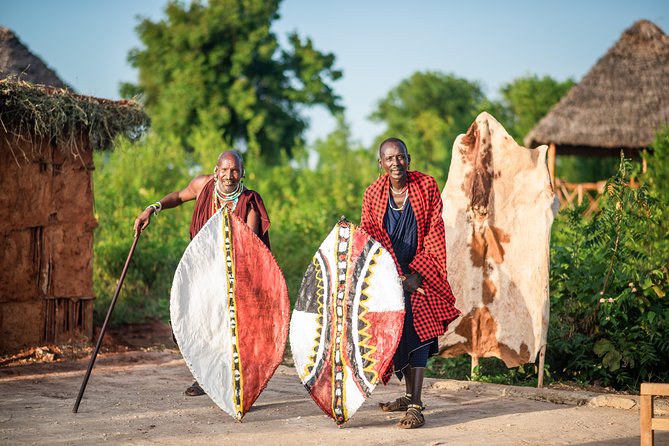
The village tour gives the visit a physical setting. You walk through an authentic Maasai village environment and get a sense of how the spaces relate to one another. This is more useful than seeing isolated objects because it places daily life in context.
The supplied information does not specify the exact buildings, route, or number of village stops. That means you should not arrive expecting a fixed museum-style sequence. The guide may shape the pace around your group and the questions you ask.
For you, the value of this section lies in observation. Notice how the village is arranged, where activity takes place, and how the guide connects the setting to Maasai life. The attraction describes this as a chance to experience their type of living, but it remains a short educational visit. It will introduce ideas rather than give you a complete account of housing, work, family life, and social structure.
That limit is not a flaw if you set the right expectation. At $20 per person, you are paying for a focused cultural activity with a guide and interactive elements, not a full-day community visit. The village setting helps make the two-hour program feel substantial.
A few more Zanzibar days to compare
- From Zanzibar: Mikumi Safari Day Trip with Flights and Meal
★ 4.7 · 1,470 reviews - Zanzibar: Quad Bike Adventure departing from Kendwa or Nungwi
★ 4.9 · 1,233 reviews - Zanzibar: Stone Town, Spice Tour, Prison Island with Lunch
★ 4.4 · 1,219 reviews - From Kendwa: Mnemba Boat Trip and Dolphin Snorkel Adventure
★ 4.8 · 1,043 reviews
Joining the Maasai dance
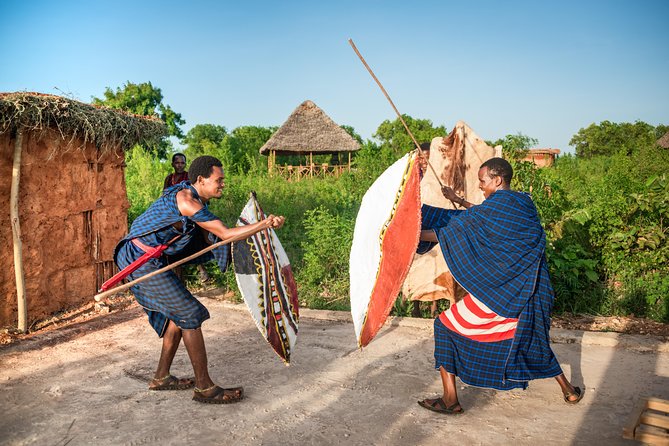
The dance is one of the livelier parts of the visit. You are given the chance to dance with the Maasai rather than only watch a presentation. This adds energy and gives you a direct way to participate, even if you know little about the culture beforehand.
You do not need to be an accomplished dancer. The point is participation, not performance. Follow the lead of the people demonstrating, join at a level that feels comfortable, and remember that enthusiasm is more useful than perfect timing.
This part may be especially appealing to families and groups of friends because it breaks up the explanations and displays. It also gives children a simple way to engage with the visit. At the same time, some people may prefer quiet observation, so you should be prepared for an active portion rather than a strictly academic talk.
The dance helps explain why this experience receives such strong approval. It combines cultural information with a shared moment, and it gives you something to remember beyond a list of facts.
Trying the bow-and-arrow activity
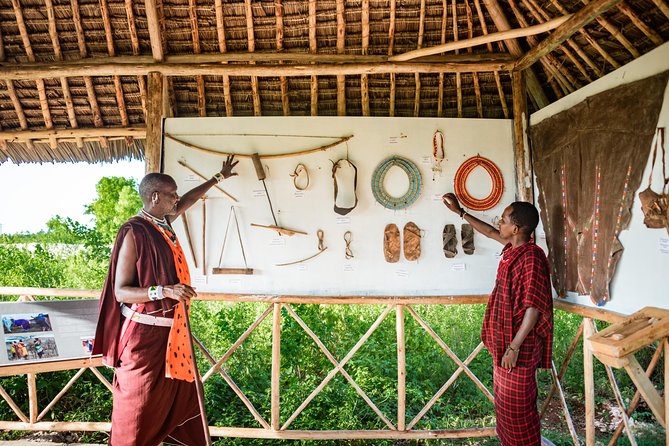
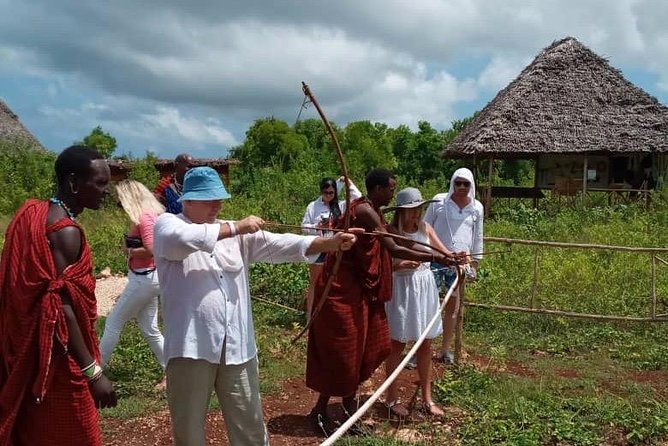
The traditional bow-and-arrow activity is another clear highlight. You get the chance to try the equipment under guidance, turning a cultural object into a practical demonstration. It is a small activity, but it helps you understand that tools are connected to skills, training, and daily life.
Do not think of this as a competitive archery session or a full lesson in hunting technique. The information provided describes it as an activity within the cultural visit, not as a standalone sports program. Listen carefully to the instructions and follow the safety guidance given on site.
This activity works well because it gives you a different kind of learning. You are not only hearing how a tool fits into Maasai life. You are also thinking about balance, aim, handling, and the physical effort involved. That can make the wider discussion about traditional living more memorable.
It also adds variety to the itinerary. After clothing, tools, and village interpretation, the bow and arrow offer a practical change of pace. If you are booking for a group, this is one of the details likely to keep everyone involved.
Asking about customs and present-day Maasai life
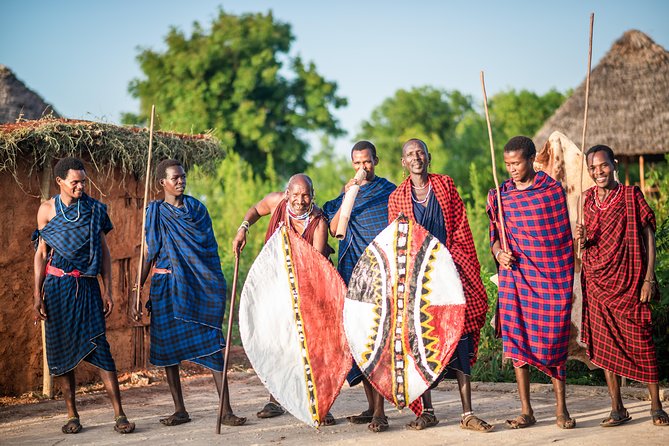
The best conversations may happen between the scheduled activities. The guide can explain how Maasai culture has developed over time and how traditions relate to life today. You should ask direct questions, since this is where a short attraction visit can become more meaningful.
The available comments specifically praise David for answering questions openly and for not hiding subjects that may be difficult for Western visitors to understand. That is useful preparation. You may hear about customs or social practices that do not fit your own assumptions. The right response is to listen carefully and ask for context, not to judge too quickly.
A good question might be: How has this tradition changed over time? You could also ask which practices remain common today, which are mainly ceremonial, and how young Maasai people view inherited customs. The exact answers will depend on your guide and the conversation, but these questions can help you move beyond surface facts.
Remember that one guide cannot speak for every Maasai person or community. Treat the discussion as one informed explanation within a broad culture. That approach gives you a more honest visit and avoids expecting a single attraction to represent every Maasai experience.
How much value you get for $20
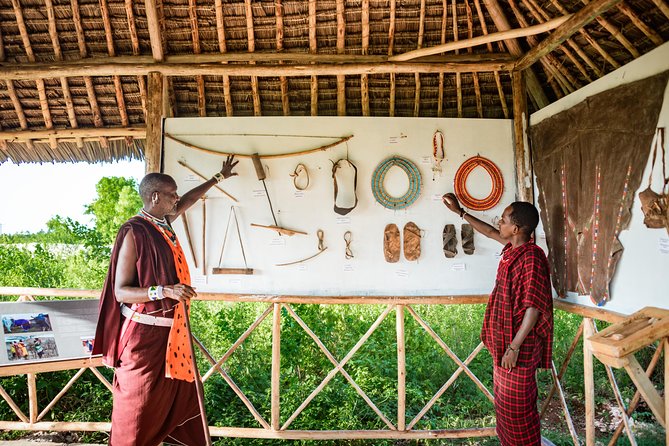
At $20 per person, Maasai World offers fair value if you want a short, guided cultural activity in Zanzibar. The price includes access to the village setting, explanations of clothing and tools, a dance, a bow-and-arrow activity, and time for questions. For a two-hour private experience, that is a reasonable package.
The value depends on what you want from the day. If you are looking for a major historical site, a long excursion, or extensive transport around the island, this is not the right comparison. If you want a convenient cultural stop with direct interaction, the price is easier to justify.
The private format improves the value for couples, families, and small groups. You are not sharing the entire visit with a large crowd, and questions are less likely to get lost. For a group of 10, the experience can also work well, though the activity may feel less personal than it would with only two or four people.
The attraction is booked an average of about 33 days in advance. That suggests you should not leave it until the final day of your Zanzibar stay, especially if your schedule is tight. Booking ahead also gives you a mobile ticket and a clearer place in the day.
Who will enjoy this experience most
I would recommend Maasai World to you if you want a short, interactive culture visit and you enjoy asking questions. It is a good fit for families, private groups, curious first-time visitors to Tanzania, and anyone who wants a break from beach activities.
It also suits people who prefer learning through a mix of talk and action. The village tour, objects, dancing, and archery provide several ways to take part. You do not need prior knowledge of Maasai culture, and most people can participate.
You may want to skip it if you dislike group participation, have no interest in cultural discussion, or expect a large-scale attraction with many separate exhibits. The program is focused and personal. Its strength is contact and conversation, not sheer size.
Service animals are allowed, and the activity is described as suitable for most participants. The supplied details do not give specific information about terrain, seating, restroom access, or wheelchair suitability, so ask the provider directly if you have mobility or access needs.
Booking, timing, and cancellation advice
Plan on about two hours, with the visit beginning and ending at Maasai World in Mpandeni. Since the attraction is open daily from 10:00 a.m. to 7:00 p.m., you have flexibility, but you should reserve a time that fits your Zanzibar plans.
Confirmation is provided when you book, and the mobile ticket makes entry simple. Keep the ticket available on your phone. Since advance reservations are common, booking early is wise if you are visiting during a busy period or have only a few free days.
Free cancellation applies when you cancel at least 24 hours before the experience begins. Cancellations made within 24 hours are not refunded, and changes inside that window are not accepted. The cut-off follows local time, so check your booking carefully before the final day.
Should you book Maasai World?
Book it if you want a reasonably priced, two-hour introduction to Maasai culture with real participation and time for questions. The village tour, dance, clothing and tool displays, and bow-and-arrow activity give the visit more substance than a basic cultural presentation.
I would especially choose it for a private group that values conversation. If David is your guide, you may get particularly clear explanations of how Maasai life has changed and how customs fit into the present. Just keep your expectations realistic: this is an introduction in Zanzibar, not an exhaustive account of every Maasai community.
For most culturally curious visitors, the $20 price is justified by the guided setting and hands-on format. Reserve ahead, arrive ready to listen, and take part respectfully. That is how you get the most from the experience.
FAQ
Where is Maasai World located?
Maasai World is located at 58H2+2CP, Mpandeni, Tanzania, in Zanzibar. The activity starts and ends at the same meeting point.
How long does the visit last?
The experience lasts approximately two hours.
What can I do at Maasai World?
You can learn about Maasai culture, see traditional clothing and tools, tour an authentic Maasai village, join a Maasai dance, ask questions about customs, and try a traditional bow and arrow activity.
What are the opening hours?
Maasai World is listed as open Monday through Sunday from 10:00 a.m. to 7:00 p.m.
Is the activity private?
Yes. Only your group participates in the private tour or activity.
Is the experience suitable for most people?
The activity information says most people can participate. Service animals are allowed, and the attraction is near public transportation.
Can I cancel for a refund?
Yes. You can receive a full refund if you cancel at least 24 hours before the experience starts. Cancellations or changes made less than 24 hours before the start time are not accepted and are not refunded.
Newly listed around Zanzibar
- Zanzibar: Nungwi/Kendwa Beach Sunset Dhow Cruise with Fruits★ 3.4 · 3 reviews
- Prison Island, Sea Turtles, Rock Restaurant & Relax in Beach★ 4.6 · 3 reviews
- Starfish Beach; The Rock; Kuza Cave; Paje Beach; Salaam Cave Tour★ 4.5 · 3 reviews
- Zanzibar: Half-Day Spice Farm Tour,the flavours of Zanzibar★ 4.7 · 3 reviews
- Joazani forest & Spice farm with lunch★ 5.0 · 3 reviews
- Nakupenda Island Snorkeling Sea trip & Lunch W/Transfer -Zanzibar★ 4.0 · 3 reviews
- Mnemba Island Snorkeling and Dolphin tour★ 5.0 · 3 reviews
- Zanzibar:Jozani forest, Spice farm with Swahili Cuisine clas★ 4.2 · 3 reviews
Maasai Village Visits, compared.

5 Days Camping Tarangire, Serengeti & Ngorongoro crater & Visiting Maasai
Read our review →
Maasai village visit, Materuni waterfalls & coffee experience
Read our review →5 Days Camping Tarangire, Serengeti & Ngorongoro crater & Visiting Maasai
Read our review →7-Day Private Tanzania Safari with Sunset Walking on the Crater Rim and Maasai
Read our review →
Maasai village visit and Chemka hot-springs with hot lunch.
Read our review →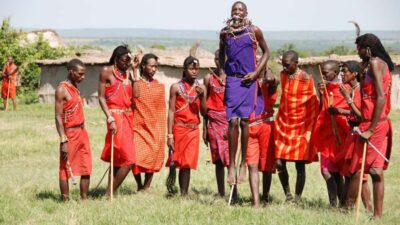
Kilimanjaro: Maasai Village Visit, Waterfalls, & Coffee Tour
Read our review →
Browse the lists this tour appears in