
Reviewed · KILIMANJARO CLIMBS
Kilimanjaro Climbing Rongai Route
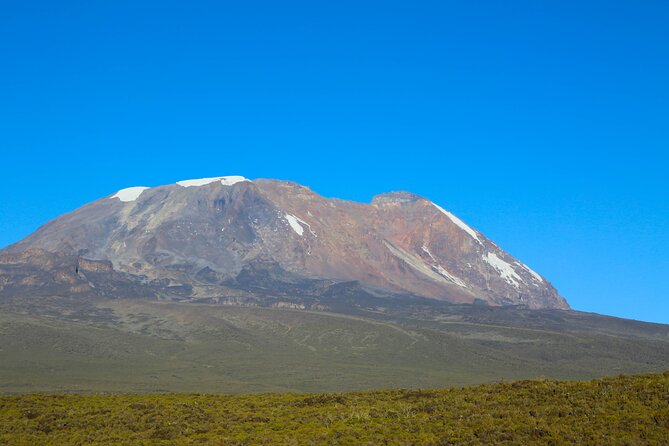
Rongai gives you a quieter way up Mount Kilimanjaro, approaching from the Kenyan border and crossing several distinct climate zones before the hard push to Uhuru Peak. I like the gradual first days and the striking camp below Mawenzi, a jagged volcanic peak that gives this route a strong sense of open wilderness.
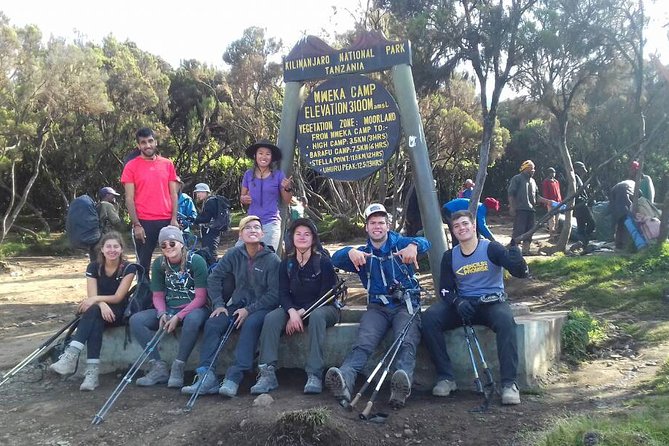
I also like the human side of the trip. Habari Adventure uses local Tanzanian guides trained in safety and first aid, and guides such as Emmanuel, Innocent, and Leon have been singled out for patience, good humor, and steady support. The main consideration is the summit day: about 15 hours of walking, a midnight start, and a steep climb to 5,895 meters.
Key points to know before booking
- Rongai begins near the Kenyan border: You start at Nalemoru Gate, not from Moshi itself, after transport from your hotel or agreed pickup point.
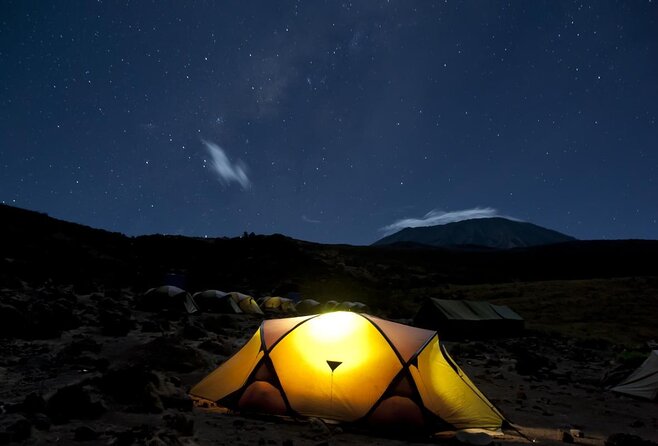
- Mawenzi Tan Hut is a highlight: At 4,330 meters, this camp sits beneath Mawenzi’s sharp spires and gives you useful time to rest and adjust to altitude.
- Summit day is extremely long: You climb from Kibo Hut around midnight, reach Gilman’s Point, continue to Uhuru Peak, then descend to Horombo Hut.
- The group is capped at 15 people: That is large enough for company but still small enough for the guides to monitor the group closely.
- The route takes seven days: The schedule allows several gradual walking days before the final climb, though altitude can still be difficult.
- The price is $2,840.39 per person: Its value depends on what you want most, especially local guiding, organized transport, support, and a slower route to the summit.
Why the Rongai Route feels different
The Rongai Route approaches Kilimanjaro from the northeast. You begin near the Kenyan border and finish on the southern side of the mountain, passing through a broad range of plant zones and volcanic terrain along the way.
That change of scenery is one of the route’s best features. The first day is a gentle climb through rainforest. Later, the trees thin into moorland, then give way to high rocky ground and the pale saddle between Kibo and Mawenzi.
Rongai is also valued for its quieter feel. The tour description does not promise an empty trail, and conditions can vary, but this approach gives you a different view of Kilimanjaro than the routes beginning farther south.
You should still treat this as a serious high-altitude climb, not a long forest walk. The listed fitness level is moderate, but the summit day demands endurance, patience, and the ability to keep moving when the air is thin.
More Kilimanjaro routes:
- Kilimanjaro climb by Lemosho Route (7-day)
★ 5.0 · 651 reviews - Kilimanjaro climb, Machame Route (7-day)
★ 5.0 · 262 reviews - Kilimanjaro Climbing Lemosho Route 8 Days.
★ 5.0 · 186 reviews
Local guides and the value of steady support
A good guide matters greatly on Kilimanjaro. Habari Adventure uses local Tanzanian guides with training in safety and first aid, along with knowledge of the mountain’s plants, wildlife, geography, history, archaeology, anthropology, and astronomy.
That range of knowledge can make the slower sections more interesting. You are not simply walking from one camp to another. Your guide can help explain the changing vegetation, identify animals, and put the mountain’s volcanic structure into context.
Names associated with particularly well-regarded trips include Emmanuel, Innocent, and Leon. You should not assume one of these guides will lead your departure, but you can ask Habari Adventure who is assigned to your group before you travel.
The group limit of 15 is worth noting. A smaller group may feel more personal, while a full group of 15 can create a wider range of walking speeds. The guides’ patience becomes important here, especially on summit night, when the standard is to walk slowly and keep the group together.
Day 1: Nalemoru Gate and the rainforest
After breakfast, you leave Moshi and drive to Nalemoru Gate. The stated start time is 8:00 a.m., and the listed walking time is about three hours.
The opening walk is a gradual ascent through rainforest. This is a sensible first day because it lets you start finding your rhythm before the altitude becomes a major concern.
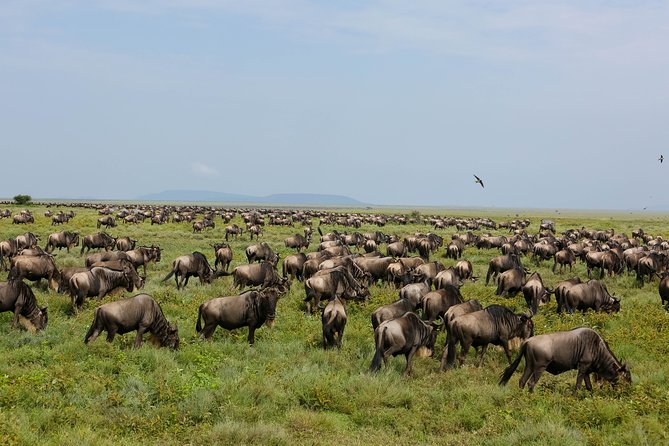
Keep your eyes open for wildlife. The route description lists possible sightings of zebras, elephants, buffaloes, and monkeys, though wildlife sightings are never guaranteed. Even without animals, the forest gives you a cool, shaded beginning and a clear sense that this climb is moving through changing ecological zones.
The first day is short by Kilimanjaro standards, but that does not make it disposable. Use it to check your boots, adjust your pack, learn how your guide sets the pace, and notice how your body responds as you gain height.
Day 2: Second Cave Camp at 3,450 meters
The second day takes about four hours and continues upward into the moorland zone. You gain a better view of Kibo, the highest of Kilimanjaro’s three volcanic cones, along with the eastern ice fields near the crater rim.
You spend the night at Second Cave Camp, at about 3,450 meters. The move from rainforest to open moorland changes the feel of the climb. There is less shade, more exposure, and a wider view of the mountain ahead.
This is a good point to focus on hydration, meals, and sleep. You may feel fine physically, but altitude symptoms can appear later. Tell your guide promptly if you develop a headache, nausea, unusual weakness, or trouble breathing.
The route gives you a fairly gentle walking day, but camp altitude matters more than mileage. A short day can still affect you when you are sleeping higher than the night before.
A few more Moshi & Kilimanjaro days to compare
- Safari Serengeti And Ngorongoro
★ 5.0 · 288 reviews - Climbing Kilimanjaro – Machame Route
★ 5.0 · 170 reviews - Climbing Kilimanjaro through 7 days Machame Route
★ 5.0 · 151 reviews - Kilimanjaro climb, Lemosho Route (8-day)
★ 5.0 · 148 reviews
Day 3: Across the moorland toward Mawenzi
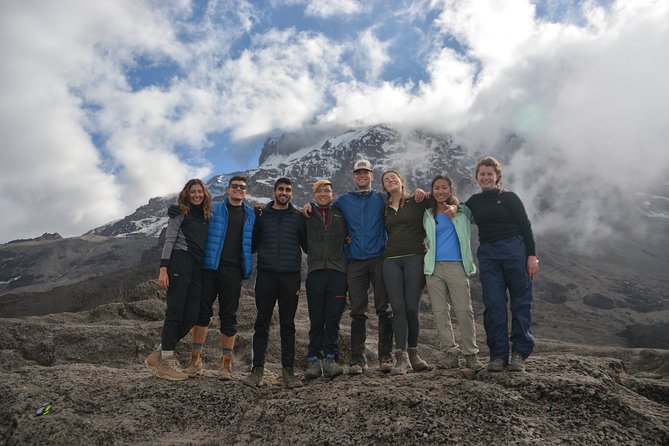
Day three lasts about five hours. You continue across the moorland on a smaller path, with views toward Kibo’s eastern ice fields and the jagged peaks of Mawenzi.
The trail reaches Kikelelwa, where you stop for lunch and spend the night. This is a more remote-feeling section of the route, with Mawenzi becoming the main visual focus instead of Kibo.
I like this day because it gives you a strong sense of the mountain’s volcanic form. Kibo is the summit goal, but Mawenzi supplies the sharper, more dramatic profile. The two peaks help you understand that Kilimanjaro is a volcanic massif, not a single simple cone.
The smaller path may feel more natural and less formal than the opening trail. It can also mean uneven footing, so poles and careful steps are useful if you bring them.
Day 4: Mawenzi Tan Hut at 4,330 meters
The fourth day is shorter, about four hours, but the climb is steeper. You move up grassy slopes toward Mawenzi Tan Hut, set in a cirque beneath Mawenzi’s towering spires.
This is one of the most memorable camps on the route. The setting gives you broad views and a strong feeling of being far from ordinary daily life. It is also a practical acclimatization stop, since you have free time in the afternoon to rest or explore nearby areas.
Do not feel that you must use every spare minute walking. At 4,330 meters, rest is productive. A quiet afternoon can help you conserve energy for the higher camps and final ascent.
The drawback is that you are now high enough for altitude to become a real concern. The short distance may look easy on paper, but the elevation gain and thin air can make the walk slower than expected.
Day 5: The lunar saddle to Kibo Hut
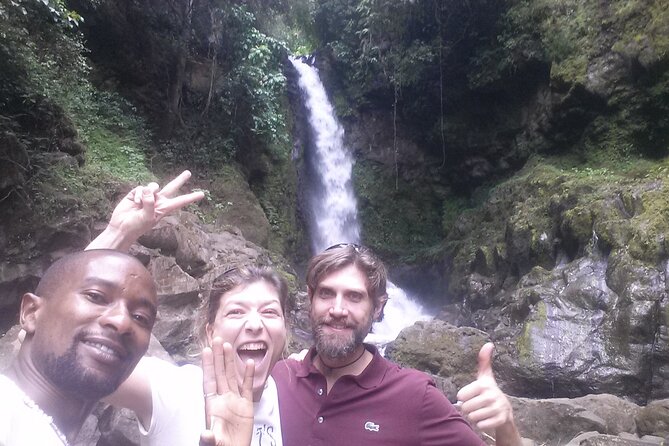
Day five takes about five hours as you cross the broad, dry saddle between Mawenzi and Kibo. The terrain is described as a lunar desert, and the change from grassy slopes to pale, open ground is striking.
You reach Kibo Hut for lunch and spend the afternoon resting before the midnight summit start. This is not a sightseeing afternoon. Your main job is to eat, organize your warm layers, prepare your headlamp if you have one, and sleep as much as possible.
Kibo Hut sits at about 4,700 meters, though the supplied schedule gives its location without a specific elevation. The high camp makes the next morning possible, but it also means you sleep at significant altitude before the hardest climb.
The timing can feel odd. You may eat in the afternoon, try to sleep early, then wake around midnight for the summit attempt. Keep your evening simple and follow the guide’s instructions.
Day 6: Gilman’s Point, Uhuru Peak, and Horombo
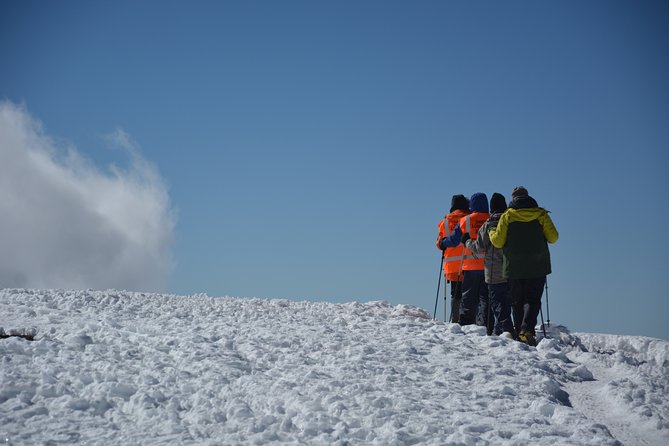
This is the defining day. You start around midnight and climb the steepest, most demanding section in darkness.
Your guide sets a slow pace. That is not a sign of weakness. Walking slowly helps you save energy and reduces the chance of burning out before the crater rim.
After about five hours, you reach Gilman’s Point at 5,685 meters. The plan includes a short rest and a cup of tea while you watch the sunrise over Mawenzi. This may be one of the most powerful moments of the climb, especially because the long night has narrowed your focus to each careful step.
From Gilman’s Point, you continue for about another hour to Uhuru Peak at 5,895 meters, the highest point in Africa. The route passes near glaciers and ice cliffs that still occupy much of the summit area.
After photographs at the top, you descend to Kibo Hut for a short rest and hot lunch. Then you continue down to Horombo Hut at 3,700 meters, where you spend the night.
The total walking time is listed as about 15 hours. This figure explains why summit day should be taken seriously. You will climb, descend, eat, rest briefly, and descend again, all after beginning in the middle of the night.
Reaching Gilman’s Point is a major achievement, but the stated goal is Uhuru Peak. Conditions can affect the final section, and your guide’s safety judgment should take priority over any personal target.
Day 7: From Horombo to the park gate
The final day takes about seven hours. You descend through heath and moorland to Mandara Hut at 2,700 meters, where you have a hot lunch.
From Mandara, the trail continues through tropical rainforest to the Kilimanjaro National Park Gate. There you collect your certificates and complete park formalities before transport takes you back to your hotel in Moshi.
The last day is easier in altitude terms, but it can be tiring after the summit push. Your knees and feet may feel the descent more than the uphill sections, so take care with each step.
A warm shower in Moshi is part of the appeal at the end. This is also the point when you can properly celebrate the climb, rather than trying to force a party at high camp.
What $2,840.39 buys you in practical terms
At $2,840.39 per person, this is not a budget walk. The value comes from the length of the trip, local guiding, organized transport, safety support, park access, and the chance to attempt the summit by a seven-day route.
The trip includes pickup as an available feature and uses a mobile ticket. The meeting information lists Kilimanjaro Airport and Kilimanjaro National Park as the starting location, while the daily plan says you leave from your hotel in Moshi. Because those details do not match perfectly, confirm the exact pickup point before booking.
You should also ask for a full list of inclusions. The supplied details confirm admission tickets for the park portions and transport back to Moshi, but they do not spell out every item such as gear, meals, porter support, airport transfers, or hotel nights.
The company’s strongest appeal is personal support. Solo climbers have been accommodated, including an off-season departure with only one person in the climbing group. Female solo climbers have also described feeling safe and well cared for, which may matter if you are considering a private or very small departure.
Food is another positive point associated with the experience. One seven-day climb was especially praised for its organization, friendly crew, and food. Since meals are not fully described in the tour details, ask what is included and how dietary needs are handled.
Who should choose this climb
I would look closely at this trip if you want a seven-day summit attempt with a clear day-by-day structure and local guides who provide close support.
It suits you best if you:
- Can manage several hours of walking on most days
- Are willing to move slowly and follow guide instructions
- Want varied scenery, from rainforest to high volcanic desert
- Like the idea of a route approaching from the Kenyan side
- Prefer a group capped at 15 people
- Are comfortable with a midnight start and a 15-hour summit day
- Value guide support and local knowledge over a bare-bones price
I would think twice if you want a relaxed mountain holiday. The first days are manageable, but the summit day is long, steep, cold, and physically demanding. A moderate fitness rating should not be read as a promise that the climb will feel moderate.
The trip can also work well for solo climbers. The company has handled solo departures, and the guide team’s patient manner is a useful quality when you are climbing alone or joining a mixed group.
Booking details worth checking
Confirmation is provided at booking, and the stated maximum group size is 15 people. The listed start time is 8:00 a.m., with pickup offered, but confirm whether your meeting point is Kilimanjaro Airport, your Moshi hotel, or another agreed location.
Free cancellation is available up to 24 hours before the local start time for a full refund. Changes or cancellations made inside that 24-hour window are not accepted for a refund, and poor weather may lead to a different date or a full refund.
Before paying, ask about the exact departure date, assigned guide, meals, accommodation, porter arrangements, and what happens if you stop below the summit. These questions are especially important on a high-altitude climb.
Should you book the seven-day Rongai Route?
Book it if you want a quieter-feeling approach, strong scenery around Mawenzi, and a company built around local guide support. The seven-day schedule gives you more time than a rushed ascent, and the gradual early stages are helpful.
I would choose it for the guide culture as much as for the route. Emmanuel, Innocent, and Leon are names worth asking about, though assignments can change. The positive pattern is clear: patient guides, a supportive crew, organized operations, and good food are central to the experience.
Do not book it simply because the listing calls for moderate fitness. The 15-hour summit day is the real test, and altitude can affect anyone. If you accept that challenge, prepare carefully, confirm the inclusions, and listen closely to your guide, this is a strong way to make a serious attempt on Africa’s highest peak.
FAQ
How long is the Kilimanjaro Rongai Route experience?
The climb lasts approximately seven days, from departure in Moshi to the return to your Moshi hotel after completing the mountain section.
Where does the climb begin?
The walking portion begins at Nalemoru Gate near the Kenyan border. The tour information also lists Kilimanjaro Airport and Kilimanjaro National Park as meeting details, so confirm your exact pickup point before departure.
What is the highest point reached?
The summit goal is Uhuru Peak at 5,895 meters. The route also reaches Gilman’s Point at 5,685 meters on the way to the summit.
How difficult is the climb?
A moderate physical fitness level is required, but summit day is particularly demanding. It includes a midnight start, about 15 hours of walking, a steep ascent, and a long descent.
How many people can join the group?
The maximum group size is 15 people.
Can I cancel for a full refund?
Yes. You can cancel at least 24 hours before the local start time for a full refund. Cancellations or changes made less than 24 hours before the start are not refunded or accepted. If poor weather causes cancellation, you are offered another date or a full refund.
Newly listed around Moshi & Kilimanjaro
- Climb Mount Kilimanjaro: 7 Days Machame Route★ 5.0 · 3 reviews
- 6 Days Mount Kilimanjaro Climbing via Rongai Route★ 5.0 · 3 reviews
- Explore 1 day Ngorongoro Crater Budget Group Safari from Arusha★ 5.0 · 3 reviews
- Mt. Kilimanjaro Day Hiking★ 5.0 · 3 reviews
- Chemka (Kikuletwa) Hot Springs, Tanzania★ 5.0 · 3 reviews
- Guided City tour of Moshi★ 4.3 · 3 reviews
- 8 Day Tanzania Family Safari★ 5.0 · 3 reviews
- Serengeti Safari with Sirikwa Travel★ 5.0 · 3 reviews
Kilimanjaro Climbs, compared.








Browse the lists this tour appears in