
Reviewed · MOSHI & KILIMANJARO TOURS
Savannah Escape & Active Culture Tour
The most unusual thing about this four-day safari is the mix: you move from elephant country and the Serengeti plains to the Ngorongoro Crater, then spend time with Hadza hunter-gatherers near Lake Eyasi. It is not just a wildlife loop. It connects Tanzania’s famous parks with local life.
I like the private format, which lets your group set the pace with guide Leo, a female safari driver-guide with experience across the northern circuit. I also like the social purpose behind the cultural visits, including Leo’s work supporting girls and women with menstrual hygiene.
The main drawback is simple: four days is short for this much ground. Tarangire, Serengeti, Ngorongoro, and Lake Eyasi require long drives, and some days are packed from breakfast until evening. You gain variety, but you give up some unhurried time in each place.
Key points before you book
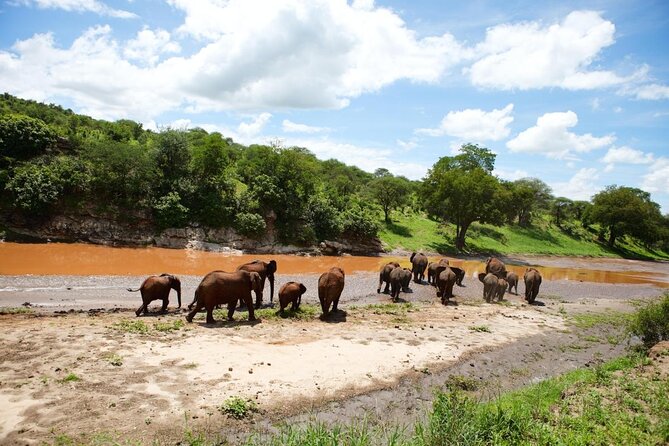
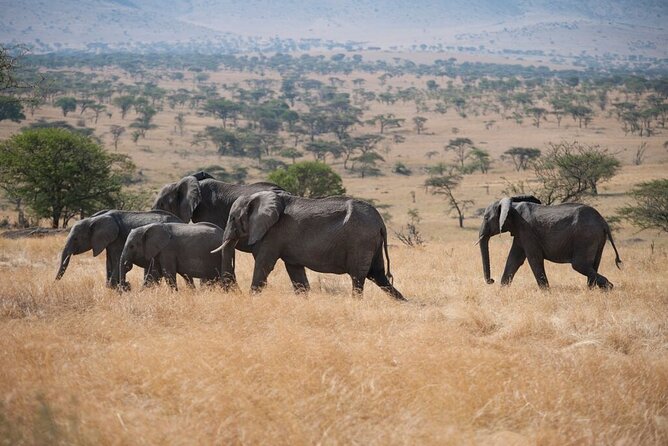
- Tarangire brings large elephant herds: The Tarangire River, swamps, acacia woodland, and baobab trees draw animals, especially in the dry season.
- Serengeti adds the big open-country experience: Central Serengeti and the Seronera area offer some of the best chances for searching for predators and plains animals.
- Ngorongoro puts wildlife in a natural bowl: You descend more than 600 meters into the crater, where water supports animals throughout the year.
- Lake Eyasi changes the tone of the trip: You meet Hadza people in their homeland and learn about hunting, gathering, honey collection, and a click-language tradition.
- Leo is a distinctive guide choice: She is presented as one of Tanzania’s few professional female safari driver-guides working across the full northern circuit.
- This is a private trip with a social angle: Only your group participates, and the cultural program connects with work supporting girls and women.
Why this four-day route works
Northern Tanzania offers an embarrassment of famous names, and this trip tries to fit several into one compact journey. You get three major wildlife areas, then a cultural stop that feels very different from a standard game drive.
That variety is the strongest reason to consider it. Tarangire has a dry, baobab-dotted character. Serengeti opens into huge plains and gives you the classic safari setting. Ngorongoro brings animals together around permanent water. Lake Eyasi shifts the focus from wildlife to people and ways of life.
You should expect a private safari vehicle and a guide who drives, interprets the surroundings, and adjusts the search for animals. The private setup matters here. If your group wants to linger at a sighting, take a different route, or ask more questions about local customs, you are not working around a busload of strangers.
Leo’s role is part of the appeal. The tour places her at the center as chief driver-guide, and her work with social projects adds a personal connection to the cultural portion. Charles is also associated with the company’s guiding team, so it is worth confirming who will be with your group when you book.
The price is $1,820 per person. That is a serious outlay, but the value depends on what matters most to you. You are paying for a private four-day route, a driver-guide, access to several major northern Tanzania destinations, meals listed for three breakfasts, four lunches, and three dinners, and a cultural visit that is not an afterthought.
Still, do not judge the price without checking the full cost breakdown. The supplied details do not clearly state the accommodation category, park fees for every stop, drinks, airport transfers, or flights. Ask for those details before paying. A private safari can be good value when the vehicle, guide, meals, lodging, and conservation fees are clearly covered. It can feel expensive if several large costs are added later.
A few more Moshi & Kilimanjaro days to compare
- Kilimanjaro climb by Lemosho Route (7-day)
★ 5.0 · 651 reviews - Safari Serengeti And Ngorongoro
★ 5.0 · 288 reviews - Kilimanjaro climb, Machame Route (7-day)
★ 5.0 · 262 reviews
Day 1: Tarangire and its elephant country
Pickup is listed around 7:30 a.m., with a start time of 7:00 a.m. elsewhere in the details. The meeting point is the NSSF Building on Old Moshi Road, while hotel pickup is also offered. Confirm the exact pickup time and place in advance. That small check can save you a sleepy morning scramble.
From the Arusha area, the drive to Tarangire takes about two hours. You travel with a packed lunch and spend roughly eight hours on the day’s park visit and drive. Tarangire follows the Tarangire River and includes low hills, acacia woodland, giant baobabs, and broad swamp areas.
The park’s water sources explain its appeal. During the dry season, the river and swamps draw animals from surrounding areas, so this is often the place on the route where you see especially large elephant groups. The setting has a strong visual identity too. Baobabs rise above the woodland, giving the drive a more sculpted, dry-country feel than the open Serengeti.
Tarangire is also associated with less common species such as greater kudu, fringe-eared oryx, and ashy starling. Sightings are never guaranteed, but the possibility adds interest beyond the standard list of lions, zebras, and elephants.
I would treat this first day as both a wildlife outing and a test of the pace. You may be excited to begin, but you will also be sitting in the vehicle for much of the day. Wear practical clothes, carry water, and keep your camera ready between stops. The supplied information lists lunch, but not drinks or snacks, so clarify what you should bring.
Day 2: Crossing into the Serengeti
After breakfast, you drive toward Serengeti National Park with a packed lunch, passing through the Ngorongoro Conservation Area. The day is listed at about eight hours, and the goal is central Serengeti, especially the Seronera area.
This is the day when the route begins to feel truly expansive. The Serengeti is known for open plains that stretch far into the distance, with scattered vegetation and rolling views that make it easier to understand why the park is so famous.
Seronera is a useful base for wildlife searching because the Seronera River provides water and attracts animals. You may spend the afternoon looking for the species that gather around this area, then continue toward accommodation in the evening with a sunset view.
The major practical point is that this is not an entire day of sitting in one game-drive zone. You are also transferring from one part of northern Tanzania to another. That means the day can feel long, especially after the previous day in Tarangire.
The reward is variety. You may see plains animals, big cats, elephants, and other wildlife, and the route can produce memorable moments even when the animals are not close to the vehicle. Several past trip accounts connected with Safari by Leo describe seeing the Big Five and, at the right time of year, the Great Migration. Those are possible highlights, not promises. Migration sightings depend on the season and the animals’ location.
If seeing the migration is your main goal, ask for a seasonal plan rather than assuming this four-day route will meet it. The same advice applies to cheetahs and rhinos. A skilled guide can improve your chances, but no guide can control wild animals.
Day 3: Into the Ngorongoro Crater
You start after an early breakfast, around 7:00 a.m., and leave the Serengeti with a packed lunch. The route takes you into the Ngorongoro Conservation Area, followed by a descent of more than 600 meters into the crater for a game drive.
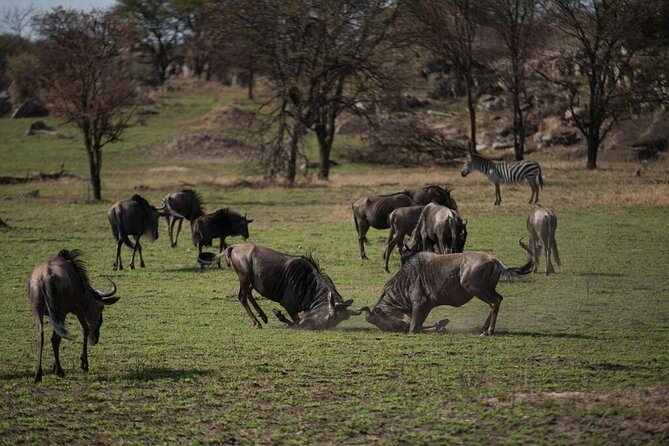
The crater is the trip’s most concentrated wildlife setting. Its permanent water supply supports herds of wildebeest, zebra, buffalo, eland, warthog, hippo, and elephant throughout the year. Predators are also a major draw, with lions, hyenas, and jackals among the species you may see. The endangered black rhino is another important possibility.
I like the contrast with Serengeti. In the Serengeti, you scan wide open country and may cover a great distance between sightings. In Ngorongoro, the crater walls create a contained setting where many animals live in one broad natural basin.
That concentration comes with a tradeoff. Ngorongoro is a major attraction, so the crater can feel busy, especially at popular wildlife sightings. Your private vehicle does not mean you will have the place to yourself. It does give you a guide who can help decide how long to stay and when to move on.
The day is listed at about seven hours, but the timing still depends on roads, game sightings, and the transfer from Serengeti. An early breakfast is useful. Bring a light layer, sun protection, and patience for the descent and climb. Temperatures can vary between the crater floor and higher areas, though specific weather conditions are not provided.
This is also the day when the safari may feel most rewarding to first-time visitors. You have a strong chance to see many familiar African species in one setting, while still having the sense that the animals are living on their own terms.
A change of scene while you are in Moshi & Kilimanjaro:
- Kilimanjaro Climbing Lemosho Route 8 Days.
★ 5.0 · 186 reviews - Climbing Kilimanjaro – Machame Route
★ 5.0 · 170 reviews - Climbing Kilimanjaro through 7 days Machame Route
★ 5.0 · 151 reviews - Kilimanjaro climb, Lemosho Route (8-day)
★ 5.0 · 148 reviews
Day 4: Meeting the Hadza near Lake Eyasi
The final day changes the subject from animals to people. You visit the Hadza near Lake Eyasi and the surrounding hills, in the area they have long called home.
The Hadza are described as a small hunter-gatherer community facing pressure as land is converted to conservation areas and farmland. The information provided estimates about 1,300 Hadza people, with roughly 300 to 400 still living a hunter-gatherer life.
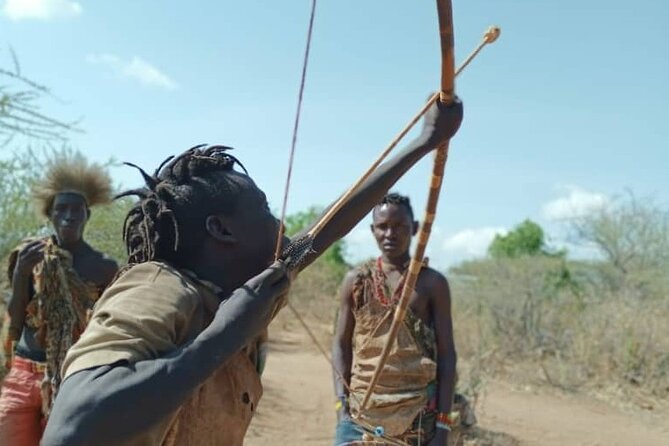
This visit has value because it gives you a chance to listen and observe a way of life very different from your own. The Hadza do not keep domesticated livestock, grow crops, or store food in the usual way described here. They hunt, gather edible plants, and collect honey. Their language uses click sounds, with similarities to languages associated with San communities in southern Africa.
One idea to pay attention to is individual autonomy. The Hadza are described as placing strong value on personal independence, which makes this more than a quick folk demonstration. The cultural visit can help you think about land, food, conservation, and the pressure placed on small communities.
You should approach the stop with respect. This is a living community, not a stage set. Ask before taking photographs, listen more than you talk, and let your guide explain what is appropriate. The supplied details do not promise a particular activity or ceremony, so do not book this expecting a fixed performance.
The day lasts about five hours and ends back at the meeting point. It is a shorter final day than the park drives, which helps after three demanding days on the road. It also gives the trip a clear purpose beyond collecting animal sightings.
The guide and the human side of the trip
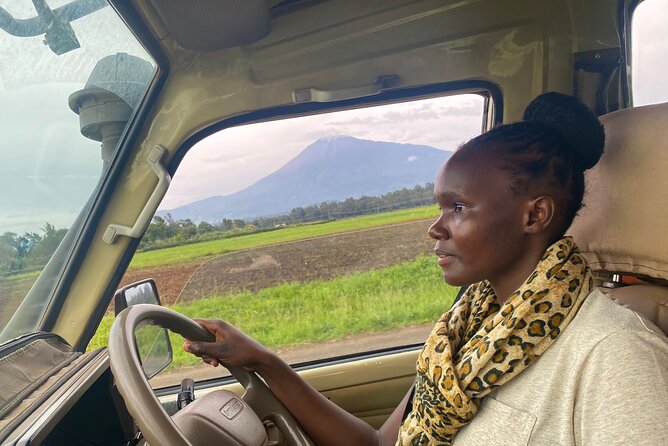
Leo is central to the character of this experience. She is identified as a professional female safari driver-guide with extensive northern circuit experience, and her work includes support for girls and women through menstrual hygiene projects.
That detail matters because the cultural part is not presented as a separate add-on with no connection to the guide. You have an opportunity to understand some of the social issues Leo works on, particularly the challenges faced by girls who lack access to menstrual supplies and education.
The company’s past trip descriptions also associate Leo with careful planning, route advice, accommodation arrangements, meals, walking, cultural activities, and wildlife drives. I would still ask exactly what is included in your own booking, but this suggests that the guiding role may extend beyond simply driving between parks.
An all-women group has also used the company for a four-day safari tied to International Women’s Day. If you are interested in women-led travel or want to support a female guide in a traditionally male-heavy field, this is a meaningful point in the tour’s favor.
Comfort, timing, and what to clarify
The tour is private, and most people can participate. It is near public transportation, offers pickup, and uses a mobile ticket. Confirmation is received at booking.
The schedule is active. You have long vehicle days, early starts, packed lunches, and several changes of scenery. If you prefer slow mornings and two nights in one place, this is not the right shape of trip. If you have limited time in northern Tanzania and want maximum variety, the pace makes sense.
The meal plan lists four lunches, three dinners, and three breakfasts. That suggests meals are organized during the main four-day program, but you should ask about drinks, snacks, special diets, and the exact lodging arrangement.
The departure information needs a quick check because two start times appear: 7:00 a.m. and about 7:30 a.m. The stated start and end point is the NSSF Building on Old Moshi Road, while hotel pickup is offered. Confirm both details before departure.
Free cancellation is available if you cancel at least 24 hours before the start time. Cancellations or changes made inside that period are not accepted for a refund.
Who will get the most from this safari?
I would recommend this trip to you if you want a first taste of northern Tanzania without spending a full week on safari. It suits people who value wildlife but also want contact with local communities and a guide with a clear social mission.
It is especially appealing if you want a private trip, prefer a female guide, or are interested in a women-focused travel story. The combination of national parks and Hadza culture gives you more to remember than a route made only of game drives.
I would hesitate if you dislike long road transfers, need a relaxed schedule, or want to focus on one park in depth. Serengeti alone can take several days, and adding Tarangire, Ngorongoro, and Lake Eyasi means you will spend substantial time moving between places.
The $1,820 price can be fair for a private, multi-park safari with meals and personal guiding, but only after you confirm the full list of inclusions. Ask about accommodation, park and conservation fees, vehicle details, drinks, transfers, and any extra cultural fees.
Should you book the Savannah Escape & Active Culture Tour?
Book it if your ideal trip combines big wildlife areas with direct cultural contact and you are comfortable with a brisk schedule. Tarangire’s elephants, Serengeti’s open plains, Ngorongoro’s concentrated wildlife, and the Hadza visit give you four distinct experiences in four days.
Skip it if you want long, quiet stays or if your main goal is one specific animal event, such as the Great Migration. For everyone else, this is a thoughtful route with a strong guide story and an unusual final day. Confirm the pickup time and total price first, then decide if the variety is worth the miles.
FAQ
How long is the Savannah Escape & Active Culture Tour?
The tour lasts approximately four days.
Where does the tour start?
The stated meeting point is the NSSF Building on Old Moshi Road in Tanzania.
What time does the tour start?
The start time is listed as 7:00 a.m., while the first-day pickup is described as around 7:30 a.m. Confirm the exact time with Safari by Leo.
Does the tour offer pickup?
Yes. Pickup is offered, and the day one details describe pickup from your hotel. The meeting point is also listed as the NSSF Building on Old Moshi Road.
Is this a private tour?
Yes. Only your group participates in the activity.
Which national parks and conservation areas are included?
The route includes Tarangire National Park, Serengeti National Park, and the Ngorongoro Conservation Area, including a game drive in the Ngorongoro Crater.
Does the tour include a cultural visit?
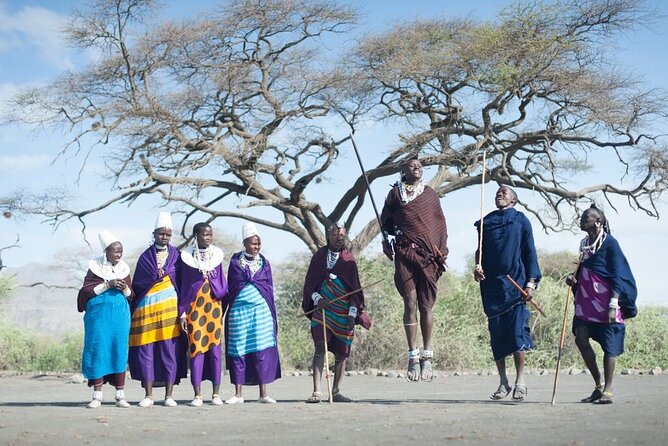
Yes. The fourth day includes a visit to the Hadza community near Lake Eyasi. The tour description also refers to encounters with Maasai people and social projects, but the detailed four-day schedule specifically identifies the Hadza visit.
Which meals are included?
The listed inclusions are four lunches, three dinners, and three breakfasts.
Can I cancel for a full refund?
Yes, if you cancel at least 24 hours before the experience start time. Cancellations or changes made less than 24 hours before the start are not refunded or accepted.
Newly listed around Moshi & Kilimanjaro
- Climb Mount Kilimanjaro: 7 Days Machame Route★ 5.0 · 3 reviews
- 6 Days Mount Kilimanjaro Climbing via Rongai Route★ 5.0 · 3 reviews
- Explore 1 day Ngorongoro Crater Budget Group Safari from Arusha★ 5.0 · 3 reviews
- Mt. Kilimanjaro Day Hiking★ 5.0 · 3 reviews
- Chemka (Kikuletwa) Hot Springs, Tanzania★ 5.0 · 3 reviews
- Guided City tour of Moshi★ 4.3 · 3 reviews
- 8 Day Tanzania Family Safari★ 5.0 · 3 reviews
- Rongai Route 7 Days★ 5.0 · 3 reviews
Moshi & Kilimanjaro Tours, compared.







