
Reviewed · KILIMANJARO CLIMBS
Best 5 Days Marangu Route Climbing on Kilimanjaro
The unusual appeal here is simple: you climb Africa’s highest mountain while sleeping in dormitory-style huts, not tents. Mattresses and pillows are supplied, though you still need a sleeping bag. The route follows a gradual, direct path through Kilimanjaro National Park, with forest, high mountain terrain, waterfalls, birds, and a sunrise summit attempt.
I like the practical hut setup, and I like that the price includes park fees, meals, drinking water, crew wages, and the guide, cook, and porters. Nalisis is repeatedly connected with airport pickups, helpful planning, and group coordination. The catch is serious: five climbing days give you limited time to adjust to altitude, and Marangu uses the same path for the ascent and descent, making it less scenic and more crowded than longer routes.
Key points to know before you book
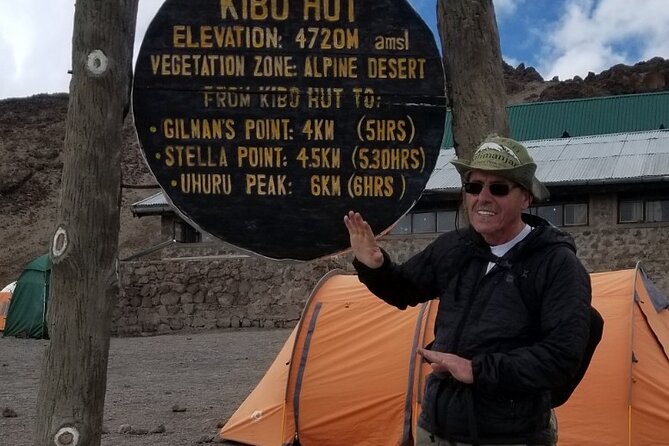
- Hut accommodation: Sleep in basic communal huts with mattresses and pillows instead of carrying a tent.
- Direct route: Marangu approaches Kilimanjaro from the southeast on a gradual, well-established trail.
- Short schedule: The five-day version reaches Uhuru Peak quickly, but altitude adjustment is harder.
- Full support team: A guide, cook, and porters are included, along with meals, water, park fees, and crew wages.
- Group or private choices: You can join a shared departure or arrange a private climb, with groups capped at 100 people.
- Summit reward: The final goal is Uhuru Peak, where you can celebrate above the snow line with broad mountain views.
What the five-day Marangu Route really feels like
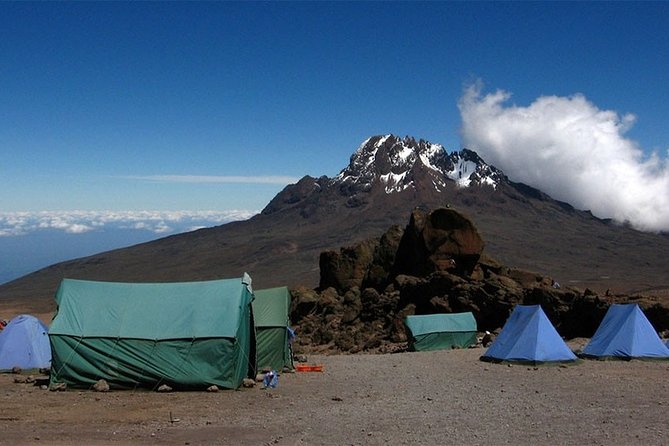
Marangu is often called the Coca-Cola Route because it is Kilimanjaro’s oldest and most established climbing path, with a straightforward trail and hut accommodation. That nickname can make the climb sound easy. It is not.
The walking is generally less rough than on some other routes, but altitude changes the rules. A path that feels manageable lower down can become exhausting near the summit. The five-day schedule is the main concern, since your body has less time to adjust before the highest push.
You begin from the Moshi area, with the meeting point listed at Kilimanjaro Airport and Kilimanjaro National Park. Pickup is offered, and the advertised start time is 8:00 am. From there, your support team handles the mountain logistics while you focus on walking, eating, resting, and watching how your body responds.
The service is built around a traditional climbing team. Your guide leads the route, the cook prepares breakfast, lunch, and dinner, and porters carry important supplies. That arrangement makes a major difference. You do not need to carry every meal and shared item yourself, but you should still pack carefully and keep your personal day-use gear manageable.
More Kilimanjaro routes:
- Kilimanjaro climb by Lemosho Route (7-day)
★ 5.0 · 651 reviews - Kilimanjaro climb, Machame Route (7-day)
★ 5.0 · 262 reviews - Kilimanjaro Climbing Lemosho Route 8 Days.
★ 5.0 · 186 reviews
Day one: entering Kilimanjaro National Park
The first stage takes you into Kilimanjaro National Park and begins the steady move upward through natural vegetation. The lower mountain is the gentlest part of the climb, but it is also where you can learn the rhythm that will carry you higher.
Expect an active day of about eight hours for the climbing experience as a whole, though the exact daily walking times and hut names are not supplied. Your guide and porters support the group as you pass through changing plant life and mountain scenery. Waterfalls, natural drainage, birds, and possible animal sightings add interest to what could otherwise feel like a long uphill walk.
I would use this first day to settle into a slow pace. Marangu’s gradual slope can tempt you to walk too quickly. That is a poor bargain. Save energy, drink the included water regularly, and pay attention to how you feel rather than trying to match the fastest person in the group.
Your overnight stay is in a selected mountain hut. The huts offer communal dining halls, basic washrooms, and toilets. They are practical rather than private. You receive a mattress and pillow, but a sleeping bag is still required, so do not mistake hut lodging for hotel comfort.
The middle climb: huts, meals, and changing vegetation
The middle stages take you farther from the lower forest and into a more exposed mountain setting. The supplied description highlights natural vegetation, waterfalls, birds, drainage, and changing scenery rather than a list of named stops. That means you should expect the experience to be about gradual height gain and changing conditions, not a chain of formal attractions.
Each day follows a useful pattern: walk, eat, rest, and repeat. Breakfast, lunch, and dinner are included. The cook is an important part of the operation because regular food becomes more valuable as the air thins and your appetite may change.
The communal dining hall gives the climb a social feel. On a shared departure, you may eat and rest alongside other people climbing at a similar time. That can be encouraging, though it also means less quiet and less control over the daily pace than you would have on a private climb.
The huts make Marangu a sensible choice for people who dislike camping. You avoid sleeping directly on the ground and do not need a tent setup each night. Still, you should expect basic facilities, shared rooms, and simple toilets. The route’s comfort advantage is relative, not luxurious.
The operator offers joining, sharing, private, and group arrangements. The stated maximum is 100 people, which is a large possible cap. Your actual group may be smaller, but you should ask about the expected group size before paying if crowding is a concern.
The altitude question: why five days can be tough
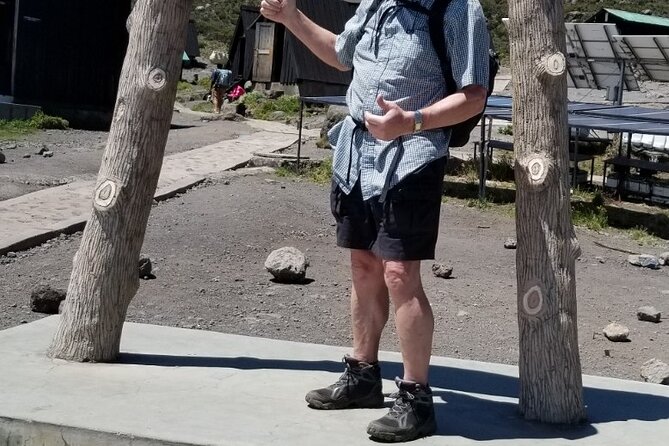
The biggest decision is not hut versus tent. It is five days versus more time on the mountain.
The five-day version is attractive if your schedule is tight. It gets you to Uhuru Peak without adding extra mountain nights. But the short time frame makes altitude adjustment fairly difficult. A gradual trail does not remove the effects of thin air.
I would not choose this package simply because Marangu is described as the easiest route. That label refers mainly to the direct path, gentler slope, and hut facilities. It does not mean the summit is easy. The final climb remains physically demanding, and the altitude is the part you cannot bargain with.
The supplied information says the operator also offers a six-day Marangu climb. One additional day may provide a more comfortable schedule, though the exact extra-day plan is not given here. If you have limited high-altitude experience, ask Nalisis about the six-day option and whether it better suits your pace. One of the strongest practical details connected with the company is that Nalisis advised an inexperienced climber to consider a seven-day Lemosho route, even though the person had limited time. That suggests the booking conversation should include your fitness, past mountain experience, and schedule, not just your preferred route.
You should also ask what happens if you need to descend early. The supplied details do not explain evacuation procedures, medical screening, or altitude protocols, so do not assume those points are covered without confirmation.
More five day trips in Moshi & Kilimanjaro:
- 5 Days Camping Tarangire, Serengeti & Ngorongoro crater & Visiting Maasai
★ 5.0 · 58 reviews - 5-Day Majestic Tanzania Safari – High End All Inclusive
★ 5.0 · 44 reviews - 5 Day Mid range Tanzania Safari
★ 5.0 · 34 reviews - 5 days Tanzania Camping Safari
★ 5.0 · 29 reviews
Summit day: Uhuru Peak before the descent
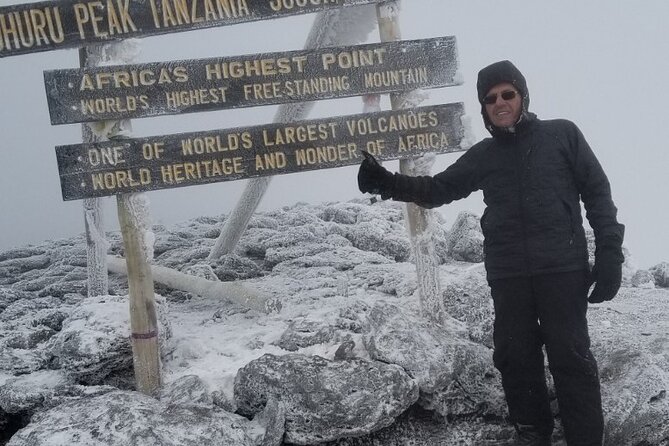
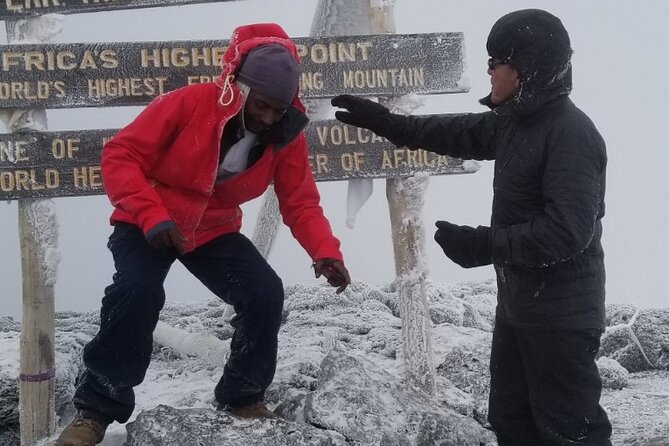
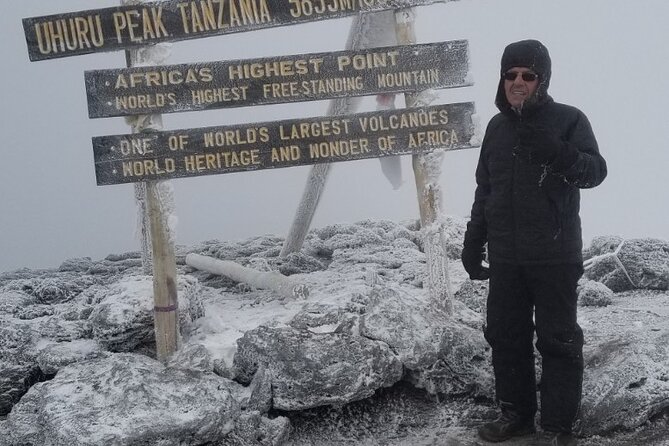
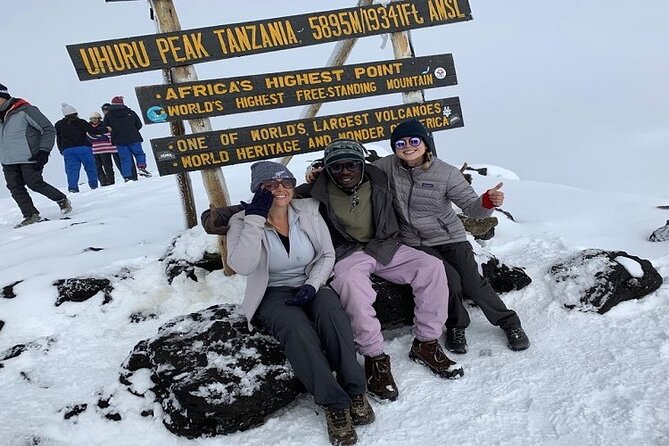
The summit is Uhuru Peak, the highest point on Kilimanjaro and the emotional center of the climb. The description emphasizes snow, sunrise, wide views, laughter, and celebrating at the Roof of Africa.
Summit day is likely to feel very different from the lower approach. Expect the hardest effort of the trip, cold conditions, and a long day before returning to lower ground, though exact times are not specified. The early start is not given in the supplied schedule, so confirm it with the operator before departure.
Your guide is there to manage the pace and keep the group moving safely. This is where a patient guide matters more than a fast one. Walk slowly, follow instructions, and tell the guide promptly if you feel unwell. Do not treat reaching the top as a test of pride.
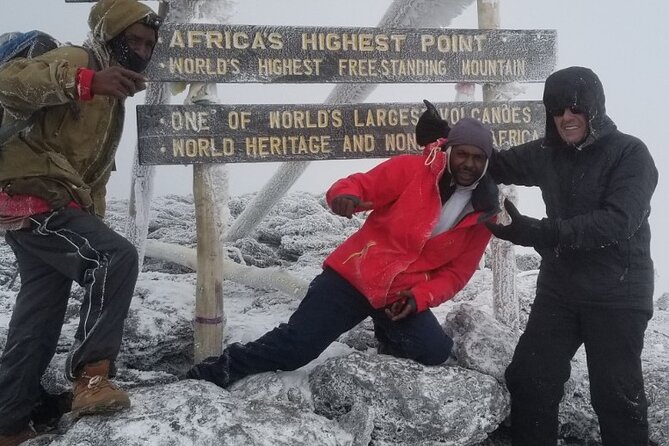
At Uhuru Peak, the snow and high-altitude views provide the photograph people imagine when they first consider Kilimanjaro. The celebration is part of the reward, but the real achievement is managing the entire climb responsibly. A summit photo is wonderful. Returning safely is better.
Descent by the same route
Marangu’s descent uses the same path as the ascent. That keeps the route simple and helps you recognize familiar sections, but it also limits the variety of scenery.
If you want a constantly changing route, Marangu may feel repetitive. Other Kilimanjaro routes are known for offering different scenery on the way down, while this one gives you the direct return path. The tradeoff is clear: Marangu is easier to understand logistically, but less varied visually.
The descent can still be rewarding. You notice how quickly the air, vegetation, and energy change as you lose altitude. After the summit effort, reaching lower ground can feel as satisfying as the summit itself.
The activity ends back at the meeting point. Airport pickup is offered at the start, and the information indicates that the tour returns to its meeting point at the end. Confirm the exact transfer plan if you need to connect with a flight or another tour.
What the $1,560 price includes
At $1,560 per person, this is not a budget walk, but the price covers many of the expensive and essential parts of a Kilimanjaro climb.
Included items are:
- Guide services
- Cook and porters
- Park fees
- Tax
- Gate transfer
- Crew wages
- Environmental fees
- Drinking water
- Breakfast, lunch, and dinner
That package matters because park access, crew pay, food, and mountain transport can add up quickly when arranged separately. The inclusion of crew wages is especially important. You should still budget for a tip, since tipping the crew is not included.
Flights and visas are also excluded. Those costs can vary greatly depending on your country and route into Tanzania. Pickup is offered, but you should confirm whether the airport transfer is included in the quoted price or simply available as part of the booking arrangement.
The price is strongest for someone who wants a supported climb without arranging each mountain service independently. It is less attractive if you are comparing only the number of days. A longer route may cost more but provide extra time for altitude adjustment, which can be worth more than saving one mountain day.
The people behind the climb
The company name appears as Rede Tours and Safaris, also identified as Amore African Safari LTD. Nalisis is the main name connected with airport pickup, group arrangements, advice, and communication.
The service points repeatedly associated with the operator are professional organization, supportive staff, helpful cooks, and strong guide assistance. One first-time climber described needing encouragement from the guide all the way to Uhuru Peak. That detail is useful because it shows the human side of the climb: you are not buying a marked trail alone, but a team that helps you keep going.
At the same time, ask clear questions before departure. Confirm the guide-to-climber ratio, expected group size, sleeping arrangements, daily distances, summit timing, and what gear is supplied beyond mattresses and pillows. The maximum group size of 100 is a broad limit, not a promise that your group will contain 100 people, but it is still worth clarifying.
Who should choose this route
I would point this climb toward someone who wants the simplest established route and prefers huts to tents. It also suits people with a firm schedule, provided they understand that five days is a fast altitude schedule.
The route may work well for:
- First-time mountain climbers who have prepared properly
- People who prefer hut sleeping to camping
- Hikers who want a direct, gradual route
- Groups that want shared or private arrangements
- People who value included meals, porters, and park services
- Climbers who have limited time in Tanzania
I would be more cautious if you have never spent time at altitude, dislike communal sleeping, or want a quieter and more varied route. In those cases, ask about the six-day Marangu option or a longer route such as Lemosho. The supplied information specifically connects Lemosho with a seven-day recommendation for a climber who lacked experience, so that alternative deserves a serious conversation.
Practical preparation for a better climb
Bring a sleeping bag. The huts provide mattresses and pillows, but not the sleeping bag itself.
Plan for basic communal facilities. Washrooms and toilets are available, but you should not expect private bathrooms or hotel-style comfort. Pack personal washing supplies and keep your expectations practical.
Prepare for mixed conditions. The climb includes lower vegetation, exposed high mountain areas, snow near Uhuru Peak, and changing temperatures. The exact equipment list is not provided, so ask the operator for a current packing list before you travel.
Leave room in your budget for tips, flights, and visas. Crew tipping is excluded, and those payments should be planned rather than treated as an afterthought.
Finally, protect your schedule. The cancellation policy allows a full refund if you cancel at least 24 hours before the start time. Cancellations or changes within 24 hours are not refunded or accepted. Poor weather can lead to a new date or a full refund. The activity requires good weather, so avoid placing an important flight immediately after the climb unless you have a sensible buffer.
Should you book the five-day Marangu climb?
Book it if you want hut lodging, a direct route, a full support team, and a fixed five-day mountain schedule. The included fees, meals, water, guide, cook, and porters make the $1,560 price easier to justify, and the company’s coordination through Nalisis adds useful support before arrival.
Think twice if your main goal is the best scenery or the highest chance of comfortable altitude adjustment. Marangu is the most crowded route of the options described here, follows the same path up and down, and gives you little spare time to acclimatize.
My practical choice would be this: select the five-day version only if your schedule is firm and you are ready for a demanding altitude experience. If you can spare another day, ask about six-day Marangu. If you are inexperienced and can allow more time, ask about a longer route before committing. The mountain will still be there, and a slower plan may give you a better chance to enjoy it.
FAQ
Where does the Kilimanjaro climb begin?
The listed meeting point is Kilimanjaro Airport and Kilimanjaro National Park in Tanzania. Pickup is offered, and the stated start time is 8:00 am.
How long does the experience last?
The climb is described as five climbing days, while the overall experience is listed as approximately six days. The operator offers both five-day and six-day Marangu climbs.
Where do I sleep on the Marangu Route?
You sleep in dormitory-style mountain huts. Mattresses and pillows are supplied, but you must bring or arrange a sleeping bag.
Are meals included?
Yes. Breakfast, lunch, and dinner are included throughout the climb, along with drinking water.
Are a guide, cook, and porters included?
Yes. The package includes a guide, cook, and porters, as well as crew wages, park fees, tax, gate transfer, and environmental fees.
Is tipping included in the price?
No. Tipping the crew is not included and should be budgeted separately.
What is the highest point reached?
The climb aims for Uhuru Peak, described as the summit of Kilimanjaro and the Roof of Africa.
Can I cancel for a full refund?
Yes, if you cancel at least 24 hours before the experience start time. Cancellations or changes made less than 24 hours before the start time are not refunded or accepted. If poor weather cancels the activity, you are offered another date or a full refund.
Newly listed around Moshi & Kilimanjaro
- Climb Mount Kilimanjaro: 7 Days Machame Route★ 5.0 · 3 reviews
- 6 Days Mount Kilimanjaro Climbing via Rongai Route★ 5.0 · 3 reviews
- Explore 1 day Ngorongoro Crater Budget Group Safari from Arusha★ 5.0 · 3 reviews
- Mt. Kilimanjaro Day Hiking★ 5.0 · 3 reviews
- Chemka (Kikuletwa) Hot Springs, Tanzania★ 5.0 · 3 reviews
- Guided City tour of Moshi★ 4.3 · 3 reviews
- 8 Day Tanzania Family Safari★ 5.0 · 3 reviews
- Serengeti Safari with Sirikwa Travel★ 5.0 · 3 reviews
Kilimanjaro Climbs, compared.








Browse the lists this tour appears in