
Reviewed · KILIMANJARO CLIMBS
Mt.kilimanjaro-machame Route
The most important part of this six-day Kilimanjaro climb is not the scenery, impressive as it is. It is the guide team, especially during the final night when altitude, cold, darkness, and fatigue all arrive together. The route gives you a real acclimatization plan, with high camps followed by lower sleeping camps.
I like the private-group format, because your pace and condition can receive direct attention. I also like the route’s variety: rainforest on day one, open views across the Shira Plateau, the stark Lava Tower section, Barranco Wall, and finally Uhuru Peak at 5,895 meters. The main drawback is the compressed six-day schedule. You reach summit altitude quickly, so this climb demands moderate fitness, careful pacing, and a serious attitude toward altitude.
Key points at a glance
- The Machame Gate start sits at 1,800 meters, then the route climbs through rainforest to Machame Camp at 3,010 meters.
- Acclimatization is built into the plan, including a hike toward Lava Tower and a long stay at 4,630 meters before descending to Barranco.
- Barranco Wall looks harder than it is, with the climb taking about an hour on a straightforward hiking trail.
- Summit night begins at Barafu Camp, at 4,640 meters, with a personal guide assigned to each pair of climbers.
- The route finishes through Mweka Gate, at 1,650 meters, followed by certificates and a transfer back to your hotel.
- The price is $1,743.59 per person, with pickup offered, a mobile ticket, and free cancellation up to 24 hours before departure.
Why the Machame Route works so well
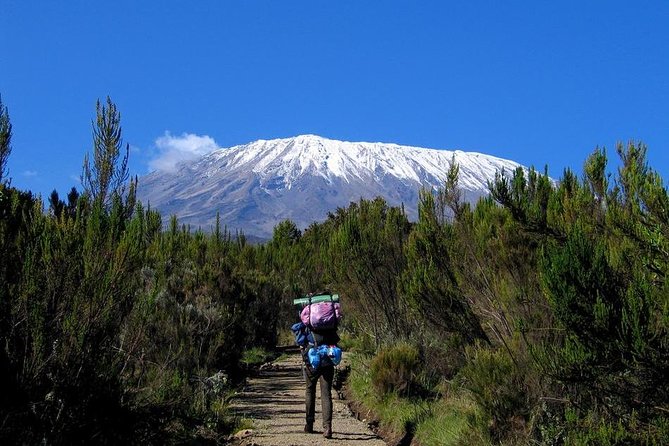
The Machame Route is a compact way to see several sides of Kilimanjaro. You begin in thick tropical forest, cross the open Shira Plateau, climb toward the volcanic Lava Tower, and pass the dramatic Barranco Wall before making the final push to Uhuru Peak.
That variety gives the climb a strong sense of progress. Each day looks and feels different. You are not simply walking uphill for six days, then walking back down the same way.
Still, this is not an easy holiday with mountain views attached. The itinerary lists roughly 12 hours for each day, and the altitude is the central challenge. The actual walking pace may vary with the group, but you should be ready for long days, early starts, cold conditions, and a demanding summit night.
The private format helps. Only your own group takes part, so the guides can pay closer attention to how you are moving and feeling. That matters most above 4,000 meters, where a strong pace on the first hour can leave you struggling later.
More Kilimanjaro routes:
- Kilimanjaro climb by Lemosho Route (7-day)
★ 5.0 · 651 reviews - Kilimanjaro climb, Machame Route (7-day)
★ 5.0 · 262 reviews - Kilimanjaro Climbing Lemosho Route 8 Days.
★ 5.0 · 186 reviews
Day 1: Machame Gate to the rainforest
Your morning begins with hotel pickup, a meeting with the guide and mountain support crew, and a short briefing. The drive continues to Machame Gate, at 1,800 meters, where the climbing permits are acquired and the group registers with the search and rescue service.
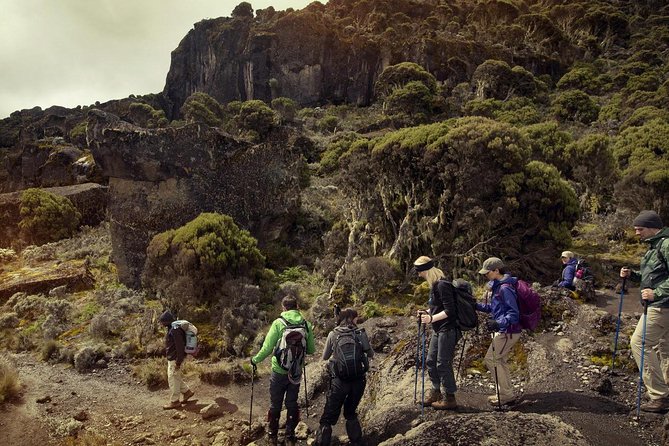
The first walking section leads through rainforest to Machame Camp, at 3,010 meters. This is a pleasant but wet introduction to the mountain. Tropical showers are highly likely, so your raincoat should be easy to reach, not buried at the bottom of your bag.
Pack spare clothes as well. Damp clothing is more than an annoyance when you are camping at altitude. It can make the evening at camp uncomfortable and leave you starting the next day cold.
The forest provides shade and a gradual beginning, but do not judge the whole trek by this first section. You are already gaining more than 1,200 meters from the gate to camp. Keep your pace modest from the start and let the guides set the rhythm.
Day 2: Shira Camp and the first altitude lesson
After breakfast, you climb to Shira Camp at 3,845 meters. The rainforest begins to thin, and the Shira Plateau opens in front of you. This is one of the route’s most rewarding changes, because the view expands just as the vegetation becomes lower and less dense.
The walking itself is described as manageable, but you may notice the altitude. That is the point of this day. You are high enough to feel a difference, yet the plan gives you time to rest at camp and adjust.
After lunch at Shira, you take an acclimatization hike toward Lava Tower Camp, gaining another 300 meters before returning to Shira for a hot dinner. This is a smart pattern: climb higher during the day, then sleep lower than your highest point.
You should pay attention to small signs from your body here. A slower pace is not a failure. On Kilimanjaro, saving energy and allowing your body to adjust are part of the job.
Day 3: Lava Tower at 4,630 meters
Day three is the route’s key acclimatization day. You leave Shira Camp and travel over a series of ascents and descents toward Lava Tower, at 4,630 meters.
This section may feel uncomfortable. You might notice headache, shortness of breath, or unusual tiredness as you climb. The plan calls for spending at least one to two hours at this altitude, with lunch at Lava Tower, before descending to Barranco Camp at 3,960 meters.
That descent is important. You climb high, spend time there, and then sleep lower. It may seem strange to walk uphill only to come back down, but this is one of the most useful features of the schedule.
Barranco Camp brings one of the trip’s great visual moments: the Barranco Wall. It rises steeply above camp and can look intimidating from below. The next day, you will climb it, but the route is described as a simple hiking trail rather than a technical rock climb.
A few more Moshi & Kilimanjaro days to compare
- Safari Serengeti And Ngorongoro
★ 5.0 · 288 reviews - Climbing Kilimanjaro – Machame Route
★ 5.0 · 170 reviews - Climbing Kilimanjaro through 7 days Machame Route
★ 5.0 · 151 reviews - Kilimanjaro climb, Lemosho Route (8-day)
★ 5.0 · 148 reviews
Day 4: Barranco Wall, Karanga, and Barafu
An early breakfast gets you onto Barranco Wall before the route becomes crowded with other groups. The climb takes about an hour and is not considered difficult, though it does require care and steady movement.
At the top, you can rest and take photographs with Kibo volcano behind you. This is a good place to pause, but remember that the day is far from finished.
The route continues to Karanga Camp through repeated ascents and descents. This can be more tiring than one steady climb. The guides adjust the pace to the group, which is especially useful here. A rushed morning could make the later climb to Barafu much harder.
After warm lunch at Karanga, you continue to Barafu Camp, at 4,640 meters. Dinner comes at camp, followed by the least glamorous but most useful activity on Kilimanjaro: resting and trying to sleep before the summit attempt.
Do not expect a relaxed evening. You are at high altitude, and the night departure means your rest period is short. Keep your summit clothing, water, and essentials ready before you lie down.
Day 5: The night climb to Uhuru Peak
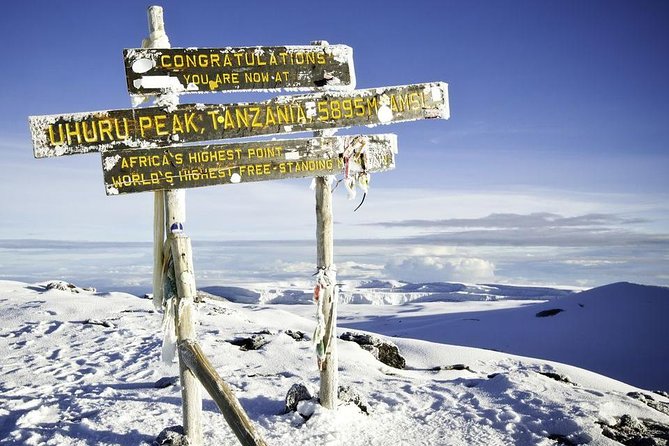
The summit attempt begins at night from Barafu Camp. Your goal is Uhuru Peak, at 5,895 meters, the highest point on Kilimanjaro.
Technically, the route is described as relatively simple. The difficult part is the altitude. You will climb in darkness, and each pair of climbers receives a personal guide for the ascent. That arrangement is one of the strongest practical features of the trip. A guide can monitor your physical and mental condition, help control the pace, and identify when you need attention.
The summit section is where the quality of the guiding matters most. The guide team’s role is not just to point out the way. You need calm pacing, steady encouragement, and close observation when every step feels slow.
After reaching Uhuru Peak, you can descend to the nearest glacier if you still have the energy and conditions allow. The itinerary presents this as optional, so do not treat it as a second objective. Reaching the summit is already the main achievement.
You then return to Barafu Camp for a two-hour rest before continuing to Millennium Camp, at 3,820 meters. This is a very long day. Even if the summit climb itself feels manageable, the combination of ascent, descent, limited sleep, and altitude makes day five the most demanding part of the trip.
Day 6: Mweka Gate and the return to Moshi
Millennium Camp is in tropical rainforest, a welcome change after the exposed upper mountain. Waking at a lower altitude should bring some relief, along with the satisfaction of having reached the summit.
After breakfast, you descend to Mweka Gate, at 1,650 meters. The final walking section is not just a formality. Your legs may be tired, and downhill walking can be surprisingly hard after the summit day.
At the gate, the group gathers to congratulate one another. You can also record your thoughts in the guestbook. The company then presents commemorative certificates at its office and transfers you back to your hotel.
The finish is nicely structured. You do not simply get dropped at a gate and left to arrange your own return. The certificate and office gathering add a clear closing moment to the climb.
What the guide team adds to the climb
The company places heavy emphasis on its guides, and the available feedback gives several names to look for, including Qamrish, Ayoub, Fred, and Nancy. The information does not state which guide will lead your specific departure, so ask when booking rather than assuming a particular person will be assigned.
The strongest praise centers on support and organization. One climber described a last-minute change handled with care, while another praised the team for helping with a combined Kilimanjaro and safari trip. Food also received special attention, with the chef singled out for preparing meals that suited the group.
Those details matter because a mountain trip is made up of many small moving parts. Meals, pacing, camp timing, permits, transfers, and altitude checks all affect how you feel on summit night. You should still ask exactly what is included in the price, since the supplied information does not give a full equipment or accommodation list.
The personal guide arrangement on summit night is particularly useful. You are not left to match the speed of a large group at the most difficult point of the climb.
Is $1,743.59 a fair price?
The listed price is $1,743.59 per person. I would judge that as a package price only after confirming the inclusions, because the available details do not spell out every item covered.
The trip does include a private activity, hotel pickup, a mountain support crew, climbing permit arrangements, meals named in the daily plan, certificates, and a transfer back to the hotel. Those services have real value, especially on a six-day climb where logistics can quickly become complicated.
The price also reflects the route’s compressed schedule. A six-day climb requires an efficient plan, careful camp changes, and strong coordination between guides and support staff. It is not simply six independent hikes.
Before paying, ask about accommodation before and after the climb, sleeping equipment, park and rescue fees, porter support, airport transfers, bottled or treated water, tips, and any required rental gear. These items are not clearly detailed here, and they can change the final cost.
Who should choose this six-day climb?
This trip suits you if you have moderate physical fitness, want a private group, and prefer a route with major scenery changes rather than a simple up-and-down path.
It is also a good fit if you value close guide support. The personal guide system for pairs during the summit attempt gives the final ascent a more attentive feel than a large shared group.
I would be cautious if you want a slow, spacious schedule. Six days is a short time to reach 5,895 meters. The itinerary includes acclimatization, but you still gain altitude quickly and face a strenuous summit day.
You should also be comfortable with basic mountain uncertainty. Rain is likely in the rainforest, weather may affect the climb, and the summit schedule begins at night. The experience requires more than enthusiasm. You need patience, physical preparation, and willingness to follow the guide’s pace.
Booking details worth checking
The meeting time is 7:00 am, and pickup is offered. The activity is private, with only your group taking part, and confirmation is provided when you book. It is also listed as being near public transportation, though the actual climb begins with the supplied vehicle transfer to Machame Gate.
A mobile ticket makes the start simple. The experience requires moderate physical fitness, but no further medical or age requirements are given, so ask the provider directly if you have a health concern.
Free cancellation is available up to 24 hours before the local start time for a full refund. Changes made inside that 24-hour window are not accepted, and cancellations inside that period are not refunded. The climb requires good weather. If poor weather causes cancellation, you can choose another date or receive a full refund.
Should you book the Machame Route?
I would choose this trip if you want a private six-day Kilimanjaro climb with strong attention to guide support, a varied route, and a clear acclimatization pattern. The Barranco Wall, Lava Tower, Shira Plateau, and Uhuru Peak give the itinerary plenty of memorable milestones.
The main question is not the scenery. It is the schedule. If you can handle long days and a rapid rise to high altitude, the plan offers a focused path to the summit. If you prefer more time for acclimatization, ask about longer alternatives before booking.
Confirm the price inclusions, request the names of your assigned guides, and prepare carefully for rain, cold, and the night ascent. With those points settled, this is a strong choice for a fit climber who wants direct support and a private mountain experience from Moshi.
FAQ
Where does the Kilimanjaro climb begin?
The group travels from Moshi to Machame Gate, the entrance to Kilimanjaro National Park. Machame Gate is at 1,800 meters.
What time does the experience start?
The stated start time is 7:00 am. Hotel pickup is offered.
How long is the Machame Route experience?
The climb lasts approximately six days. Each day is listed as about 12 hours, though the walking pace and breaks can vary.
What level of fitness do I need?
You should have a moderate level of physical fitness. The route includes long walking days, repeated ascents and descents, high altitude, and a night summit attempt.
Is this a private group climb?
Yes. Only your group participates in the activity.
Which camps are included on the route?
The route uses Machame Camp, Shira Camp, Barranco Camp, Karanga Camp, Barafu Camp, and Millennium Camp. The final descent ends at Mweka Gate.
How high is Uhuru Peak?
Uhuru Peak is at 5,895 meters. The summit attempt begins at night from Barafu Camp, which is at 4,640 meters.
Are guides provided during the summit attempt?
Yes. Each pair of climbers receives a personal guide for the ascent to monitor physical and mental condition.
What happens if bad weather cancels the climb?
If poor weather causes cancellation, you are offered a different date or a full refund. You can cancel for a full refund up to 24 hours before the local start time.
Newly listed around Moshi & Kilimanjaro
- Climb Mount Kilimanjaro: 7 Days Machame Route★ 5.0 · 3 reviews
- 6 Days Mount Kilimanjaro Climbing via Rongai Route★ 5.0 · 3 reviews
- Mt. Kilimanjaro Day Hiking★ 5.0 · 3 reviews
- Explore 1 day Ngorongoro Crater Budget Group Safari from Arusha★ 5.0 · 3 reviews
- Chemka (Kikuletwa) Hot Springs, Tanzania★ 5.0 · 3 reviews
- Guided City tour of Moshi★ 4.3 · 3 reviews
- 8 Day Tanzania Family Safari★ 5.0 · 3 reviews
- Serengeti Safari with Sirikwa Travel★ 5.0 · 3 reviews
Kilimanjaro Climbs, compared.








Browse the lists this tour appears in