
Reviewed · MOSHI & KILIMANJARO TOURS
Guided City tour of Moshi
Moshi’s story comes into focus on foot, from the old German railway station to the food market where spices, produce, and everyday trade give you a direct look at town life. This is not a checklist of grand sights. It is a street-level introduction to Moshi, with a coffee stop, local lunch, and a rooftop view to finish.
I like the friendly, informative guiding, especially if Ziggy leads your walk. I also like the practical help along the way, including advice on ATMs, local food, and inexpensive souvenirs. The main drawback is that you are walking through working parts of town, not visiting polished tourist attractions, so expect a simple local experience rather than a tightly timed sightseeing show.
Key points to know before you book
- The old railway station sets the historical scene: See a German-built structure before heading into the markets.
- The food market shows daily Moshi life: Look for fresh produce, spices, and local cooking ingredients.
- Coffee and lunch are included: Both are local touches that add real value to the $20 price.
- Ziggy is a guide name to look for: The tour is designed around friendly conversation and questions.
- A rooftop may reveal Kilimanjaro: Clear weather is essential, and the mountain view is not guaranteed.
- You get practical town advice: Your guide can point out ATMs, places to eat, and useful shopping stops.
Why this Moshi walk is worth your first day
Moshi is often treated as a starting point for Kilimanjaro climbs and northern Tanzania safaris. That is a shame. The town has its own pace and character, and a walking tour helps you notice it before you move on to the mountain or wildlife parks.
At $20 per person, this tour offers a useful amount for the price. You get a guide, a city walk, local coffee, and lunch. You also visit both food and craft markets, which means the experience covers more than sightseeing. It gives you a first sense of how Moshi works and where you might want to return later.
I would especially consider it for your first full day in town. You can get your bearings, learn where to withdraw cash, ask about local dishes, and pick up a small gift without spending the day inside a vehicle. The tour also suits anyone who prefers conversation and observation over a long list of monuments.
The walk is offered in English and Swahili. A guide such as Ziggy can make a real difference because the best part of a market visit is often the explanation. Ask questions about spices, food, prices, and local customs. You will get more from the streets if you treat the tour as a conversation rather than a photo stop.
A few more Moshi & Kilimanjaro days to compare
- Kilimanjaro climb by Lemosho Route (7-day)
★ 5.0 · 651 reviews - Safari Serengeti And Ngorongoro
★ 5.0 · 288 reviews - Kilimanjaro climb, Machame Route (7-day)
★ 5.0 · 262 reviews
Starting at your hotel or Mama Africa Giftshop
The tour begins with a meeting at your hotel or at the Mama Africa Giftshop. The giftshop is also useful later if you want to compare souvenirs, since the shop carries locally made items at approachable prices.
There is no included transport during the tour, so do not picture a sightseeing vehicle collecting you for a drive around town. The experience is built around walking. If your hotel is the starting point, confirm the exact meeting arrangement when booking so you know where to be.
Wear comfortable shoes. That is the one item the operator specifically asks you to bring, and it matters more here than a camera or a large day bag. You will move through streets, market areas, and commercial parts of central Moshi, so practical footwear will make the walk easier.
The tour is described as an intimate exploration, but the exact group size and duration are not provided. That means you should ask for those details if they matter to you. A small group would be best for market questions and easy conversation, while a larger group may feel less personal.
The old German railway station
The first stop is Moshi’s old railway station, a German-built structure that points to the town’s colonial-era transport history. You do not need to be a railway enthusiast to appreciate the stop. It gives the rest of the walk a useful starting point: Moshi was shaped by movement, trade, and connections beyond the town itself.
This is a good place to slow down and look at the building rather than simply passing through. Your guide can add context about the station and its role in the town. The architectural detail is likely to interest visitors who enjoy seeing how older structures fit into a modern city.
Do not expect a large museum or a long formal history lesson. The stop is one part of a broader walking route. Its value comes from setting a historical marker beside the present-day town, where markets and ordinary business continue around it.
I like this opening because it avoids beginning with a generic orientation talk. You start with something physical and specific. Then, as the tour moves toward the market, you can see how Moshi’s older framework and current daily life sit close together.
Reading Moshi through the food market
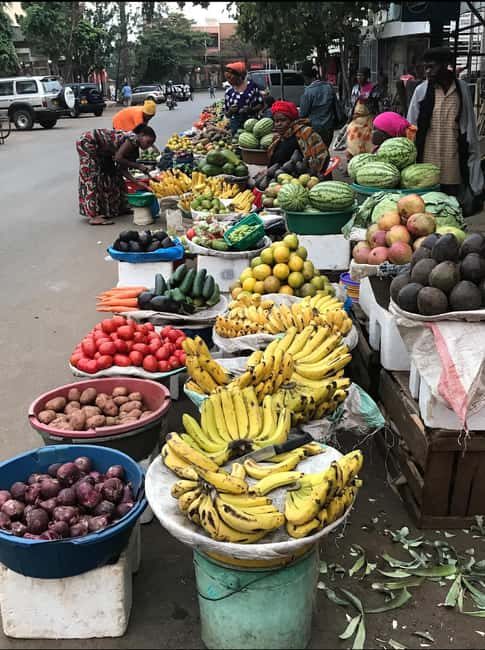
The food market is where the tour becomes most immediate. You will see fresh produce, local ingredients, and the trade that keeps meals moving from market stall to kitchen. This is the place to ask questions instead of rushing through with your phone raised.
Pay attention to the spices. One particularly useful tip is to ask about the seasonings used in local cooking. The market can help you understand food in Tanzania before you sit down to eat it. You might see ingredients you recognize, along with items that are less familiar and easier to understand when a guide explains how they are used.
The market is also a lesson in routine. You are not entering a staged cultural display. People are shopping, selling, and getting on with the day. That can make the visit more rewarding, but it also means you should act with care. Ask before taking close-up photos and follow your guide’s lead around stalls.
If you enjoy food, this may be the strongest part of the route. The market connects naturally with the included local lunch, giving you a chance to move from seeing ingredients to tasting local food. The exact lunch dish is not specified, so ask your guide what is being served and mention any dietary needs before eating.
One small tip: a local ginger shot has been singled out as worth trying, with a serious kick. If you like sharp, spicy flavors, it could be a fun addition to the food experience. If not, take a small taste first.
A change of scene while you are in Moshi & Kilimanjaro:
- Kilimanjaro Climbing Lemosho Route 8 Days.
★ 5.0 · 186 reviews - Climbing Kilimanjaro – Machame Route
★ 5.0 · 170 reviews - Climbing Kilimanjaro through 7 days Machame Route
★ 5.0 · 151 reviews - Kilimanjaro climb, Lemosho Route (8-day)
★ 5.0 · 148 reviews
Handmade goods at the craft and souvenir market
The next market focuses on crafts and souvenirs. This is a useful stop if you want to buy something made in Tanzania rather than wait until the airport or a safari lodge, where prices and choices may be different.
The best approach is to browse slowly. Look at the workmanship, compare items, and ask what they are made from. Your guide can help you understand what you are seeing and may point you toward reasonable places to shop. The Mama Africa Giftshop is also noted as a source of nice, inexpensive souvenirs.
This stop has a practical side. Shopping with a guide can reduce some of the uncertainty that comes with buying in an unfamiliar town. Still, purchases are not included in the tour price, and you should decide for yourself what fits your budget. Bring only the cash you need, or use one of the ATM locations your guide points out.
The craft market is not likely to suit someone who dislikes any time spent browsing. It is also not a guaranteed place for a specific item, since stock changes. But if you want a small reminder of Moshi and prefer to buy close to the source, it earns its place on the route.
Tanzanian coffee, served as part of the walk
Coffee is one of the most appealing stops because it changes the pace. After the markets, you get a chance to focus on aroma and flavor rather than traffic, stalls, and street activity.
The tour includes a local coffee experience. The description does not specify the exact venue or preparation method, so think of this as a taste and introduction rather than a full plantation visit or roasting workshop. You will have the chance to enjoy Tanzanian coffee in town, with your guide adding context as you go.
That distinction matters. If you are looking for a farm tour, detailed brewing instruction, or a long coffee lecture, this city experience may feel too brief. If you simply want to sample local coffee while learning more about Moshi, it adds a pleasant and relevant stop.
I like that coffee is not treated as an afterthought. Tanzania is well known for coffee production, and a local cup helps connect the town to the wider region. It also gives you something to talk about with your guide and fellow walkers.
Lunch that keeps the experience local
A local lunch is included, which strengthens the tour’s value. You are not paying extra for a meal at a hotel or large restaurant, and that fits the purpose of the walk. The aim is to introduce you to ordinary Moshi rather than keep you inside tourist-only spaces.
The exact restaurant and menu are not provided. For that reason, ask about the lunch plan before the tour, especially if you have allergies, dietary restrictions, or strong food preferences. The tour does not include hotel food or drinks from larger restaurants, so the included meal should be understood as a local option.
You should also budget for any extra drinks or snacks. Food and drinks outside the included local lunch and coffee are not covered. Tipping is optional, and souvenirs cost extra.
For many people, lunch will be more valuable than another sightseeing stop. A shared meal gives you time to ask about local life, food customs, and places to eat during the rest of your stay. Let your guide know what you enjoy. The more direct your questions, the more useful the stop becomes.
Rooftop views and a possible Kilimanjaro sighting
The final major stop is a rooftop bar in central Moshi. From here, you can look across town and, on a clear day, see Mount Kilimanjaro. The mountain view is a fine way to end the walk, but weather controls the result.
Do not book this tour solely for a guaranteed Kilimanjaro photograph. Clouds can hide the peak, and the information only promises the best view on clear days. The rooftop still gives you a chance to rest and look over the city, even if the mountain does not appear.
The bar setting also gives the tour a natural pause. You have spent time looking closely at markets and buildings, then you step back and see Moshi from above. Drinks are not included, so plan to pay for anything you order there.
This is a pleasant finish, though it may feel less important to you than the market stops. If the mountain is visible, it can become the highlight. If not, the walk still has value because the main experience is the town itself, not one distant peak.
What the guide adds to the experience
The guide is central to the tour. Without good explanations, a market can become a blur of stalls and a railway station can become another old building. With a friendly guide, those places turn into a connected story about food, trade, architecture, and daily routines.
Ziggy is the guide name associated with this walk. The experience is described as friendly and informative, and that is exactly what you should want here. You will benefit most if you ask plenty of questions, especially at the food market and during lunch.
The guide can also help with small but important needs. You can get directions to ATMs, suggestions for local food, and advice about shopping. That practical information can save you time later and help you feel more confident moving around Moshi on your own.
English and Swahili are available. If you want to practice a few Swahili words, this is a natural setting to do it. Do not expect every cultural question to have a simple answer, but a good guide can explain what you are seeing in a way that a guidebook cannot.
Who should book this $20 city tour?
I would recommend it to first-time visitors staying in Moshi, especially those about to go on safari or climb Kilimanjaro. It gives you a human-scale introduction before the larger experiences begin.
It is also a good fit if you want to support local businesses and spend money beyond the main safari and trekking operators. Your lunch, coffee, shopping, and optional rooftop spending all keep part of your visit connected to the town.
You may want to skip it if you dislike walking, markets, informal food experiences, or open-ended conversation. The tour does not focus on grand monuments, luxury dining, or private transport. It is a town walk with local stops, and that is both its strength and its limit.
At $20, the included lunch and coffee make the price easy to justify. Add the guide’s local advice, the market visits, and the chance of a Kilimanjaro view, and you get a practical first look at Moshi for modest cost. Just remember to bring comfortable shoes, money for optional purchases, and realistic expectations about the rooftop view.
Final verdict: book it for a grounded Moshi introduction
Book this tour if you want to understand Moshi before heading to the mountain or safari circuit. The strongest parts are the food market, the friendly guiding, the local coffee, and the useful advice about ATMs and places to eat.
Choose it for connection rather than spectacle. You may leave with a better sense of the town’s streets, its cooking ingredients, its crafts, and the people who make daily life work. If Ziggy is leading the walk, ask questions and take advantage of the conversation. That is where this $20 experience earns its keep.
FAQ
Where does the guided city tour of Moshi begin?
You can begin at your hotel or at the Mama Africa Giftshop. Confirm the exact meeting point before setting out.
How much does the tour cost?
The price is $20 per person.
What languages are available?
The tour is available in English and Swahili.
Is lunch included?
Yes. A local lunch is included in the tour price.
Is coffee included?
Yes. The tour includes a local coffee experience.
Does the tour include transport?
No. Transport is not included. The experience is designed as a walking city tour.
What should I bring?
Bring comfortable shoes for walking around Moshi.
Is Mount Kilimanjaro guaranteed to be visible?
No. The rooftop bar offers the best mountain view on clear days, so visibility depends on the weather.
Are souvenirs included?
No. Souvenirs and other purchases during the tour are not included.
Can I cancel for a full refund?
Yes. You can cancel up to 24 hours in advance for a full refund. You can also reserve now and pay later.
Newly listed around Moshi & Kilimanjaro
- Climb Mount Kilimanjaro: 7 Days Machame Route★ 5.0 · 3 reviews
- 6 Days Mount Kilimanjaro Climbing via Rongai Route★ 5.0 · 3 reviews
- Explore 1 day Ngorongoro Crater Budget Group Safari from Arusha★ 5.0 · 3 reviews
- Mt. Kilimanjaro Day Hiking★ 5.0 · 3 reviews
- Chemka (Kikuletwa) Hot Springs, Tanzania★ 5.0 · 3 reviews
- 8 Day Tanzania Family Safari★ 5.0 · 3 reviews
- Serengeti Safari with Sirikwa Travel★ 5.0 · 3 reviews
- Rongai Route 7 Days★ 5.0 · 3 reviews
Moshi & Kilimanjaro Tours, compared.








Browse the lists this tour appears in