
Reviewed · KILIMANJARO CLIMBS
Kilimanjaro Climbing Lemosho Route 8 Days.
Reaching Uhuru Peak at 5,895 meters is the heart of this climb, but the route earns its place too. In eight mountain days, you move from rainforest to moorland, alpine desert, glacier views, and a long midnight summit push. The full trip takes about nine days once airport arrival and the final hotel night are counted.
I like the private format, since your guide can adjust the walking pace for your own group. I also like the practical safety setup: pulse oximeters, first aid equipment, emergency oxygen, and a proper gear check before you leave Moshi. Those details matter on a high mountain.
The main caution is simple: this is a serious physical effort, not a scenic stroll. Summit day can last about 14 hours, and the package price of $2,300 does not include flights, a visa, laundry, or tips for the mountain crew.
Key points to know before climbing
- Lemosho gives you a gradual approach: The route begins in rainforest, crosses the Shira plateau, then reaches the high alpine desert around Lava Tower and Barranco.
- Private means more control: Only you and your group participate, with a guide team setting the daily pace.
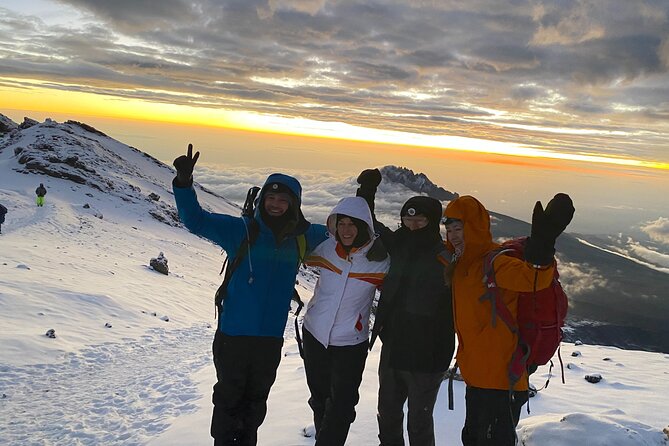
- Summit night is the test: You start around midnight, reach Stella Point at 5,756 meters, continue to Uhuru Peak, then descend to Mweka Camp.
- Safety equipment is included: The crew carries pulse oximeters, a first aid kit, and emergency oxygen.
- Meals and two hotel nights are covered: Breakfast, lunch, and dinner are provided during the listed schedule, with hotel stays before and after the climb.
- Budget beyond the advertised price: Flights, entry visa, laundry, and tips are separate expenses.
Why the Lemosho Route is worth eight mountain days
Kilimanjaro is not a technical rock-climbing trip, but altitude makes it demanding. The Lemosho Route takes a patient line up the mountain, giving you time to gain height instead of rushing straight toward the summit.
That slow rhythm is one reason I prefer this itinerary to a very short climb. You spend several nights above 3,500 meters before summit night, with an acclimatization walk on Day 4 and the useful high-altitude climb to Lava Tower on Day 5.
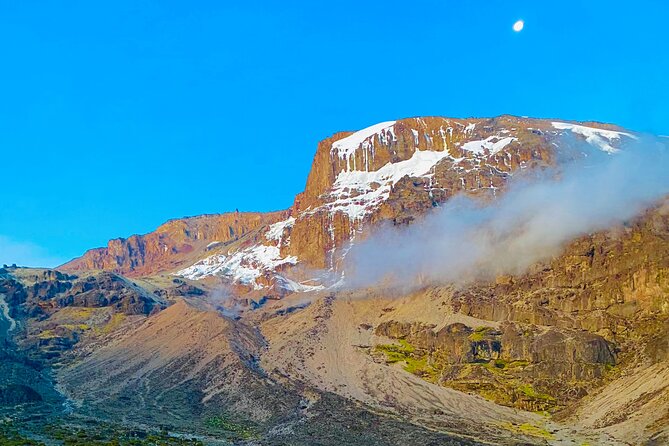
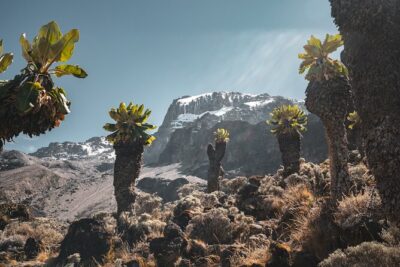
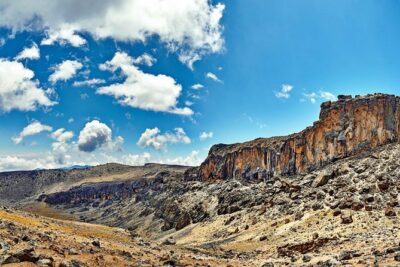
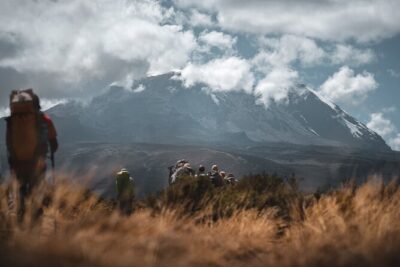
You also get a fine variety of scenery. The route begins under trees, opens onto heather and volcanic rock, then becomes dry and stark. At higher camps, Kibo and Mawenzi provide the great mountain views, while the northern ice fields appear from the western side.
This is a private trek, so you are not placed into a mixed group with strangers. That helps if your party has a shared goal, such as a family challenge or a trip with friends. It also means you should be honest about your walking speed and fitness before booking. A private group does not make Kilimanjaro easier. It simply gives your guide more room to manage your day.
More Kilimanjaro routes:
- Kilimanjaro climb by Lemosho Route (7-day)
★ 5.0 · 651 reviews - Kilimanjaro climb, Machame Route (7-day)
★ 5.0 · 262 reviews - Climbing Kilimanjaro – Machame Route
★ 5.0 · 170 reviews
Day 1 in Moshi: gear check before the real work
Your experience begins with pickup at Kilimanjaro International Airport and a private transfer to your hotel in Moshi. The drive and hotel arrival are followed by a trek briefing and equipment check with your guide.
This first meeting is more important than it may sound. The guide checks that you have suitable mountain gear before you head into the park. If something is missing or unsuitable, this is the moment to deal with it rather than discover the problem at 4,000 meters.
You spend the night at the hotel, with dinner included. The listed start time is 8:00 a.m., but your actual airport pickup and briefing arrangements should be confirmed when you book.
Day 2: from Londorossi Gate into the rainforest
After breakfast, you take a roughly two-hour drive from Moshi, at about 910 meters, to Londorossi Park Gate at 2,100 meters. Park registration takes place here while guides and porters organize food, camping equipment, and personal gear.
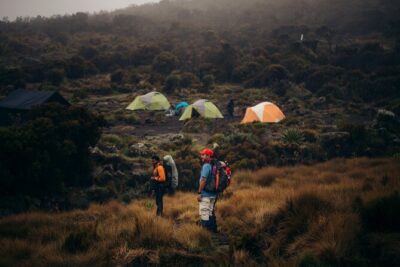
The first walking day lasts about seven hours. You enter the rainforest, where the route feels shaded and enclosed before reaching Mti Mkubwa Camp at 2,980 meters.
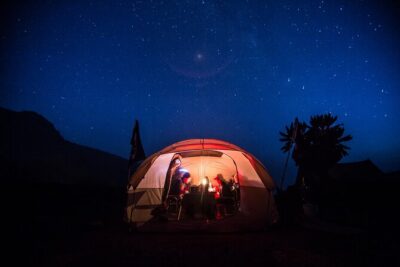
Your tent is set up by the time you arrive, with your personal belongings inside. That is a useful comfort after a long first day. You can focus on eating, drinking, and resting instead of setting up camp in the dark.
The increase in altitude is noticeable, but the day is designed as an introduction. Walk slowly from the start. There is no prize for arriving early at camp.
Day 3: Shira I and the first broad views
Day 3 covers about seven kilometers in four hours. The forest gives way to moorland, with grassy ground, heather, and volcanic rock formations.
Parts of the route are steep, but the walking time is shorter than the day before. You begin to see Kibo and the wide Shira plateau, an important change from the enclosed rainforest.
You sleep at Shira I Camp at 3,500 meters. For many people, this is the first night when altitude becomes a practical concern. Pay attention to how you feel, drink regularly, and tell your guide about headaches, nausea, unusual tiredness, or any change in coordination.
The point of this day is not simply to cover distance. It moves you into higher country while keeping the walking manageable.
A few more Moshi & Kilimanjaro days to compare
- Safari Serengeti And Ngorongoro
★ 5.0 · 288 reviews - Climbing Kilimanjaro through 7 days Machame Route
★ 5.0 · 151 reviews - Kilimanjaro climb, Lemosho Route (8-day)
★ 5.0 · 148 reviews - Kilimanjaro climb, Lemosho Route (6-day)
★ 5.0 · 129 reviews
Day 4: a shorter day with acclimatization built in
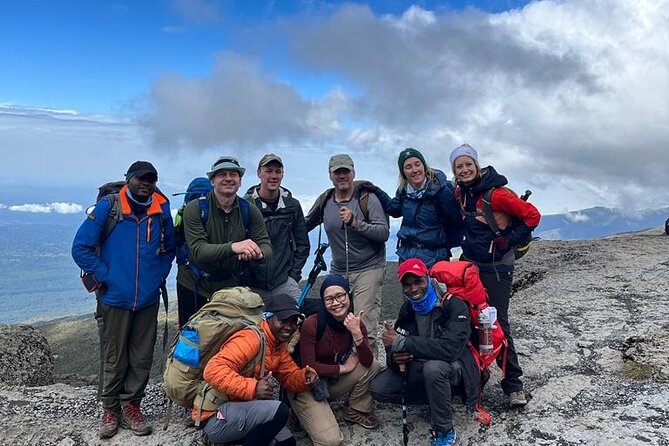
The fourth day covers about eight kilometers and takes roughly five hours. The moorland continues, but the route is not as steep as some of the other sections.
From the western side of the mountain, you may see the northern ice fields, along with clear views of Kibo. Hot lunch is served at camp, and tea is scheduled for around 4:00 p.m.
The most useful part of the day is the acclimatization walk after tea. You climb a little higher, then return to camp to sleep lower. This familiar high, sleep lower pattern gives your body more time to adjust.
It is also a good rest opportunity before the harder middle section. Do not treat the shorter schedule as a reason to overexert yourself. Keep your energy for the summit days ahead.
Day 5: Lava Tower and the descent to Barranco
Day 5 is one of the most valuable days on the route. You leave the moorland behind and enter alpine desert, walking up toward Lava Tower at 4,600 meters.
The day covers about 10 kilometers and takes around six hours. You gain considerable height, then descend for about three hours to Barranco Camp at 3,900 meters.
That descent is not wasted effort. It helps with acclimatization and brings you to camp at a more comfortable sleeping altitude than Lava Tower. It also gives you views of the Western Breach and Barranco Wall.
Barranco Camp sits in a valley below the wall. The setting is dramatic, especially around sunset. This is one of those nights when the camp location becomes part of the experience, not just a place to sleep.
You should still expect a demanding day. At 4,600 meters, even a moderate walking pace can feel slow. The guide’s job is to watch your condition, not push you to match someone else’s speed.
Day 6: the Barranco Wall and Karanga Camp
After breakfast, you climb the Barranco Wall, reaching about 4,200 meters before continuing toward Karanga Camp. The day covers about six kilometers and is listed at roughly four to six hours, depending on pace and conditions.
The wall is a physical section rather than a technical climbing pitch. You should expect uneven ground and steeper walking, with the route finishing near the upper part of the Heim Glacier area.
Karanga Camp sits at about 4,000 meters. By this point, you have already spent time at elevation, crossed several climate zones, and completed the Lava Tower acclimatization day.
This is a short-distance day, but altitude can make it feel longer. Keep your pack light, use clothing you can adjust easily, and make full use of the camp rest period.
Day 7: Barafu Camp and a long afternoon of rest
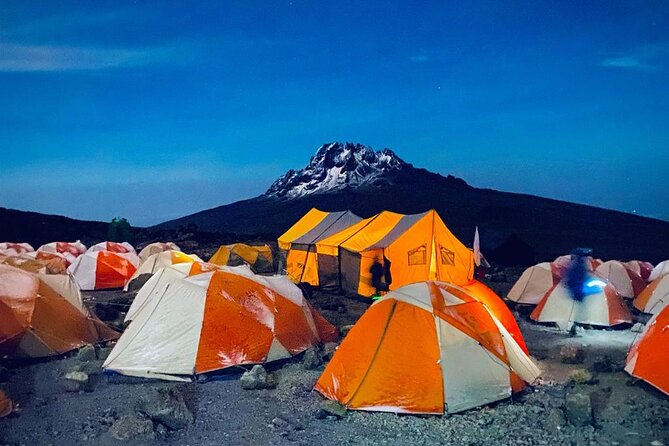
The route to Barafu Camp covers only about four kilometers and takes around three hours. You climb to 4,640 meters, with views toward both Kibo and Mawenzi peaks.
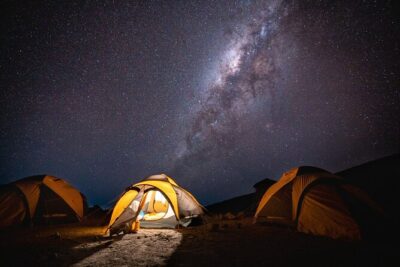
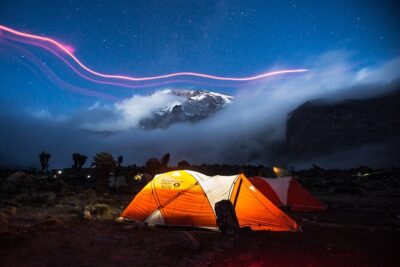
Barafu means ice in Swahili, and the camp marks the beginning of the summit phase. You have lunch, then a long rest before dinner. The early meal is followed by an attempt to sleep before waking around midnight.
This afternoon may feel strangely quiet. You have a short walking schedule, but the next effort is the hardest part of the entire climb. Eat what you can, organize your summit clothing, refill your water, and keep your headlamp and warm layers ready.
The itinerary provides light tea and cookies before the midnight departure. Do not expect a normal night of sleep. The value of this day is giving you time to rest before the summit push.
Day 8: Stella Point, Uhuru Peak, and Mweka Camp
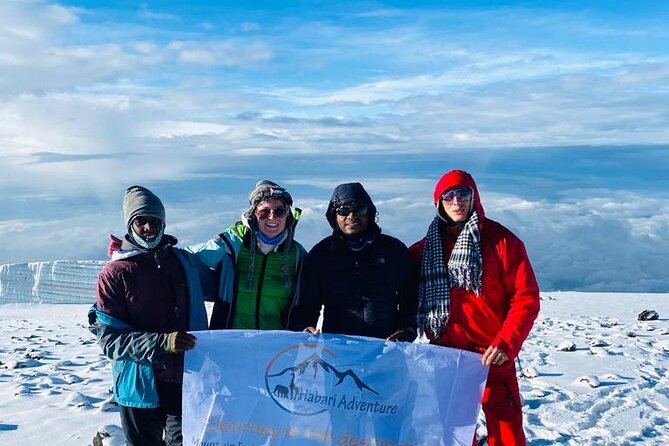
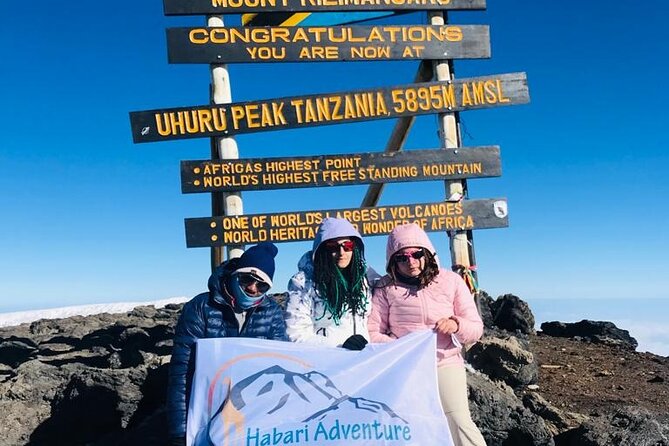
Summit day begins around midnight. You climb scree for four to five hours toward Stella Point at 5,756 meters, then continue for about one hour to Uhuru Peak at 5,895 meters.
This is where the route becomes most demanding. The air is thin, the ground is loose, and the walking takes place through the coldest part of the night. Your guide sets a slow pace, checks your condition, and helps you keep moving steadily.
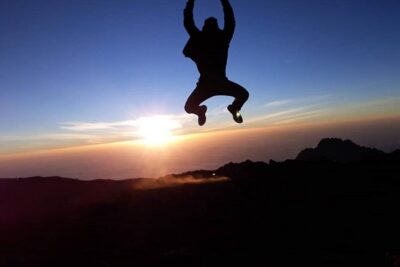
The plan is to reach Stella Point around sunrise. From there, you continue along the crater rim toward Uhuru Peak, take photos, and begin the descent.
The full day is listed at about 14 hours and 21 kilometers, though the schedule also gives a 12-hour estimate. Either way, you should plan for a very long day. After returning to Barafu Camp for lunch and rest, you descend to Mweka Camp at 3,100 meters.
That descent is a relief for your lungs but hard on tired legs. Hiking poles can be especially useful here, although the supplied information does not confirm that poles are provided. Ask about them during the gear check.
Day 9: forest walking and the return to Moshi
The final walking section passes through Mweka’s montane forest to Mweka Gate. It covers about 10 kilometers and takes roughly three hours.
At the gate, you complete park formalities and receive summit certificates. A vehicle then returns you to your Moshi hotel for a warm shower and celebration.
The final day is much easier than summit day, but your knees and feet may still be tired. Allow yourself time to move slowly. The hotel night is a welcome part of the package, since it gives you a proper place to recover after camping.
What the $2,300 price covers
At $2,300 per person, this is not a bare-bones park entry and guide arrangement. The price includes park-related fees and taxes, private transportation, two hotel nights, mountain accommodation, and the listed meals.
You also receive breakfast eight times, lunch eight times, and dinner nine times. That covers the arrival hotel night, the mountain schedule, and the return night, according to the supplied plan.
The safety provisions add practical value. Pulse oximeters help the crew monitor oxygen saturation, while a first aid kit and emergency oxygen provide basic emergency support. They do not remove the risks of altitude, and they are not a replacement for proper medical preparation, but their inclusion is reassuring.
You still need to budget for your international or domestic flights, Tanzanian entry visa, laundry, and tips for the mountain crew. Crew tips are an important part of the final cost, so do not treat the advertised price as your full trip budget.
The guide and porter team matter greatly
A Kilimanjaro climb is a team effort. Your guide manages pace, route decisions, altitude checks, and the summit schedule, while porters carry supplies and help keep camp operating.
The company has used guides named Yusuph, Abdi, Michael, Ema, Godlizen, Jamal, and Johnson on recent climbs. Availability can change, so ask who will lead your departure rather than assuming a particular person will be assigned.
The strongest practical lesson is to use the pre-climb briefing well. Ask your guide to check every important item, including footwear, warm layers, rain protection, sleeping equipment, gloves, and headlamp needs. The exact equipment supplied is not fully specified, so get a written packing list.
A private trip also allows the guide to adapt to different walking speeds within your group. That is especially useful for families or friends whose fitness levels are not identical.
Who should book this Kilimanjaro climb
This trip suits you if you want a private climb with meals, hotels, transport, guides, porters, and safety equipment arranged in advance. It also suits people who prefer the longer Lemosho approach and want several days to adjust to altitude.
You need a moderate level of physical fitness. The demanding parts include the seven-hour rainforest day, the climb to Lava Tower, the Barranco Wall, and the long summit day followed by a major descent.
This may not suit you if you want a short holiday with light walking or if you dislike camping. The itinerary includes multiple mountain camps, early starts, basic mountain routines, and a midnight summit departure.
The experience is also best for people who can tolerate uncertainty. The climb requires good weather, and the operator may change the date or offer a full refund if poor conditions force cancellation.
Booking details and cancellation
Confirmation is provided when you book. Airport pickup is offered, and the starting point is Kilimanjaro Airport in Tanzania, with the listed start time at 8:00 a.m.
You can cancel up to 24 hours before the local start time for a full refund. Changes or cancellations inside that 24-hour window are not accepted for a refund. Service animals are allowed, and the activity is described as private, with only your group participating.
The experience is booked an average of 147 days ahead. That is a useful planning clue: if your dates are fixed, reserve early rather than waiting until close to departure.
Should you book the 8-day Lemosho Route?
I would choose this climb if you want a well-supported, private ascent with a gradual route, built-in acclimatization, and a clear mountain schedule. The combination of Lemosho scenery, included meals, two hotel nights, safety equipment, and a dedicated guide team gives the $2,300 price reasonable value.
I would not book it without first checking the full equipment list, the guide assignment, porter arrangements, tipping expectations, and what happens if your group member cannot continue. Those questions are normal and worth asking.
Book it if you are ready for a real high-altitude challenge and want the logistics handled around you. Skip it if you are looking for a gentle hike. Kilimanjaro rewards patience, preparation, and a slow pace far more than bravado.
FAQ
How long does the Kilimanjaro Lemosho experience last?
The mountain climb takes eight days, while the full schedule lasts about nine days including airport arrival, hotel accommodation, and the return to Moshi.
Where does the experience start?
Pickup is offered from Kilimanjaro International Airport in Tanzania. The listed start time is 8:00 a.m.
Is this a private tour?
Yes. Only you and your group participate in the activity.
What meals are included?
The package includes eight breakfasts, eight lunches, and nine dinners during the listed schedule.
Are hotel nights included?
Yes. Two hotel nights are included, one at the beginning and one after returning from the mountain.
What safety equipment is provided?
The crew provides a pulse oximeter, first aid kit, and emergency oxygen.
What is not included in the price?
Flights, Tanzanian entry visa, laundry services, and tips for the mountain crew are not included.
Can I cancel for a full refund?
Yes. You can cancel at least 24 hours before the local start time for a full refund. Cancellations or changes made less than 24 hours before the start time are not accepted for a refund.
Newly listed around Moshi & Kilimanjaro
- Climb Mount Kilimanjaro: 7 Days Machame Route★ 5.0 · 3 reviews
- 6 Days Mount Kilimanjaro Climbing via Rongai Route★ 5.0 · 3 reviews
- Explore 1 day Ngorongoro Crater Budget Group Safari from Arusha★ 5.0 · 3 reviews
- Mt. Kilimanjaro Day Hiking★ 5.0 · 3 reviews
- Chemka (Kikuletwa) Hot Springs, Tanzania★ 5.0 · 3 reviews
- Guided City tour of Moshi★ 4.3 · 3 reviews
- 8 Day Tanzania Family Safari★ 5.0 · 3 reviews
- Serengeti Safari with Sirikwa Travel★ 5.0 · 3 reviews
Kilimanjaro Climbs, compared.
Browse the lists this tour appears in