
Reviewed · KILIMANJARO CLIMBS
Lemosho Route 8 Days Kilimanjaro Climbing Tour
The best thing about this climb is the way Kilimanjaro changes around you. You begin in rainforest, cross the Shira Plateau, pass through alpine desert, scramble up the Barranco Wall, then reach Uhuru Peak at 5,895 meters, the highest point in Africa. It feels like several hikes stitched into one great mountain day.
I like the eight-day pace, which gives you more time to adjust to altitude than shorter routes. I also like the practical support: a guide team, porters, cook, tents, purified water, emergency oxygen, and a mess tent with tables and chairs. The main caution is simple: this remains a serious high-altitude climb. A moderate fitness level is required, and summit night will test your legs, sleep, and patience.
Key points to know before you book
- Eight days on the Lemosho Route: A gradual approach through rainforest, heath, moorland, and alpine desert.
- Summit at 5,895 meters: The final push reaches Stella Point and then Uhuru Peak before descending to Mweka Camp.
- Strong camp support: Guides, porters, a cook, sleeping tents, mattresses, a mess tent, meals, and purified water are included.
- Private group format: Only your own group takes part, with airport pickup and transfers to and from your Moshi hotel.
- A well-equipped package: Park fees, rescue fees, conservation charges, VAT, emergency oxygen, and a summit certificate are covered.
- Budget for extras: Flights, visa, insurance, personal gear, drinks, and tips are not included in the $2,600 price.
Why eight days on Lemosho makes sense
Lemosho is a good choice if you want Kilimanjaro to unfold at a measured pace. The route begins on the western side of the mountain, where the first days move from forest into open high country. You are not rushed straight toward the summit, and that matters when your body is learning to cope with thinner air.
The route also gives you variety. One morning you may be walking beneath trees, and a few days later you are crossing bare volcanic ground with huge views of rock and sky. That change is not just pretty. It keeps the climb interesting when your knees and shoulders are starting to complain.
Macpace Tours and Safaris runs this as a private activity, so your group is not combined with strangers. That can make a real difference on a climb. You can discuss pace, rest breaks, and daily needs with your own guide team rather than trying to fit into a large crowd.
The company has received especially strong praise for its guides, porters, cooks, planning, and care during the ascent. Guides named in the feedback include Victor, Edwin, and Joseph, though you should confirm your actual guide assignment before departure. The repeated praise for the mountain crew is important because good support matters most when weather, fatigue, or altitude makes the day harder than expected.
More Kilimanjaro routes:
- Kilimanjaro climb by Lemosho Route (7-day)
★ 5.0 · 651 reviews - Kilimanjaro climb, Machame Route (7-day)
★ 5.0 · 262 reviews - Kilimanjaro Climbing Lemosho Route 8 Days.
★ 5.0 · 186 reviews
Day 1: Lemosho Gate to Mti Mkubwa Camp
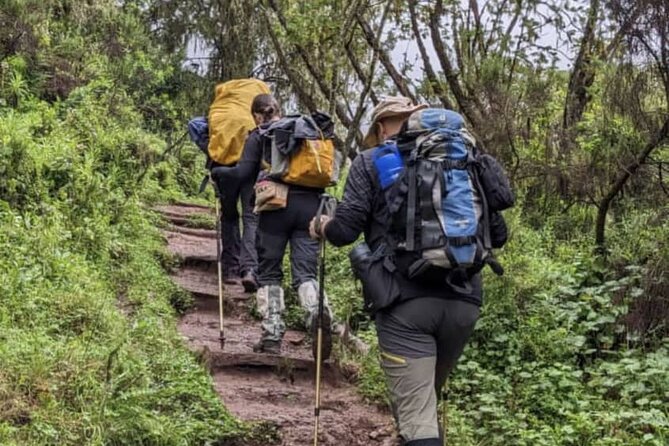
Your climb begins at Lemosho Gate, after transport from your Moshi hotel or arranged pickup point. The first walk leads through rainforest to Mti Mkubwa Camp, with about four hours of hiking listed for the day.
This is a gentle introduction to the mountain, though wet forest conditions can make the trail muddy. The trees provide shade, and the lower altitude gives you a chance to settle into the rhythm of walking, eating, drinking, and resting.
You will have porters and a cook supporting the camp system. The package includes a four-season waterproof mountain tent shared by two people, a sleeping mattress, and a separate mess tent with tables and chairs. That dining tent is more than a comfort feature. After several hours outside, having a dry place to eat and organize your things can lift your mood.
Day 2: Shira Ridge and the open Shira Plateau
Day two moves toward Shira I Camp, with about six hours on the trail. The forest begins to thin, and you enter the heath and moorland zone. The shift is striking: less dense vegetation, more open ground, and wider views.
Crossing Shira Ridge gives the day a sense of progress. You are no longer simply walking uphill through trees. The mountain begins to feel larger and more exposed, with views across the Shira Plateau.
This is one of the reasons I prefer the Lemosho Route to a rushed climb. The route gives you time to notice the mountain’s plant zones instead of treating the early days as a race to base camp. Keep your pace slow and steady. The phrase pole pole, meaning slowly, is useful advice on Kilimanjaro even when nobody says it aloud.
Day 3: Shira II and higher moorland
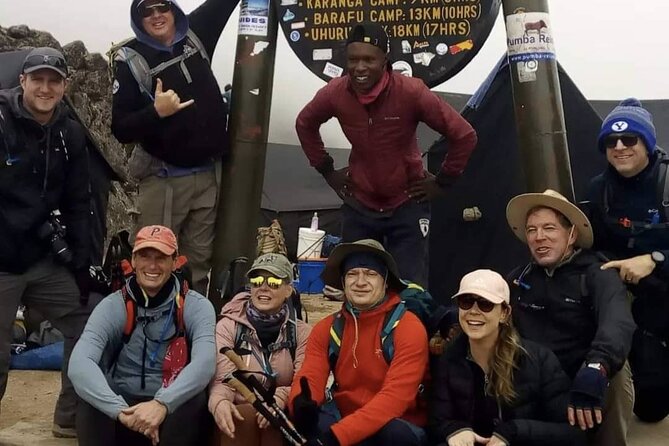
The third day continues through moorland toward Shira II Camp. The walk is listed at about five hours, with the route becoming rougher and more barren as you approach the Lent Hills.
You gain more height, but the day is not only about reaching camp. The trail offers broad views across the Shira Plateau, and the open setting lets you see how far you have come. The ground becomes less forgiving, so sturdy boots and careful footing are important.
This is also a good day to pay attention to your body. Headaches, nausea, poor sleep, and unusual fatigue should be reported to your guide. Emergency oxygen is included, but it is not a substitute for proper altitude monitoring or an honest conversation with the guide team.
A few more Moshi & Kilimanjaro days to compare
- Safari Serengeti And Ngorongoro
★ 5.0 · 288 reviews - Climbing Kilimanjaro – Machame Route
★ 5.0 · 170 reviews - Climbing Kilimanjaro through 7 days Machame Route
★ 5.0 · 151 reviews - Kilimanjaro climb, Lemosho Route (8-day)
★ 5.0 · 148 reviews
Day 4: Lava Tower, alpine desert, and Barranco Camp
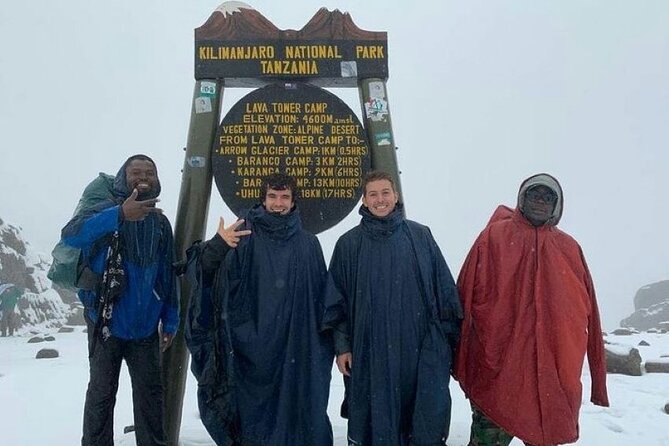
Day four is one of the longest and most dramatic sections, listed at roughly seven hours. You pass through alpine desert, where vegetation becomes sparse and volcanic rock takes over. The views toward Lava Tower and the Western Breach give the day a more rugged character.
The route eventually leads to Barranco Camp. This is a valuable acclimatization pattern because you climb high during the day and then sleep at a lower camp than your highest point. The exact effect varies from person to person, but the schedule gives your body useful time at altitude before the summit attempt.
Barranco Camp also sets up the next morning’s challenge. You can see the Barranco Wall ahead, and it looks steeper than many people expect. Do not let the word wall make you imagine technical climbing with ropes. The itinerary describes a steep scramble, but you still need a calm head, good balance, and patience with the people ahead of you.
Day 5: The Barranco Wall and Karanga Camp
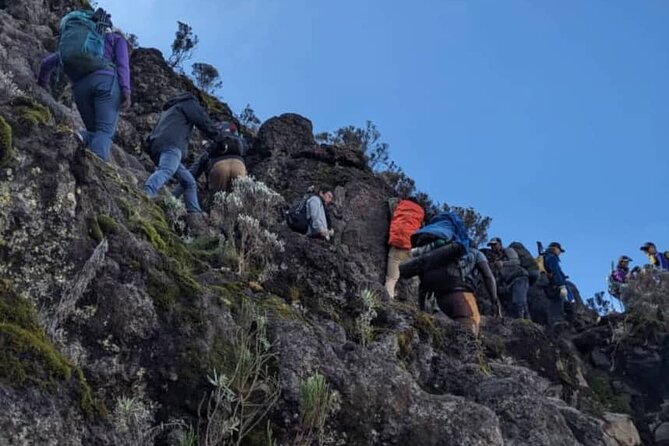
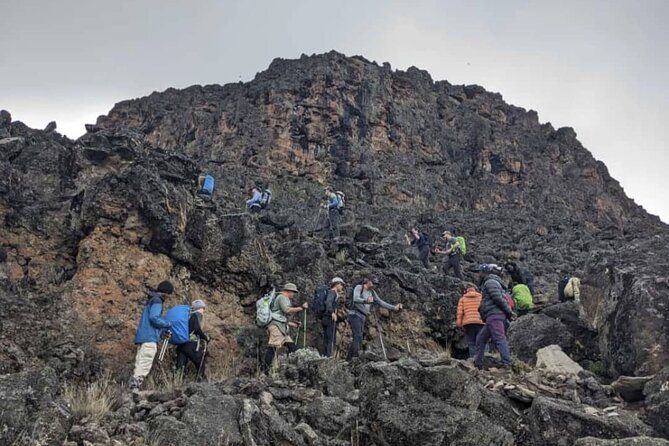
The Barranco Wall is the day’s headline feature. You climb over and around the rock, using your hands at times, then continue across valleys and ridges toward Karanga Camp. The walking time is described as about four to six hours.
This section gives you a physical challenge without making the entire day a long march. It also brings some of the best views of the climb. The route feels more varied than a simple uphill trail, and the change in direction keeps your attention on foot placement and the guide’s instructions.
Karanga Camp sits above a scenic valley and serves as another useful pause before Barafu. By now, your routine should be familiar: arrive, drink, eat, dry clothing, check your gear, and rest. Keep the evening quiet. The summit attempt is close, and saving energy is more useful than trying to entertain yourself at camp.
Day 6: Karanga to Barafu Camp
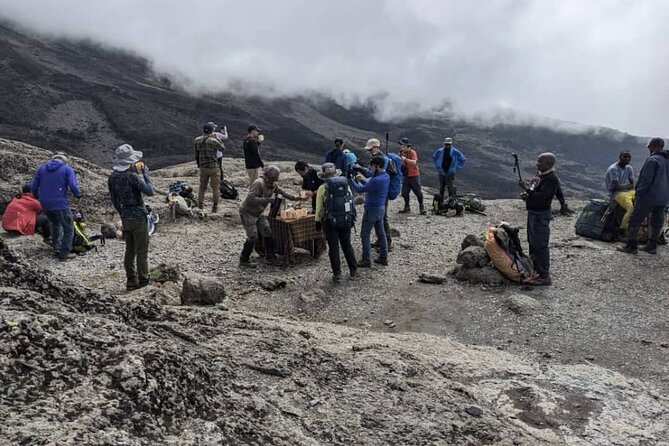
The walk to Barafu Camp takes about three to five hours and brings you to the base camp for the summit attempt. The alpine desert continues, and the trail becomes steeper as you gain height.
Barafu is not a place to expect a long, relaxed afternoon. You will rest and prepare for the night ascent. Organize your summit clothing before dinner so you are not searching through your bag in the dark. Keep water, warm layers, snacks, gloves, and a headlamp easy to reach.
The supplied information confirms tents, mattresses, meals, purified drinking water, and a cook. Personal sleeping bags and most trekking clothing are not included, though equipment is available for rent. Confirm rental costs and sizes before you arrive, especially for boots and sleeping gear.
Day 7: Stella Point, Uhuru Peak, and Mweka Camp
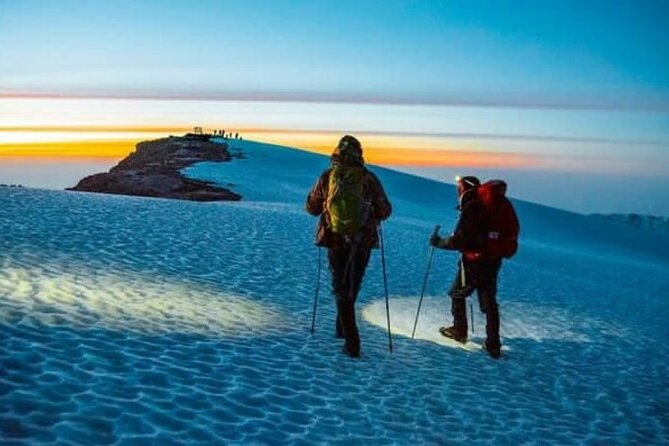
Summit day begins around midnight. You climb toward Stella Point and then continue to Uhuru Peak at 5,895 meters. This is the most demanding part of the tour, despite the itinerary showing about four hours for this section. In practice, you should treat it as a long overnight effort followed by a major descent, not as an ordinary half-day walk.
The cold, darkness, steep trail, and altitude can make the climb feel slow. Your guide sets the pace, and the best approach is to take small steps, breathe evenly, and focus on the next section rather than the whole mountain.
Reaching Uhuru Peak is the emotional high point. You have crossed several climate zones and spent a week working toward this moment. After time at the summit, you descend to Mweka Camp for the night. The descent is welcome, but it is still tiring on legs that have already worked hard.
Make sure your daypack is arranged for both halves of the day. You need warm summit clothing before sunrise, then lighter layers and enough water for the descent. Your guide can help you judge what to carry, but you should know where your own essentials are.
Day 8: Mweka Gate and the return to Moshi
The final day takes you down through rainforest to Mweka Gate, with about four hours listed. The vegetation becomes thicker again as you lose altitude, and the change is a satisfying reminder of the ground you have covered.
At the gate, you receive a Kilimanjaro summit certificate and say goodbye to the mountain crew. Transfers back to your Moshi hotel are included, as are airport pickup and drop-off arrangements. Confirm the timing if you have a same-day flight, because the descent, gate formalities, and transfer all require room in your schedule.
The last walk may look easy on paper, but tired knees can turn downhill steps into hard work. Trekking poles can help, though personal equipment is your responsibility unless rented through the operator.
What the $2,600 price covers
At $2,600 per person, this is not a bare-bones mountain permit. The price includes park-related charges such as conservation fees, camping or hut fees, rescue fees, and government VAT. It also includes professional guides, porters, a cook, salaries, transfers, mountain tents, mattresses, a mess tent, emergency oxygen, purified water, meals, hotel arrangements, and a summit certificate.
Meals are provided for the mountain portion: eight lunches, seven breakfasts, and seven dinners. That reduces the amount of planning you need to do before the climb and removes much of the daily food burden from your shoulders.
The value depends on how much support you want. If you prefer a fully arranged climb with a camp kitchen, porter team, transport, and park costs bundled together, the price is easier to justify. If you already own gear and are comparing the lowest possible price, you may focus more closely on the operator’s crew ratios, equipment standards, tipping expectations, and rental charges.
The package does not include your Tanzania visa, international or domestic flights, personal travel insurance, personal trekking gear, alcohol, bottled drinks, laundry, telephone use, or tips. Those extras can add up, so build them into your real budget rather than treating $2,600 as the final figure.
Comfort, equipment, and the human support system
The camping setup is practical rather than luxurious. You sleep two to a waterproof, four-season tent, with a mattress supplied. A mess tent with tables and chairs gives you a place to eat and sit together away from the weather.
A cook prepares the included meals, while porters carry equipment and guides manage the route and daily climb. The strong praise directed at the Macpace crew is one of the most reassuring parts of the package. Several accounts describe the guides and porters as kind, helpful, and attentive, with particular appreciation for the care shown during the summit attempt.
That said, you should ask clear questions before booking. Confirm the number of guides and porters assigned to your group, the sleeping bag rental options, toilet arrangements, and the tipping guidance. One account refers to a private toilet, but the main package information does not clearly promise one, so get that detail in writing.
Who should choose this climb
This route suits you if you want a private, supported Kilimanjaro climb and can commit to eight days away from ordinary routines. You need moderate physical fitness, but the bigger test is sustained effort at altitude.
It is a good fit for first-time high-altitude trekkers who want a gradual route and strong logistical support. It also works well for families or friends booking together, since only your own group participates and the pace can be discussed with the guides.
It is less suitable if you dislike camping, want a short holiday, or expect the summit to be easy because Kilimanjaro is a non-technical mountain. You do not need advanced climbing skills based on the information provided, but you do need preparation, warm clothing, proper boots, and a willingness to keep moving when the summit night becomes uncomfortable.
The route also suits people combining the climb with a Tanzania safari. Macpace Tours and Safaris has arranged safari extensions to places including Arusha, Serengeti, Ngorongoro, and Mto wa Mbu, but those safari days are separate from this eight-day mountain package.
Booking details and cancellation
Pickup is offered, and transfers to the mountain and back to your Moshi hotel are included. Confirmation is received at booking, and the activity operates Monday through Sunday from 8:00 AM to 3:00 PM during the stated operating period, from August 1, 2024, through June 17, 2026.
The cancellation terms are generous if your plans change early. You can cancel at least 24 hours before the local start time for a full refund. Cancellations or changes made within 24 hours are not accepted for a refund.
Should you book the 8-day Lemosho Route?
I would choose this tour if your priorities are route variety, a slower ascent, private-group support, and a package that covers most major mountain costs. The combination of Lemosho’s changing zones, the Barranco Wall, and the summit route through Stella Point gives you a strong Kilimanjaro experience rather than a quick march to the top.
Before paying, ask Macpace Tours to confirm your guide names, group size, crew numbers, sleeping bag and gear rental prices, toilet arrangements, and the expected tipping range. If those answers suit your needs, the $2,600 package offers a practical way to tackle Kilimanjaro with the major logistics already arranged.
FAQ
How long is the Lemosho Route Kilimanjaro tour?
The tour lasts approximately eight days, beginning at Lemosho Gate and ending at Mweka Gate before transfer back to Moshi.
What altitude does the climb reach?
The summit is Uhuru Peak at 5,895 meters, the highest point in Africa.
Is airport pickup included?
Yes. Airport pickup and drop-off are included, along with transfers to the mountain and back to your Moshi hotel.
What meals are included?
The package includes eight lunches, seven breakfasts, and seven dinners.
Are tents and mattresses provided?
Yes. A waterproof, four-season mountain tent is provided on a twin-sharing basis, along with a sleeping mattress. Personal sleeping bags are not included, but they are available for rent.
Is this a private tour?
Yes. Only your own group participates in the activity.
What is not included in the price?
The price excludes Tanzania visa costs, international and domestic flights, personal trekking equipment, travel insurance, tips, personal expenses, alcohol, beer, and bottled beverages.
Newly listed around Moshi & Kilimanjaro
- Climb Mount Kilimanjaro: 7 Days Machame Route★ 5.0 · 3 reviews
- 6 Days Mount Kilimanjaro Climbing via Rongai Route★ 5.0 · 3 reviews
- Mt. Kilimanjaro Day Hiking★ 5.0 · 3 reviews
- Explore 1 day Ngorongoro Crater Budget Group Safari from Arusha★ 5.0 · 3 reviews
- Chemka (Kikuletwa) Hot Springs, Tanzania★ 5.0 · 3 reviews
- Guided City tour of Moshi★ 4.3 · 3 reviews
- 8 Day Tanzania Family Safari★ 5.0 · 3 reviews
- Serengeti Safari with Sirikwa Travel★ 5.0 · 3 reviews
Kilimanjaro Climbs, compared.








Browse the lists this tour appears in