
Reviewed · KILIMANJARO CLIMBS
Kilimanjaro climb, Kilimanjaro Crater route (10-day)
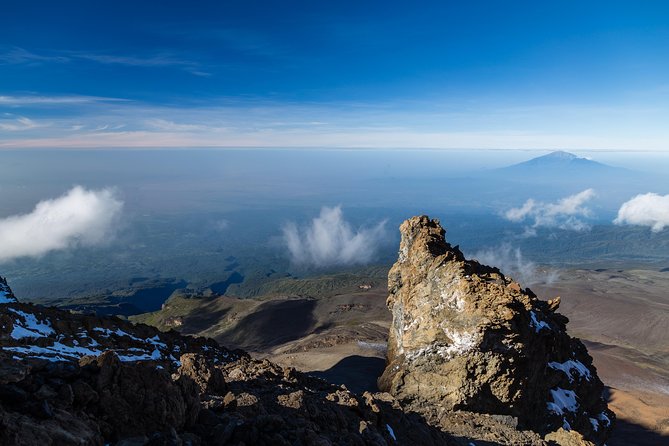
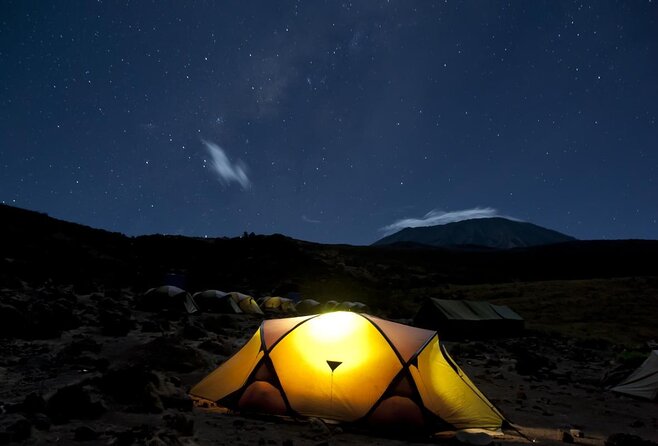
The rarest part of this climb is not simply reaching Uhuru Peak. It is the chance to spend a night in Kilimanjaro’s crater, above most inhabited places on Earth, with glaciers and a star-filled sky close at hand. The Northern Circuit also gives you long, quiet days on the mountain’s northern side, far from the busier routes.
I like the slow altitude gain and the serious safety setup: certified Wilderness First Responder guides, twice-daily medical checks, oxygen, oximeters, and a guide assigned to every two climbers for the summit push. The drawback is clear: crater camping adds real altitude risk, and the supplied schedule does not clearly show which night is spent inside the crater, so confirm that detail before paying.
Key details before you book
- A 10-day route with strong acclimatization: You reach high points gradually, with a planned walk to Lava Tower before sleeping lower at Moir Hut Camp.
- Quiet northern slopes: The route passes near Kenya, with views toward the Tsavo and Amboseli valleys and fewer people than the better-known trails.
- A demanding summit night: You begin around midnight from School Hut Camp at 4,750 meters and climb to Uhuru Peak at 5,895 meters.
- Crater camping requires caution: Sleeping inside the crater is unusual and memorable, but the extra altitude calls for honest self-assessment and suitable insurance.
- A full support system: Tents, meals, drinks, park fees, porters, cooks, medical kits, oxygen, and airport transfers are included.
- Private group format: Only your group takes part, with group discounts available and pickup offered from Kilimanjaro International Airport.
Why the Northern Circuit is worth the extra days
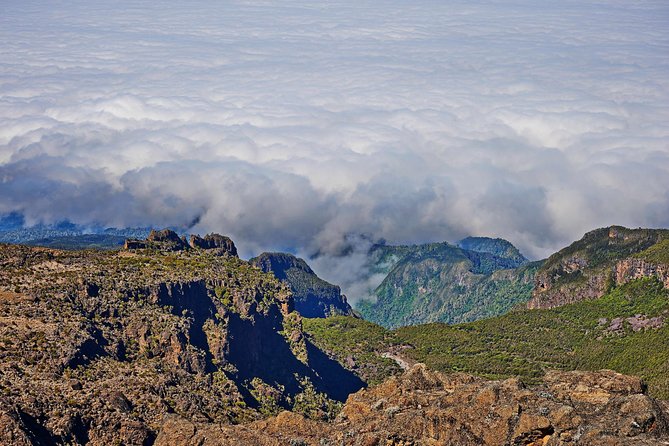
Kilimanjaro climbs are often sold as a race against altitude. This one gives you more time to adjust. That matters because the summit is high, even though the route itself does not require technical climbing skills.
The Northern Circuit begins on the western side of the mountain, then curves around the northern slopes before joining the Rongai route near 3rd Cave Camp. The trail has repeated gains and drops rather than one constant uphill grind. That can feel tiring, but it gives your body more time to adapt.
I like this approach for two reasons. First, you get a better chance to experience several distinct zones of Kilimanjaro instead of marching straight toward the summit. Second, the northern side is known for its open views and low foot traffic. Near the Kenya border, you may see across toward the Tsavo and Amboseli valleys, a striking contrast to the summit glaciers and volcanic rock.
The price is $6,466 per person. That is a major expense, but it covers much more than a guide and a tent. You receive two hotel nights, park charges, transport, three meals a day on the mountain, drinks, a large support crew, branded camping equipment, medical monitoring, and airport transfers. You still need to budget for flights, visas, insurance, personal gear, gear rental if needed, hotel meals, and tips for the mountain crew.
For a private climb with a long acclimatization plan and extensive support, the price can make sense. It is not a budget mountain trip. You are paying for time, logistics, food, staff, permits, and a more controlled attempt at a very high summit.
More Kilimanjaro routes:
- Kilimanjaro climb by Lemosho Route (7-day)
★ 5.0 · 651 reviews - Kilimanjaro climb, Machame Route (7-day)
★ 5.0 · 262 reviews - Kilimanjaro Climbing Lemosho Route 8 Days.
★ 5.0 · 186 reviews
Day 1: A soft landing near Moshi
Your arrival begins at Kilimanjaro International Airport, where an Altezza Travel representative meets you and arranges the transfer to the hotel. The first night is at Aishi Machame Hotel, with a room, hot water, internet access, a swimming pool, and staff support.
Check-in begins at 2:00 PM. In the evening, you attend a briefing with the company managers, who check that you are ready for the climb. This is useful time, not filler. A Kilimanjaro trip is easier when you know what is happening with transport, equipment, food, and altitude before leaving the hotel.
The first night also gives you a chance to check your personal gear. Bring questions about boots, sleeping bags, clothing, and any medical concern. The company can provide some personal equipment for hire, but that is an extra cost.
Day 2: Londorossi Gate and the Shira Plateau
The mountain crew meets you at the hotel in the morning. The drive to Londorossi Gate takes about three to four hours, followed by park registration, climbing permits, and search and rescue registration.
From the gate, off-road vehicles take you higher, to about 3,500 meters. This saves you a long lower-altitude approach, but it also means your first day puts you directly into thin air. You then walk to Shira 1 Camp, with only a modest gain in height.
The walk is described as fairly gentle, and you get your first major views of the Shira Plateau. This opening day is short enough to help you find your walking rhythm, but do not treat it as a free pass. Your body has gone from hotel level to high camp quickly, so take the slow pace seriously.
Day 3: Shira 2 and the Lava Tower acclimatization walk
The route from Shira 1 to Shira 2 Camp gains roughly 300 meters. The physical demand remains moderate, leaving time to notice the mountain plants and, when the sky is clear, Mount Meru.
After lunch and a two-hour rest, you take an acclimatization walk toward Lava Tower. You climb another 300 meters, then return to camp. This is one of the smartest parts of the schedule. The basic principle is simple: go higher during the day, then sleep lower.
Your guide and crew provide tea, coffee, juices, soda, and other drinks on the mountain. Vegetarian, gluten-free, halal, and other meal plans are available, which is important on a trip where appetite often becomes unreliable.
A few more Moshi & Kilimanjaro days to compare
- Safari Serengeti And Ngorongoro
★ 5.0 · 288 reviews - Climbing Kilimanjaro – Machame Route
★ 5.0 · 170 reviews - Climbing Kilimanjaro through 7 days Machame Route
★ 5.0 · 151 reviews - Kilimanjaro climb, Lemosho Route (8-day)
★ 5.0 · 148 reviews
Day 4: Lava Tower at 4,630 meters and Moir Hut Camp
This is one of the most useful and uncomfortable days. You leave Shira Camp at about 3,900 meters and climb toward Lava Tower at 4,630 meters. The route has repeated ups and downs, and you may feel the altitude here.
Lunch takes place at Lava Tower, allowing you to spend one or two hours at the higher elevation before descending toward Moir Hut Camp. That descent is not a setback. It is part of the acclimatization plan.
The guide can choose a lower porter trail if someone is not adjusting well. In that case, the highest point is about 4,400 meters instead of 4,630. I appreciate this flexibility. A fixed schedule is less important than keeping the group healthy.
The day lasts about eight hours, so you should expect a serious walking day even if no climbing technique is needed. This is where a slow, steady pace pays off.
Day 5: Around the northern slope toward Kenya
After a short, steep climb out of Moir Valley, the route settles into a long series of gradual rises and descents. The day is around seven hours, but the walking is considered relatively easy compared with summit preparation.
The real reward is the setting. You travel around Kilimanjaro’s northern slope, close to the border with Kenya, with views toward the Tsavo and Amboseli valleys. This is a quieter side of the mountain, and the lack of crowds is one of the strongest reasons to choose this route.
You should also understand the tradeoff. The Northern Circuit is long because it takes the scenic way around. If you want the shortest possible path to the summit, this is not it. If you prefer time, space, and gradual altitude gain, the extra days work in your favor.
Day 6: 3rd Cave Camp and the Rongai connection
You finish crossing the northern slope and spend the night at 3rd Cave Camp. Here the route meets the traditional Rongai trail.
The supplied schedule lists this day as 14 hours, even though the description says the trekking is shorter than the previous day. That is an important point to clarify with the operator. The figure may include the full day’s logistics, but you should ask what actual walking time is planned.
By now, the schedule aims to have you comfortable at about 4,000 meters. That does not guarantee an easy summit, but it gives you a better base for the final push. Keep drinking, eat even if your appetite fades, and tell your guide early if you develop a headache, nausea, dizziness, or unusual weakness.
Day 7: School Hut Camp before the summit
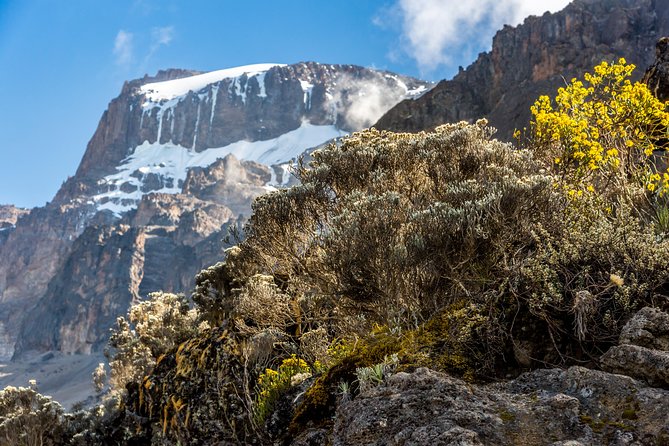
The route climbs to School Hut Summit Camp at 4,750 meters. The walking itself is not described as especially hard, but this is a day for saving energy.
Once you reach camp, rest and drink. Avoid strenuous activity. The summit attempt begins around midnight, so the best use of the afternoon is a quiet meal, warm clothing, and sleep.
This camp is already extremely high. You may not sleep well, even if you follow every instruction. That is normal on a high mountain, but it is also why your guide’s health checks matter.
Day 8: Uhuru Peak, the crater, and a long descent
The summit attempt starts in darkness, around midnight. From School Hut, you climb to Uhuru Peak at 5,895 meters. The route is not technically difficult, but altitude makes every step harder.
The safety arrangement is reassuring: one guide is assigned to every two climbers for the summit section. The guide monitors your condition and can make decisions based on how you are coping. Reaching the top is never worth pushing through dangerous symptoms.
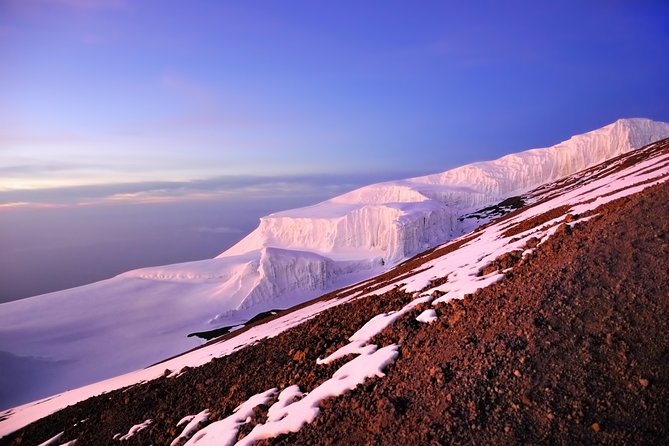
After a successful summit, a walk onto the nearest glacier may be possible. This should be treated as an optional extra, not a promise. Kilimanjaro’s glaciers are shrinking, and the crater area is exposed to wind and severe cold.
The schedule then takes you down to Barafu Camp for a two-hour lunch and rest before continuing to Millennium Camp at 3,820 meters. The listed timing is about five hours, but the complete summit day is much more demanding than that number suggests. Ask how the operator counts the hours.
Descent deserves respect. Fatigue, loose footing, and damaged toes can turn a successful summit into a painful finish. Use trekking poles if you have them, shorten your steps, and do not rush simply because you are going downhill.
The crater camping question you should settle first
The headline experience is an overnight stay in Kilimanjaro’s crater. You would camp at extraordinary altitude, beneath clear skies, with views of the remaining glaciers. That is a rare mountain experience, but it also adds exposure to cold, wind, and altitude illness.
There is a scheduling issue here. The daily route supplied for this program names Shira 1, Shira 2, Moir Hut, 3rd Cave, School Hut, Barafu, and Millennium Camp. It does not clearly identify a crater camp night. Before booking, ask Altezza Travel to confirm:
- Which night is spent inside the crater
- The exact crater elevation and campsite
- How the crater night changes the summit schedule
- What happens if weather or health conditions make crater camping unsafe
- Whether the glacier walk is included or only considered if conditions allow
This is not a minor wording point. Crater camping is the feature that makes this route unusual, and you should have the precise plan in writing.
Day 9: Forest, Mweka Gate, and certificates
Millennium Camp sits lower, amid tropical forest. After a hot breakfast, you descend to Mweka Gate at about 1,650 meters.
This final walk gives you a chance to look back on the climb with your support crew. At the park exit, you are transferred to the company offices to receive your accomplishment certificate, then taken back to the hotel for a proper rest.
The lower altitude should feel welcome. You may be tired, sore, and ready for a shower, but this is also when the scale of the climb begins to sink in.
Day 10: Hotel rest and airport transfer
The final day is deliberately easy. You rest at the hotel and transfer to the airport. Check-out is at 11:00 AM, and a later check-out is available for an evening flight at an additional charge.
Airport pickup and drop-off are included, which removes one more piece of planning after a physically demanding trip. Still, give yourself enough time at the end. Mountain schedules can change if weather, health, or trail conditions affect the climb.
Meals, tents, and medical support
The mountain package includes three energy-focused meals each day, along with hot and cold drinks. Breakfast, lunch, and dinner are supplied on the stated schedule, and special diets can be arranged.
You sleep in North Face VE-25 tents, with two climbers per tent unless you are climbing alone. The camp setup includes sleeping pads, a mess tent, tables, chairs, crockery, and cutlery. Single tent and hotel arrangements cost extra.
The support crew includes guides, porters, camp staff, and cooks. Tips are not included, so set aside money for the mountain team. The company also provides medical kits, oximeters, unlimited oxygen tanks, and checks at least twice daily.
That equipment does not make the climb risk-free. Oxygen is an emergency tool, not a substitute for acclimatization. You need insurance that covers trekking up to 6,000 meters and helicopter evacuation. It is strongly recommended and should be checked before departure.
Who should book this climb?
I would choose this trip if you want a private, carefully supported Kilimanjaro climb and prefer gradual acclimatization over a short itinerary. It suits people with moderate physical fitness who can handle long walking days, cold camps, limited sleep, and a difficult summit night.
The route can also suit a private group planning a shared challenge. Group discounts are available, and only your party participates. Previous arrangements have included a group of five, family climbs with adult children, and a private climb combined with a safari. Those examples show the format can work for different group types, but the altitude still sets the rules.
I would hesitate if you mainly want a quick mountain holiday, dislike camping, or have little tolerance for uncertainty. Crater camping makes the trip more special, but it also makes accurate planning and medical readiness more important.
Final decision: book it, but confirm the crater plan
This is a serious and expensive Kilimanjaro program with a lot going for it: a quiet route, generous acclimatization time, strong logistical support, private departures, and a summit plan that takes health monitoring seriously.
I would book it if Altezza Travel confirms the crater-night details, the actual daily walking times, and the conditions for any glacier visit. I would also buy the required high-altitude and evacuation insurance, budget for crew tips and personal gear, and arrive ready for a demanding rather than comfortable adventure.
If those points are clear, the 10-day Northern Circuit offers a better chance to enjoy the mountain instead of simply surviving the schedule. The crater night is the special prize, but careful planning is what makes that prize worth the risk.
FAQ
How long is the Kilimanjaro climb?
The program lasts about 10 days, including arrival, hotel stays, the mountain climb, descent, and airport transfer.
What is the highest point reached?
The summit is Uhuru Peak at 5,895 meters. The itinerary also includes School Hut Camp at 4,750 meters and Lava Tower at 4,630 meters.
Is airport transportation included?
Yes. Pickup and drop-off at Kilimanjaro International Airport are included, along with ground transportation during the program.
Are hotel nights included?
Yes. Two nights at Aishi Machame Hotel are included, with two people per room unless you are climbing alone. Single accommodation costs extra.
Are meals provided on the mountain?
Yes. Three meals a day are included on the mountain, along with drinks such as tea, coffee, juices, and soda. Vegetarian, gluten-free, halal, and other meal plans are available.
What does the cancellation policy allow?
You can cancel for a full refund if you do so at least 24 hours before the experience start time. Cancellations or changes made less than 24 hours before the start time are not accepted for a refund.
Newly listed around Moshi & Kilimanjaro
- Climb Mount Kilimanjaro: 7 Days Machame Route★ 5.0 · 3 reviews
- 6 Days Mount Kilimanjaro Climbing via Rongai Route★ 5.0 · 3 reviews
- Explore 1 day Ngorongoro Crater Budget Group Safari from Arusha★ 5.0 · 3 reviews
- Mt. Kilimanjaro Day Hiking★ 5.0 · 3 reviews
- Chemka (Kikuletwa) Hot Springs, Tanzania★ 5.0 · 3 reviews
- Guided City tour of Moshi★ 4.3 · 3 reviews
- 8 Day Tanzania Family Safari★ 5.0 · 3 reviews
- Serengeti Safari with Sirikwa Travel★ 5.0 · 3 reviews
Kilimanjaro Climbs, compared.








Browse the lists this tour appears in