
Reviewed · KILIMANJARO CLIMBS
Kilimanjaro Lemosho Route 8 Days
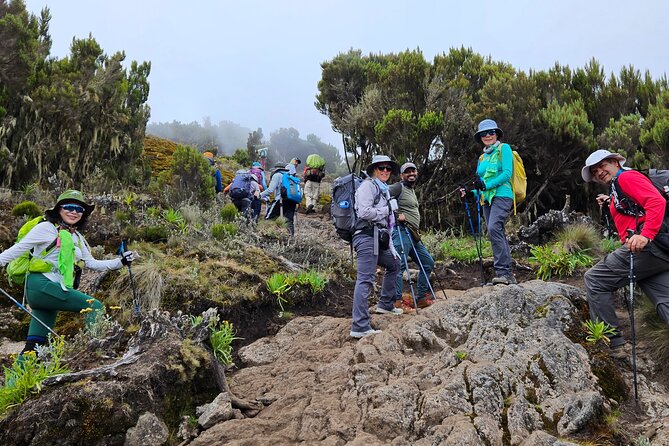
Kilimanjaro’s Lemosho route gives you a serious mountain climb with a smart acclimatization plan: gain height during the day, then sleep lower when the route allows. You move from montane forest to moorland, alpine desert, glaciers, and the summit of Uhuru Peak.
I like the slow pole pole pace and the strong safety setup, which includes emergency oxygen, a Gamow bag, a pulse oximeter, vital-sign checks, and wilderness first responder training. I also like the private format, generous camp services, hot meals, washing water, and an actual toilet tent.
The main caution is simple: the title promises eight days, but the detailed schedule lists seven trekking days. Confirm the exact number of nights, hotel nights, and summit timing before paying. The $3,000 price is not small, though much of the costly mountain support is included.
Key points to know before you book
- Lemosho offers varied scenery: Walk through forest, heather, moorland, high desert, volcanic rock, glaciers, and the summit ridge.
- Trek high, sleep lower: Lava Tower and Barranco help your body adjust before the final push.
- Summit night is long: Expect to leave camp around midnight and spend up to 12 hours hiking and descending.
- The Great Barranco Wall is a scramble: It is demanding, but the route is described as non-technical.
- The private setup adds control: Only your group participates, and group discounts may be available.
- The package is well equipped: Park fees, porters, cooks, tents, meals, transfers, medical equipment, and purified water are included.
Why the Lemosho route earns seven or eight days
Lemosho is a good choice if you want more than a direct march toward the summit. The route takes you across several mountain zones, and its broad acclimatization pattern gives you time to adjust before the highest camps.
The core idea is pole pole, Swahili for slowly slowly. That may sound gentle, but it is central to the climb. The route still includes long days and steep sections. The slower pace simply gives your body more time to handle the thin air.
The climb begins near the mountain village of Machame, then reaches the Shira Plateau before turning counter-clockwise below Kibo’s southern face. This route design allows high daytime walks followed by lower sleeping points on key days. No route can remove the risk of altitude sickness, but this pattern is a sensible reason to consider Lemosho.
The schedule needs clarification. The product is called Kilimanjaro Lemosho Route 8 Days, while the supplied day-by-day plan has Days 1 through 7. It may be a seven-day mountain itinerary with additional arrival or hotel time, but that is not clear. Ask Jaribu Africa Adventures to spell out every overnight location.
More Kilimanjaro routes:
- Kilimanjaro climb by Lemosho Route (7-day)
★ 5.0 · 651 reviews - Kilimanjaro climb, Machame Route (7-day)
★ 5.0 · 262 reviews - Kilimanjaro Climbing Lemosho Route 8 Days.
★ 5.0 · 186 reviews
Day 1: forest trails from Londrossi Gate to 2,780 meters
After breakfast, you travel by 4WD to Londrossi Gate. The team handles national park registration and weighs duffle bags. This matters because each porter’s load must stay within the stated 20-kilogram limit.
From the gate, the vehicle continues about 11 kilometers on narrow dirt roads through pine plantations to the Lemosho Glades. The hike then covers about 7 kilometers in four to five hours, moving from roughly 1,981 meters to 2,780 meters.
The first walking day is not a huge test of stamina. Its value is in the gradual start, the forest setting, and the chance to settle into the group routine. Depending on the program and weather, lunch may be taken at the gate.
You sleep in a three-person expedition tent designed for two climbers. That extra space is useful for bags and changing clothes. A mattress, mess tent, shower or wash tent, private portable flush toilet, and hot washing water are also listed among the camp services.
Day 2: giant heather and the open Shira Plateau
Day 2 is longer, with about 12 kilometers and seven hours of hiking. You climb from 2,780 meters to 3,511 meters, leaving the montane forest and entering moorland.
The trail follows narrow tracks that weave across ridges. The vegetation changes as you rise. Giant heather and Erica appear first, followed by giant lobelia and giant groundsel, plants that give this section a distinctly high-mountain feel.
This is a day for patience. You may want to walk faster when the trail opens, but the planned pace is deliberately slow. Take the time to drink, eat, and watch your breathing.
The Shira Plateau is one of the route’s major rewards. It gives you wide views and a feeling of space after the enclosed forest. The cost is fatigue: seven hours at altitude is not a casual walk, and the narrow tracks may feel harder than the distance suggests.
Day 3: Shark’s Tooth and the high desert
The route continues north on Day 3 for nine kilometers over five to six hours. You rise from 3,511 meters to 4,175 meters, entering the alpine desert.
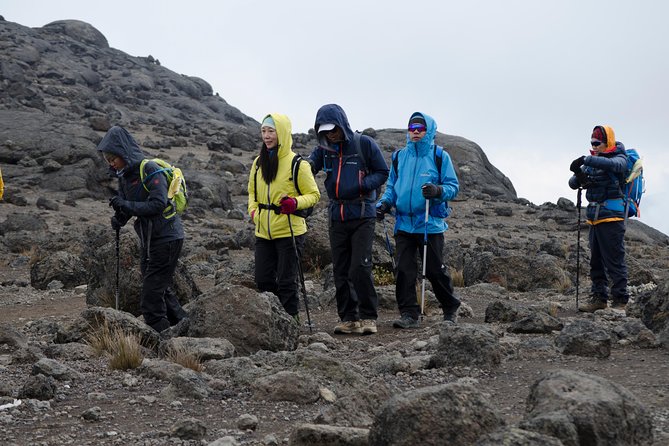
You pass the natural landmark called Shark’s Tooth, then walk up a ridge and into a valley before climbing to camp. The route becomes more barren, with only hardy everlastings and small senecios surviving at this height.
This is a useful acclimatization day because the gain is steady rather than abrupt. You reach camp in time for lunch, leaving part of the afternoon for rest. That rhythm can be more valuable than squeezing in extra distance.
The area below the Lent Group, a collection of massive volcanic dykes, adds geological interest. A large circular bowl formed by glacial activity sits above the route. The supplied schedule cuts off before describing all of this section, so you should ask for the exact camp name and sleeping altitude.
A few more Moshi & Kilimanjaro days to compare
- Safari Serengeti And Ngorongoro
★ 5.0 · 288 reviews - Climbing Kilimanjaro – Machame Route
★ 5.0 · 170 reviews - Climbing Kilimanjaro through 7 days Machame Route
★ 5.0 · 151 reviews - Kilimanjaro climb, Lemosho Route (8-day)
★ 5.0 · 148 reviews
Day 4: Lava Tower and the Great Barranco Valley
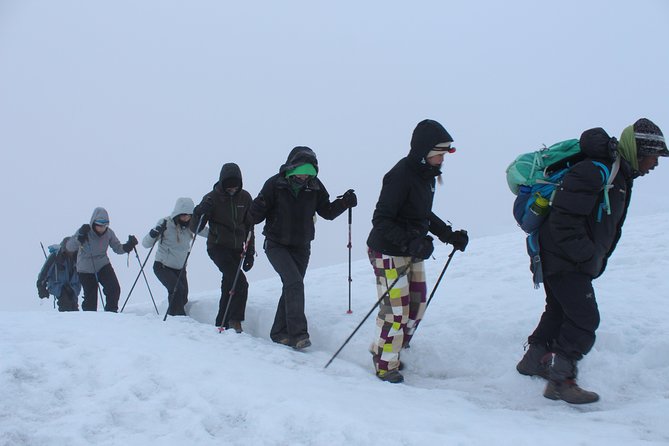
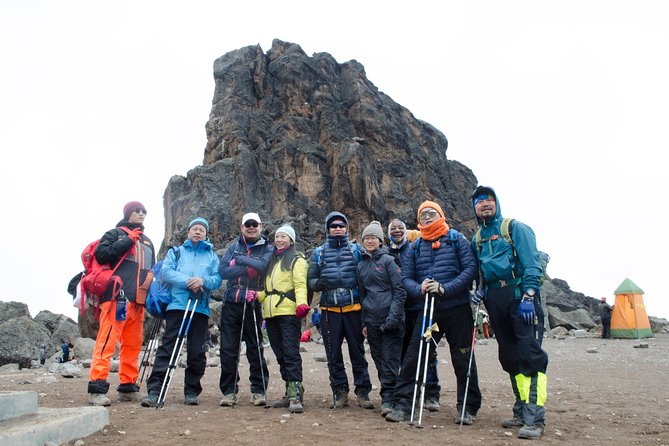
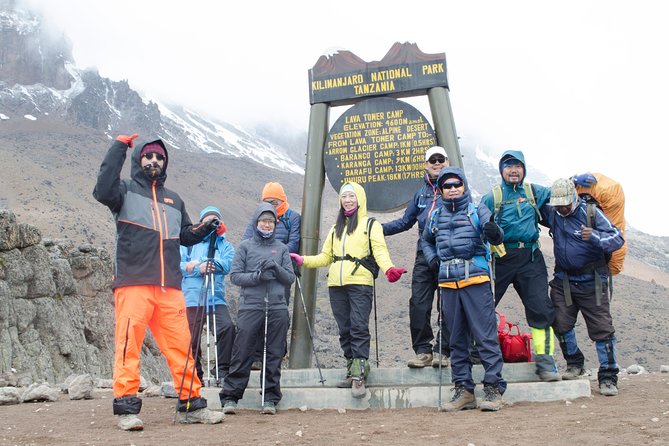
Day 4 is one of the most important days on the climb. You walk about six kilometers in five to six hours, reaching a high point near 4,642 meters, with Lava Tower at about 4,530 meters.
The trail first descends over rocky scree to Lava Tower, where lunch is planned. You may also attempt a non-technical rock scramble to the top. From there, the listed views include the Karanga Valley, Shira Plateau, and Western Breach.
This is the route’s classic trek high, sleep lower day. You spend time at a high elevation, then descend more than 600 meters over about two hours into Great Barranco Valley. That descent can feel tiring, but it is useful for acclimatization.
The drawback is the rough footing. Scree and steep trail can be awkward, especially if you are already feeling the altitude. Good boots and trekking poles are sensible personal equipment, but personal trekking gear is not included in the $3,000 price.
Day 5: scrambling up the Great Barranco Wall
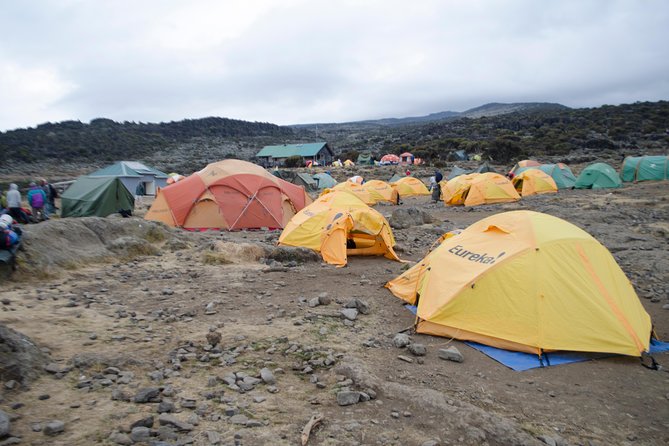
The Great Barranco Wall is the day’s main event. You climb the eastern face steadily, reaching a point below the Heim Glacier. Depending on cloud and weather, you may see the glacier and upper slopes of Kilimanjaro clearly.
This is a rock scramble rather than a technical climb. You should still expect hands-on movement, uneven footholds, and a steep-feeling route. The guides’ support matters here, especially when the trail is crowded or the rock is wet.
After the wall, the trail drops into Karanga Valley and then climbs again toward the next camp. The schedule gives about nine kilometers and six to seven hours, ending near 4,600 meters.
That repeated up-and-down movement is tiring, but it prepares you for summit night. The scenery also changes quickly, from the wall and glacier views to the stark alpine desert around Karanga. Pack your day bag carefully because this is not a day when extra weight feels harmless.
Day 6: Stella Point, Uhuru Peak, and the longest day
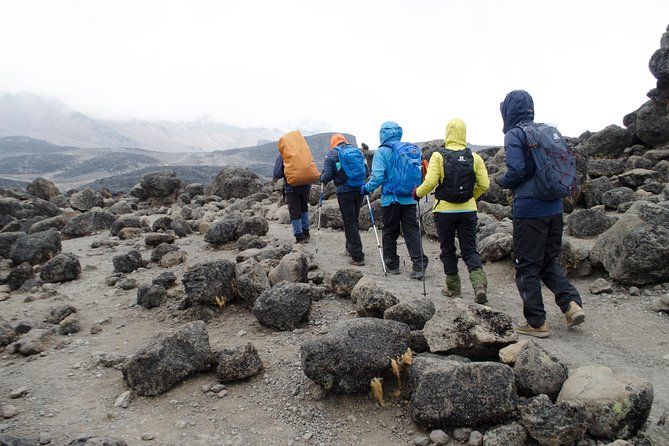
Summit day begins around midnight. After a warm drink and light snack, you start the slow climb toward the crater rim. The planned ascent to Stella Point at 5,685 meters takes about six hours.
At Stella Point, you stop to rest, eat, and look across the clouds. From there, the trail is normally snow-covered, and the final two hours to Uhuru Peak can be especially demanding.
The route passes the Rebmann and Tarzel glaciers before reaching the summit area. The stated high point is Uhuru Peak at 5,895 meters, the roof of Africa. After the summit, you descend toward a lower camp, with the full day listed at up to 12 hours.
This is the part of the trip you should respect most. Midnight starts, cold, darkness, thin air, and a long descent combine into a heavy physical test. The summit success rate will depend on your fitness, acclimatization, weather, and response to altitude. The package includes emergency oxygen, a Gamow bag, medical supplies, vital-sign monitoring, and a pulse oximeter, but these tools do not make the summit easy.
The itinerary mentions wine and Champagne at the summit. That may make a memorable celebration, but the practical reward is the view and the personal achievement. Keep your expectations realistic: clouds or snow can limit visibility.
There is an altitude inconsistency in the supplied schedule. Day 5 ends near 4,600 meters, while Day 6 lists a starting altitude of 3,819 meters. Ask the operator to confirm the actual camp used before summit night, since the sleeping point affects wake-up time and the length of the climb.
Day 7: descending through Mweka forest
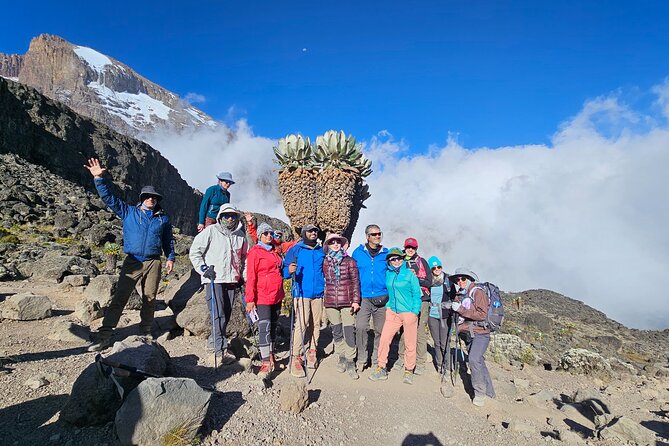
After the summit effort, you descend through Mweka’s montane rain forest. The route covers about 13.5 kilometers in five to six hours, dropping from roughly 3,819 meters to 1,652 meters.
This is easier on your breathing but not always easy on your legs. The trail is steep in places and slippery when wet. It follows the crest of a broad ridge between two river valleys before meeting a road for the final 40 minutes to Mweka Park Gate.
At the gate, a picnic lunch is planned, and successful climbers receive certificates from the Kilimanjaro National Park Authority. Gold certificates are listed for Uhuru Peak and green certificates for Stella Point.
The final transfer is by private bus or Jeep to your hotel in Arusha. Since the package lists two bed-and-breakfast nights at either Ameg Lodge or Salinero Hotels, confirm which nights are included and whether the hotel is in Arusha or Moshi. The tour summary names Moshi as the location, while the itinerary ends with an Arusha hotel transfer.
What the $3,000 price covers
At $3,000 per person, this is a substantial purchase. The value depends on how much mountain support you would otherwise need to arrange yourself.
The listed package includes Kilimanjaro National Park entrance, camping and rescue fees, government taxes, and 18 percent VAT on park entrance fees. It also pays the salaries of guides, cooks, and porters, which are major parts of a properly run climb.
You receive:
- Airport transfers and return transport between the hotel and park gate
- Two nights of bed-and-breakfast accommodation at Ameg Lodge or Salinero Hotels
- Expedition tents for two climbers, mattresses, a mess tent, and a private flush toilet tent
- Breakfast, lunch, and dinner, listed as seven of each
- Purified water, hot washing water, fresh towels, and substantial meals
- Two-way radio, mobile phone, emergency oxygen, Gamow bag, and medical kit
- Professional guides with wilderness first responder training or equivalent assistance
- AMREF Flying Doctors medical evacuation cover, subject to the stated exclusions
- Porter, cook, and guide wages
- Luxury camp chairs, tables, and a back-rest chair
- Wine and Champagne for the summit
This is a higher-service camping operation, not a bare-bones trek. Fresh food, warm water, a private toilet, and medical monitoring can make a real difference during a week on the mountain.
You still pay for international flights, visas, personal equipment, communication charges, staff tips, laundry, souvenirs, room service, immunizations, and some medical or evacuation costs. You also pay for meals if illness forces you off the planned route. Budget for those extras rather than treating the headline price as your total trip cost.
The guides and the private-group advantage
The names connected with this trip include Manase, Ayumwe, Stephen, and Joseph. Manase and Ayumwe are specifically associated with the eight-day Lemosho climb, while Joseph is described as handling questions during planning. Stephen and Manase are also named as guides.
That gives you useful names to confirm before departure. Ask who your lead guide will be, how many assistant guides are assigned, and how many climbers are in your private group. The experience is private, so only your group participates, but the group size itself is not stated.
A private arrangement can help with pacing, rest stops, and decisions about the summit attempt. It may also work well for a larger party: one group of 14 friends completed the climb together, according to the supplied trip details. Group discounts are offered, so ask how the price changes for your party.
The company is also described as responsive during planning, with quick answers to questions. That matters for a climb requiring flights, visas, equipment, transfers, and medical preparation.
Food, comfort, and porter ethics
The food plan is stronger than the basic camp menu often associated with a long mountain trek. The package promises large portions of fresh, healthy, nutritious food, plus hot drinks and washing water morning and evening.
You should still expect a camping experience. A wash tent is not a hotel shower, and a portable toilet is not a full bathroom. The advantage is privacy and a cleaner routine at camp.
The company states that porters receive fair and ethical treatment and that their wages are included. Each duffle is weighed, with a 20-kilogram limit per porter. You should still clarify the weight allowance for your own daypack and what gear the porters carry.
Tips are not included. Since staff gratuities are a separate cost, ask for the operator’s current tipping guidance and carry enough Tanzanian shillings or another accepted form of payment.
Who should book this Kilimanjaro climb
This route suits you if you have moderate physical fitness, enjoy long days outdoors, and want a private climb with substantial support. It is especially appealing if scenery matters to you, since the route passes through several distinct zones rather than repeating one type of trail.
It is less suitable if you want a short, simple mountain holiday. Day 2 lasts about seven hours, summit day can last 12 hours, and the Great Barranco Wall and steep descents require steady legs.
You also need to be comfortable with camping and with the possibility that weather may affect the summit. The experience requires good weather, and a cancellation caused by poor conditions may lead to a new date or full refund.
At booking, confirm the seven-day versus eight-day duration, the exact hotel, the camp used before summit night, the altitude figures, the group size, guide assignments, and what happens if you cannot continue. Those questions are not fussy. They help you compare this package with other Kilimanjaro operators on equal terms.
Should you book it?
I would consider this Jaribu Africa climb if you want Lemosho’s varied route, a private group, strong medical equipment, and a comfortable camp setup. The guides named in the supplied trip details include Manase, Ayumwe, Stephen, and Joseph, and the planning support appears suited to climbers who want quick answers.
The price can be fair for the level of park fees, staff, meals, transfers, tents, medical gear, and porter support included. I would not book until the operator explains why the advertised eight days become seven in the detailed plan.
Book it if you are ready for a demanding altitude climb and value support over the lowest possible price. Skip it if you want a clearly defined itinerary with no altitude or hotel ambiguities until those points are corrected in writing.
FAQ
Where does the Kilimanjaro Lemosho climb take place?
The experience is based around Mount Kilimanjaro in Tanzania. The tour summary lists Moshi as the location, while the itinerary includes transfers involving Arusha.
How long is the experience?
It is advertised as an eight-day Lemosho route, but the detailed itinerary lists seven days, from Day 1 through Day 7. Confirm the exact duration with Jaribu Africa Adventures before booking.
What is the price?
The listed price is $3,000 per person. Group discounts are offered.
Is this a private tour?
Yes. Only your group participates in the activity.
What level of fitness is required?
A moderate physical fitness level is required. The itinerary includes hiking days of up to seven hours and a summit day lasting up to 12 hours.
Does the price include accommodation?
Yes. Two nights of bed-and-breakfast accommodation are included at either Ameg Lodge or Salinero Hotels. Confirm the selected hotel and the exact nights included.
Are meals included?
Yes. The package lists seven breakfasts, seven lunches, and seven dinners, along with fresh, nutritious food and purified water on the mountain.
Is mountain safety equipment included?
The package includes an expedition medical kit, emergency oxygen, a Gamow bag, a pulse oximeter, vital-sign monitoring, two-way radio, mobile phone, and trained wilderness first responder guide support.
What happens if bad weather cancels the experience?
If poor weather causes cancellation, you will be offered a different date or a full refund. A full refund is also available if you cancel at least 24 hours before the experience start time.
Newly listed around Moshi & Kilimanjaro
- Climb Mount Kilimanjaro: 7 Days Machame Route★ 5.0 · 3 reviews
- 6 Days Mount Kilimanjaro Climbing via Rongai Route★ 5.0 · 3 reviews
- Explore 1 day Ngorongoro Crater Budget Group Safari from Arusha★ 5.0 · 3 reviews
- Mt. Kilimanjaro Day Hiking★ 5.0 · 3 reviews
- Chemka (Kikuletwa) Hot Springs, Tanzania★ 5.0 · 3 reviews
- Guided City tour of Moshi★ 4.3 · 3 reviews
- 8 Day Tanzania Family Safari★ 5.0 · 3 reviews
- Serengeti Safari with Sirikwa Travel★ 5.0 · 3 reviews
Kilimanjaro Climbs, compared.








Browse the lists this tour appears in