
Reviewed · KILIMANJARO CLIMBS
Kilimanjaro Lemosho Route
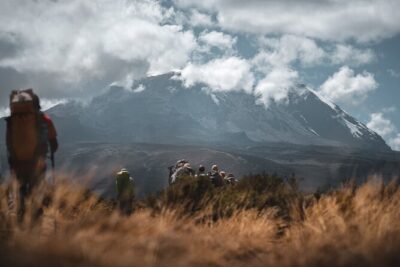
Kilimanjaro’s Lemosho Route gives you the mountain in stages: forest on day one, open moorland next, then high volcanic rock, snow, and the final push to Uhuru Peak at 5,895 meters. It is a serious climb, not a sightseeing walk, but the eight-day schedule gives you useful time to adjust to the altitude.
I like the gradual change in plant life and the careful climb-high, sleep-lower rhythm on the Lava Tower and Barranco day. I also like the strong camp support, with porters setting up tents and a chef preparing fresh meals, plus guides such as Festo, Nechi Teti, John, Saide, and Augustino praised for calm care and organization.
The main drawback is the summit day: you start around 11:30 PM, climb through the cold and dark, then spend up to 15 hours hiking and descending. Also, the supplied schedule has a confusing reference to Shira 1 and Shira 2 on days two and three, so confirm the final route plan before booking.
What matters most on this Kilimanjaro climb
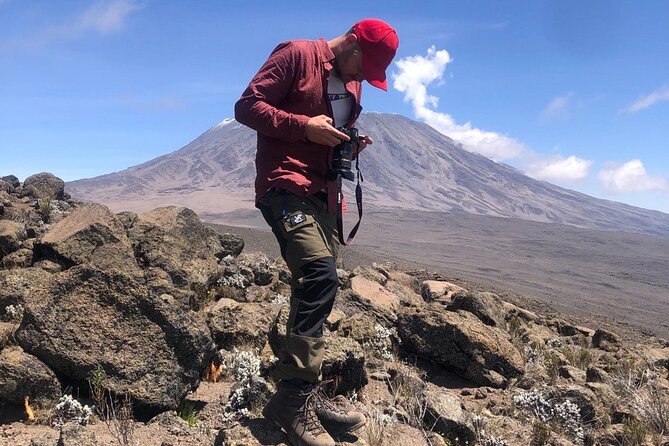
- Lemosho’s changing scenery: You move from montane forest to moorland, semi-desert rock, scree, and snow.
- A private group of up to five: Your party does not share the activity with other booking groups.
- A serious acclimatization day: The climb to Lava Tower, followed by descent to Barranco, helps you spend time high before sleeping lower.
- A full summit attempt: You climb toward Stella Point, continue to Uhuru Peak, return briefly to Barafu, then descend to Mweka Camp.
- Strong practical support: Porters carry camp equipment, while a chef prepares meals at camp.
- Good reported satisfaction: The experience is rated 4.9 from 71 reviews, with 97 percent recommending it.
Why the Lemosho Route is worth eight days
Lemosho is a good choice if you want more than the shortest possible path up Kilimanjaro. The route lets you watch the mountain change under your feet, from damp forest trails to dry high-altitude ground and finally the icy summit zone.
Eight days also matters because altitude is the great unknown. You can be fit, experienced, and determined, yet still struggle above 4,000 meters. This itinerary gives your body more time to adjust than a rushed climb, although no schedule can remove the risk of altitude sickness.
The price is $2,890 per private group of up to five. If five people share the quoted amount, that works out to $578 per person. A smaller group pays more per person, so ask Zara Tanzania Adventures exactly what the price includes before you compare it with another operator.
The published details clearly describe guides, porters, a cook, tents, park admission, and transport between the trail and Springlands Hotel. They do not spell out every possible inclusion, such as personal equipment, drinks, accommodation before or after the trek, or tips. Get those points in writing.
More Kilimanjaro routes:
- Kilimanjaro climb by Lemosho Route (7-day)
★ 5.0 · 651 reviews - Kilimanjaro climb, Machame Route (7-day)
★ 5.0 · 262 reviews - Kilimanjaro Climbing Lemosho Route 8 Days.
★ 5.0 · 186 reviews
Day one: Springlands Hotel to Mti Mkubwa Camp
After breakfast and a guide briefing at Springlands Hotel, you drive for roughly 1.5 hours to the Lemosho entrance area. The route information names Londorossi Gate for registration, with the trail beginning at about 2,100 to 2,200 meters.
Your first walk covers about 7 kilometers and takes around five hours in total. The forest section is a gentle introduction compared with what comes later, though muddy or uneven ground can make the pace slower.
Mti Mkubwa Camp sits at about 2,780 meters. By the time you arrive, porters should have prepared the tents and the chef will serve lunch. You then have time to rest before dinner and an evening briefing.
This first day is valuable because it gives you a quiet start. You are not asked to tackle a huge distance immediately, and the forest provides a clear sense that you have left ordinary road travel behind. Keep your first day easy. The goal is to arrive comfortable, not to prove how fast you can walk.
Days two and three: Shira’s high open country
Day two is listed as a 12-kilometer walk from Mti Mkubwa to Shira Camp 2, at roughly 3,840 meters. The stated walking time is six to seven hours, with a hot lunch planned at Shira Camp 1 before continuing.
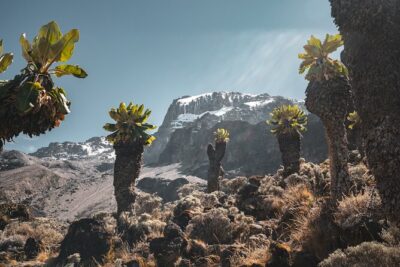
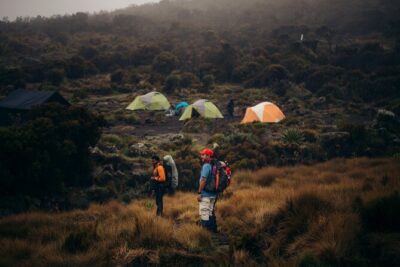
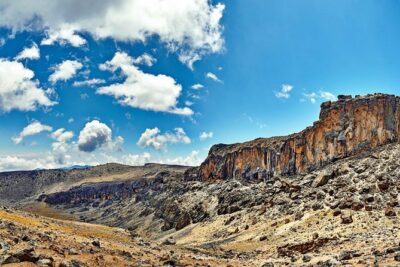
This is where the route opens up. Forest gives way to moorland, with wider views toward Kibo, Kilimanjaro’s main volcanic cone. The climb is longer than day one, and the gain in height is noticeable.
The schedule then describes day three as a shorter walk from Shira 1 to Shira 2, with five kilometers and three to four hours. That conflicts with the previous day’s description, which already places you at Shira 2.
Treat this as a point to clarify, not a reason to dismiss the trip. Ask Zara for the exact camp sequence, daily elevations, and walking times for your departure date. A clear plan helps you understand how much time you will spend acclimatizing and prevents confusion when you are already tired.
In either version, the Shira area is one of the more scenic parts of the climb. You get broad views, less tree cover, and a chance to settle into the slow pace needed at altitude. The route information promises time to rest at camp, with porters handling camp setup and the chef preparing lunch and dinner.
Day four: Lava Tower and the Barranco descent
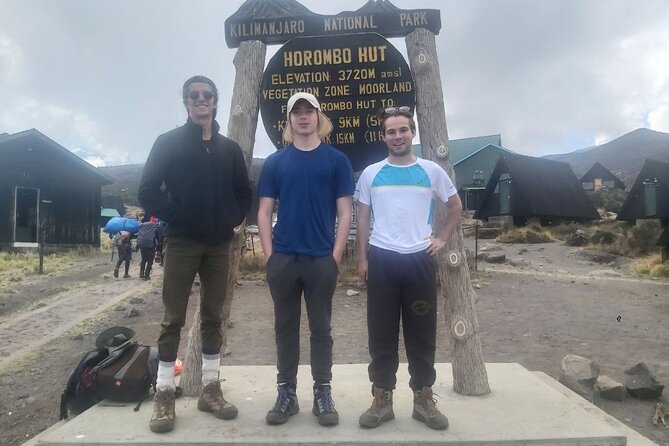
Day four is the itinerary’s key acclimatization day. You climb from about 3,840 meters toward Lava Tower at 4,630 meters, crossing a dry, rocky semi-desert zone.
The distance is about 11 kilometers, and the walk takes seven to eight hours. The demanding part is not only the distance. You spend several hours climbing higher, where breathing becomes harder and ordinary hills can feel surprisingly steep.
After reaching the Lava Tower area, you descend about 680 meters to Barranco Camp at approximately 3,960 meters. This is the classic climb-high, sleep-lower pattern. You get time at a higher elevation during the day, then rest at a lower camp overnight.
The descent also brings views of the Western Breach and, if the weather cooperates, a memorable sunset at Barranco. This day may test your legs, but it serves a useful purpose. Go slowly, drink as directed by your guide, and tell the guide promptly if you feel unwell.
A few more Moshi & Kilimanjaro days to compare
- Safari Serengeti And Ngorongoro
★ 5.0 · 288 reviews - Climbing Kilimanjaro – Machame Route
★ 5.0 · 170 reviews - Climbing Kilimanjaro through 7 days Machame Route
★ 5.0 · 151 reviews - Kilimanjaro climb, Lemosho Route (8-day)
★ 5.0 · 148 reviews
Day five: The Barranco Wall and Karanga Valley
The Barranco Wall is the day’s headline feature. It looks steep, but the route description presents it as a climb rather than technical rock climbing. You should still expect hands-on movement in places and a slower pace than on a normal trail.
After the wall, you descend into Karanga Valley, with the camp at around 4,035 meters. The day covers about 5 kilometers and is listed at roughly five hours, followed by an acclimatization walk toward Barafu.
That extra walk gains about 200 meters before you return to Karanga Camp. It is a smart use of the afternoon, since it gives your body another short exposure to higher ground without making you sleep there yet.
This is also a day when the camp routine becomes important. The porters prepare the tents, the cook serves lunch and dinner, and the guide explains the next stage. The repeated briefings may sound simple, but they help you manage clothing, water, snacks, and energy before the summit push.
Day six: Barafu Camp and the wait for darkness
You climb from Karanga to Barafu Camp, rising from about 4,035 to 4,640 meters. The distance is only around 5 kilometers, but rocky ground and thin air make the five-hour walk feel substantial.
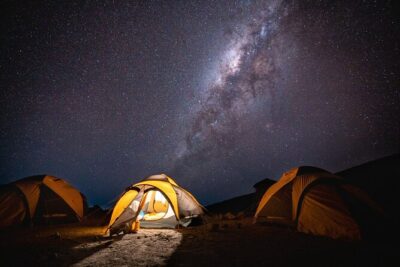
Barafu is the launch point for the summit attempt. Once you arrive, the porters set up camp and lunch is served. The plan then allows rest until dinner, followed by a detailed briefing about the night climb.
Try to treat this afternoon as part of the climb, not wasted time. You need to eat, organize your summit clothing, and rest as much as possible. The start is scheduled for around 11:30 PM, so your normal sleep pattern will be disrupted.
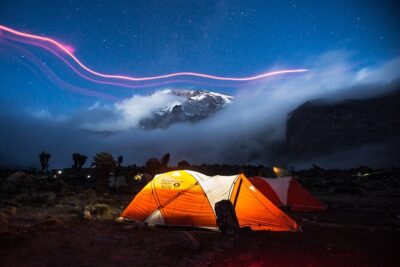
The high camps are basic by nature. This is not the stage for comfort or privacy. It is a functional stop where you prepare for the hardest section, and your guide’s instructions matter more than your usual hiking habits.
Day seven: Stella Point, Uhuru Peak, and Mweka Camp
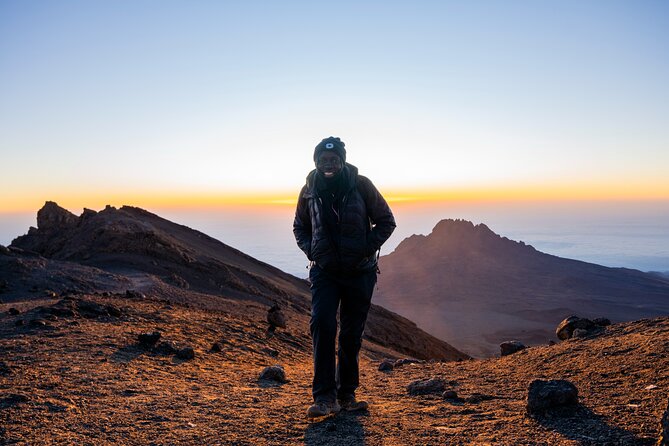
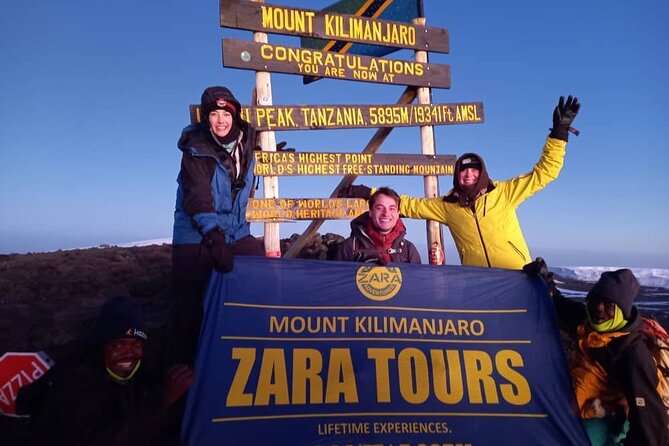
Summit day begins with tea and biscuits before you leave in the middle of the night. You climb northwest through scree toward Stella Point on the crater rim, at about 5,685 meters.
The route gives six hours as a typical time to Stella Point. This is often the toughest stretch because the air is thin, the ground is loose, and you have been walking since the previous evening.
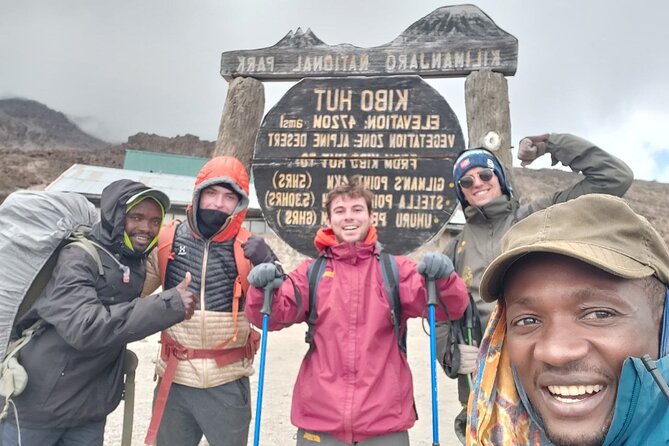
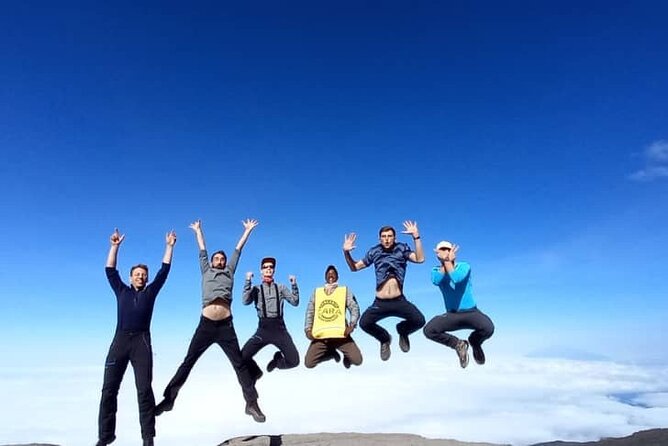
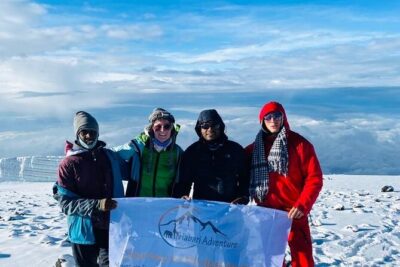
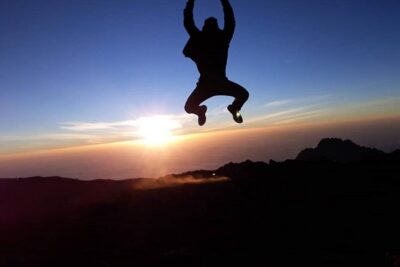
At Stella Point, you may see sunrise if the weather is clear. From there, you continue for about two hours over snow-covered ground toward Uhuru Peak, the summit at 5,895 meters. The time you spend at the top is limited by cold, fatigue, and weather, so take your photographs and begin the descent when your guide advises.
The day is not finished at the summit. You descend to Barafu in about three hours for a short rest, then continue to Mweka Camp at around 3,090 meters. The full hiking and descending time is listed as more than 15 hours, with about 17 kilometers covered.
This is where a good guide team can make a real difference. Festo, Nechi Teti, Emmanuel, John, Saide, Augustino, and Captain G are names associated with past departures, but Zara may assign a different team. Ask who will lead your group and how many assistant guides will be present.
Day eight: Mweka Gate and the return to Moshi
After breakfast at Mweka Camp, you descend about 10 kilometers to Mweka Gate. The walk takes four to five hours and brings you back into lower vegetation and easier breathing.
From the gate, you are driven to Springlands Hotel for a hot lunch and a shower. After several nights in mountain camps, those simple comforts will feel well earned.
The hotel can also connect you with a safari coordinator if you want to continue in Tanzania. The safari suggestion is not part of this eight-day climb, so treat it as an optional extension rather than part of the quoted trek.
Guides, porters, food, and group size
The most consistently praised part of this experience is the human support. The guide team is described as professional, attentive, and reassuring, while porters are credited with carrying equipment and preparing camps before climbers arrive.
That support changes the nature of the climb. You still carry a daypack and do every step yourself, but you are not responsible for moving the tents, food, and camp supplies from one night to the next. A fresh meal at camp also helps you keep eating when altitude has reduced your appetite.
Past groups specifically praised Festo, Nechi Teti, Emmanuel, John, Saide, Augustino, and Captain G. One account describes a whole group reaching the summit under Festo’s leadership, while another highlights John’s experience and the chef’s fresh daily meals.
The activity is private, with only your group participating, and the stated maximum is five people. That can make the pace and guide attention feel more personal. Confirm the exact group size if you are booking fewer than five, since the price is charged by group rather than per person.
Fitness, safety, and practical preparation
You need a moderate level of physical fitness. The trek does not require a stated technical climbing grade, but it demands repeated walking, steep uphill sections, a long summit night, and a major descent afterward.
Train for long days on uneven ground. Hiking with a daypack is useful preparation, since you will carry personal items even though porters handle the group gear. Break in your boots and practice using the clothing layers you plan to wear.
The biggest practical mistake is going too fast. Follow the guide’s pace, especially on days four through seven. Tell the guide about headaches, nausea, unusual tiredness, or other symptoms rather than trying to hide them.
Pack for major temperature changes. The lower forest and high summit zone are not the same environment, and day seven can involve cold, darkness, scree, and snow. The supplied information does not provide a full packing list, so request one from Zara before departure.
The meeting information lists Kilimanjaro Airport and a start time of 12:00 AM, while the climb itself begins with breakfast and a transfer from Springlands Hotel. Confirm your exact pickup location and time before arrival. Pickup is offered, and the experience uses a mobile ticket.
Is the $2,890 group price good value?
For a group of five, the cost is attractive at $578 per person, assuming the stated services are included. You receive an eight-day private route, park access, guides, porters, camp support, meals prepared by a chef, and transfers described in the schedule.
The value is strongest if you want a supported climb rather than an independent trek. You are paying for planning, permits and camp organization, safety oversight, food, transport, and a working mountain crew, not simply for access to a trail.
For one or two people, the per-person cost becomes much higher because the price is per group. Compare the full inclusion list, not just the headline number. Ask about hotel nights, airport transfers, equipment, bottled or treated water, staff tips, and any medical or evacuation arrangements before you commit.
Tips for the mountain team are encouraged and appreciated. Special envelopes are available at Springlands Hotel, so plan for this expense separately from the tour price.
Who should book this climb?
I would choose this route if you want a gradual, scenic approach and can give yourself eight days on the mountain. It suits fit hikers who value guide support, camp meals, and a private group setting.
It is also a good match if the changing plant zones and views matter as much to you as the summit itself. The forest, Shira moorland, Lava Tower rock, Barranco scenery, and summit snow give the climb a strong sense of progression.
I would think twice if you want a relaxed holiday or dislike cold nights, basic camps, long walking days, and disrupted sleep. The summit attempt is the central challenge, and no cheerful camp routine can make a 15-hour summit day easy.
Zara’s rating of 4.9 from 71 reviews and 97 percent recommendation figure suggest a strong track record, especially for guide care, organization, food, and porter support. Still, ask direct questions about the Shira schedule and what is included in the price.
Should you book the Zara Lemosho trek?
Book it if you want a private, fully supported Kilimanjaro climb with time for acclimatization and a route that changes scenery every day. The guide and camp team are the main reason this package looks appealing, and the eight-day plan gives you a better rhythm than a rushed ascent.
Before paying, confirm the Shira 1 and Shira 2 sequence, your pickup details, the full list of inclusions, your assigned guide team, and tipping expectations. If those answers are clear and you are ready for the long summit night, this is a strong way to approach Uhuru Peak.
Cancellation is free with at least 24 hours’ notice before the local start time. Less than 24 hours’ notice does not qualify for a refund, and late changes are not accepted.
FAQ
How long is the Kilimanjaro Lemosho trek?
The trek lasts approximately eight days, from the transfer to the Lemosho entrance area through the descent to Mweka Gate and return to Springlands Hotel.
How high is Uhuru Peak?
Uhuru Peak is listed at 5,895 meters. The summit attempt begins from Barafu Camp, at about 4,640 meters.
How difficult is this activity?
A moderate physical fitness level is required. The trek includes several hours of walking on most days, a climb over the Barranco Wall, high-altitude terrain, and a summit day lasting more than 15 hours.
Is this a private tour?
Yes. Only your group participates, and the group can include up to five people.
Is pickup available?
Yes, pickup is offered. The meeting information lists Kilimanjaro Airport, while the itinerary begins with a briefing and departure from Springlands Hotel. Confirm your exact pickup details before the trip.
What happens on summit day?
You leave around 11:30 PM, climb toward Stella Point, continue to Uhuru Peak, descend to Barafu for a short rest, and then continue to Mweka Camp for dinner and overnight.
Can I cancel for a full refund?
Yes, if you cancel at least 24 hours before the experience start time. Cancellations made less than 24 hours in advance are not refunded, and late changes are not accepted.
Newly listed around Moshi & Kilimanjaro
- Climb Mount Kilimanjaro: 7 Days Machame Route★ 5.0 · 3 reviews
- 6 Days Mount Kilimanjaro Climbing via Rongai Route★ 5.0 · 3 reviews
- Explore 1 day Ngorongoro Crater Budget Group Safari from Arusha★ 5.0 · 3 reviews
- Mt. Kilimanjaro Day Hiking★ 5.0 · 3 reviews
- Chemka (Kikuletwa) Hot Springs, Tanzania★ 5.0 · 3 reviews
- Guided City tour of Moshi★ 4.3 · 3 reviews
- 8 Day Tanzania Family Safari★ 5.0 · 3 reviews
- Serengeti Safari with Sirikwa Travel★ 5.0 · 3 reviews
Kilimanjaro Climbs, compared.
Browse the lists this tour appears in