
Reviewed · KILIMANJARO CLIMBS
Kilimanjaro Lemosho Route 8 Days
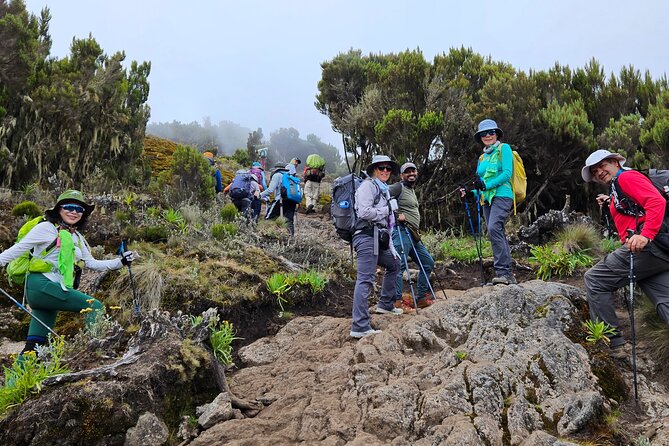
The best thing about this 8-day Lemosho Route is its gradual approach to Kilimanjaro. You cross the Shira Plateau, pass beneath Kibo’s crater rim, and work toward Uhuru Peak at 5,895 meters. The route is prized for scenery, with possible views toward the Great Rift Valley, Mount Meru, and Longido, plus a chance of seeing wildlife near the lower slopes.
I like two things right away. First, the longer schedule gives you more time to adjust to altitude than a rushed climb. Second, this package includes serious mountain support: emergency oxygen, a Gamow Bag, rescue fees, radios, a pulse oximeter, and a porter for your day-pack during the summit attempt.
The main consideration is that this is still a demanding high-altitude climb, not an ordinary walking holiday. The summit day can involve 7 to 8 hours uphill, followed by a descent to Barafu and another 4 to 6 hours to Mweka Camp. The itinerary also contains a few timing and accommodation details worth confirming before you pay.
Key points at a glance
- Scenic western approach: The Lemosho Route crosses the Shira Plateau and offers views toward Mount Meru, Longido, and the Great Rift Valley.
- A full eight-day pace: The schedule allows gradual altitude gain, though there is no separate acclimatization day.
- Strong safety equipment: Oxygen, a Gamow Bag, radios, rescue cover, and a pulse oximeter are included.
- A very long summit day: Uhuru Peak is followed by a descent through Barafu and onward to Mweka Camp.
- Comfort beyond the trail: Tents, sleeping mats, dining furniture, warm washing water, hotel stays, and full-board meals are included.
- A locally run operation: The company emphasizes fair treatment of porters and uses English-speaking mountain guides, including guides named Abel, Eli, Justin, Richard, Abdul, and Priscus on different climbs.
Why the Lemosho Route earns its reputation
Kilimanjaro is not a technical climb in the usual mountaineering sense, but altitude makes it serious. The summit rises to 5,895 meters, where thin air, cold, fatigue, and weather can all change the day.
Lemosho is a good choice if you care about scenery and want a steady approach. You begin on the western side of the mountain, rather than walking straight into the busiest lower sections. The route then crosses the Shira Plateau before joining the higher circuit toward Barranco, Karanga, and Barafu.
I like this progression because the scenery changes often. The lower forest gives way to open high country, then to the stark volcanic world around Kibo. Views of Mount Meru and Longido can make the early days feel like more than a warm-up.
There is one important distinction: eight days does not mean eight easy days. The schedule gains altitude every day from Mti Mkubwa to Barafu. You will have shorter walks on Days 3 and 5, but those are still useful recovery periods rather than full rest days.
More Kilimanjaro routes:
- Kilimanjaro climb by Lemosho Route (7-day)
★ 5.0 · 651 reviews - Kilimanjaro climb, Machame Route (7-day)
★ 5.0 · 262 reviews - Kilimanjaro Climbing Lemosho Route 8 Days.
★ 5.0 · 186 reviews
Day 1: Londorossi Gate to Mti Mkubwa Camp
The climb begins with a drive to Londorossi Park Gate at about 2,385 meters, or 7,825 feet. From there, you walk for roughly 3 to 4 hours over 8 kilometers to Mti Mkubwa Camp at 2,700 meters.
This is a sensible opening day. The walking distance is moderate, and the first camp gives you a gentle introduction to the rhythm of mountain life: walking, eating, washing with warm water, and settling into a tent.
The lower section is the best place to watch for signs of wildlife, since the route begins in the mountain’s forest zone. The description says some wildlife may be seen, but sightings are not promised. Treat that as a welcome possibility, not a central reason to book.
Day 2: Mti Mkubwa to Shira Camp 1
Day 2 covers about 6 kilometers and takes 5 to 6 hours, ending at Shira Camp 1 at 3,500 meters.
Although the distance is short, the climb is substantial. You gain around 800 meters in elevation, so a slow pace matters. Your guide should be watching how you respond to the thinner air, and the package includes a pulse oximeter for checking oxygen levels.
This is where the Lemosho route begins to feel broad and open. The forest gives way to high-altitude vegetation and sweeping views. The walk can feel exposed compared with Day 1, so sun protection and warm layers are important practical choices.
The altitude gain is the first real test. You may arrive tired even if the mileage looks modest. Eat well, drink the supplied purified water, and avoid treating a short distance as permission to walk quickly.
Day 3: Shira Camp 1 to Shira Camp 2
The route continues from Shira Camp 1 to Shira Camp 2 at 3,840 meters. The listed distance is 8 kilometers, with 3 to 4 hours of walking.
This is one of the more useful days in the itinerary. You remain high, but the walking time is shorter than on the surrounding days. That combination can help your body adjust before the route heads toward Barranco.
The Shira Plateau is the scenic heart of this route. You get a wide, open setting rather than a narrow forest path, and the views can stretch toward Mount Meru, Longido, and the Great Rift Valley. Weather controls how much you see, so keep expectations flexible.
I would use this day to settle into your personal routine. Keep your day-pack light, walk slowly, and pay attention to headaches, nausea, unusual tiredness, or poor coordination. The guides are there to monitor altitude, but you must report how you feel clearly.
A few more Moshi & Kilimanjaro days to compare
- Safari Serengeti And Ngorongoro
★ 5.0 · 288 reviews - Climbing Kilimanjaro – Machame Route
★ 5.0 · 170 reviews - Climbing Kilimanjaro through 7 days Machame Route
★ 5.0 · 151 reviews - Kilimanjaro climb, Lemosho Route (8-day)
★ 5.0 · 148 reviews
Day 4: Shira Camp 2 to Barranco Camp
Day 4 is a longer outing, about 8 kilometers and 6 to 7 hours, finishing at Barranco Camp at 3,950 meters.
The elevation gain from Shira Camp 2 is not huge, but the route takes you through a more rugged high-altitude setting. Kibo becomes a stronger presence, and the volcanic character of the mountain is much clearer.
Barranco is an important stage because the next morning brings the Barranco Wall. The wall can look intimidating from camp, but this itinerary treats it as part of the normal route rather than an optional challenge.
This is also a day when the value of an experienced guiding team becomes clear. Different trips have used guides such as Abel, Eli, Justin, Richard, Abdul, and Priscus. The company’s strongest praise centers on calm pacing, altitude advice, encouragement, and the ability to adjust the program to the group.
Day 5: Barranco to Karanga Valley Camp
The walk from Barranco to Karanga Valley Camp covers about 5 kilometers in 4 to 5 hours. The camp sits at approximately 3,995 meters.
Distance alone does not tell the story here. The route includes the Barranco Wall and uneven ground, so you should expect some hands-on scrambling and a slower pace. This is not presented as technical climbing, but it is more demanding than a flat trail.
The short mileage is helpful after Day 4. You gain only a little more elevation, and the day gives you time to continue adjusting before the final push. I like this part of the schedule because it breaks the approach to Barafu into manageable pieces.
Karanga is also a good reminder that fatigue accumulates. You may feel strong at breakfast and worn down by camp arrival. Keep your expectations modest. The goal is not speed. The goal is to arrive at Barafu ready for the summit attempt.
Day 6: Karanga Valley to Barafu Camp
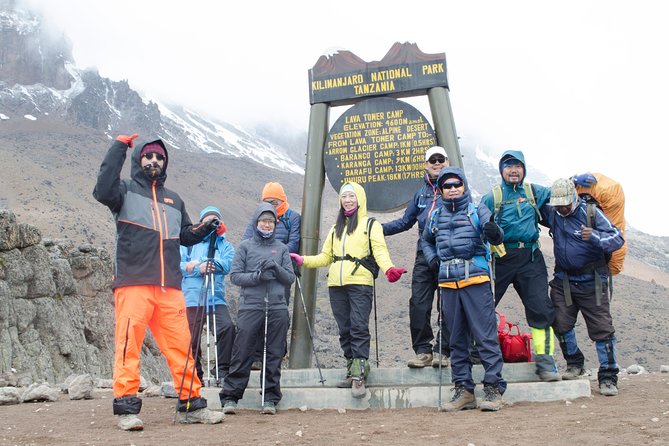
Day 6 takes about 4 to 5 hours over 4 kilometers, reaching Barafu Camp at 4,550 meters.
This is a short but serious day. Barafu is the high camp, and the air is thin. You will likely spend much of the afternoon preparing equipment, eating, resting, and listening to the guide’s instructions for the summit.
The package provides tents, sleeping mats, toilet tents, dining tables, chairs with backs and armrests, and solar LED lights. Those extras matter more at Barafu than they might at a lower camp. A proper place to eat and a well-organized sleeping setup can make the difference between feeling prepared and feeling miserable.
The listed itinerary does not give a separate acclimatization day at this point. You should ask how the team handles rest, meal timing, and the start time for your summit attempt. The description is designed for a summit in daylight and around sunrise, but exact timing can depend on weather, pace, and the group’s condition.
Day 7: Uhuru Peak and Mweka Camp
This is the hardest day by far. The uphill section to Uhuru Peak is listed as 7 to 8 hours over 5 kilometers, reaching 5,895 meters. After a short rest at Barafu, you descend to Mweka Camp at 3,060 meters, a further 12 kilometers and 4 to 6 hours.
The figures in the listing show about 5 hours for the day, but the detailed walking times add up to roughly 11 to 14 hours. Treat the longer figure as the realistic planning guide. This will be a full mountain day, with little room for casual stops.
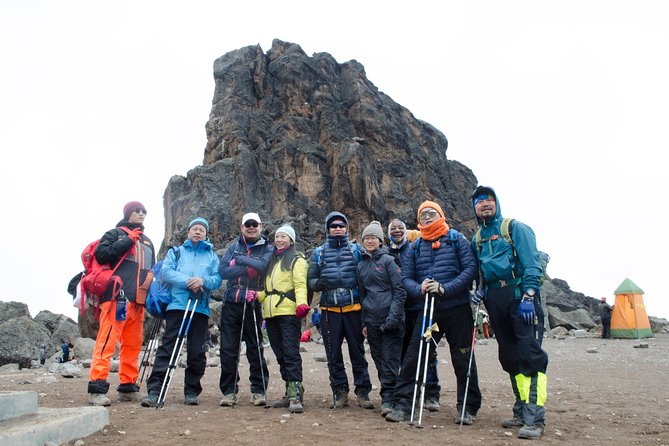
The promise of reaching the summit in daylight and around sunrise is a major draw. At the top, you are near Kibo’s crater rim, with the option described as trekking toward the inner Reusch Crater. Ask the operator exactly how that crater section fits into the day, since the published schedule does not give separate timing or distance for it.
A porter carries your day-pack during the summit attempt, which is useful when every extra item feels heavy. Emergency oxygen, a Gamow Bag, rescue fees, radios, and a pulse oximeter also provide an important safety net. These tools do not remove altitude risk, but they show that the operator has planned for problems rather than relying only on enthusiasm.
The descent to Mweka Camp is not an afterthought. Knees and feet take a beating after the summit, and loose volcanic ground can slow you down. Eat and drink at Barafu, use your poles if you carry them, and save enough energy for the second half of the day.
Day 8: Mweka Gate and the certificate ceremony
The final walk goes to Mweka Gate. The itinerary lists 3 to 4 hours and 4 kilometers, followed by a transfer to Park View Inn for certificates and a summit-party ceremony.
One detail needs clarification: the itinerary gives Mweka Gate an elevation of 4,600 meters, which appears inconsistent with the descent described from Mweka Camp. Ask the company to confirm the correct gate elevation and route figures before departure.
The last morning should feel easier after the summit, but do not underestimate tired legs. Once at the gate, the certificate ceremony gives the trip a clear finish instead of ending abruptly at the trailhead.
What the $2,833 price really covers
At $2,833.34 per person, this is not a bare-bones camping package. The cost includes park entrance fees and government taxes, rescue fees, mountain meals, purified drinking water, tents, mats, toilet tents, warm water for washing, transport in the destination, and arrival and departure transfers.
You also receive hotel accommodation before and after the climb. The package wording lists two classic standard hotel nights and two comfort hotel nights, described as one before and one after the trek for each category. Since that wording is unusual, confirm the exact number of hotel nights and the hotel names.
The food provision is generous on paper, with breakfast, lunch, and dinner listed for all eight days. Meals are described as fresh, nutritious, and served in large portions. That matters on a climb where you need steady fuel, though you should ask about dietary needs before booking if you have restrictions.
The company also says it treats porters fairly and ethically. That is not a decorative extra. Porter welfare is a central issue on Kilimanjaro, and a locally run operator that explains its porter practices deserves attention.
You still need to budget for tips, a Tanzania visa on arrival, laundry, telephone use, beverages, and optional trips such as a safari after the climb. The price includes a substantial support system, but it is not an all-in holiday cost.
How the support team affects your climb
The strongest part of this experience is the human support. Guides are English-speaking, and the package is private, meaning only your group participates. That gives the team more room to match the pace and respond to changing conditions.
Past trips have involved guides named Abel, Eli, Justin, Richard, Abdul, and Priscus. The useful point is not memorizing names. It is knowing that guide assignments may vary, so ask who will lead your climb and how many support staff will accompany your group.
The equipment list is unusually detailed. VHF radios allow communication across the trek, while the pulse oximeter helps monitor oxygen levels. A Gamow Bag is a portable hyperbaric chamber used in serious altitude emergencies, and emergency oxygen is carried as another safeguard.
A portable personal flash toilet is also included. That may sound minor, but private toilet access can make camp life far more comfortable. Dining chairs with backs and armrests, solar lights, and warm washing water are similarly practical touches that become valuable after a long day.
Who should book this climb?
I would choose this route if you want the scenic western approach, a private trip, and a full support package. It suits people with moderate physical fitness who are ready to walk for several hours on consecutive days and cope with a very long summit day.
It is also a good match if you value a locally based company and want hotel transfers, meals, mountain equipment, and rescue planning arranged together. The route is scenic and structured, but it is not a soft adventure.
I would think twice if you dislike camping, struggle with long descents, or want a relaxed sightseeing holiday. The summit success cannot be guaranteed, and good weather is required. If weather cancels the experience, the stated policy offers a different date or a full refund.
Free cancellation is available if you cancel at least 24 hours before the start time. Cancellations or changes made inside that period are not refunded or accepted, so pay attention to local cut-off times.
My verdict on the Lemosho Route
I like this package for its route choice, detailed safety provisions, and practical camp support. The Shira Plateau, Barranco section, Kibo views, and sunrise summit plan give you more visual variety than a simple up-and-down route.
The main weakness is not the mountain plan itself, but the presentation of a few details. The Day 7 duration does not match the walking times, the Mweka Gate elevation should be checked, and the hotel inclusion needs a clear explanation.
Ask those questions before booking, then decide based on your fitness and attitude toward altitude. If you want a scenic, well-supported eight-day climb and accept the physical cost, this is a strong option. If you want short days and guaranteed summit success, no Kilimanjaro itinerary can honestly promise that.
FAQ
Where does the Kilimanjaro Lemosho Route climb begin?
The trip drives to Londorossi Park Gate, listed at 2,385 meters, or 7,825 feet, before walking to Mti Mkubwa Camp.
How long is the experience?
The itinerary lasts approximately eight days.
How high is Uhuru Peak?
Uhuru Peak is listed at 5,895 meters, or 19,341 feet.
Is this a private tour?
Yes. Only your group participates in the activity.
Are meals included?
Yes. Breakfast, lunch, and dinner are listed for all eight days, with full-board accommodation provided during the trip.
Is drinking water included?
Yes. Clean, purified drinking water is included.
What safety equipment is provided?
The package includes emergency oxygen, a Gamow Bag, VHF handheld radios, a pulse oximeter, and rescue fees on the mountain.
What is not included in the price?
Tips, a Tanzania visa on arrival, personal expenses such as laundry, telephone use, and beverages, plus optional tours such as a safari after the climb, are not included.
Newly listed around Moshi & Kilimanjaro
- Climb Mount Kilimanjaro: 7 Days Machame Route★ 5.0 · 3 reviews
- 6 Days Mount Kilimanjaro Climbing via Rongai Route★ 5.0 · 3 reviews
- Explore 1 day Ngorongoro Crater Budget Group Safari from Arusha★ 5.0 · 3 reviews
- Mt. Kilimanjaro Day Hiking★ 5.0 · 3 reviews
- Chemka (Kikuletwa) Hot Springs, Tanzania★ 5.0 · 3 reviews
- Guided City tour of Moshi★ 4.3 · 3 reviews
- 8 Day Tanzania Family Safari★ 5.0 · 3 reviews
- Serengeti Safari with Sirikwa Travel★ 5.0 · 3 reviews
Kilimanjaro Climbs, compared.








Browse the lists this tour appears in