
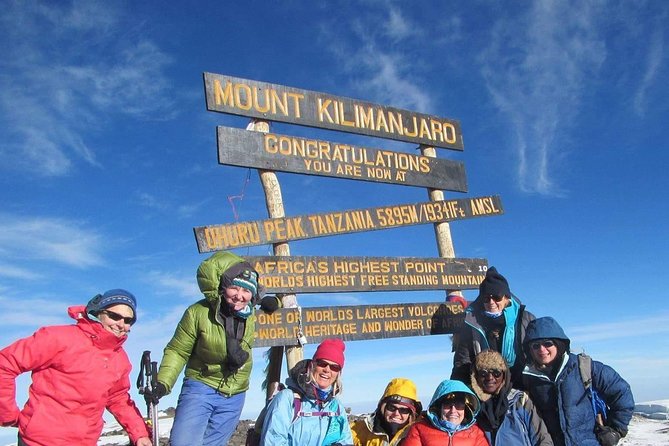
Reviewed · KILIMANJARO CLIMBS
Kilimanjaro Climb- 8 Days Lemosho Route
Kilimanjaro’s Lemosho Route gives you the mountain in chapters: open heath, high alpine meadow, stark upper slopes, and the cold arctic zone near Uhuru Peak. The descent returns through rainforest, so you get more scenery than on a short, direct route.
I like the generous eight-day schedule and the practical safety support, including an emergency oxygen cylinder and an oximeter. I also like that the package includes two Moshi bed-and-breakfast nights, airport or gate transfers, mountain meals, tents, and a sleeping mattress. The main catch is simple: this remains a hard high-altitude climb, and the $2,600 price does not include flights, insurance, visa fees, sleeping bags, boots, clothing, medication, or tips.
Key points to know before booking
- Eight days on the Lemosho Route: A slower schedule gives you more time to cross Kilimanjaro’s climate zones and adjust to altitude.
- Scenic route with a rainforest descent: The climb begins among heath and alpine meadows, reaches arctic terrain near Uhuru Peak, then drops through rainforest.
- Safety equipment is included: You receive an emergency first-aid kit, oxygen cylinder, and mountain oximeter, but a Gamow bag and personal medication are not included.
- Full board on the mountain: Meals and drinking water are provided, with fresh, healthy food served in large portions.
- English-speaking mountain guide and support crew: The group can reach a maximum of 20 people, with fair and sustainable crew salaries listed as part of the package.
- Strong planning support: Kelvin is repeatedly identified as a fast, flexible contact during preparation, while airport transfers and Moshi accommodation help smooth the start.
Why Lemosho is worth eight days
You do not climb Kilimanjaro for a quick walk to a viewpoint. The mountain rises through several distinct climate zones, and the Lemosho Route lets you experience that change gradually.
The route begins in heath country. From there, it moves across alpine meadows before reaching the colder upper mountain near Uhuru Peak, Kilimanjaro’s summit. The descent takes a different line through rainforest, giving the trip a useful sense of progression rather than making you retrace the same path.
That variety is the main reason to choose Lemosho. You get broad mountain scenery early, a tougher and more exposed upper section later, and a greener finish on the way down. An eight-day plan also gives your body more time to respond to altitude than a rushed six-day climb.
Still, do not confuse a longer schedule with an easy one. You need moderate physical fitness, and the summit section will likely be the most demanding part of the trip. The package gives you guides, food, water, tents, and basic emergency equipment, but your preparation still matters.
More Kilimanjaro routes:
- Kilimanjaro climb by Lemosho Route (7-day)
★ 5.0 · 651 reviews - Kilimanjaro climb, Machame Route (7-day)
★ 5.0 · 262 reviews - Kilimanjaro Climbing Lemosho Route 8 Days.
★ 5.0 · 186 reviews
Starting in Moshi with the practical details handled
The experience is based in Moshi, and pickup is offered. The listed start time is 8:00 am. Two nights of bed and breakfast accommodation in Moshi are included, which can be useful after a long flight and before or after time on the mountain.
One of the more useful details from the booking experience is the named contact Kelvin. He is described as responding to questions within 24 hours and helping climbers understand how to prepare. That matters here because a Kilimanjaro trip involves more decisions than simply choosing a date. You need to confirm your insurance, personal clothing, boots, sleeping bag, medication, and energy snacks before reaching Tanzania.
Airport transfer arrangements also receive strong praise in the supplied feedback. One account describes arriving tired at Kilimanjaro Airport and finding a driver waiting outside for the transfer to Moshi. Another identifies Joseph as the airport welcome contact. These details suggest that the arrival process is designed to be handled rather than left to you after a long international flight.
You should still confirm the exact airport meeting procedure before departure. The supplied information confirms pickup is offered, but it does not state whether the airport transfer is included in every booking arrangement or how the two Moshi nights are placed within the eight-day schedule.
Crossing the heath and alpine meadow
The first mountain section is the scenic setup for the climb. You leave Moshi and head toward the Kilimanjaro gate area, where the mountain operation begins with permits, crew arrangements, and the move onto the route.
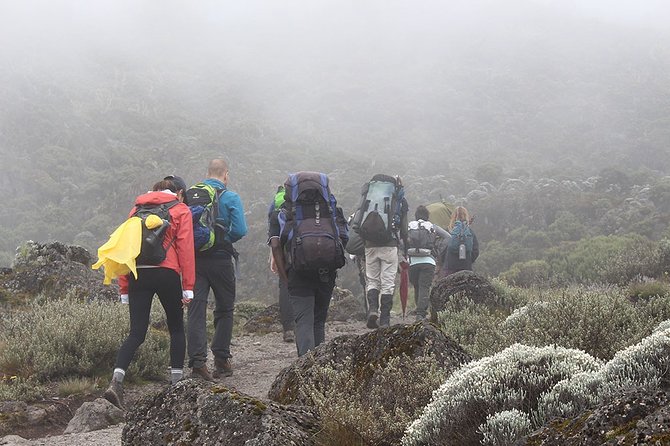
Lemosho starts among heath vegetation rather than immediately placing you in the highest, bare terrain. That gives the opening days a more open feel, with changing views and a clear sense that you are moving upward through a large natural system.
As the route continues, the heath gives way to alpine meadows. This is an important part of the experience because you are not simply counting miles. You are watching the vegetation thin as the altitude increases, and the surroundings become more exposed and austere.
The guide’s role is especially important during these early days. A good mountain guide helps set a sensible pace and keeps the group moving at a rate that supports altitude adjustment. The operator lists an English-speaking mountain guide as part of the package, along with a support crew whose salaries are described as fair and sustainable under KINAPA standards.
The maximum group size is 20 people. That is not an intimate private trek, so ask about your expected group size if personal attention is a major concern. A group of 20 can bring social energy and shared encouragement, but it may also mean a slower pace when everyone gathers or moves through camp routines.
The upper mountain and Uhuru Peak
Near the summit, the route enters the arctic zone. This is where the character of the climb changes sharply. Vegetation is no longer the focus. Cold, thin air and the physical effort of gaining the final height become the central facts of the day.
Uhuru Peak is the goal, but reaching it depends on far more than enthusiasm. Your fitness, rest, hydration, clothing, pacing, and response to altitude all matter. The eight-day format is useful because it gives you more time than a compressed itinerary, but no operator can guarantee a summit result.
The safety equipment is a real benefit. The mountain package includes an emergency first-aid kit, an emergency oxygen cylinder, and an oximeter. An oximeter lets the crew monitor blood oxygen levels, while oxygen may be used in an emergency. These items are reassuring, but they are not a substitute for medical judgment or travel insurance.
A Gamow bag is specifically excluded. You should also bring any medication you need, since medication is not included. The information does not describe a doctor or a medical evacuation plan, so read the insurance requirements carefully and choose a policy that covers high-altitude trekking and emergency evacuation.
The summit day is likely to be the hardest part of the route, but the supplied material does not give exact walking hours, elevation gain, campsite names, or the summit departure time. Ask for those details before booking. They will help you judge the climb against your fitness and previous mountain experience.
A few more Moshi & Kilimanjaro days to compare
- Safari Serengeti And Ngorongoro
★ 5.0 · 288 reviews - Climbing Kilimanjaro – Machame Route
★ 5.0 · 170 reviews - Climbing Kilimanjaro through 7 days Machame Route
★ 5.0 · 151 reviews - Kilimanjaro climb, Lemosho Route (8-day)
★ 5.0 · 148 reviews
Descending through rainforest
The descent through rainforest provides a welcome change after the summit section. The route becomes greener, damper, and more enclosed, and the contrast with the arctic upper mountain is one of Lemosho’s best features.
A different descent environment also helps the trip feel complete. You begin among heath, cross alpine terrain, approach the summit zone, then return through forest. In practical terms, descending can still be hard on tired legs, especially after the summit attempt, so do not treat the final section as effortless.
Kilimanjaro’s lower rainforest can also be wet and muddy. The supplied information does not list weatherproof clothing or gaiters, so you need to bring suitable personal equipment. The operator provides mountain tents and a sleeping mattress, but your own boots, clothing, sleeping bag, and other trekking gear are excluded.
Mountain food, water, and camp life
Full-board meals and drinking water are included during the mountain portion. The food is described as fresh, healthy, nutritious, and served in large portions. That is more important than it may sound. On a long climb, regular meals reduce the need to plan every calorie yourself, and large portions give you a better chance of eating enough when the altitude reduces your appetite.
Energy foods and beverages are not included. Pack the snacks and drinks you know you can tolerate while walking. Alcoholic drinks, soft drinks, and personal spending money are also excluded, so you should not expect a fully stocked personal supply on the mountain.
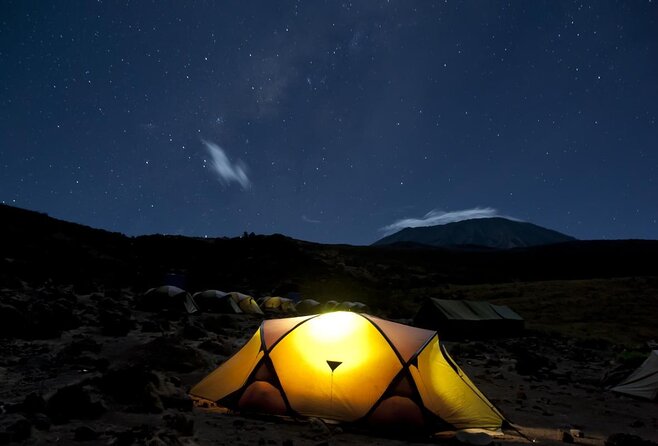
Tents and a sleeping mattress are supplied. A sleeping bag is not. This is one of the largest practical omissions from the headline price, since a warm, suitable sleeping bag is essential on a high mountain. Hiking boots, trekking clothes, and other personal equipment are also your responsibility.
The package includes two Moshi bed-and-breakfast nights, but it does not specify the hotel by name. If hotel standards, room arrangements, or location matter to you, confirm them before you pay. Bed and breakfast is a useful base, but it is not the same as a full-service pre-climb preparation package.
What the $2,600 price really covers
At $2,600 per person, this is not a budget walk, but the price includes many of the costly parts of a Kilimanjaro operation. You receive mountain permits and other fees and taxes, an English-speaking guide, crew support, tents, a mattress, drinking water, full-board mountain meals, gate transfers, emergency equipment, and two Moshi nights with breakfast.
The stated inclusion of fair and sustainable crew salaries is also worth noting. Porters are central to the logistics of a climb, carrying equipment and helping establish the mountain camps. A responsible payment structure is part of the real cost of climbing, not a decorative extra.
You still need to budget for international flights, Tanzanian visa fees, travel or medical insurance, tips, medication, personal purchases, snacks, soft drinks, and all personal trekking equipment. Those additions can make the final cost noticeably higher than $2,600.
Tips and gratuities are not included. The supplied information does not give a recommended tipping amount, so ask Sote Tours for current guidance before departure. You should also confirm what the phrase Kilimanjaro gate transfers covers and how pickup works on your arrival and departure days.
In value terms, the package makes the most sense for someone who wants an organized climb with the major mountain logistics bundled together. It makes less sense if you already own no equipment and are comparing only the advertised price, because the gear and insurance bill will add up.
The human side of the operation
The strongest praise centers on communication and staff conduct. Kelvin is repeatedly singled out as responsive during the planning stage, with quick answers and flexible help when questions came up. Goodluck is named in the company responses, and Joseph is identified in one arrival account as the person who met climbers at the airport.
The supplied feedback also gives positive attention to porters, guides, and the wider support team. The practical takeaway is that Sote Tours puts real effort into communication before the climb and personal support during the trip.
You should ask who your mountain guide will be before departure, since the provided information confirms the guide speaks English but does not provide a guide’s name. Also ask how the 20-person maximum is applied to your date, how porter welfare is managed in practice, and what happens if someone needs to stop climbing.
The overall published score is 5 from nine reviews, with praise focused on smooth booking, airport transfers, guide and porter professionalism, and the sense that the staff handled the trip from planning through completion. That is encouraging, but it is still a small sample. I would use it as a positive sign, then check the written inclusions and safety arrangements carefully.
Who should choose this climb?
This route suits you if you want Kilimanjaro’s scenery and prefer a longer schedule over the shortest possible ascent. It is a good match for a fit first-time high-altitude climber who wants guides and crew support rather than an independent, self-organized expedition.
It also suits couples and small groups who value help with planning. One account describes a fiancé couple arranging the trip through email and WhatsApp, while another describes four friends completing the eight-day Lemosho climb. The booking support may be especially useful if Tanzania is part of a larger safari plan.
You should think twice if you are looking for a relaxed holiday, have no interest in buying or renting cold-weather equipment, or are uncomfortable with tents and basic mountain conditions. Moderate fitness is required, and the absence of a Gamow bag from the included equipment list means you should ask direct questions about altitude response and evacuation procedures.
The route is not presented as wheelchair accessible, and the information only says it is near public transportation. That detail matters mainly for the Moshi portion. The climb itself is a strenuous mountain trek, so you should not use the public transport note as a guide to physical accessibility.
Booking, cancellation, and weather rules
Confirmation is received at booking. Free cancellation is available if you cancel at least 24 hours before the local start time. Cancellations made inside that 24-hour window, along with late changes, are not accepted for a refund.
The climb depends on suitable weather and a minimum number of participants. If the operator cancels for poor weather or because the minimum is not reached, you can choose another date or experience, or receive a full refund. The same does not automatically apply if you decide not to climb after arriving, so ask about medical withdrawals and failed summit attempts before booking.
Should you book the 8-day Lemosho Route?
I would book this climb if you want a scenic Kilimanjaro route, value a longer eight-day schedule, and are comfortable assembling your own personal gear and insurance. The combination of full mountain meals, water, tents, transfers, Moshi accommodation, an English-speaking guide, and basic emergency equipment gives the $2,600 price a solid foundation.
Before paying, get four points in writing: the exact day-by-day route, the Moshi hotel and night arrangement, the equipment and evacuation plan for altitude problems, and the current tipping guidance. If those answers are clear, Sote Tours looks like a sensible choice for a supported Lemosho climb rather than a bare-bones bargain trip.
FAQ
How long is the Kilimanjaro Lemosho climb?
The experience lasts approximately eight days and includes seven nights on the mountain according to the tour description. Two nights of bed-and-breakfast accommodation in Moshi are also included, but the exact placement of those nights should be confirmed.
What route does the climb use?
The climb uses the Lemosho Route. It begins through heath, crosses alpine meadows, reaches the arctic zone near Uhuru Peak, and descends through rainforest.
What is included in the $2,600 price?
The price includes two Moshi bed-and-breakfast nights, mountain drinking water, full-board meals, guide service, mountain tents, a sleeping mattress, Kilimanjaro gate transfers, fees and taxes, an emergency first-aid kit, an emergency oxygen cylinder, and an oximeter.
Are flights and visas included?
No. Flights and visa fees are not included in the listed price.
Is travel or medical insurance required?
Yes. Travel or medical insurance is required. The supplied information advises you to ask for a recommendation.
Is a sleeping bag included?
No. A sleeping bag, hiking boots, trekking clothes, and other personal trekking equipment are not included.
Is emergency oxygen provided?
Yes. An emergency oxygen cylinder and an oximeter are included on the mountain. A Gamow bag is not included.
How large can the group be?
The activity can have a maximum of 20 participants. The exact size of your group is not stated, so confirm it before booking if group size matters to you.
What is the cancellation policy?
You can cancel at least 24 hours before the local start time for a full refund. Cancellations or changes made less than 24 hours before the start are not accepted, and poor weather or an unmet minimum group size may result in an alternative date, an alternative experience, or a full refund.
Newly listed around Moshi & Kilimanjaro
- Climb Mount Kilimanjaro: 7 Days Machame Route★ 5.0 · 3 reviews
- 6 Days Mount Kilimanjaro Climbing via Rongai Route★ 5.0 · 3 reviews
- Explore 1 day Ngorongoro Crater Budget Group Safari from Arusha★ 5.0 · 3 reviews
- Mt. Kilimanjaro Day Hiking★ 5.0 · 3 reviews
- Chemka (Kikuletwa) Hot Springs, Tanzania★ 5.0 · 3 reviews
- Guided City tour of Moshi★ 4.3 · 3 reviews
- 8 Day Tanzania Family Safari★ 5.0 · 3 reviews
- Serengeti Safari with Sirikwa Travel★ 5.0 · 3 reviews
Kilimanjaro Climbs, compared.








Browse the lists this tour appears in